
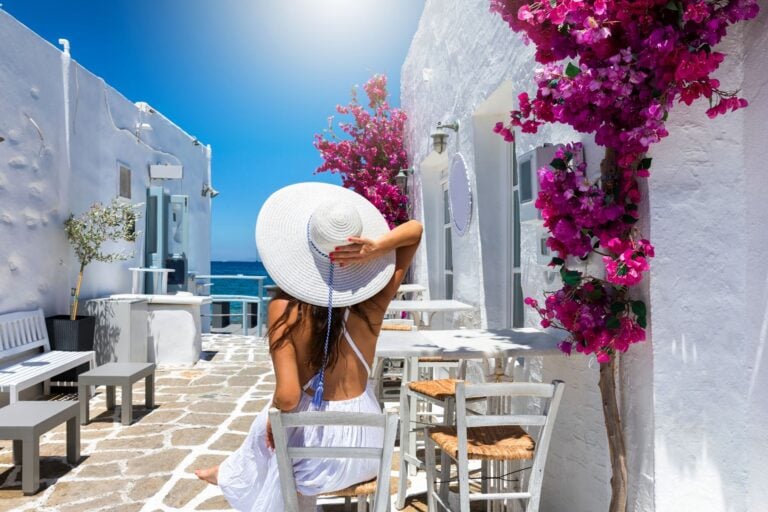

Greece has a way of ruining you for other destinations. Where else can you stand before a 2,500-year-old temple in the morning, swim in crystal-clear Aegean waters by afternoon and enjoy grilled octopus and cold white wine at sunset?
With more than 6,000 islands and a coastline stretching some 15,000 kilometers (9,320 miles), this Mediterranean country holds enough wonder for a dozen lifetimes.
Here is a look at the best places to visit in Greece, from ancient ruins and clifftop monasteries to volcanic islands and pine-fringed peninsulas.
1. Athens: Where Ancient History Meets a Vibrant City
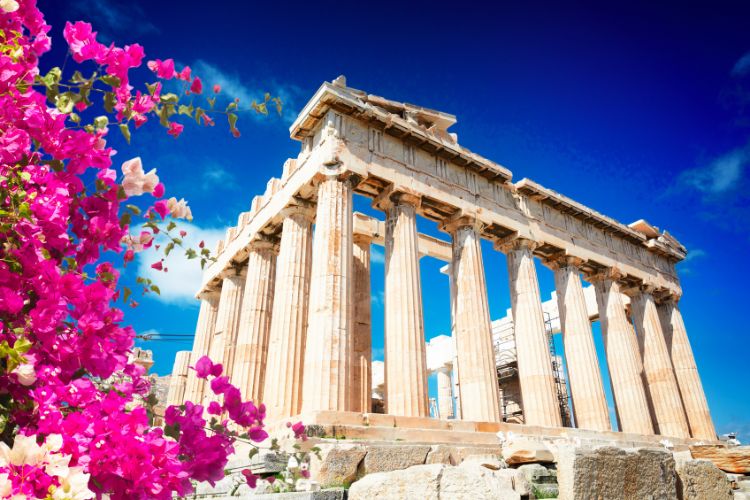
Image by Anastasia Collection via Canva
Few cities hold as much history as Athens, one of the oldest continuously inhabited cities in the world. The Greek capital blends ancient monuments with a lively cafe culture, bohemian neighborhoods and world-class museums.
The Acropolis remains the crown jewel of any visit. Towering above the city, it holds the Parthenon, the Erechtheion and the sanctuary of the goddess Athena.
In welcome news for travelers, the Parthenon’s scaffolding was removed in 2025 after decades of restoration, making this an especially rewarding time to visit.
Practical note: The Acropolis now requires advance timed-entry tickets, which must be booked online at etickets.tap.gr. Book early, as popular time slots sell out quickly.
The Acropolis Museum, at the foot of the hill, houses some of the finest works of ancient Greek art in an impressive modern building.
For a broader look at Greek civilization, the National Archaeological Museum is one of the most important collections in the world. The Cycladic Art Museum is another spot worth visiting, with its stunning collection of prehistoric island art.
Below the Acropolis, the Plaka district charms visitors with its narrow streets, neoclassical buildings, and tavernas where you can try souvlaki and gyros.
Monastiraki Square sits in a neighborhood buzzing with street food, outdoor markets and excellent people-watching.
Watch the traditional changing of the guard at Syntagma Square. Then stroll the promenade along Ermou Street, lined with cafes and boutiques.
History buffs will want to visit the Panathinaiko Stadium. This marble venue hosted the first modern Olympic Games in 1896.
The nearby National Garden offers a green retreat in the middle of the city. About 10 kilometers south of the center, the beaches at Alimos and Lagonisi are ideal for a half-day escape.
For first-time visitors, this guided walking tour of the Acropolis takes the guesswork out of one of the world’s great ancient sites. A licensed guide leads you past the Parthenon, Temple of Athena Nike, and Propylaia gateway, with skip-the-line access and an optional add-on for the Acropolis Museum. Book this highly rated Acropolis and Parthenon Guided Walking Tour here.
2. Thessaloniki and the Halkidiki Peninsula
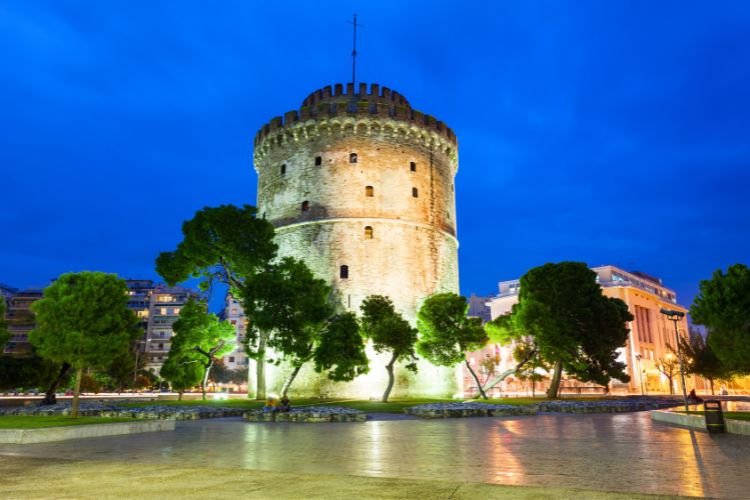
Greece’s second city often gets overlooked by first-time visitors, but Thessaloniki rewards those who seek it out. A port city on the northern coast, it is layered with Byzantine churches, Roman ruins and a food scene many Greeks consider the best in the country.
The White Tower, the city’s most recognizable landmark, offers panoramic views of the waterfront from its top.
Aristotle Square and the famous Nikis Avenue are the heart of city life, busy with restaurants, bars and the Mediterranean art of lingering over coffee. The statue of Alexander the Great near the waterfront is a powerful reminder of the city’s deep roots.
The Archaeological Museum and the adjacent Museum of Byzantine Culture together cover northern Greek history from ancient times through the medieval era.
The historic Rotunda building, originally a Roman structure, contains stunning mosaics from the early Christian era. Nearby, the Roman Forum gives a sense of what the city looked like under imperial rule.
After dark, the Ladadika district comes alive with bars and restaurants tucked into cobblestone streets.
An hour or two from Thessaloniki, the Halkidiki peninsula extends into the Aegean on three fingers of land.
Kassandra is the most developed, with resort towns and fine beaches. The picturesque village of Afytos, with its cobbled streets and vineyard views, is worth a stop. While there, pick up a bottle of local wine or some excellent olive oil.
Sithonia is quieter and wilder, known for pine-backed beaches and clear water. Towns like Neos Marmaras and Sarti offer beautiful bays and a more relaxed pace.
3. Crete: Greece’s Largest and Most Diverse Island
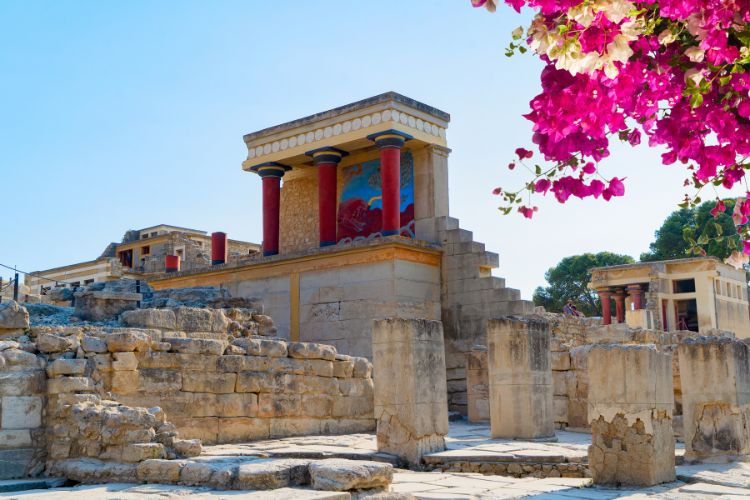
Crete is the largest island and the most southern in Greece. It is also arguably the most varied, with ancient ruins, mountain villages, gorges and some of the most gorgeous beaches in the Mediterranean all packed into one destination.
Knossos, considered by many to be the oldest city in Europe, was the seat of the Minoan civilization. At its peak, the site had an estimated population of up to 100,000.
The ruins of the palace are extraordinary, and the Archaeological Museum in Heraklion houses the objects and frescoes found on-site. You will need at least half a day for each.
Chania, in western Crete, is the island’s most charming town, with a Venetian harbor, a maze of old streets and excellent restaurants. If you have one day here, spend it wandering and eating well.
To the northwest lies Balos Lagoon, one of the most photographed beaches in all of Greece. The road to reach it is rough and the beach offers no shade or services. However, the turquoise lagoon and white sand make the effort worthwhile.
For the adventurous, the hike through Samaria Gorge is unforgettable. One of the longest gorges in Europe, it runs some 16 kilometers through a national park of rugged beauty.
At its narrowest, the canyon walls are barely three meters apart, with cliffs soaring up to 400 meters. Allow six to eight hours for the full trek, and wear sturdy footwear.
4. The Ionian Islands: Corfu, Kefalonia, Zakynthos, and More
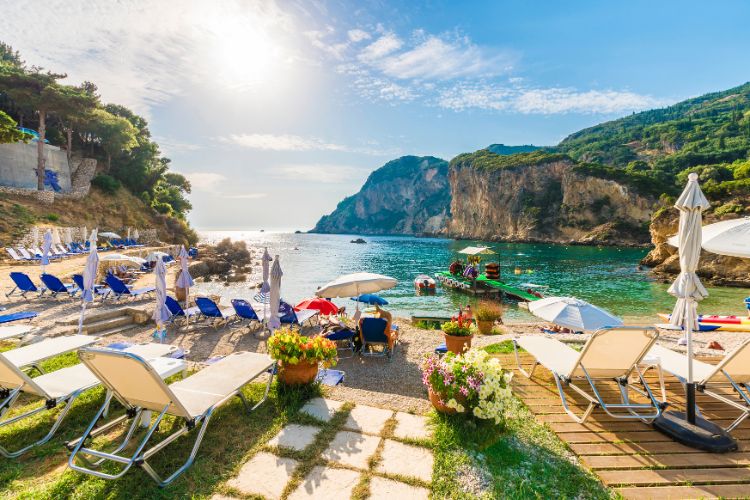
The Ionian islands lie along Greece’s western coast, with a character quite different from that of the Aegean islands. Centuries of Venetian rule left a deep mark on the architecture, cuisine and culture here.
Corfu’s old town is a UNESCO World Heritage Site, its narrow streets and colorful facades reflecting that long Venetian legacy.
The Palace of Achilleion, built for the Austrian royal family in the late 19th century, opens its ornate rooms and beautiful gardens to visitors today.
Beyond the town, the coastline at Paleokastritsa is spectacular, with a series of coves and beaches framed by dramatic cliffs. Porto Timoni beach is a particular favorite.
The village of Kassiopi, with its small harbor and wooden fishing boats, offers a more local feel.
Kefalonia is larger and wilder. Mount Aenos rises above 1,600 meters, and the hike to the summit pays off with sweeping views.
The pretty villages of Assos and Fiskardo draw visitors for their waterfront tavernas and traditional architecture.
The island’s most extraordinary sight is Melissani Cave. Here, an underground lake glows an impossible shade of blue when sunlight filters through a collapsed ceiling.
Zakynthos, the southernmost Ionian island, is best known for Navagio Beach, also called Shipwreck Beach. It is an isolated cove reachable only by boat, where the hull of a wrecked freighter rests on white sand surrounded by sheer limestone cliffs. It is one of the most photographed scenes in Greece.
Lefkada, connected to the mainland by a short causeway, is underrated. Its beaches are among the best in Greece, and the harbor town of Vasiliki is a hub for windsurfing.
Parga, on the Ionian mainland coast, makes a lovely base for day trips to the nearby islands, with a long seafront promenade and excellent beaches at Lichnos and Valtos.
5. Meteora: Monasteries Perched on the Clouds
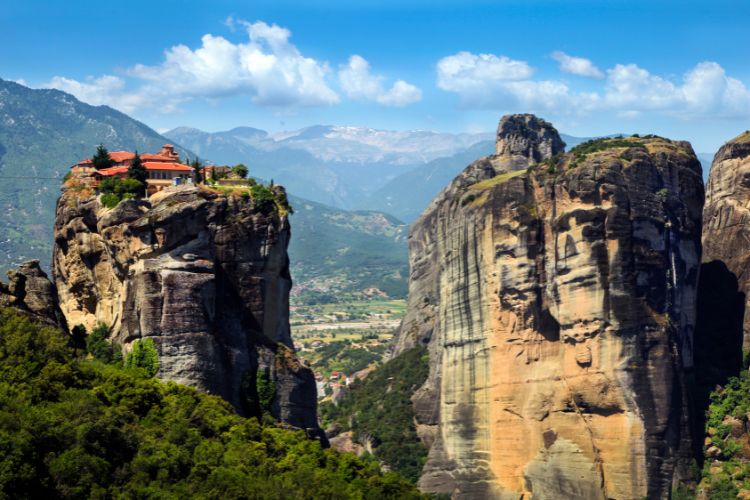
Image by GoodLifeStudio from Getty Images Signature via Canva
Few sights in Greece, or anywhere in the world, prepare you for Meteora. In the 14th century, monks seeking isolation from the world climbed to the tops of towering sandstone pillars and built monasteries there.
At the height of monastic life in the 16th century, 24 monasteries crowned these rocks. Six remain open to visitors today, perched above the Thessalian plain in central Greece.
The six monasteries are Great Meteoron, Varlaam, Roussanou, St. Nicholas Anapafsas, St. Stephen and Holy Trinity. Together they form a UNESCO World Heritage Site, designated in 1988 for both their cultural significance and the outstanding natural beauty of the landscape.
What makes Meteora so compelling is not just the sacred art and Byzantine architecture inside the monasteries but the sheer improbability of their location, the stone columns rising like something from another world.
Popular options include sunrise and sunset hikes, full-day trips from Athens by train, and private guided visits.
The train from Athens takes roughly five hours; from Thessaloniki, closer to three. Book tours in advance during the busy summer months.
Read More: Greece’s Meteora Monasteries
6. Mount Olympus: Home of the Gods
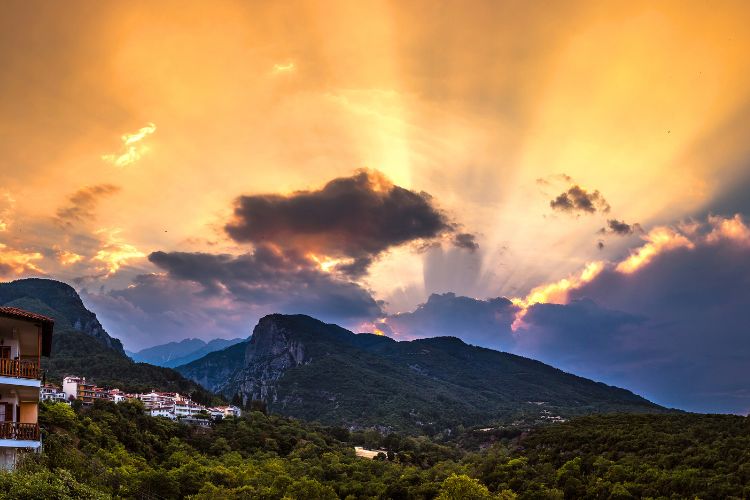
In Greek mythology, Mount Olympus was the home of Zeus and the twelve Olympian gods. In reality, it is the highest mountain in Greece and the second-highest in the Balkans, with the peak of Mytikas at 2,917 meters above sea level.
Declared Greece’s first national park in 1938, it shelters more than 100 bird species and a remarkable range of endemic plants.
The town of Litochoro, about an hour south of Thessaloniki, serves as the main gateway for climbing the mountain.
Each year, roughly 10,000 hikers make their way to the summit peaks of Mytikas, Stefani, and Skolio. On the way up, the Orlias Waterfalls offer a breathtaking detour.
For those who prefer a more relaxed visit, the lower slopes and forest trails are equally beautiful and far less strenuous.
7. The Cyclades: Santorini, Mykonos and Beyond
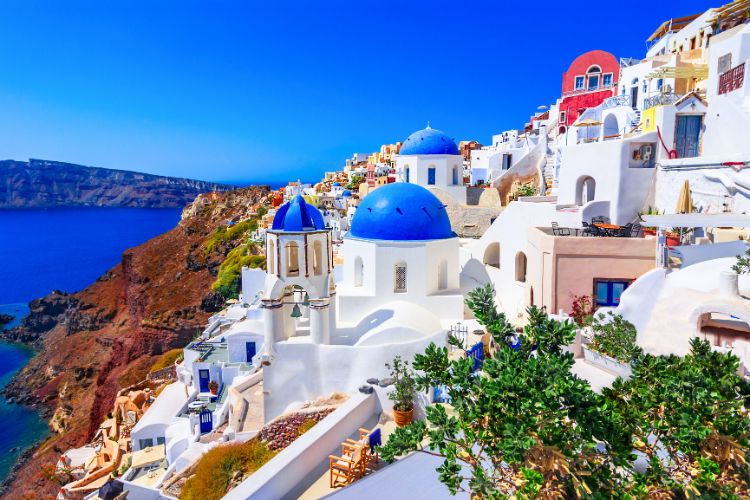
The Cyclades archipelago is scattered across the Aegean between Athens and Crete. It is what many travelers picture when they think of Greece: white cube houses, blue-domed churches, windmills on the hillsides, and sea views in every direction.
Santorini, built on the rim of an ancient volcanic caldera, is the place you’ll most recognize from photos. The caldera hike from Fira to Oia is the signature experience. Views span the flooded crater to the opposite cliffs and provide one of the most famous sunsets on earth.
Santorini saw a series of minor earthquakes in early 2025. However, authorities confirmed the caldera remains stable and travel is safe.
Mykonos is the party island, with world-class DJs, beautiful beaches like Elia and Paradise, and a cosmopolitan scene that buzzes from June through September. But it is also charming out of season, when the windmills and winding streets feel like a different place entirely.
A short ferry ride from Mykonos, the island of Delos is among the most important archaeological sites in the Greek world. The entire uninhabited island is a UNESCO World Heritage Site, with ruins of temples, theaters, and ancient homes covering nearly every inch.
Naxos, Paros, and Amorgos offer a quieter alternative to the more famous islands. Here you’ll find excellent beaches, mountain villages and a more local atmosphere.
For an off-the-beaten-path experience, the small island of Milos offers some of the most dramatic coastal scenery in Greece.
Read More: Affordable, Luxury, or Family-Friendly: 10 Best Hotels in Santorini, Greece
8. Delphi: The Navel of the Ancient World
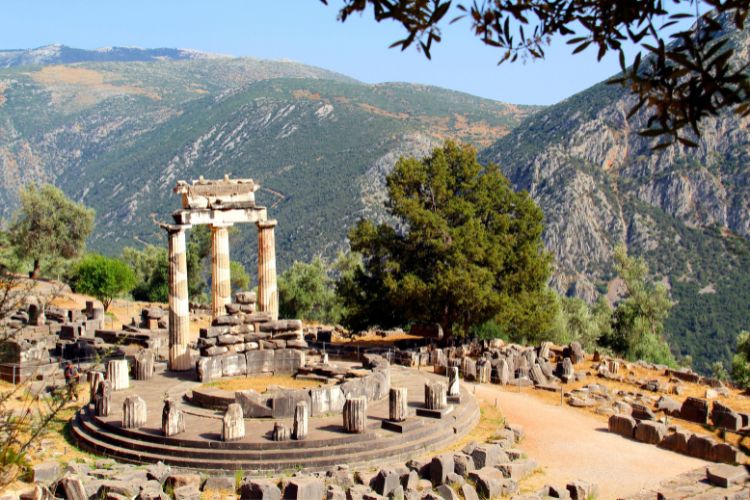
High on the slopes of Mount Parnassus, Delphi was considered by the ancient Greeks to be the center of the world. Legend says that Zeus sent two eagles from opposite ends of the earth; where they met, he declared the center, and there the Greeks built their most sacred oracle.
The sanctuary grew to prominence from the 8th century BC onward. By the 6th century BC, Delphi was the religious and political heart of the ancient Greek world.
The site’s centerpiece is the Temple of Apollo, where the Oracle of Delphi held court and delivered prophecies that shaped the ancient world.
A large theater, a sanctuary of Athena, and a stadium where the Pythian Games were held every four years round out the complex.
The Delphi Archaeological Museum houses the famous bronze Charioteer, one of the finest surviving works of ancient Greek art. The whole site was declared a UNESCO World Heritage Site in 1987.
Delphi makes an excellent day trip from Athens, roughly two and a half hours by road. Several well-rated guided tours include transport, a local expert, and flexible cancellation policies.
9. The Peloponnese: Ancient History Close to Athens
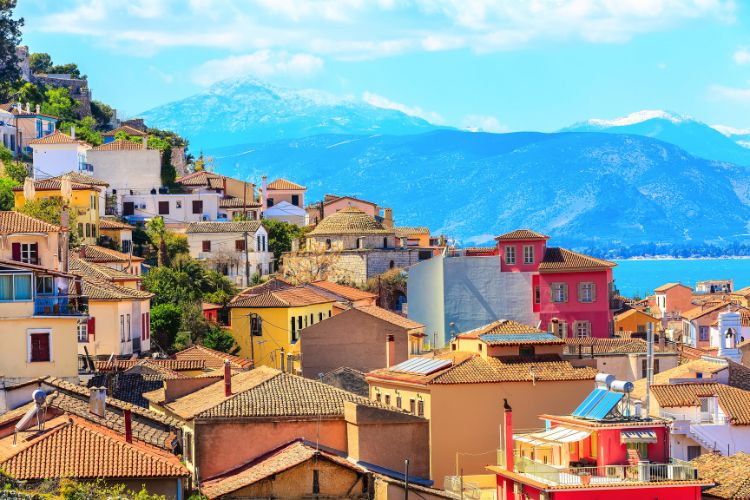
Just an hour from Athens, the Peloponnese peninsula is one of the most historically rich regions in Greece. It is also one of the most rewarding for travelers willing to venture beyond the islands.
Nafplio, a small coastal city and the first capital of modern Greece, is widely considered one of the most beautiful towns in the country.
The old town is a pleasure to wander, with Venetian-era buildings, neoclassical facades and a harbor that looks almost too picturesque to be real.
The Palamidi Fortress above the city rewards the climb with sweeping views. Nearby Karathona and Arvanitia beaches are both excellent.
Close to Nafplio, the ancient city of Mycenae is the stuff of myth and legend, the home of King Agamemnon and the setting for stories told by Homer.
The famous Lion’s Gate and the massive stone walls give a vivid sense of how formidable this Bronze Age city once was. The Archaeological Museum in Nafplio provides essential context.
Epidaurus, also near Nafplio, holds one of the best-preserved ancient theaters in the world. Built in the 4th century BC, with seating for up to 14,000 spectators, it has acoustics so incredible that you can hear a whisper from the stage while seated in the upper rows. The site is a UNESCO World Heritage Site.
Further into the Peloponnese, the medieval fortified city of Mystras contains Byzantine churches and palaces largely intact. On the coast, Monemvasia is a medieval village clinging to a sea rock, accessible only through a single tunnel.
At Olympia, birthplace of the ancient Olympic Games, visitors can walk through the ruins of the original stadium and the Temple of Zeus, also a UNESCO site.
10. Rhodes: The Medieval City of the Aegean
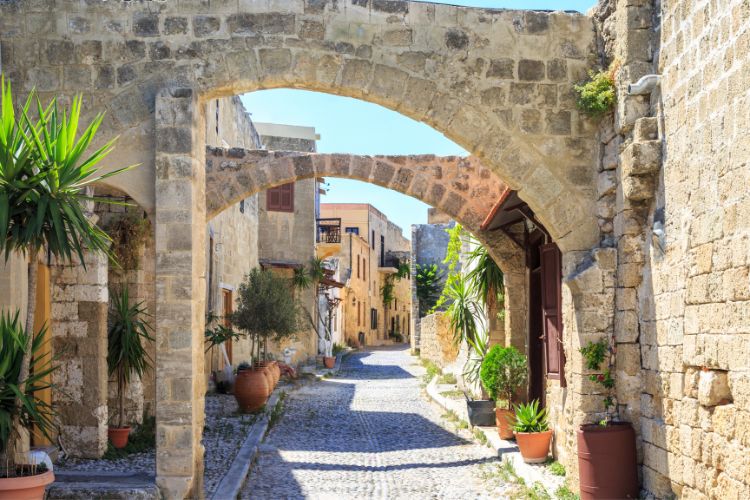
Rhodes, the largest of the Dodecanese islands, sits in the southeastern Aegean close to the Turkish coast. Its medieval old town, built by the Knights of St. John in the 14th century, is one of the best-preserved fortified cities in Europe and a UNESCO World Heritage Site.
The Palace of the Grand Master of the Knights of Rhodes dominates the old town, its towers and battlements unchanged from the medieval era.
Winding through the old town’s stone-paved streets brings you past mosques, Byzantine churches, Ottoman fountains, cafes and souvenir shops. The Roloi Clock Tower provides the best view over the rooftops.
Outside the walls, the modern city has its own appeal, with boutiques along the waterfront and the National Theater of Rhodes.
Day trips to the whitewashed village of Lindos, with its hilltop acropolis overlooking two bays, are an easy and rewarding excursion. The beaches at Faliraki, Tsambika, and Glystra offer excellent swimming.
Rhodes also serves as a ferry hub for exploring other Dodecanese islands, including Kos and Leros.
Read More: Top 10 Things to Do in Rhodes, Greece: So Much More Than a Beautiful Beach Destination
Tips for Visiting Greece
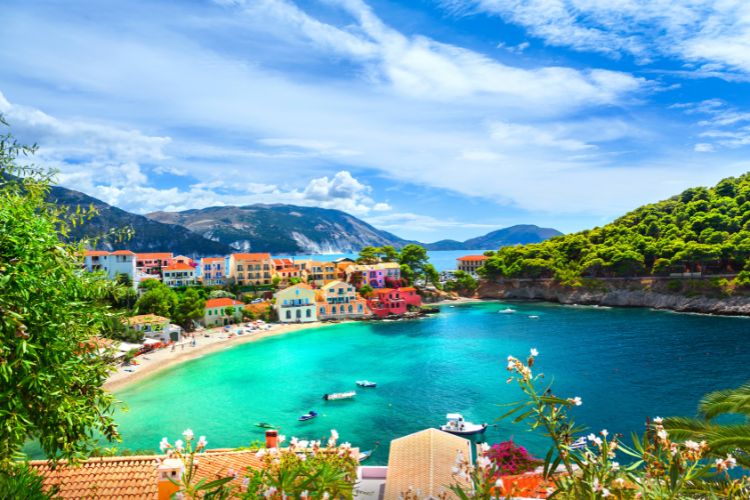
Greece set visitor records in 2025 and is expecting another strong season in 2026. Booking early, especially for accommodation on Santorini and Mykonos, is strongly advised.
The shoulder seasons of spring (April to May) and fall (September to October) offer better prices, fewer crowds and comfortable temperatures.
Island hopping by ferry is one of the great pleasures of traveling in Greece, but the islands are divided into clusters with regular connections within each group.
Ferries run frequently within groups like the Cyclades or the Ionians, but connections between island groups are limited. Plan your routes accordingly.
When visiting the Acropolis in Athens, pre-booking timed entry tickets online is now mandatory. The government combination ticket covering multiple sites was discontinued in April 2025, so budget extra time and separate admission fees for each site you plan to visit.
Greece is a safe destination with a stable political environment. Standard precautions around pickpocketing in crowded tourist areas apply, as they would anywhere in Europe.
Need a hand planning your trip? Here are the sites and services we rely on most, from booking tools to travel products we love.
Inspire your next adventure with our articles below:
Author Bio: Based in Serbia in Europe, Marija Stojanovic Petkovski worked as a journalist but realized writing about the most beautiful places in the world is something that inspires her. She is sure that a pint of good craft beer perfectly accompanies a tasty homemade lasagna. In her spare time, she enjoys playing with her children and spending time outdoors with her family.
Want to discover more hidden gems and helpful travel tips? Join our free newsletter for the latest travel secrets and travel articles.
We are reader-supported and may earn a commission on purchases made through links in this article.

- 5 Romantic Island Escapes Along British Columbia’s Coast - September 13, 2026
- Inside Hawaii Island’s Lava Tubes: Nāhuku, Kaumana and a Guided Cavern Near Hilo - September 13, 2026
- 18-Day Colombia Road Trip Itinerary by Bus or Car - September 13, 2026
Planning another trip soon? ✈️
Add GoWorldTravel.com as a preferred source on Google. Click the button below so our local guides, packing hacks, and hidden-gem itineraries always show up first when you search!
Add to Preferred Sources