


When visiting Portugal, it’s tempting to remain in Lisbon. But if time and transportation allow, we enjoy exploring a bit further. My family and I decided to hire a driver and take a day tour from Lisbon to Cascais and Portugal’s westernmost coast.
About 20 miles west of Lisbon sits Cascais, a popular resort town. Traditionally a fishing village, it is now filled with villas, hotels and tourists. The main attraction here is the beach, where you can find swimmers and sunbathers, surfers and kiters all enjoying the sun and surf.
Fishing still takes place here, but Cascais has become a fisher of tourists. The area offers not only the beach but also golf courses and resorts thick with pine and palm trees.
What to Do in Cascais
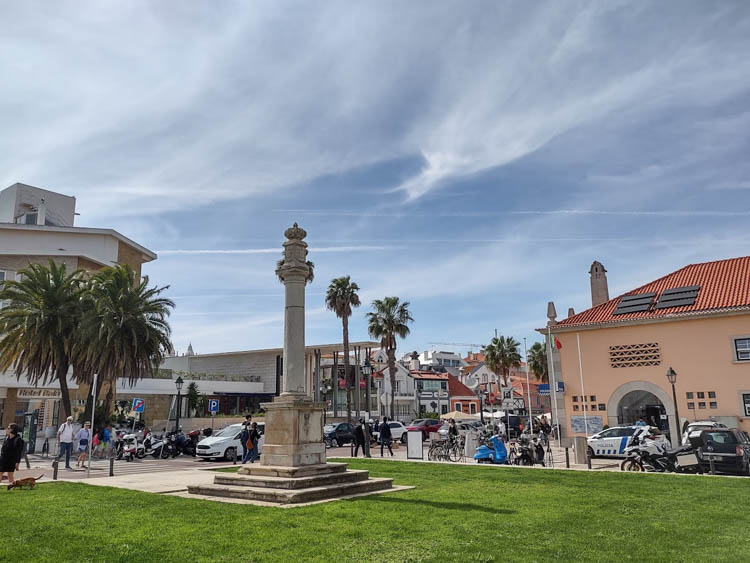
We were here for the culture, so we visited the Museu do Conde de Castro Guimaraes. The museum is located in a towering home once belonging to a Count. Decorated with paintings, furniture, jewelry and porcelain, it gave us a taste of what Cascais was like a century ago.
This Creekside villa was donated by Count Manuel de Castro Gumaraes to the people of Cascais. It sits just across from the marina, filled with shopping, restaurants and cafes.
Cascais is known for its fresh seafood. It was here that we sampled fresh swordfish, salmon and octopus. A Spanish couple argued with the waiter about an overcharge on their ticket, causing a bit of chatter in multiple languages.
We were careful to inspect our bill and everything was checked out. It was a bit pricier than other meals we had in Portugal, but that was expected here. Regardless, the fresh seafood was delicious.
Read More: Portugal’s Must-Visit Destinations: From Historic Cities to the World’s Biggest Waves
Looking Into the Mouth of Hell
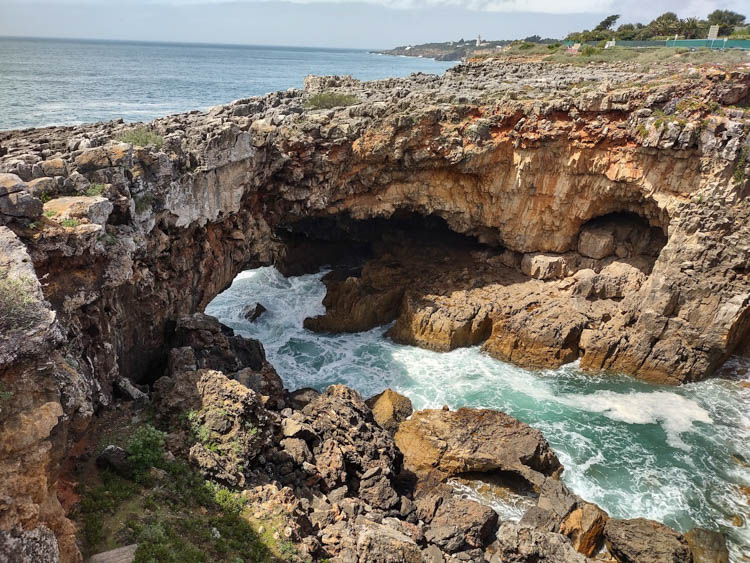
After several hours in Cascais, our driver took us two miles west to Boca do Inferno or the “Mouth of Hell”. The mouth is a sea cave that you can see from either side from above.
Depending on where you stand, you will be looking from the inside out or the outside looking in. The mouth offers a majestic view as the sea waves rush in and out, creating tide pools full of sea life.
Although not at all developed or built up, the natural area had a festive environment. People ventured out onto the flat rock at the water’s edge, many getting sprayed by the sea as the crashing water smacked the rock.
A musician with a harmonica and a guitar played Neil Young’s “Hey, Hey, My, My” and Tom Jobim’s “Waters of March”. We took in the scent of the sea, watched the water and listened to the waves crashing in time to the music.
I had assumed it was called the Mouth of Hell because of the violent view of water crashing through the rocky cave. However, our tour guide explained that this site was given the name because it had once been a popular location for suicide.
“And of course, we in Portugal are mostly Catholic,” he said, “and believe that suicide is a one-way destination to Hell.” He invited us back in the van and we hoped this would continue to be the round-trip we had ordered. We drove away from Boca do Inferno.
Cabo da Roca: The Edge of Europe
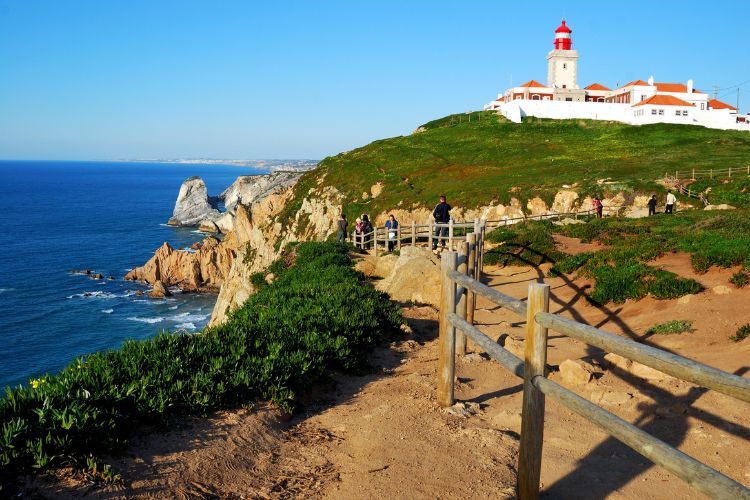
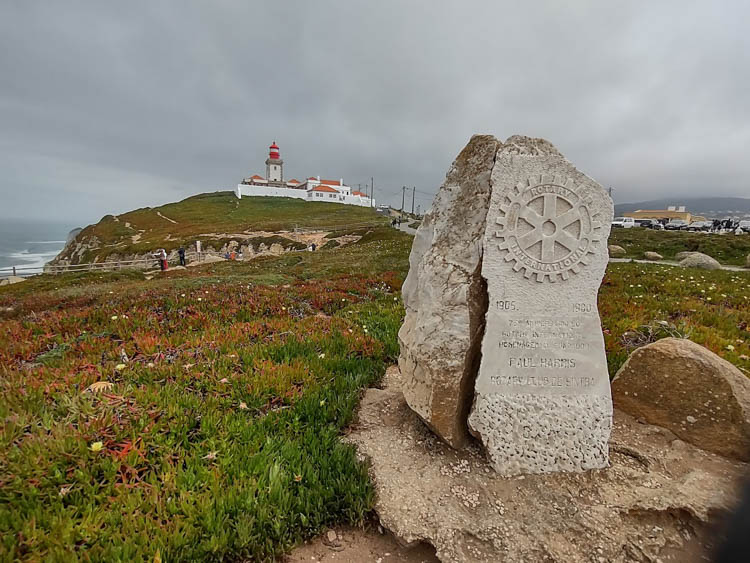
About 11 miles north up the coast from Boca do Inferno is the westernmost point in Portugal: Cabo da Roca. Unlike some geographically significant points, like Four Corners in America’s west, this geographical point is more than a marker. It is also beautiful.
Furthermore, Cabo da Roca is not only the westernmost point in Portugal, but it’s also the westernmost point in Europe.
It was once the site of a 17th-century fort guarding the entrance to Lisbon’s harbor. Now there is only a historical stone marker and a still-functioning lighthouse. But the view of the ocean from the cliff is spectacular.
We walked through trails of succulent plants that reminded me of those in my long-ago backyard in Monterey, California.
Plus we enjoyed a panoramic view from three sides on a cliff jutting out over the sea. The wind was strong and created huge waves which crashed against the rocks.
A souvenir shop and café offered keepsakes, warm coffee and shelter from the wind. However, weathering the wind and enjoying the spectacular view was the thing to do here.
If you’re planning a trip to Portugal, check out our Portugal Travel Guide, where you’ll find a curated selection of articles to inspire you and help plan your trip.
Returning to Lisbon
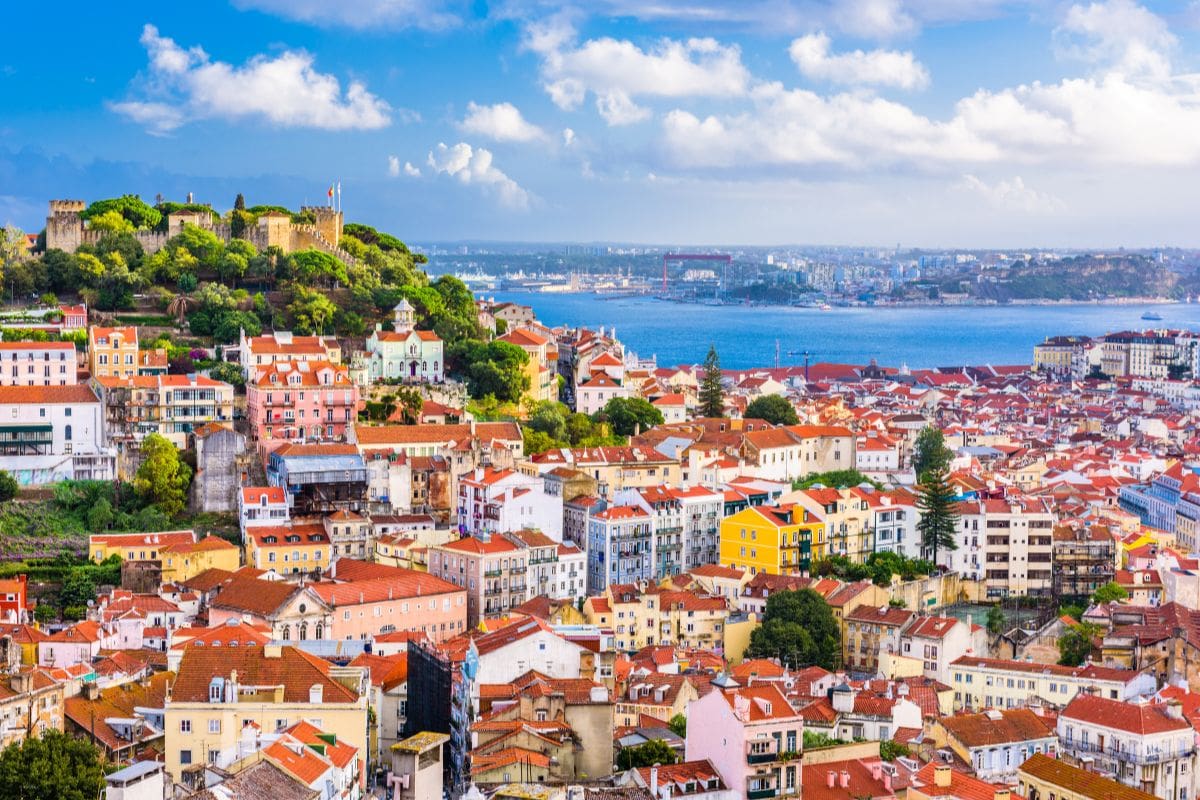
As our guide drove us back to Lisbon, we watched the scenery change from water and succulent plants to pine trees. Then from pine trees to urban landscape and from urban back to the red-roofed buildings of Alfama.
During our discussion, our driver shared his thoughts on the state of the union (good, thanks in part to the return of tourism dollars).
Also, the best place to get a Port wine (one of the hole-in-the-wall stand-up bars). And the best place to get an egg custard, or pastel de nata (right on the Rue Augusta at Manteigaria).
Portuguese pop music played on the car radio. Almost as though choreographed, “Waters of March” came on as the waters of Lisbon’s coast came into view, this time performed by Elis Regina. It seemed a fitting end to a water-focused day along Portugal’s westernmost coast.
Read More: From Fado to Funiculars: 10 Must-Do Experiences in Enchanting Lisbon
If You Go
Cascais is about 20 miles west of Lisbon and makes for an easy day trip. Hire a private driver or join a guided tour through Viator or GetYourGuide — many combine Cascais, Boca do Inferno, and Cabo da Roca in a single loop. The full circuit with stops, a museum visit, and a seafood lunch can be done comfortably in one day.
If you’d rather linger overnight, Cascais has a good range of accommodations. Search options on Booking.com. Prices tend to run higher here than in Lisbon, but the beach town atmosphere is worth it for some travelers. Travel insurance from SafetyWing or Squaremouth is always worth considering for international trips.
Need a hand planning your trip? Here are the sites and services we rely on most, from booking tools to travel products we love.
Inspire your next adventure with our articles below:
- One Day in Coimbra: Portugal’s Most Underrated City
- A Taste of Things to Do in Porto, Portugal: Port Wine is Just the Beginning
Want to discover more hidden gems and helpful travel tips? Join our free newsletter for the latest travel secrets and travel articles.
We are reader-supported and may earn a commission on purchases made through links in this article.

Planning another trip soon? ✈️
Add GoWorldTravel.com as a preferred source on Google. Click the button below so our local guides, packing hacks, and hidden-gem itineraries always show up first when you search!
Add to Preferred Sources