
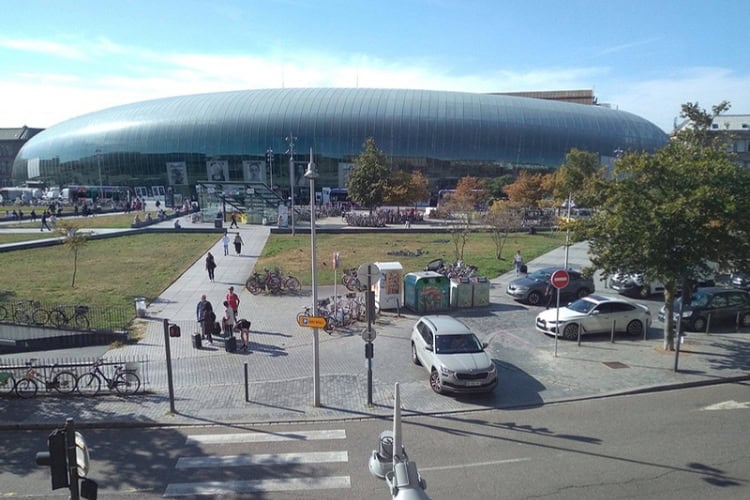
Arriving at Strasbourg by train provides no clue to the beauty and diversity of the city that lies beyond the railway station. The station building itself is distracting. It was built in 1883 with neo-Renaissance influences, but a futuristic, contrasting glass shell was added in 2007 to protect the original façade.
Outside is a vast square where people gather to meet passengers or simply pass time. It leads onto a semicircle of buildings, some of which are hotels and I was pleasantly surprised to see my hotel, Le Grand, among them. I knew it was within walking distance but didn’t realise it would be so close; a real bonus.
Walking across the square, I look back to see the unusual dome-like structure of the railway station. The 120-metre-long shell is made from special safety glass and protects the building without obscuring it (well, it does obscure it a bit from a distance) and gives it a slightly alien appearance.
Strasbourg History And Identity
Strasbourg is the capital of the Alsace region, set on the River Ill in northeastern France, close to the German frontier and at the western edge of the Rhine plain. It has spent much of its history moving between political worlds.
At different times it has been French, German, and French again; its architecture, language, food and civic identity still reflect those shifts. Since the Second World War, another identity has become equally important: Strasbourg as a capital of Europe.
For travellers, this combination makes Strasbourg unusually rewarding. Its historic centre is compact enough to explore on foot, yet the city contains several distinct layers of history.
After checking in I head into the city centre, taking the street just a few paces from my hotel. Walking down it is like entering a portal into another world. Medieval streets lead to a Gothic cathedral, and half-timbered houses line canals in the former working districts.
Grande Île And Cathedral
The best introduction to Strasbourg is made on foot, and that’s how I started, beginning in the Grande Île, the island formed by the branches of the Ill and the Canal du Faux-Rempart. This is the historic heart of the city, connected to the surrounding neighbourhoods by bridges and footbridges.
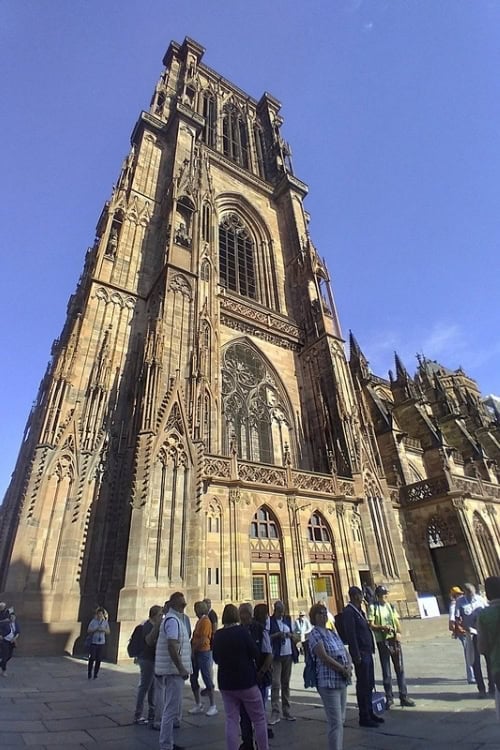
At its centre stands Strasbourg Cathedral, one of the great Gothic buildings of Europe. Built from the distinctive pink sandstone of the Vosges, it rises 142 metres above the surrounding streets. Its single spire gives the city centre its defining vertical landmark, while the elaborate western façade is dense with sculpture.
Construction began in the 12th century and lasted nearly three centuries, a reminder of the scale and patience required to build a medieval cathedral.
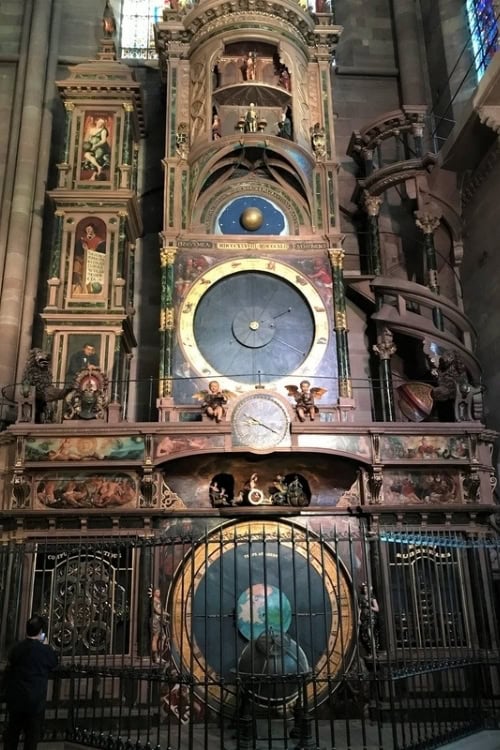
The cathedral deserves more than a quick photograph. Its interior is darker and quieter than the exterior suggests, and details emerge gradually: stained glass, sculpture, carved stone and the astronomical clock.
Immediately around the cathedral are some of Strasbourg’s most historic streets, and the Maison Kammerzell, with its elaborate timbered upper floors and steep roof, is one of the city’s best-known medieval buildings.
Nearby, the Palais Rohan houses important museums, while Place du Château and the surrounding lanes offer a useful sense of how closely the city’s religious, political and commercial life once fitted together.
If you visit, do not rush through this district. Strasbourg is at its most convincing when explored slowly, with time to look above shopfronts and notice the different centuries layered into the streets, or with a private guide who can point them out on a walk that takes in the cathedral, Palais Rohan, Petite France and the Vauban Dam.
Petite France And Waterways
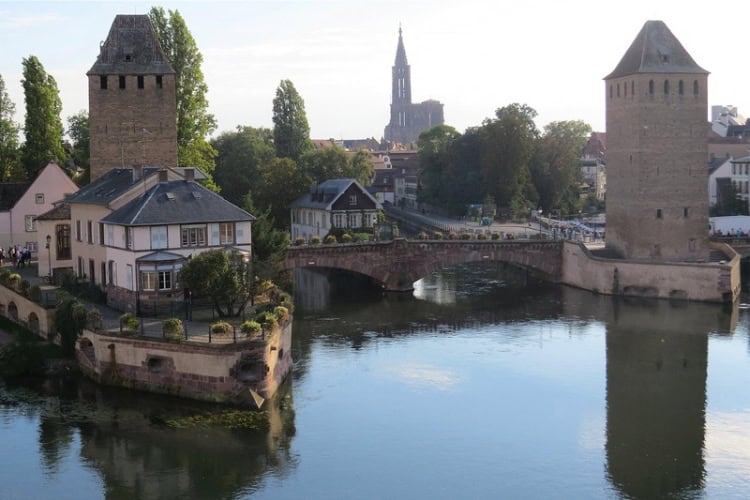
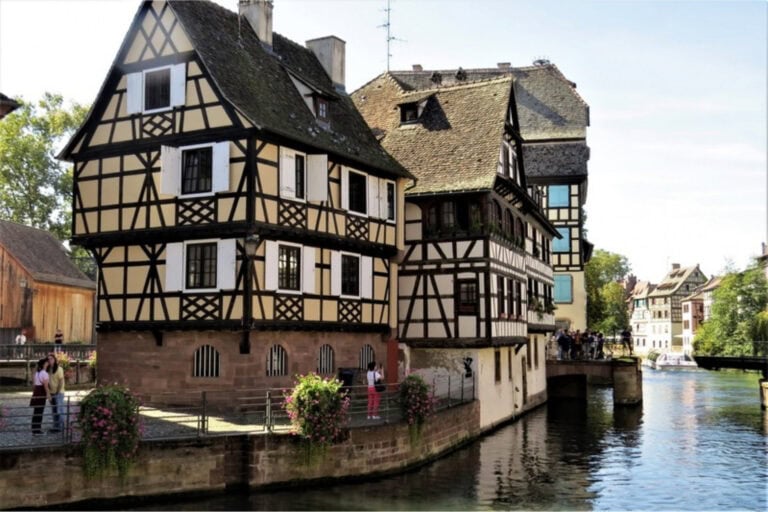
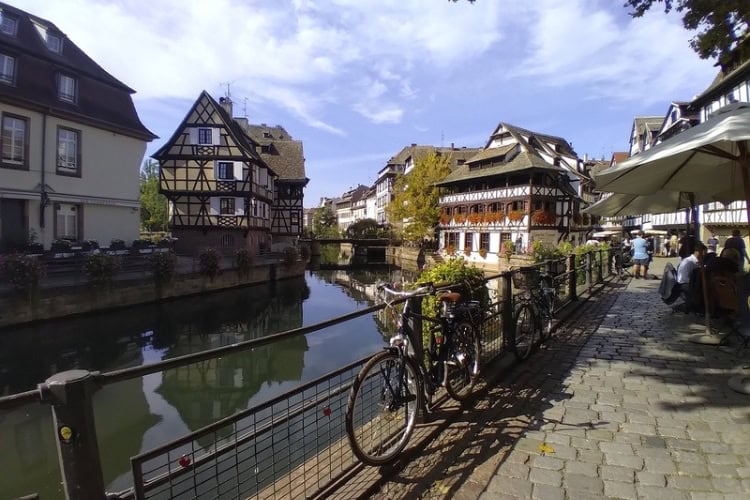
From the cathedral district, I walked west towards Petite France, perhaps the most recognisable quarter of old Strasbourg. Its name is now associated with postcard views, but the district was historically a working neighbourhood inhabited by fishermen, millers and tanners.
The relationship with water is central to its character. Narrow streets follow the canals, while timber-framed houses rise directly beside the waterways. Many date from the 16th and 17th centuries, and the steep roofs contain loft spaces that were once used for drying animal hides.
The most enjoyable way to experience Petite France is simply to wander. The Ponts Couverts, or Covered Bridges, lead towards the Barrage Vauban, a defensive structure built in the 17th century. From the upper terrace of the dam, there is a particularly good view back towards the old city, including the clustered roofs and church towers.
A boat trip offers another useful perspective and so I took one. Batorama is the most popular provider of sightseeing boat tours in Strasbourg, offering a variety of routes along the Ill River to explore the city’s historic and European districts.
Batorama offers several guided tours ranging from 45 minutes to 2 hours. If you’re considering a longer journey on the Rhine, read our Guide to River Cruising.
Neustadt: Another Strasbourg
Cross beyond the old centre and the atmosphere changes. Neustadt, meaning “new town”, was largely created after Strasbourg became part of the German Empire in 1871. Rather than extending the medieval city organically, planners created a spacious district of monumental avenues, gardens and large institutional buildings.
Important buildings include the Palais du Rhin, the National and University Library and the university district. The broad Avenue de la Liberté and surrounding streets are particularly good for seeing the scale of the German urban project.
Walking through Neustadt also helps prevent a common misunderstanding of Strasbourg: its German architectural heritage is not an isolated curiosity but a fundamental part of the city’s modern identity. UNESCO’s decision to include the district in the World Heritage listing (in 2017) alongside the Grande Île (inscribed in 1988) recognises precisely this continuity between different periods of Strasbourg’s history.
European Institutions In Strasbourg
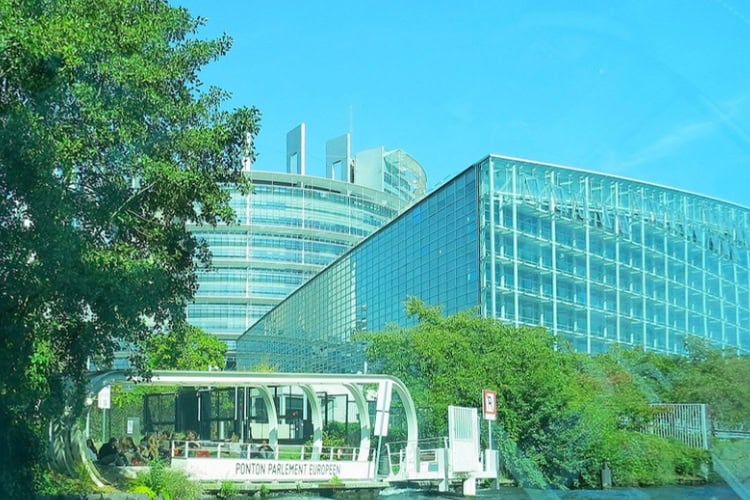
The most distinctive feature of modern Strasbourg is its role as a European city. After centuries in which the region was repeatedly fought over by France and Germany, Strasbourg was deliberately chosen after the Second World War as a place where European cooperation could take root.
The Council of Europe was founded in 1949, and Strasbourg was selected as its seat partly because the city symbolised reconciliation between former enemies. Its first Committee of Ministers meeting took place in Strasbourg in August 1949.
It is important to distinguish the Council of Europe from the European Union. The Council of Europe is a separate international organisation focused on democracy, human rights and the rule of law. It is also home to the European Court of Human Rights, whose Human Rights Building stands in Strasbourg’s European district.
The European Parliament is the other major institution associated with the city. Strasbourg is the Parliament’s official seat, and Members of the European Parliament meet here for plenary sessions.
The Parliament’s present building, inaugurated in 1999, is an enormous glass-and-metal structure beside the Ill. Its curved form contrasts deliberately with the historic architecture of central Strasbourg. Parts of the building are open to the public free of charge.
Museums, Churches, And Everyday Life
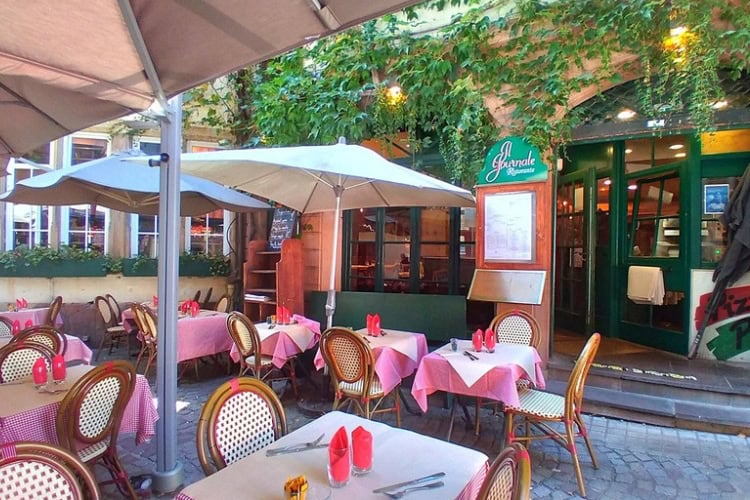
Strasbourg’s major sights can easily dominate a short visit, but the city becomes more rewarding when time is allowed for smaller discoveries.
The Musée de l’Œuvre Notre-Dame, close to the cathedral, explores medieval and early modern art connected with the city’s cathedral and surrounding region. The Musée Alsacien offers insight into traditional domestic life in Alsace. For modern and contemporary art, the Musée d’Art Moderne et Contemporain sits near Petite France.
The churches also tell the story of Strasbourg’s religious divisions. Saint-Thomas, close to Petite France, is one of the city’s most important Protestant churches and contains the monumental tomb of Marshal Maurice de Saxe, designed by the sculptor Jean-Baptiste Pigalle. Saint-Pierre-le-Jeune is notable for its medieval frescoes and cloister.
Then there are the ordinary pleasures of the city: a table in a traditional winstub, a walk beside the Ill, the produce of a local market, or an evening spent around Place Kléber.
Alsatian cuisine reflects Strasbourg’s position between cultures, with dishes such as choucroute, baeckeoffe and tarte flambée sitting alongside French culinary traditions, and this small-group food tour is a relaxed way to try them, with at least four stops that add up to a full meal, including choucroute garnie in a traditional winstub.
Shifting Borders And History
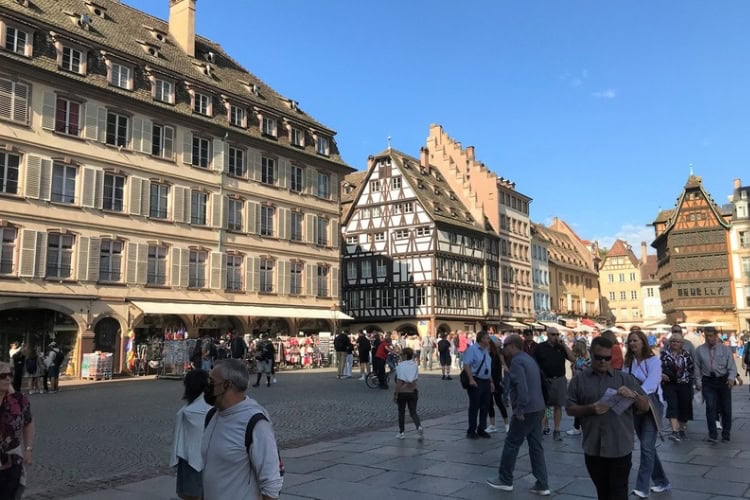
After experiencing all of this, I had to remind myself of Strasbourg’s extraordinary history. It began as the Roman settlement of Argentoratum before developing as an important commercial and religious centre during the Middle Ages.
Later it became an important centre of Protestantism, attracting religious thinkers and printers – in fact the city is closely associated with the history of printing; Johannes Gutenberg lived and worked here during part of his career, and a statue in his honour now stands on the square bearing his name.
Strasbourg became French under Louis XIV in 1681, but its Germanic cultural connections remained strong. The border shifted again after the Franco-Prussian War. Following France’s defeat in 1871, Strasbourg was incorporated into the German Empire and became the capital of the Imperial Territory of Alsace-Lorraine.
After the First World War, Strasbourg returned to France. The Second World War brought another German occupation before the city was liberated in 1944. These changes were not simply matters of government: they affected education, language, architecture and the daily lives of generations of residents.
Strasbourg rewards a traveller who gives it time. A single day is enough to see the cathedral, Petite France and much of the Grande Île, but two or three days allow the city to make more sense. I gave it three days and could easily have stayed longer. I have already made plans to go back in 2027.
If You Go
Getting There
- Strasbourg International Airport (SXB) is the closest international airport, about 10 kilometres west of the city centre.
- High-speed TGV trains run from Paris Gare de l’Est to Strasbourg in under two hours, arriving at a station that’s an easy walk from the old town. Check train times and fares on Rail Europe.
Getting Around
- Strasbourg’s historic centre is compact and best explored on foot. For longer hops, local taxi services include Taxi Strasbourg and Taxi 13.
- To explore the Alsace Wine Route and the villages beyond the city, compare rental cars on Discover Cars.
Where to Stay
Le Grand Hotel by Stay Collection sits at 12 Place de la Gare, just across the square from the station and within walking distance of the old town. Book your stay at Le Grand Hotel on Expedia.
Where to Eat
For traditional Alsatian cuisine, Fink’Stuebel at 26 Rue Finkwiller is a cosy winstub just beyond Petite France, known for generous plates of choucroute and other regional classics. Reserving ahead is a good idea.
Tours and Experiences
- Batorama runs sightseeing cruises on the Ill that loop past Petite France, Neustadt and the European district. Tickets are sold through Batorama’s own website.
- This small-group food tour pairs Alsatian dishes with local wine and beer across at least four stops.
- This half-day Alsace Wine Route tour visits two wineries for tastings of Riesling, gewürztraminer and more, with groups capped at eight and a meeting point on Place de la Gare.
Further Reading
John Man’s The Gutenberg Revolution tells the story of the printer who spent part of his career in Strasbourg and the invention that reshaped Europe.
More Information
Strasbourg on Visit Alsace
Need a hand planning your trip? Here are the sites and services we rely on most, from booking tools to travel products we love.
Inspire your next adventure with our articles below:
- Sweeping Views and Underground History at Luxembourg City’s Bock Promontory and Casemates
- Floating Through France: A Week Aboard a Luxury Barge in the Upper Loire
Author Bio: Barry Barford is a seasoned travel writer and travel industry news reporter, published in both print and digital media. In 2024 he was shortlisted for the AITO Travel Writer of the Year Awards. A dual citizen of Australia and the UK, he is a member of the London-based International Travel Writers Alliance. He lives near Sydney.
Want to discover more hidden gems and helpful travel tips? Join our free newsletter for the latest travel secrets and travel articles.
We are reader-supported and may earn a commission on purchases made through links in this article.

- Strasbourg, France: Gothic Grandeur, Pretty Canals and German Heritage - September 23, 2026
- Why New Zealand’s Coromandel Peninsula Belongs on Your Itinerary: Whitianga and Cathedral Cove by Boat - September 22, 2026
- Galicia, Spain: Coastal Fortresses, Celtic Traditions and the Camino de Santiago - September 22, 2026
Planning another trip soon? ✈️
Add GoWorldTravel.com as a preferred source on Google. Click the button below so our local guides, packing hacks, and hidden-gem itineraries always show up first when you search!
Add to Preferred Sources