
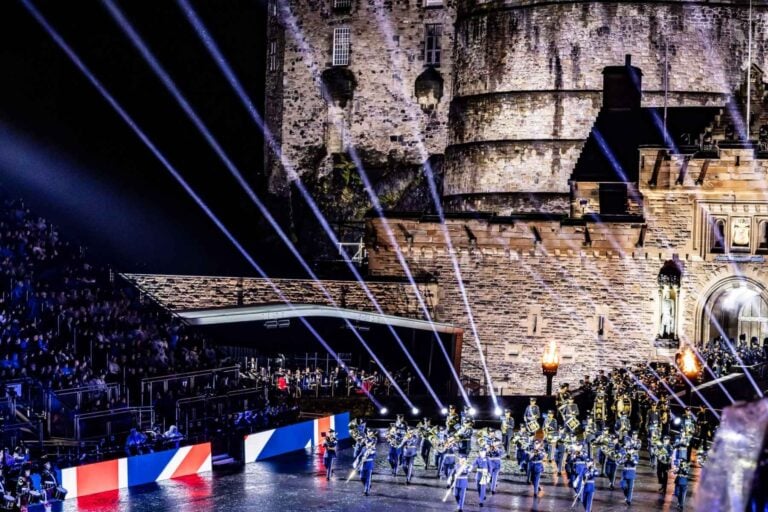
Since the 11th century, Edinburgh Castle has reigned over Scotland’s capital from its perch atop Castle Rock. It has played a prominent role in Scottish history as a royal residence, arsenal, treasury, national archive, mint, prison, military fortress, and home of the Honours of Scotland, the oldest Crown jewels in Britain.
Over two million people visit Edinburgh Castle each year. As they approach the western end of the Royal Mile, they see the castle rising from the Esplanade, which once served as a defensive fortification and a public execution site, and later as a military parade ground.
The Esplanade is no longer needed to defend the castle against invaders, and there are no more public executions. However, it is still a military parade ground—at least during the month of August.
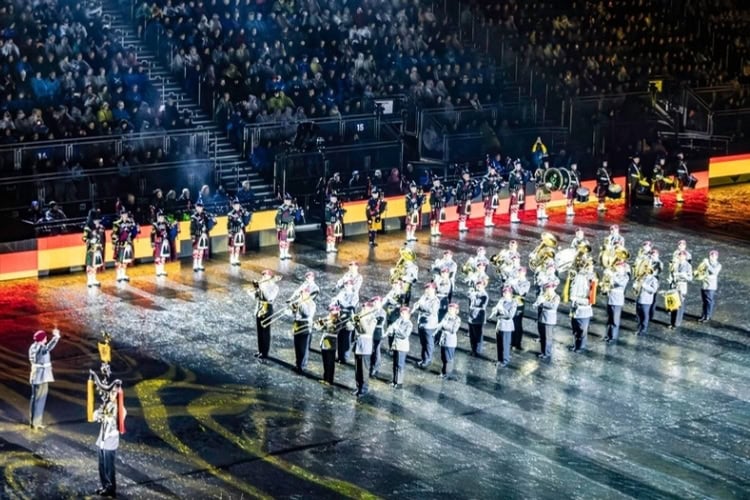
Each August, the Esplanade becomes an outdoor theater for the Royal Edinburgh Military Tattoo, an annual pageant that features marching bands, pipe and drum corps, and music and dance performances highlighted by laser shows and audio/visual effects.
The Royal Edinburgh Military Tattoo originally featured military bands and precision pipe and drum corps from Scotland, and elsewhere in the UK and Ireland. Over the years, it has evolved into a theatrical extravaganza that features musical groups, singers and dancers from all over the world.
What Is the Royal Edinburgh Military Tattoo?
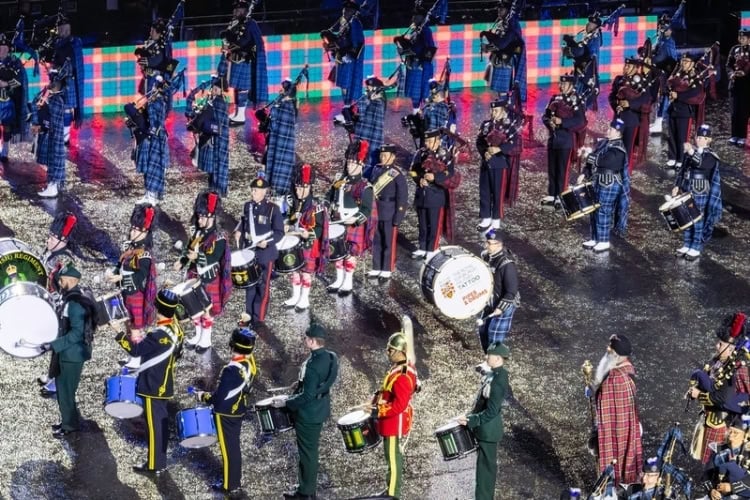
The Royal Edinburgh Military Tattoo has nothing to do with body art. In this context, tattoo is a military term that originated in the 17th century as a bugle or drum call that signaled soldiers to return to their barracks. The name originated from a Dutch phrase “doe en den tap toe,” or “turn off the taps” in English, to signal tavern owners that it was time to stop serving ale to soldiers.
Many countries, including the United States, Japan and the Netherlands, host military tattoo performances. However, the 75-year-old Royal Edinburgh Military Tattoo in Scotland is arguably the most well-known.
World Performances in Edinburgh
Each August, over 225,000 visitors from around the world visit Edinburgh. For many of them, one of the main reasons for visiting Scotland is to see the Royal Edinburgh Military Tattoo. Luckily for them, there are performances every evening and Saturday afternoon, rain or shine.
The Tattoo’s House Band and Dancers
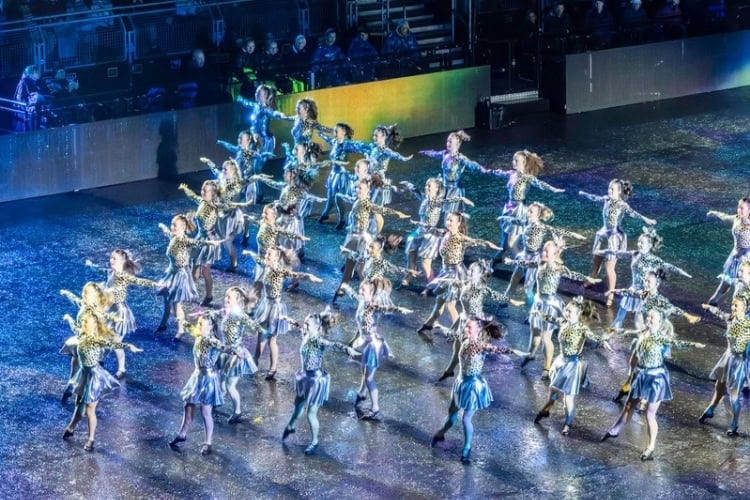
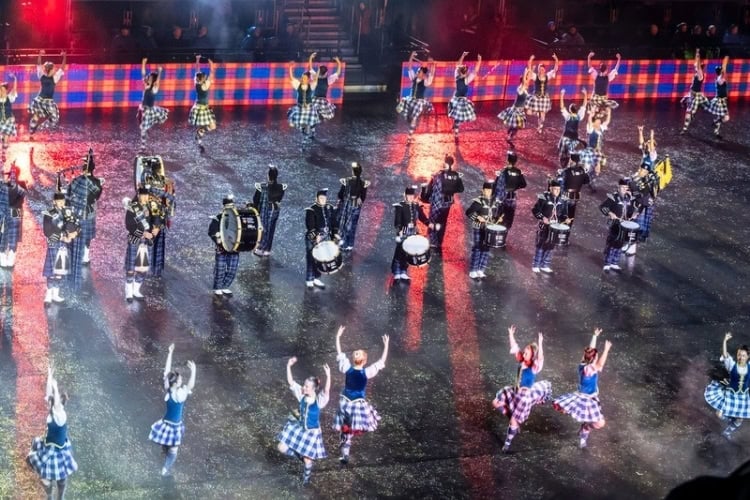
The Royal Edinburgh Military Tattoo Pipes and Drums is the organization’s civilian “house band,” and the Royal Edinburgh Military Tattoo Dancers is its dance troupe. Musicians and dancers worldwide apply and audition hoping to earn the honor and privilege of performing during the annual event.
The Massed Pipes and Drums include international bands invited by the organizers. In past years, the Royal Edinburgh Military Tattoo has featured the Pipes and Drums of the 1st Canadian Highland Battalion, La Fanfare à Cheval de La Garde Républicaine de Paris, The Koninklijke Militaire Kapel (Royal Netherlands Grenadiers) and the Top Secret Drum Corps from Basel, Switzerland.
The 2026 International Lineup
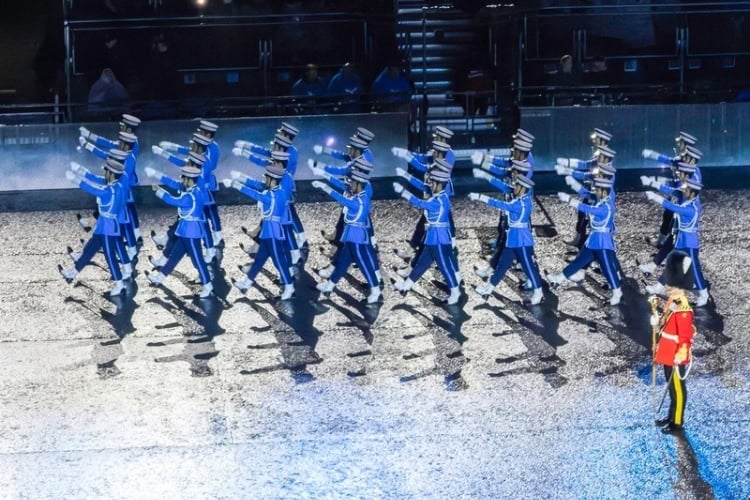
The 2026 Royal Edinburgh Military Tattoo included international performances by the German Army Band Koblenz, New Zealand Army Band, the U.S. Army Field Band and the Qatar Police Academy Band and Drill Team. Groups from the British Isles included the Bugles, Pipes and Drums of the Royal Irish Regiment and the King’s Colour Squadron from the Royal Air Force.
International Performers: Call to Gather
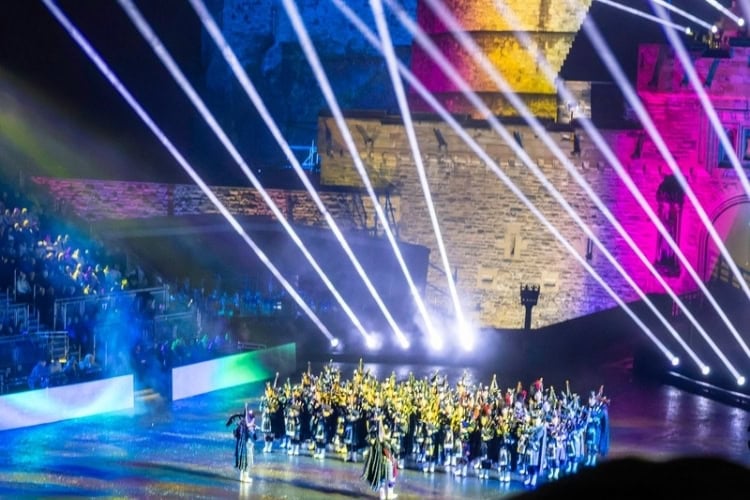
“Call to Gather,” the name and theme of the 2026 Royal Edinburgh Military Tattoo, was inspired by Scotland’s tradition of clans gathering for meetings, celebrations and festivals. For the Royal Edinburgh Military Tattoo, it means assembling global allies, friends and cultures. The name certainly fits because all the performers used traditional and contemporary music and dance to take us on a musical journey around the world.
Pipes, Drums and a Highland Sword Dance
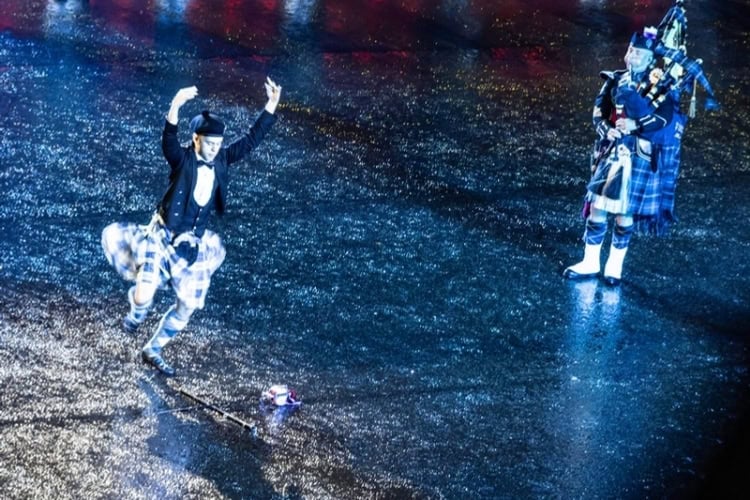
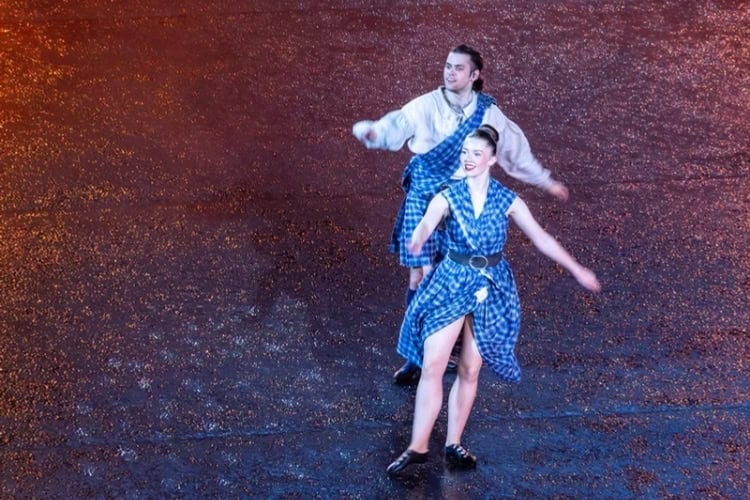
Members of the Royal Edinburgh Military Tattoo Pipes and Drums were decked out in colorful kilts and played traditional favorites like the “Skye Boat Song” and “The Haggis Song.” One of the highlights of their performance was a Highland sword dance where a dancer leaps between two crossed swords without touching or moving them.
Bands From the U.S. and New Zealand
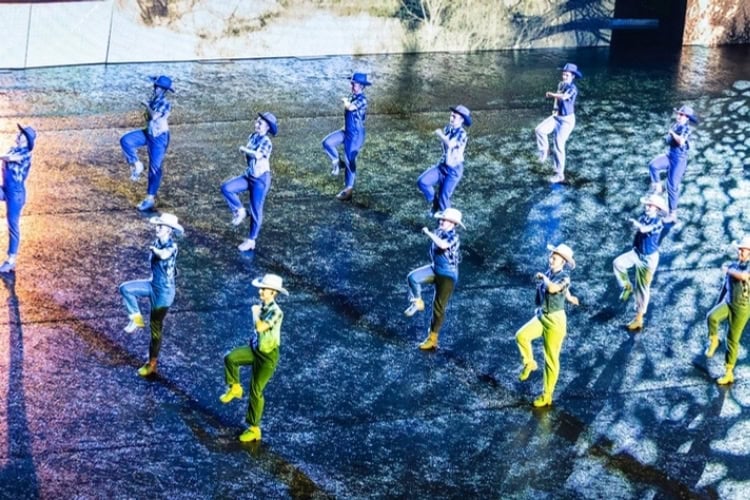
The U.S. Army Field Band’s upbeat performance included Motown favorites like “Ain’t No Mountain High Enough,” a Jackson 5 mix, and a Country Western medley that featured “Rocky Top” and “The Devil Went Down to Georgia,” complete with cowboy hats and boots.
The New Zealand Army Band celebrated Kiwi culture and heritage with a performance that included “Pōkarekare Ana,” a traditional New Zealand love song, “The Wellerman,” a traditional sea shanty, and “Māori Battalion,” a historic tribute that honors fallen soldiers. They ended with an energetic haka, a ceremonial Māori dance, which brought the crowd to its feet.
The Lone Piper and a Fireworks Finale
The last performance at every Royal Edinburgh Military Tattoo is always the Lone Piper. A single bagpiper stands on a rampart at the top of Edinburgh Castle hundreds of feet above the Esplanade. With a spotlight trained on him, he’s silhouetted against the castle as he plays a haunting Scottish lament or military tune.
Several Lone Pipers are selected each year through an audition held by the British Army School of Bagpipe Music and Highland Drumming. In 2026, the honor went to Corporals Mark McWhinnie and Hugh MacKay, Sergeant Joe Davies and Warrant Officer Colin Simpson. All are members of the Royal Regiment of Scotland and took turns performing as the Lone Piper during the 2026 Royal Edinburgh Military Tattoo.
The finale featured the Royal Edinburgh Military Tattoo Pipes and Drums, Royal Edinburgh Military Tattoo Dancers and Massed Pipes and Drums. The international groups and the Royal Edinburgh Military Tattoo Dancers gave short encore performances and marched off the Esplanade. The Royal Edinburgh Military Tattoo Pipes and Drums then took over and ended the night with “Scotland the Brave” accompanied by a fireworks display. We all agreed this was an appropriate tribute to our Scottish hosts and that the Royal Edinburgh Military Tattoo was a performance we will not soon forget.
For more, read The Ghostly Side of Edinburgh: Haunted Castles, Underground Vaults and Murder Sites.
Visitor Tips and Info
Show Times
The Royal Edinburgh Military Tattoo runs for three weeks each August, with performances daily at 9:30 pm and an additional 6:15 pm show on Saturdays. Gates open an hour and a half before the performance, so arrive early to catch a stunning view of Edinburgh Castle at dusk.
Tickets
- Make your travel plans early. Tickets sell out months before the event, and getting specific seats requires planning a year in advance.
- Consider booking a tour of Scotland with a company like Trafalgar, Globus or Collette. They buy blocks of tickets and include the Royal Edinburgh Military Tattoo on all August tour dates.
Where to Stay
August is peak season in Edinburgh, with the Fringe running alongside the Tattoo, so rooms near the castle go quickly. Hotel Indigo Edinburgh Princes Street puts you an easy walk from the Royal Mile and the climb up to the Esplanade, which matters on a night when you’ll be getting there on foot.
What to Wear and Bring
- Dress in layers. Evenings in Edinburgh can be chilly, even in August.
- The show goes on in all kinds of weather, so bring a waterproof jacket or poncho. No umbrellas are allowed.
- Wear comfortable shoes. You’ll be walking uphill and downhill on cobblestone streets to get to and from the Esplanade because no private vehicles are allowed on Castle Hill or the Royal Mile.
- There’s no dress code for general seating, but spectators in the VIP section (Royal Gallery) must wear military dress uniforms, a traditional national outfit such as a kilt, formal evening wear or business attire.
Venue Rules
- Cameras, video recorders and smartphones are welcome, but no flash photography, tripods or monopods.
- Bags and backpacks cannot exceed 11.7 × 16.5 inches (30 × 42 cm).
- No cans or glass containers are allowed, and no bottles over 26 oz (750 ml).
Need a hand planning your trip? Here are the sites and services we rely on most, from booking tools to travel products we love.
Inspire your next adventure with our articles below:
- Beyond London: Why York, England, Belongs on Your Itinerary
- 9 Insider Tips I Wish I’d Known Before My First European Adventure
Author Bio: Marni is a freelance journalist who writes about destination travel, local customs and cultures, and history. She lived all over the U.S., and caught the travel bug when she spent a year in Belgium as an exchange student. She’s a member of the International Food, Wine & Travel Writers Association (IFWTWA) and the Society of American Travel Writers (SATW).
Want to discover more hidden gems and helpful travel tips? Join our free newsletter for the latest travel secrets and travel articles.
We are reader-supported and may earn a commission on purchases made through links in this article.

- The Royal Edinburgh Military Tattoo: Scotland’s Annual Music and Dance Extravaganza - November 8, 2026
- 48 Hours in Maui: Sea Turtles, Mai Tais and the Island’s Best Local Eats - November 8, 2026
- A Week in Auckland: Parnell, Devonport and the Waterfront - November 7, 2026
Planning another trip soon? ✈️
Add GoWorldTravel.com as a preferred source on Google. Click the button below so our local guides, packing hacks, and hidden-gem itineraries always show up first when you search!
Add to Preferred Sources