
Images of camel pullers leading caravans across the Silk Road patchwork of trails sifted through my mind. As early as the 2nd century BC, these ancient convoys, laden with silk, tea, spices and porcelain, lumbered from the Far East to Mediterranean ports to trade their wares.
They encountered environmental hazards: the infamous Hindu Kush, sandstorms, the intense heat of the day and the freezing chill of the night.
Tales of Zoroastrians spreading religion; Alexander the Great, Genghis Khan, and Kublai Khan seeking conquest; and Marco Polo searching for adventure used these same pathways.
Uzbekistan’s Silk Road Origins
Every caravan, traveling west from China and India or east from Persia and Europe, passed through present-day Uzbekistan by necessity. Oases in the Kyzyl-Kum Desert and rivers throughout the region provided places for merchants to stay and water for camels. Replenishment of provisions was also provided.
They developed trading posts along the way, creating a crossroads of culture that began to thrive 2,700 years ago. Over 1,000 miles of the Silk Road still sweep through Uzbekistan. Here, ancient history intertwines with remnants of nearly seven decades of Soviet rule.
A journey to this Central Asian country could make the Silk Road a reality rather than a mirage.
Uzbekistan dropped visa requirements for U.S. citizens in January 2026. As the country marks 35 years of independence from the Soviet Union, it’s eager to welcome travelers. My husband and I jumped at the chance and started our adventure in Tashkent, the capital of Uzbekistan.
Its written history of Silk Road outposts dates back 2,200 years. However, Genghis Khan destroyed the city in 1219, and a massive earthquake in 1966 erased many historical sites.
Tashkent, Capital City Overview
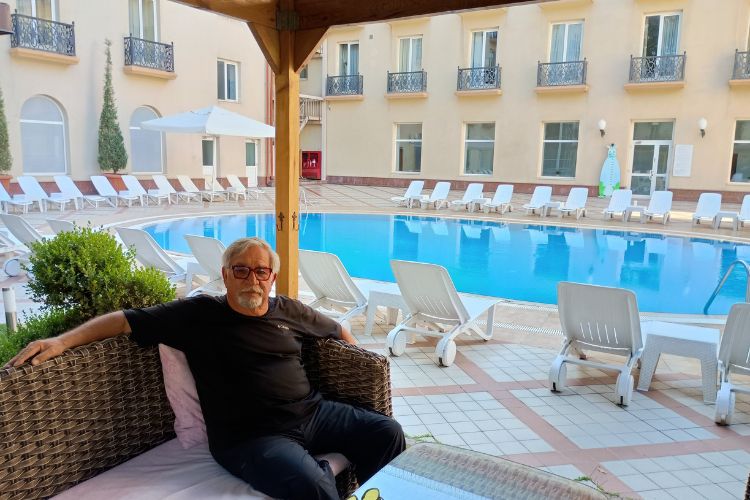
As we taxied from the airport to the Lotte City Palace Hotel, we marveled at the wide, tree-lined boulevards, parks and grassy areas meticulously interspersed among the Soviet-style, boxy apartment blocks.
Sidewalks devoid of litter, orderly traffic patterns, disciplined drivers, and the absence of chaos felt almost contrived. After the earthquake, the Soviet Union rebuilt Tashkent as a model Soviet city, with massive parks, plazas and monuments honoring Russian leaders.
Following its independence, the Uzbeks replaced an imposing statue of Karl Marx with a bronze sculpture of a progressive 14th-century leader, Tamerlane.
Uzbekistan lies within Asia, but it’s not Asian. Roughly 90% of the population practices Islam, but they aren’t Arabs. Plus the architecture, signage and spoken word of elders are Russian, but it’s not Russia.
Post-Soviet Tashkent has a cosmopolitan, optimistic energy expressed by the younger generation. They want interaction with travelers from the Western world. English is catching up fast with the younger generation. High school and university students, even young children, approached us to ask if they could practice their English.
Exploring Old Town Tashkent
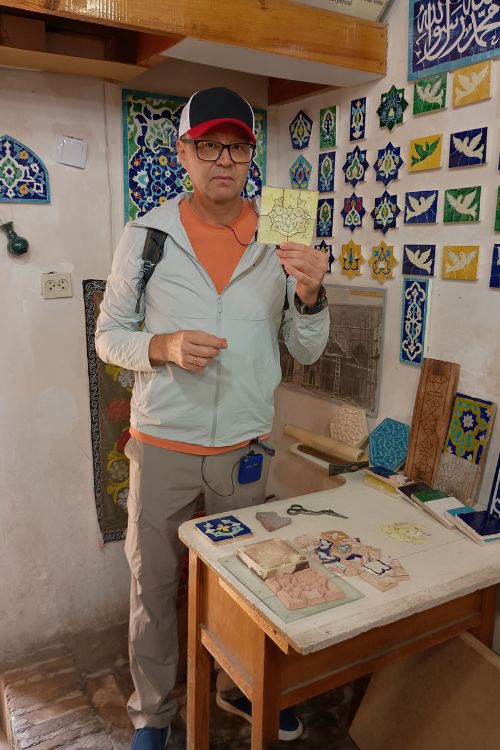
Eleven companions from Overseas Adventure Travel, and our knowledgeable Uzbek guide, Marat, assembled at our base hotel, ready to explore old-town Tashkent.
Scattered modern sites worth a brief visit included Independence Square, symbolizing freedom from the Soviet Union. Also, the Crying Mother’s Monument, honoring 400,000 Uzbek soldiers who died in WWII, and the Earthquake Memorial, remembering thousands left homeless by the 1966 tremor.
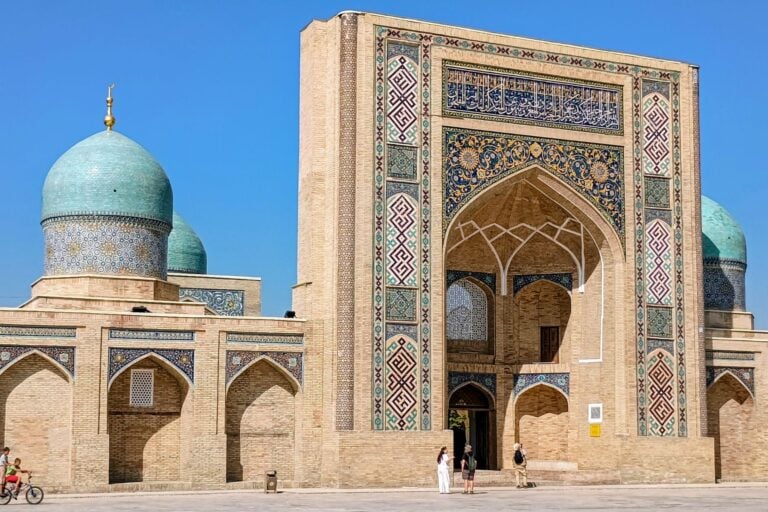
The 16th-century Barak Khan Madrasah provided our first exposure to ancient mosques, mausoleums, and madrasahs prevalent throughout Uzbekistan. Once an Islamic school, it was converted to commercial space for skilled artists.
The aqua-tiled domes glistened in the sun, and azure and gold mosaic entryways reached toward the heavens.
Tashkent Markets And Metro
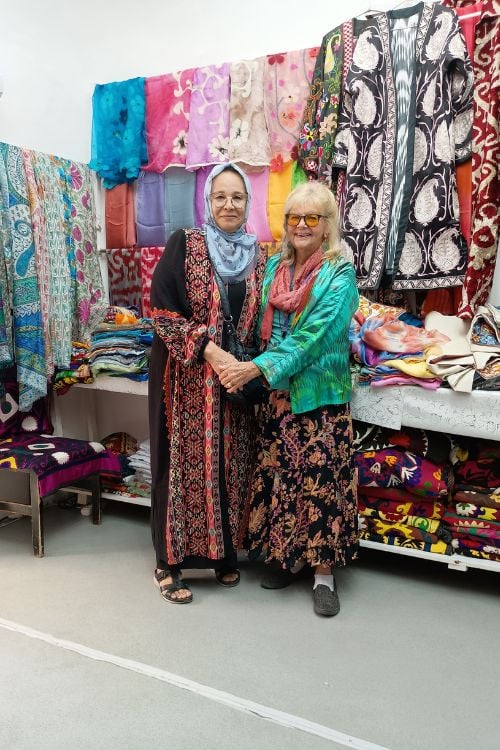
Ubiquitous mulberry trees, the silkworm’s diet, and expert weavers of silk fabric attest to the importance of this art brought from China two millennia ago. At an artisan’s shop, an Uzbek daughter translated for her mother, the creator of ‘must-have’ silk jackets and scarves.
After I made my purchase, they both put their right hand over their hearts as a gesture of genuine gratitude. This simple action used by Uzbeks transcends all languages. So touched, I, too, offered thanks in this manner throughout our journey.
The most authentic experiences in Tashkent involved blending in with the residents. At the famed blue-domed Chorsu Market, with acres of local products under one roof, we bought Uzbek bread rounds baked in a tandoori oven.
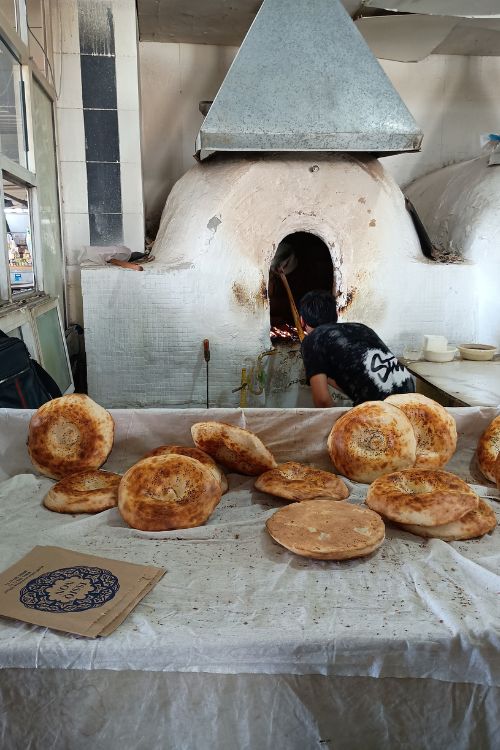
The stalls buzzed with a Russian-Uzbek clash of consonants as vendors negotiated deals. Purchases in hand, we rode the immaculate, graffiti-free Tashkent Metro, the oldest subway in Central Asia.
Stunned that every station mirrored an art gallery, I most admired the tribute to Russian cosmonauts, Yuri Gagarin and Valentina Tereshkova, the first woman to orbit the Earth.
Lunch at Besh Qozon, the Central Asian Plov Center, is not to be missed. Thousands of locals come daily to feast on the national dish, plov. An Uzbek version of paella, cooked exclusively by men, plov combines beef, carrots, onions, garlic, rice and spices in six-foot cauldrons.
Plov is the star and nearly the whole menu, but you might want to request ‘no horse meat.’
On the Road to Samarkand
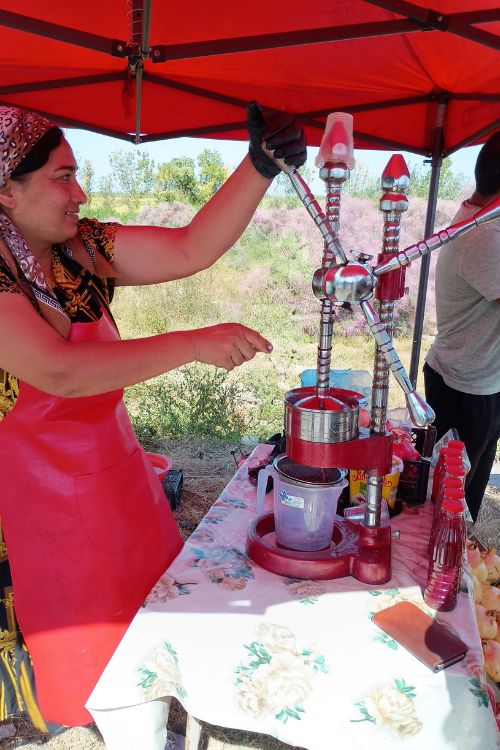
Our six-hour overland adventure across the Silk Road to Samarkand, considered the Center of the Ancient World, offered roadside encounters revealing Uzbek daily life.
We sampled smoked river fish, helped a young couple squeeze fresh pomegranate juice and tasted sweet honeydew at a huge melon auction on the shoulder of the potholed road. I have never seen so many melons in one place at one time.
Because Samarkand dominated commerce and culture early on, Alexander the Great conquered it in 329 BC. Legend holds that the Prophet Muhammad’s cousin brought Islam here in the 7th century. Tamerlane and the rulers who followed him filled the city with mosques and madrasahs from the late 1300s into the 1600s.
Upon arrival in Samarkand, our group spent an entire day visiting one of the world’s great concentrations of Islamic architecture.
Iconic Architecture Of Samarkand
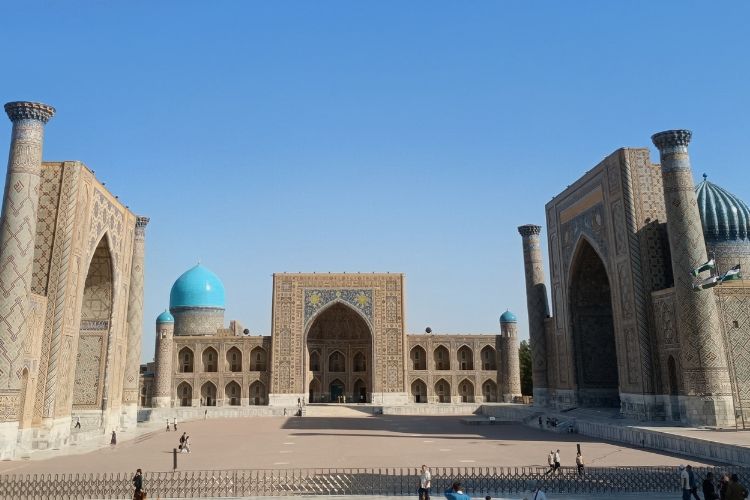
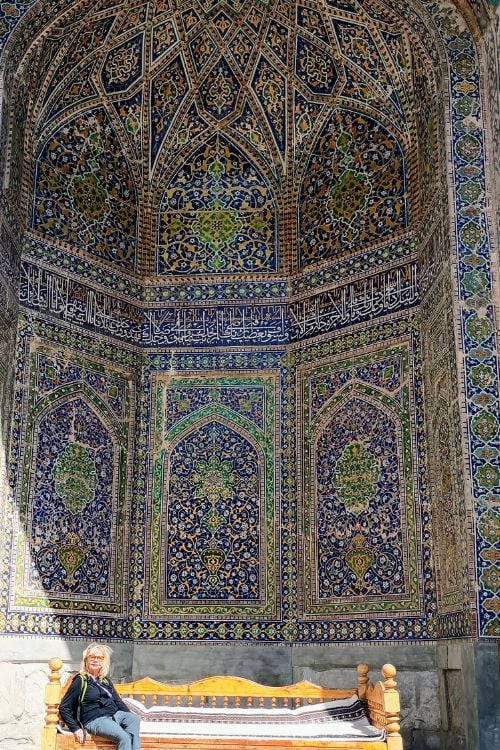
Registan Square, considered the most iconic sight in Central Asia, left me overwhelmed. Three madrasahs, built over two centuries, each with facades of mosaic tiles crafted from turquoise, lapis lazuli, indigo and gold, and flanked by domed, aqua minarets, gleamed in the sunlight.
The construction of these colossal buildings, every inch covered with exhaustive tilework, seemed inconceivable, but there they stood. In the adjoining mosque, I felt mesmerized, unable to turn away from the brilliant interior swathed with intricately carved gold leaf.
A short walk from Registan Square, the Bibi-Khanym Mosque remains the most massive, ornate mosque complex in Central Asia. Although the main mosque is too fragile to enter, the giant dome, exterior tile work and manicured gardens proved worthy of a visit.
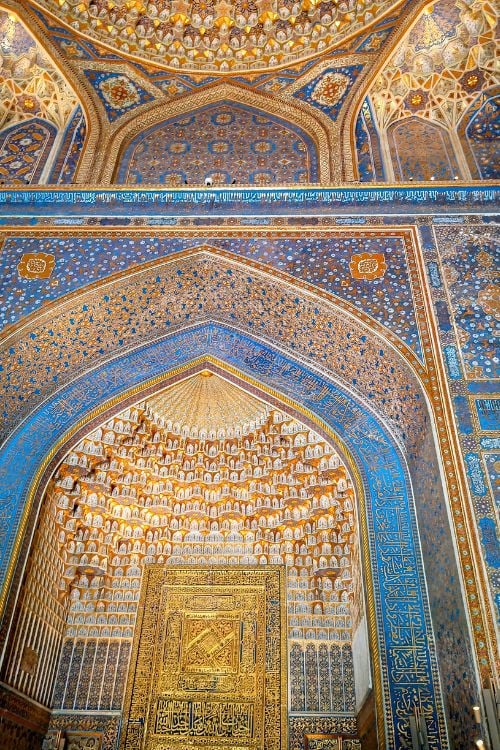
The Islamic architectural gem that seized my attention, the staggering Gur-e-Amir Mausoleum, influenced the Taj Mahal’s design. Tamerlane rests here with his sons, his grandsons and his spiritual teacher.
The main portal, the inner courtyard, the gilded chamber with its tomb markers and the gigantic dome commanded silent reflection.
My husband and I returned at night to witness the magical glow of the illuminated turquoise and gold dome and minarets.
Interacting With The Locals
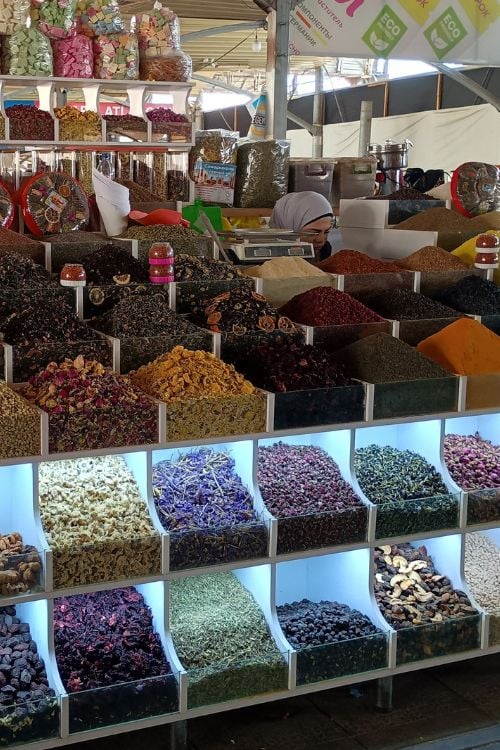
Samarkand’s Siab Bazaar captured unforgettable snapshots of local life. Women buying staples for multi-generational family units maneuvered the tricky maze of merchant stalls, categorized by product.
Following close behind each shopper, men hired to push flat-bed carts, piled high with fruit, vegetables, rice and sweets, zigzagged through the crowded aisles.
Vendors, curious about Western travelers, tempted us to sample dried fruits, nougat candy and dehydrated cheese balls. Smiling faces and hands filled with goodies extended from behind their food stands.
Dinner With a Samarkand Family
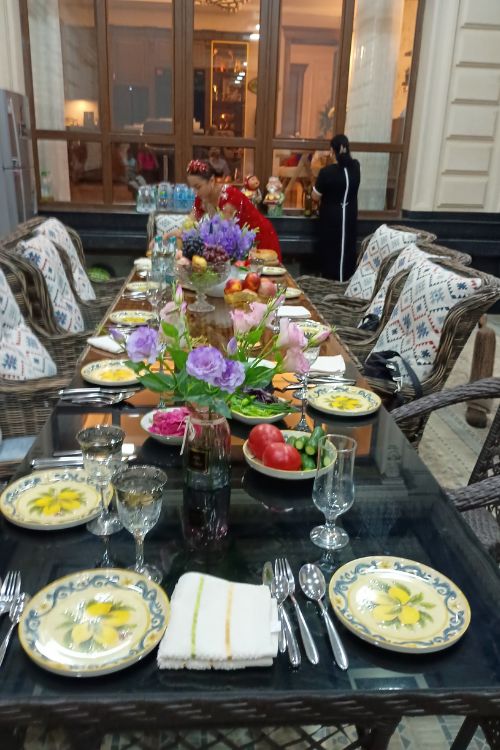
Our final evening in Samarkand unfolded as the most meaningful. Divided into two smaller groups, we were privileged to be dinner guests of local families. My husband and I exchanged wide-eyed glances as our hosts gathered outside their palatial home to welcome us.
Inside, we met the extended household: parents, married children, sisters, and cousins, all living together in opulent surroundings. A young niece studying tourism translated as we shared a meal of Uzbek favorites: dumplings, salads, vegetables, and fruit.
Seated at the head of the table, the father, owning a successful tourist transportation business, brought out a prized bottle of Uzbekistan Premium Vodka. He demonstrated the proper way to throw back the strong spirit and the merriment increased as he refilled our shot glasses.
We learned about the tradition of Uzbek families living together. With keen interest, we discussed the recent marriage of their Christian son and his beautiful Muslim wife.
After an evening filled with camaraderie, strangers became friends, and warm hugs remained our parting memories of Samarkand.
Need a hand planning your trip? Here are the sites and services we rely on most, from booking tools to travel products we love.
Inspire your next adventure with our articles below:
- Bukhara, Uzbekistan: The Silk Road City Where History and Art Thrive
- Kyrgyzstan’s Last Hidden Valley: Why Jyrgalan Is Central Asia’s Best-Kept Hiking Secret
Author Bio: Carol has taught English to Mexican adults and disadvantaged local children for the past 20 years. She writes for local, international, online, and print publications. Using her adventures to over 120 countries, she has captured a niche in travel writing, and her stories have been featured in Go World Travel Magazine. A frequent contributor to El Ojo del Lago, the largest distribution English magazine in Mexico, she’s won several literary awards from that publication. Her psychiatric field work netted a contribution to the anthology, Tales from the Couch. Recently she has also been featured in two more anthologies, Insider’s Guide to the Best of Mexican Holidays, and Bravados, Life, Love and Living in Lake Chapala, Mexico, all available on amazon.com.
Want to discover more hidden gems and helpful travel tips? Join our free newsletter for the latest travel secrets and travel articles.
We are reader-supported and may earn a commission on purchases made through links in this article.

- A Weekend in Cambará do Sul: Hiking Brazil’s Itaimbezinho and Fortaleza Canyons - October 26, 2026
- Uzbekistan’s Silk Road Cities: From Tashkent’s Markets to Samarkand’s Registan - October 26, 2026
- Lost in the Fjords: Finding Myself Through Her Eyes - October 26, 2026
Planning another trip soon? ✈️
Add GoWorldTravel.com as a preferred source on Google. Click the button below so our local guides, packing hacks, and hidden-gem itineraries always show up first when you search!
Add to Preferred Sources