
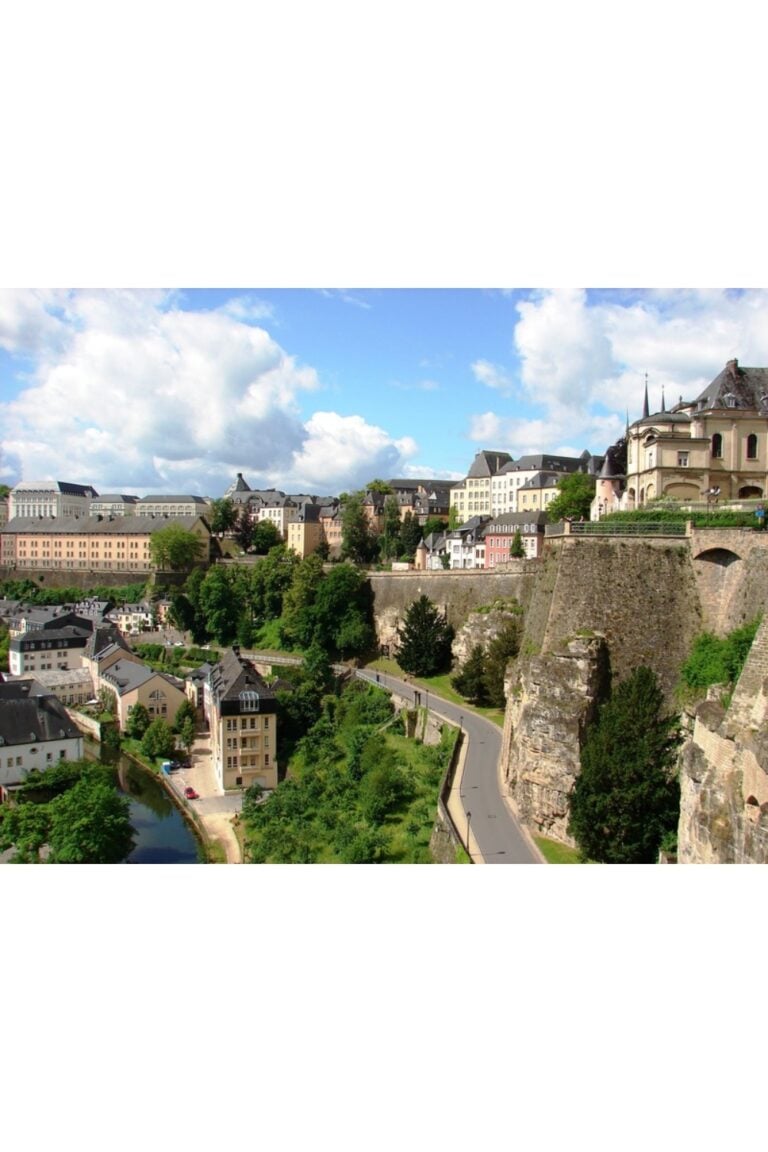
My visit to Luxembourg was full of awesome surprises and spectacular sights. It was my first encounter with this little gem that’s located right in the heart of Europe and bordered by France, Belgium and Germany.
The City and Its Wonders
Luxembourg City is like something out of a fairy tale, with its castle ruins and its many eye-popping turrets, towers and fortifications.
My favorite attraction of all was located in the northeast corner of the capital city’s old historical district. It’s here that I marveled at the Bock Promontory and its incredible network of tunnels.
The Bock Promontory
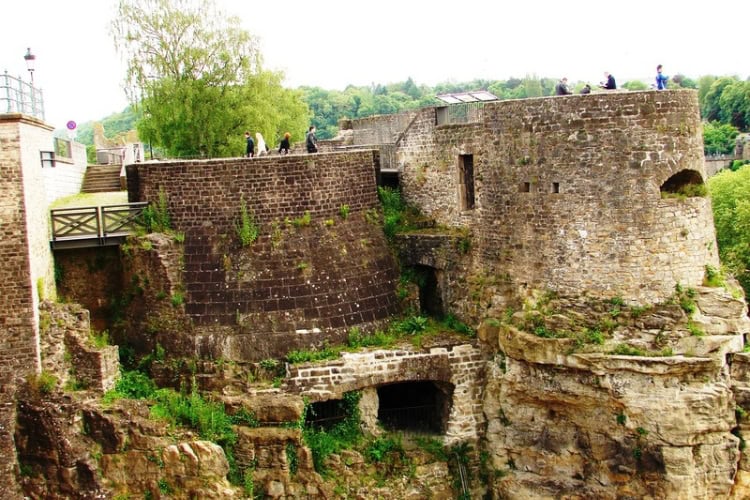
The Bock Promontory is a massive rock ledge that towers high above the Alzette River valley. It serves as a natural fortification and offers spectacular views of the surrounding area.
It was here, way back in 963, that Count Siegfried decided to build a castle. He named it “Lucilinburhuc” (“small fortification”), thus founding what has become Luxembourg. This promontory is often referred to as “the cradle of the city.”
Fortifications and Tunnels Added
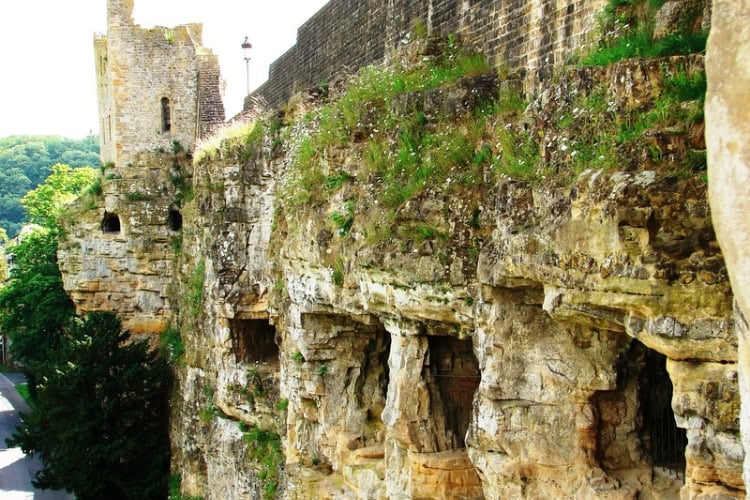
As the years passed, the castle and the surrounding town that grew here were strengthened by the addition of more fortifications, walls and gates. It eventually became known as the “Gibraltar of the North.”
A series of tunnels was also added, beginning in the 17th century (under Spanish domination). Later, these casemates were enlarged and expanded into an extraordinary 23-km-long network, with huge galleries, strategic lookout points and cannon loopholes. There was also a complex underground infrastructure that housed defenders, along with their horses, supplies, artillery and equipment.
However, under the terms of a treaty signed in 1867, Luxembourg had to demolish these fortifications. Most of the surface fortifications were destroyed, but many of the casemates remained intact.
If fortified old towns appeal to you, consider exploring Dubrovnik’s Old Town.
Touring the Casemates
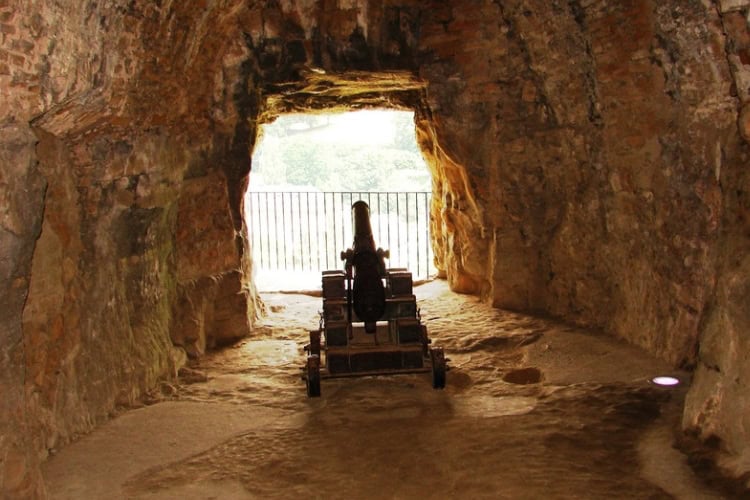
By 1933, these casemates were opened to the public. They were also used as a bomb shelter during WWII, and were declared a UNESCO World Heritage Site in 1994. Today, visitors can take tours through this incredible labyrinth of underground tunnels (from the end of March until the end of October).
I, of course, took this tour, and I found it fascinating. Only about 10% of the old fortifications remain, but those mammoth tunnels that are carved into the rocky precipice are quite the experience.
Many of the former loopholes, used as emplacements for the cannons that were brought into these casemates, are now closed up. However, there’s still quite a network of tunnels, chambers and balconies.
It’s possible to get somewhat disoriented and spend quite some time trying to find one’s way out of here, perhaps a bit like an insect wandering about in Swiss cheese.
If you’d like to explore at your own pace, a self-guided audio tour through the Old Town and Casemates covers the Bock, the Corniche and Neumünster Abbey with narrated stops along the way.
The Impressive Castle Bridge
Stairs led me down to a huge archaeological crypt where wall plates gave me an overview of the fortification’s history. More stairs took me down through the dungeons of Siegfried’s old castle.
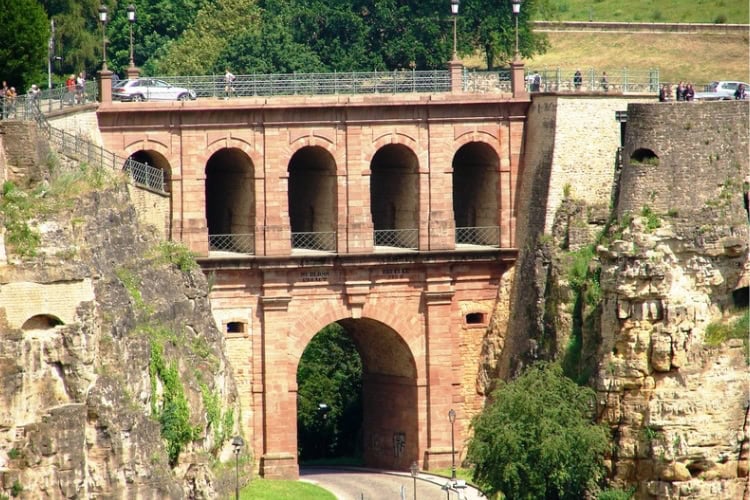
I was particularly fascinated by my visit to the Castle Bridge. It was built in the 18th century by the Austrians and connected the Bock fortifications to the Old Town.
I found that there were several ways to cross this bridge, including a spiral staircase up through the main arch, a passageway via the four upper arches, a tunnel under the road at the bottom and also a road over the top.
A Pedestrian Promenade
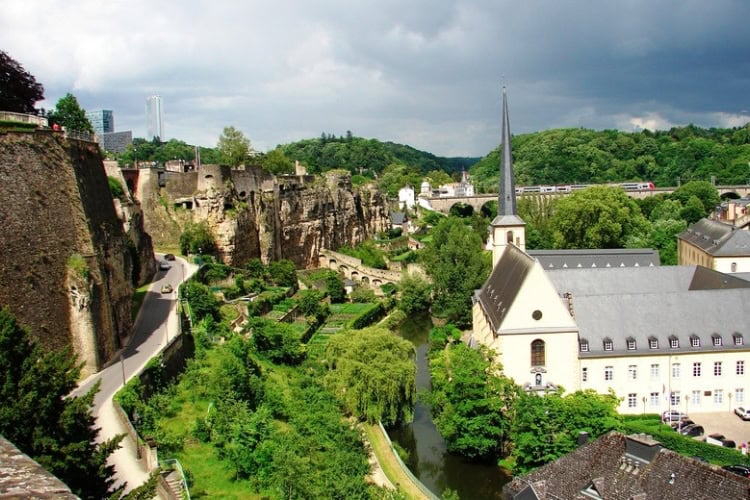
The most awesome view of the promontory and tunnel loopholes was from the Corniche. This pedestrian promenade is often referred to as “Europe’s most beautiful balcony.”
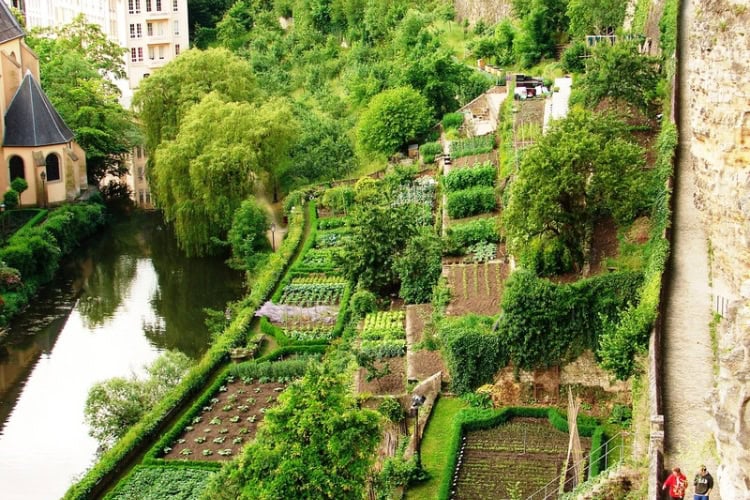
From here, up on the escarpment, I could also see into the valley far below, with its winding, gentle river. Dominating the scene was the Neumünster Abbey, which once housed Benedictine monks. Later it served as both a hospital and a prison, and now is a cultural meeting place.
Also in view were its still-maintained convent gardens, its small footbridge (“Stierchen”) and its distant railroad trestle that towers over the valley.
For another dramatic setting framed by medieval walls, read our article on the Bay of Kotor.
The Wenzel Walk
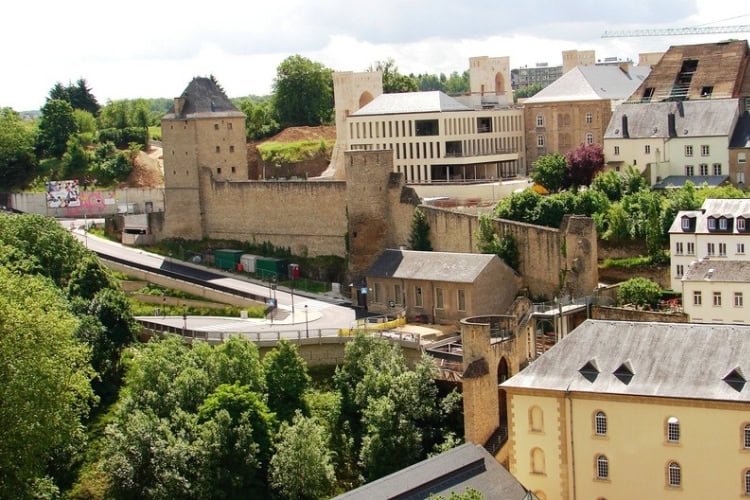
I also partook in the “Wenzel Walk,” which guided me through the history of the city. This particular walk is named after Wenceslas II, the Duke of Luxembourg between 1383 and 1419.
During this time, a third wall (the Wenzel Wall) was added to the fortifications. A section of this amazing structure still exists today.
This particular wall had 37 towers and 15 gates, and it linked Upper Town and the Rham Plateau. Archaeologists have discovered that a moat once existed in front of this wall. I passed the Grund Gate, a bastioned gate built by the Spaniards in 1632, and descended into the river valley itself.
I eventually ascended a staircase and arrived at the Second Gate of Trier (built in 1590). Later, I arrived at another old city gate, Biesserpuert, and the Grund Lock (which constituted yet another obstacle for attacking troops, for the city’s two rivers could then be dammed up).
I completed this circular walk by again ascending out of the valley and arriving at the Holy Ghost Plateau, which was inhabited by a cloister of nuns back in the 13th century.
A Guided Tour
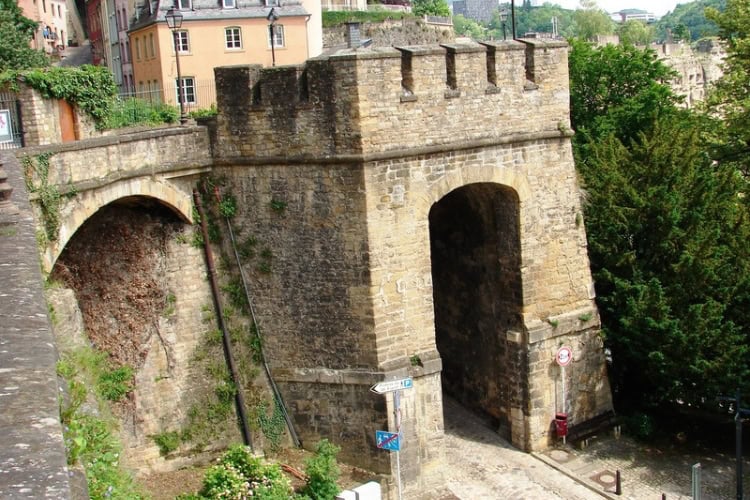
Guided tours of this Wenzel Walk are available for a fee. You’ll stroll about 5 km in a couple of hours and cover about a thousand years of Luxembourg history. The tour will also provide you with spectacular views of this beautiful city, including its not-to-be-missed Bock Promontory and casemates.
Need a hand planning your trip? Here are the sites and services we rely on most, from booking tools to travel products we love.
Inspire your next adventure with our articles below:
- A Guide to Berlin’s Most Significant and Moving Historic Landmarks
- 17 Enchanting Villages in France That Feel Like a Fairy Tale
Author Bio: John is a freelance travel writer and photographer who enjoys travelling the world and writing about his adventures. He has written weekly travel features for a group of community newspapers, presented several travelogues, and is the author of two major cycling books: “Cycling Canada” and “Cycling the USA” .
Want to discover more hidden gems and helpful travel tips? Join our free newsletter for the latest travel secrets and travel articles.
We are reader-supported and may earn a commission on purchases made through links in this article.

- Darwin, Australia’s Northernmost Capital, Combines Vibrant Markets, Waterfront Life and Access to Kakadu and Litchfield - October 11, 2026
- The Ghostly Side of Edinburgh: Haunted Castles, Underground Vaults and Murder Sites - October 11, 2026
- A Quest for the Best Frango Assado in Portugal’s Algarve - October 10, 2026
Planning another trip soon? ✈️
Add GoWorldTravel.com as a preferred source on Google. Click the button below so our local guides, packing hacks, and hidden-gem itineraries always show up first when you search!
Add to Preferred Sources