
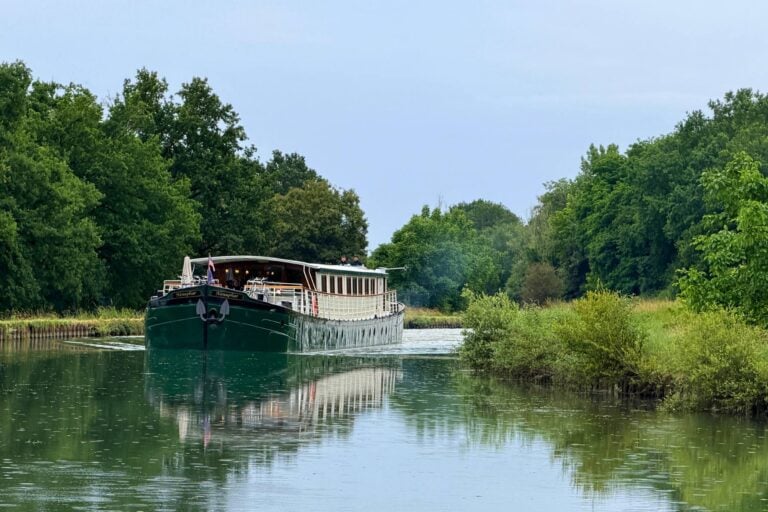
The first thing I notice isn’t the scenery at all. It’s the quiet. No engine roar, no crowds, just water lapping against the hull.
Two days ago, Ben and I were dodging tour groups in Paris. This morning, the loudest thing I’ve heard is the song of birds.
I’m on the deck of the Nenuphar, coffee in hand, watching France drift by at the pace of a walk, past farmhouses with shutters still closed against the morning and a horse leaning out of its stable window as if to see who’s passing. A lock is waiting for us up ahead, and we won’t get there for another hour. Nobody on this boat is in a hurry.
This is slow travel at its best. You can walk faster than the boat sails, and more than once, I do.
My husband, Ben, and I are here for a weeklong cruise with French Country Waterways, an American-owned luxury barge company in France. We knew almost nothing about hotel barging before we arrived. By the end of the first day, we understood exactly why guests keep coming back.
A Working Barge with a New Life
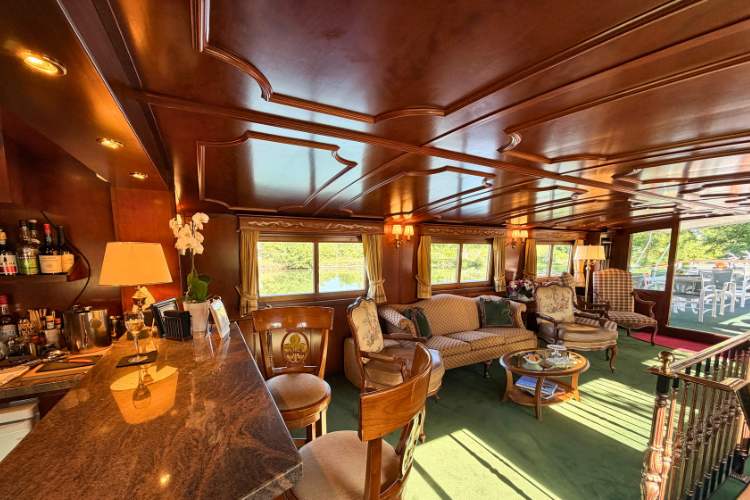
Our home for the week is the Nenuphar, a refurbished 12-passenger barge with six spacious cabins, a salon with comfy chairs, a bar, a bookcase filled with books, and a dining room built for long, unhurried meals.
The Nenuphar began its life in 1928 as a commercial barge, hauling goods along France’s canal system, much of which dates back to 1604, when the canals were built to bring commerce to Paris.
French Country Waterways bought the barge in the late 1970s and converted her into a 16-passenger vessel. In 2007, the company reconfigured her again, this time into the 12-passenger boat we sailed on.
The cabins are roomy, with king beds, good-size bathrooms, Wi-Fi, air conditioning, and portholes. Housekeeping changes the towels so often that we joke about a “towel ferry” running back and forth to our room. Eight three-speed bikes sit on deck, ready whenever you want to pedal ahead of the boat and meet it a lock or two down the canal.
Who Is French Country Waterways?
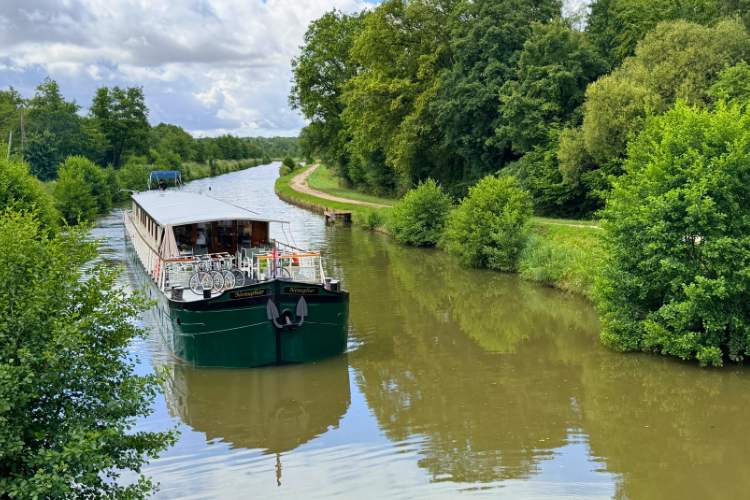
French Country Waterways is the only American-owned and operated luxury barge company in France, and it has been running these six-night sailings since the mid-1970s. The company is still family-owned, based in Duxbury, Massachusetts, and operates four barges across four distinct regions of France: Burgundy’s Côte d’Or, Champagne, Alsace-Lorraine, and the Upper Loire Valley, where we sailed. Guests choose their cruise based on the region and its character as much as the boat itself.
What sets it apart is how much is built into the price. Private tours and wine tastings, a dinner ashore at a Michelin-starred restaurant, premier wines, private motorcoach transfers, and a crew fluent in both English and French are all part of every sailing, not an upsell.
Guests can also book the barges as full charters for up to 12 people, which is how many multi-generational family trips end up here. Sailings run April through October, and the high rate of repeat guests, some coming back a dozen times or more, says as much about the company as anything in its brochure. Captain Sam told us about one couple who have sailed with French Country Waterways 13 times.
Ten Strangers, One Table
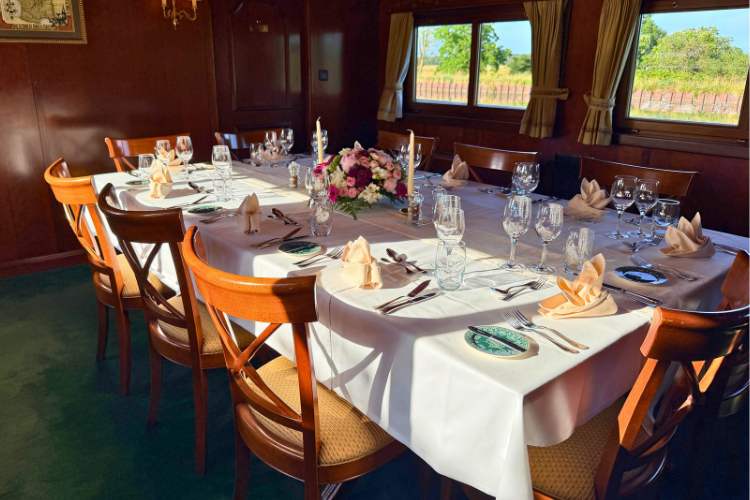
There were 10 guests aboard our sailing, ranging in age from their 40s to their mid-80s. At first, we looked at each other and wondered what we would possibly have in common. At dinner on our first night, that question answered itself.
One of our fellow passengers, Pam, suggested an icebreaker: come up with an adjective for yourself that starts with the same letter as your first name. It sounded simple, but it worked, and by the second day we all knew each other’s names and were trading stories like old friends. Our meals together all week were filled with laughter and fun stories, like any dinner with friends.
Everything Homemade, Everything Local
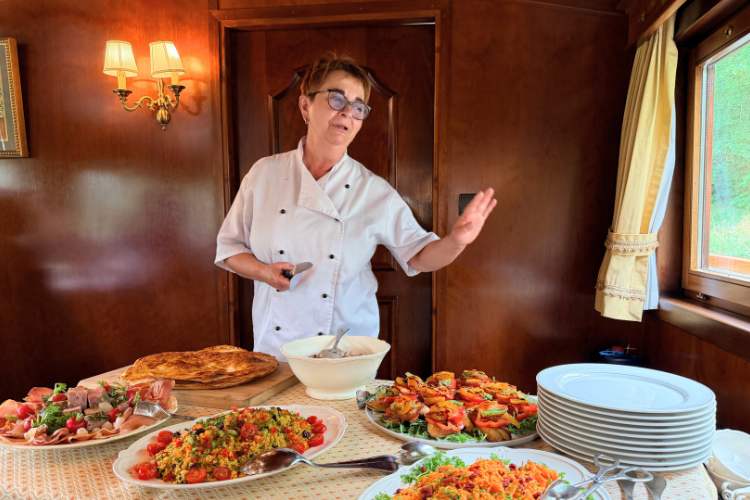
The food on French Country Waterways barges is traditional French cuisine. Everything is made from scratch onboard or sourced from nearby villages: bread and croissants baked fresh every morning, and produce, cheese, meat, and fish delivered daily from the region the boat happens to be passing through that week.
Our chef, Corinne, created masterpieces at each meal. She’s been cooking since she was a kid, taught by her parents, who ran their own restaurant, and she started cooking professionally on the barges in the early 1990s.
Watching her food come out night after night, it’s clear this isn’t recipe-card French cooking. It’s family cooking, just served with white tablecloths.
Cheese in France, I’ve decided, is a religion. Every lunch and dinner came with its own cheese course, and by the end of the week we had worked our way through about 30 different local cheeses, each tied to the region we happened to be cruising through that day.
Our Captain’s Dinner in Montargis on the last night gives a good sense of what a meal on board looked like: a trio of foie gras, morilles façon Guy, a beef filet in bourguignon sauce with gratin dauphinois, the cheese course, and a white chocolate délice to finish, paired with a Hermitage Chante Alouette 2021, a Meursault-Charmes 2019 Premier Cru, and a Corton Clos du Roi 2021 Grand Cru. That’s not an unusual night on board. That’s just dinner.
Wine Is the Point, Not Just the Pairing
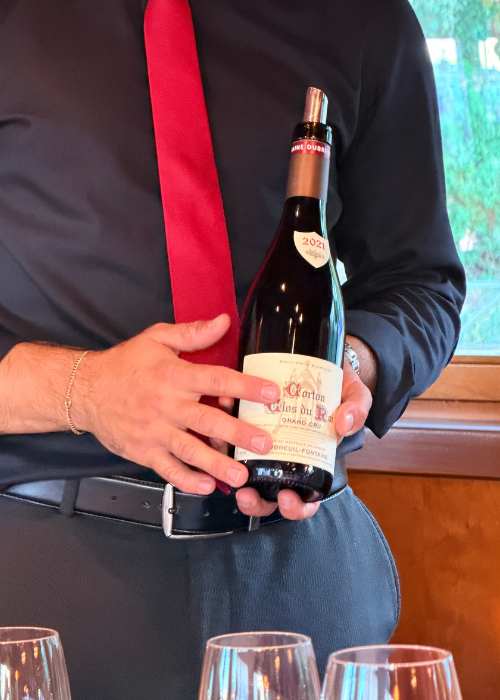
Wine isn’t an afterthought on this cruise. It’s woven into the region itself, and French Country Waterways treats it that way. Wine is poured at both lunch and dinner, always a red and a white, and always something local and genuinely good.
Over the week, we worked through a 2023 Mâcon-Fuissé “Hauts de Fuissé” from Pierre Vessigaud, a crisp Chablis 1er Cru “Les Montmains” from Domaine Vocoret & Fils, a 2021 Rully 1er Cru “Les Cloux” and a 2022 Bouzeron “Cuvée Axelle,” both from Domaine Michel Briday, a 2016 Alsace Riesling Grand Cru Kirchberg de Ribeauville from Louis Sipp, and a 2022 Sancerre Grande Réserve from Henri Bourgeois, the same producer whose cellars we toured earlier in the week. And that’s just a few of them.
It’s a lot of wine to get through in six days, but that’s rather the point. Each bottle is chosen to match wherever the barge happens to be that day.
Life on the Canal
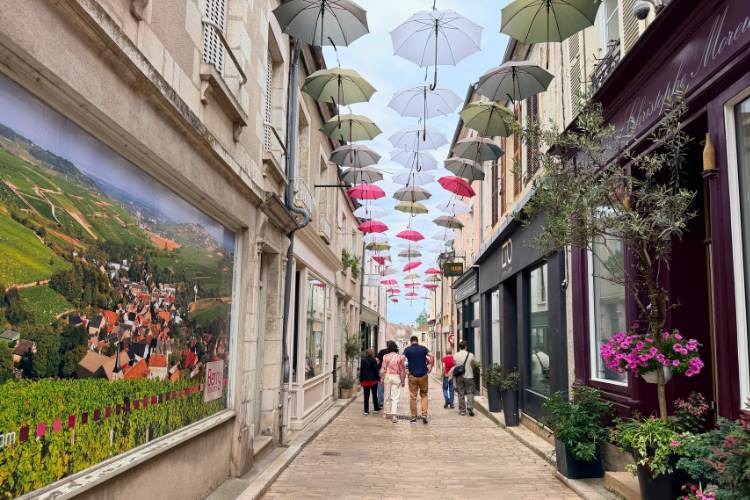
Between meals, there’s a whole region to see. Some days bring us ashore for a couple of hours. Others, we barely leave the deck at all, just watching the countryside go by. Either way, the days on this cruise take shape around wherever the barge is sailing.
Cruising the Briare Canal
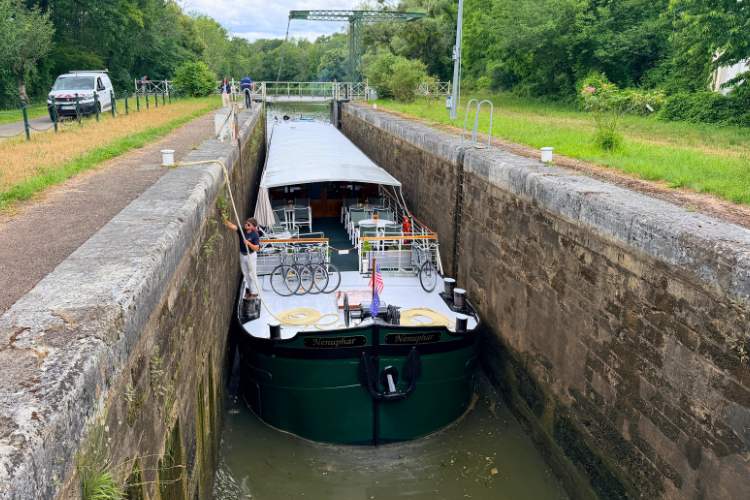
We cruised through the Briare Canal valley, engineered in the early 1600s and still used exactly as designed. At one point we crossed the Pont Canal de Briare, a canal bridge that carries boats directly over the Loire River, designed by Gustave Eiffel.
We passed small villages, and the birds sang loudly all day long in the tall trees lining the canal. Fields of corn and alfalfa rolled by on rich, dark soil. At the locks, our 12-passenger barge fit through with only a few inches to spare on either side, which is its own small thrill to watch from the deck.
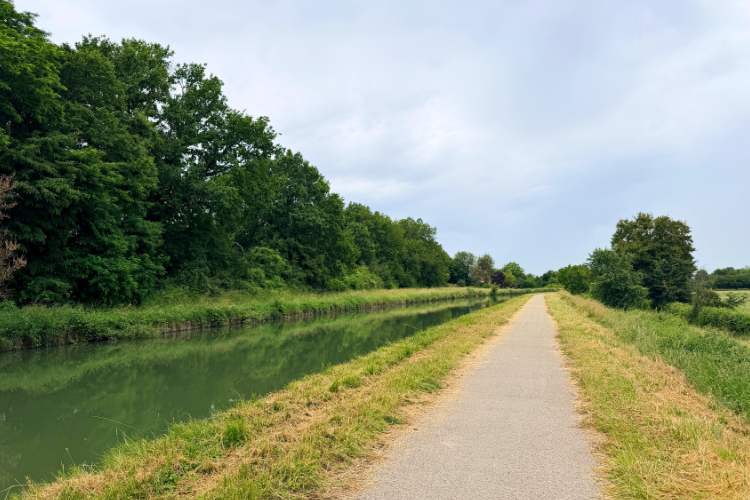
Some afternoons we got off the boat entirely. I often rode one of the onboard bikes along a flat, easy path bordered by forest. Other times, Ben and I preferred to walk instead, keeping pace with the barge along the towpath. Either way, you’re never far from the boat, and the crew always knows exactly where to pick you up.
Wine Tasting in Sancerre
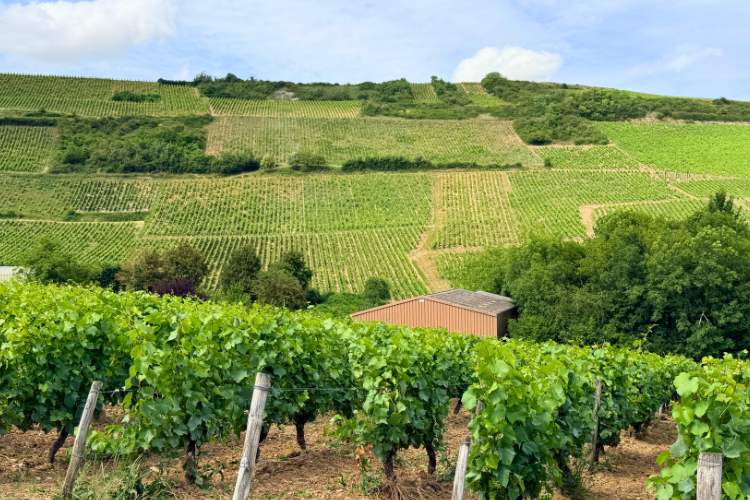
One afternoon, we took a trip to Sancerre, a town of just 1,300 people, for a private tour and wine tasting at Henri Bourgeois, a family-owned winery.
Visiting a region I had only ever heard about and experienced through its wines was fascinating. Our guide, Emily, explained that the property exports 70 percent of its wine, much of it to the United States.
The vines here can’t be irrigated, so their roots dig deep into rocky, clay- and flint-streaked soil in search of water, which is part of what gives Sancerre its distinct minerality.
La Grange Manufacture Tonnellerie
One morning, we visited La Grange Manufacture Tonnellerie, a cooperage where we watched artisans make oak barrels the same way they have for centuries, using techniques passed down through generations. It’s slow, physical, exacting work: fire, steam, and hand tools.
The Faïencerie de Gien
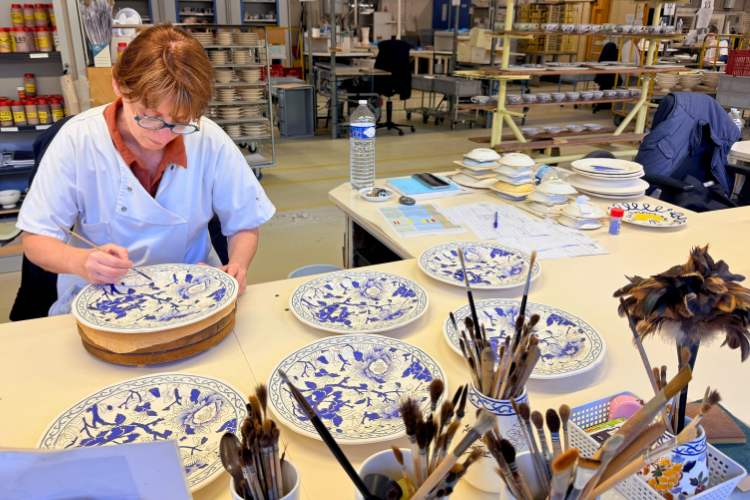
Another day brought us to the Faïencerie de Gien, a porcelain factory founded in 1821 that still hand-produces the fine glazed earthenware for which France has been known since the 18th century.
Sabine, our French Country Waterways onboard guide, gave us an excellent tour. I bought two small dishes to bring home, a fun little memory of our time in France.
Château de Sully-sur-Loire
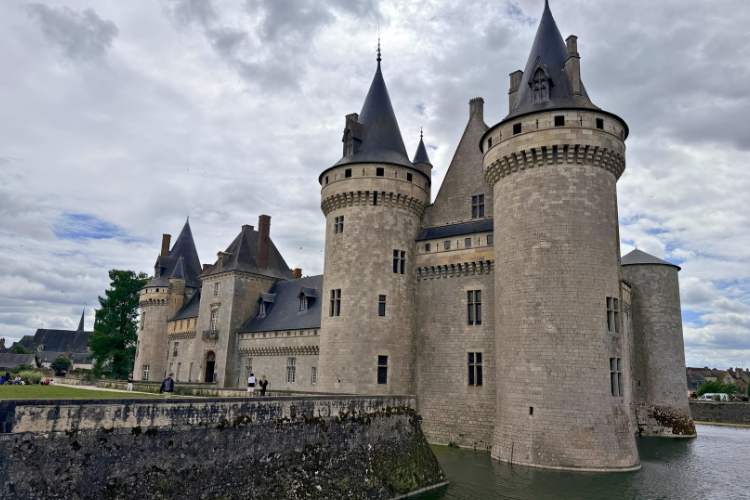
We also visited the Château de Sully-sur-Loire, a moated 14th-century castle that once sheltered a young Joan of Arc and later became home to Maximilien de Béthune, chief minister to King Henry IV. Sabine walked us through its towers and stately rooms with the kind of detail you don’t get on a big-ship shore excursion.
Dinner at La Côte Saint-Jacques
Midweek brought the meal I won’t forget: dinner ashore at La Côte Saint-Jacques, a two-Michelin-star restaurant.
We started with an amusette, a floating island served with Kristal caviar, black garlic jelly, and horseradish cream, one of the chef’s signature dishes. Next came a Brittany lobster blanquette with baby vegetables, peas, and shimeji mushrooms, followed by Challans duck fillets with violin zucchini lace, elderflower, and a Burgundy blackcurrant jus.
Then we had more of the great cheeses of France, and finally, dessert: the chef’s own version of a mille-feuille with three light custards, made as a tribute to the late chef Michel Lorain.
Montargis, the “Venice of the Gâtinais”
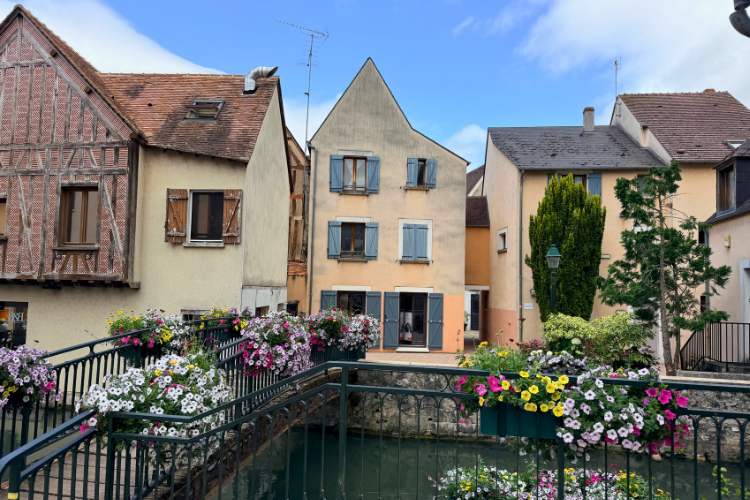
Our final full day brought us into Montargis, sometimes called “the Venice of the Gâtinais” for the canals that thread through its town center, followed that evening by the Captain’s Dinner. Sabine led us on a walking tour through the idyllic town.
The Crew Who Make It Happen
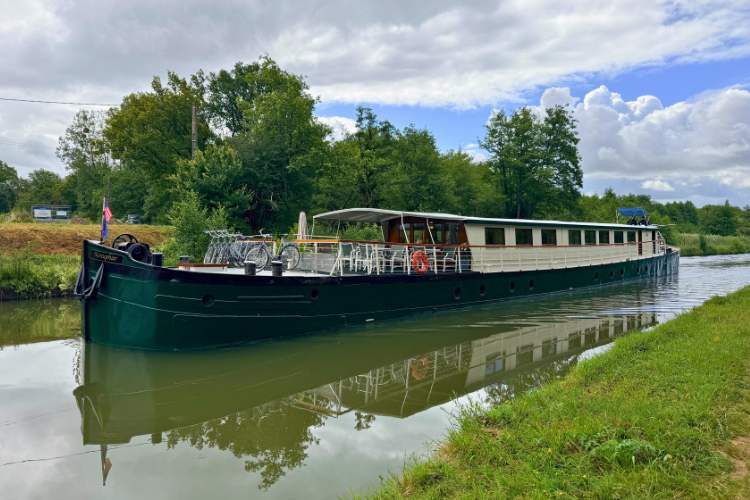
The people who ran our week aboard weren’t just running a boat. Many of them have been doing this for years, in some cases generations, and know this stretch of France better than any guidebook could. They made our weeklong experience something to remember.
Captain Sam has been at the helm since 2013, when he joined, meaning to do one season and never left. His mother, Corinne, was our chef and has been cooking onboard since the early 1990s, while Angela, our onboard hostess, has been with French Country Waterways for 45 years and still comes back for a few weeks each season.
Rounding out our crew were Sabine as destination guide, Irene as a second hostess, and Adrien, our deckhand. Everyone was fluent in English and French, and everyone seemed genuinely glad to be there.
Learning to Slow Down
I’ll admit that when we first arrived, coming straight from the pace of Paris, the barge felt almost too slow. By our second day, I had unwound completely, and by the end of the week, I understood that the slowness was the entire point.
You have to give yourself permission to stop moving before you can actually relax, and a week on a canal in the French countryside is a remarkably effective way to do that.
At the beginning of our trip, we came aboard as 10 strangers from different corners of life. Seven days later, we left as friends, having floated the same quiet canals, eaten the same extraordinary meals, and greeted the same French villagers with a “bonjour” before every conversation, exactly as we’d been taught. It was a small trip in terms of passenger count and kilometers covered, but it left a much bigger mark.
If You Go
French Country Waterways operates six-night barge cruises from April through October across Burgundy, Champagne, Alsace-Lorraine, and the Upper Loire Valley. For more information, visit fcwl.com.
- 9 Insider Tips I Wish I’d Known Before My First European Adventure - October 7, 2026
- Seaplanes, Porcupines and Hidden Lakes on Quebec’s Explorer’s Route - October 6, 2026
- The Family Reunion Hack That Eliminates All the Planning Stress - September 30, 2026
Planning another trip soon? ✈️
Add GoWorldTravel.com as a preferred source on Google. Click the button below so our local guides, packing hacks, and hidden-gem itineraries always show up first when you search!
Add to Preferred Sources
Thank you, Bonnie. It really was a special trip. One to remember for sure. So happy we got to help celebrate your hubby’s surprise birthday trip, too. 🙂
As one of the group of 10 on the Nenuphar along with Janna and Ben, I will say that her words capture the heart of this amazing experience and the videos depict the true wonder of the trip! Bravo to all who made this a surprise birthday trip for hubby, especially the fabulous on-board staff!
Bonnie M.