
Two Dishes and a Sprat
Our taxi driver told us that there are only two true Estonian dishes: blood sausage and fish soup with cream. Also sprats.
Our waiter at Pelmeni, a Russian dumpling resto in Tallinn’s Old City, said there’s no such thing as Estonian cuisine. It’s really Russian, German, and Nordic. And sprats.
A Country Reborn
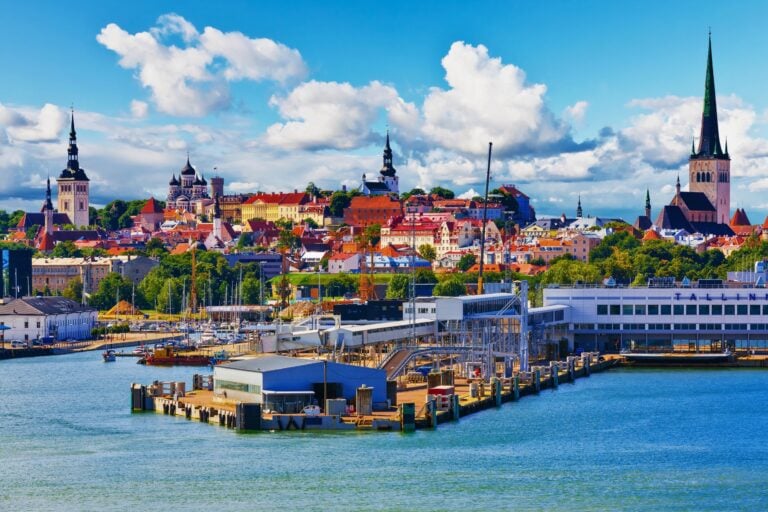
For many global travelers, this tiny Baltic nation remains a tabula rasa. Bordered by Latvia, Russia, and the Gulf of Finland, Estonia is home to just 1.3 million people.
We were drawn here by a culinary whisper – rumors of an underground gastronomic renaissance taking root in a landscape of medieval spires and pristine northern forests. We came to see how a country so small could suddenly ascend the world’s culinary stage.
Surviving the Soviet Years
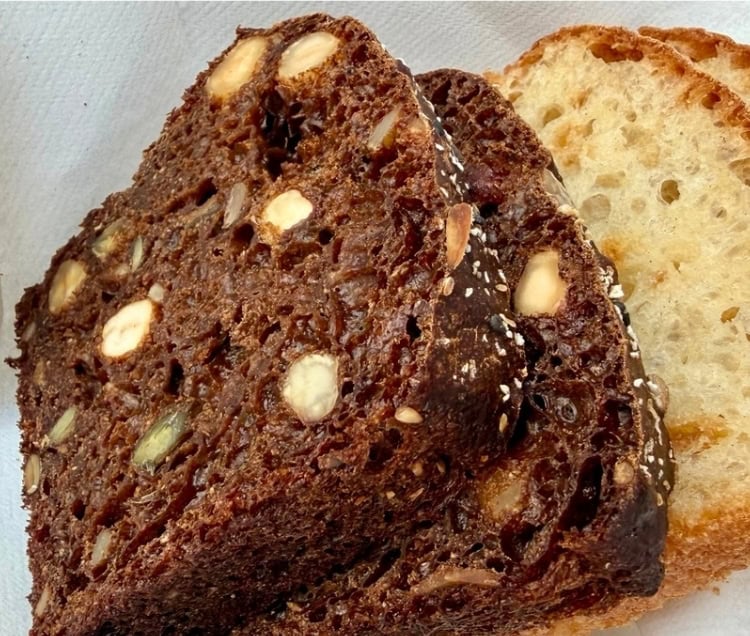
A restaurateur told us that store shelves were often bare during Soviet rule, but everyone had gardens, a cow or a pig. And they had dark rye bread, sometimes studded with nuts or raisins. Good with sprats.
During the grim Soviet years, a common toast was, “Jätku leiba!” – “May your bread last.” It has been 35 years since the Day of Restoration of Independence.
Today, as a democratic parliamentary republic, what has become of Estonia’s cuisine?
Read More: Explore the Beautiful Baltics with These Top 7 Things to Do in Latvia, Lithuania and Estonia
Exploring Balti Jaam Market
Main markets reveal all. Tallinn’s Balti Jaam market displayed Estonia’s agricultural glory including berries so fresh they weren’t yet aware they’d been picked – reds, purples, and orange sea buckthorn – and elongated grapes and Bosc pears.
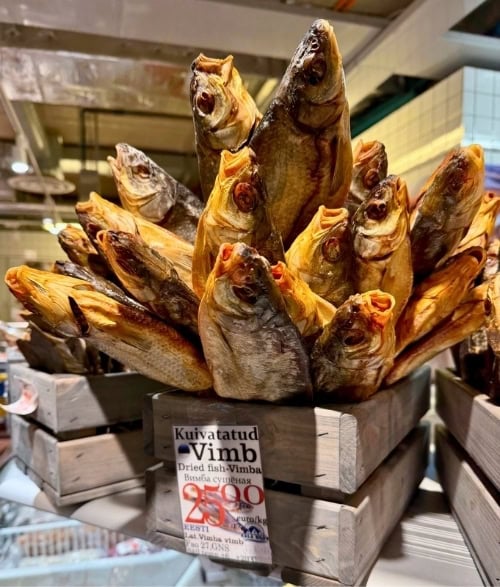
Much like nearby Finnish markets (two hours away by ferry), there were myriad fish, including baby flounders so small we wondered how they could extract a fillet, and boxes boasting bouquets of oily smoked fish.
Iced jars of turgid yellow herring roe, orange salmon eggs, and black sturgeon caviar glinted among them.
Pickles, Perfume, and Muhu’s Bread
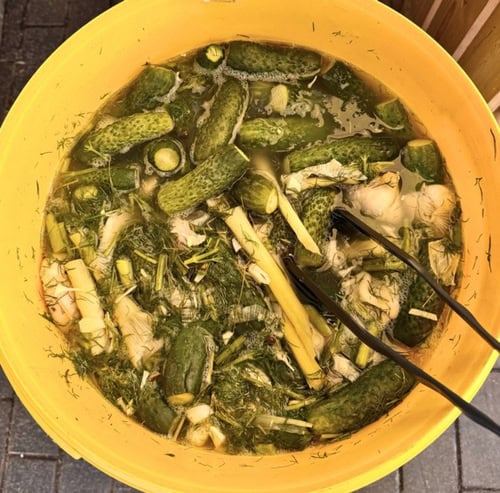
There were barrels of pickles, as of yore, and interestingly, some of them contained stalks of lemongrass. There were pickled peppers of all sizes and colors stuffed with white cheese. There were containers of pickled chanterelles.
One shop, Vorstiabi, sold only smoked meats, including Moulard duck breasts and crinkly craft sausages. Nearby, an Estonian fromagerie exhaled its lusty perfume.
Muhu Bakery’s dark loaves were set forth like trophies. We had to suppress the impulse to yank out hunks, for fear of imprisonment.
Berries Unknown Elsewhere
There were wine stores selling Estonian wines, many based on berries little known elsewhere: cloudberries, bilberries, cowberries. We tasted a rhubarb wine, honeyed as Sauternes.
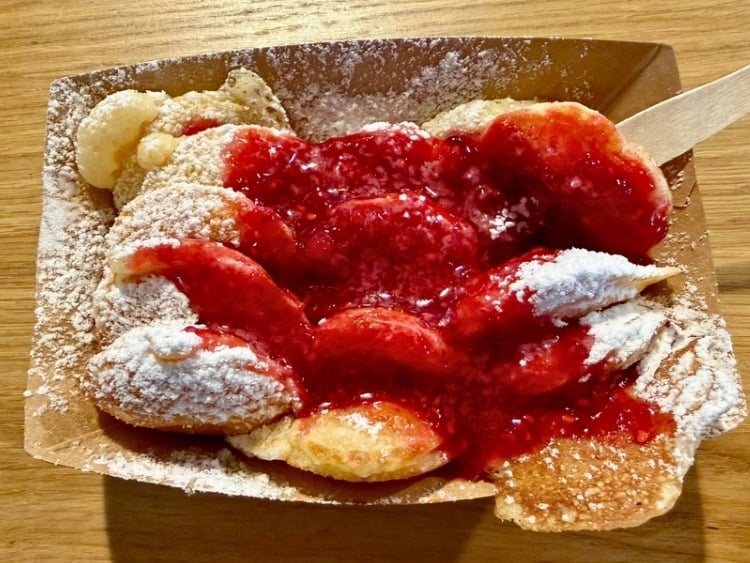
From the food hall stalls, we devoured æbleskiver with raspberry jam, hand‑crafted bao stuffed with pork belly, and Chinese dumplings pinched before our eyes. A nearby counter displayed a dizzying variety of strudels.
Balti Jaam felt like Estonia’s Day of Restoration of Independence made visible – the country’s food culture unshackled, unchecked, uncorked.
The Michelin Weather System
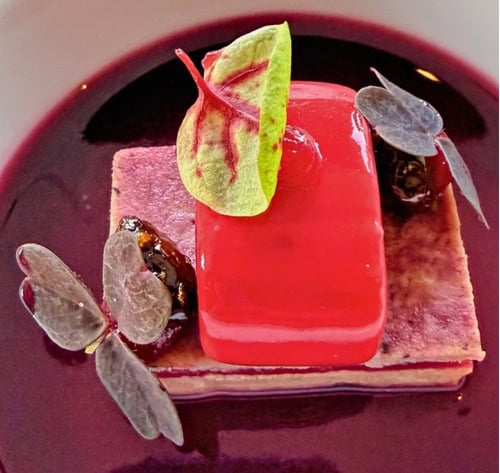
In 2022, Michelin stars appeared in the Estonian sky. It now has 43 Michelin-recommended restaurants, 9 Bib Gourmands, a one-star, and a two-star.
On the world stage now, all of them – in collegial competition – are striving upward. We were in Tallinn to forage the fruits of Estonia’s culinary liberation.
Dinner at Mon Repos
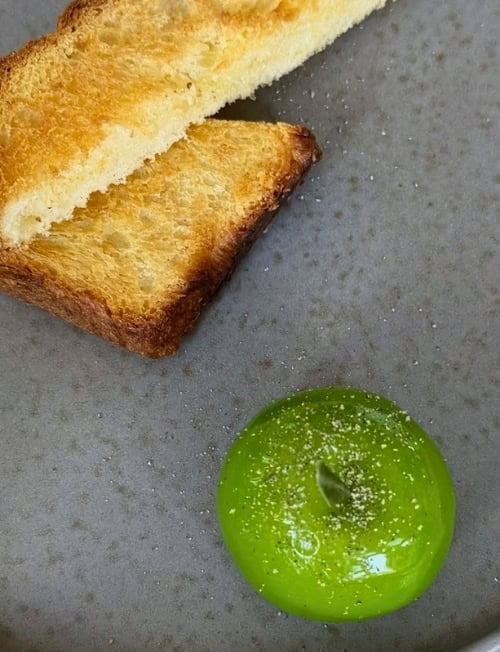
At Bib Gourmand Mon Repos, we ate a sphere of chicken liver mousse coated in green apple gelée – a faux candy apple – with toasted brioche.
A food critic at our table, an actual television star who judged cooking competitions, deemed it good but not great: gelée too thick and under-flavored, mousse under-salted.
Far be it from us to challenge royalty, but we disagreed. The dish was glorious, technically dazzling.
Think of pianist Arthur Rubinstein: even when he missed – according to his rival prodigy Vladimir Horowitz – his mistakes were grander than most players’ accuracy. And this dish didn’t miss.
Culinary Festivals and Sub‑Woofer Depth
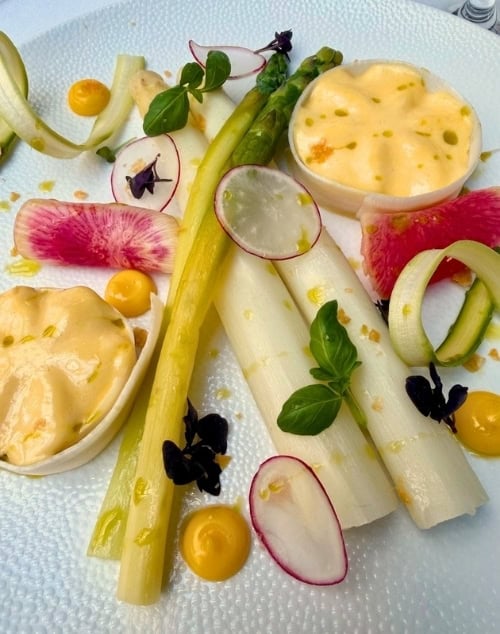
At Michelin-recommended Restaurant Tchaikovsky, we ate portly white asparagus – vegetal Wagyu – with saffron aioli, and a white-chocolate pavlova with elderflower ice cream and passion fruit, shrouded in liquid nitrogen fog like moorland mist. It felt like eating a winter festival.
At Bib Gourmand Fume, an oxtail consommé with foie gras arrived sub‑woofer deep, followed by a winsome whitefish crudo with grapes.
Michelinization
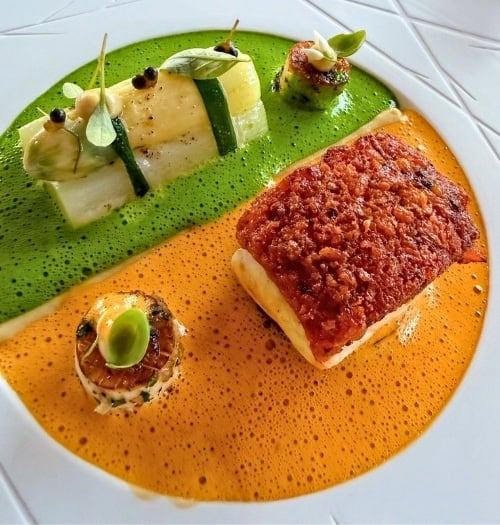
And at 180° by Matthias Diether, Estonia’s lone two‑star, many plates resembled miniature villages: architectural, intellectual compositions of geometric precision: tweezed petals, layered ingredients, multiple sauces, and imported luxuries – among them, a perfectly cooked French pigeon breast with cherries.
It was flawlessly executed, but also emblematic of how Michelin creates its own weather system. Much as wineries once crafted wines to please critic Robert Parker, restaurants seeking stars often cook toward Michelin taste.
Standards rise, but so does the risk of standardization – an international style of luxury cooking slowly eclipsing a local one. Call it Michelinization.
Tough Bread, Tough People
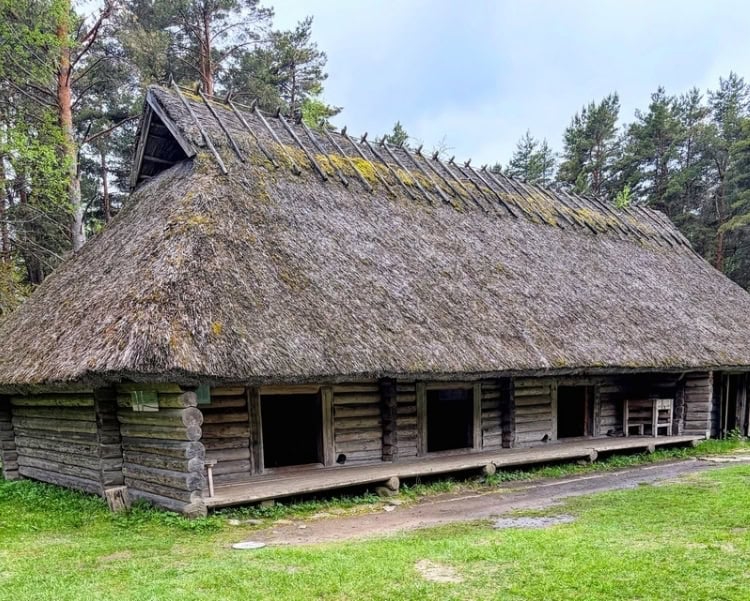
We visited the Estonia Open Air Museum where we saw homes of ordinary Estonians dating to the 1800s. The homes were made from logs, had thatched roofs, and were primarily designed to accommodate an oven for baking bread, their main foodstuff.
The bread, containing no wheat, was made from oats, barley, rye, and peas and was baked twice to dry it for longevity.
A gruel made from these ingredients still appears at some restaurants emphasizing traditional Estonian cooking, alongside game meats like bear, elk, and wild boar.
Smoke Saunas and Wrenching History
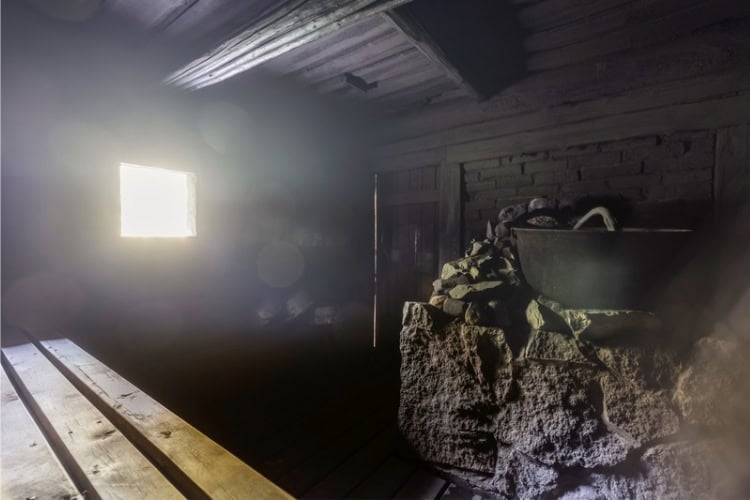
Some homes had adjoining, chimneyless smoke saunas, still popular here, that were heated with wood-fire smoke, vented before entry.
These Võro smoke saunas were also used for birthing babies, preparing the dead for burial, and smoking meats – its scent bringing to mind Balti Jaam’s Vorstiabi. They’re now on the UNESCO Intangible Cultural Heritage List.
Estonia’s recent history has been wrenching. It was occupied by the Tsarist Russian Empire (1710–1917), then the Soviets (1940–1991), a span interrupted by a murderous Nazi occupation from 1941 to 1944.
In 1944, the Soviets reoccupied the country, massively bombing Tallinn’s Old City and instituting a brutal regime relying on terror and KGB control to subdue the civilian spirit. They did not succeed.
Grit and Humanity in Tallinn
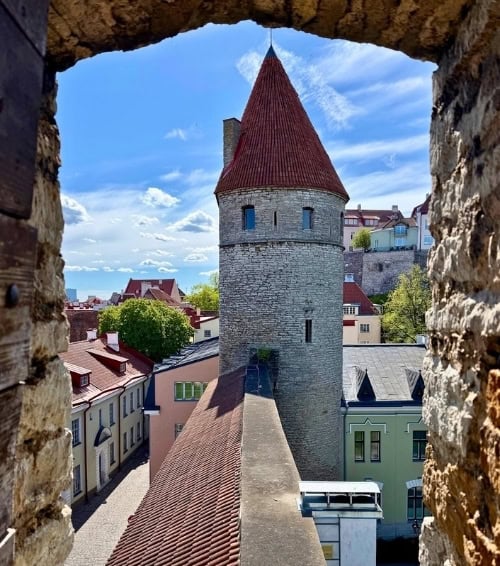
Apparently, tough bread makes tough people. Today, Estonia is an integral part of the European Union and NATO – outward-looking, technologically sophisticated, and fiercely protective of its independence.
Yet this grit has not hardened into indifference; a deep humanitarian instinct remains.
In Tallinn’s Old City, tactile maps of cast bronze offer the vision-impaired a bas-relief topography of the streets. Outside the Russian embassy, unceasing peaceful protests target the war Russia unleashed on Ukraine.
The Act of Becoming
Estonia’s fine dining scene looks outward rather than backward. Most of the chefs are young and have trained in Michelin restaurants elsewhere, with strong French technique and worldly knowledge.
We encountered the familiar grammar of global fine dining: carpaccios with imported truffle, crudos, panna cottas, liquid nitrogen desserts, Wagyu beef, grilled fish lacquered with Asian glaze, demi-glace.
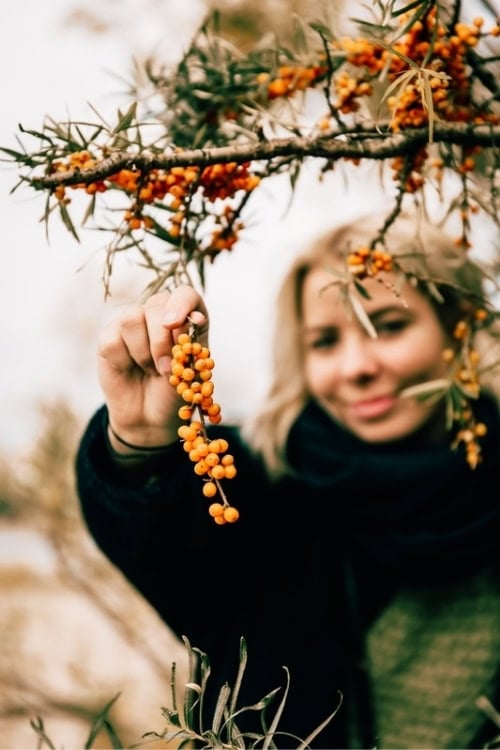
Yet in deference to tradition, nearly every table still bore dark rye bread rich with malt, and, some, the electric‑orange sea buckthorn berry – once a bitter food of survival – now repurposed as a garnish.
Estonia’s haute cuisine is still in the act of becoming. Whether it will incorporate its roots, and to what extent, is to be seen.
Read More: 11 Amazing Things to Do in Estonia: Where Old World Meets New Tech
The Stubborn, Shining Sprat
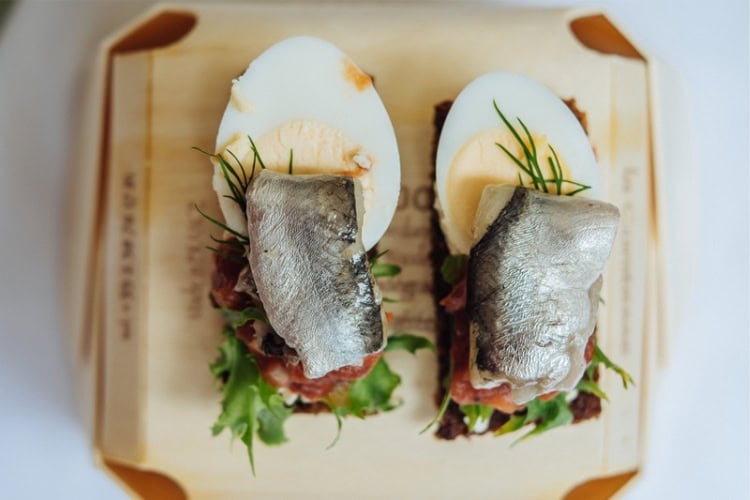
And sprats were everywhere – smoked, pickled, peppered, sheened with oil — served on crostini or simply by themselves. We ate them at breakfast every day, and every day was better for it.
If Estonia has a cuisine, perhaps it begins here: in the brine, the smoke, the rye, the berries, and the stubborn, shining sprat.
If You Go
Best Time to Visit
The ideal window runs from late May, which is when we visited, to August, when the Nordic White Nights stretch summer deep into the evening. Winter brings a magical, snowy charm to Tallinn’s Christmas markets, though daylight hours are much shorter.
Getting There
Lennart Meri Tallinn Airport (TLL) connects directly to major European hubs like Frankfurt, Helsinki and Amsterdam. Alternatively, a scenic ferry ride of about two hours connects Helsinki directly to Tallinn’s passenger port.
Where to Stay
For a base inside the walls this story wanders through, Hestia Hotel Barons Old Town sits in the heart of medieval Tallinn, an easy walk from Balti Jaam Market, with a restaurant, bar and free WiFi inside a handsomely preserved historic building.
Food Tours and Tastings
To go deeper into the flavors this story only begins to cover, the Estonian Food, Drinks and History Tour leads small groups through Old Town stops for traditional bread, beer, snacks and desserts, paired with local history from a guide.
Staying Connected
Since Estonia isn’t covered by most standard phone plans, picking up an eSIM before departure keeps data flowing from the moment you land. Get an Estonia eSIM on Airalo.
Travel Insurance
For international coverage, Squaremouth and SafetyWing both let you compare and buy a policy before you go.
Helpful Resources
For comprehensive travel planning, maps, and dynamic event calendars, check out the nation’s official tourism portal at VisitEstonia.com. For hyper-local capital city tips, explore VisitTallinn.ee.
Need a hand planning your trip? Here are the sites and services we rely on most, from booking tools to travel products we love.
Inspire your next adventure with our articles below:
- How to Travel in the Baltics on a Budget of $50/Day
- Foraging, Sauna and Sunset Swims: An Escape to Finland’s Lake Saimaa
Author Bio: David and Susan Greenberg are award-winning travel and food writers whose work is rooted in a shared passion for discovering extraordinary meals and meaningful travel experiences around the world. Their journey into culinary storytelling began in Hong Kong, where they spent five years reviewing everything from humble street-side eateries to Michelin-starred restaurants for FoodieHK, the city’s premier online dining magazine. David is also the author of numerous poetry picture books and a young adult novel published by major U.S. publishers and translated into multiple languages. His global travels for book readings deepened his connection to local food cultures, shaping his path into food and travel writing. Susan brings a rich background in education and marketing, having taught in schools and universities and previously owned a marketing firm. Together, their complementary perspectives create stories that balance vivid sensory detail with thoughtful insight. Since returning to the United States in 2022, they have expanded their focus to include destination, hotel, and culinary travel features, with work published in Northwest Travel & Life, Southwest Travel & Life, Food, Wine & Travel, and Eater. They were named Best New Travel Writers of the Year by Northwest Travel & Life. Now based in the Pacific Northwest, they continue to travel widely in search of their next unforgettable bite.
Want to discover more hidden gems and helpful travel tips? Join our free newsletter for the latest travel secrets and travel articles.
We are reader-supported and may earn a commission on purchases made through links in this article.

- Fall Day Trips from Vancouver: 7 Scenic Walks Worth the Drive - September 15, 2026
- Laos for Backpackers: Vientiane, Vang Vieng and Luang Prabang on a Slow-Travel Route - September 15, 2026
- Why “Just Immerse Yourself” Won’t Teach You Spanish, No Matter How Long You Stay - September 15, 2026
Planning another trip soon? ✈️
Add GoWorldTravel.com as a preferred source on Google. Click the button below so our local guides, packing hacks, and hidden-gem itineraries always show up first when you search!
Add to Preferred Sources