
All my life, I’ve heard stories of my grandpa’s experience during World War I—how the Germans invaded his native Latvia when he was just 14, how he had to flee as a refugee and was separated from his family, never to find them again.
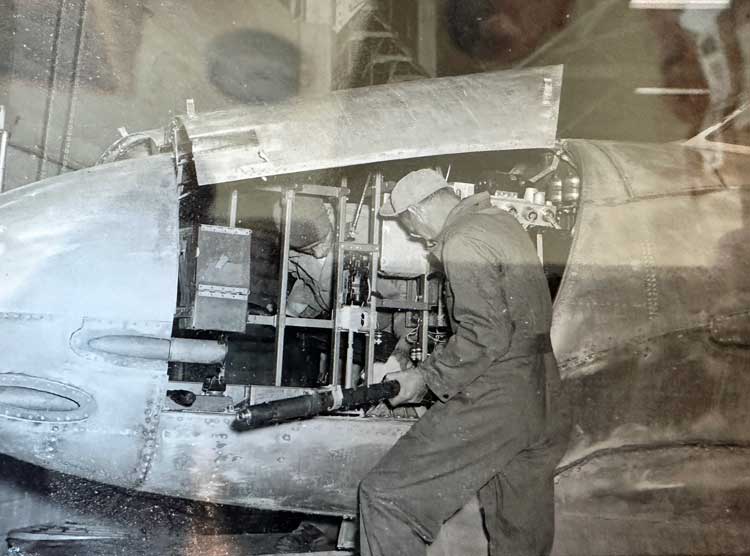
I heard how he traveled to America to begin a new life, and how, during World War II, he served as an American soldier in England, repairing military aircraft that flew missions over the very places he once called home.
Those stories always seemed so distant, but a recent military heritage tour in Latvia and Lithuania gave me the chance to delve into that early history with new eyes.
Military Heritage Tourism in Latvia, Lithuania and Estonia
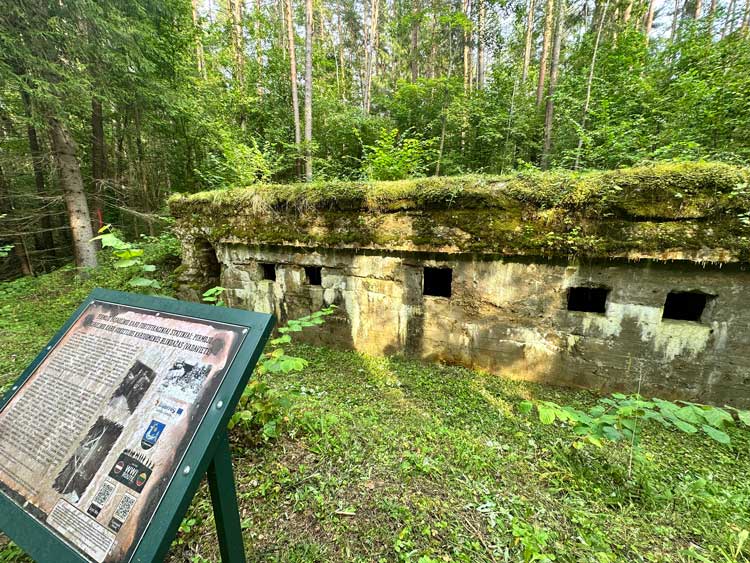
the Russian army along the front line. Photo by Janna Graber
The Military Heritage Tourism project connects 943 historical sites across Latvia, Estonia and Lithuania, weaving together a century of Baltic military history from WWI trenches to Cold War missile silos. This cross-border initiative reveals how three small nations fought repeatedly for independence against overwhelming odds.
For history buffs and those interested in military heritage, the project offers a glimpse into war history that is often overlooked outside the Baltics, yet is crucial to understanding global history. The project’s website has several suggested tour routes for travelers.
Those of us with Baltic roots can walk where our grandparents walked, touch the walls they touched, and begin to understand the true weight of the stories passed down through generations.
A Baltic Tour for History Buffs
Over five days, I traveled with a small group of military heritage enthusiasts, visiting dozens of these sites across Latvia and Lithuania, walking in the footsteps of partisans, soldiers, and civilians who lived through some of Europe’s darkest and most complex chapters.
Day One: Into the Partisan Underground
Our journey began early morning from Riga, Latvia’s capital and cultural heart. With its UNESCO-listed Old Town and Art Nouveau architecture, Riga feels like a living museum, but we were heading deeper into history.
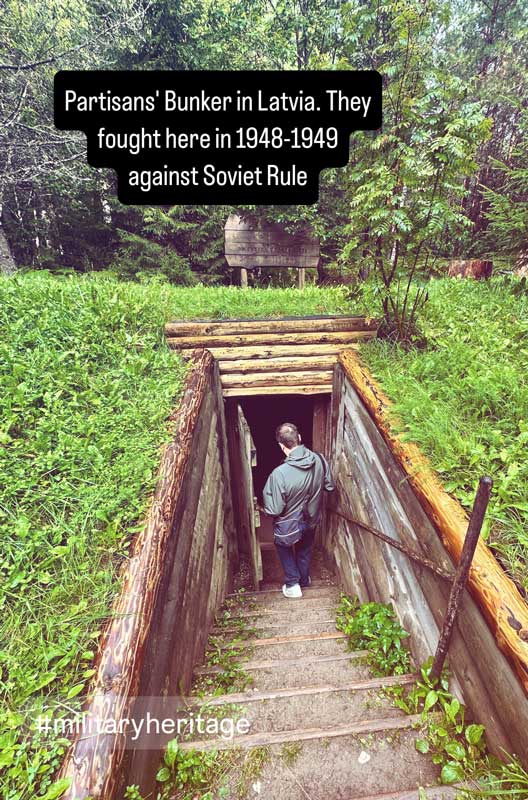
Īle National Partisan Bunker
Our first stop took us through the rolling countryside of western Latvia to the forests of Īle, home to the largest partisan bunker in the Baltic States.
Built in 1948 by Latvian and Lithuanian partisans resisting Soviet rule, this underground fortress tells a story of bravery. Standing in the reconstructed bunker, I could almost feel the weight of desperation that drove 24 partisans to make their final stand here against 760 Soviet security forces on March 17, 1949. Fifteen were killed; nine captured and deported to Siberia.
The partisan movement represented something I hadn’t thought of – the gray area between liberation and occupation that defined the post-war Baltic experience. These weren’t just freedom fighters; they were young people caught between competing empires, fighting for a vision of independence that seemed increasingly impossible.
Saldus German Soldiers’ Cemetery
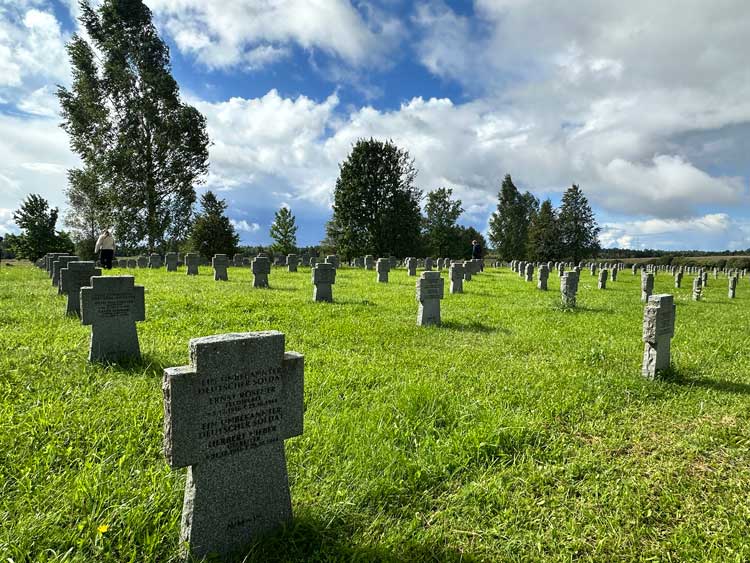
Our next stop at the Saldus German Soldiers’ Cemetery confronted us with another uncomfortable truth. Here lie 27,000 German soldiers who fell during the Courland Pocket siege between October 1944 and May 1945. Walking among the crosses, I thought about how military heritage forces us to acknowledge the humanity of all combatants, even those on the wrong side of history.
Ezere Customs House
We paused for lunch in the small town of Saldus, sampling traditional Latvian fare before continuing to the Ezere History Repository at the Latvian Lithuanian border. This modest customs house witnessed one of history’s pivotal moments – here, the German Army Group Courland’s surrender was signed on May 8, 1945, the same day as VE Day in the west.
Cold War Museum, Ballistic Missile Complex
 This former Soviet Union Ballistic Missile Complex in Lithuania once housed four ballistic missiles. Photo by Janna Graber
 Cold War Museum at the Ballistic Missile Complex in Lithuania. Photo by Janna Graber
 Cold War Museum in Lithuania. Photo by Janna Graber
Our next stop was the Cold War Museum at Plokštinė in Lithuania’s Žemaitija National Park. This former Soviet ballistic missile complex once housed four SS-4 “Sandal” medium-range missiles with 2-megaton thermonuclear warheads aimed at Western Europe.
We visited one of their missile silos (now empty, of course) and went through the Cold War Museum at the underground launch facility. I was a teenager in the 1980s, and I remember what the Cold War felt like from the American side. It was interesting to see it from the Soviet viewpoint.
Old Mill Hotel in Klaipėda
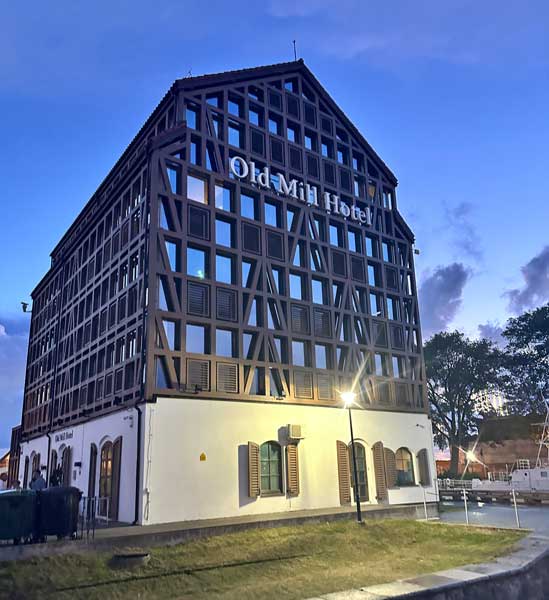
As evening approached, we settled into the Old Mill Hotel in Klaipėda, Lithuania’s historic port city. Over dinner at GRASSO Restaurant, our group chatted about all we had seen that day while sampling Lithuanian cuisine – hearty, tasty dishes that seemed designed to sustain people through long, difficult winters.
Day Two: Naval History and Coastal Fortifications
Klaipėda, Lithuania’s third-largest city and only seaport, was our base for exploring the Baltic’s maritime military history. Once known as Memel under German rule, the city bears architectural traces of its complex past, with German, Lithuanian, and Soviet influences.
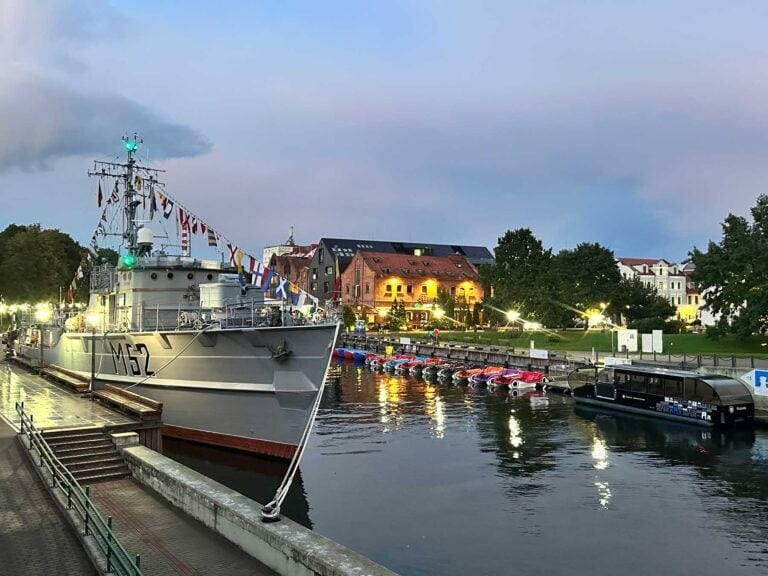
M52 “Sūduvis
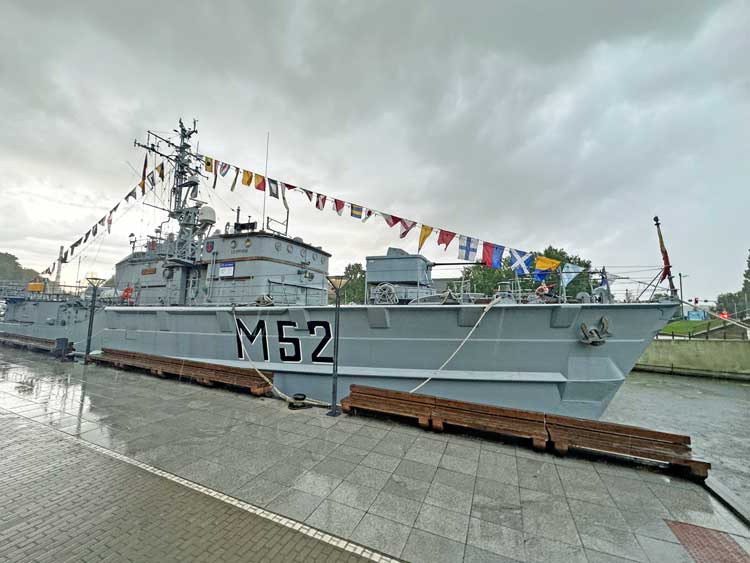
We began aboard the M52 “Sūduvis,” a former German mine trawler that served Lithuania’s naval forces for 22 years. The ship’s cramped quarters and utilitarian design reminded us that naval service demanded its own form of courage – facing the enemy while trapped in a steel box on an unforgiving sea.
Today, it’s a museum. They also have “escape room” experiences.
Memel-Nord
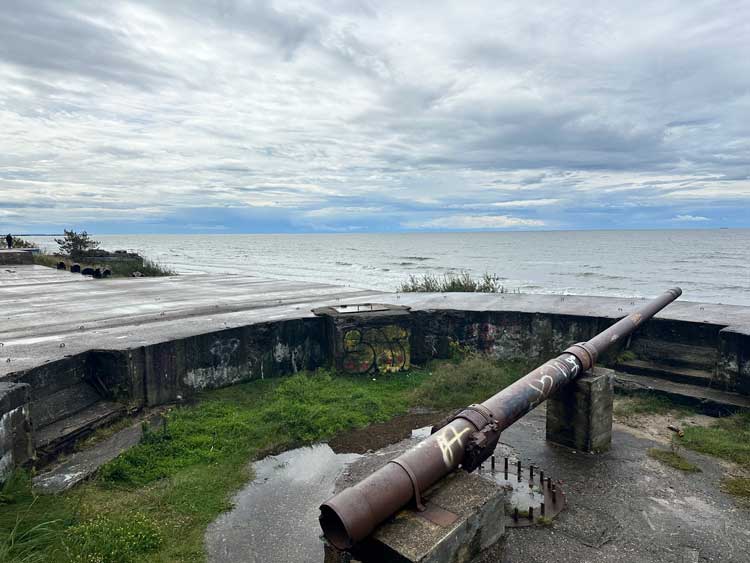
the German Navy’s coastal defense system. Photo by Janna Graber
The “Memel-Nord” coastal artillery battery showcased German military engineering at its most impressive. Built in 1939 after Germany annexed the Klaipėda region, these concrete fortifications were designed to control the approaches to the Baltic Sea.
Lunch at “Olando Kepure” between Klaipėda and old Palanga offered respite and local seafood – reminders that these coastal communities have always lived from the sea, whether in peace or war.
Karosta Prison
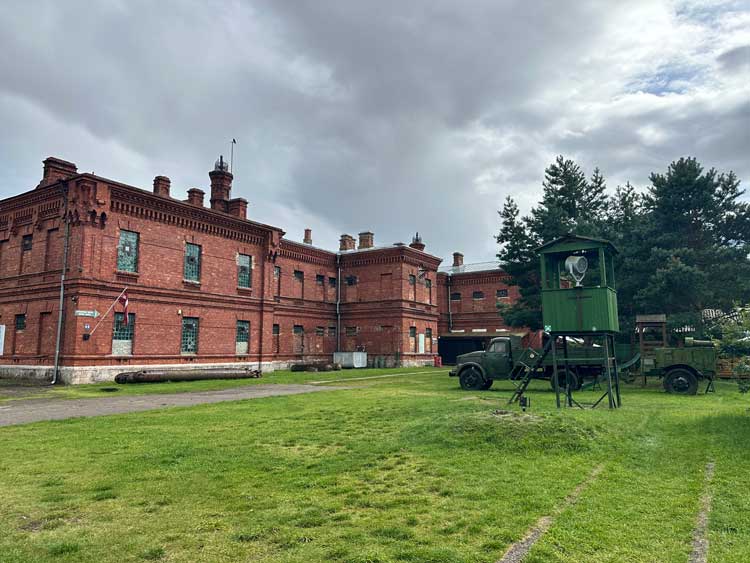
Europe that is open to the public. They offer guided tours and a “Behind the Bars” reality game experience. Photo by Janna Graber
Our afternoon destination was Liepāja, Latvia’s “city where the wind is born.” We explored the infamous Karosta Prison – Europe’s only military prison open to the public. Today, it’s a museum that offers guided tours. Our guide was in character as a Soviet guard.
In addition to the tours, Karosta offers a ‘Behind the Bars’ reality game, and guests can even spend the night in a prison cell. Although it’s not my kind of adventure, I’m told it’s quite a fascinating experience. There’s also a Soviet-era buffet and a souvenir shop.
Redan Fortress
The Redan Fortress was our final stop of the day, the site of a pivotal 1919 battle where Pavel Bermont-Avalov’s forces briefly captured this strategic position before being driven back by Latvian troops. Standing on these aging fortifications, overlooking the Baltic Sea, I could understand why control of this coastline had been contested for centuries.
We spent the night at the lovely Promenade Hotel in Liepāja, dining at the excellent hotel restaurant, a relaxing end to a moving day.
Day Three: Remembrance and Resistance in Riga
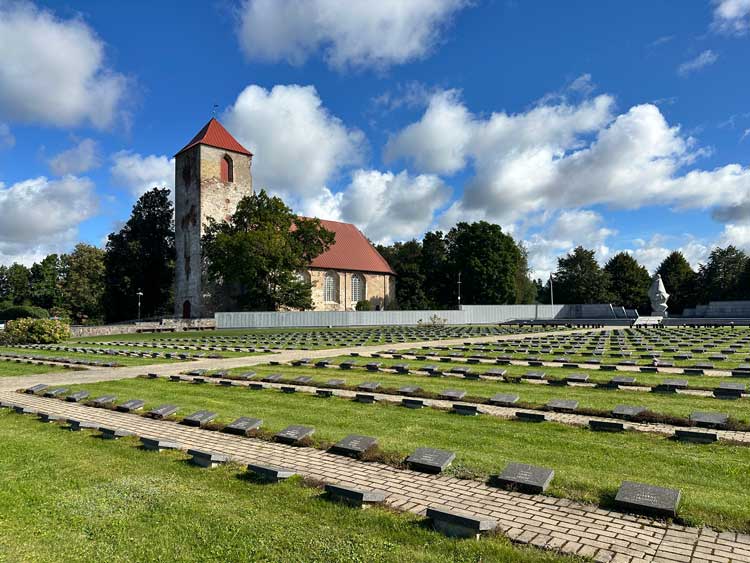
1,300 Latvian legionnaires are buried. Photo by Janna Graber
The next morning, we delved deeper into Latvia’s experience of occupation and resistance. Our first stop at Lestene Brothers’ Cemetery, the second-largest military cemetery in Latvia, honored more than 1,300 Latvian legionnaires.
These soldiers served in German uniform during WWII – not from Nazi sympathy, but because they saw the German army as the only force capable of liberating Latvia from Soviet occupation.
Ložmetējkalns (Machine Gun Hill)
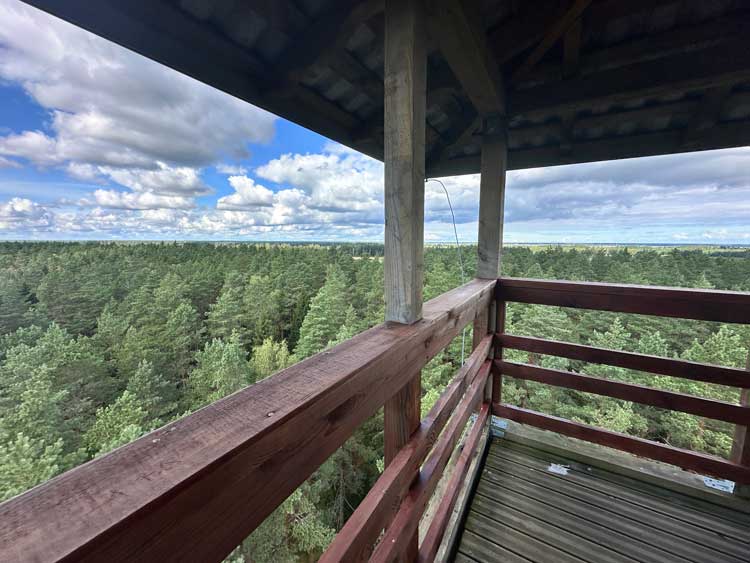
At Ložmetējkalns (Machine Gun Hill), we climbed the observation tower overlooking the site of WWI’s Christmas Battles.
Here in 1917, Latvian Riflemen and Siberian units successfully attacked German fortifications in one of the war’s bloodiest engagements. The name “Machine Gun Hill” testified to the devastating firepower that made these positions nearly impregnable.
Museum of Occupation of Latvia
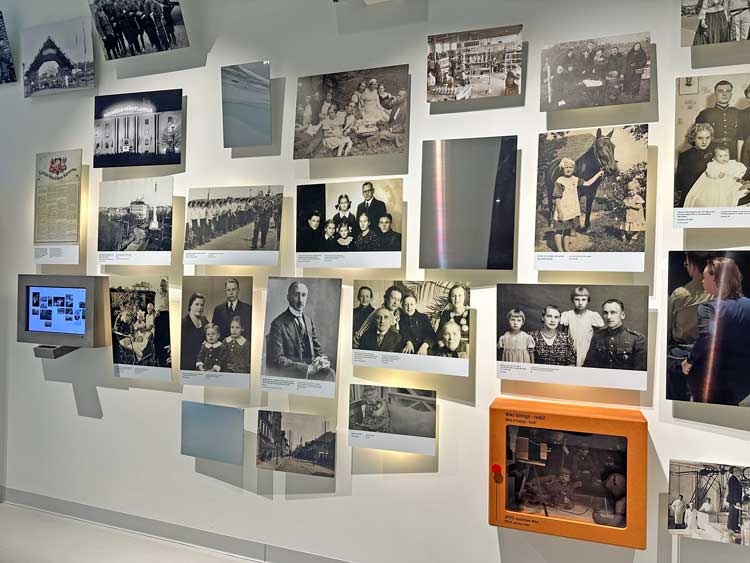
After lunch in Riga’s vibrant city center – where medieval cobblestones meet modern cafes – we visited the Museum of the Occupation of Latvia.
I was so interested in the well-done exhibits that I could have spent many more hours here. This powerful institution documents Latvia’s experience from 1940 to 1991, covering both Nazi German and Soviet occupations.
The museum’s “House of the Future,” designed by renowned architect Gunārs Birkerts, presented these abstract historical forces through personal stories and artifacts that brought the human cost of totalitarianism into sharp focus.
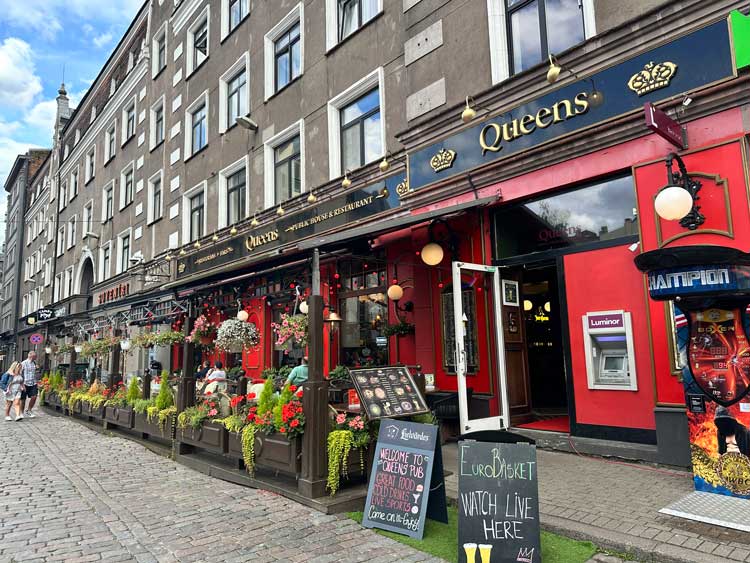
An evening in Riga gave us the chance to explore the city’s renowned restaurant scene, a testament to how these cities have successfully transformed their complex pasts into vibrant destinations today.
Day Four: Eastern Frontiers and Soviet Power
Our longest travel day took us from Riga to eastern Latvia, through landscapes that bore witness to some of the 20th century’s most devastating conflicts.
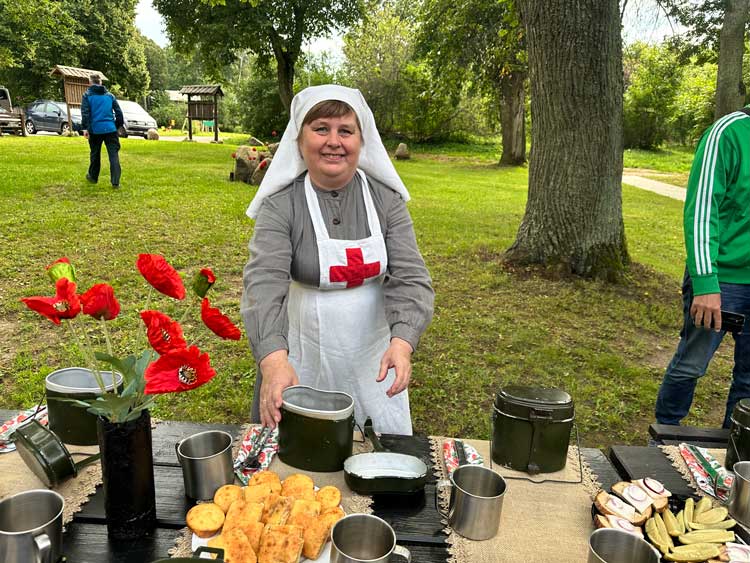
At the First World War Museum in Medumi, our guide shared many stories of that time and how they impacted the local population. Afterwards, we sampled authentic soldiers’ porridge – a simple meal that connected us viscerally to the daily reality of trench warfare.
Daugavpils Fortress
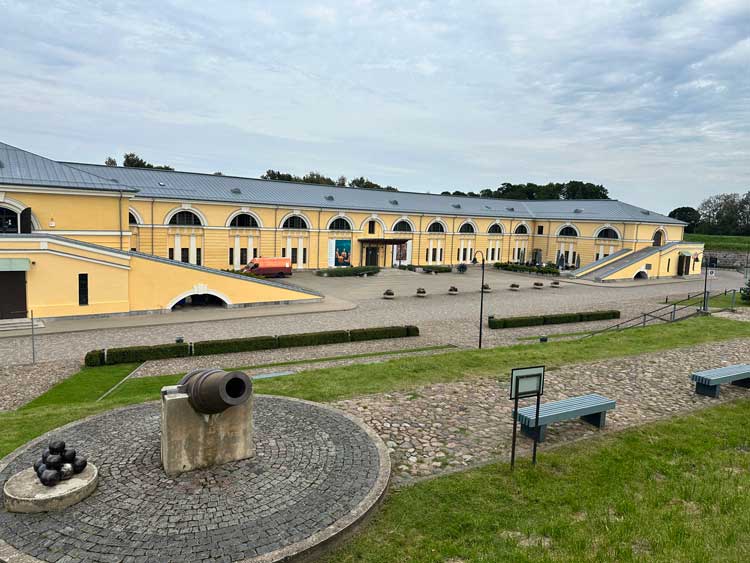
The Daugavpils Fortress, Northern Europe’s only unchanged 19th-century fortress, was our afternoon destination. Built to defend against Napoleon’s invasion, this massive complex later served various military purposes through Soviet occupation.
Today, it houses cultural institutions, including the Mark Rothko Art Center, honoring the abstract expressionist painter born in this city.
German Army Command Bunker in Kimbartiške
Lunch at Cafe “Arsenāls”, located within the fortress walls, offered traditional Latvian cuisine, followed by a visit to a German Army command bunker in Kimbartiške.
This reinforced concrete facility, built between 1915 and 1918, featured electricity, water, stoves, and wooden bunks – sophisticated infrastructure for its time.
Museum of Military Vehicles in Svente Manor
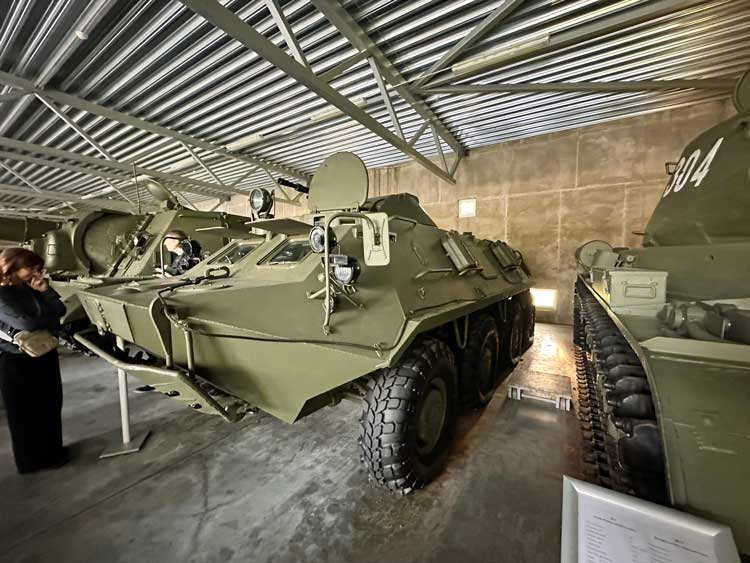
Our day ended at the Museum of Military Vehicles in Svente Manor, home to the Baltic States’ largest tank collection.
The collection includes Soviet T-34 medium tanks and an IS-2 heavy tank named after Stalin, which testified to the massive military machinery used in the war across Eastern Europe.
Hotel Sventes Muiža
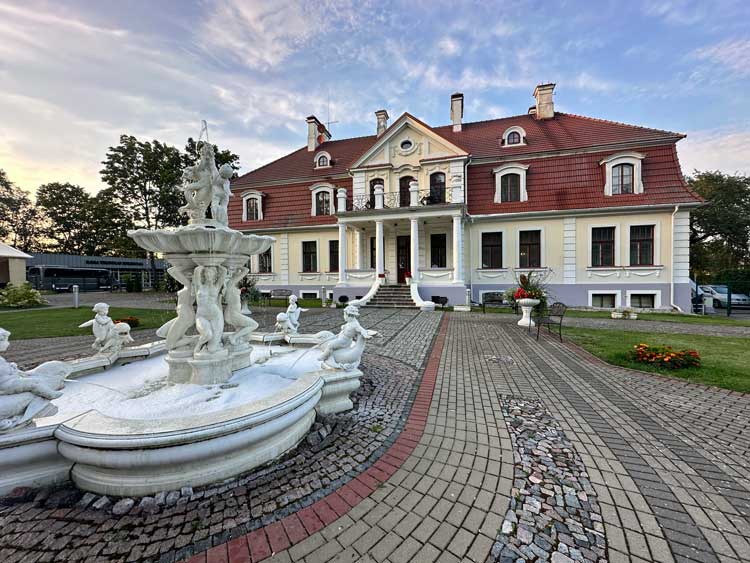
We spent the night at Hotel Sventes Muiža, a beautifully restored manor house where dinner featured local specialties and regional wines, creating a lovely counterpoint to the day’s somber themes.
Day Five: Final Battles and Lasting Memory
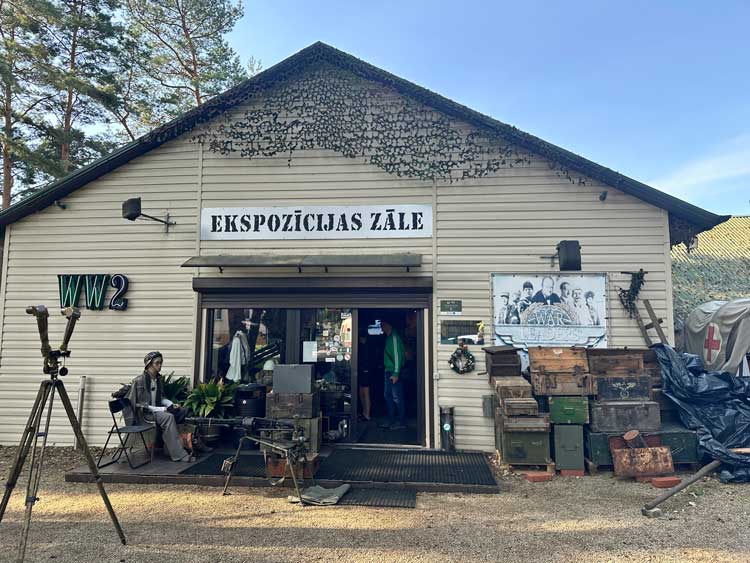
Our last day on the tour began with a visit to the World War II Museum in Aglona, which features over 1,000 artifacts from active battle zones. The museum’s hands-on approach – allowing visitors to handle weapons and try on uniforms – gave us a connection to wartime experience.
We had a quick stop at Hitler’s Bunker in Malnava. Hitler’s brief visit to Army Group North headquarters in July 1941 lasted only hours. Still, the nearby anti-aircraft bunker, built as Soviet air superiority grew, represented Germany’s increasingly desperate defensive posture.
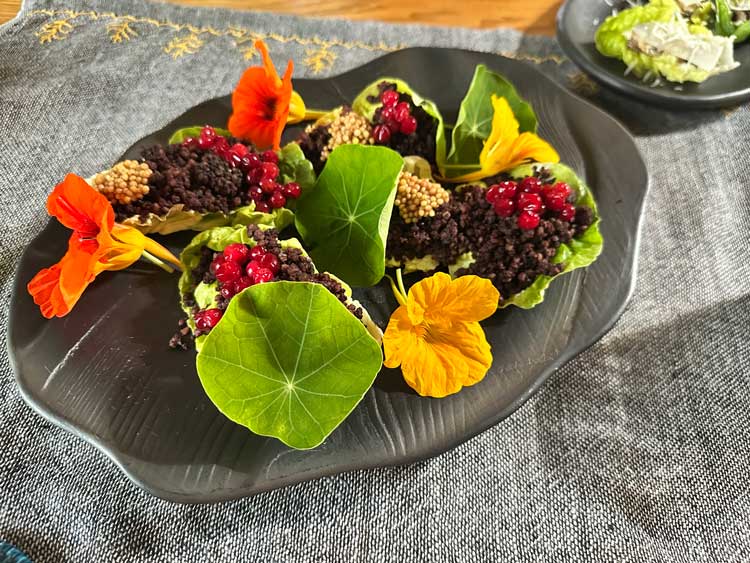
Lunch at the guest house “Dzīles” in Malnava offered traditional Latgalian cuisine and local beverages, including tastings of regional specialties that connected us to local food traditions spanning generations.
Trail and National Partisan Memorial in Stompaki
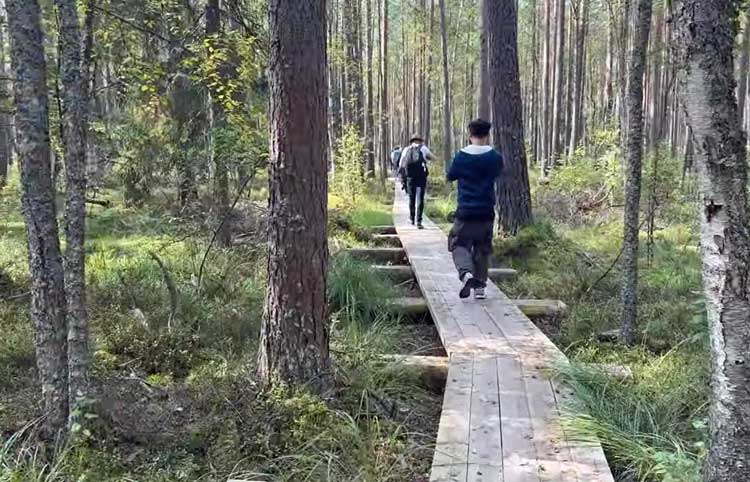
Our most emotionally powerful stop came at the Trail and National Partisan Memorial in Stompaki Bog. Here, around 350 partisans established one of the largest resistance settlements in the Baltic States in early 1945.
The 1.5-kilometer wooden boardwalk led to five islands where partisans built residential bunkers, including a bakery and church bunker.
Walking this trail, I tried to imagine those times. These partisans weren’t just fighting Soviets – they were fighting for the right to exist as a people. The Battle of Stompaki, the largest battle in Latvian national partisan history, represented not just military resistance but cultural survival.
At the memorial site, our group held a moment of silence – a fitting tribute to the hundreds of partisans who had made their last stand in these remote wetlands, fighting not just for political independence but for their very identity as a people.
A Journey of Understanding
Our military heritage tour through Latvia and Lithuania showed me that history isn’t just about battles won and lost – it’s about how people preserve memory and meaning across generations of trauma – trauma that also affected my own family.
The carefully preserved sites in the Military Heritage Tourism project, along with excellent local guides and thoughtful accommodations, provided a framework for gaining a deeper understanding of those experiences.
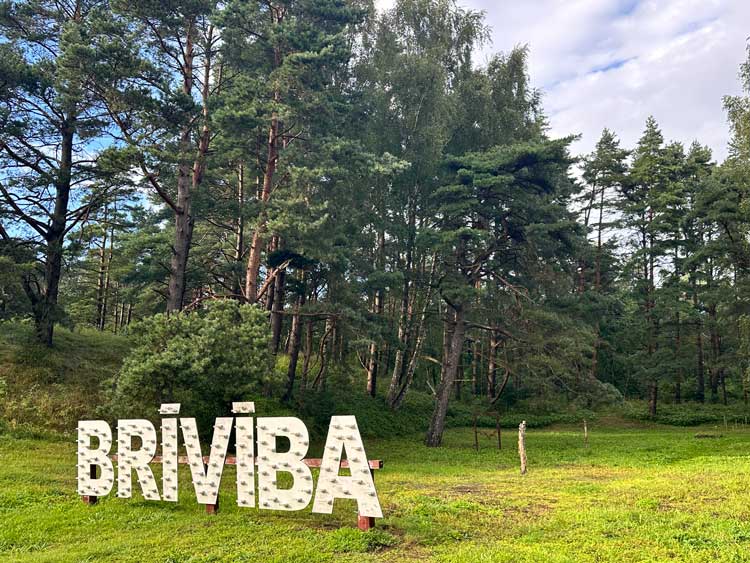
From Riga’s cosmopolitan energy to Klaipėda’s maritime character to the haunting beauty of Stompaki bog, each location offered insights into how the Baltics have navigated the crosscurrents of great power politics.
The 943 military heritage sites across the Baltic States tell a story larger than any single conflict or occupation. They tell the story of human resilience, of small nations that refused to disappear despite centuries of foreign rule.
For those carrying family memories of Baltic history, like mine, these sites offer something precious – the chance to walk where our ancestors walked, to touch the walls they touched, and to gain a deeper understanding of their story.
My grandfather’s history lives on not just in family memory, but in many of these carefully preserved sites scattered across the Baltic landscape. They remind us that military heritage isn’t just about the past – it’s about the ongoing responsibility to remember, to honor, and to learn from those who came before us.
If You Go: Travel Tips
To make the most of what you’re seeing, I recommend hiring a local guide or opting for a company that offers small group guided tours in these regions.
The historical context and personal stories that knowledgeable guides provide transform these sites from mere monuments into meaningful experiences.
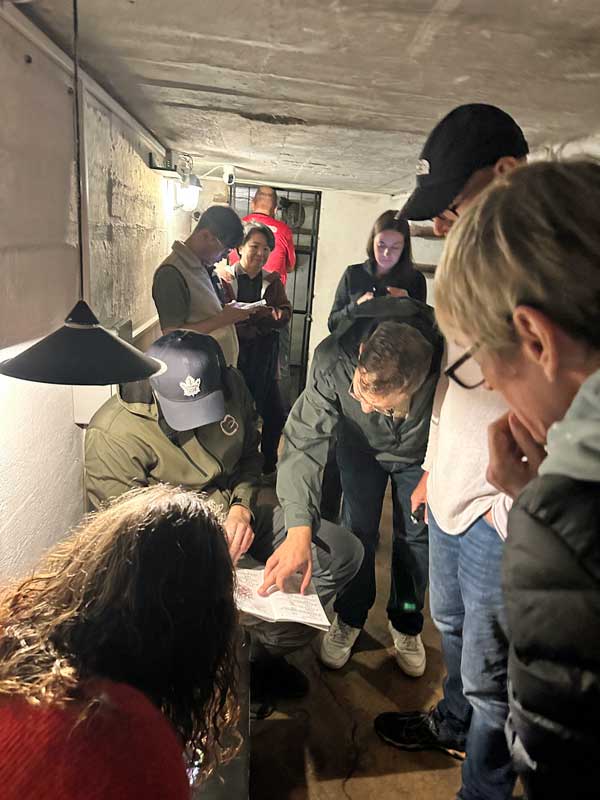
If you visit these locations on your own, you’ll need to rent a car. Driving is safe and easy in Latvia and Lithuania, with well-maintained roads and clear signage. Many heritage sites are located in rural areas that are not easily accessible by public transport.
The Military Heritage Tourism project website (https://militaryheritagetourism.info/en) features detailed information about all 943 heritage sites across Latvia, Lithuania, and Estonia, including contact details and visiting hours. Many sites require advance booking, particularly the underground bunkers and restricted military installations.
Plan for weather changes – Baltic coastal regions can be unpredictable, and many sites involve outdoor walking. Comfortable, weatherproof footwear is essential for exploring bog boardwalks and fortresses.
Most heritage sites have modest entrance fees, and many offer group discounts. Several locations offer hands-on experiences, such as trying on historical uniforms or tasting period foods – these immersive elements enhance the understanding of military life across different eras.
Allow extra time for reflection and discussion. These sites can be emotionally intense, and it helps to have time to process the complex history and discuss it with fellow travelers.

- 9 Insider Tips I Wish I’d Known Before My First European Adventure - October 7, 2026
- Seaplanes, Porcupines and Hidden Lakes on Quebec’s Explorer’s Route - October 6, 2026
- The Family Reunion Hack That Eliminates All the Planning Stress - September 30, 2026
Planning another trip soon? ✈️
Add GoWorldTravel.com as a preferred source on Google. Click the button below so our local guides, packing hacks, and hidden-gem itineraries always show up first when you search!
Add to Preferred Sources