

Not all islands are created equal. Some have Komodo dragons. Others are ruled by donkeys. A few look as if they belong on another planet entirely.
This is a guide to 21 islands that actually feel different: the kind of places that make you wonder how they’ve stayed under the radar this long. No overwater bungalows in Bora Bora. No same-same Caribbean resorts. Just islands doing their own weird, wonderful thing on every continent.
Africa
Bazaruto Archipelago, Mozambique
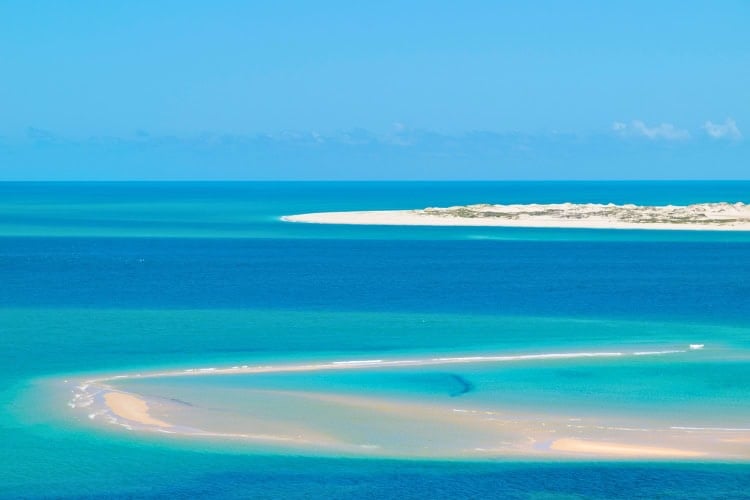
The Bazurto Archipelago consists of five islands off central Mozambique, ringed by sandbars that appear and disappear with the tide. Around 5,000 people live here, mostly fishing families still sailing wooden dhows the old way. It’s a national park where dugongs (closely related to manatees) actually survive, while they’re critically endangered almost everywhere else.
Two Mile Reef offers diving with 30-meter visibility. Between June and September, humpback whales breed close enough to shore that you can spot them from the beach. Getting here requires flying into Vilanculos from Johannesburg, then speedboat or helicopter to the islands.
Lamu, Kenya

There are no cars on Lamu. Actually zero. The island banned them. More than 3,000 donkeys work here, hauling everything from cement to tourists. The Lamu Donkey Sanctuary has run a seafront clinic treating them for free since 1987.
The town is a UNESCO site founded in 1370, essentially unchanged since. Stone buildings with carved wooden doors, narrow alleys, and mosques standing for centuries. It’s Swahili culture preserved at the intersection of Arab, Persian, Indian, and African influences.
In November, the Cultural Festival features donkey races on the beach, dhow sailing competitions, and traditional dance. Walking tours hit the museum and fort, but the best approach is wandering and getting lost in the alleyways.
Read More: The Best of Kenya: Safari Magic and Coastal Paradise
Príncipe, São Tomé and Príncipe
This two-island nation in the Gulf of Guinea sees maybe 15,000 tourists a year total. Príncipe, the smaller island, gets even fewer. Jungle mountains drop into the ocean, sea turtles nest on empty beaches, and there are no dangerous snakes or predators.
The chocolate history runs deep. Tour old plantation estates to see bean-to-bar production, some dating to Portuguese colonial times. Hike through Príncipe Natural Park, take pirogue rides to Baia das Agulhas for snorkeling, or visit Santo António for slow-paced island life. Local company Eventur runs day trips, but booking requires emailing directly rather than clicking buttons on Viator.
Asia
Socotra, Yemen

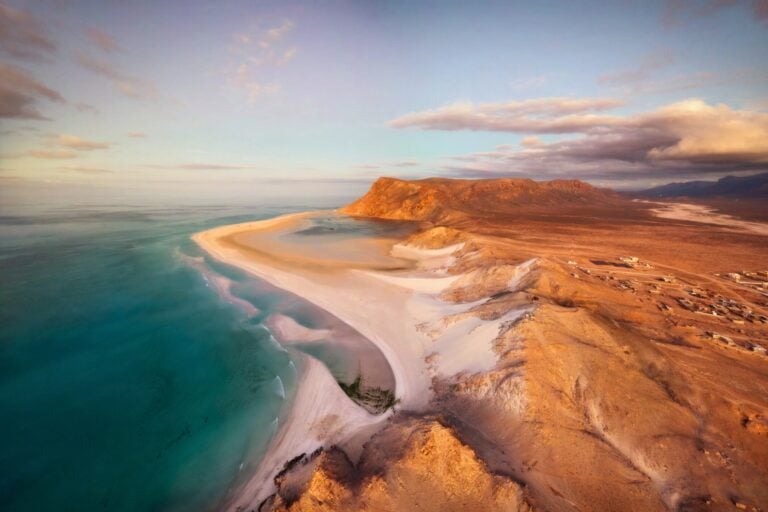
Socotra sits 240 miles off the coast of Yemen and operates autonomously from the mainland. While Yemen deals with civil war, Socotra remains peaceful and safe. Dragon blood trees look like giant umbrellas with thick trunks spreading into dense canopies. Cut the bark and red sap bleeds out, hence its name. They grow on Socotra and basically nowhere else, same as 90% of plant species here.
The island is only accessible from October through May. Tours typically last 7-8 days because of weekly flight schedules. You’ll camp on beaches (no hotels outside Hadibu), eat fresh-caught fish over campfires, and hike to places like Hoq’s Cave. The infinity pool at Homhil overlooks the southern island. Detwah Lagoon pairs turquoise water with white sand and limestone cliffs.
Companies like Welcome to Socotra and Young Pioneer Tours handle logistics. Expect camping gear, guided hikes, and snorkeling at Dihamri Marine Protected Area, where coral reefs look impossibly healthy.
Check out TripAdvisor’s list of best Socotra Island Tours here.
Flores, Indonesia
Most people show up for Komodo dragons. Fair enough. Where else can you see three-meter prehistoric lizards with venomous saliva?
But Flores itself has crater lakes that change color, traditional villages reachable only on foot, and pink beaches from pulverized coral. Mount Kelimutu has three lakes shifting between turquoise, blood red, and emerald green. Villages like Wae Rebo preserve cone-shaped Mbaru Niang houses accessed via 3-4 hour jungle hikes.
Day trips from Labuan Bajo take you into Komodo National Park where rangers guide you through terrain where massive lizards hunt. Pink Beach mixes red coral with white sand. Padar Island has that viewpoint where white, black, and pink beaches meet blue water. At Manta Point, snorkel alongside manta rays with four-meter wingspans.
Viator has solid options from budget speedboats to private sailing charters. Expect 6am pickups and full days on the water.
Yakushima, Japan

Rain falls constantly on Yakushima, turning the forest into a moss-draped world where every tree trunk, rock, and fallen log is green. Deep within these primeval woods stands Jōmon Sugi, a cedar that may be up to 7,000 years old, towering over the forest like a silent witness to millennia.
Reaching it requires a long, full-day hike, but shorter trails such as Shiratani Unsuikyo offer glimpses of the same ancient moss and twisted roots. Scattered along the coast, hot springs let you soak while waves crash nearby, blending the dense forest with the sea. On Yakushima, the natural world feels alive in a way that almost seems unchanged for thousands of years.
Europe
Svalbard, Norway
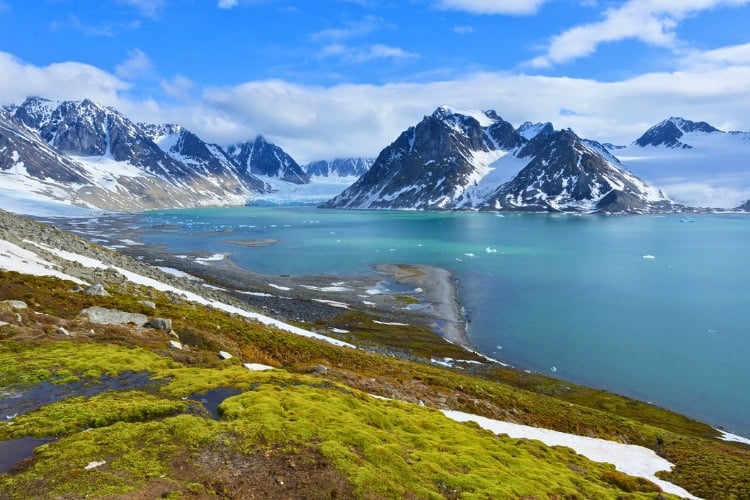
In Svalbard, polar bears outnumber people, and it’s actually illegal to leave town without a gun. The archipelago sits halfway between mainland Norway and the North Pole, a landscape of glaciers, tundra, and frozen fjords. In summer, the sun never sets; in winter, it never rises.
Longyearbyen, home to around 2,400 residents, feels like a frontier town. Beneath the permafrost lies the Global Seed Vault, a backup of the world’s crop seeds. Wildlife thrives on the edges of human settlement—polar bears patrol the ice, walruses rest on beaches, and Arctic foxes roam the tundra.
Winter brings its own magic: the Northern Lights sweep across the sky, and dog sleds glide over the frozen expanse. Svalbard is remote, extreme, and unforgettable, a place where nature dominates every hour of the day.
Read More: Norway’s Svalbard Archipelago: An Expedition Above the Arctic Circle
Gotland, Sweden
Gotland, Sweden’s largest island, feels like a place frozen in time. Its medieval heart, Visby, is still encircled by 3.4 kilometers of 13th-century stone walls, and every August, Medieval Week brings the town alive as 40,000 visitors arrive in period costume to joust, feast, and wander the cobbled streets. Beyond Visby, windswept beaches on Fårö are dotted with dramatic limestone formations called raukar, immortalized in the stark, haunting films of Ingmar Bergman, who lived on the island for decades.
History is everywhere: Viking burial sites and carved picture stones tell stories of gods and heroes, while reconstructed settlements offer a glimpse into daily life centuries ago. The Gotland Museum houses the world’s largest collection of Viking silver, a reminder that this island has long been a crossroads of culture, trade, and myth. Here, the past isn’t just preserved—it shapes the landscape itself.
Azores, Portugal
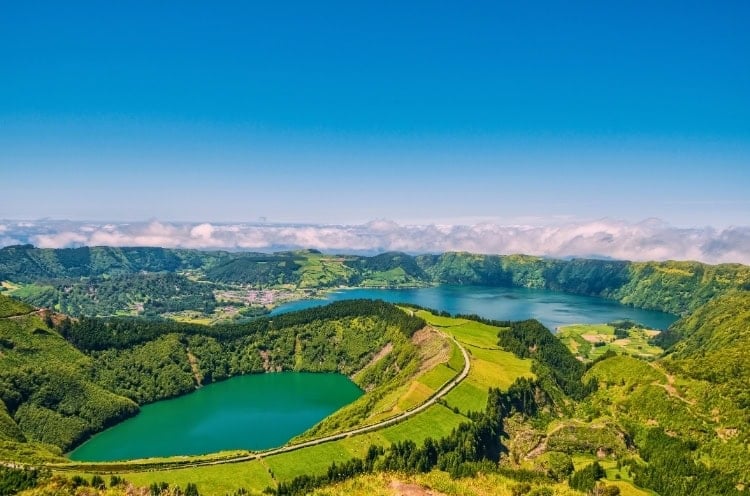
The Azores, nine volcanic islands scattered across the mid-Atlantic, feel like a world apart, just four hours from Lisbon. On São Miguel, twin lakes (one blue, one green) sit in a massive crater at Sete Cidades, a landscape so perfectly formed it seems unreal. In Furnas, locals still cook food in volcanic steam vents before unwinding in naturally heated thermal pools.
Whale watching here rivals anywhere in the world, with blue whales, sperm whales, and playful dolphins passing by throughout the year. Each island has its own personality: Pico rises with Portugal’s highest mountain, while other islands are quieter, uncrowded, and rich with rugged coastal beauty. The Azores manage to feel remote and untouched, despite having regular flights from Europe.
Read More: Top Things to See and Do in Portugal’s Azores Islands
North America
Haida Gwaii, Canada
The Haida people have lived on these islands for 13,000 years off British Columbia’s coast. Ancient totem poles stand in abandoned village sites like SGang Gwaay, a UNESCO site only visited with Haida Watchmen guides. Smallpox wiped out most of the population in the 1800s, leaving villages empty but not forgotten.
Sitka spruce and western red cedar grow massive trunks so wide that multiple people can’t encircle them. Gwaii Haanas National Park protects the southern archipelago, accessible only by boat or floatplane. The Haida culture is actively alive, from contemporary totem carving to language revitalization.
San Juan Islands, Washington

Haida Gwaii, off the coast of British Columbia, has been home to the Haida people for 13,000 years. Across the islands, ancient totem poles rise from abandoned village sites like SGang Gwaay, a UNESCO World Heritage Site that visitors can explore only with Haida Watchmen guides. The islands bear the weight of history: smallpox wiped out most of the population in the 1800s, leaving villages empty but never forgotten.
Towering Sitka spruce and western red cedar dominate the forests, their massive trunks so wide that several people would be needed to wrap their arms around them. The southern archipelago is protected as Gwaii Haanas National Park, accessible only by boat or floatplane, preserving both its natural beauty and cultural heritage. Today, Haida culture thrives through contemporary totem carving, language revitalization, and active stewardship of the land, a living testament to resilience and continuity.
Isla Espíritu Santo, Mexico

Isla Espíritu Santo rises from the Sea of Cortez, an uninhabited island north of La Paz, where desert meets the sea. At Los Islotes, playful sea lions weave around snorkelers in endless circles, a scene that feels both wild and intimate. Inland, the island is pure Baja desert, dotted with towering cardón cacti and beaches that shift between brilliant white sand and volcanic black.
Day trips from La Paz let you combine snorkeling with the sea lions and exploration of secluded beaches. The water is comfortably warm year-round, so full wetsuits aren’t necessary, and wildlife encounters can include seasonal manta rays, whale sharks, and dolphins. Isla Espíritu Santo feels like a place set apart, where the natural world dominates and every splash of water or desert wind reminds you how alive it is.
South America
Galápagos Islands, Ecuador
The Galápagos Islands feel like stepping into a living experiment in evolution. Because the wildlife developed without land predators, animals here have almost no fear of humans. Blue-footed boobies perform their quirky dances just feet from where you stand, giant tortoises over a hundred years old lumber past, and marine iguanas—the only seafaring lizards on Earth—pile onto rocks, sneezing salty spray into the air.
Each island has its own character. Isabela mixes fresh lava fields with highland forests, while Bartolomé is defined by Pinnacle Rock rising sharply from black sand beaches. Visiting usually means a cruise of three to fourteen days with certified naturalist guides, featuring daily Zodiac landings and snorkeling alongside sea lions and turtles. The water is brisk, in the sixties to seventies, thanks to the Humboldt Current, but even here you might spot penguins at the equator.
Read More: The World’s 15 Most Breathtaking Island Destinations
Chiloé, Chile
Chiloé, off southern Chile, is a place where myth and daily life collide. Timber churches built without nails stand as UNESCO sites, and stories of witches and ghost ships remain part of local identity.
The island is the original center of potato cultivation, home to around 400 varieties, and traditional feasts like curanto (seafood, meat, and potatoes cooked in earth ovens) feed entire communities. Misty temperate rainforests shelter wildlife, while penguins nest along the coast. Frequent rain keeps the landscapes lush, giving Chiloé a wild, unforgettable beauty.
Los Roques, Venezuela

Los Roques is an archipelago of 350 islands set within a protected national park off Venezuela’s coast, where calm conditions have kept both the islands and reefs remarkably intact. The water shifts through every shade of blue and green, pooling in shallow lagoons protected by coral. Gran Roque, the only inhabited island, is a small fishing village reached by small plane.
Day trips fan out to the outer cays, where sandbars connect tiny islands and snorkeling reveals some of the healthiest Caribbean coral left. Cayo de Agua delivers the classic scene: wading through clear water, reefs just offshore. Steady trade winds make kiteboarding a natural fit here, but the real draw is the sense of isolation and untouched beauty.
Oceania
Lord Howe Island, Australia

Lord Howe Island, 600 kilometers east of Sydney, limits visitors to just 400 people at a time. Volcanic peaks rise straight from the sea, meeting the world’s southernmost coral reef, where tropical and temperate species mix in unexpected ways. Offshore, Ball’s Pyramid towers from the ocean, a dramatic sea stack that became famous after a rare stick insect once thought extinct was rediscovered nearby.
Reaching Mount Gower’s summit requires a full day and a guide, but life on the island moves slowly anyway. There’s no mobile service, limited wifi, and bicycles operate on an honor system. Accommodations book far in advance, but the strict visitor cap is exactly what keeps Lord Howe feeling untouched.
Aitutaki, Cook Islands
Aitutaki’s lagoon rivals Bora Bora, minus the crowds and the price tag. A volcanic island sits at the center of the atoll, surrounded by a wide lagoon and scattered motu that feel almost unreal. Boat trips hop between uninhabited islets where you wade ashore onto empty beaches, with stops at places like One Foot Island, known for its tiny post office and clear-water snorkeling.
Getting here means flying through Rarotonga, then a short hop to Aitutaki. Accommodations stay low-key, from simple beach bungalows to small resorts, keeping the focus where it belongs—on the lagoon itself.
Tanna is one of Vanuatu’s most traditional islands, where daily life still follows rhythms that long predate modern tourism. At its center, Mount Yasur erupts every few minutes, sending bursts of molten rock into the sky. You can drive most of the way up and walk to the rim, close enough to feel the heat and hear the deep rumble beneath your feet.
In Sulphur Bay, the John Frum movement remains part of local life, shaped by the island’s history and outside influence. Much of Tanna still follows kastom traditions, and village visits require care and respect. Beyond the volcano, black sand beaches meet coral reefs, with hot springs and jungle waterfalls scattered across the island. Flights from Port Vila run regularly, but Tanna still feels raw and deeply rooted in place.
Antarctica
South Shetland Islands

The South Shetland Islands sit just off the Antarctic Peninsula and offer one of the most direct ways to experience Antarctica. Penguin colonies crowd the rocky shores, with chinstrap, gentoo, and Adélie penguins nesting by the hundreds of thousands, unfazed by humans standing just feet away. Weddell seals sprawl across ice floes while humpback whales surface in the freezing water offshore.
Glaciers spill straight into the sea, sending icebergs the size of buildings drifting past in deep, electric blues. At Deception Island, ships sail into a flooded volcanic caldera, one of the few places on Earth where you can anchor inside an active volcano.
Most visits happen by expedition cruise from Ushuaia, crossing the notoriously rough Drake Passage. Trips include Zodiac landings, guided wildlife encounters, and days shaped by weather that can shift without warning. Travel is limited to the Antarctic summer, when temperatures hover near freezing and the landscape feels raw, immense and completely untamed.
Need a hand planning your trip? Here are the sites and services we rely on most, from booking tools to travel products we love.
Inspire your next adventure with our articles below:
- 12 Bucket List Adventures to Gift Your Travel Lover This Year
- 9 Life-Changing Countries Worth Adding to Your Travel Bucket List
Want to discover more hidden gems and helpful travel tips? Join our free newsletter for the latest travel secrets and travel articles.
We are reader-supported and may earn a commission on purchases made through links in this article.

Planning another trip soon? ✈️
Add GoWorldTravel.com as a preferred source on Google. Click the button below so our local guides, packing hacks, and hidden-gem itineraries always show up first when you search!
Add to Preferred Sources