
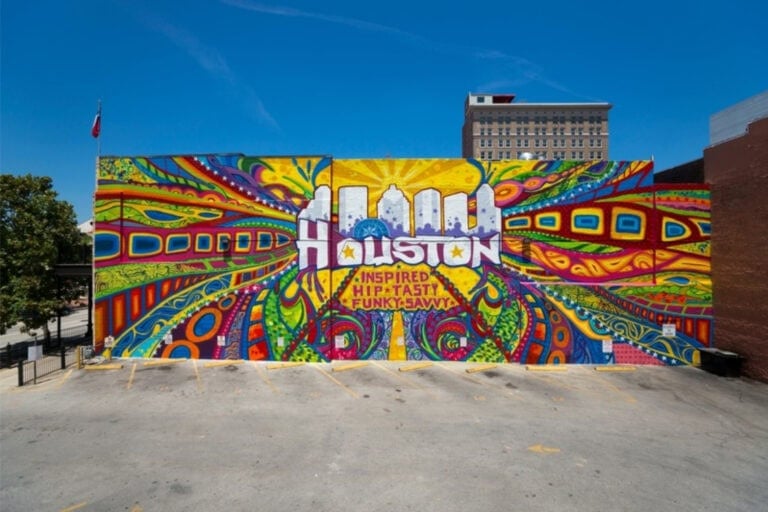
My first thought is: I didn’t order an enchilada. I was expecting “Chef’s take on crab cake,” as our server promised. And yet the plate in front of me at Maximo Mexican restaurant in Houston, Texas, holds two neatly folded rolls, draped by a marigold-toned mole.
But Adrian Torres has performed a sleight of hand, presenting a dish that borrows the look of a humble enchilada to deliver a luxurious surprise.
The “tortilla” is Chihuahuan cheese, rolled thin and wrapped around a generous portion of sweet lump crab, griddled until caramelized, and topped with a scattering of chiles and, improbably, trout roe. It’s all presented on an oval of handmade masa.
The effect is layered and immediate. The faint crunch of the cheese gives way to the richness of the crab, lifted by the bright mole amarillo, a gentle heat from the chiles, and the salty crunch of the roe.
It’s “crab cake” that’s been run through Mexican streets and Oaxacan kitchens, then tweaked so it’s somewhere closer to fine dining than nostalgia.
Maximo: A Culinary Evolution
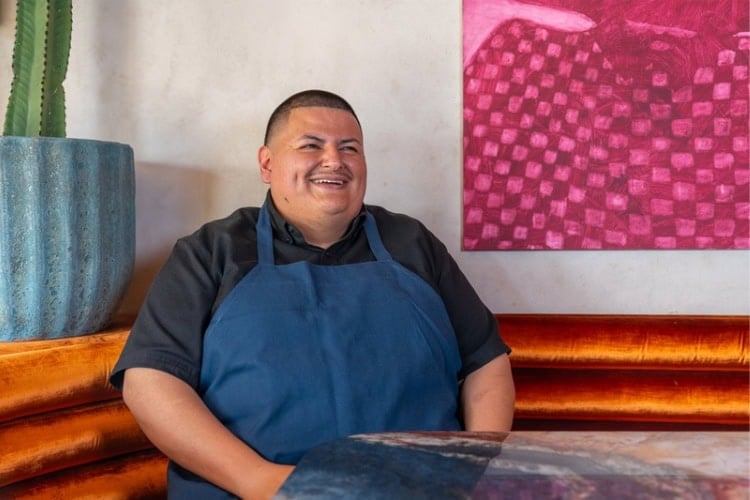
Photo by Carla Gomez
Torres has since early 2025 led the restaurant’s evolution from a neighborhood taco joint to one of the most inventive tables here in Houston, the biggest city in Texas and the fourth-largest city in the U.S.
In that time, he’s earned a Michelin Bib Gourmand (his five-course tasting menu goes for a mere $45) and has been named a finalist for James Beard Emerging Chef.
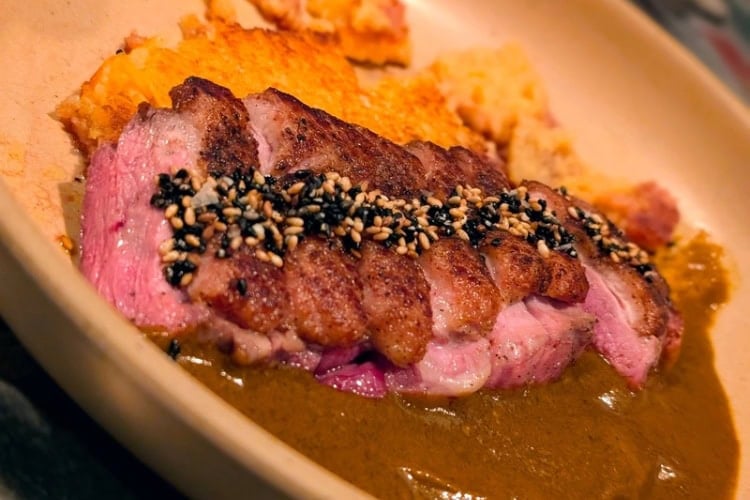
The menu moves easily across influences. A signature masa cornbread is topped with ant (!) butter and Russian-style Osetra caviar. On top of that is a standout Peking duck breast, sliced thick and shingled on the plate, rosy at the center, with a stripe of heirloom Mexican fried rice running down the center and mole negro pooled alongside.
Houston’s Fusion Cuisine
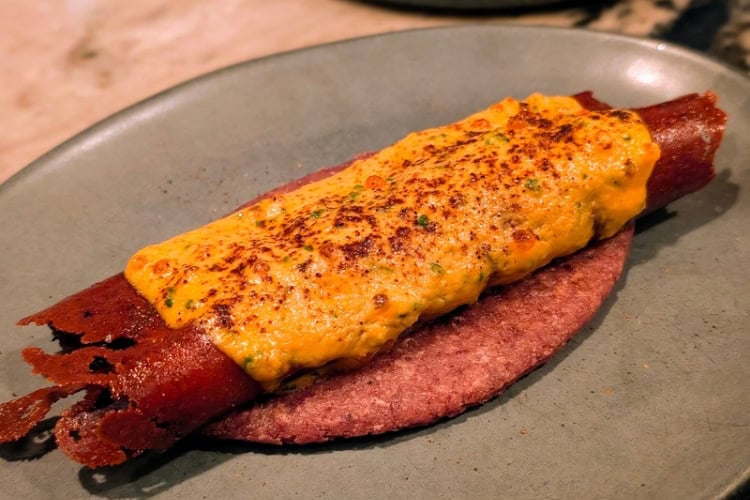
Photo by Craig Stoltz
In Houston, chefs tend to bristle at the word “fusion,” which suggests cuisines lashed together for effect. Here, it lands differently.
This is a surprisingly diverse city, where more than 145 languages are spoken and people have been sharing their mama’s recipes from around the world with each other for generations.
The blending of Mexican and global influences feels less like contrivance than convergence. It’s just something in the air, like the humidity.
A New Houston
Houston sprawls inland from the Gulf of Mexico, and its location has made it the dominant center of Texas’s legendary oil industry. With that came a certain aura: conspicuous oil money, broad shoulders, and a taste for barbecued brisket. And that’s not entirely wrong, but it’s changing.
What’s replacing it is a city in motion, powered by a more diversified economy. The economic engine of the Johnson Space Center is in high gear. Advanced technologies spin out into Houston’s entrepreneurial corners, and there are growing investments in biotech, advanced manufacturing, and alternative energy.
Some refer to the new Houston as the “Third Coast” of the U.S., a rival to the East and West coasts.
Houston’s Cultural Diversity
But throughout this transition, less noticed but more influential to daily life in the city, Houston has become home to generations of immigrants from all over the world. Houston is often called “the most diverse city in America,” though such things are hard to measure.
Suffice to say, one in four Houstonians was born outside the U.S. And nowhere does this transformation show more clearly than in neighborhoods where cultures overlap. Strip centers read like global food courts and small restaurants have menus that are less a statement than a conversation.
A Visitor’s Culinary Adventure
So what does this all mean for a visitor? A choice among 10,000 restaurants serving cuisine from at least 70 countries and countless regional specialties within that.
Houston has many award-winning Indian, Italian, Mexican, and Mediterranean restaurants that can compete with those of any U.S. city. However, in addition to the usual international dining suspects, you’ll come across some you rarely find elsewhere.
This includes those serving Venezuelan-Syrian, Sardinian, Uzbek, Haitian, Sri Lankan, Cambodian, Laotian, Guatemalan, Egyptian and Dongbei (“cold weather”) Chinese. There is also representation of the continent of Africa: Ivorian, Senegalese, Angolan, Ghanian, South African and Zimbabwean.
Eating Through Houston
So I had my work cut out for me on my long weekend in Houston, just figuring out where to go. I wound up visiting, in addition to the Mexican-plus-the-world Maximo, a restaurant that fused Vietnamese and Cajun cuisine.
I also experienced an eclectic West African place that integrates Southern U.S. influences, a wild Chinese global diner, and, in a different take on “international” dining, a Native American Choctaw restaurant that served an 18-course tasting menu I will be talking about for the rest of my life.
So: Let’s dig in. It’s time to eat Houston.
Crawfish & Noodles: Vietnam on the Bayou
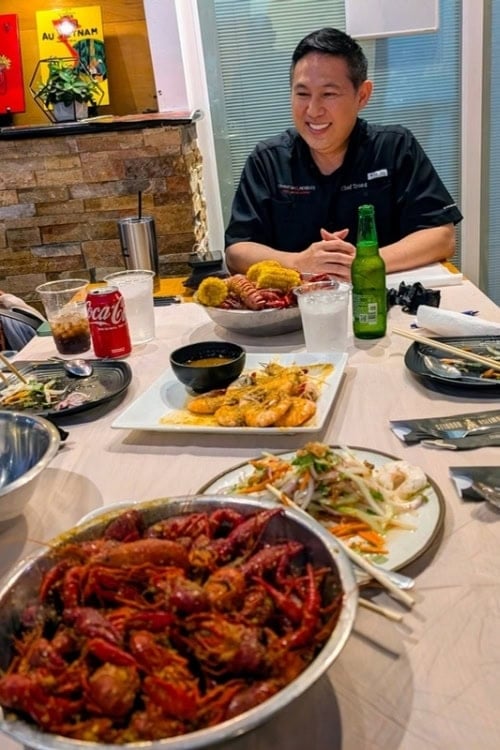
One night of my Houston dining adventure, I strapped on my sturdy white bib, pulled on black nitrile gloves, cracked open a bright red crawfish, and sucked the juice out of its head.
It was full of garlic and butter and an exuberant mix of spices that Chef Trong Nguyen, a pioneer in developing Houston’s Viet-Cajun food and launching it into the world, refuses to reveal. (Lemon grass, he eventually let on, and cayenne, among others.) The nub of tail meat was sweet, perfectly tender, and worth the work to fight out of its shell.
I was at Nguyen’s landmark Crawfish & Noodles, the strip-mall temple of Viet-Cajun cuisine that draws together the flavors of Southeast Asia and the bounty of bayou country.
It’s located along the six-mile stretch of Bellaire Boulevard in Houston known as Chinatown. That’s an unfortunate name, since the area comprises people, grocery stores, bakeries, salons, and an astonishing variety of restaurants representing not just China.
Vietnam, Thailand, Japan, Taiwan, Korea, Pakistan, Nigeria and many more are also represented. There is some effort to rename the area “Asiatown” to reflect its diversity, but it hasn’t caught on.
Nguyen’s Viet-Cajun Creation
More to the point of Crawfish & Noodles, Houston is home to one of the largest Vietnamese communities in the U.S., second among metro areas only to Los Angeles. More Vietnamese live in Houston than live in all of the U.K.
“After the Vietnam War, many Vietnamese came to America,” Nguyen explains. “Then they came here. It was because of the Gulf, where Vietnamese who worked on shrimp and fish boats at home could find work. But it was also the weather. Vietnamese are used to hot and humid weather, so Houston felt familiar.”
Born in Vietnam and raised on his grandmother’s cooking, Nguyen spent three decades in casino marketing before leaving to launch Crawfish & Noodles.
In the process, he developed Viet-Cajun crawfish, bathing Louisiana-style boils in garlic, butter, and Vietnamese seasonings. It’s a marriage that works partly because both Cajun and Vietnamese cooking already carry French DNA, from Acadian French roots in the bayou to colonial French influence in Vietnam.
The Rise of Viet-Cajun Crawfish
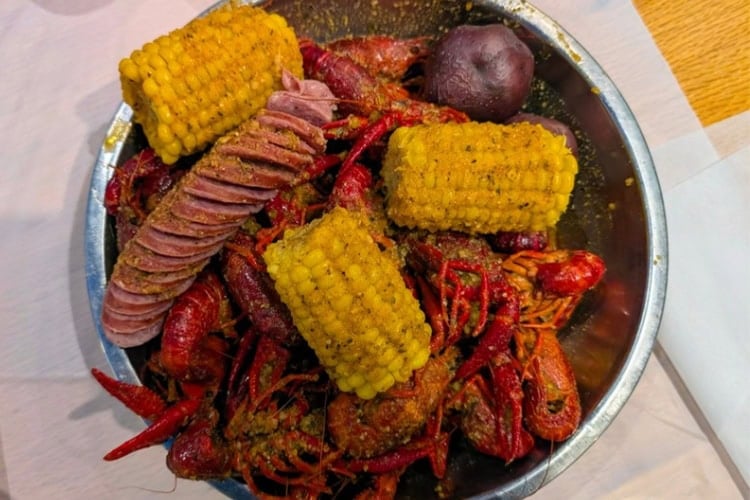
The result transformed a once-modest neighborhood spot into a nationally recognized destination. Nguyen’s Viet-Cajun crawfish has earned him multiple James Beard Award nominations and put him on screens, including David Chang’s Netflix series Ugly Delicious and Andrew Zimmern’s The Zimmern List. He has also had appearances on Food Network and other national outlets.
Which is not to say it’s been easy to pull off.
“It took me almost two years to get it right,” he explains as he expertly twists the tail meat off a bowlful of crawfish. “It was hard to get the mix of Vietnamese and Cajun flavors right. We struggled in business for the first few years.”
Today, the restaurant is dependably packed, with Asians and Anglos filling the seats.
The Menu at Crawfish & Noodles
All the dishes we have tonight, like salt-and-pepper fried chicken and a bright, cool plate of lotus salad studded with impossibly plump Gulf shrimp, pull the cultures of Vietnam and Houston together.
Which Nguyen sees as his mission. In April of 2026, he served as host of the first Viet Cajun Crawfish Festival in Houston. It was his way to celebrate America’s 250th anniversary.
ChòpnBlọk: Houston’s Nigerian Connection
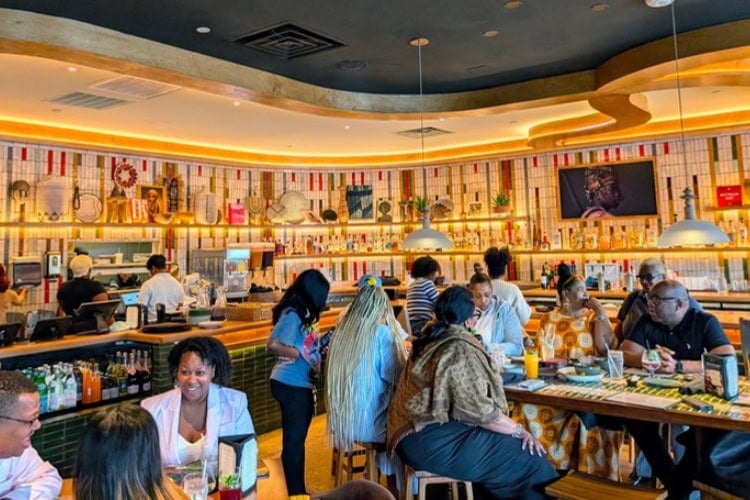
Photo by Craig Stoltz
In another example of the Houston area’s remarkable success at welcoming people from around the world, it’s home to more people of Nigerian descent than any other metro in the U.S.
The Nigeria-U.S. pipeline of oil and gas commerce drew the African nation’s engineers and petro-executives to Houston in the ‘70s and ‘80s. Chain migration followed.
Some recent federal estimates put the Nigerian population in the Houston metro at over 75,000.
Alief Neighborhood and its Nigerian Community
A lot of that population has settled in the Alief neighborhood, which wraps and lines parts of Chinatown. This means some of the area’s favorite Nigerian restaurants are located in the same strip centers as the polyglot neighborhood’s pho shops and biriyani joints.
But today we’ve headed to the humming Montrose area to visit the West African restaurant ChòpnBlọk. The restaurant was winner of a Michelin Bib Gourmand award and “best” distinctions from the New York Times and Esquire.
Chef Ope Amosu is located here, in the restaurant row, where the city’s foodies prowl, because he wanted West African food to be more visible to Houston’s recreational eaters.
The Vibrant Scene at ChòpnBlọk
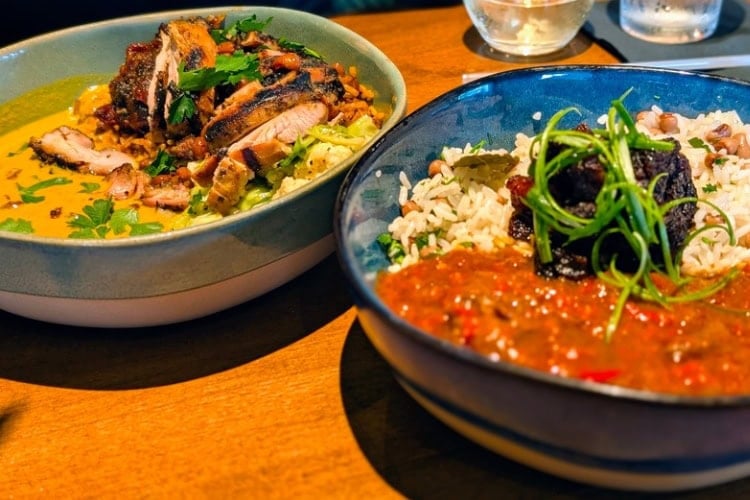
ChòpnBlọk specializes in bowls. Amosu moonlighted from his oil executive job by working at Chipotle to learn the fast-casual food business from the ground up.
Advised by our lovely server, who’s happy to act as ambassador for a style of food we’re not familiar with, my wife and I are sharing two signature bowls.
First comes the Golden, built around ChòpnBlọk’s signature Smokey Jollof Jambalaya, which brings together the traditional rice dish of Nigeria with the bayou rice dish staple. It’s another Houston-meets-world creation. It’s both exotic and familiar and delivers a light, lovely back-of-the-throat tingle.
Houston’s Multi-Cultural Dining
We also have the Buka, a bowl full of steamed rice and beans, spoon-soft short rib, and kicky West African Red Stew. Each bowl features a small serving of plantains, one of them stewed gently and one fried crisp, both of them sweet counterparts to the heat of the main attractions.
The room is colorful and filled with African art, books, and small sculptures. Cheerful voices bounce off the concrete floor. The bar is full and lively.
We can’t possibly eat a real dessert, but we want to linger. My wife chooses a South African Sauvignon Blanc. I ordered a Redburn Sidecar from the bar, which modifies the classic American cocktail by infusing the Cognac with South African Rooibos.
It’s another multi-culti Houston creation, modifying a speakeasy staple with the needles of an obscure shrub grown in Africa’s Cederberg Mountains, 9,000 miles away.
In this sunny room, in this restaurant that so skillfully brings African flavors to non-African eaters, it’s a treat to savor.
Agnes and Sherman: A Global Diner
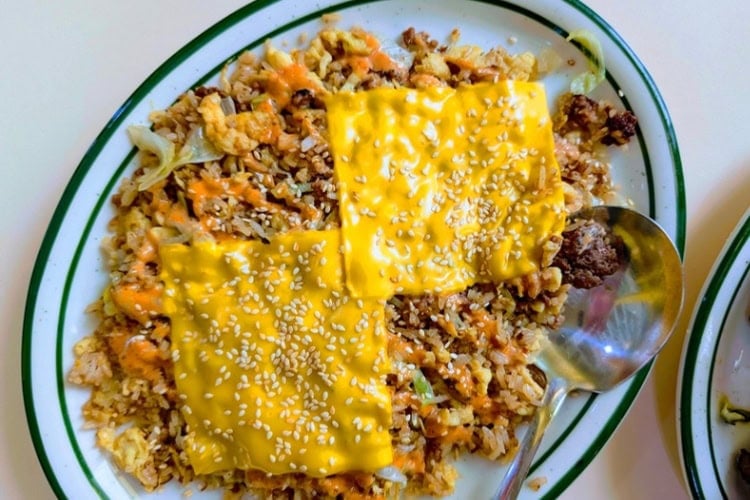
The dish in front of me is so outlandish that it’s funny. I actually laugh when I taste it.
It’s the Cheeseburger Fried Rice at Agnes and Sherman, a diner that reaches into Houston’s global pantry with glee. It’s yet another rising star that’s won Michelin recognition in a short time.
The creation came out looking very much like a plate of fried rice, but with two precisely placed diamonds of American cheese melted on top, drizzled with a suspicious pink sauce and dusted with sesame seeds.
This shouldn’t work. It should be one of those forced fusions that blows up in your face like a trick cigar. But I fork through the cheese and pink goo and into the innards, and sure enough, there’s crispy beef like you find in a smashburger, along with gently wilted lettuce and the promised fried rice.
It’s an absurd joy, a plateful of crunchy, chewy, gooey, sweet umami fun. A cheeseburger that swaps its bun for take-out rice. It’s the dumbest dish I’ve ever loved.
Nick Wong’s Culinary Innovations
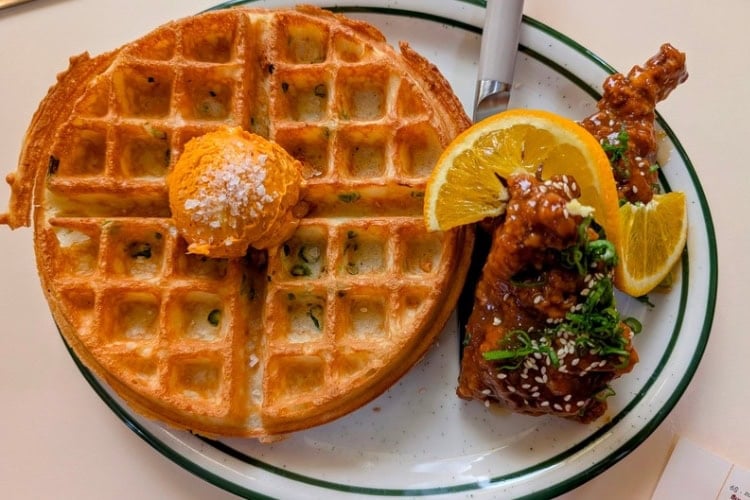
It’s all part of what chef Nick Wong does, torching the scripts of both diner and Chinese restaurant and treating Houston’s global map like a playroom.
On the day my wife and I visited, we had a Taiwanese Dip sandwich, which tweaks the staid French Dip with mustard greens and an elevated version of the nose-clearing Chinese mustard you get in yellow packets with cheap delivery food.
We also tried the Savory Scallion Waffles, a play on the classic Southern chicken and waffles and Chinese scallion pancakes. They’re topped with sambal butter, an Indonesian nod.
The Wedge Salad swaps Chinese sausage for the bacon, ginger scallion dressing for the Roquefort, and “Chinese donuts”, thin slices of unsweetened fried dough, for croutons. I’ve never seen those before, and it turns out, neither had Wong until he invented them.
The Rangoon: A Delectable Surprise
But our favorite dish, aside from the Cheeseburger Fried Rice, of course, was the Rangoon. The dish rethinks and pulls apart those little crab dumplings full of vague white cream that arrive in wax paper when you order Chinese takeout.
Here, flat wonton chips the size of your palm sit on a plate next to a bowl of generously crabby dip; a cup of translucent pepper jelly sits alongside. At a glance, it’s another international game, resembling a plate of tortilla chips, queso, and salsa.
It’s also interactive. You essentially assemble your own crab Rangoon bites from the three components, transforming something you usually swallow like a fat pill into a culinary activity.
Nick Wong’s Creative Culinary Mind
That’s exactly what Wong intended. “It’s fun to eat them with a group,” he said when he stepped briefly out of the kitchen on the busy afternoon. “I also got tired of pinching all those dumplings. It’s a lot of work.”
Wong has worked at some of the top restaurants in the world (including interning at now-closed world’s best Noma in Copenhagen). He also led the kitchen in David Chang’s famed Momofuku Ssam Bar in New York. This is the restaurant that busted open the top Asian dining by making it loud, casual, experimental, eclectic and electric. Agnes and Sherman carries that DNA.
All the way through the Egg Fu Young with Gumbo Gravy.
Ishtia: Story Time
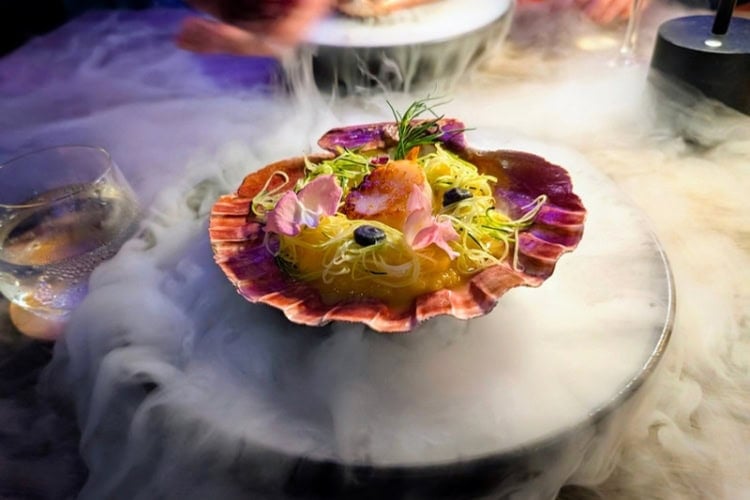
By course number 12, I think I’ve hit my limit.
“We’re almost done with the entrees,” says chef and host David Skinner, as he pours hot water onto a bowl of dry ice in front of us, bathing our scallop shells in a lovely fog.
We’re at the Choctaw Indian restaurant Ishtia, nearing the home stretch of an 18-course tasting menu. After the haze clears, we see that course number 12 is Skinner’s take on the “three sisters”. This is the Indian agricultural triumvirate of corn, beans, and squash, elevated with fine-dining creativity.
The squash is julienned and presented with corn butter; the tepary beans have been transformed into dots of gel. All of this enhances a gorgeous single Maine diver scallop, which is there because, well, it’s delicious.
An Extraordinary Dining Experience
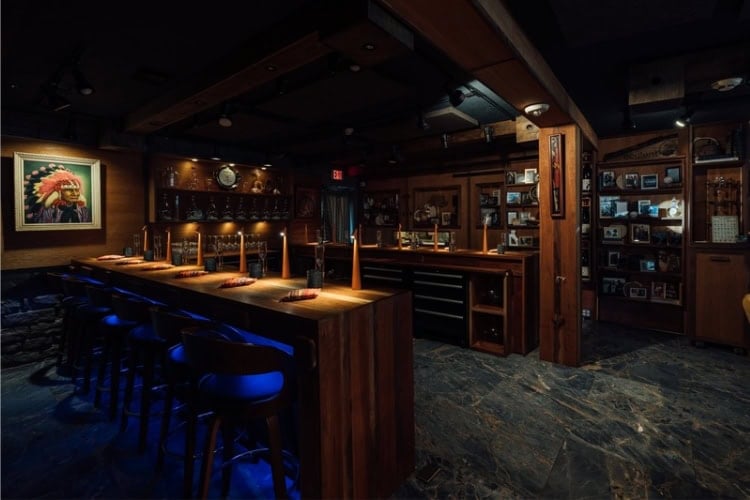
The whole evening has been extraordinary, in the literal sense of that word. We’ve had deer cheek braised in allspice, presented on a stick and wrapped with filaments of potato; a broth of chanterelle, morel, and king trumpet mushrooms poured over a hot stone; and an aerated parsnip crustade so light it nearly collapses on the tongue.
Skinner has presented each of these courses with a story that illuminates the Choctaw people and landscape.
He is a Choctaw tribal member himself, born in Ponca, Oklahoma, and this is his retirement gig. He wants to tell the story of his people through food.
The fact that he does this with a mix of culinary techniques ranging from rustic authenticity to molecular gastronomy puts this experience so far off any map of restaurant experience you’ve had.
You struggle to keep your balance. So you just have to sit back, listen to the stories, and let the 18 courses come at you.
Choctaw Inspired Gourmet
“This is what’s known as a ‘Welcome Stew,’” he said, as he presented course number four, a small pot of a slow-cooked tepary bean and bison stew. “It’s what the Choctaw would have served if you’d come to their house years ago, if you didn’t come to kill them.”
Skinner started his first restaurant when he was a teenager, but took a 30-year diversion into the oil and gas industry. There he became an executive for Conoco and later launched his own energy business advisory service. The corporate job allowed him to travel the world, where he ate voraciously and studiously.
Ishtia is his third restaurant since he cashed out, and it’s clearly a passion project. It’s open three nights a week, with 18 seats in a small room and communal counter seating; $239 prix fixe plus a 20 percent service charge.
Culinary Creativity and Storytelling
The courses and stories keep coming: A bite of foie gras with berries that’s his take on the (“gross”) jerky and granola snacks he was fed as a child. A pork jowl stew (Choctaw-raised pigs that are genetically related to Iberian breeds, Skinner says) from his great-grandmother’s recipe.
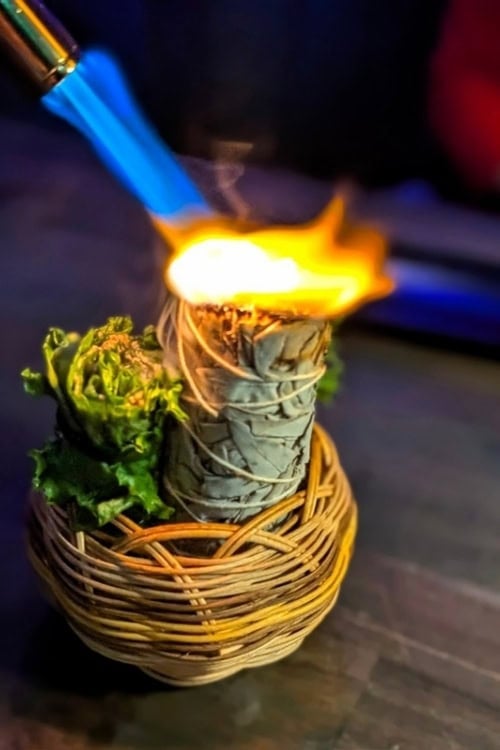
A “handheld salad” of walnut and sumac pesto wrapped in lettuce and tied with chives, served on a plate smoking with a squat cigar of torched sage, an Indian ceremonial rite. Rainbow trout smoked on alder greens and served alongside native rice harvested by canoe.
But modest little course number ten was also a standout. “Here’s a palate cleanser,” Skinner said as he set down two small bowls in front of us. They appeared to be empty.
A Surprising Experience
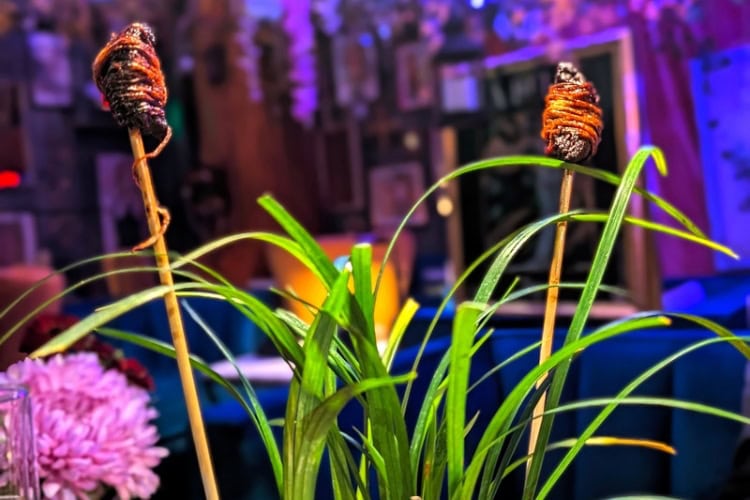
With a flourish, he grabbed the small handmade vase that had been sitting at the end of our table all night, lifted out the flowers, and poured the contents into our bowls. “Apple cider and spruce tip syrup, with sumac and juniper berries,” he announced.
So we’d be sipping the liquid that the flowers in front of us had been standing in since we arrived. What a surprise, what a treat, what a delight.
Like practically everything else we had in Houston, as a matter of fact.
More Culinary Adventures in Houston
One more way to get a big serving of Houston’s eclectic dining scene is at Post, its international food court downtown. Some of the shops are truly exotic.
When I was there, you could visit stalls offering Uzbek, New Nordic, Venezuelan, Zimbabwean, and Bolivian food, along with more familiar international favorites like Thai, Indian, Chinese, and, yes, I should mention this, here at the end, Tex-Mex.
Houston: If You Go
Houston’s a big, sprawling city famously lacking municipal zoning, its beauty parts interconnected by a network of ugly, messy freeways. I recommend a generous Uber budget to minimize the difficulties of navigation and maximize the joys of watching such a vivid, wildly disorganized city breeze past.
When you’re not eating, the huge urban oasis Hermann Park provides an excellent opportunity for mobile digestion and walking access to Houston’s excellent museums, including its notable Museum of Fine Arts (all that oil money has spawned many generous patrons of the arts).
Away from all that, you may want to seek out the Menil Collection, a standout private collection strong in 20th-century art that’s free to the public, and the singular Rothko Chapel sanctuary, next door, a bona fide must-do for fans of mid-century modernists.
Where to Stay
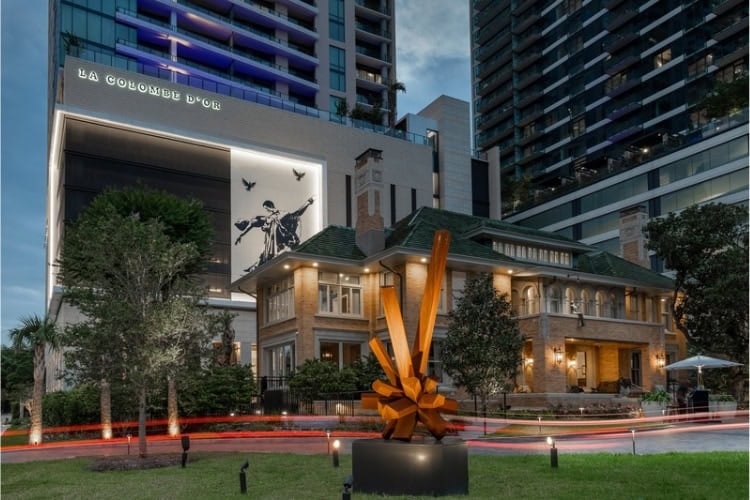
La Columbe D’Or in the zippy Montrose neighborhood is a perfectly located outpost for a Houston dining adventure. It’s a boutique hotel in three ways.
There’s an art-loaded 1920s Deco mansion with five second-floor suites (we stayed in the spacious, light-dazzled Cezanne Room, full of brilliantly curated original paintings I could have looked at for days).
Slip through a garden and you’ll find 18 sleek, modern suites. Right across the street stand nine Hollywood-style bungalows, elegant apartments aimed at the extended-stay or family set.
Back at the mansion, Bar No. 3 has serious craft cocktail chops. (The tell: They have green and yellow Chartreuse. Plus: Suze.)
From the hotel’s Montrose Boulevard location, you can walk to ChòpnBlọk, Uchi, a locally-loved sushi restaurant, Traveler’s Table, an eclectic international spot people kept recommending to me, and half a dozen other well-regarded places. It’s a ten-minute Uber from downtown.
Need a hand planning your trip? Here are the sites and services we rely on most, from booking tools to travel products we love.
Inspire your next adventure with our articles below:
- 14 Reasons to Visit Lubbock, Texas: Buddy Holly’s Hometown Has More Than You’d Expect
- Discovering Texas Hill Country’s German Roots: Walking Fredericksburg’s Main Street
Author Bio: Craig Stoltz, a former travel editor of the Washington Post, is a freelance journalist covering travel, food, and drink. He’s a frequent contributor to GoWorld Travel, and his work has also appeared in Fodor’s, Frommer’s, Afar, Garden & Gun, and many other publications.
Want to discover more hidden gems and helpful travel tips? Join our free newsletter for the latest travel secrets and travel articles.
We are reader-supported and may earn a commission on purchases made through links in this article.

- What to Do in Bordeaux: A Wine Lovers’ Guide to One of the World’s Most Prestigious Wine Regions - October 1, 2026
- The Ultimate Gift for Travelers Who Don’t Want More Stuff: 10 Epic Experiences in the US - October 1, 2026
- Walking the Camino de Santiago de Compostela After 65: 10 Tips for Baby Boomers - October 1, 2026
Planning another trip soon? ✈️
Add GoWorldTravel.com as a preferred source on Google. Click the button below so our local guides, packing hacks, and hidden-gem itineraries always show up first when you search!
Add to Preferred Sources