


Some destinations stay with you long after you return home. They change your perspective, challenge your assumptions, and remind you why travel matters.
Whether you’re drawn to ancient trails through mountain passes, otherwordly volcanic landscapes or vibrant cultures that redefine what community means, these nine countries offer experiences that go far beyond ordinary sightseeing.
From the unique terrain of Iceland to the jungle-clad temples of Peru, each of these destinations provides something genuinely transformative.
These are places where nature and history unfold at every turn and the journey is as meaningful as the destination.
1. Peru

The four-day Inca Trail through the Andes remains one of the world’s most sought-after treks, and for good reason.
This ancient pathway leads through cloud forests and alpine tundra before culminating at the Sun Gate at Machu Picchu. The trail reaches its highest point at Dead Woman’s Pass (13,828 feet). Here, hikers are rewarded with sweeping views of the Sacred Valley below.
Permits for the Inca Trail are strictly limited to 500 people per day (including guides and porters). They typically sell out six months in advance for peak season. Book through a licensed tour operator, such as GetYourGuide or Viator, as independent trekking is not permitted. This full day tour from Cusco includes train tickets, bus transport, entrance fees, and an expert guide who brings Incan history to life at the citadel.
If you’re not up for the whole trek, the train from Cusco to Aguas Calientes offers a scenic alternative, delivering you directly to Machu Picchu’s base.
The best time to hike is during the dry season from May to September. However, be prepared for cold nights at altitude. The trail closes completely every February for maintenance.
2. Iceland

Iceland delivers on its promise of fire and ice. Volcanic landscapes steaming with geothermal activity contrast against massive glaciers.
At the same time, the country’s famous Blue Lagoon offers a surreal soaking experience in milky-blue water naturally heated by the earth.
Between August and April, Iceland becomes one of the world’s premier destinations for viewing the Northern Lights. The long winter nights and minimal light pollution create ideal conditions for catching the aurora borealis dancing across the sky.
Winter also brings its challenges. Only four to five hours of daylight and icy road conditions make self-driving treacherous for the unprepared.
Round-trip flights from some parts of the US to Iceland can be found as low as $300-$600, depending on the season. This makes it one of Europe’s most accessible destinations.
November through March offer the cheapest fares. June through August remains peak tourist season despite higher prices.
Read More: Land of Fire and Ice: 10 Unforgettable Experiences That Make Iceland Pure Magic
3. Bolivia

Bolivia’s Salar de Uyuni creates one of Earth’s most surreal landscapes. This vast salt flat, the world’s largest, transforms into a mirror reflecting the sky during the rainy season from December to April. The effect is so disorienting that photographers struggle to capture where the ground ends and sky begins.
The salt flat sits at 11,995 feet above sea level, so give yourself time to acclimatize in La Paz before heading out. Most visitors join multi-day tours that also visit the Eduardo Avaroa Andean Fauna National Reserve, home to flamingo-filled lagoons and bizarre rock formations carved by wind.
Beyond the salt flats, Bolivia offers incredible cultural experiences in La Paz, South America’s highest capital city, and on Lake Titicaca, where indigenous communities maintain centuries-old traditions.
4. Japan

Japan seamlessly blends ancient tradition with cutting-edge modernity. In Tokyo’s Shinjuku district, you can lose yourself in one of the world’s busiest intersections. Here you’ll be surrounded by neon signs and the constant hum of urban energy.
An hour away by bullet train, Kyoto preserves traditional Japan with its thousands of temples, bamboo groves and carefully maintained geisha districts.
Japan Rail Passes make exploring the country affordable and efficient. The pass gives unlimited travel on most JR trains, including the famous Shinkansen bullet train.
Cherry blossom season (late March to early April) and autumn foliage (November) are stunning but crowded and expensive times to visit. Consider the shoulder seasons of May or September for pleasant weather and fewer tourists.
Japanese cuisine extends far beyond sushi. Regional specialties like Osaka’s okonomiyaki, Hiroshima’s oysters, and Hokkaido’s seafood offer delicious reasons to explore beyond the major cities.
Read More: 10 Fascinating Facts About Japan That Most Travelers Miss
5. Germany

Berlin’s Brandenburg Gate stands as a powerful symbol of both division and reunification. The city’s street art, particularly along the East Side Gallery section of the Berlin Wall, tells stories of hope, resistance, and transformation.
Berlin rewards curious travelers willing to venture beyond the tourist highlights into neighborhoods like Kreuzberg and Prenzlauer Berg, where local life unfolds in independent cafes, beer gardens and weekend markets.
Beyond Berlin, Germany surprises visitors with its diversity. Bavaria’s fairy-tale Neuschwanstein Castle inspired Disney’s iconic design. The Rhine Valley’s castle-topped hills and vineyard-covered slopes make for spectacular river cruising.
Hamburg’s maritime history and contemporary culture create a distinct northern character quite different from Munich’s Bavarian traditions.
The country’s Christmas markets, running from late November through December, transform town squares into glittering wonderlands. Enjoy mulled wine, roasted chestnuts and handcrafted gifts.
Germany’s efficient train system makes it easy to explore multiple cities in one trip.
6. Brazil

Brazil’s energy is infectious. In Rio de Janeiro, locals live by the beach-centric lifestyle known as “viver a vida” (living life).
Copacabana and Ipanema beaches serve as the city’s living rooms, where Cariocas (Rio residents) play volleyball, practice capoeira and gather for sunset.
The Amazon rainforest, accessible via Manaus, offers a completely different Brazilian experience. Multi-day riverboat tours and jungle lodges provide opportunities to spot pink dolphins, sloths, and countless bird species. You will also learn about indigenous communities and conservation efforts.
Brazilian cuisine varies dramatically by region. In the northeast, Bahian food reflects African influences with dishes like moqueca (fish stew). In the south, churrascarias serve endless parades of grilled meats. Everywhere, fresh fruit juices, açaí bowls, and caipirinhas fuel daily life.
Brazil requires a visa for US citizens, which can be obtained online. Portuguese is the primary language. English is not widely spoken outside major tourist areas, so learning a few key phrases will enhance your experience.
7. Portugal

Portugal has emerged as one of Europe’s most compelling destinations, offering Mediterranean charm without Mediterranean prices.
Lisbon’s hills are laced with rattling yellow trams, stunning viewpoints, and neighborhoods filled with azulejo-tiled buildings. The historic Alfama district preserves the city’s Moorish past, while Belém showcases Portugal’s Age of Discovery heritage.
Porto, Portugal’s second city, sits elegantly along the Douro River. The city’s historic Ribeira district is a UNESCO World Heritage site. The waterfront wine cellars offer tastings of the region’s famous port wine.
A scenic train ride into the Douro Valley reveals terraced vineyards cascading down steep hillsides, producing some of Europe’s finest wines.
The Algarve coastline along Portugal’s southern coast delivers stunning beaches, dramatic cliffs, and water-carved grottos accessible by boat. Towns like Lagos and Tavira blend laid-back beach culture with historic charm.
Portugal’s food scene has gained international recognition, from Lisbon’s legendary pastéis de nata (custard tarts) to fresh seafood prepared countless ways along the coast.
Spring (April to May) and fall (September to October) offer ideal weather for exploring Portugal, with fewer crowds than summer and lower prices than peak season.
8. South Africa

South Africa’s diversity extends far beyond its wildlife. Cape Town ranks among the world’s most dramatically situated cities, with Table Mountain as its backdrop and two oceans meeting at its doorstep.
The Cape Winelands, less than an hour from the city, produce world-class wines in a setting of whitewashed Cape Dutch estates and mountain views.
Safari experiences in Kruger National Park and surrounding private reserves put you face-to-face with Africa’s Big Five: lion, leopard, elephant, buffalo and rhino.
The variety of accommodation options ranges from budget-friendly rest camps to luxury lodges where rangers track animals specifically for your viewing.
South Africa’s complex history is preserved and interpreted at sites like Robben Island, where Nelson Mandela was imprisoned for 18 years, and the Apartheid Museum in Johannesburg. These visits provide essential context for understanding the country’s journey toward democracy.
The Garden Route between Cape Town and Port Elizabeth offers coastal scenery, charming towns and outdoor activities from surfing to bungee jumping.
South Africa’s infrastructure makes it one of Africa’s easiest countries to explore independently. However, guided tours provide deeper insights into both wildlife and culture.
Read More: This 10-Day Land and Cruise Safari Is the Perfect Introduction to Southern Africa
9. Rwanda
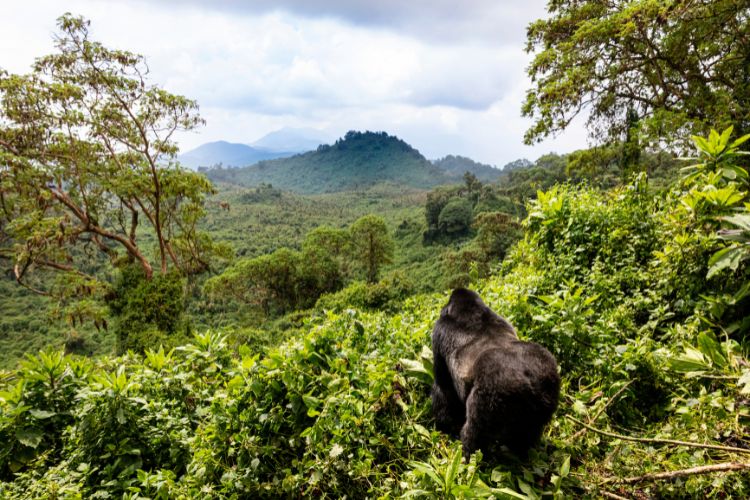
Rwanda has transformed itself in remarkable ways since the 1994 genocide. Today, the capital Kigali is one of Africa’s cleanest and safest cities. Here, there are world-class museums that confront the country’s painful past while celebrating its resilience.
The real draw for most visitors is gorilla trekking in Volcanoes National Park. Mountain gorillas exist only in a few protected areas across Rwanda, Uganda, and the Democratic Republic of Congo.
Permits cost $1,500 per person in Rwanda and must be booked well in advance through the Rwanda Development Board or licensed tour operators.
The trek to find gorilla families can range from one to several hours of hiking through dense forest at altitude.
Once you locate a habituated group, you’re allowed one hour in their presence. Watching these gentle giants interact, play, and care for their young creates one of wildlife viewing’s most profound experiences.
Beyond gorillas, Nyungwe National Park protects an ancient montane forest where chimpanzee trekking is possible. Akagera National Park offers traditional safari game viewing, including Africa’s Big Five.
Rwanda requires a visa, which can be easily obtained online before travel. The country’s small size makes it possible to combine multiple experiences in a single trip. Many visitors include Rwanda as part of a broader East African itinerary.
Read More: Mountain Gorillas in the Wild: A 13-Day Trek Through Uganda, Rwanda, and Burundi
Each of these nine countries offers something that can’t be replicated elsewhere. Whether you’re seeking adventure, cultural immersion, natural beauty, or simply a fresh perspective, these destinations deliver experiences that reshape how you see both the world and your place in it. The key is choosing which transformative journey calls to you first.
Need a hand planning your trip? Here are the sites and services we rely on most, from booking tools to travel products we love.
Inspire your next adventure with our articles below:
- A Fulfilling Life: The 7 Benefits of World Travel
- Breathtaking Journeys: The World’s Top 8 Scenic Cruises
Want to discover more hidden gems and helpful travel tips? Join our free newsletter for the latest travel secrets and travel articles.
We are reader-supported and may earn a commission on purchases made through links in this article.

- Slow Down on Prince Edward Island: A Relaxed Four-Day Itinerary of Dunes, Seafood and Seaside Inns - September 25, 2026
- Two Sides of Cape Town: Table Mountain Trails, Winelands Dawn and Township Voices - September 25, 2026
- St. Pierre and Miquelon: Visit France Without Leaving North America - September 25, 2026
Planning another trip soon? ✈️
Add GoWorldTravel.com as a preferred source on Google. Click the button below so our local guides, packing hacks, and hidden-gem itineraries always show up first when you search!
Add to Preferred Sources