
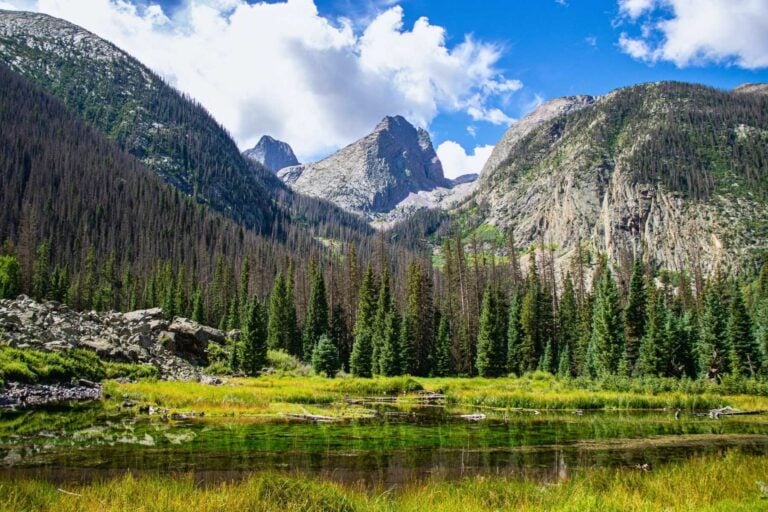

I arrived expecting quiet. That was the promise, at least — a few days in Lake City, a tiny mountain town in Colorado’s San Juan Mountains, where the streets emptied early and the loudest thing at night would be the wind moving through pine trees.
I imagined the usual travel reset: scenic views, a slower pace, maybe a sense of escape before returning to normal life. Instead, the place did something stranger. It didn’t feel like an escape at all. It felt like staying.
Finding Quiet, Not Escape
The town sits several hours from Denver along a narrow highway that slowly trades traffic for trees. Lake City lies in Hinsdale County — one of the least populated counties in the United States — at roughly 8,600 feet above sea level, with only a few hundred year-round residents.
Visitors don’t arrive here by accident — you pass larger ski towns on the way, and continuing past them feels intentional. There are no resorts, only a few small lodges and rental cabins, and the nearest grocery store closes early enough that planning dinner becomes part of the day’s rhythm.
In winter, weather and supply deliveries quietly dictate schedules more than posted hours do. The nearest airport is still a drive away, which means arrivals happen slowly and departures feel deliberate. The town didn’t offer the usual signals of being a destination.
There were no tour buses, no lines outside restaurants, no menus printed in six fonts trying to convince anyone of authenticity. The coffee shop — Lake City Café on Silver Street — opened when the owner arrived rather than at a posted hour.
A chalkboard sign out front listed only “coffee” and “tea,” as if additional explanation would be unnecessary.
From Visitor to Participant

On the first morning, I noticed something unusual — nobody asked where I was from. In most places, travel comes with a small ritual. A cashier hears an unfamiliar voice and asks the question, and the traveler answers, and both people briefly acknowledge distance.
Here, conversation simply continued as though I had always been nearby. I ordered coffee, sat by the window, and watched people enter not to browse but to continue conversations already in progress. Travel usually works by contrast. You go somewhere different so you can feel different.
But without anyone pointing out that I was new, the contrast faded. By the third day, the barista poured my drink before I ordered it, not as a courtesy but as routine. That was the first moment I realized I wasn’t visiting the town anymore. I was participating in it.
Routine Over Itinerary
Most trips revolve around plans. You move from one activity to the next, so the day feels full. In a small place, plans collapse quickly.
You run out of things you “should” do and are left with things that simply happen: the same dog appearing every morning at the same corner, the same pickup truck passing slowly down the main street at dusk, the same people greeting each other without pause.
The rhythm repeats until repetition stops feeling empty and starts feeling stable. This kind of place rewards a specific kind of traveler.
Anyone looking for packed itineraries will run out of activities quickly, but travelers tired of constant stimulation tend to settle in within a day or two. Remote workers, writers, or anyone trying to reset their attention span adjust fastest.
Without scheduled attractions, the trip becomes less about deciding what to do and more about noticing what is already happening — weather moving in, conversations extending, mornings lasting longer than expected.
Lake City isn’t built around tourism infrastructure; it’s a former mining town that never reshaped itself into a resort, which means visitors briefly adapt to the town rather than the town adapting to them.
When a Place Stops Performing
In larger destinations, novelty carries the experience. You chase new sights because newness confirms you traveled. But in this town, nothing competed for attention. Without constant stimulation, smaller details expanded — the way afternoon light moved across a storefront, the predictability of weather patterns, the quiet reliability of daily routines.
I realized how much travel normally depends on performance. Travelers search for what makes a place different, and destinations try to prove it. Both sides participate in an unspoken agreement: this place is different, and I will notice it.
But what happens when a place doesn’t perform? With nothing insisting on significance, I started noticing things that would never appear in a guidebook. The sound of snow melting from rooftops in the late morning.
The brief silence that settled over the street between passing cars. The way people paused conversations to look at the mountains, not because they were remarkable that day, but because they were always there.
The town didn’t try to impress me, and because of that, I stopped trying to interpret it. Instead of asking what there was to do, I began asking how the place functioned — not as a destination, but as a location where life simply continued. The town didn’t exist for visitors. I was temporarily fitting into a pattern that existed long before I arrived.
On the fourth day, I woke up and didn’t feel the urge to explore anything, not out of boredom, but out of familiarity. I walked to the same café, took the same seat, and watched the same street. For the first time on a trip, I wasn’t gathering memories. I was having a morning. That distinction stayed with me long after leaving.
Comfort Through Duration
Travel often promises transformation through distance — go far enough and something changes. But in that mountain town, the shift came from duration instead. Remaining in one place long enough removed the need to interpret it.
I wasn’t discovering the town anymore; I was recognizing it. And recognition creates a strange comfort. You stop evaluating a place and start trusting it. The street will look the same tomorrow. The door will open the same way. The mountains will still be there.
Not exciting — reliable. When I finally left, the trip didn’t feel finished. It felt interrupted.
Planning for Empty Space
On the drive away, I realized the town hadn’t taught me how to travel better. It showed me how little travel is required to feel somewhere new. Novelty fades quickly, but familiarity deepens quietly. Most trips chase the first and miss the second.
Planning helps here, but not in the usual way. Restaurants keep limited hours, and some days nothing opens at all. Weather changes plans without apology, and the best days are often the ones left intentionally empty.
Instead of asking what can be added to the schedule, visitors do better leaving space for repetition — walking the same street twice, returning to the same café, recognizing people instead of landmarks.
The town gave me neither adventure nor escape. It gave me routine — and in doing so, showed me that sometimes the most memorable trips are the ones where nothing remarkable happens, except that you were fully there.
Need a hand planning your trip? Here are the sites and services we rely on most, from booking tools to travel products we love.
Inspire your next adventure with our articles below:
- Experience the Magic of Appalachia in Boone, NC
- Vienna, Composed: Cafés, Architecture and the Discipline of Grace
Author Bio: Felix Lilly is a published travel and healthcare writer based in Portland, Oregon. His work explores the intersection of place, reflection, and lived experience, with a focus on destinations that reveal deeper cultural and personal meaning.
Want to discover more hidden gems and helpful travel tips? Join our free newsletter for the latest travel secrets and travel articles.
We are reader-supported and may earn a commission on purchases made through links in this article.

Planning another trip soon? ✈️
Add GoWorldTravel.com as a preferred source on Google. Click the button below so our local guides, packing hacks, and hidden-gem itineraries always show up first when you search!
Add to Preferred Sources