
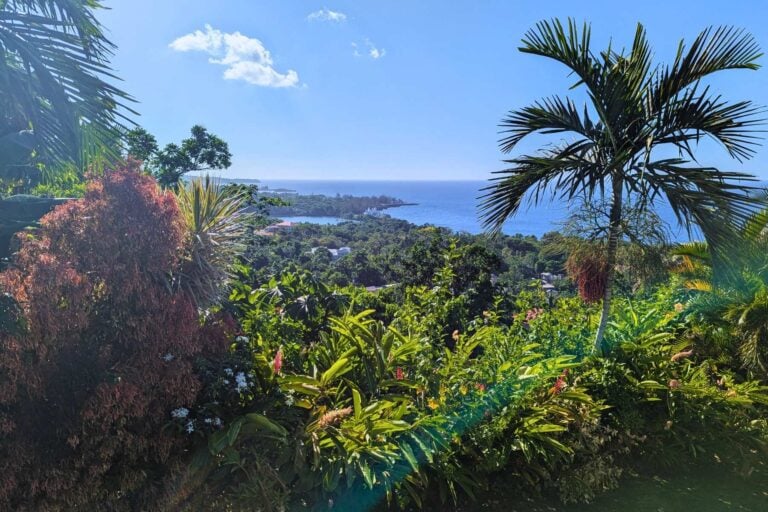

The road into Jamaica’s Blue Mountains twisted sharply enough to make me question my decision to sit in the back of the bus. Outside the windows, jungle vegetation swallowed the hillsides in layers of deep green. Banana trees, coconut palms and vining monstera climbed toward peaks wrapped in mist.
The mountains reminded me a little of my home in Tennessee. If the Smokies had been dropped into the Caribbean and left to simmer in heat and humidity, this would be the result.
Hours earlier, I had been walking through Kingston under the punishing afternoon sun, weaving between traffic and murals. Now the air had cooled slightly as we rose higher in elevation. That drive was my first clue that Jamaica was going to be more complicated and more interesting than the postcard version I had in my head.
Most visitors know Jamaica through resort ads and beach images. They envision turquoise water, reggae, rum punch and white sand. All of that exists, but as I traveled from Kingston to the Blue Mountains, Port Antonio and the north coast, the island revealed something more layered.
Kingston: Jamaica’s Cultural Pulse
The Courtleigh Hotel
The humid air outside the airport felt thick enough to touch. I arrived at The Courtleigh Hotel exhausted after a long day of travel. By the time I reached my room, it was already late evening, and I assumed dinner was long over.
As a vegan, I assumed the hotel would probably not have an option for me that late at night. I found myself pleasantly surprised. After a quick stop at The Courtleigh’s restaurant, the staff arranged a vegan pasta loaded with vegetables in a coconut milk sauce, then packed it to go so I could take it up to my room. That small act of care ended up setting the tone for much of the trip.
Travel has a way of doing that. The moments that feel inconvenient in real time often become the ones you retell later. At one point during the trip, a Jamaican radio host playing over the speakers on our bus summed it up perfectly: “Every good day is a good day, and every bad day is a good story.”
Traveling as a vegan in Jamaica was easier in some moments than I expected and harder in others. The island has deep plant-based traditions through Ital food and abundant local produce, but in formal tourism settings, I still sometimes had to clarify that vegan meant no dairy, eggs or fish. However, overall, I was able to manage just fine as hotel staff were kind and accommodating.
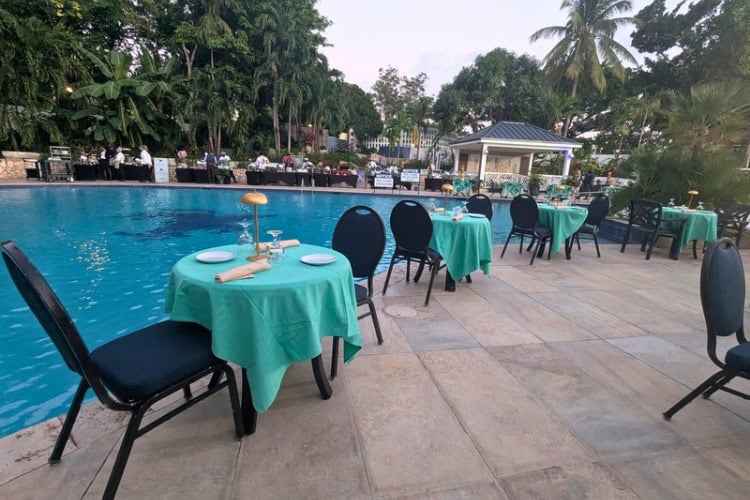
The Courtleigh itself felt warm and personal compared to some of Kingston’s larger corporate hotels. Its sister property, right next door, The Jamaica Pegasus Hotel, occupies a different place in Kingston society.
The Jamaica Pegasus Hotel is where diplomats, politicians, business travelers and visiting dignitaries tend to stay. Staff jokingly described it as the place “to see and be seen,” and during our visit, government officials and foreign delegations moved quietly through its lobby.
Emancipation Park
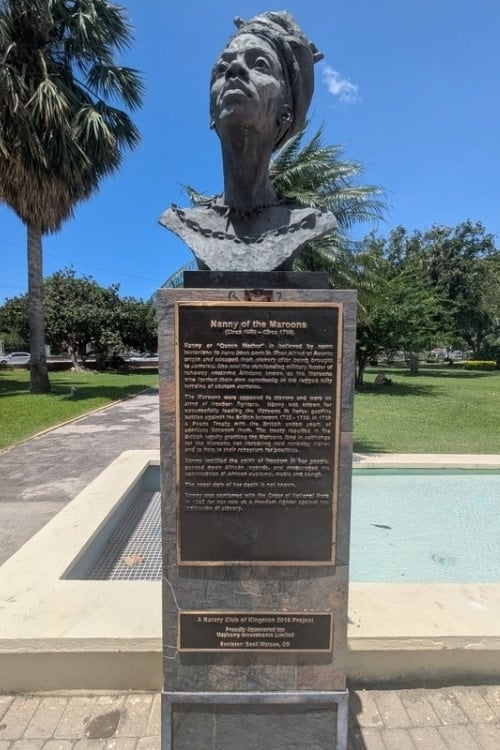
Nearby Emancipation Park offered one of the city’s most interesting public spaces. Locals walked the paths beneath trees while traffic surged outside the gates. Busts of Jamaican heroes lined sections of the park, while the massive nude Redemption Song statue served as a focal point. It was a nice place to walk around. Just take care navigating traffic during the short walk to it from The Jamaica Pegasus Hotel.
Tuff Gong Studios and the Bob Marley Museum
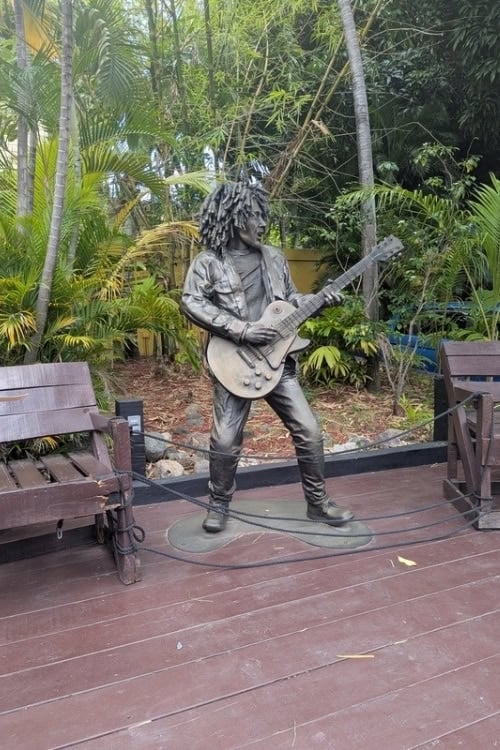
No visit to Kingston feels complete without confronting the enormous cultural presence of Bob Marley.
At Tuff Gong Studios, founded by Marley himself, we followed the process of music production from rehearsal spaces to recording rooms and eventually to the vinyl pressing operation still functioning on-site today.
Watching records physically pressed inside the studio felt refreshingly tangible in an era dominated by streaming algorithms and digital playlists.
The studio carried its own atmosphere that was unmistakably Jamaican, which rarely feels confined to formal performance spaces. It spills outward constantly into the streets, bars, taxis, hotels and storefronts of daily life.
The Bob Marley Museum occupies the former home where Marley once lived, recorded music and survived an assassination attempt in 1976. School groups moved through the museum alongside international tourists while guides explained Marley’s life, music and political significance.
Photographs, gold records, instruments and preserved rooms occupy the property, turning the space into something between a historical site and a cultural shrine to a man who influenced much of Jamaican culture.
Kingston Art Walk
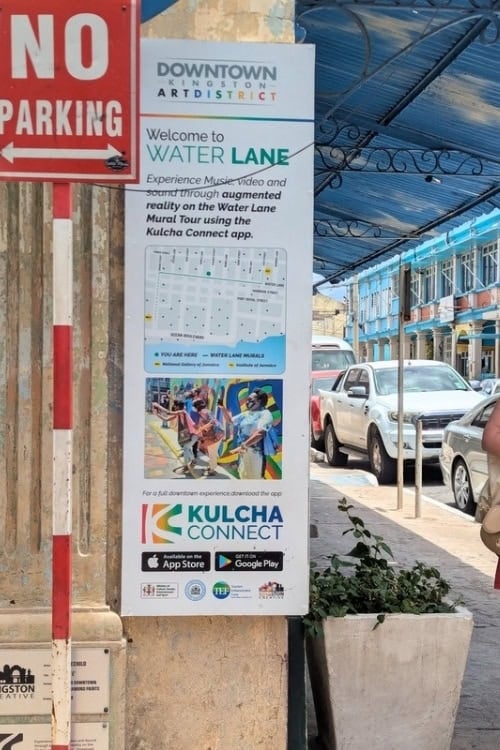
Kingston’s downtown art district revealed another side of the city entirely. Murals stretched across walls in bursts of color while galleries and installations reflected Jamaica’s remarkably layered cultural identity. African, Indian, Chinese, European and Rastafari influences appeared throughout the artwork.
Jamaica’s national motto is “Out of Many, One People.” The art walk felt like an effort to live up to that. If you are looking for something that represents the tapestry that is Jamaican society, the art walk is a great place to start. I would recommend going with a guide from Kingston Creative who can provide context to the murals that line the street.
Devon House
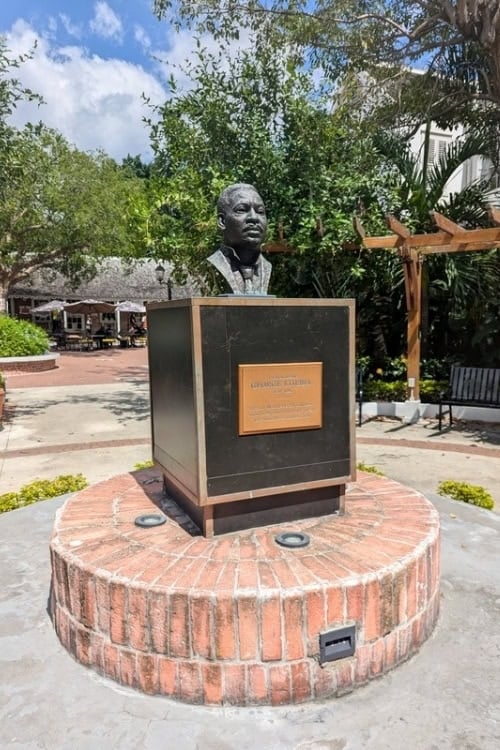
Later, we stopped near Devon House, one of Kingston’s most famous historic properties. In the surrounding park, mango and ackee trees dotted the grounds. Jamaica’s plant life seemed almost impossibly abundant throughout the trip, with fruit trees appearing nearly everywhere we traveled.
The park around Devon House was not only a place for tourists to visit; it also functioned as a community hub where kids hung out and families enjoyed the afternoon.
The Blue Mountains: A Cooler, Quieter Jamaica
Strawberry Hill
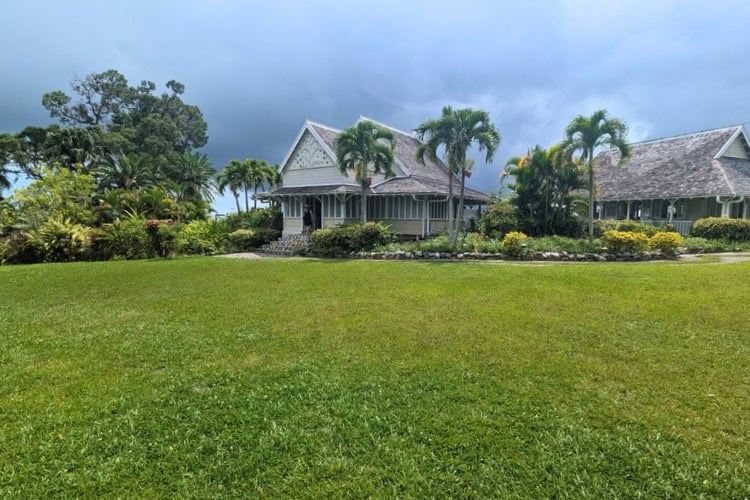
Originally established as a private mountain retreat before becoming a luxury resort, Strawberry Hill sits perched above sweeping views of the Blue Mountains and the city below. In the mountains, cooler temperatures offered welcome relief from Kingston’s heat.
The property has long attracted musicians, artists and couples seeking quiet and isolation. Wooden verandas overlooked layers of forested mountains while birds darted between tropical flowers surrounding the property.
It felt like an easy place to be with one’s partner. You could imagine lingering over breakfast, sitting out on the veranda and letting the mist move across the hills without needing much else to do.
The drive there, however, was another story. The roads through the Blue Mountains twist sharply along steep mountainsides, and motion sickness quickly became a real possibility for many of us on the bus. If you are prone to car sickness, it is recommended to sit in the front of the car and bring anti-nausea medication if available.
Still, the scenery made it impossible to look away for long.
Maroon Country: History That Still Feels Alive
Charles Town Maroon Museum
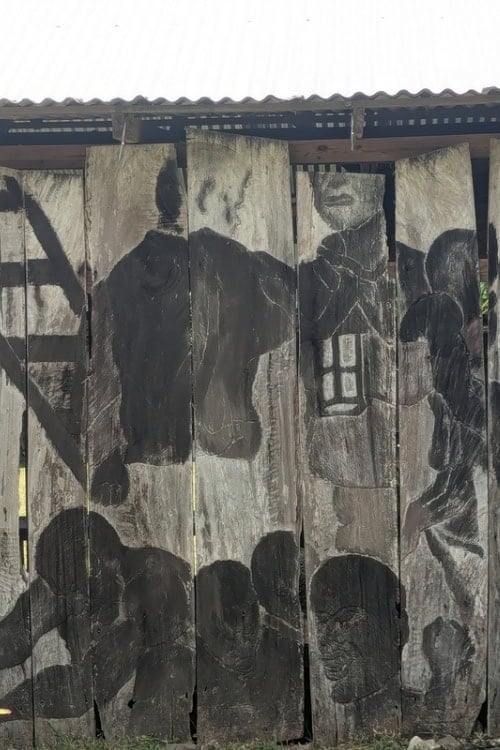
Partway through the journey, we stopped at the Charles Town Maroon Museum, which became one of the most memorable experiences of the trip.
The museum tells the story of Jamaica’s Maroons, communities formed by formerly enslaved Africans who resisted British colonial rule and established independent settlements throughout Jamaica’s mountainous interior.
Guides explained how the Maroons survived using deep knowledge of the land itself, sourcing water from jungle vines, using camouflage tactics and adapting the landscape to resist colonial forces.
Artifacts throughout the museum included drums disguised to avoid suspicion, historical tools, carvings and displays documenting resistance history and communal life.
Our guide was deeply invested in the Maroon community, and the experience never felt distant or overly academic. It felt alive and personal from the way he talked about his culture.
After lunch served in calabash bowls beneath the afternoon heat, drumming and dancing gradually pulled visitors into a celebration until nearly everyone joined in.
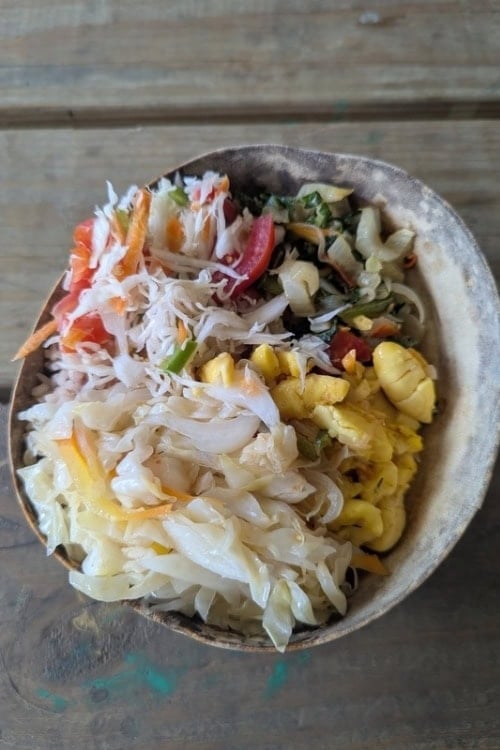
Port Antonio: Jamaica’s Creative Retreat
By the time we reached Port Antonio, the atmosphere had shifted completely from Kingston’s intensity and Charles Town’s history. Port Antonio is one of Jamaica’s artist towns.
Geejam Hotel and Studios

We stayed at Geejam Hotel, which blends luxury accommodations with one of Jamaica’s most famous residential recording studios. Artists including Drake, Harry Styles, Megan Thee Stallion and Bad Bunny have all recorded music there. We toured the studio late at night while hearing stories about the artists who had worked within those walls.
Nearby, The Anton Villas offered luxury multi-bedroom accommodations overlooking lush tropical surroundings. The area felt particularly suited for groups, artists or creative retreats seeking privacy and space.
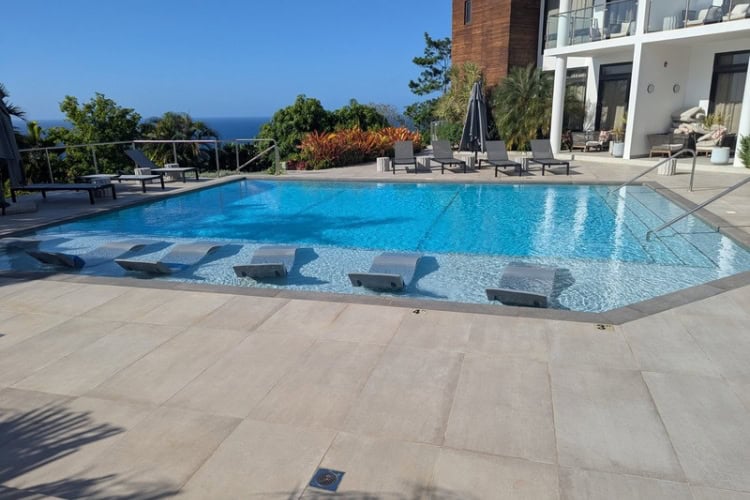
Port Antonio felt like the kind of place artists come to disappear just enough to make something. It was quieter than Kingston, but not sleepy. It had both beauty and privacy that seemed to give ideas room to take shape.
A Fragile Paradise
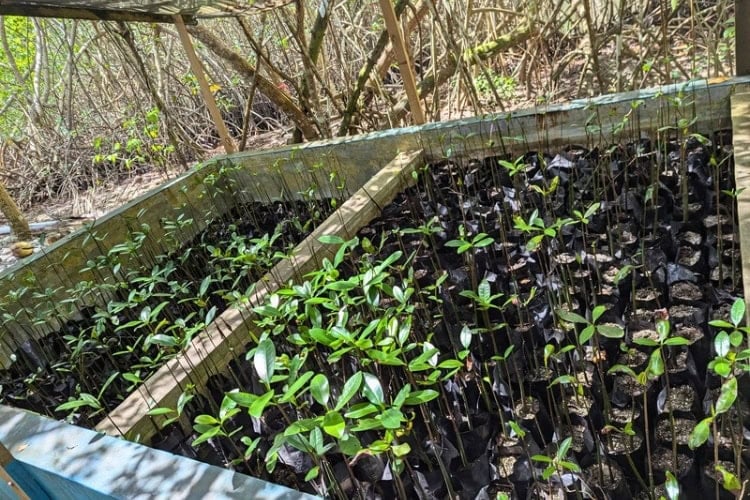
After departing Geejam, we visited the Alligator Head Foundation (named for the large rock formation in the area shaped like an alligator head) near Frenchman’s Cove. Here, the conversation shifted from what visitors come to see to what Jamaica is trying to protect.
Here, researchers spoke candidly about coral bleaching, invasive lionfish, mangrove restoration and sea turtle protection efforts underway along Jamaica’s coast. Climate change poses very serious challenges for Jamaica’s wildlife and ecosystems. The center operates turtle hatcheries, mangrove nurseries and coral restoration projects designed to help preserve ecosystems increasingly threatened by warming oceans and stronger storms.
Standing beside mangrove seedlings and coral nurseries, it was clear these are living systems under pressure. The natural amenities people visit are part of ecological systems that support communities, wildlife and the future of the island itself.
Ocho Rios and the North Coast Icons
Dunn’s River Falls and Catamaran Cruise
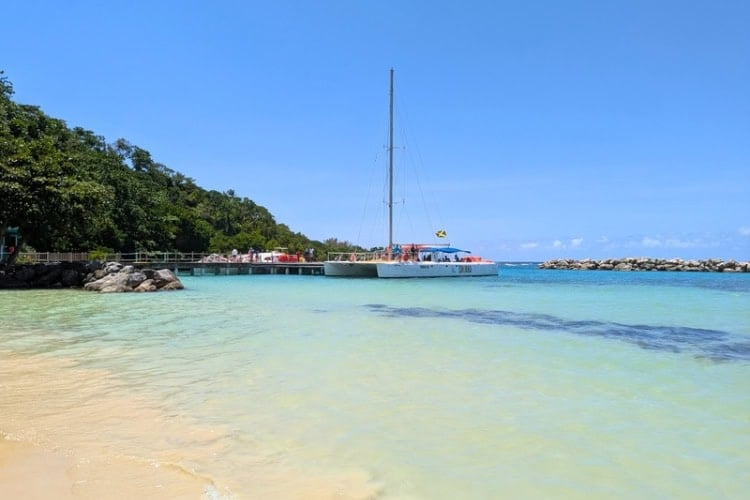
In Ocho Rios, Dunn’s River Falls delivered one of Jamaica’s most iconic landscapes. It is one of the country’s must-see natural attractions, and for good reason. At the falls, water cascades down layered stone terraces surrounded by dense tropical vegetation. The area was clearly popular and offered lots of activities for families, such as ziplining and catamaran cruises.
We walked across the bottom of the falls to a catamaran cruise, which carried us along the coastline. Once at the nearby reef, people got off the boat and snorkeled. Some of the animals people saw included stingrays and cuttlefish.
The area seemed to be popular with couples. They can settle into one of the nearby resorts, then spend their days exploring waterfalls, beaches, caves and coastline before returning to a place built for relaxation. It strikes a nice balance with enough natural beauty and adventure to keep the trip interesting, with the ease of an all-inclusive stay at the end of the day.
Green Grotto Caves
The north coast is the picturesque Jamaica that many travelers imagine first, but even here, there was more history beneath the surface.
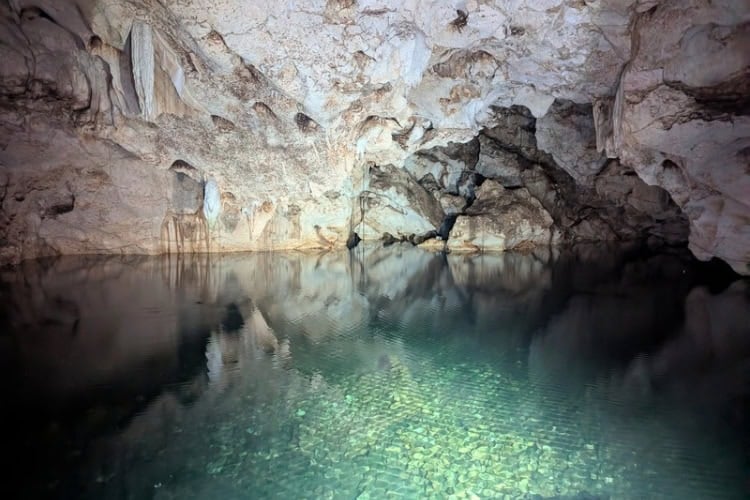
Green Grotto Caves offered another reminder that Jamaica’s landscapes often carry deep historical memory beneath their beauty. Inside the caves, swallows nested high above limestone ceilings while guides led visitors through narrow passageways and cavern chambers once used as refuge by escaped enslaved people.
Portions of the cave system were later used for gatherings and even film productions, including scenes connected to James Bond films.
At one point, our guide struck a rock formation protruding from the cave wall, producing a deep, resonant sound that echoed like a drum through the chamber. Coral formations embedded within sections of the cave revealed that parts of the system once existed underwater long ago.
To expereince these caves, you can book a guided tour of Green Grotto Caves from Ocho Rios, with round-trip transportation and a jerk lunch stop included.
A Last Day in Kingston
We ended our trip at the ROK Hotel Kingston. By then, Jamaica had become far more than the postcard version I had carried with me when I arrived.
Somewhere between the Blue Mountain roads, the coral nurseries near Port Antonio, the dancing at Charles Town and the caves beneath the north coast, I began to understand the truth in that radio host’s joke.
In Jamaica, the good days were good days. The challenging moments became stories. And together, they revealed an island full of music, memory, warmth, resilience and beauty.
By the time I left, Jamaica no longer felt like a place I had simply visited. It felt like a place I had only just begun to understand.
I will be back.
Tips for Visiting Jamaica Beyond the Beach
- Pack motion sickness remedies if traveling through the Blue Mountains.
- If you are vegan, do not assume “vegetarian” means vegan. Clarify ingredients, especially dairy, eggs, fish and meat-based broths.
- Spend time in Kingston if you care about music, art and culture.
- Build in breathing room. Distances can take longer than expected, and a packed schedule can become exhausting in the heat.
- Visit both cultural and natural sites. Jamaica’s beaches are beautiful, but its history, music, mountains, conservation work and communities reveal far more of the island.
Hotels
- The Courtleigh Hotel and Suites: Located centrally with its sister property, The Jamaica Pegasus Hotel, right next door.
- Geejam Hotel: For artists.
- The Anton Villas: Great for groups.
- Couples Resort: More laid-back, all-inclusive for couples.
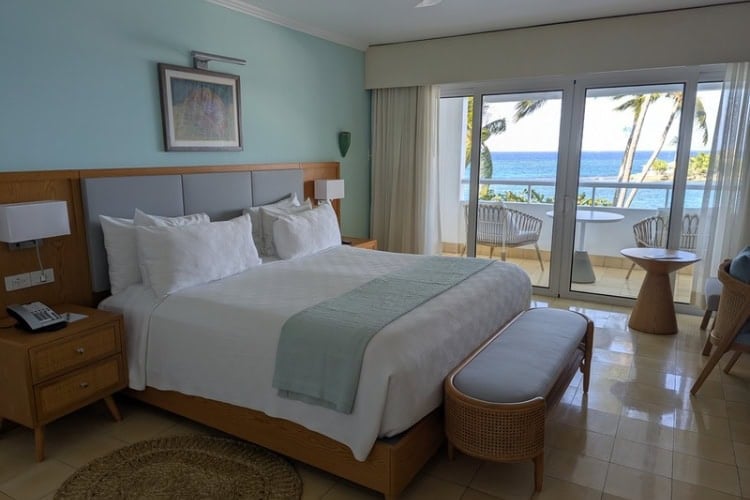
- ROK Hotel Kingston: Sleek, geared more toward business travelers.
Tours & Experiences
- Bob Marley Museum: A 75-minute guided tour of the reggae icon’s former Kingston home, with original rooms, memorabilia and recording studio intact.
- Tuff Gong Studio Tour: A look inside the legendary recording studio Bob Marley founded, still active today.
- Water Lane Mural Tour: A walking tour of Kingston’s downtown art district, led by local guides from the cultural organization behind the murals.
- Strawberry Hill: A hilltop retreat above Kingston worth a stop for lunch, with sweeping views over the Blue Mountains.
- Charles Town Maroon Museum: One of Jamaica’s living Maroon communities, preserving the history and traditions of those who resisted enslavement.
- Alligator Head Foundation: A marine conservation center on the east coast offering guided tours of their reef restoration work.
- Dunn’s River Falls Catamaran Cruise: A cruise along the Ocho Rios coastline with snorkeling and views of one of Jamaica’s most iconic natural landmarks.
- Green Grotto Caves: A guided tour through limestone caverns with deep ties to Jamaica’s history, including chambers once used as refuge by escaped enslaved people.
Disclosure: This trip was fully hosted by the Jamaica Tourist Board. Accommodations, activities and related travel experiences were provided as part of a media visit. All opinions and observations are my own.
Need a hand planning your trip? Here are the sites and services we rely on most, from booking tools to travel products we love.
Inspire your next adventure with our articles below:
- Hiking Grenada’s Rainforest Trails and Waterfalls, from Grand Etang to Seven Sisters
- 7 Must-Visit National Parks, UNESCO World Heritage Sites and Conservation Areas Around the Globe
Want to discover more hidden gems and helpful travel tips? Join our free newsletter for the latest travel secrets and travel articles.
We are reader-supported and may earn a commission on purchases made through links in this article.

- Canadian Rockies in 10 Days: Glacial Lakes, Wildlife and First Nations Culture from Vancouver to Calgary - October 4, 2026
- Penang, Malaysia: How to Plan a Trip to Singapore’s Quieter, Cheaper Neighbor - October 4, 2026
- Berlin’s Museum Island: Art, Antiquities and Architecture on the Spree - October 3, 2026
Planning another trip soon? ✈️
Add GoWorldTravel.com as a preferred source on Google. Click the button below so our local guides, packing hacks, and hidden-gem itineraries always show up first when you search!
Add to Preferred Sources