

From the moment I plunged into the water from our boat at Watawai, one of many reefs ringing Ataúro Island, I was in awe. Just 10-15 feet below me was a phantasmagoric undersea garden with literally hundreds of varieties of coral in every color, texture, formation, and shape.
Myriad small fish in a kaleidoscope of hues and patterns weaved through and around the marine nursery. And then I spotted the eight-foot-long sea snake that was suddenly coming straight at me.
A Glimpse into Timor-Leste

Timor-Leste, or East Timor, is one of the world’s youngest nations and among the least known. It became a nation only 24 years ago following a quarter-century war for independence with Indonesia.
Development is in very early stages, and tourism is in its infancy, attracting largely seasoned divers and travelers searching for new experiences, and willing to go the extra mile required to just get there.
The nation is emerging and remote, unassuming and fresh—and that is the foundation of its charm and appeal, along with the stunning natural assets of the tiny country. Its dreamlike reefs are heralded as among the most ecologically diverse on Earth.
Dili’s Vibrant Culture

This is a peaceful land with a smiling and welcoming populace that has had little exposure to outside peoples and cultures. Yanto, a guide who took me hiking in the interior, explained it best: “How happy we are to see malai (foreigners or tourists).
It makes us happy that international people are coming to our small country. We have love in our hearts for them.”
The thrust of the energy of the emerging Timorese is churning on the clean, busy streets of Dili, the capital. A sea of scooters and vintage Japanese sedans with a sprinkling of trucks flows nonstop on main arteries from sunrise to past sunset.
Many escape the fiery daytime temperatures, relaxing under the banyan, rubber, and other shade trees along the city’s favorite hangout, the picturesque seaside boardwalk.
The city’s beaches are mostly empty during the day, but as the heat subsides in the evening, they explode to life with numerous pop-up stands grilling meats and seafood, street food carts preparing noodles, stir-fries, and other foods, joggers, strollers, and people sitting along the seawalls talking and socializing after the day’s work.
Vendors balance poles on their shoulders with bags of oranges, bananas, and peanuts dangling from the ends.
Reliving History at the Museum of Timorese Resistance
The Museum of Timorese Resistance is the cultural heart of Dili, illuminating how their fight to be free remains top of mind and heart with the people. It frankly and viscerally documents the struggle to stop Indonesia from absorbing TL, illustrated with myriad and sometimes gruesome old photos.
Portuguese traders and missionaries first arrived in what is now Timor-Leste in the 16th century, and in 1702, it was formally established as a colony. Soon after the Portuguese departed in 1975, Indonesia occupied TL, intent on annexing it. Independence came in 2002.
The Symbolic Cristo Rei
The raw experience of the museum is balanced by the joyous, other top site of Dili: Cristo Rei. Evoking Rio’s Christ the Redeemer, the towering statue of Christ dominates a promontory enclosing a small bay several miles outside the city center.
The route up is a steep trek of 680 red-painted steps. The only other visitors on a Saturday morning were locals in exercise garb getting in their steps for the day.
The views from the top were arresting, revealing twisting coastline, beaches washed by aquamarine waters, and the rooftops of Dili in the distance.
The statue was a gift from Indonesia during the height of the conflict; some say it came with a sinister message: it’s 27 meters tall (88+ feet) and TL was slated to be Indonesia’s 27th province.
Returnees and Cultural Celebrations

At Cristo Rei beach, I swam with a “returnee” (those who have now come back after escaping during the troubles to work abroad) who echoed a familiar sentiment: “With independence, it’s an exciting time to be back home.
We have a new country that is developing and evolving, and I want to be a part of it.”
I happened upon several street cultural celebrations where the participants donned colorful traditional wrap-around attire accented with gold armbands, beads, and feather headdresses.
They are keeping their culture alive in a modern world where everyone is in Western dress and the ambiance is the minimalist, generic modern architecture common worldwide today.
While the adults remained stoic when I asked if I could take photos, teenagers welcomed me, and children were in a frenzy of delight to have their picture taken.
Colorful Cemeteries and Coffee Delights
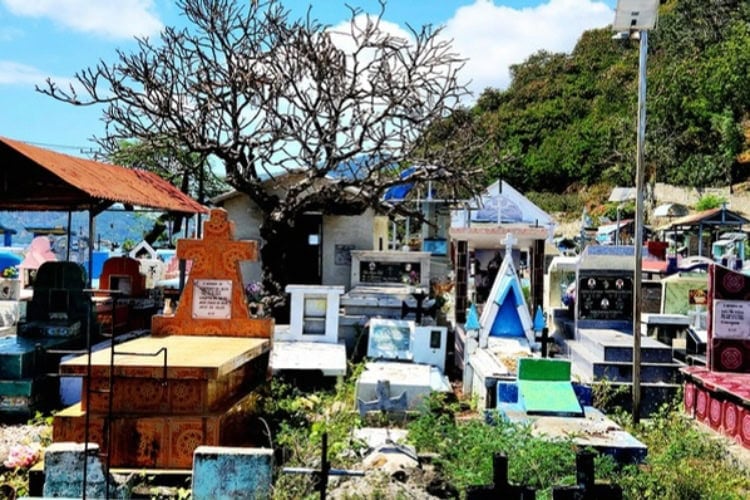
The country’s most explosive displays of color were not among the living: 90+% of East Timorese are Catholics, and their eye-catching cemeteries are jam-packed chaos—graves, mausoleums, and crypts squeezed into every square inch—in a rainbow of shades, shapes, and materials.
A treat of Dili—and all of TL—is the excellent, always-fresh-brewed coffee. The Timorese love their coffee, and coffee shops with Italian-style espresso machines are everywhere.
Those few who have heard of East Timor often know of it because of its reputation for rich, high-quality coffee, grown organically and sustainably. Starbucks, in fact, is an important buyer of the crop.
Exploring Ataúro Island

The highlight of Timor-Leste, however, is indisputably Ataúro Island. Only serious, go-anywhere intrepid travelers come to this laid-back, beach-shack destination with only a few bare-bones lodging options, rough dirt roads, part-time electricity, and intermittent internet.
Most arrive on the slow old ferry from Dili; some hire a faster speedboat.
While Ataúro lacks services and comforts, it compensates with spectacular diving and snorkeling. The hotels may be basic, but several have certified dive masters and professional boats and equipment.
They cater to a tiny but steady stream of visitors who come from around the world because the coral reefs here are natural wonders.
Read More: 9 Places to Experience Amazing Sea Life Up Close
Ecological Richness of Timor-Leste

Though poor and undeveloped, Timor-Leste enjoys exceptional ecological wealth. It is located in the heart of what’s known as the Coral Triangle, a global epicenter of tropical marine biodiversity—with TL’s reefs recognized as among the most diverse of all.
A major oceanic current here, passing through the Ombai and Wetar straits that flow by TL’s north coast, connects the Pacific and Indian oceans. This is a major marine mammal migration route, from whales to pelagic sharks and sea turtles.
With this unique marine ecosystem and migratory pathway, Timor-Leste is exploring developing nature-based tourism based on sustainable, best-practice conservation.
Fascinating Moments Under Water

I spent much of my time on Ataúro in the water, marveling at the extraordinary diversity of the coral reefs inhabited by a great array of colorful fish and other marine life.
It was on one of my afternoon snorkeling trips that I spotted the Silver Banded Krate, a highly venomous but purportedly not aggressive sea snake.
It was twisting through the coral in search of its preferred fish when, suddenly, it rocketed straight up, passing within 5-6 feet of me. Just before reaching the surface, it exhaled a burst of spent air, took a gulp of fresh air, and then shot straight back down again. It did not seem to even notice I was there.
Explorations Beyond Ataúro
Ataúro’s roads, among the worst anywhere, lead to raw, wild beaches such as Afrema Beach, where the shallow turquoise water was as warm as a bathtub, and giant starfish were ensconced in the seagrass bottom.
Passing locals on the road, a light seemed to come on in their head as they broke into a big smile, nodded or waved, and shouted out a greeting I didn’t understand.
On the mainland, English speakers are becoming more common, but less so on Ataúro. English is being taught in school and is supplanting the former lingua franca of Portuguese, which seemingly goes hand-in-hand with the new country’s decision to adopt the U.S. dollar as its currency.
Discovering East Timor’s Interior
The interior reveals an entirely different East Timor.
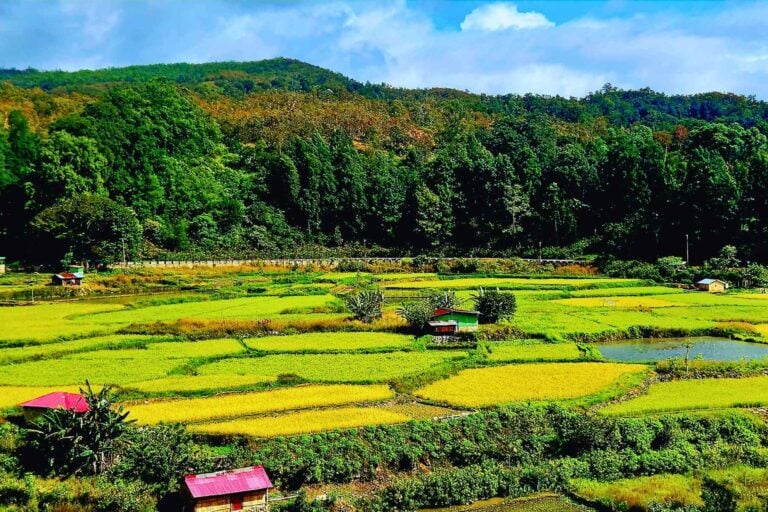
The steep, twisting roads into the mountains are cracked and broken, even collapsed away in spots, but the rewards are dramatic from valleys of watery rice paddies shimmering in the midday sun, jagged peaks shrouded in fog, cascades crashing into mountain tarns, and lookouts with far-reaching panoramas.
The highlands are the original home of the people (pirates and invaders made the coasts too dangerous in the past), and many of the traditional thatched ceremonial houses (every extended family or clan had their own at one time) remain and are still used for rites and ceremonies.
When we stopped to buy fruit at a roadside stand, we were welcomed like long-lost family, with smiles and laughter. Numerous palm wine vendors sell a repurposed water bottle of the fermented libation for fifty cents. Made from palm flowers, it was sour with hints of sweetness and vinegar.
Reminders of Portuguese rule are encountered here and there: the ruins of a prison or fort, a forgotten cemetery, small monuments, and markers.
A Journey to Dokomali Waterfall
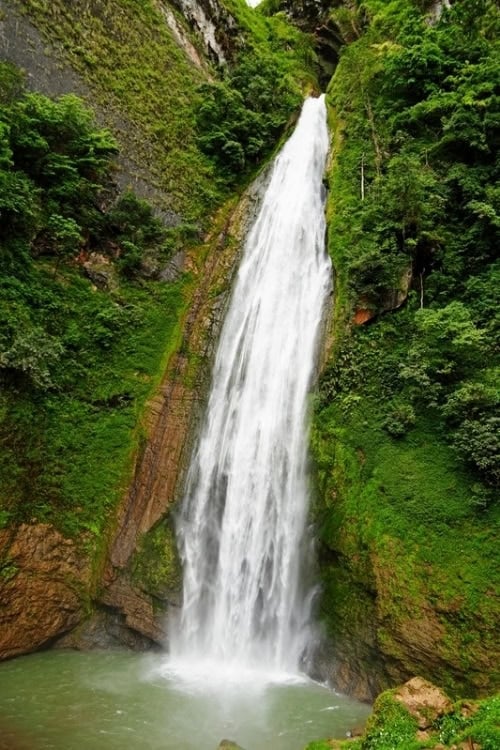
One of the highlights of the interior is Dokomali Waterfall. The exuberant hike up passed through farmer’s string-bean fields, past thatched huts, along lush green slopes, and over large rocks, as the sound of splashing water grew ever louder and the peaks looming above came into focus.
To complete the final leg to the base of the falls, we had to ask permission to continue with the “gatekeeper,” an elderly woman whose family has owned the land there for many generations. Yanto engaged in the pro forma negotiations (it was a question of how much, not whether we could pass). The final price: $3.
Majestic and powerful, Dokomali tumbles more than 100 feet into a pool, a cold spray spreading in all directions, a thick mist blowing in and out with the breeze alternately concealing and revealing the cascade. Dokomali Peak, the falls’ source, is approximately 5,485 feet high, the tallest peak in the region.
The Journey to Timor-Leste
Getting to Timor-Leste is still difficult: braving a long, arduous bus trip from the Indonesian side of Timor Island, or flying one of a handful of routes, mainly from Darwin, Australia, or Denpasar, Bali, with new connections to Kuala Lumpur and southern China recently opening up the country a little further.
The recent turbulent past has given way to an industrious, optimistic democracy that welcomes visitors with smiles and gentility.
The very young population dreams of a great future for their new country. Young men playfully engaged me, asking questions, eager to learn where I came from and who I was.
A Unique and Inviting Destination

The spirited people make TL a singularly stimulating and curious destination to visit. The dramatic interior delights with its sweeping panoramas, traditional huts, and tall waterfalls.
And then there are the fantastical reefs, found not just around Ataúro but the main island as well. Spending days exploring the reefs in itself is more than enough reward for making the long trek to East Timor.
Need a hand planning your trip? Here are the sites and services we rely on most, from booking tools to travel products we love.
Inspire your next adventure with our articles below:
Want to discover more hidden gems and helpful travel tips? Join our free newsletter for the latest travel secrets and travel articles.
We are reader-supported and may earn a commission on purchases made through links in this article.
Planning another trip soon? ✈️
Add GoWorldTravel.com as a preferred source on Google. Click the button below so our local guides, packing hacks, and hidden-gem itineraries always show up first when you search!
Add to Preferred Sources