
It had been threatening rain all day and just as I was starting up the path, the clouds burst. Within minutes, the hike in a dense forest in the South Pacific nation of Samoa had become a slog of mud and pooled water.
The tropical downpour was relentless as I trudged my way up the steep trail, but I paid it no mind because I was lost in thought, trying to remember the plot and story of the classic pirate novel I’d read as a kid, Treasure Island.
And then I arrived ‒ at the grave of Robert Louis Stevenson.
Robert Louis Stevenson in Samoa

The famous Scottish novelist spent his last years in Samoa ‒ an independent country about 700 miles east of Fiji and next door to the U.S. Territory of American Samoa.
He was beloved by the people for his support and advocacy to counter the abuses of the German colonialists. The morning after his death, Samoans bore him on their shoulders up Mount Vaea and buried him on a spot overlooking the sea.
Hiking to Robert Louis Stevenson’s Grave
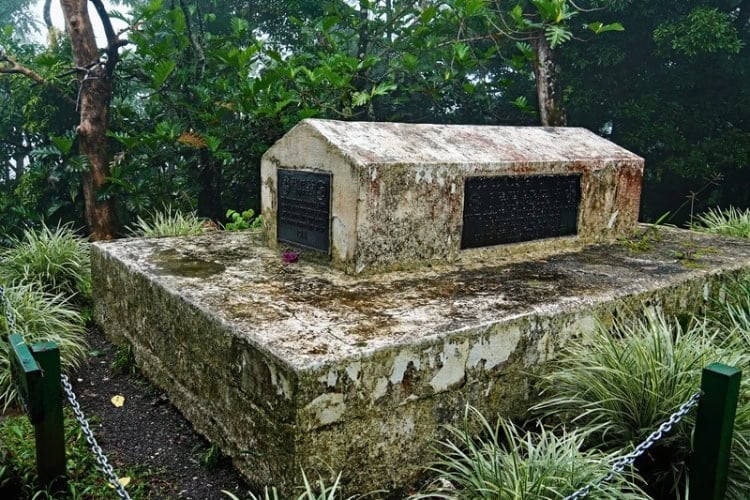
Today, hiking to the grave is a top Samoa bucket list item along with visiting his nearby house that is now a museum dedicated to the celebrated writer, and swimming in what was his private river pool and small waterfall.
What happened afterwards, as I waited roadside for a taxi, bus, or other lift back to the nearby Samoan capital, Apia, was so indicative of the throwback that is Samoa today: A couple with their young son in the back seat was driving by and stopped to ask where I was going.
They invited me to get in, engaged me in nonstop pleasant conversation, and took me all the way back to my hotel.
Samoa reminded me of that memorable Twilight Zone episode where a businessman dreams of an idyllic, old-fashioned town untainted by the modern world, and one day he steps off his commuter train and finds himself there.
Old-World Rhythm and Faith

Samoa is a gentle and peaceful land, where the people are kind and genuine, traditional values remain intact, and streets are completely safe and clean.
The slow and relaxed lifestyle even allows everything ‒ from museums to coffee shops ‒ to shut down from midday Saturday through Monday morning. The only exceptions are some restaurants, mostly the ones in hotels.
The Samoans enjoy the weekend respite, relaxing, getting together, bathing at their favorite swimming spots and going to church on Sunday in this very religious nation.
They continue a traditional, Old-World way of life that remains so intact in few places. Walking in compact Apia on Sunday morning was eerie: not a soul to be seen, not even a stray dog; every business shuttered; only an occasional lone car on the road.
But then I discovered where everyone was: I stumbled upon the one McDonald’s location in Apia and it was filled with people eating, while the large nearby Catholic and Methodist cathedrals were overflowing with worshippers.
Dramatic Landscapes and Waterfalls

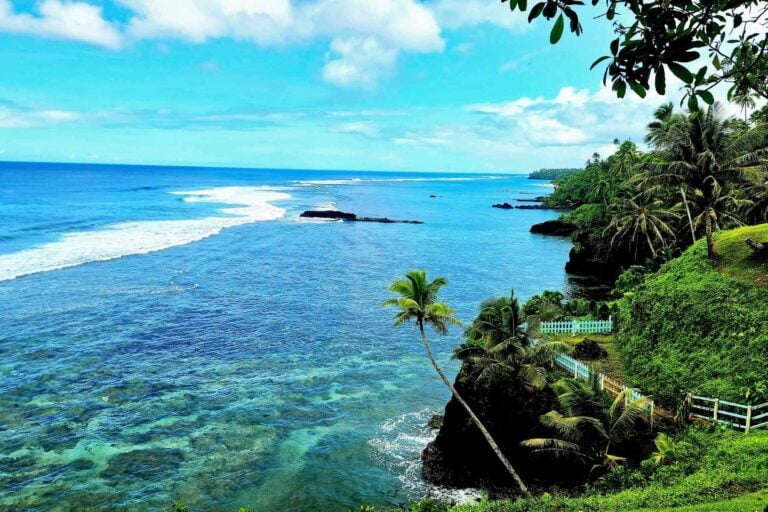
What never shuts down – and, more than anything else, brings visitors to this South Seas nation – is Samoa’s stunning beauty. Samoa is truly blessed by nature with its jaw-dropping coastline and beach panoramas, tumbling waterfalls, and dense, verdant tropical landscapes.
Driving on the left on mountainous Upolu, the main island where a majority of Samoans live, left a strong impression: everything in the villages and along the roads was neat, clean, and orderly.
Every village had its own open-air meeting house where people gather for ceremonies, memorials, and funerals and to discuss and resolve their local issues.
The mature, towering trees and impenetrable forests were spectacular. Splashes of color exploded against the verdant green background: brightly painted houses, bushes and vines adorned with blossoms in an array of hues, and plants with leaves in dynamic reds, yellows and oranges.
A fiery standout was the red ginger, the ubiquitous national flower of Samoa.
We escaped the high temperatures and humidity by seeking out some of Samoa’s most popular attractions: swimming holes. Togitogiga Waterfall was a modest cascade, but the cool, refreshing water was soothing on a hot day.
Steps winding down into a sunken ravine took us to the deep pool, where the small but powerful tumbler provided a nice natural massage. On our way to the next swimming spot, we swung by Samoa’s highest waterfall, called Papapapaitai.
It was a primeval vision, seen from a perfectly located lookout point, of water tumbling about 325 feet straight down a sheer, narrow rock wall of black-brown stone amid an overgrown forest of Amazonian proportions.
To Sua Ocean Trench

The first impression was that the dramatic To Sua Ocean Trench was Samoa’s answer to the cenotes of Mexico. They look similar, but cenotes are freshwater pools fed by a labyrinth of underground rivers, while To Sua is a one-off, saltwater sunken pool filled by the adjacent Pacific Ocean.
A steep path descended some 75 feet below ground level to a precipitously steep wooden ladder ‒ almost a vertical descent with no railing or ropes ‒ down to a platform.
We were surprised by the strong ocean currents inside the To Sua pool, the reason there are rope lines to keep you from being pulled away. The water was murky, filled with dirt and mud stirred up by powerful bouts of rain during the night, but it was cool and revitalizing.
To Sua’s Wild Coastline

The To Sua Ocean Trench was a dramatic interlude, but it was the glorious, incomparably stunning coastline here that took our breath away.
It was a chameleon sea ranging from translucent aquamarine near shore to a palette of blues, the glowing emerald green hills, black basalt cliffs, majestic palms, and white waves breaking on the offshore reefs.
In a turbulent picture of roaring nature, the powerful ebb and flow of the Pacific pushed churning, careening water in and out of black-rock, lichen-covered pools at the seafront here.
From To Sua, we drove to a high point in the mountains, Le Mafa Pass, and lookout point. Unfortunately, driving rain accompanied by fog and thunder drowned out the view completely.
Motoring down through dales and canyons to the coast, sunshine breaking through, we arrived at a beach heralded as perhaps the most beautiful in Samoa.
Lalomanu Beach Paradise

Lalomanu Beach is an exquisite slice of Samoan paradise, with a turquoise lagoon, fine white sand beach, and crystal-clear, warm sea-green water with a soft sandy bottom.
There is a fringe of sultry palms and a foreboding island looming ahead (at one time, where lepers were banished), ringed by Samoan beach fales (simple thatched huts on stilts for visitors, with decks, some with beds).
Lalomanu is an idyllic spot to loll away the day immersed in singular beauty, swimming in a welcoming sea, enjoying fresh seafood on the deck of the beachfront restaurant, and kicking back at a fale (local families own the restaurant and fales).
Piula Cave Pool, a short drive from Apia, was a super popular swimming hole with Samoans on a Saturday afternoon. Laughing and splashing families, children, and couples were enjoying the warm saline water of the large, natural rock pool at the Pacific’s edge.
When I went to take a photo, several bathers waved and smiled.
Apia’s Retro Charm

Apia was a ghost town on Sunday, but even during the week, it was quaint and sleepy, echoing a bygone time. There are some standout retro buildings, such as the Clock Tower and the Bank of Samoa edifice, which looks like a cruise ship.
There is a big bus station with bright, colorfully painted decades-old buses, a very ornate Catholic Cathedral of the Immaculate Conception, and lots of coffee shops, along with a few eateries.
Samoan Warmth and Wisdom

Traveling Samoa, I received a smile here, a hello there, and occasional curious questions asking who I am and what I was doing in Samoa.
I found the people to be sweet and respectful, engaging me with gentility, interest, and smiles that were genuine.
I was surprised when taxi drivers (invariably 20-something young men), seeing I was much older, routinely asked my advice about marriage, having a family, and achieving a successful career.
Samoa is not exactly a modern-day, South Seas version of Willoughby, the town in that Twilight Zone episode, but it is an escape from the crowds and bustle of today’s mass travel world.
If you’re looking for a retreat with wonderful people, extraordinary natural beauty, exquisite beaches, a sparkling sea, and a tranquil retro lifestyle, then Samoa beckons.
Coconut-Kissed Oka Delight
There’s one additional incentive to visit Samoa: While the food at hotels and resorts is generally international fare, one local dish (it’s difficult to find traditional Samoan food) is on many menus, and it’s to die for.
Oka is Samoa’s version of ceviche, prepared with sushi-grade tuna or snapper, “cooked” in lemon or lime juice, with diced cucumber, red onion, and tomatoes.
What sets it apart from the various Latin American ceviches is the secret ingredient, coconut milk, which gives it a lush, creamy, idyllic consistency – kind of like Samoa itself.
For more information about Samoa: https://www.samoatourism.org/
Need a hand planning your trip? Here are the sites and services we rely on most, from booking tools to travel products we love.
Inspire your next adventure with our articles below:
- South Pacific Cruise: Sydney to Vanuatu and New Caledonia
- Hiking Grenada’s Rainforest Trails and Waterfalls, from Grand Etang to Seven Sisters
Want to discover more hidden gems and helpful travel tips? Join our free newsletter for the latest travel secrets and travel articles.
We are reader-supported and may earn a commission on purchases made through links in this article.
Planning another trip soon? ✈️
Add GoWorldTravel.com as a preferred source on Google. Click the button below so our local guides, packing hacks, and hidden-gem itineraries always show up first when you search!
Add to Preferred Sources