
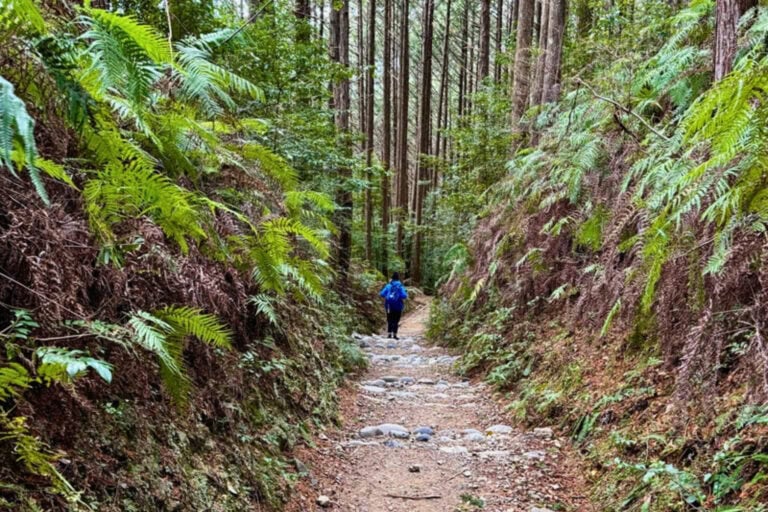
It’s the end of Day 2 of our six-day walk on the Nakahechi route of Japan’s Kumano Kodo pilgrimage trail. We’ve veered off the trail to find snacks for the next day and locate our guesthouse accommodations for the evening in Chikatsuyu.
Meeting Akira
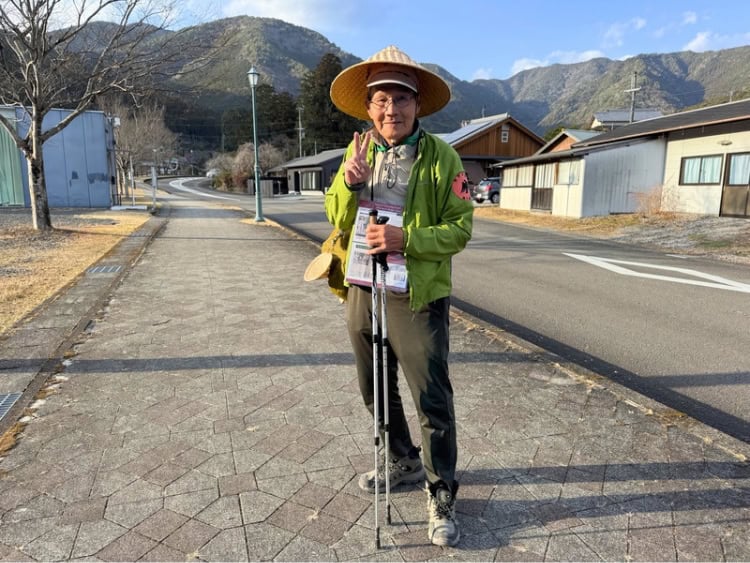
Ahead, we see an older man climb out of the passenger side of a car, with the body language of someone who wants to chat with us. Wearing Japan’s traditional conical woven hat, a green jacket and carrying walking poles, the senior gentleman turns out to be Akira Nakagishi, a self-designated trail ambassador who has guided others along the famed route for many years.
Now retired from teaching high school English and guiding, which he stopped after suffering a stroke, he stays engaged with the trail community by recording English-speaking hikers for his TikTok and Instagram channels.
“Hello. Welcome to Chikatsuyu. My name’s Akira,” he says by way of introduction. “I was born in Hongū and grew up there and lived there all through my life, and now I’m 84 years. I went to FM Tanabe’s broadcast to recording this morning and came back here with my daughter’s driving and I saw you and stopped and asked the videotape recording. Thank you very much, wonderful ladies from Canada. I enjoyed chatting and recording.”
He then turns his phone toward us and asks us to say why we’re there and share our thoughts about the walk.
Later, we see ourselves, along with many other pilgrims, pop up on his social media channels, which he has been populating with videos of walkers for the past couple of years.
So dedicated to the trail and its visitors, he messages us later to watch for him the next day at trail marker 75 near the Grand Shrine of Hongū. Sure enough, there he is, waiting to collect a few more comments.
If you’re planning a trip to Japan, check out our Japan Travel Guide, where you’ll find a curated selection of articles to inspire you and help plan your trip.
Following an Ancient Path
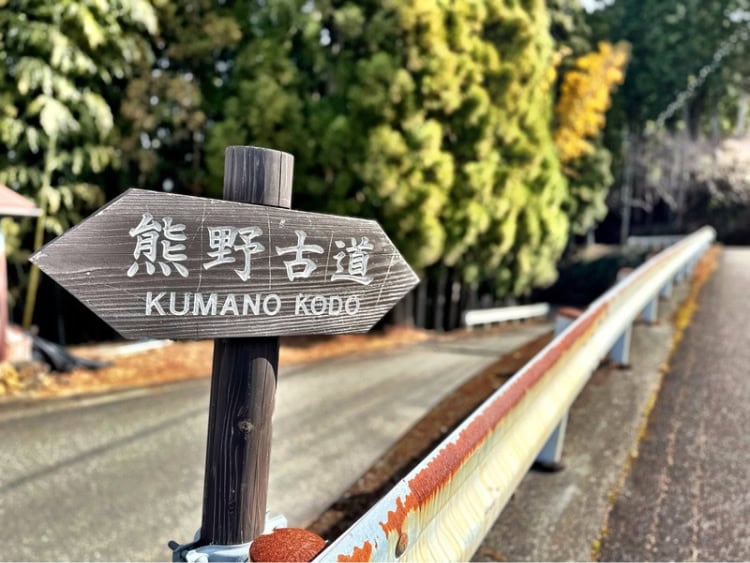
The Kumano Kodo is one of Japan’s oldest and most revered pilgrimage networks, with a history stretching back more than 1,000 years. Winding through the lush, mountainous Kii Peninsula south of Osaka, these ancient trails have been walked by everyone from ordinary villagers to emperors seeking spiritual renewal.
The six-day Nakahechi route, often called the Imperial Route, is one of the most popular ways to experience the pilgrimage. It takes walkers through towering cedar and cypress forests, stone stairways, small rural villages and mountain passes, with stops at centuries-old shrines along the way.
Days are spent hiking between traditional Japanese inns and guesthouses, where local hospitality, regional cuisine and the restorative waters of natural hot springs offer a welcome reward after a day on the trail.
The journey also provides an opportunity to visit the three Grand Shrines of Kumano, sacred sites that have drawn pilgrims for generations. The route is as much a spiritual and cultural experience as it is a physical challenge.
What makes the Kumano Kodo particularly interesting to international walkers is its relationship with Spain’s Camino de Santiago. They are the world’s only two pilgrimage routes recognized as UNESCO World Heritage Sites, and both have ancient traditions of welcoming travellers seeking reflection, discovery and a sense of purpose.
In 2015, the two destinations introduced the Dual Pilgrim program, allowing walkers who complete qualifying sections of both routes to receive special recognition. Like the Camino, the Kumano Kodo offers a chance to slow down, connect with the landscape and meet fellow travellers along the way.
Hiking a Winter Route With Oku Japan
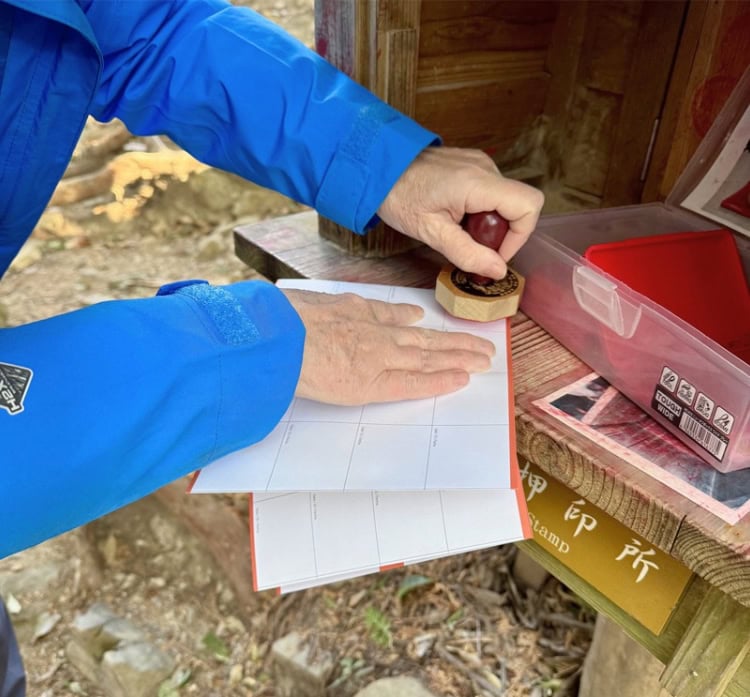
We chose to walk the self-guided Winter Kumano Kodo tour in January, which proved perfect for long, sometimes strenuous days on the trail. We experienced no adverse weather, with morning temperatures hovering around 0 C before warming up during the day.
Hosted by Oku Japan, the company planned and booked everything we needed for the walk, from our starting and concluding accommodations in Osaka, to overnight stops at guesthouses and smaller hotels along the way. Luggage transfers were also arranged.
They sent us off with detailed maps, trail descriptions, helpful photographs and instructions on how to catch local buses to off-trail accommodations, along with suggestions for alternative walking distances.
Hospitality Found Along the Route
Hospitality was definitely not lacking, both on and off the trail, with fellow hikers checking on our progress, particularly during some of the more challenging sections, and there were many. The ancient builders of these trails didn’t seem to consider switchbacks when constructing paths up the steep terrain.
We also experienced plenty of warmth and kindness at our accommodations.
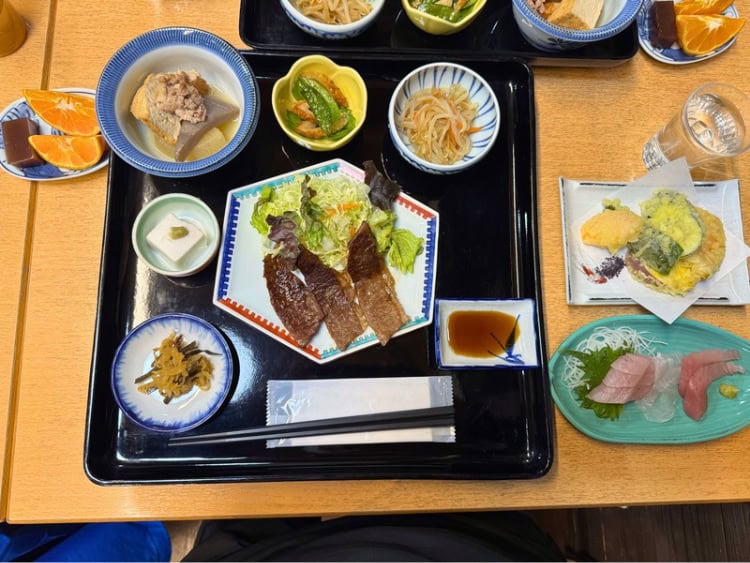
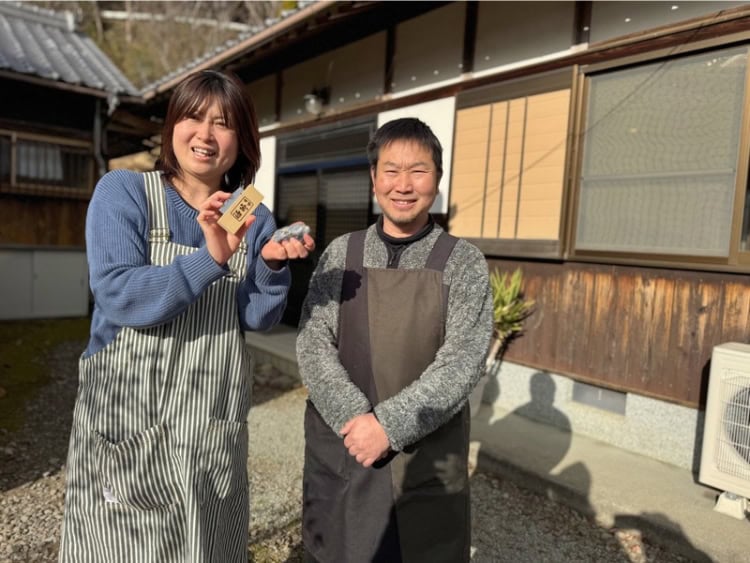
Our first memorable stay, which, like the others, included sumptuous, multi-course traditional Japanese fare for dinner and filling breakfasts, was at the lovely and comfortable guesthouse Sakura-no-Sono (Cherry Garden) in Chikatsuyu, run by husband-and-wife team Chie and Chin Yokoya.
Along with providing dinner and breakfast, we were also sent off daily with bento boxes filled with things like boiled eggs, onigiri (rice balls) or fresh fruit and vegetables. These boxed lunches were very welcome as at times we weren’t anywhere near a village where we could grab snacks or lunch.
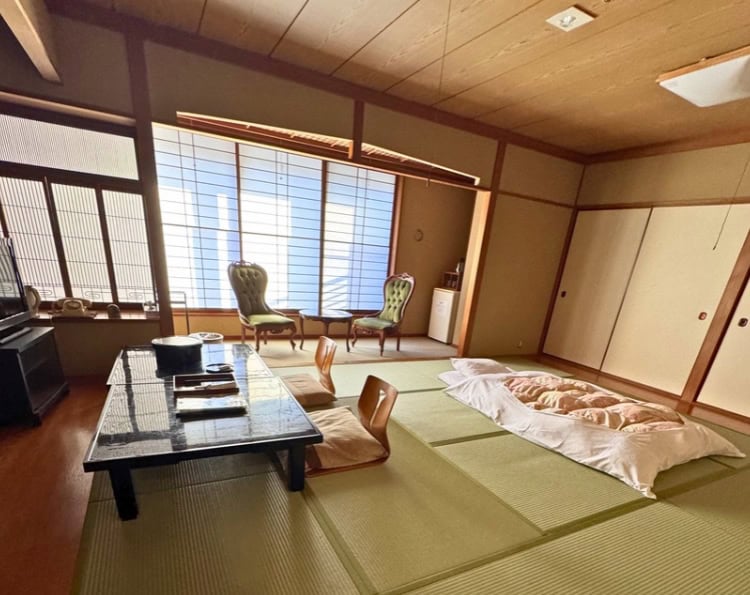
“We hope you are safety and success of travel,” Chie said as she struck a stone with steel to create a spark to bless us before we hit the trail, with full bellies and well-rested after a great sleep on traditional futons laid out on tatami mats.
It was also in Chikatsuyu that we popped into Oku Japan’s field office for further instructions and to pick up a good-luck amulet featuring Japan’s three-legged crow, intended to ward off evil spirits.
It must have worked, as we didn’t encounter any that I’m aware of (although I sometimes wondered as I grunted my way up another steep narrow mountain path).
Traditional Inns and Onsens
One of our more unique experiences on the trail was dipping into the outdoor natural hot spring in a river across the street from Kawayu Onsen Fujiya. Wearing rented bathing suits (bathing dresses, really, in keeping with Japanese modesty), we soaked our tired muscles after another strenuous day of walking.
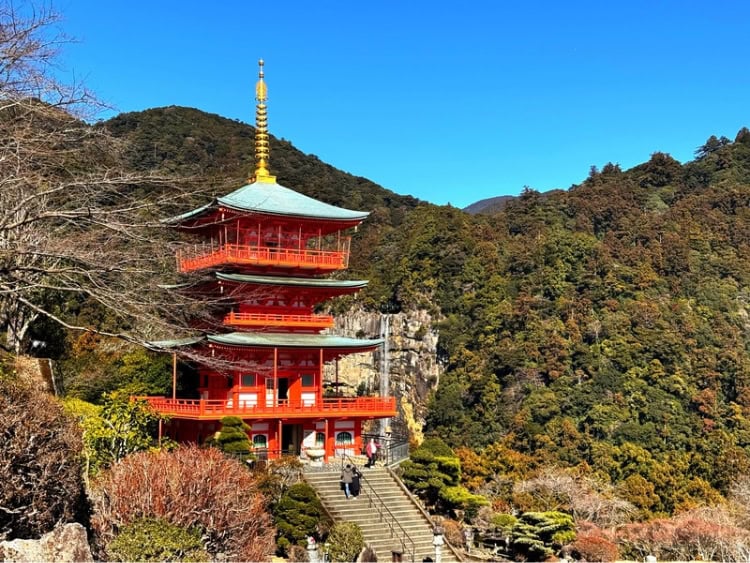
The final day of walking is one of the most scenic, as you ascend to Nachi Grand Shrine and the beautiful Seiganto-ji Buddhist temple, with its red pagoda overlooking a waterfall.
If you position yourself just right, you can capture an iconic photo of the striking pagoda and Nachi Falls, a dramatic waterfall plunging 133 metres down a forested mountainside, in the same frame.
Our six-day adventure concluded in Kii-Katsuura, a lively fishing port known for its tuna and early-morning fish market. We walked along its scenic waterfront, popped into small shops for last-minute souvenirs and checked into Manseiro for our final traditional meal and a restful night’s sleep on a futon.
Read More: The Naked Truth About Japanese Hot Springs: Complete Onsen Etiquette Guide
Kumano Kodo Rewards and Challenges
The Kumano Kodo includes five main routes linking the sacred shrines, with the Nakahechi being the most popular and an ideal choice for first-time or moderately experienced multi-day hikers. The distance varies depending on the itinerary, with our route covering several challenging sections over six days.
That said, when I’ve told others familiar with the route that I’ve walked it, their eyes widen in surprise. That may say more about their expectations of me than anything else, but it also reflects the reputation of this pilgrimage as a challenging undertaking. The steep ascents and descents can be demanding, with some days involving up to nine hours of hiking.
But the rewards go well beyond the kilometres covered. There are the ancient forests, the spiritual history, the steaming hot springs, the extraordinary hospitality and the unexpected encounters with people like Akira, who remind us that a pilgrimage is about more than simply getting from one place to another.
Six days later, we left with tired legs, wonderful memories and a deeper appreciation of Japan’s traditions and the people who keep them alive. And, perhaps most importantly, a sense of accomplishment that made every steep climb worthwhile.
If You Go
Getting There
We flew direct from Toronto to Haneda International Airport in Tokyo where we acclimatised for a couple of days at the lovely Royal Park Hotel in Terminal 3, which is a small city in and of itself with an Edo-style complex of convenience stores like Lawsons and a maze of tiny restaurants serving ramen and other Japanese specialties.
Later, we took the bullet train to Osaka, where we started the walk.
Where to Stay
If you book this trip through Oku Japan, they arrange all accommodations for the trail. Breakfast, dinners and boxed lunches for the hike are also included.
Need a hand planning your trip? Here are the sites and services we rely on most, from booking tools to travel products we love.
Inspire your next adventure with our articles below:
- Circling Japan by Small Ship, Far From the Tourist Crowds
- Winter on the Nakasendo Trail: Exploring Traditional Japan on Foot
Author Bio: Pat Lee is an experienced travel writer who loves to explore the world, sometimes on two wheels. She loves to learn about what makes a small corner of the world tick through up close and personal experiences. While she’s been privileged to visit many parts of the world, she’s barely scratched the surface.
Want to discover more hidden gems and helpful travel tips? Join our free newsletter for the latest travel secrets and travel articles.
We are reader-supported and may earn a commission on purchases made through links in this article.

- Japan’s Kumano Kodo in Winter: Steep Climbs, Hot Springs and Shrine Towns on the Nakahechi Route - November 17, 2026
- Barcelona to San Sebastian Road Trip: Mediterranean to Basque Coast - November 17, 2026
- An Edinburgh Day Trip to Dunfermline, Scotland’s Ancient Capital - November 16, 2026
Planning another trip soon? ✈️
Add GoWorldTravel.com as a preferred source on Google. Click the button below so our local guides, packing hacks, and hidden-gem itineraries always show up first when you search!
Add to Preferred Sources