
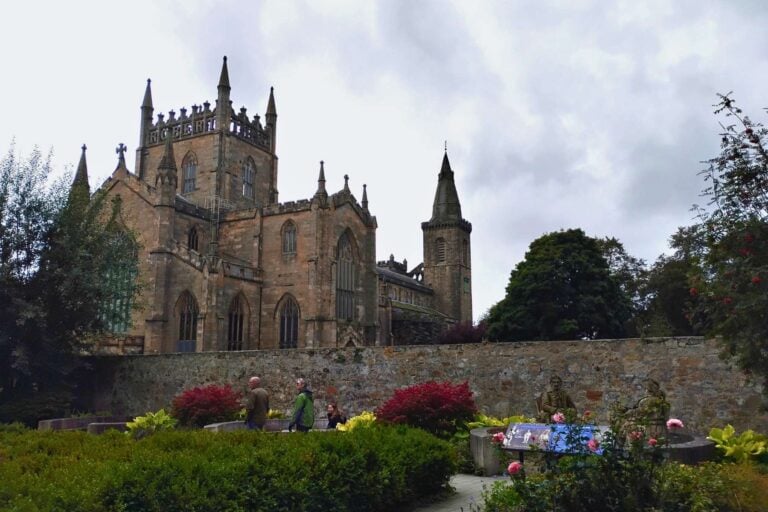
If you love royal history, charming cities, or even train rides, a day trip to Dunfermline is for you. It’s an easy 30-minute ride from Edinburgh’s Waverley Station, taking you across the iconic Forth Bridge into Fife.
If you’re spending time in the capital, you might also explore the ghostly side of Edinburgh.
Opened in 1890, the Forth Bridge is a Scottish icon and noted for its cantilever design. As the world’s first major steel structure, it was a milestone in modern railway engineering and is a UNESCO World Heritage Site.
Dunfermline is often referred to as the ancient capital of Scotland, and there is much to love about this city (which was awarded city status in 2022 by the late Queen Elizabeth II).
Here are some of my favorite places from my recent day in Dunfermline.
Dunfermline Abbey and Palace
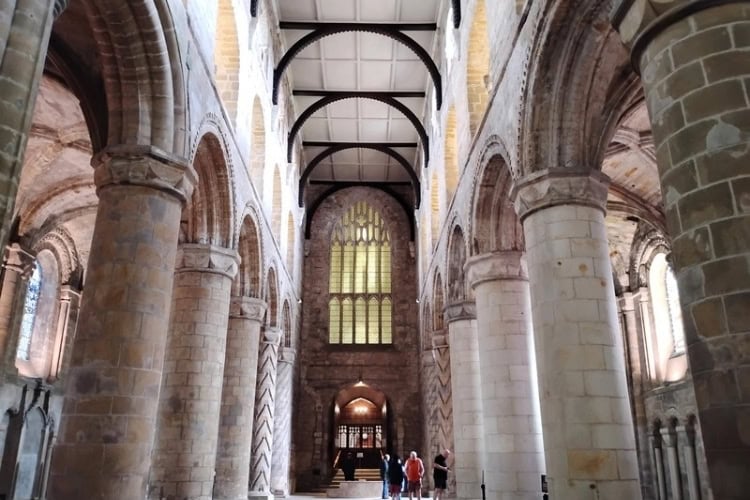
This abbey has a special place in the heart of Scots. A stunning example of Romanesque architecture, it was founded as a priory and made an abbey by David I, later becoming a royal mausoleum. Among the kings and queens buried here are Robert I (Robert the Bruce), St. Margaret, David I, King Malcolm III, King Edgar, and King Alexander I. More kings and queens of Scotland are buried here than in any other place.
A Tale of Two Churches
In the 11th century, during the time of Malcolm III and his queen, Margaret (later St. Margaret), it was their son David I who raised the status of the priory to an abbey. He provided the funds and brought in stonemasons from England to build it.
After England’s Edward I badly damaged the Abbey in 1303, Robert I financed its rebuilding. It was a statement of confidence following the Wars of Independence with England. This abbey is lovely, with an elaborate façade, intricate stonework, and a stunning vaulted ceiling.
Robert I was interred before the high altar in 1329. His heart was taken on crusade before eventually being buried at Melrose Abbey.
After the Protestant Reformation, the nave remained, but the old choir collapsed. Between 1818 and 1821, a new parish church was built here. Visitors can explore both areas, and the newer section remains an active church. Within this area you will find a stunning Tiffany window donated by Dunfermline’s own Andrew Carnegie and history exhibits.
Robert the Bruce’s Final Resting Place
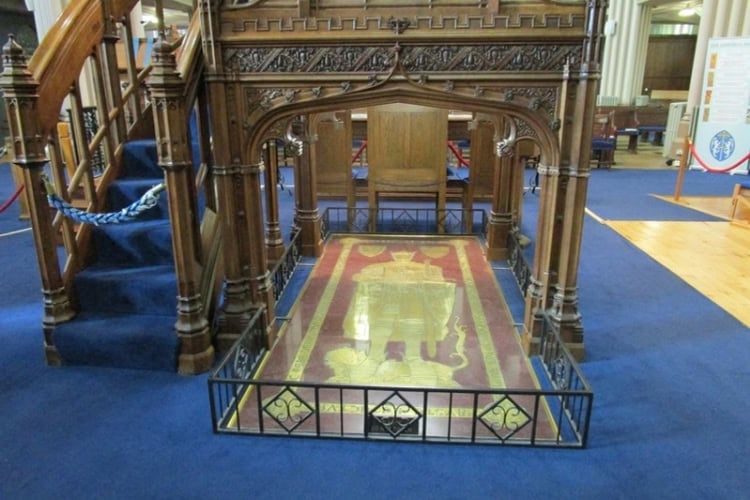
While the final resting places of most of the royals are not identified, you can see the Bruce Vault within the modern section of the church. Robert the Bruce (Robert I), the King of Scots, lay unmarked until 1889. You can view his ornate marker located under the pulpit.
Exploring the Palace Ruins
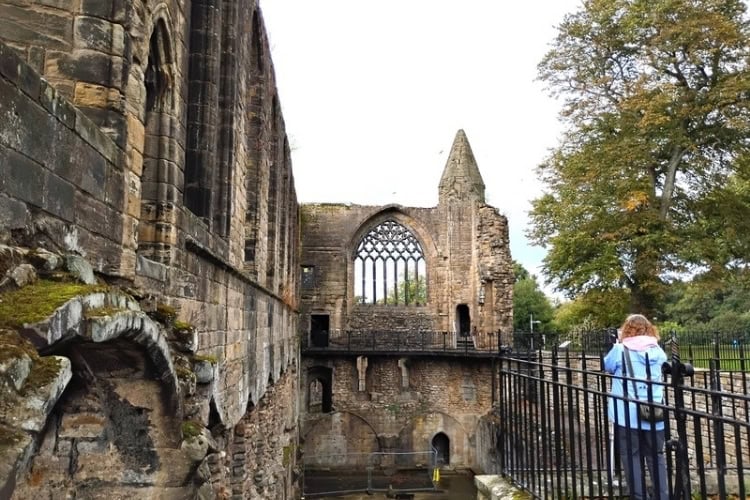
The Palace was created by Queen Anna of Denmark following the Protestant Reformation of 1560. It served as a home and monastic guesthouse, and Charles I was delivered within its walls in 1600, the last monarch to be born in Scotland. Today’s visitors can explore its ruins and see exhibitions. You may also wish to explore the churchyard; William Wallace’s (also known as Braveheart) mother is among those buried here, and it is also the location of St. Margaret’s Shrine.
Elsewhere on the grounds is the moving Garden for Heroes. This peaceful and meaningful area pays tribute to those lost in World War II and beyond. A large cenotaph memorializing those lost in World War I is also nearby.
A Break at Abbot House
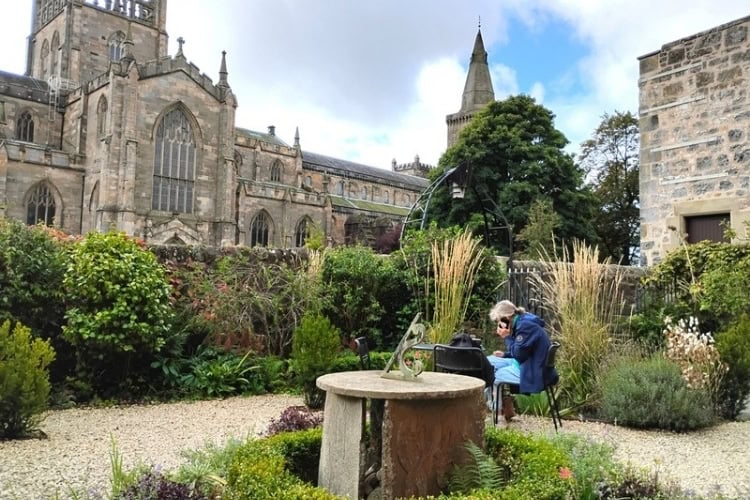
I enjoyed my time at the Abbey and Palace so much that I took a break for a scone and hot chocolate at nearby Prost Coffee (located in the historic Abbot House) and returned to see more. Admission to the Abbey is free.
The Abbot House is located next to the Abbey and is Dunfermline’s oldest house and is steeped in history dating back to the 16th century. Also known as the Pink House, it offered a relaxing break as I enjoyed my treats in its courtyard.
Andrew Carnegie’s Legacy
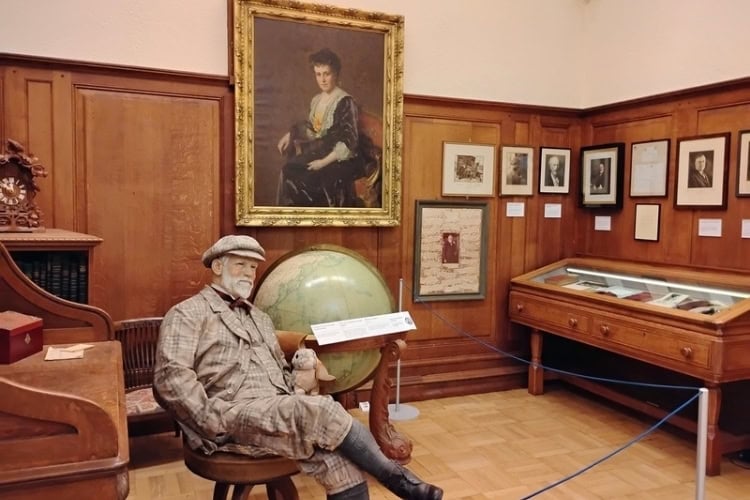
Andrew Carnegie was born in a small weaver’s cottage in Dunfermline in 1835. A stop at his birthplace helps you understand just how humble his beginnings were. This tiny house was home to two families plus a weaving business, and the Carnegies shared two small rooms.
Carnegie and his family moved to the United States of America, and it was there he made his fortune in the steel industry. Never forgetting his roots, he funded the very first Carnegie Library in Dunfermline and also gifted Pittencrieff Park, known for its peacocks. In all, Carnegie is said to have given away nearly 90% of his fortune. Over 2,500 Carnegie libraries were built worldwide between 1883 and 1929.
In honor of his 60th birthday, his wife Louise purchased his childhood home for him. Today, you can visit the house and the extension, which is an impressive museum celebrating his achievements and philanthropy: the Andrew Carnegie Birthplace Museum. Free admission.
Dunfermline Carnegie Library and Galleries
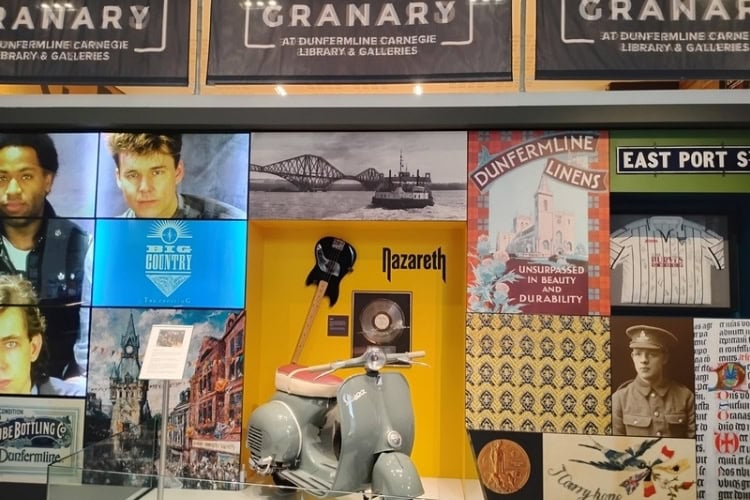
That original library remains and is still active today and houses a museum highlighting the history of the area. The Dunfermline Carnegie Library, opened in 1883, is a short walk from his childhood home and shares the stories of royalty in Dunfermline, local commerce, and people.
Weaving and silk production were among the local trades. The wedding dress worn by Queen Elizabeth II in 1947 was made from duchesse satin from the Scottish firm of Winterthur, located in Dunfermline.
Spend some time here; many of the exhibitions resonate even if you aren’t local. The Dunfermline Carnegie Museum and Galleries. Free admission.
More to See and Do
Dunfermline is a city with a lot to offer. When I arrived, I took an easy walk from the train station to the Heritage Quarter, passing lovely homes on the way, and started my day at the World War I Memorial. Later in the day, I explored local shops, including charity shops. Charity shops are essentially thrift stores that benefit various charities; often, new items are on offer as well.
Walking around, I admired many historical buildings, including the City Chambers just off the High Street with its magnificent clock tower. Independent shops and bakeries also had me reaching for my wallet (in the best possible way).
The vibe here is resoundingly local and laid-back. Unlike busy Edinburgh, I got the sense that I didn’t need to rush to see everything, and the Heritage Quarter, featuring medieval street layouts, was packed with landmarks. The High Street, Maygate, and Abbot Street are the heart of the Quarter, which has historic passageways including Wilson’s Close, Music Hall Lane, and Cross Wynd. These streets and passages reiterate the ancient townscape.
Elsewhere in the city, the Alhambra Theatre (opened in 1922) provides a series of live performances year-round; Carnegie Hall (named for Andrew Carnegie) opened in 1937, features a variety of theatre, music, film, and other events (it will close for renovations in 2027), and for those who wish for a guided experience, Clan MacKenzie Routes Walking Tours offers bespoke opportunities.
History comes to life with every step in Dunfermline while visitors explore both ancient tales and modern legacies. Where will your feet take you?
Need a hand planning your trip? Here are the sites and services we rely on most, from booking tools to travel products we love.
Inspire your next adventure with our articles below:
- Beyond London: Why York, England, Belongs on Your Itinerary
- This Quiet Georgia Town Is the Gateway to Wild Horses and Carnegie Ruins
Author Bio: Mary Casey-Sturk is an Editor and Writer for Living Magazines (Kentucky) as well as a contributor to Smoky Mountain Living Magazine (North Carolina). Mary is also a content developer, freelance travel, food, wine and features writer and the author of “Eating Cheese Curds with Strangers”.
Want to discover more hidden gems and helpful travel tips? Join our free newsletter for the latest travel secrets and travel articles.
We are reader-supported and may earn a commission on purchases made through links in this article.

- An Edinburgh Day Trip to Dunfermline, Scotland’s Ancient Capital - November 16, 2026
- Savor the Rhone on a Food and Wine River Cruise from Avignon to Lyon - November 16, 2026
- Christmas in Stockholm: Markets, Light Festivals and Lucia Traditions - November 15, 2026
Planning another trip soon? ✈️
Add GoWorldTravel.com as a preferred source on Google. Click the button below so our local guides, packing hacks, and hidden-gem itineraries always show up first when you search!
Add to Preferred Sources