
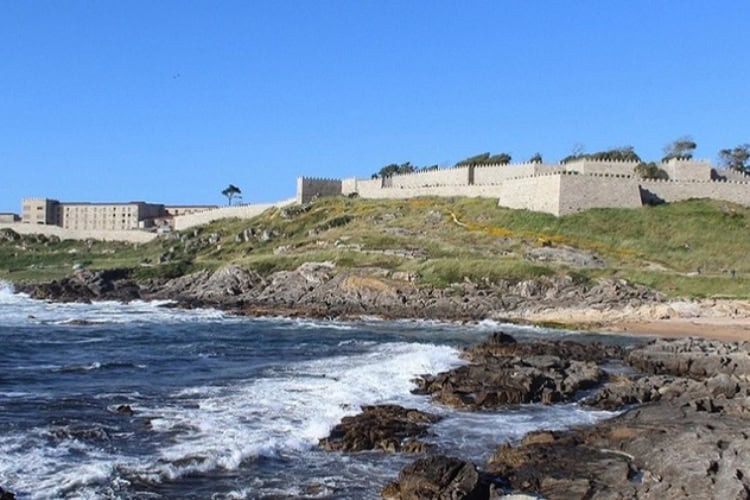
Frothy Atlantic waves pound the shoreline along the Monterreal Fortress’ medieval walls that encircle what’s now the Parador de Baiona hotel, the stone bulwark vividly aglow under the unyielding sunlight of a perfectly cloudless sky.
But just a ten-minute walk along this rocky peninsula of Galicia, Spain’s northwestern-most region, leads to the calm waters of a protected harbor. Juxtaposed among the modern-day sailboats and fishing boats, a seemingly fragile wooden sailing ship catches my eye – a small wonder representing a pivotal moment in world history.
Baiona and La Pinta
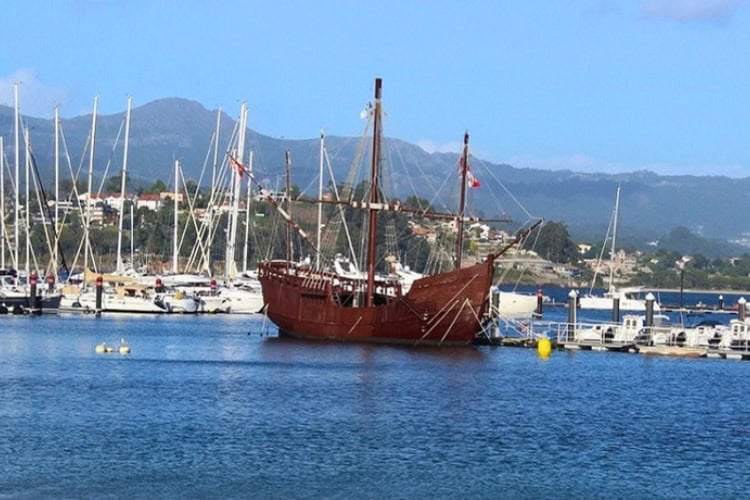
The vessel is actually a replica of Christopher Columbus’ La Pinta, the second of his three-ship fleet that found the New World, but the first to return to Europe – here, at the Galician port in Baiona – with the first news of the momentous voyage.
“The people in Baiona feel so proud that La Pinta arrived here and that Columbus had found a way to the Americas, and that they were giving the news to the king and queen of Spain,” says Galician tour guide Laura Villar. “I think they were really amazed and the whole town probably helped provide water and food on board and helped repair the boat before it could sail to the south of Spain,” she surmises.
The replica La Pinta is a floating museum open to visitors, but the caravel landing here on March 1, 1493, with 26 on board, is celebrated annually during the first weekend of March with the Festa da Arribada. Galicians don troubadour costumes as the town’s Old Quarter and Monterreal Fortress transform into a medieval village with period music and the reenactment of when La Pinta Captain Martín Alonso Pinzón anchored his ship.
Galicia’s Celtic Heritage
With a land mass slightly smaller than Belgium, Galicia is an autonomous community in this far corner of Spain along Portugal’s northern border, thus developing its own cultural heritage due to its dramatic coastline, rugged mountains and isolated location. Because of its deep Celtic roots well before Roman occupation, breathy bagpipes still echo within the medieval walls of Santiago de Compostela, often used to welcome pilgrims completing their knee-aching hikes along the many routes of the Camino de Santiago.
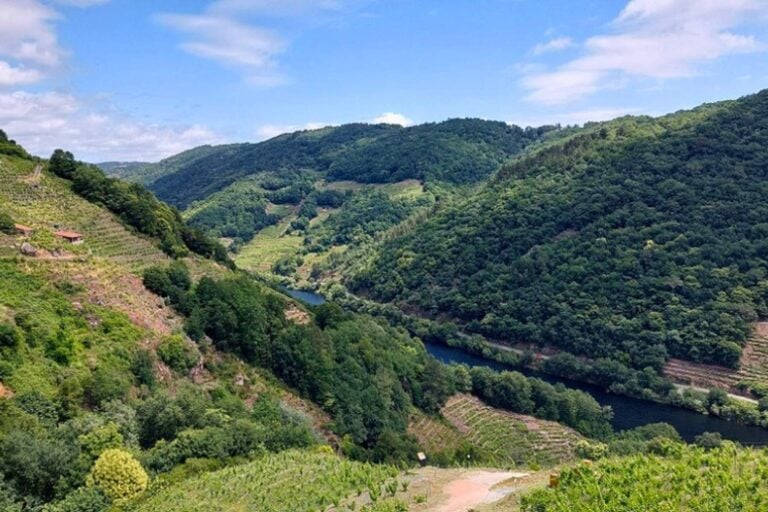
Terraced vineyards in mineral-rich mountainous valleys cooled by briny sea breezes produce bountiful wines. Fresh seafood is seemingly on every menu, with octopus tentacles dangling in marketplaces and restaurant displays. And Galego, a Portuguese-rooted language with Spanish influences, evolved and now reverberates through most conversations here. Galicia differs in many ways from the often arid climate and Mediterranean culture in much of Spain.
Celebrating Pilgrimages Along the Camino De Santiago
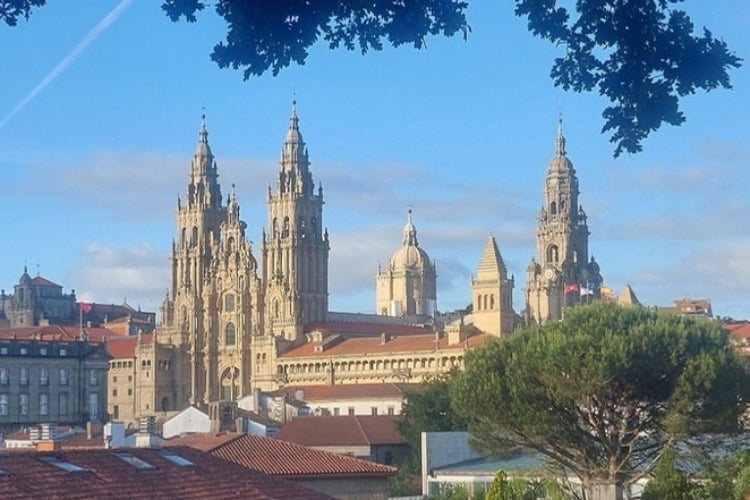
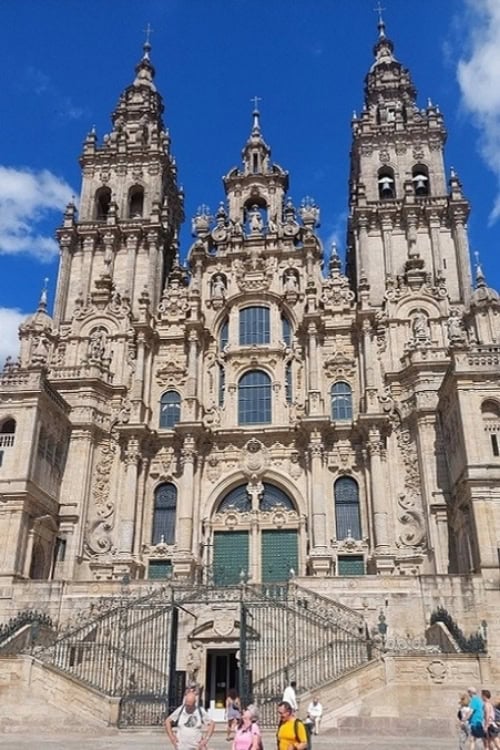
Cheers, chants and singing often reverberate within Santiago de Compostela’s sprawling Praza do Obradoiro. Groups clutching their walking sticks pose for photos beneath the towering Baroque façade of the city’s cathedral as they celebrate the end of what for many has been a once-in-a-lifetime journey.
“It was definitely difficult. There were a lot of people wondering if they’d even make it,” says pilgrim Andrew Simily from St. Louis who walked for six days. “Today, making it into the plaza and looking up, a lot of people were emotional.”
“The first two days were the hardest on the trail and some of our group couldn’t make it the whole way,” recalls fellow hiker Patricia Larson. “Coming into the plaza and finally seeing it is a very joyful and happy feeling.”
Why Pilgrims Make the Journey
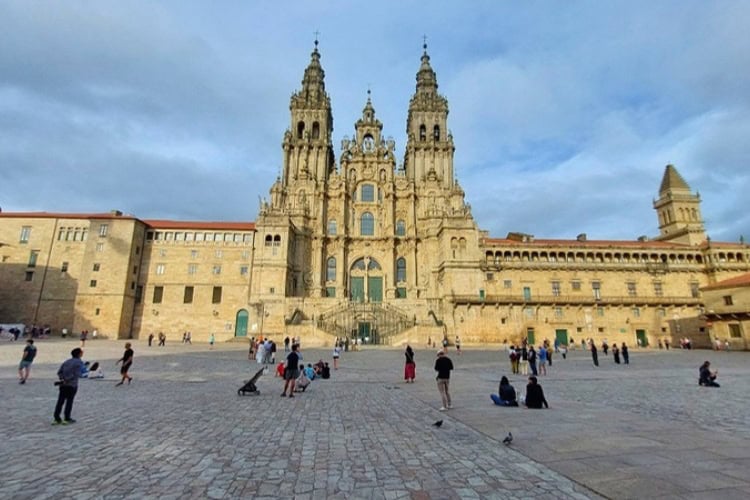
Since the Middle Ages, pilgrims have trekked to Santiago to seek forgiveness for their sins at what many believe is the tomb of the Apostle Saint James the Greater in the cathedral. “In the old days, if you did the walk it meant all your sins would be wiped out,” explains Villar. “You came into the cathedral, went to mass and confession and then Holy Communion. If you died after that you would go straight to heaven.”
The cathedral with its portico of sculpted apostles and prophets dates back to the 11th to 13th centuries, with the Baroque towers added in the 17th and 18th centuries. Medieval pilgrims likely saw the same interior we see today, many back then sleeping in the cathedral’s upper balconies. Since they were often sick and unbathed, the cathedral’s famous incense-burning Botafumeiro (censer) was often swung to mask the stench.
Cathedral Rituals, Then and Now
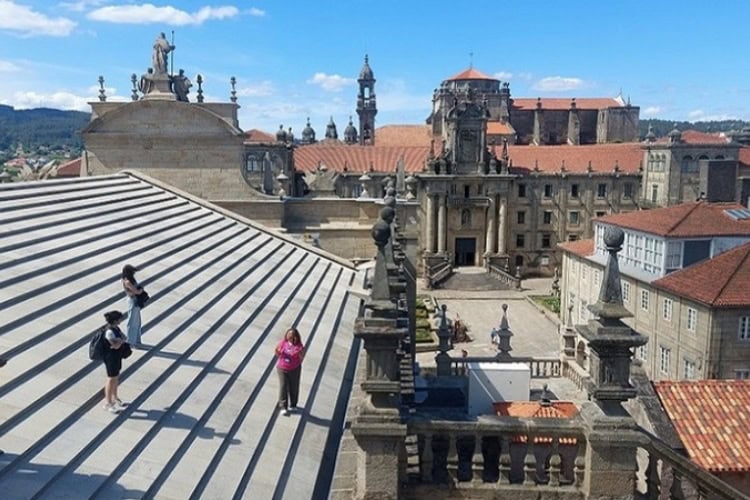
We line up with modern-day pilgrims to hug a statue of Saint James shrouded in a jewel-studded silver cloak just behind the altar, known as the “Hugging the Apostle” rite. We climb the cathedral towers to tour its rooftop for sprawling views of Santiago’s cloisters, former convents and narrow medieval-era streets.
For more, read Take A Hike: Pro Hiking Tips to Keep You Safe This Summer.
Galician Wines: Red Or White?
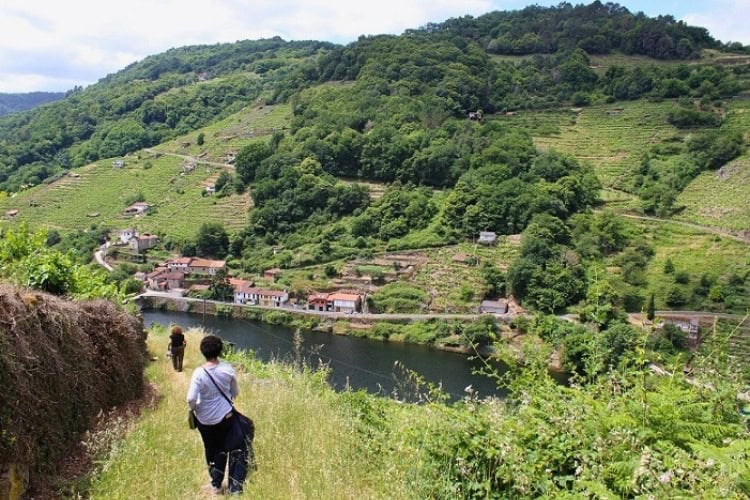
Along the Atlantic on both its western and northern edges, Galicia’s cool sea breezes, river valleys and abundant rainfall are key to producing some of Spain’s most distinctive wines. Two dominate here – smooth white Albariño along the coast and red Mencía farther inland.
In the Ribeira Sacra region, we visit the Vía Romana winery amidst its terraced vineyards with steep views of the meandering Miño River Valley. Vía Romana specializes in varieties of Mencía, described as fruity with mineral notes due to slate-dense soil. During our wine tasting, I try a lightly tinted rosé paired with a tapas dish of smoked trout and white asparagus marinated with sugar, lime and dill. That’s followed by a deep-red Mencía with notes of pepper along with grilled octopus and paprika-spiked potatoes.
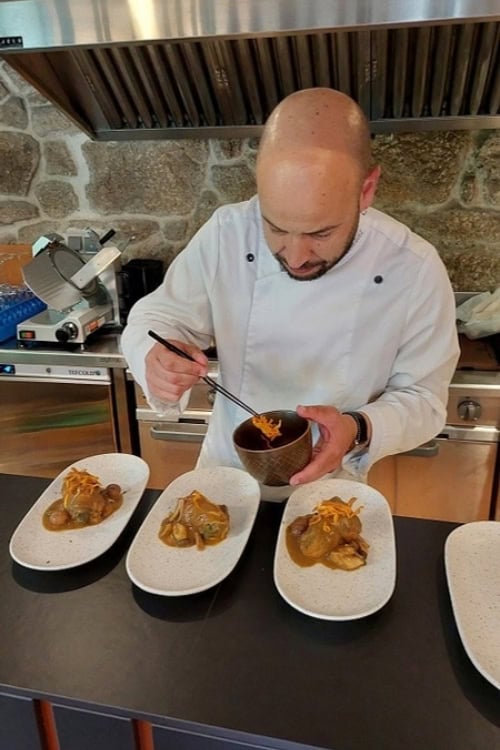
My favorite, however, is the Vía Romana Barrica served with hake, a delicious white fish drenched in a leek puree. “Barrica is fermented with care and aged in French oak,” says wine tasting guide Julian Agulló. “It has a deep color with fruity aromas and notes of vanilla.”
Crisp And Refreshing Albariño
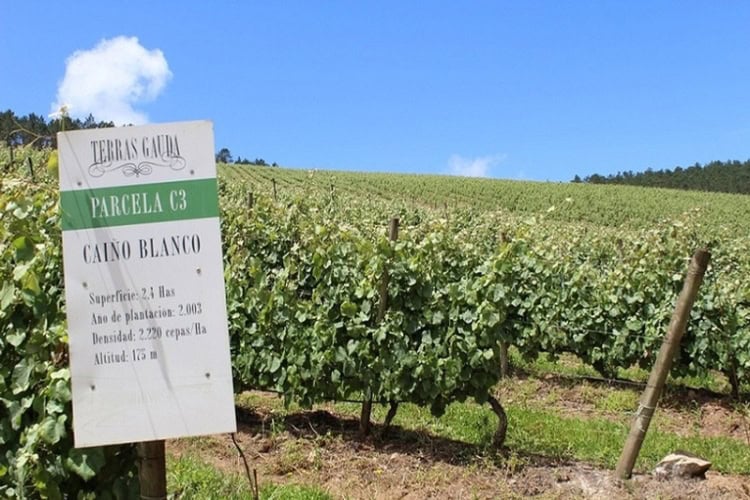
In Galicia’s coastal Rías Baixas region, refreshing Albariño white wine is king. At the southwestern-most edge of Galicia across from the Portuguese border, the Terras Gauda winery in the O Rosal Valley takes advantage of the optimal grape-growing conditions thanks to its proximity to the ocean and mouth of the Miño River.
“The Rías Baixas has a special microclimate because of its relationship with the sea,” says winery guide Inés González as she drives us through a vineyard where young grapes are already budding in early June. “The soil is perfect for the white varieties including Albariño, Caiño and Loureiro.”
Sea breezes and the granite- and quartz-rich soil add a touch of salinity to the winery’s 100 percent Albariño brand, Abadía de San Campio, along with its blended varieties often described as light to medium-bodied, fruity and with spirited acidity.
More Albariño Producers to Try
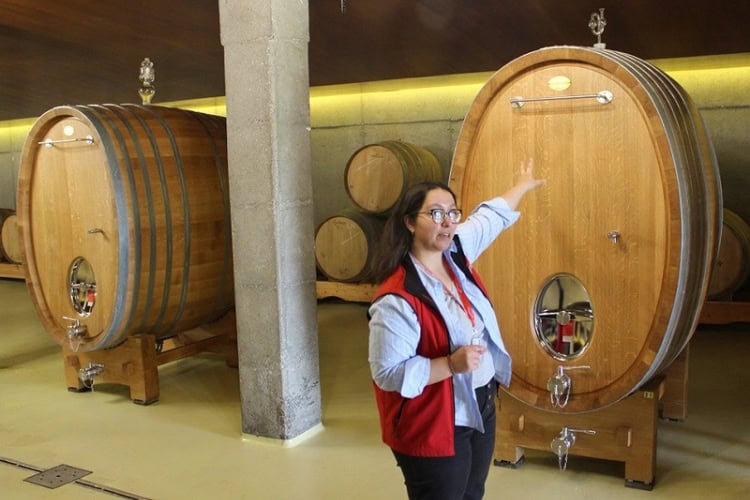
Further north within the Rías Baixas at Vilanova de Arousa, Bodegas Granbazán produces its own Albariño varieties often compared to Riesling. Its Etiqueta Verde, aged for six months in stainless steel tanks, tastes crisp, while the Etiqueta Ámbar, aged nine months, has more body with more balanced acidity. Granbazán’s Albariño Limousin, aged in French oak, meanwhile, is described as oaky, drier and goes down smoother.
“The refreshing aspect of Albariño is what makes it really special, citrusy and minty, almost as if you just brushed your teeth,” is how Granbazán spokesperson Clara Alfonsín describes it. “The wines in the Rías Baixas, with Albariño the most recognized, tend to have an intense sensation of acidity from the granite.”
At the nearby Bodegas Mar de Frades, meanwhile, servers pour us a 100 percent Albariño sparkling wine, Brut Nature, with maritime saltiness and scintillating freshness. Paired with grilled octopus, clams and scallops, this innovative Albariño seems perfect with seafood. Mar de Frades is also taking its brands to a new level, experimenting by aging wines in porous concrete and even granite tanks.
Legends, the ‘Glass City’ and a Galician Beer Tasting
After all the wine sampling, I welcome a visit to the MEGA Mundo Estrella Galicia, a beer museum within its brewery in the northern coastal city of A Coruña. Estrella produces arguably Spain’s most popular beers that are paired with cheeses in the tasting room. For example, I try 1906 de Bodega, a dark amber lager complemented with Galicia’s San Simón smoked cheese, and then 1906 Galician Irish red ale alongside creamy O Mouro cheese with its rind infused with cinnamon and coffee notes. The 1906 brands commemorate the brewery’s founding year.
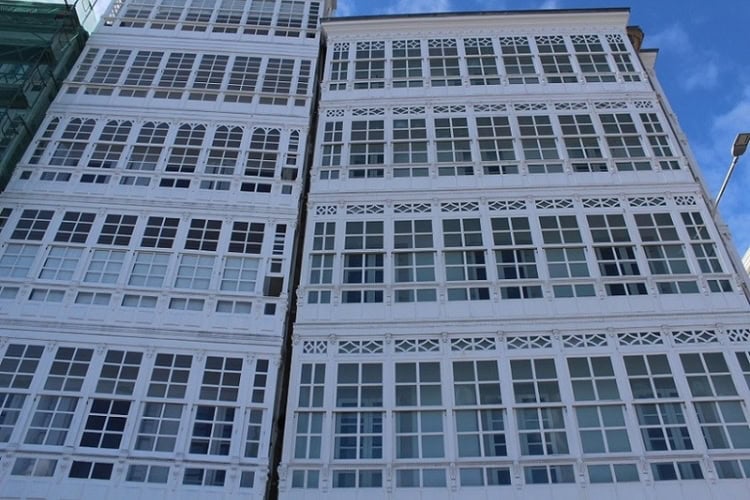
Near the port area, the reason for A Coruña’s “City of Glass” nickname becomes abundantly clear. That’s because glass balconies – particularly those facing the harbor – cover building facades almost side to side, creating a seemingly bright and upbeat ambiance, especially during sunny days. Builders installed them in the 19th and early 20th centuries. “They opened up the houses to light,” says Villar, also allowing for ventilation and better temperature control in both winter and summer.
The Legend of Torre de Hércules
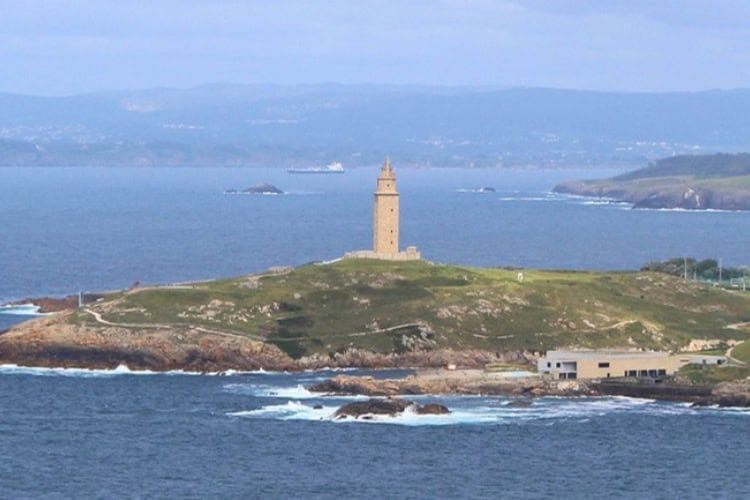
Perched along A Coruña’s coastline, the imposing 180-foot-high Torre de Hércules stands as the world’s oldest working lighthouse, dating back to the 1st century AD. The Romans built it, but the legend, as most do, thrills readers even more. It’s said that Hercules saved the city from a three-headed monster. “He killed the giant and the tower was selected in his name,” says Villar. Huffing up 234 steps leads to the top with stunning views of the wide-open Atlantic.
My Short Pilgrimage
Pilgrims can now choose between more than 200 Camino de Santiago routes, although most opt for a preferred dozen or so. Our group hiked only a short distance – just for the experience of doing so – in the heart of the Ribeira Sacra wine region. We passed by houses and forested meadows dotted with wildflowers along the Invierno (Winter Way) pilgrimage, from the medieval stone church of San Paio de Diomondi to the village of Belesar on the Miño River. Next to the church, we toured a hostel for pilgrims, once a summer palace for bishops.
Walking sticks helped me maneuver along the uneven and steep rock-strewn path as it crisscrossed down the mountainside. The meager two-kilometer hike was challenging enough for me to applaud the mettle and determination of those fulfilling their life-long dreams for their own pilgrimage.
If You Go
Getting There
United Airlines launched nonstop summer service between Newark and Santiago de Compostela in 2026, making this corner of Spain a more direct trip from the East Coast than it used to be.
Getting Around
The wineries, coastal towns and A Coruña are spread out enough that a rental car makes the trip far easier than relying on regional trains and buses. Book a rental car through Discover Cars to compare pickup options in Santiago, Vigo or A Coruña.
Where to Stay
Set on the fortress walls of Monterreal with Atlantic waves breaking just below, the Parador de Baiona pairs a genuinely historic setting with modern comforts, two on-site restaurants and water views from its terrace.
Wine Tastings and Tours
- Ribeira Sacra Wine Tour from Santiago de Compostela: a private full day tour through the terraced vineyards described in this piece, with stops at multiple producers for tastings.
- Albariño Private Wine Tour from Santiago de Compostela: a full day private tour into the Rías Baixas and its Salnés Valley wineries, without the stress of driving the region’s coastal roads.
A Coruña Highlights
- MEGA Mundo Estrella Galicia Guided Tour: a guided walk through the beer museum inside the working Estrella Galicia brewery, tasting included.
- A Coruña Historic Walking Tour: Old Town and Highlights: a small-group walk through the same glass-balconied streets and lighthouse grounds covered in this piece.
Camino de Santiago Resources
For general trip planning:
- Spain’s official tourism board breaks down what each route involves and how to choose one, here.
- For route maps, albergue listings and other practical details specific to the region, Galicia has its own pilgrimage resource, here.
- Trying to decide which route to walk? This guide compares the French Way, Portuguese Way and other major options side by side.
- Santiago Cathedral and Carraca Tower Roofs Tour: climb the same 150 steps to the rooftops for the views described in this piece.
- Pilgrims planning a longer walk might want The Camino Companion, a field guide covering packing, training and etiquette across the Camino Francés, Camino Português and other major routes.
Wine Tasting Information
For a deeper dive into the region’s wine routes, Galicia’s tourism board has a guide to touring its vineyards, here.
Plan Your Visit
Learn more at Galicia’s official tourism site, here.
Need a hand planning your trip? Here are the sites and services we rely on most, from booking tools to travel products we love.
Inspire your next adventure with our articles below:
- Can You Drive a Rental Car Across Borders in Europe? A Complete Guide for 2026
- Germany’s Mosel Valley: A Riesling Lover’s Paradise
Author Bio: A former Houston TV news reporter, Richard Varr is a long-time freelance travel writer and member of the Society of American Travel Writers (SATW). He has written for publications and websites including AAA Via, MSN, GoWorldTravel.com, Porthole Cruise and Travel, AllThingsCruise.com, the Good Sam RV Club’s Coast to Coast, EastWestNewsService.com, Toronto Star, London Telegraph, Dallas Morning News, Miami Herald, TravelWeekly.com and many others. Richard wrote the Dorling Kindersley Eyewitness Travel Guide to Philadelphia.
Want to discover more hidden gems and helpful travel tips? Join our free newsletter for the latest travel secrets and travel articles.
We are reader-supported and may earn a commission on purchases made through links in this article.

- Why New Zealand’s Coromandel Peninsula Belongs on Your Itinerary: Whitianga and Cathedral Cove by Boat - September 22, 2026
- Galicia, Spain: Coastal Fortresses, Celtic Traditions and the Camino de Santiago - September 22, 2026
- The East Coast’s Most Epic Fall Road Trip: 1,500 Miles of Peak Autumn Colors - September 22, 2026
Planning another trip soon? ✈️
Add GoWorldTravel.com as a preferred source on Google. Click the button below so our local guides, packing hacks, and hidden-gem itineraries always show up first when you search!
Add to Preferred Sources