
There’s something to be said our desire to cruise. In our busy, overwhelming digital world, I find myself reflecting on the “why” more than the “how” of cruising.
On a cruise, you don’t have to think about planning your next meal or even traveling between destinations. There’s no checking out of hotels, schlepping your suitcase across cobblestones (if you are in Europe) or checking into a new hotel.
That’s the appeal of cruising. It’s letting someone else handle the logistics while you explore new destinations.
On Holland America’s Viking Trails & Celtic Origins: Edinburgh Evening Stay cruise, I visited destinations in four countries on a packed seven-day itinerary. Our journey included stops at two Icelandic ports, the Faroe Islands, two days at sea, a visit to Edinburgh through South Queensferry and a final arrival in Rotterdam, the city where Holland America began.
Arriving in Reykjavík
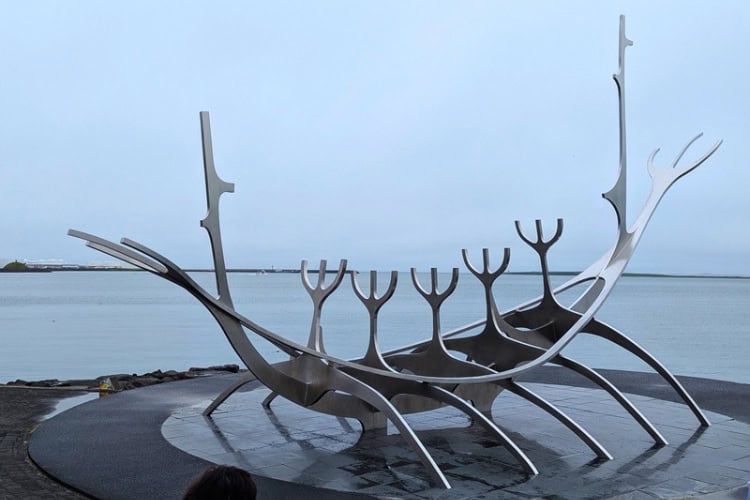
Most travelers arrive in Iceland at Keflavík International Airport. I flew in a day before on an overnight flight from Nashville to Reykjavík on Icelandair. I’m glad I was able to get a few hours of sleep. Reykjavík is very walkable, but after a night flight, even an easy stroll can feel like running on fumes.
Keflavík Airport is outside the city, so I took a Flybus to the central bus terminal before transferring to a smaller hotel for hotel drop-off. The system was straightforward, although almost nothing in Iceland could be described as inexpensive.
I was glad to arrive in Reykjavík well before embarkation rather than flying in on the day the cruise departed. The extra time reduced the pressure to see everything at once and created some protection against flight delays.
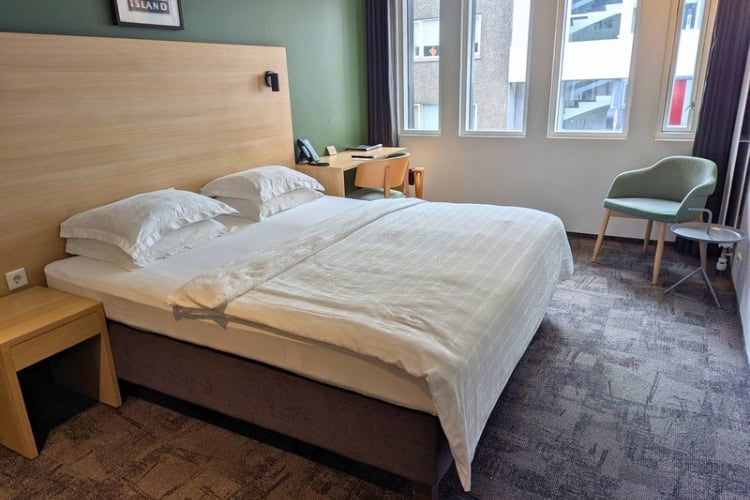
I stayed at Center Hotels Laugavegur, a comfortable hotel within walking distance of many central attractions. After dropping off my luggage and resting briefly, I headed toward Hallgrímskirkja, Iceland’s most famous church.
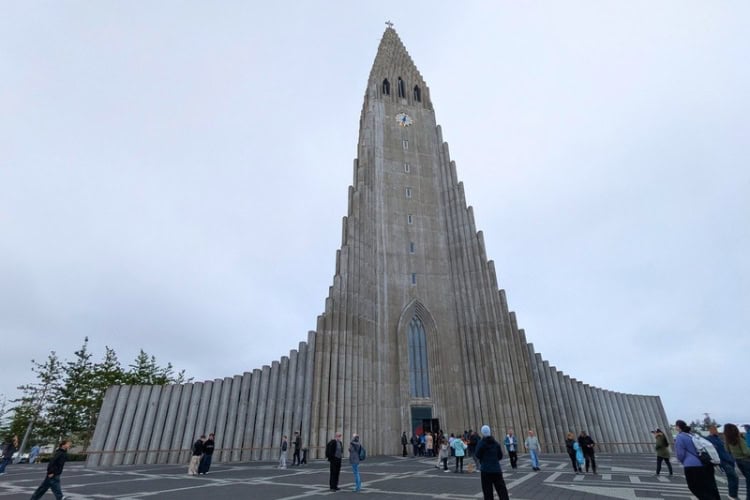
The Lutheran church, one of Reykjavík’s most recognizable landmarks, was designed by Icelandic architect Guðjón Samúelsson. Its rising concrete forms are often compared to the basalt columns found in Iceland’s volcanic landscapes. Visitors can enter the church and, when access is available, purchase a ticket to take an elevator toward the top of its tower.
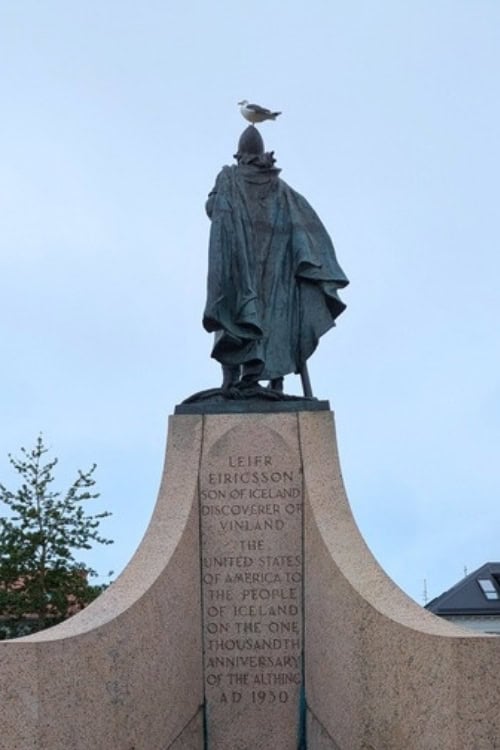
In the plaza outside the church stands a statue of Leifr Eiricsson, the Norse explorer associated with voyages to North America centuries before Columbus. The monument was a gift from the United States commemorating the 1,000th anniversary of Iceland’s Alþingi parliament.
The church is a logical starting point for exploring Reykjavík, but you should leave some flexibility in your first-day plans.
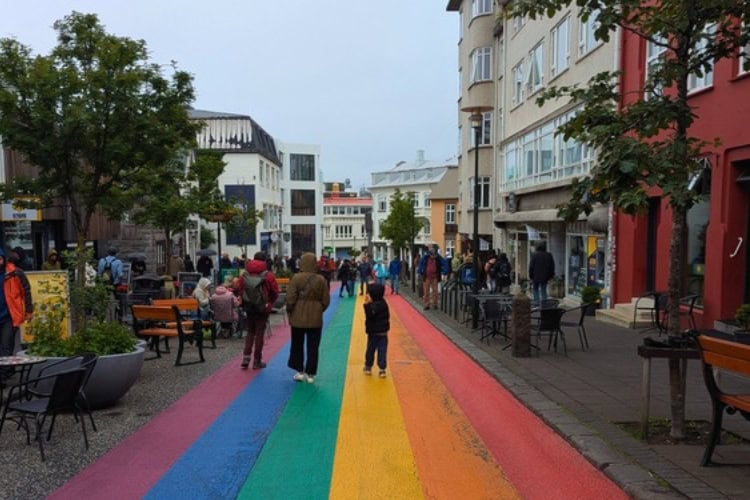
What to Bring to Iceland in the Summer
I arrived in summer expecting relatively mild conditions and instead encountered cold rain and biting wind. The person who had recommended packing long underwear had not been exaggerating.
Waterproof outerwear, layers and shoes that can handle wet pavement are must-haves here. Summer visitors should also prepare for the near-constant daylight, and it helps to know the best time to visit Iceland. The midnight sun can make it surprisingly difficult for the body to recognize that it is time to sleep.
As a vegan, I was glad to find that Reykjavík offered more vegan options than I anticipated, including a pad Thai that sustained me through the afternoon. I stopped by a local grocery store, which was fun, to pick up some extra snacks (and help keep costs down).
Boarding and Botanical Garden
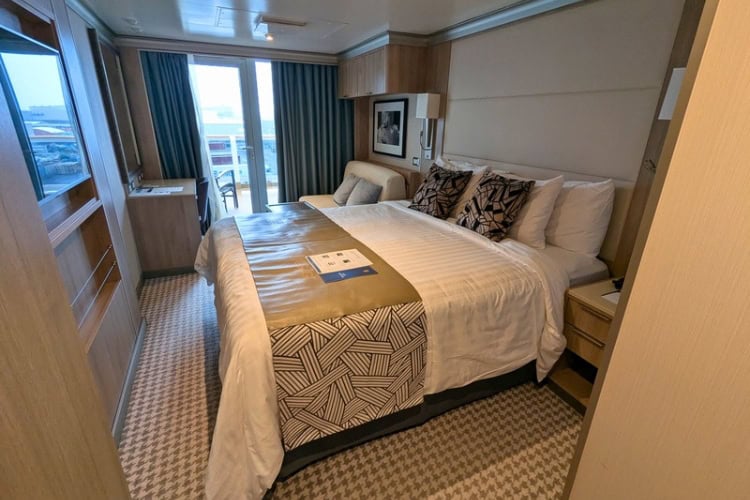
The next day, a short bus ride took me to the cruise terminal to check in. Once I reached my stateroom, I did not wait long for my luggage to arrive.
The Rotterdam is a big ship, carrying an approximate maximum of 2900 passengers and approximately 1000 crew members, but it doesn’t feel like one of the enormous floating resorts packed with waterslides and thrill rides. Holland America has gone in a more traditional direction. There are lots of lounges, restaurants and quiet places to sit, and the atmosphere generally feels relaxed and a little more grown-up.
A few things stand out. The Lido Pool sits under a retractable glass roof, which is particularly useful on a cruise through places like Iceland and Scotland where the weather can change quickly. There are several specialty restaurants, including Tamarind, Pinnacle Grill and Morimoto by Sea, along with casual spots like the Grand Dutch Café and Lido Market. In the evenings, live music is one of the ship’s biggest draws, with venues centered around piano, rock and other popular music.
For this itinerary, the ship felt like a comfortable place to come back to after a long day in port.
Because the ship was not scheduled to depart immediately and I had checked in early, I still had time to go back ashore and then return in the evening for our departure. Once settled in my stateroom, I departed the ship, and I walked to the Reykjavík Botanic Garden for coffee and a quiet stroll with a new friend I had made along the way.
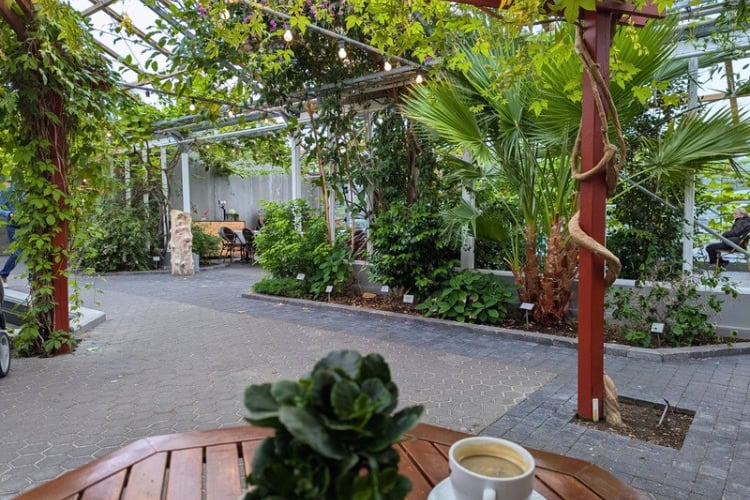
The garden was a welcome break from more touristy areas. Local families walked between the flower beds while children played nearby, and the cool drizzle made the café especially inviting.
In the evening, we returned to the ship and then we began sailing toward our first port stop in Heimaey later that night.
Volcanic Landscapes in Heimaey
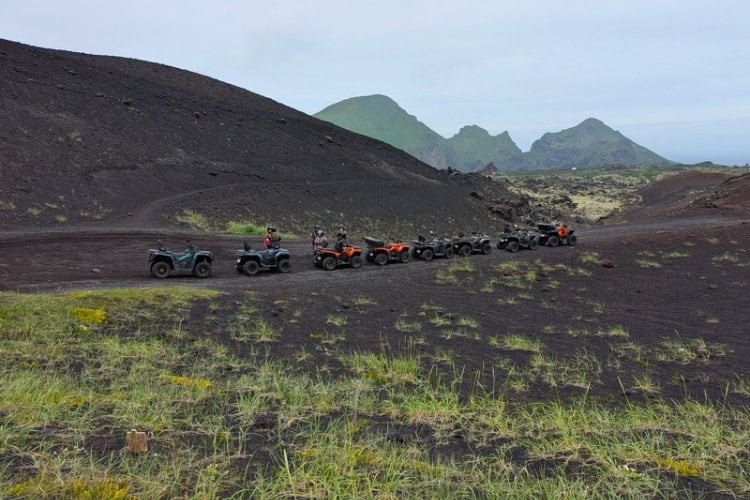
Heimaey is the only inhabited island in Iceland’s Vestmannaeyjar, or Westman Islands. It is a small community whose landscape and modern history were transformed by the 1973 eruption of Eldfell.
The eruption began unexpectedly during the early hours of January 23. Most residents were evacuated rapidly, while lava and ash eventually destroyed hundreds of homes and businesses. Today, the volcanic cone and relatively young lava fields remain visible reminders of how abruptly the island changed.
I explored the terrain on one of Holland America’s excursions, an ATV volcano tour. We rode on volcanic ground around the caldera and towards views of the harbor and surrounding cliffs.
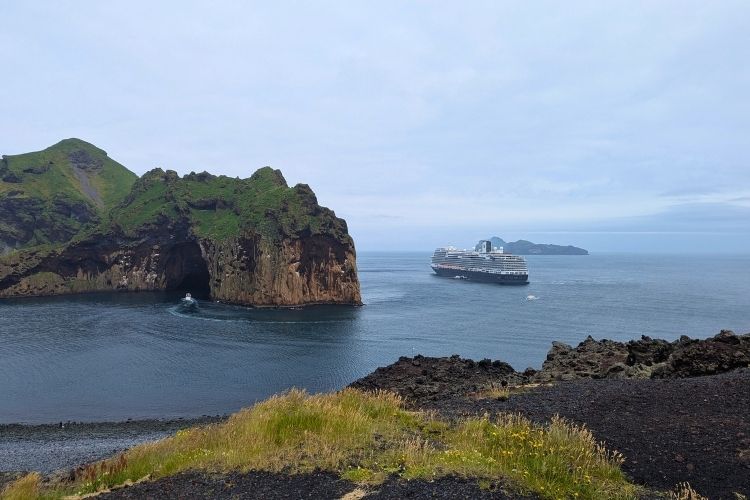
It was one of the most memorable activities of the cruise. The ATV added a sense of adventure, but the landscape was the real attraction. Black lava and green slopes came together in strikingly beautiful contrasts.
If you prefer something a little less adventurous, you can still explore parts of Heimaey independently. The community is relatively compact, and museums such as Eldheimar provide more context about the eruption. If you choose an ATV or hiking excursion, expect wind, uneven terrain and rapidly changing weather.
Slower Afternoon in Djúpivogur

Our second Icelandic small-town destination was Djúpivogur, on Iceland’s eastern coast. Its appeal lies in the opportunity to walk and experience the pace of a small Icelandic community.
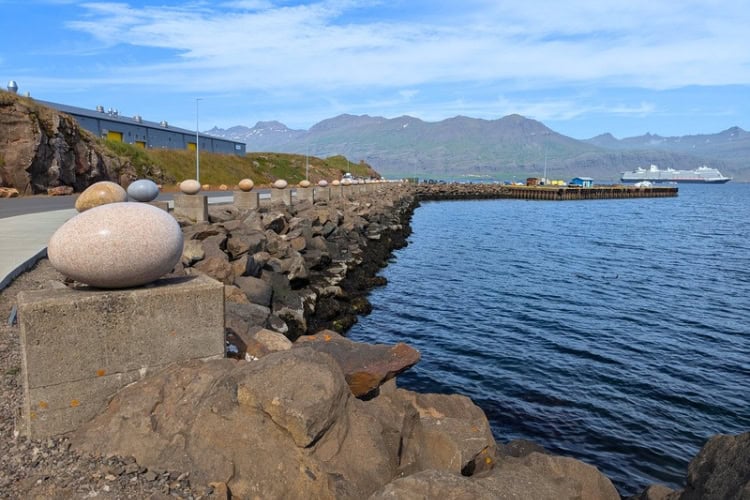
The best-known attraction is Eggin í Gleðivík, or the Eggs in Merry Bay. The outdoor artwork by Sigurður Guðmundsson consists of 34 oversized egg sculptures representing bird species that nest in the surrounding area. The stone egg forms line the waterfront on concrete pillars once used for industrial purposes.
From the eggs, you can continue toward the small Æðarsteinn lighthouse. Good walking shoes are useful because trails around the shoreline can become uneven and less obvious than urban paths. Parts of the route may be difficult for travelers with limited mobility.
Djúpivogur has several modest cultural attractions. Langabúð, housed in one of the community’s historic buildings, contains exhibitions related to regional history and Icelandic artists. Tankurinn takes a more unconventional approach. It is an old fish-oil tank that has been converted into a space for art and music.
Travelers who enjoy a slow afternoon of walking, photography and small museums can comfortably explore Djúpivogur without an organized excursion. Those hoping to cover more of eastern Iceland may prefer booking a tour beyond the village.
Touring the Faroe Islands
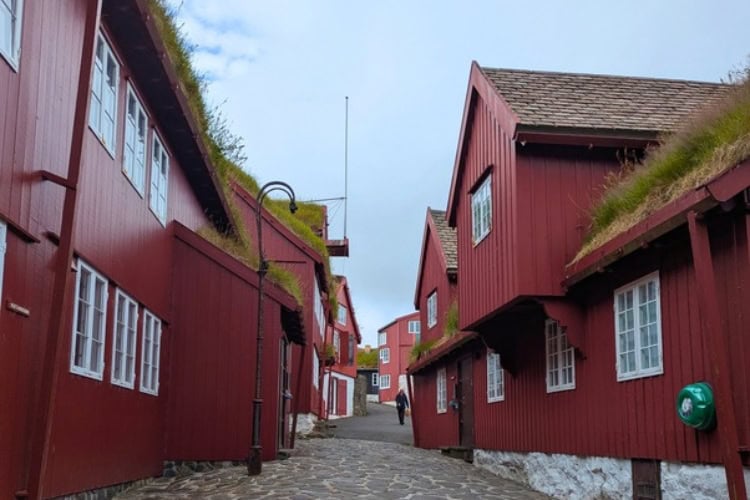
Our next port was Runavík in the Faroe Islands. The Faroe Islands are unfamiliar to many travelers. The self-governing archipelago is composed of 18 major islands located roughly between Iceland and Scotland. They are part of the Kingdom of Denmark but handle most of their own domestic affairs.
The first things you see on approach are vertical cliffs surrounded by bright green grass and small settlements.
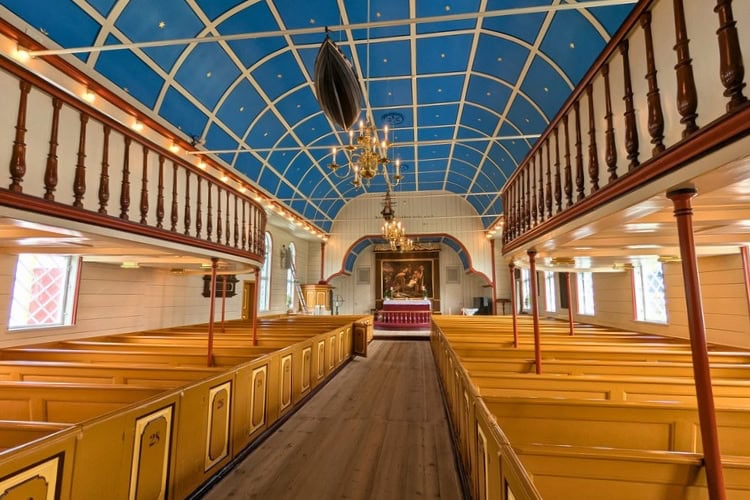
Rather than trying to explore entirely on my own, I joined an organized tour from Holland America that included Tórshavn (the capital), museums, historic buildings and the islands’ remarkable road infrastructure.
The Eysturoy undersea tunnel includes what the Faroese Tourism Authority describes as the world’s first undersea roundabout. Located deep below the surface, the illuminated junction is decorated with work by Faroese artist Tróndur Patursson. It is both transportation infrastructure and, somewhat unexpectedly, a tourist attraction.
The Faroese capital felt remarkably compact for the political center of a country, as we walked right next to the prime minister’s office, with our guide noting that the prime minister was not in that day.
Our last stop was the national museum. The National Museum of the Faroe Islands told the story of the islands’ culture and development. Our guide also explained the Faroes’ strategic role during World War II.
After Germany occupied Denmark in 1940, British forces occupied the Faroe Islands to prevent Germany from taking control of them. The occupation lasted until 1945 and contributed to a growing sense of Faroese identity and autonomy.
By the end of the tour, I had enough independent time to sit down for a drink with another new friend, one of the pleasant, less predictable parts of group travel.
For cruise passengers, an organized excursion can be particularly valuable in the Faroe Islands. The scenery extends well beyond the port, and the tunnels, roads and widely dispersed communities are difficult to reach without transportation.
Sea Day Activities
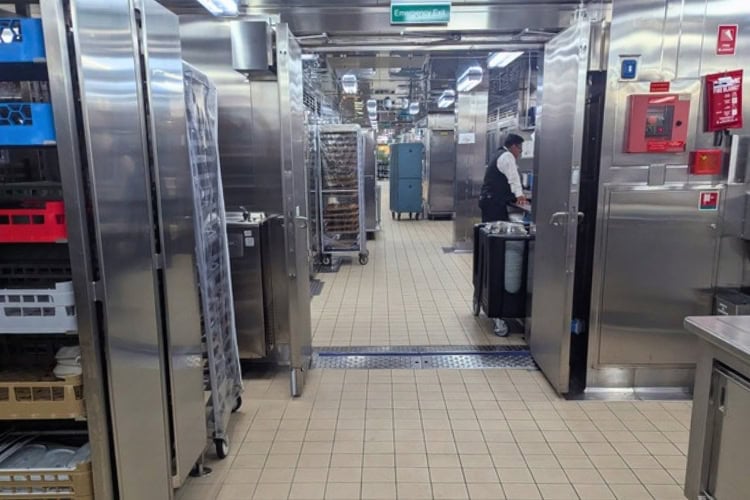
When you visit many ports in a short span of time, a sea day can be welcome down time.
One of my most worthwhile onboard activities on sea days was a behind-the-scenes tour. These tours typically have limited capacity, so passengers interested in ship operations should inquire early.
I did a behind-the-scenes tour on one of our sea days. We began in the bakery, where the staff produced thousands of pieces of bread for the ship. From there, we visited food-storage areas, waste-sorting operations, the engine control room, kitchens, the theater, laundry facilities and workspaces used by onboard tailors.
The tour showed how many separate systems must function together to keep the ship running smoothly. In the kitchens, dishes moved through carefully coordinated preparation lines. In the laundry, industrial equipment processed the endless flow of linens and uniforms. In the waste area, crew members sorted materials for different forms of handling and recycling.
Everything about this operation was carefully planned.
The tour concluded with an opportunity to speak with the captain, which was my favorite part of the tour. If you have the opportunity, the behind-the-scenes tour is well worth joining.
Edinburgh from South Queensferry
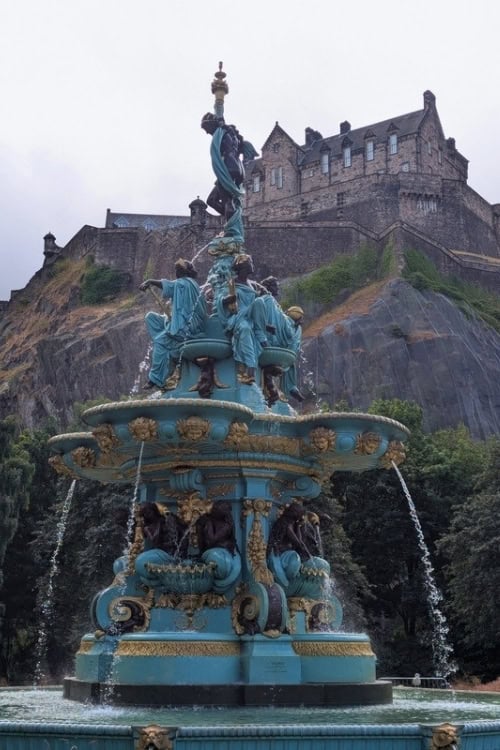
Our next port was South Queensferry, Scotland. Choppy water made the tender ride to shore slightly adventurous. Keep in mind that tendering and transportation can consume a meaningful part of an Edinburgh port day.
I took a cruise-line transfer into the city, which provided a scheduled return but also placed a firm limit on my sightseeing time.
Edinburgh was busier than I expected. The streets around Edinburgh Castle were crowded, and travelers determined to tour the castle should reserve ahead and prioritize it rather than assuming they can casually add it to a full day.
I found Princes Street Gardens a nice place to walk, particularly earlier in the day before crowds increased.
The National Museum of Scotland was one of the best options for a flexible visit. General admission is free, although some temporary exhibitions may charge a fee. Its collections range from Scotland’s early history to science, technology, decorative arts and fashion. You can spend several hours inside, making it a useful choice during poor weather as well as a worthwhile attraction in its own right.
While in port in Scotland, it’s best to remember that your time there is limited so prioritize the things you most want to see. Between tendering, transportation and crowds, an Edinburgh cruise day is better approached with one major priority and a few flexible secondary stops.
Back in South Queensferry, the waterfront community offered a quieter contrast to the capital and a pleasant place for a final walk or meal before returning to the ship.
Arrival in Rotterdam
We arrived at our final destination, Rotterdam. I had been curious about this city and, since this was my first time in the Netherlands, I was eager to explore.
After disembarking the ship, I stayed at Hotel New York, once Holland America’s headquarters and now a hotel just steps from where the ship docked. Rotterdam feels newer than most European cities, rebuilt after wartime bombing, but Hotel New York’s older architecture has been carefully preserved.
Nearby, I visited the Fenix Museum, an art museum dedicated to migration. The building itself was once a Holland America Line warehouse, standing on the same area where millions of migrants once departed for America and Canada. The ground-floor photo exhibit, filled with photos of migrants from around the world, was the most moving part of the museum, full of pain, joy, love and everything in between.
Holland America’s Deep Roots
It was fitting that our cruise on the Rotterdam ended in the Dutch city with the same name. Holland America was founded here in 1873, and for decades its ships carried a very different kind of passenger. Between the 1880s and the 1920s, the line was one of the major carriers of Europeans crossing to the New World. By the company’s own count, more than two million people started new lives abroad aboard its ships.
The company didn’t stop carrying immigrants and start running cruises overnight. It offered its first vacation sailing in 1895, decades before transatlantic passenger service finally ended in 1971, when jet travel presented significant challenges to the ocean crossing industry. Rotterdam stayed a hub for Holland America through all of it. Holland America’s old headquarters building still stands near where the ship docks today, now known as Hotel New York.
Standing in that city, I came to understand the cruise line’s role in the development of my own country. Some of my own Swedish immigrant relatives may well have crossed the Atlantic on one of these ships, on their way to the place I would eventually call home.
After the museum, I made my way to city center, visited the famous Cube Houses, and saw the surfers at RiF010 (Rotterdam’s unusual urban surf pool built right into the heart of the city). Walking Rotterdam’s streets, I got a better sense of the energy that inhabited the city. I particularly enjoyed stopping at a nice restaurant and ordering vegan katsu curry.
Modern Atlantic Crossings
Today, Holland America carries a different type of traveler, one seeking new destinations, new experiences and a temporary departure from ordinary life. The popular cruise line visits over 300 ports with 500-plus itineraries spanning all seven continents.
The itinerary I traveled on traces a modern version of a passage long shaped by migration and cultural exchange.
I learned much about Iceland, the Faroe Islands, Scotland and the Netherlands on my journey.
The Viking Trails and Celtic Origins itinerary is about seeing how these regions connect through history and culture. When the ship docks in Rotterdam, you leave with a memorable experiences and a handful of impressions, small, honest glimpses of how these places overlap across history. I was grateful to have been on the journey.
Note: This specific cruise itinerary generally starts in Iceland and ends in the Netherlands but specific ports may change. Check with Holland America for the most up to date itinerary.
Plan Your Trip
Cruise itineraries, admission prices and opening hours can change. Check the official websites before your trip, particularly when planning around a limited amount of time in port.
Cruise Information
- Holland America Line: Viking Trails & Celtic Origins — Current itinerary details, sailing dates and availability aboard Rotterdam. Ports can vary by departure.
- Holland America Line: Rotterdam — Staterooms, dining, entertainment and other information about the ship.
Getting To and Around Reykjavík, Iceland
- Icelandair — Flights to Iceland and information about traveling through Keflavík International Airport.
- Flybus — Airport transfers between Keflavík and Reykjavík, with hotel drop-off options.
- Center Hotels Laugavegur — The Reykjavík hotel featured in this article.
- Hallgrímskirkja — Opening hours, tower access and visitor information.
- Reykjavík Botanic Garden — Garden information, seasonal hours and events.
- Flóran Café/Bístró — The seasonal café inside the botanical garden.
- Visit Reykjavík — Official planning information for the city.
Heimaey and the Westman Islands
- Visit Vestmannaeyjar — Official information about Heimaey, local attractions and outdoor activities.
- Eldheimar Museum — Tickets, hours and information about the 1973 Eldfell eruption.
Djúpivogur, Iceland
- Visit East Iceland: Djúpivogur — Planning information for the village and surrounding region, including local attractions and activities.
Faroe Islands
- Visit Faroe Islands — The islands’ official tourism website, with information about transportation, tours and attractions.
- Visit Tórshavn — Visitor information for the Faroese capital.
- National Museum of the Faroe Islands — Exhibitions, admission, opening hours and directions.
Edinburgh and South Queensferry
- Edinburgh Castle — Advance tickets, opening hours and visitor information.
- National Museum of Scotland — Hours, exhibitions and accessibility information. General admission is free.
- Forever Edinburgh — The city’s official visitor guide.
- Visit South Queensferry — Visitor information for the cruise port and waterfront community.
Rotterdam
- Fenix — A museum devoted to migration, housed in a former warehouse on Rotterdam’s waterfront.
- Hotel New York — The former headquarters of Holland America Line, now a waterfront hotel and restaurant.
- Cube Houses — Rotterdam’s distinctive tilted houses, designed by architect Piet Blom.
- Kuub Coffee — A specialty coffee shop located beneath the Cube Houses.
- RiF010 — An urban surf pool in the center of Rotterdam where visitors can surf, paddle or watch the waves from the waterfront.
- Backyard — A plant-based restaurant in central Rotterdam.
- Rotterdam Tourist Information — The city’s official guide to attractions, transportation, restaurants and events.
Disclosure: Holland America Line and Rotterdam Partners hosted this author and provided transportation. All opinions are the author’s own.
Need a hand planning your trip? Here are the sites and services we rely on most, from booking tools to travel products we love.
Inspire your next adventure with our articles below:
- Cruise Ship Wi-Fi 101: What Every Passenger Should Know Before Sailing
- Land of Fire and Ice: 10 Unforgettable Experiences That Make Iceland Pure Magic
Want to discover more hidden gems and helpful travel tips? Join our free newsletter for the latest travel secrets and travel articles.
We are reader-supported and may earn a commission on purchases made through links in this article.

Planning another trip soon? ✈️
Add GoWorldTravel.com as a preferred source on Google. Click the button below so our local guides, packing hacks, and hidden-gem itineraries always show up first when you search!
Add to Preferred Sources