
Rotterdam is home to Europe’s largest seaport. Yet the movement of cargo is only part of the city’s story. For generations, Rotterdam was also a migration hub. Millions of emigrants passed through its waterfront on their way to new lives in the United States, Canada and elsewhere.
I knew some of this history before arriving. What I did not understand was how deeply migration had shaped Rotterdam, or how clearly the city’s past remains visible in its museums, buildings, restaurants and waterfront.
One day is not enough to see Rotterdam comprehensively. It is, however, enough time to begin understanding the forces that have made it what it is.
This itinerary assumes you have one full day and will spend the night in the city. It begins near Rotterdam’s historic passenger docks before crossing into the city center for food, architecture and an unlikely sight of people surfing in the middle of Rotterdam.
Holland America Line’s Rotterdam Roots
Rotterdam’s migration history is closely tied to the Holland America Line. Founded in Rotterdam in 1873, the company carried generations of European emigrants across the Atlantic. At one point, more than 10% of the steerage passengers traveling from Europe to the New World sailed with Holland America.
The Holland America Line continues to have a strong connection to Rotterdam and vice versa. I arrived in Rotterdam aboard the modern-day Rotterdam ship after a Holland America cruise through Iceland, the Faroe Islands and Scotland, which made exploring this history especially fitting.
Morning: Migration at Fenix
If you want to visit a museum in Rotterdam, Fenix is a great option.
Located in a former Holland America Line warehouse on the Katendrecht peninsula, Fenix is an art museum dedicated to exploring migration. Constructed in 1923, the warehouse once handled cargo for the Holland America Line near the docks where passengers left Europe for destinations across the Atlantic.
Allow at least two or three hours here. Travelers who like to read every description and listen to the recorded stories could easily spend half a day here.
My favorite exhibition was The Family of Migrants, a collection of nearly 200 photographs documenting the human experience of migration. Some images capture moments of grief. Others show love, relief and everything in between.
A booklet available near the entrance provides context for the photographs. When you enter the exhibit, take one with you. The information transforms the exhibition from a collection of images into a series of human stories.
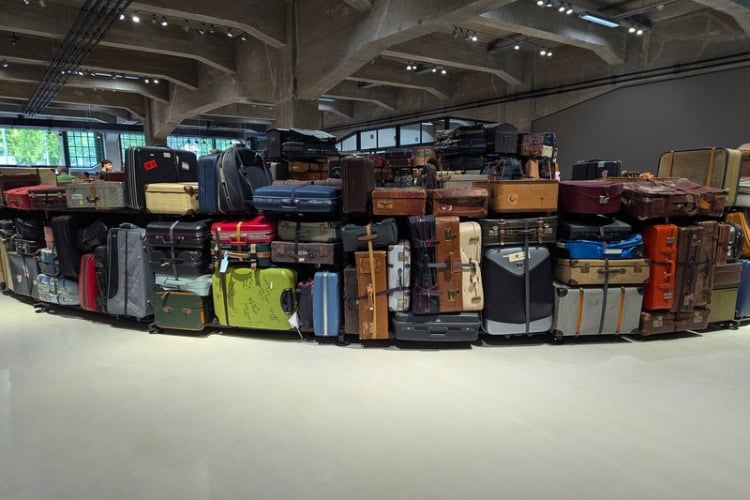
Nearby, the Suitcase Labyrinth contains approximately 2,000 suitcases, each connected to a person and a turning point in that person’s life. Pick up a listening device at the entrance, then tap the marked tags to hear selected owners describe what the suitcases carried and where their journeys led.
The top floor of Fenix uses more modern art to explore migration. Before leaving, make your way up the Tornado, the museum’s dramatic spiral staircase and observation platform.
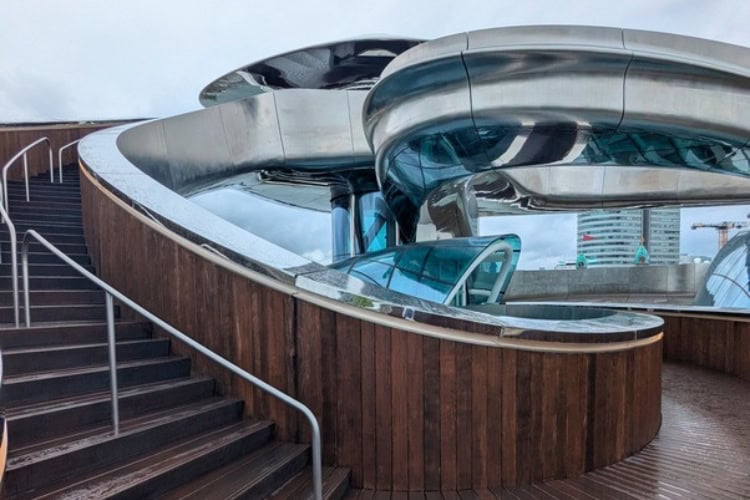
From the rooftop, you can see views of Rotterdam and the historic waterways where ships once carried emigrants toward North America.
Lunch: Flavors of Markthal
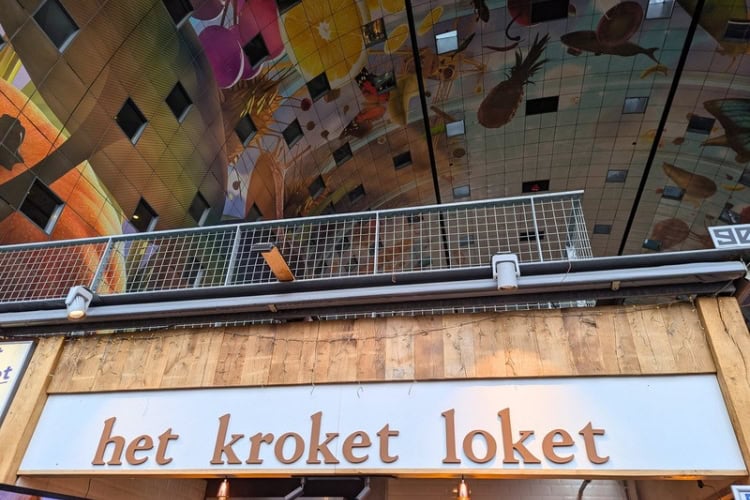
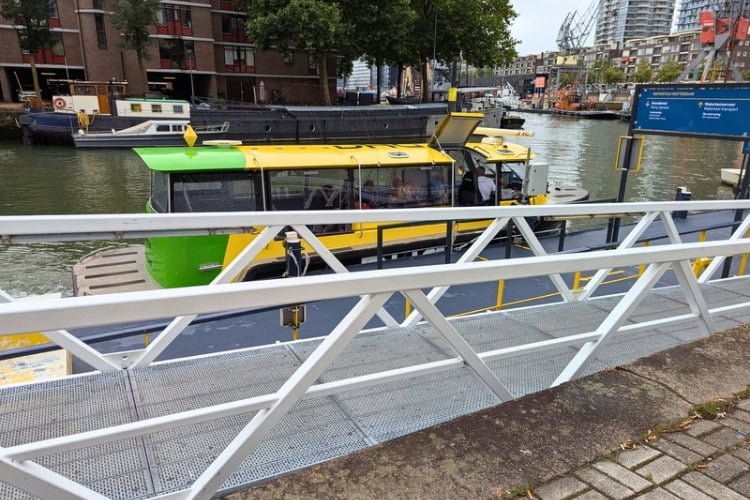
From Fenix, cross the river to Markthal. Walking is possible for travelers comfortable covering several miles over the course of the day, but public transportation or a water taxi will preserve more time for sightseeing. The water taxis are also a quintessential Rotterdam experience.
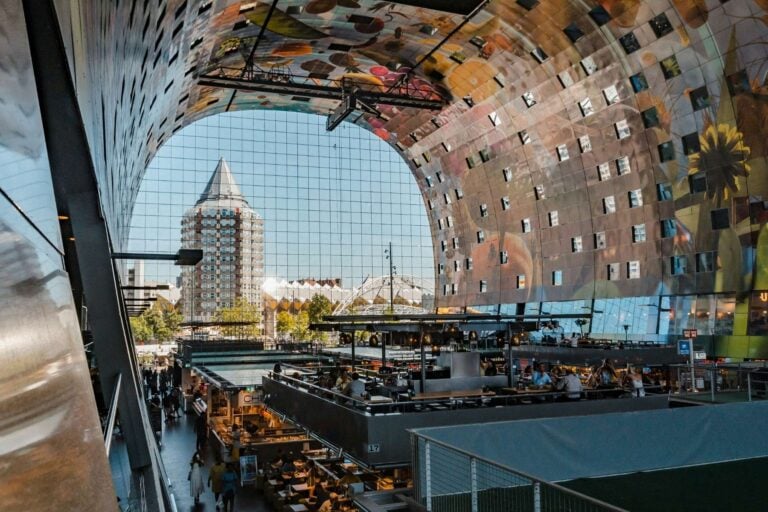
Markthal is part food market and part architectural spectacle. Its enormous and colorful arched interior is filled with stalls and restaurants serving food from the Netherlands and around the world.
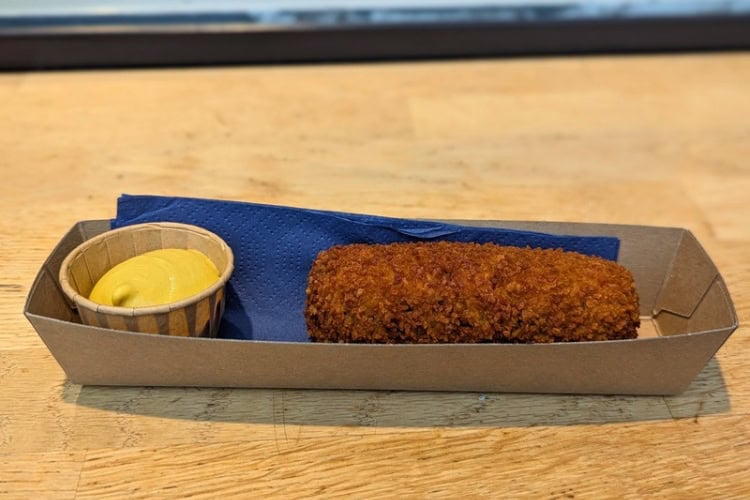
I found a vegan mushroom croquette with a crisp exterior and creamy filling, served with mustard. I also picked up a Greek-style spinach pastry for later.
The combination may not have made for a conventional lunch, but that is part of the fun of eating here. You can assemble a meal one stall at a time instead of committing to a single restaurant or cuisine.
Markthal can become crowded, particularly around lunch and on weekends. Give yourself time to look at the menus before joining a line.
Early Afternoon: Cube Houses
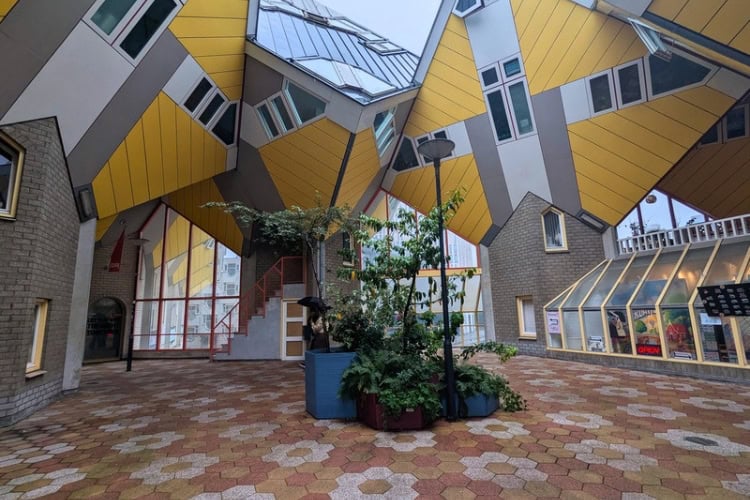
Markthal is only a short walk from one of Rotterdam’s most recognizable architectural landmarks, the Cube Houses.
Architect Piet Blom designed the tilted yellow residences as an “urban forest.” Each home represents a tree, with a cube-shaped living space rotated 45 degrees and balanced on a hexagonal column. The Rotterdam complex was completed in 1984 and remains a functioning residential neighborhood.
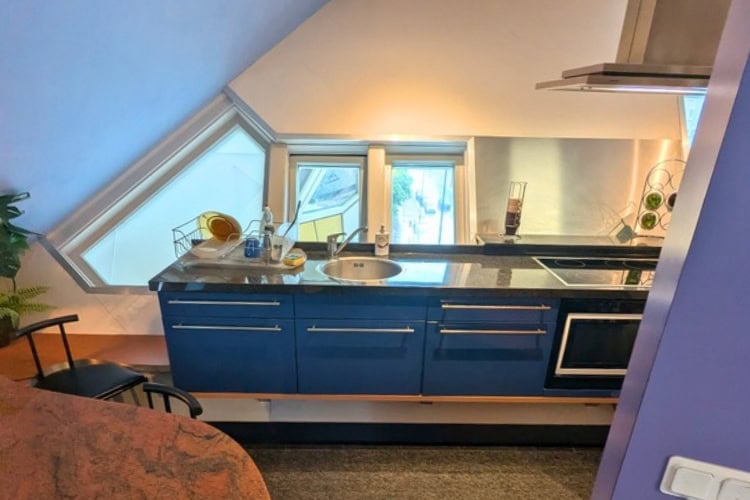
Walking beneath the cubes is free, and one home has been converted into the Kijk-Kubus Museum House. Visitors can enter for a small fee, €3.50 for a standard adult ticket at the time of writing. The small entrance fee will let you see inside one of the Cube Houses. The museum house is generally open daily, but check hours and admission prices before visiting.
Coffee Break at Kuub Coffee
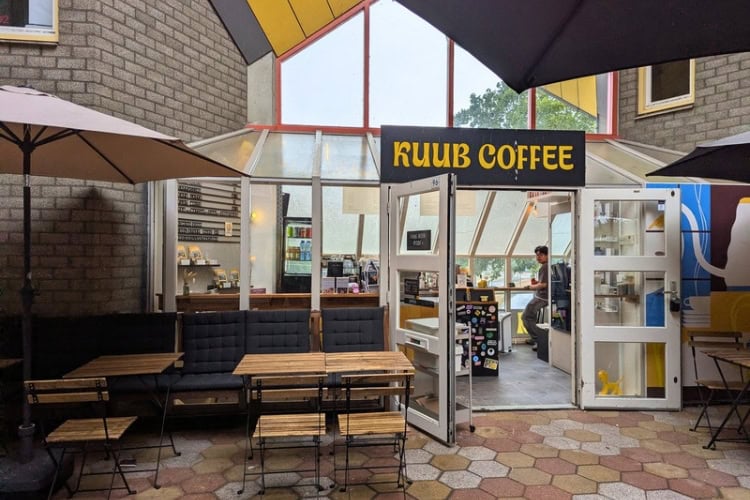
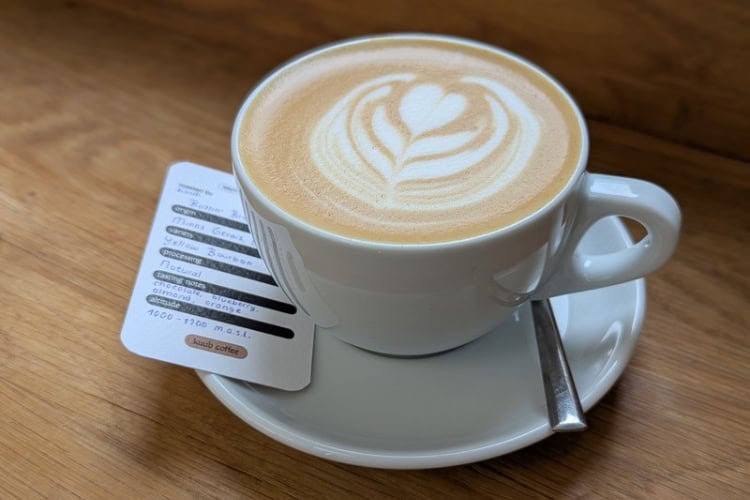
Underneath the Cube Houses, Kuub Coffee offers a convenient place to stop before continuing through the city.
The café sits within the pedestrian area beneath the occupied homes, making it a good place to appreciate the Cube Houses. While I was there, the owner chatted with me and then chatted with a local mom and child who lived nearby. Kuub Coffee felt like it was part of the community of people who lived there.
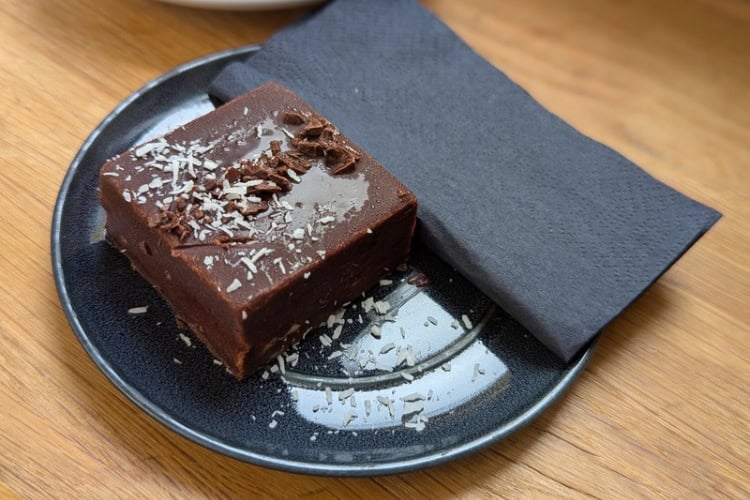
I had a coffee and vegan chocolate sweet, both of which I enjoyed.
Surfers in the City Center
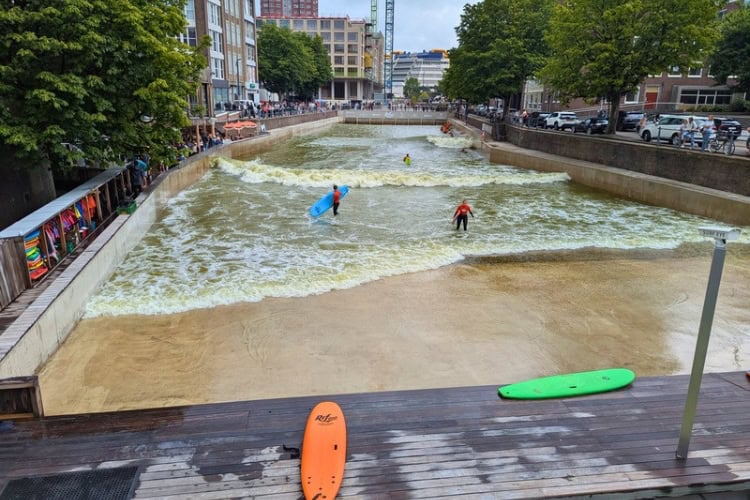
From the Cube Houses, continue toward RiF010, an urban surf pool built into the Steigersgracht canal in central Rotterdam.
RiF010 offers surf sessions and lessons on its city wave, along with other water activities. Even when you have no intention of getting into the water, it is entertaining to watch from the side and cheer when someone manages a particularly long ride.
Even without active surfers, the walk through this part of the city provides another look at the contrast between Rotterdam’s surviving historic structures and its appetite for new ideas.
Dinner: Backyard
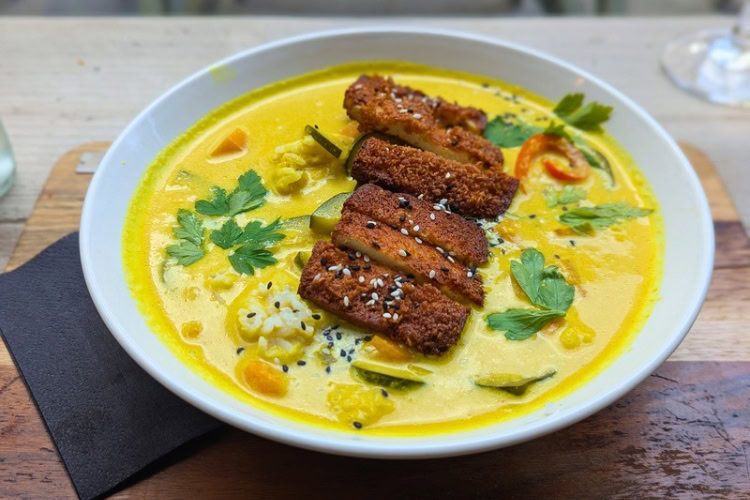
For dinner, I went to Backyard in the city center.
The plant-based restaurant has a relaxed, greenery-filled interior that feels removed from the busier streets outside. I ordered the Katsu Curry, which I enjoyed.
After a day spent moving through migration exhibits, international food stalls and experimental architecture, Backyard was a nice final stop.
Where to Stay: Hotel New York
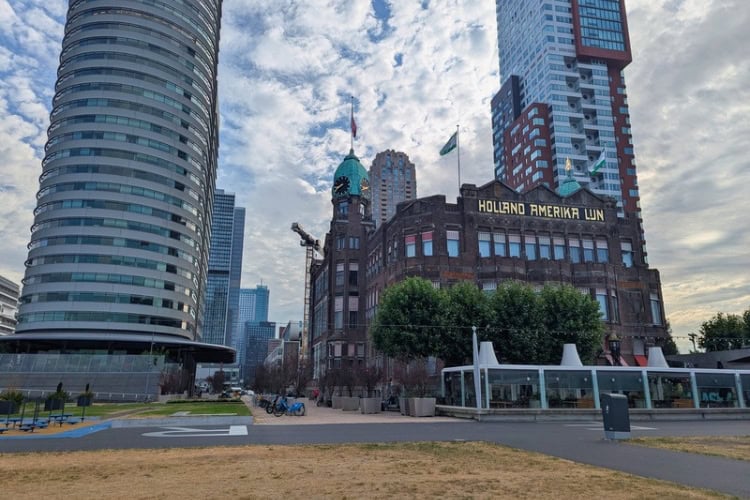
I stayed at Hotel New York, located in the former headquarters of the Holland America Line near the Rotterdam cruise terminal and across the water from the city center.
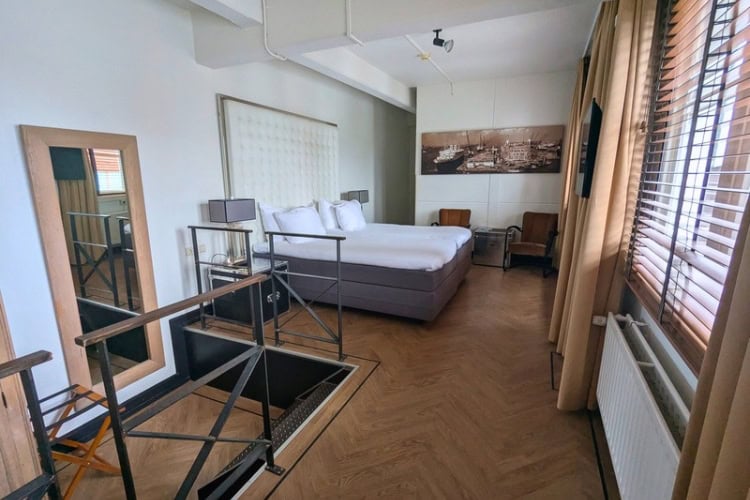
The building opened as the company’s administrative headquarters in 1901. From this waterfront, the Holland America Line connected Rotterdam with New York and carried generations of passengers across the Atlantic. The company ended its scheduled New York service in 1971 and moved its headquarters to Seattle in 1977. The Rotterdam building later reopened as Hotel New York in 1993.
Hotel New York is particularly convenient for Fenix, the cruise terminal and the waterfront. Water taxis and public transportation connect the area with the more traditional city center.
While the older architecture of the building is appealing in its own right, it also means some guests may have challenges navigating the stairs of the building. If a guest has mobility concerns, they should call beforehand.
Twenty-four hours won’t show you all of Rotterdam, but it’s enough to get a feel for its migration history, maritime roots and its constant reinvention. By the time you leave, you understand why it’s worth a visit.
Plan Your Trip
Hotel
Hotel New York — The former headquarters of Holland America Line, now a waterfront hotel and restaurant.
Activities
Fenix — A museum devoted to migration, housed in a former warehouse on Rotterdam’s waterfront.
Cube Houses — Rotterdam’s distinctive tilted houses, designed by architect Piet Blom.
RiF010 — An urban surf pool in the center of Rotterdam where visitors can surf, paddle or watch the waves from the waterfront.
Food
Kuub Coffee — A specialty coffee shop located beneath the Cube Houses.
Backyard — A plant-based restaurant in central Rotterdam.
Tourist Information
Rotterdam Tourist Information — The city’s official guide to attractions, transportation, restaurants and events.
Disclosure: This trip was hosted by Holland America Line and Rotterdam Partners. All opinions and impressions are the author’s own.
Need a hand planning your trip? Here are the sites and services we rely on most, from booking tools to travel products we love.
Inspire your next adventure with our articles below:
Want to discover more hidden gems and helpful travel tips? Join our free newsletter for the latest travel secrets and travel articles.
We are reader-supported and may earn a commission on purchases made through links in this article.

- 10 Essential Tips for Surviving Major Flight Disruptions - October 22, 2026
- Helicopter-Access Hiking at Durrand Glacier Chalet in British Columbia’s Selkirk Mountains - October 22, 2026
- An Artist’s Safari: Seeing the Soul of the Wild in Black and White - October 22, 2026
Planning another trip soon? ✈️
Add GoWorldTravel.com as a preferred source on Google. Click the button below so our local guides, packing hacks, and hidden-gem itineraries always show up first when you search!
Add to Preferred Sources