
The pilot of LATAM Airlines flight 895 was aiming for a distant speck in the vast ocean below, a prominent island among a group of much smaller islands.
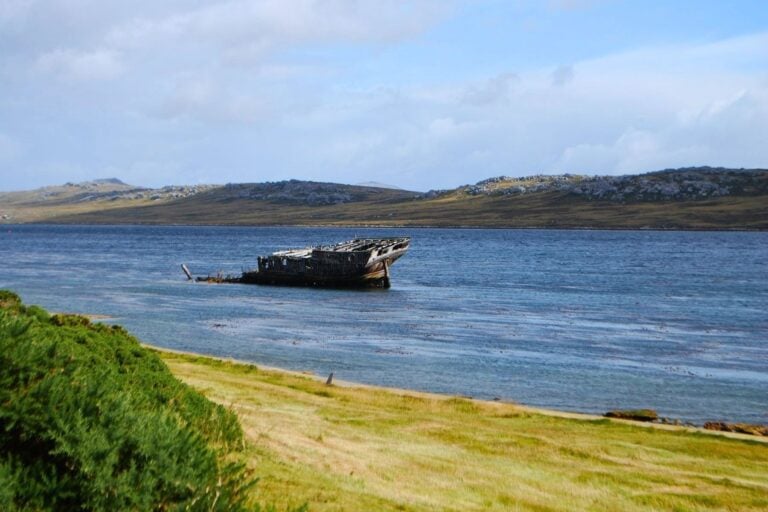
As we got closer and the plane descended lower, a rocky, barren landscape could be seen, as well as several old shipwrecks scattered around the shores.
On final approach the Airbus A320 drifted slightly, evidence of a strong crosswind buffeting the island. Turbulence shook the plane, causing some passengers to grip their armrests tightly.
Finally, the aircraft touched down on the runway, delivering its passengers to an otherworldly place surrounded on all sides by roiling ocean. Welcome to the Falkland Islands.
Location and Demographics
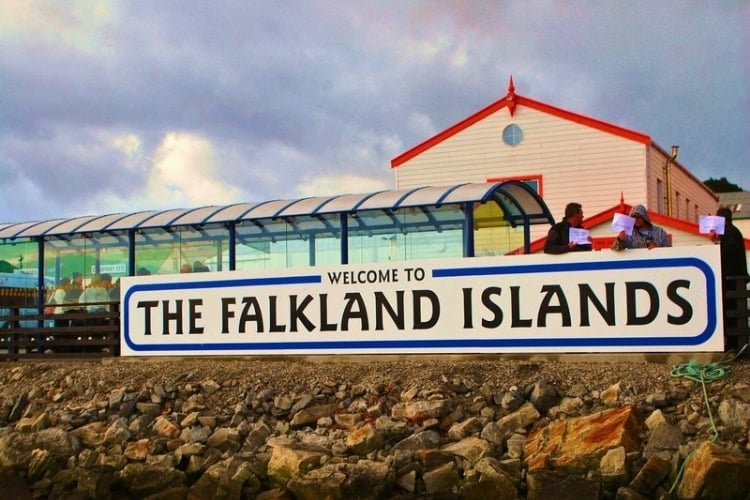
Situated in the South Atlantic Ocean at a latitude of approximately 52° south, the Falkland Islands are a self-governing British overseas territory located 500 km east of South America’s Patagonian coast.
Because of their remoteness they’re not everyone’s cup of tea, but if you like windswept, rugged places teeming with marine wildlife you’ll love it here.
The picturesque capital, Stanley, is on East Falkland, one of the two main islands, the other being West Falkland. Fiercely loyal to their British heritage, Falkland Islanders are proud, resourceful and self-sufficient but also warm, friendly and welcoming.
There are more than 750 other islands in the Falklands archipelago, most of them tiny and uninhabited, with about 80 per cent of the population living in Stanley.
The Falklands is one of the most sparsely populated territories on the planet – 3,500 people in a land area of more than 12,000 square kilometres – and the sense of space here is liberating. Even in Stanley and even with the addition of a few visitors, you never come across anything remotely like a crowd.
Early History and Later Conflict
The English navigator John Davis made the first recorded sighting of the Islands in 1592, aboard his ship Desire. However, the first landing was not until 1690 and is attributed to another British captain, John Strong, sailing aboard the Welfare.
Early visitors were American sealers, Norwegian whalers and penguin hunters from various parts of the world. These voyagers unwittingly contributed to the large number of shipwrecks – estimated at more than 300 – around Falklands shores.
Thought to be a safe haven for battered vessels after rounding the terrifying Cape Horn, the islands proved to have hidden dangers of their own.
Apart from Britain, only France and Spain colonised the Falklands in the mid-18th century, and there was no indigenous population prior to European settlement.
This hasn’t stopped Argentina from claiming sovereignty over the islands, and on 2 April 1982 Argentine forces invaded and occupied the islands, triggering the infamous Falklands War in which many lives were lost on both sides.
It was a futile war; just 74 days after it started, Argentina suffered a humiliating defeat and Britain retook the islands.
Since then the islanders have been left in peace and in a decisive self-determination referendum in 2013, a staggering 99.8 percent of voting residents elected to remain British. Nevertheless, Argentina’s position remains unchanged to this day.
The Capital
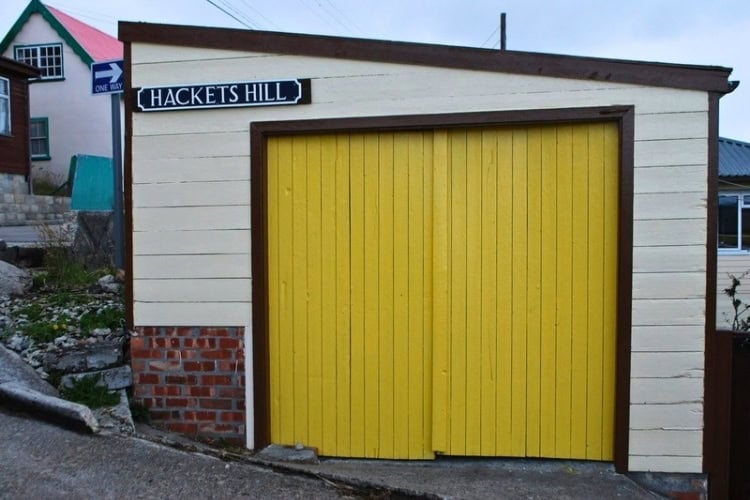
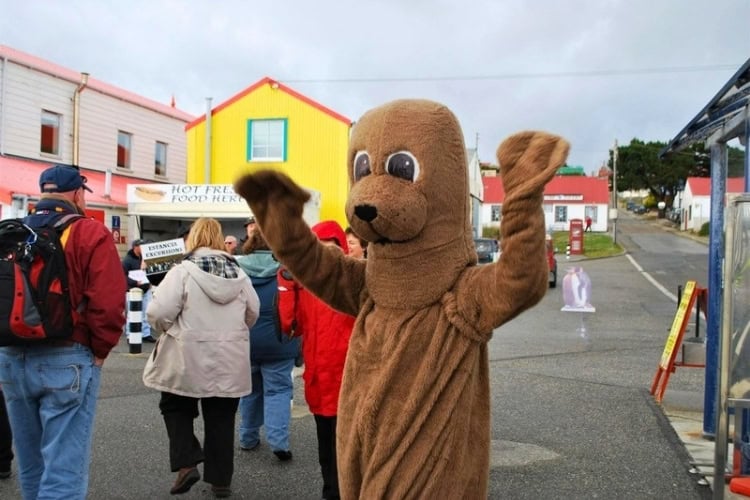
For visitors, Stanley is the natural place to start your tour. Its brightly painted houses, harbour-front setting and distinctive red telephone boxes give the town an unmistakably British character, tempered by the isolation and scale of the South Atlantic.
The waterfront is easily explored on foot, where historic sites provide a useful introduction to the islands’ maritime, agricultural and military history. One of the old homes, Cartmell Cottage, has been turned into a museum displaying fittings and artefacts from years gone by.
The Peguin News Office
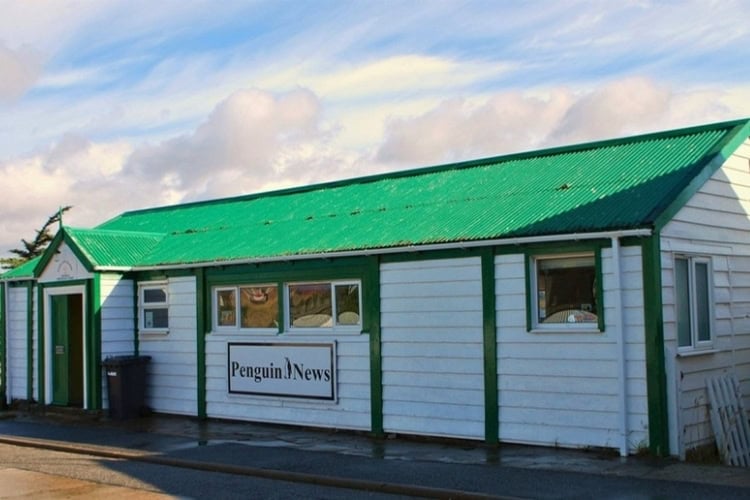
As a journalist I was drawn to the local newspaper office like steel to a magnet, and found myself wondering what it would be like to work there. The Penguin News is the only newspaper produced in the Falkland Islands and is published in printed form every Friday and online.
You can pick up a map from the Jetty Visitor Centre to help you locate the following sights:
Christ Church Cathedral
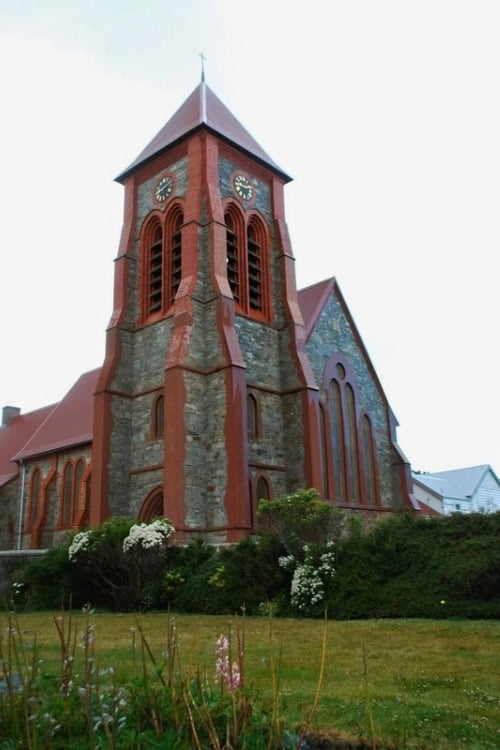
The Christ Church Cathedral is claimed to be the southernmost Anglican church in the world, and I have no reason to doubt the claim.
Whalebone Arch
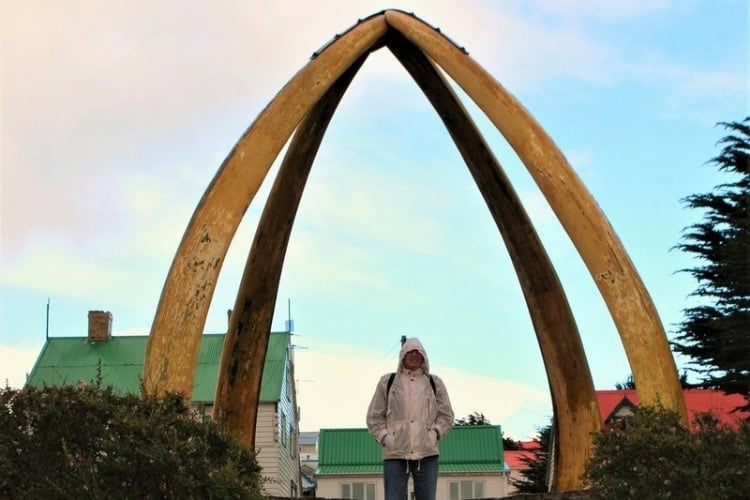
Standing right next to the cathedral, the arch was constructed in 1933 from the jawbones of two blue whales. It commemorates the centenary of continuous British administration in the Falklands and symbolises the role whaling has played in the islands’ past.
Pioneer Cottages
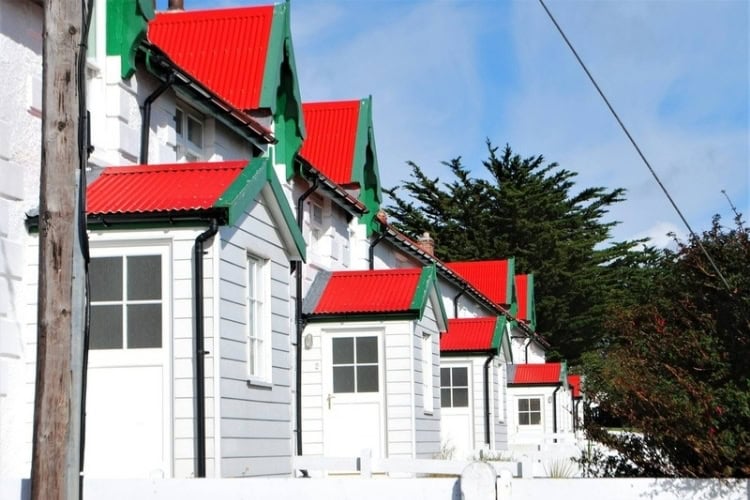
These original cottages were brought over in kit form from Britain and erected in 1849 for the military pensioners who settled here at the time. They are now private homes.
The Liberation Memorial
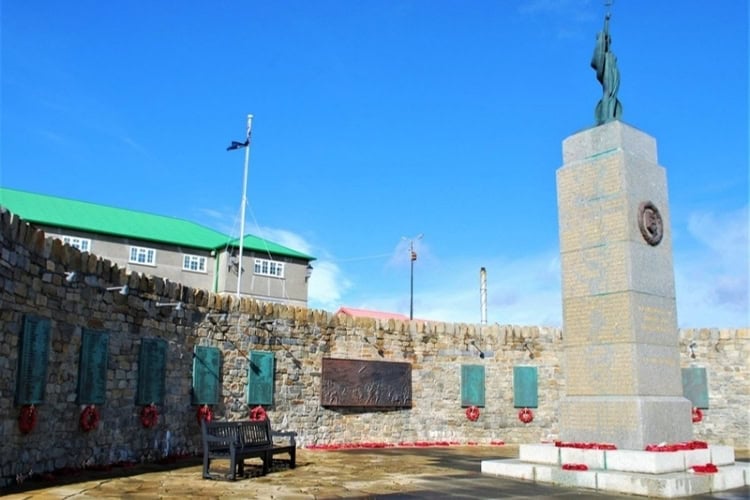
The Liberation Memorial commemorates the British Forces and supporting units that liberated the Falkland Islands from Argentine occupation in 1982. The site gives clear views of Stanley Harbour and the town centre, making it both a historical and scenic landmark.
Victory Green
Victory Green is an attractive stretch of land where you can sit alongside the harbour wall. It provides great views to the north side of Stanley Harbour. Ducks and geese frequently strut along the green, to the delight of visitors.
At the west end of Victory Green lies the mizzen mast from the SS Great Britain and the story of this ship is one of the most interesting in Falklands history. At one time in the 19th century it was the largest passenger ship in the world. But it was severely damaged in a storm and lay rusting in Falklands waters for more than 30 years.
Incredibly, after all that time, the SS Great Britain was refloated in 1967 and towed 7,000 nautical miles across the Atlantic back to the UK, a feat considered one of the most challenging salvage operations ever attempted. The vessel was extensively restored and is now an award-winning museum in Bristol.
Wandering Stanley’s Streets
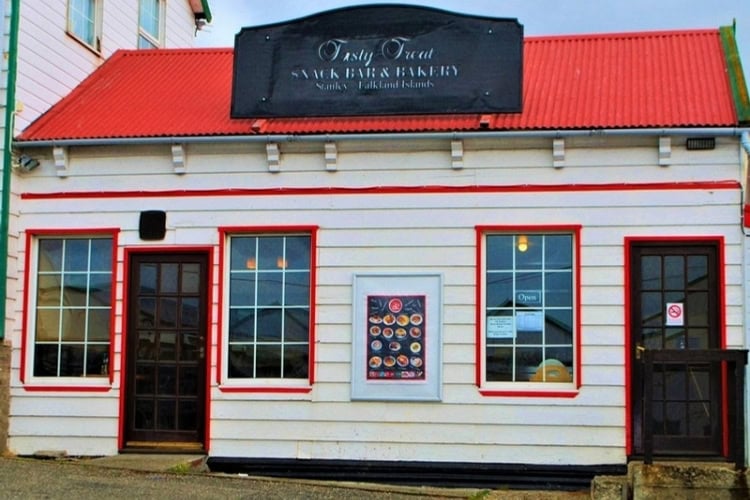
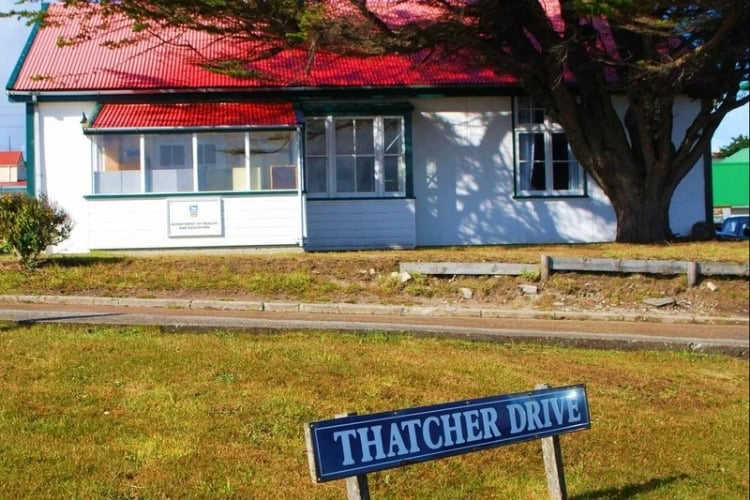
We continued wandering the streets, noting the one named for the British prime minister who spearheaded the Falklands War, and ducking into Tasty Treat, a local café and bakery, for sustenance when we felt cold.
It was February, the Southern Hemisphere summer, and back home in Australia the temperature would have been about 27°C, but here it was 14°C. In this sub-Antarctic climate it’s always cool – generally between 2°C and 16°C – and there are no temperature extremes. Westerly winds are near-constant.
The Wider Islands and Their Wildlife
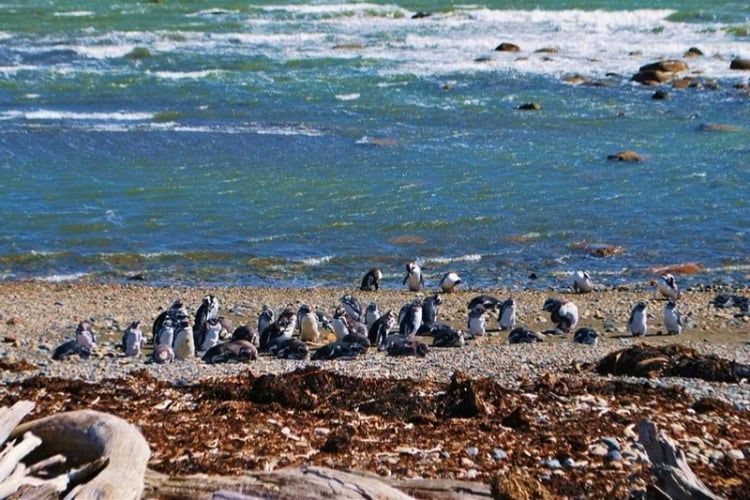
Beyond the capital the Falklands become truly distinctive. The landscape ranges from rugged coastal cliffs and windswept hills to remarkable white-sand beaches and the geological formations known as stone runs.
There is a ferry service between East and West Falkland operated by Workboat Services Ltd with its motor vessel Concordia Bay. It provides regular crossings for passengers and vehicles, the crossing takes approximately 90 minutes and it offers opportunities to observe marine life along the way.
The Falklands are home to several penguin species including king, gentoo, Magellanic and rockhopper penguins. Volunteer Point, reached by a lengthy overland journey from Stanley with a local guide, is particularly renowned for its king penguin colony.
Closer to Stanley, Gypsy Cove is easily accessible and home to Magellanic penguins, while other colonies are scattered throughout the archipelago. Albatrosses, petrels, sea lions and other marine life add to the extraordinary richness of the islands’ natural environment.
If You Go
Getting There
There are two ways for independent travellers to reach the Falklands by air.
- Flights from South America: LATAM Airlines operates a return flight from Santiago, Chile, to East Falkland every Saturday, with a stop at Punta Arenas, Chile. Flight time is six hours 30 minutes. Once a month, the flight also stops at Rio Gallegos, Argentina. The general sales agent for LATAM in the Falklands is International Tours and Travel, which can also advise on the anticipated resumption of LATAM’s midweek (Wednesday) flight from São Paulo, Brazil.
- Flights from the United Kingdom: The UK Ministry of Defence operates twice-weekly RAF charter flights from Brize Norton, Oxfordshire, to the Falklands, with a refuelling stop at Ascension Island. Total flight time is around 18 hours. These flights are available to both military personnel and civilian passengers, who can book through the Falkland Islands Government Office in London. Flights depart from the UK on Sundays and Wednesdays, returning from the Falklands on Tuesdays and Fridays.
All flights arrive at Mount Pleasant Airport (MPN), which is a military base with a civilian terminal. From there, bus transfers are available to Stanley and other destinations arranged by accommodation providers or tour operators.
Getting Around
- Internal flights: Domestic flights within the Falklands are operated by the Falkland Islands Government Air Service.
- Car rental: Falklands 4×4 specializes in self-drive vehicles suitable for the island’s roads, including sturdy 4x4s and family cars, with daily rates starting at £45 and discounts for longer rentals. Stress Free Car Rental provides access to well-known international brands.
Where to Stay
Stanley has hotels and guesthouses, while outside the capital visitors can stay in rural lodges, farm accommodation, self-catering properties and other small-scale establishments.
Highly recommended is the venerable old Malvina House Hotel, situated in the heart of Stanley. It has beautiful views overlooking the harbour and is only a few minutes’ walk from shops, pubs, historic sites and monuments.
The owner of the original building named the hotel after his youngest daughter, Malvina. It’s a Scottish name and its resemblance to the Argentine name for the Falklands, Malvinas, is purely and quirkily coincidental, the current management is at pains to point out.
Penguin Tours from Stanley
- Volunteer Point King Penguin Tour: This guided 4×4 day trip takes care of the long overland drive to the king penguin colony, and you’ll spot gentoo and Magellanic penguins along the same stretch of beach. Learn more here
- Falkland Islands Shared Tour Sightseeing with Penguins: If you’re short on time, this tour covers Stanley’s highlights along with Magellanic and gentoo penguins in under three hours. Learn more here
Organised Tours and Cruises
If you would prefer to go on an organised tour or cruise, check here and at ROL Cruise.
Travel Insurance
With only a few flights a week, one weather delay or missed connection can throw off a whole itinerary, so it’s worth getting cover before you go. Compare policies on Squaremouth, or look at SafetyWing for flexible cover on longer trips.
Best Time to Visit
The Southern Hemisphere late spring to early autumn (November to March), when weather conditions are milder and wildlife activity is at its peak.
Need a hand planning your trip? Here are the sites and services we rely on most, from booking tools to travel products we love.
Inspire your next adventure with our articles below:
- The Great Lakes Shipwreck Museum: Honoring the Legend of the Edmund Fitzgerald
- 5 Romantic Island Escapes Along British Columbia’s Coast
Author Bio: Barry Barford is a seasoned travel writer and travel industry news reporter, published in both print and digital media. In 2024 he was shortlisted for the AITO Travel Writer of the Year Awards. A dual citizen of Australia and the UK, he is a member of the London-based International Travel Writers Alliance. He lives near Sydney.
Want to discover more hidden gems and helpful travel tips? Join our free newsletter for the latest travel secrets and travel articles.
We are reader-supported and may earn a commission on purchases made through links in this article.

- Falkland Islands: Rugged Shores, Thriving Wildlife and a Warm Welcome - November 20, 2026
- Japan’s Kumano Kodo in Winter: Steep Climbs, Hot Springs and Shrine Towns on the Nakahechi Route - November 20, 2026
- 8 Reasons Kanazawa Belongs on Your Japan Itinerary - November 20, 2026
Planning another trip soon? ✈️
Add GoWorldTravel.com as a preferred source on Google. Click the button below so our local guides, packing hacks, and hidden-gem itineraries always show up first when you search!
Add to Preferred Sources