

When you visit a new country, can you sidestep museums, churches and shopping and still imbibe the culture? Certainly, if it’s Costa Rica. Definitely, if you’re a teenage boy.
Four boys and their grandmothers embarked on Road Scholar’s “From Monkeys to Macaws: Colorful Costa Rica with your Grandchild” tour. In doing so they proved that imbibing the culture was highly doable from a suspension bridge, river raft or zip line.
Throw in interactions with sloths, crocodiles and bats and Costa Rica openly reveals itself.
From Seattle to San Jose, Costa Rica
My grandson, Wes, and I joined three other teenage boys and their grandmothers. Ivan was our engaging and informative leader. Our equally engaging bus driver, Tonio, maneuvered this troop from one side of Costa Rica’s continental divide to the other.
We arrived weary in Costa Rica’s capital of San Jose after a 21-hour door-to-door commute from Seattle. Wes began the acculturation process as he enjoyed cheesy grits with bacon during our stop at the Charlotte, NC, airport.
In San Jose, Wes found it amusing that the traffic was so slow that street vendors parked their stalls in the middle of the streets. He was then on his way to leaving San Jose’s Museo Nacional and the gold and jade museums behind for less adventurous travelers.
Check out our Costa Rica Travel Guide for a curated selection of our best articles on Costa Rica.
Embarking on Our Colorful Costa Rica Ecotourism Trip
After an overnight at San Jose’s Radisson, where we had a presentation on the biodiversity of Costa Rica, we departed for our first stop. This was La Paz Waterfall Gardens in the foothills of the Poas Volcano. There we saw jaguars, boa constrictors and capuchin monkeys that chased each other around.
We then climbed to the roaring waterfalls in a verdant, misty area where cloud and rainforest meet. Both Poas and Arenal, which we visited later, are among the five active volcanoes.
Read More: My Quest to Find All of Costa Rica’s Wild Monkeys
Attempting to Sleep in the Rainforest
Settling into Selva Verde Lodge on the Sarapiqui River provided a chance to immerse ourselves in the rainforest that sloths, toucans and basilisk lizards call home. Another name for basilisks is Jesus Christ lizards because they move so fast that they walk over water.
Clicks from cicadas, screeches from howler monkeys and bird calls enlivened every moment in the never-quiet forest. Evenings offer no respite when thunder roars through the canopy as the rain pours down.
Adventure, Frogs and Chocolate
The next day, Adventuras del Sarapiqui took us rafting down the tumultuous Sarapiqui River. We saw enormous owl butterflies, black vultures and abundant cormorants as we paddled past the mangroves. Nobody emerged dry, but the excitement of unanticipated drops and crashing waves was worth it.
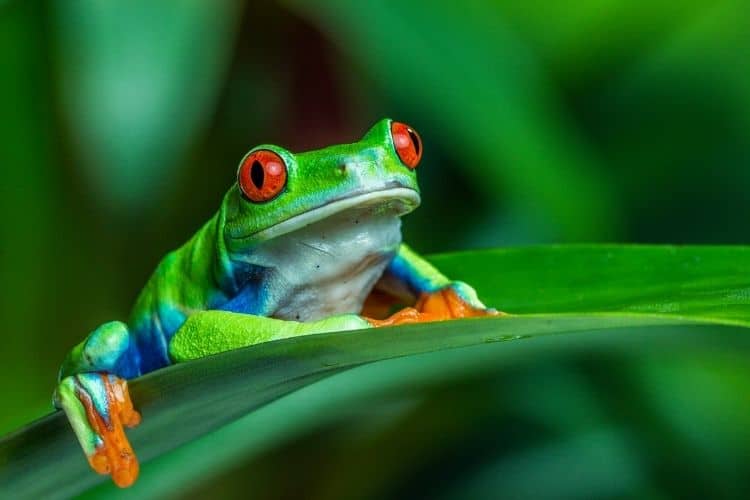
The afternoon was spent at a chocolate farm where the boys brewed dense chocolate milk and ground sugar from sugarcane. In the evening, we went on a night walk in the forest, where we uncovered leaf-mimicking katydids and tiny poison dart frogs in many stages of coloration.
Blue Jeans frogs no bigger than a fingernail with red bodies and blue legs, those with green and black splotches and red-eyed tree frogs that may have measured a fingernail and a half.
River and Garden Life
The following day we headed to Puerto Viejo for a boat ride with Oasis Tours on the Sarapiqui River. We saw a variety of birds that included ibis, kingfishers and great blue herons that migrate to a beaver dam in our neighborhood in Seattle.
The afternoon took us to an ethnobotanical garden tour where we studied the relationship between humans and plants, dabbed our bodies with achiote (red plant dye) and tasted the plants that constitute many herbal remedies.
Birds and Bridges
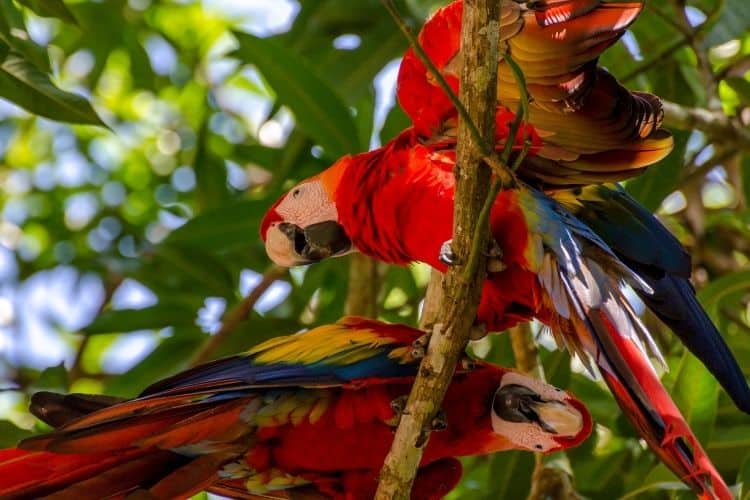
On the way to the Arenal Volcano area, we visited a macaw sanctuary and fed the rescued green and scarlet macaws that had been near extinction. Now, these birds are repopulating the rainforest and they clustered around when the sanctuary owner called them.
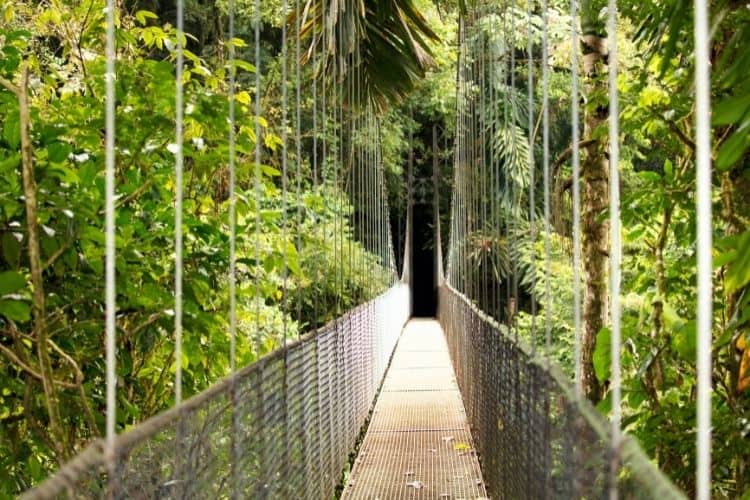
After lunch in La Fortuna, we tested our fear of heights on the suspension bridges at Mistico Arenal. They charged across the cavernous valleys over which the bridges hang. A stop at a neighborhood commune provided the boys with an opportunity to make cheese and patacones: fried plantains topped with refried beans and cheese.
There are two seasons in Costa Rica: rainy and dry. We were there in the rainy season. Buckets of rain streaked down and then disappeared—very conveniently, as it turns out, because there were no canceled excursions due to rain.
Ziplining in Arenal Volcano National Park
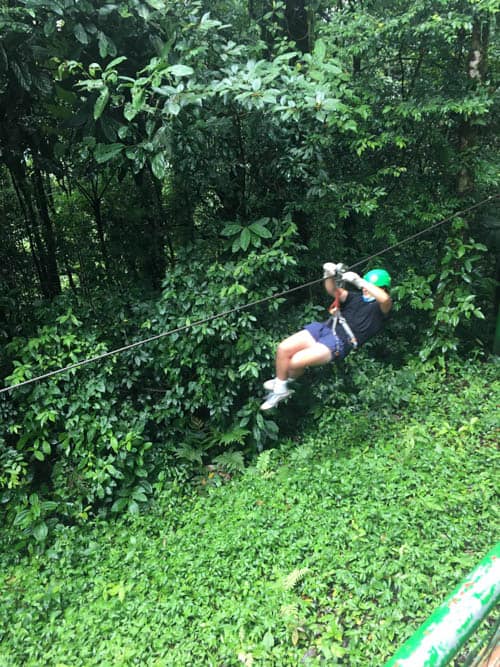
We stayed at the luxurious Hotel Arenal Moana. The mineral springs pool with its swim-up bar attracted the boys, but not as much as the day’s activity of zip lining at Sky Adventures.
Without hesitation, the boys screamed over the 650-foot drop to the Arenal Volcano National Park below. Wes said it was more exciting than he had anticipated.
Learning About Bats and Costa Rican Culture
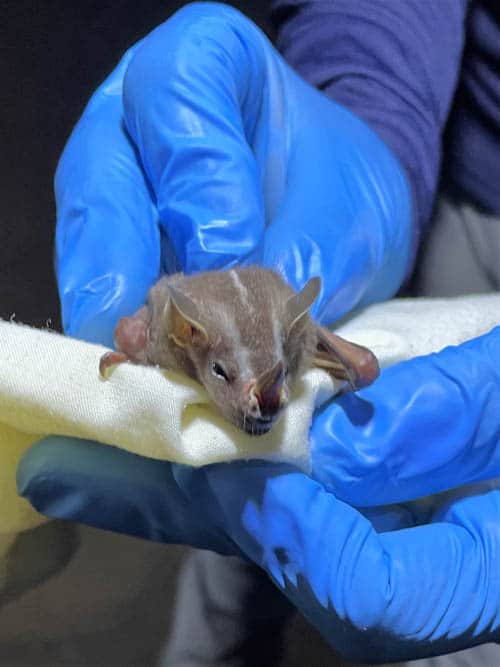
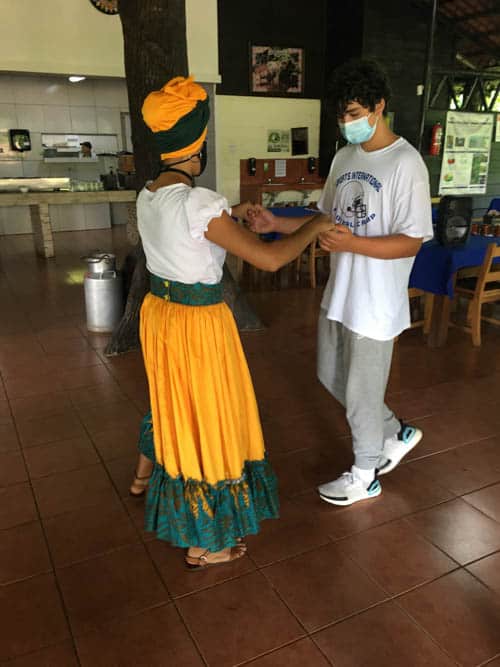
Arenal Vida Campesina, which we visited the next day, is a cultural education center where we made tortillas, toured the organic plants and danced. While the plants were interesting to the boys, they weren’t nearly as interesting as the opportunity to dance with the girls presenting a selection of local dances.
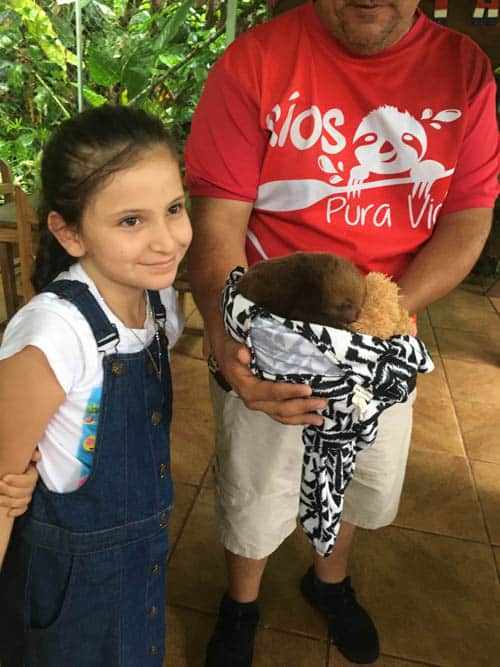
We stopped on the way back at the Meso American Animal Rescue Center to see a rescued baby sloth and then at an outside restaurant in La Fortuna, where iguanas roamed. In the dark hours of the evening, we tracked down bats at Night Winds.
There, we examined bats up close and learned of their contributions to the ecosystem in eating insects, pollinating flowers and dispersing seeds.
Crossing the Great Divide
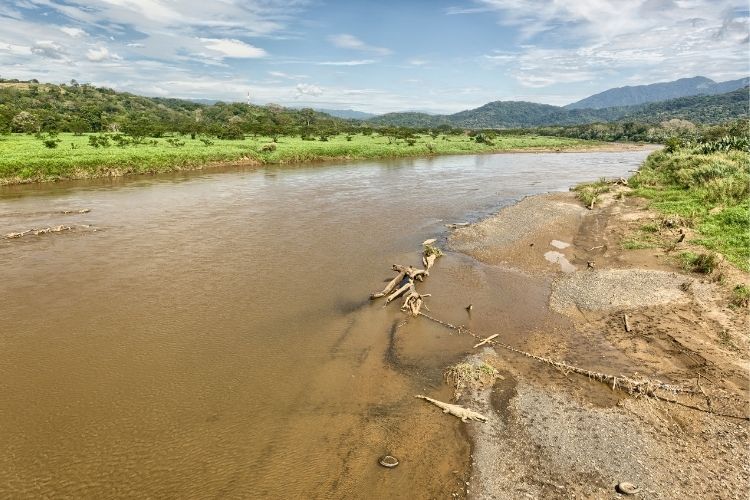
It wasn’t easy to leave Monoa Hotel, but we needed to traverse the continental divide and head to Hotel Punta Leona on the Pacific side. Though we were primarily in the Central Valley, we had spent most of our time on the Caribbean side of the divide.
We toured the Taracoles River by Safari Crocodiles. Here we saw many crocodiles along with pink spoonbills, frigate birds and egrets.
Typical Costa Rican Food
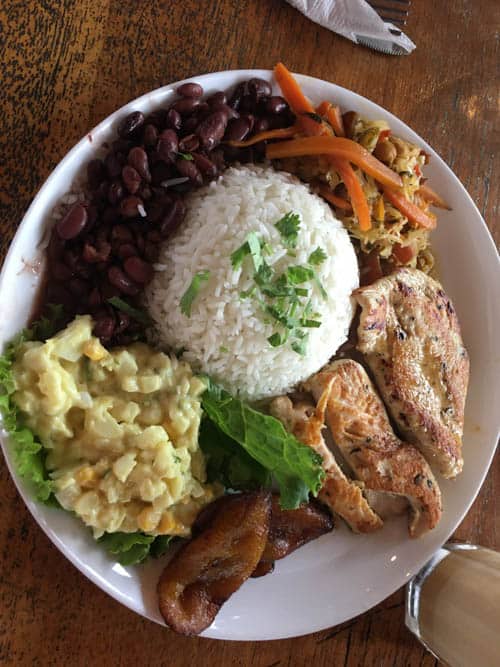
Some of the food we enjoyed was the typical dish of casado comprised of rice, beans, salad, potatoes and meat. Rice and beans accompany every meal as do refreshing fruit drinks. These included guanabana (also called soursop) and pinolillo, a froth of corn, milk, ice and chocolate.
Plantains came in many forms, including crispy chips. We tried creamy jacote and lychee nuts, both sweet and soft. We also enjoyed perfectly ripe golden pineapple and papaya snacks found at many places we stopped.
Our last boating adventure was with Jaco Outriggers in the coastal village of Agujas. We paddled our outriggers from Playa Agujas to Limoncito Playa where we snorkeled and had a picnic lunch.
Final Thoughts on Our Costa Rica Ecotourism Adventure
My grandson’s favorite memory of our Costa Rica ecotourism adventure was sipping mango smoothies at Arenal Manoa Hotel mineral pool. His least favorite was being in the dark rainforest. Overall, we left feeling the full effect of pura vida, Costa Rica’s greeting, which means life is good.
Need a hand planning your trip? Here are the sites and services we rely on most, from booking tools to travel products we love.
Inspire your next adventure with our articles below:
- Best Time to Visit Costa Rica: Your Complete Month-by-Month Guide
- Costa Rica’s Cloud Forests: Your Complete Guide to Monteverde and Manuel Antonio
Author Bio: Marcia McGreevy Lewis lives in Seattle and is a retired feature writer for a major Washington newspaper. She was the Director of Communications at an independent school where she founded the school’s magazine. GO World Travel, ROVA Magazine, Third Act Magazine and F3LL Literary Magazine carry some of her recent work. Reach her on Facebook, Instagram: marcialewis25, Twitter: @McGreevyLewis and linkedin: Marcia Lewis
Want to discover more hidden gems and helpful travel tips? Join our free newsletter for the latest travel secrets and travel articles.
We are reader-supported and may earn a commission on purchases made through links in this article.

Planning another trip soon? ✈️
Add GoWorldTravel.com as a preferred source on Google. Click the button below so our local guides, packing hacks, and hidden-gem itineraries always show up first when you search!
Add to Preferred Sources
What a wonderful adventure you had. It brought back great memories of my trips to Costa Rica. Congratulations on another published article!!!! Hugs, Jo Anne