
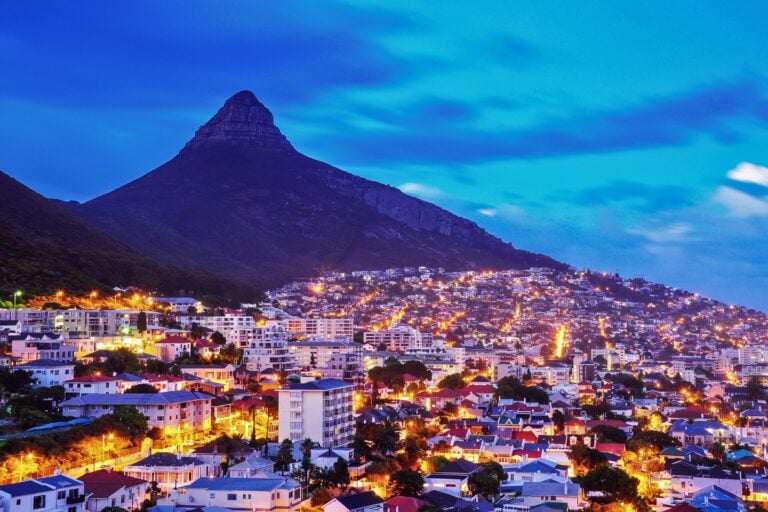
That morning, I woke up at 4:45 a.m. to watch the sun rise over the Cape Winelands. I had been in Cape Town for five days and felt I had barely started.
This is the problem — and the gift — of the city. It doesn’t behave like a destination.
It behaves like several destinations that have been compressed into the same geography: a mountain city, a beach city, a food city, a wildlife city, a wine city, a city of complicated history and startling beauty and remarkable unresolved tensions. You cannot do Cape Town in a week. You can, however, spend a week there and understand why people come back for the rest of their lives.
Mountains Are Their Thing
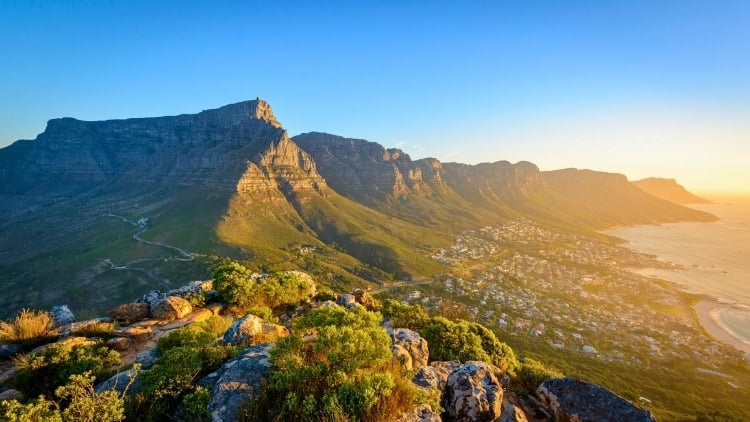
Unlike almost all other natural landmarks that dominate a cityscape, Table Mountain does not just form part of Cape Town’s scenery but dominates it in a manner that is unique. It shapes the atmosphere of the city. On days when there is no mist in the air, Table Mountain dominates the landscape in a way that should be intimidating, but it’s not, for it is too fantastic to evoke fear.
However, when the clouds cover Table Mountain in an act known locally as the Tablecloth, it’s apparent that something different is happening in the area.
I rode the cable car up Table Mountain during my second day in Cape Town. When I got to the top, the views were overwhelming in how comprehensive they were. From the top, one can see the entire city, Robben Island floating in the gray waters of the bay, and the endless Atlantic stretching out before you. The top of Table Mountain is larger than it looks from below, and fynbos — one of the most amazing floral kingdoms in the world — fills the area in low-growing tangles of flora, with little paths weaving through them. I walked for two hours without meaning to.
The Winelands at Dawn
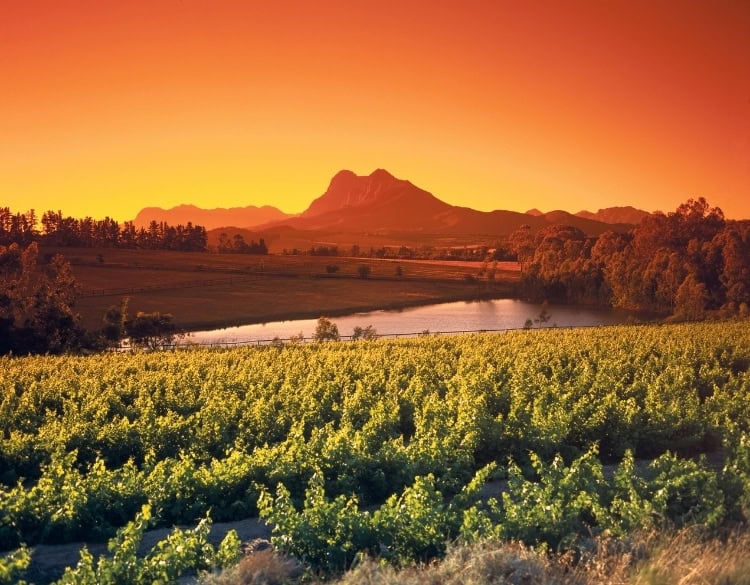
Wine farms located in both Stellenbosch and Franschhoek are less than an hour from the center of the city. Everything about the pace there is quite distinct.
In Vergelegen Estate, one of the most historical areas in the Cape region, the oak trees planted by the Dutch colonial governor during the first decades of the 18th century still stand in strict rows in front of the white-gabled estate. The tasting room opens at nine o’clock, but I came earlier on a tip from someone familiar with the area. I walked through the grounds before sunrise and observed the cellar workers moving between buildings as the Helderberg Mountains above slowly gained their first orange hue of sunlight.
The wine, especially the white blends consisting of Semillon and Sauvignon Blanc, typical for the Cape region, is remarkable and so relatively inexpensive compared to other similarly high-quality wines in Europe. I tasted no less than eleven varieties that day. I have no regrets.
Franschhoek, a smaller town with French Huguenot heritage and one of Africa’s most concentrated collections of serious restaurants, is worth half a day on its own. The main street is faintly absurd in its prettiness — a single road of white-walled buildings, vineyard views, and enough excellent food to make choosing a lunch reservation a genuine problem.
What the Township Tour Taught Me
The debate about taking the township tour lasted several days and, although I ended up agreeing to take it thanks to my friend, there is no denying the value of such discussions.
The tour I chose was guided by a man who hailed from Langa, the oldest township in Cape Town, and who conducted the tour quite directly, thus removing it from its status as the usual sightseeing experience. He talked about the economic situation there as straightforwardly as he discussed the wonderful murals, jazz clubs, spaza shops, or community centers functioning out of nowhere.
At one point during the tour, we sat down for lunch in a community restaurant, sharing a huge table with others, eating some wonderful umngqusho (dried corn and beans), drinking beer. We discussed things in an utterly frank manner, which was rather unusual for South Africa.
It must be said that the tour, of course, did not solve any of the problems existing in Cape Town. Nor did it promise to do so. However, it offered another look at Cape Town that neither the cable car nor the wine farms were able to offer by themselves.
The Food, Which Deserves Its Own Paragraph
In the Old Biscuit Mill in Woodstock, which has been transformed from a factory into an amazing marketplace for good food on Saturday mornings, I tried a boerewors roll — coiled sausage with coriander and caramelized onions. I was standing right next to people who were eating injera and ceviche influenced by Japanese culture.
The smells of spices, coffee, and bread, as well as sunlight passing through the corrugated iron roof in long, slanting strips, made the atmosphere unique.
When to Go
When to Go
The Cape summer, from November through February, is hot, dry and crowded. March and April are the shoulder season, with warm weather, thinner crowds and a golden quality to the light on the vineyards that’s hard to put into words. Late March is an ideal window. Bring sunscreen, whatever the season, because the UV at this latitude is extraordinary.
Getting There
Cape Town International Airport (CPT) is about 11 miles from the city center, roughly a 20-minute drive by rideshare or taxi.
Where to Stay
- Mount Nelson, A Belmond Hotel is Cape Town’s grand dame, set in manicured gardens at the foot of Table Mountain with two pools and a spa. Book your stay on Expedia.
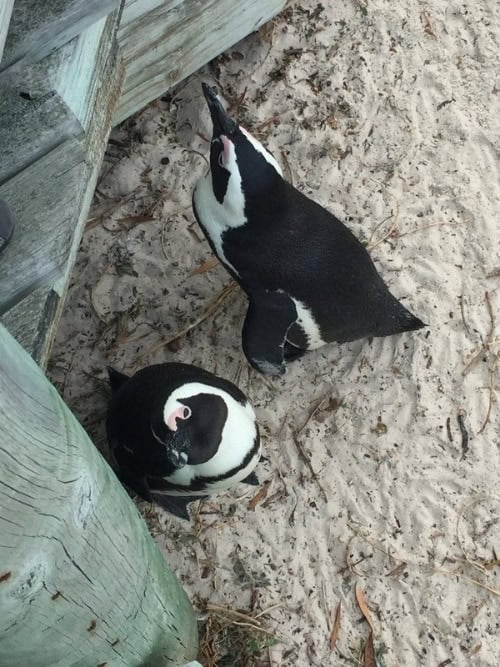
- Cape Grace, A Fairmont Managed Hotel overlooks a private marina minutes from the V&A Waterfront, and its concierge can arrange Winelands and penguin excursions. Book your stay on Expedia.
- Gorgeous George is a design hotel in the city center with a rooftop pool bar and individually styled rooms near Company’s Garden. Book your stay on Expedia.
Getting Around
Rideshare apps are the easiest way to get around the city. For the Winelands, Vergelegen and the coast, a rental car gives you the most freedom. Compare options on Discover Cars and plan to be back before dark.
Tours and Experiences
- This Table Mountain Cableway and hop-on hop-off bus combo ticket is valid for 14 days, so if the Tablecloth rolls in and the cableway closes, you can go up another day.
- This full-day Winelands tour from Cape Town visits Stellenbosch, Franschhoek and Paarl with tastings at three estates and thousands of reviews behind it.
- This Langa township walking tour is led by guides who live in Langa and includes visits with residents in their homes.
Need a hand planning your trip? Here are the sites and services we rely on most, from booking tools to travel products we love.
Inspire your next adventure with our articles below:
- Cape Town’s Unique Experiences for the Curious Traveller
- Slow Down and Savor: Why Africa’s Most Elegant Train Journey Should Be Your Next Adventure
Author Bio: I’m Nishika Vadodaria, a student based in Mumbai, India, who wants to travel to my heart’s content without the extra planning that ends up bugging you. I would love to share my travel diaries to make yours easier.
Want to discover more hidden gems and helpful travel tips? Join our free newsletter for the latest travel secrets and travel articles.
We are reader-supported and may earn a commission on purchases made through links in this article.

- Slow Down on Prince Edward Island: A Relaxed Four-Day Itinerary of Dunes, Seafood and Seaside Inns - September 25, 2026
- Two Sides of Cape Town: Table Mountain Trails, Winelands Dawn and Township Voices - September 25, 2026
- St. Pierre and Miquelon: Visit France Without Leaving North America - September 25, 2026
Planning another trip soon? ✈️
Add GoWorldTravel.com as a preferred source on Google. Click the button below so our local guides, packing hacks, and hidden-gem itineraries always show up first when you search!
Add to Preferred Sources