


When you picture snow-heavy cities, you might think of places like Quebec City in Canada, where locals might proudly claim the title. Or cities in the United States, such as Buffalo or Syracuse, near the Great Lakes. However, the answer lies in a different part of the world: Japan, specifically Aomori.
What is the World’s Snowiest City?
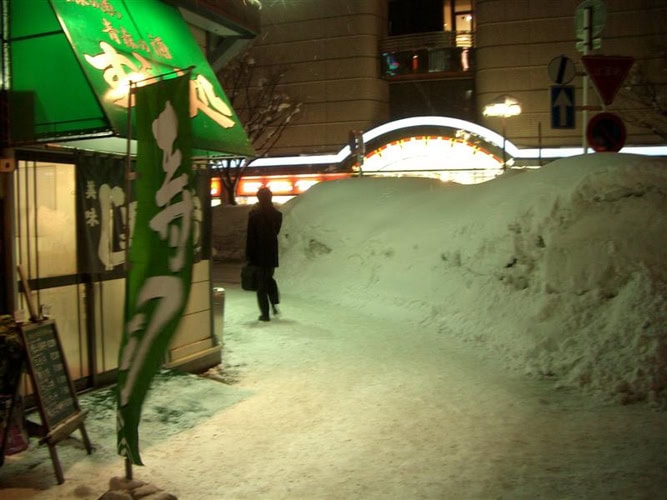
During the winter of 2024-2025, Aomori City experienced some of the heaviest snowfall in years. On January 5th, the snow depth reached an astounding 139 centimeters (54.72 inches), the highest recorded since 1894.
The snowfall was so extreme that a prefectural special snow response headquarters was established for the first time in 12 years.
During my university days, I took an overnight bus from Tokyo to the Hakkoda Ski Resort in southern Aomori City. The city is located at the northernmost tip of Honshu, Japan’s main island.
While I mostly slept through the journey, I remember waking up to a stunning scene. The snow was piled high, nearly reaching the ropeway’s base station. The station building, surrounded by an endless white landscape, looked like an abandoned Arctic cabin.
Aomori City, situated in the northernmost part of Honshu, experiences heavy snowfall even on its plains. At the time, I had no idea that Aomori was one of the snowiest cities in the world. According to the city’s records, the cumulative snowfall over the past 30 years averaged 622 cm (about 244 inches) annually as of fiscal year 2023.
Although global warming has reduced annual snowfall in Aomori, the city recorded a remarkable 798 cm (314 inches) of snow in 1994. In another historically significant year, snowfall reached around 812 cm (319 inches).
Aomori earned the title of the world’s snowiest city in a 2016 ranking by AccuWeather. This was based on data from the Japan Meteorological Agency, The Weather Network (Canada), and AccuWeather itself. On average, Aomori receives 312 inches (793 cm) of snow annually. This far exceeds Syracuse’s 124 inches (315 cm) and Buffalo’s 95 inches (241 cm).
Best Aomori Tours & Excursions
A Complex Geography Maximizes Snowfall
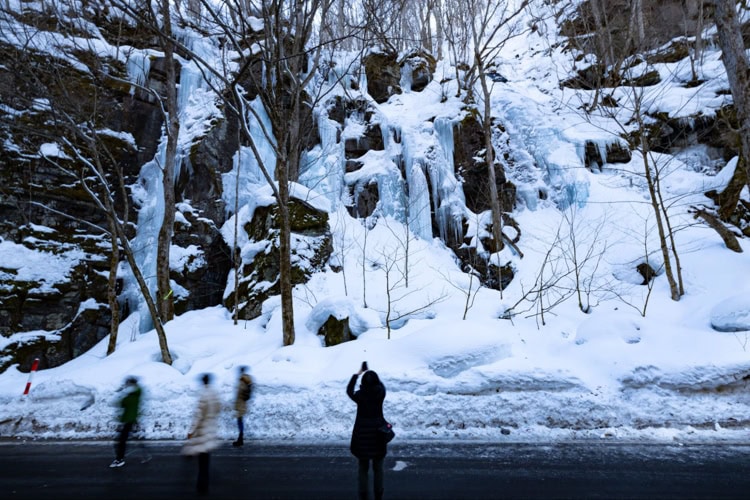
Photo courtesy of Prefecture, Tourism and International Affairs Strategy Bureau, Tourist Attraction and Exchanges Section
So, what makes Aomori such a snowy city? The answer lies in its unique geography.
Aomori is surrounded by Mutsu Bay, the Hakkoda mountain range, and two peninsulas stretching north into the Tsugaru Strait, which separates Honshu from Hokkaido. This combination of geographical features, especially its proximity to the Sea of Japan, creates ideal conditions for heavy snowfall.
During winter, cold, dry air masses from the Eurasian continent flow over the Japan Sea, absorbing moisture from its warmer surface. As this moisture-laden air rises over the mountains, it cools, forming clouds and releasing heavy snow.
This phenomenon is similar to the lake-effect snow seen in Buffalo and Syracuse, where cold winds pick up moisture from the Great Lakes.
However, Aomori’s setup is even more complex. The city’s northern coast is flanked by two peninsulas. The mountains of the Shimokita Peninsula to the northeast intensify the snowfall by blocking and redirecting winds. This traps moisture-laden air, causing even larger snow clouds to form and leading to record-breaking snowfall.
Despite the challenges posed by heavy snowfall—such as transportation disruptions and limited mobility—Aomori’s winter beauty is unmatched.
Activities in Aomori

Photo courtesy of Prefecture, Tourism and International Affairs Strategy Bureau, Tourist Attraction and Exchanges Section
Visitors can enjoy attractions like the open-air baths at Sukayu Onsen, the snow monsters (Juhyo) at the Hakkoda Ski Resort, the frozen waterfalls of Oirase Gorge and the region’s famous sweet winter apples.
Aomori’s local cuisine, including Jappa-jiru soup made from fish scraps, is another highlight of winter in this region.
While Tokyo and Osaka are popular tourist hubs, Japan faces issues with over-tourism. For travelers seeking a more authentic experience, Aomori offers a unique and largely untouched destination, perfect for those looking for something distinctly Japanese.
Whether you’re an adventure enthusiast or a nature lover, Aomori promises an unforgettable winter experience. Be sure to add this snowy gem to your Japan travel bucket list.
Read More: Tokyo vs. Osaka: The Ultimate Face-Off for First-Time Visitors to Japan
How to Get to Aomori
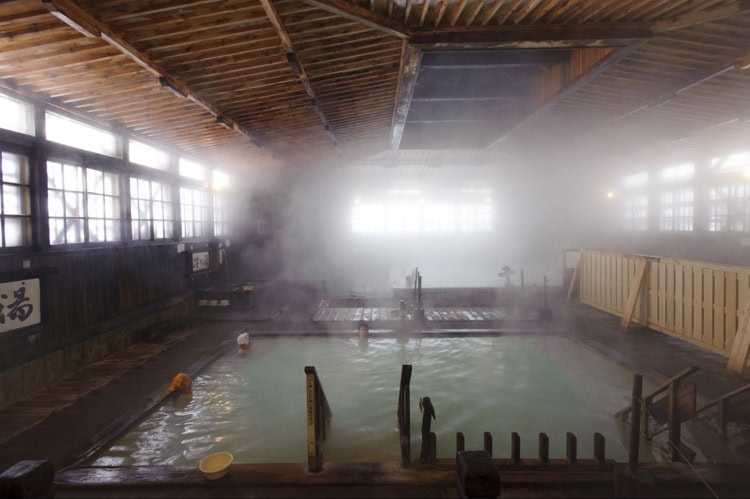
Photo courtesy of Prefecture, Tourism and International Affairs Strategy Bureau, Tourist Attraction and Exchanges Section
Aomori is easily accessible via the Tohoku Shinkansen (bullet train), which takes approximately 3 hours and 10 minutes from Tokyo Station to Shin-Aomori Station. From there, it’s just a 5-minute local train ride to Aomori City.
Alternatively, flights from Tokyo to Aomori Airport take about 1 hour and 15 minutes, with a 35-minute limousine bus ride to the city center. Flights from Osaka’s Itami Airport to Aomori Airport take about 1 hour and 40 minutes.
For a cost-effective option, overnight highway buses from Tokyo to Aomori are available, though the 9 to 10-hour journeys can be taxing.
Need a hand planning your trip? Here are the sites and services we rely on most, from booking tools to travel products we love.
Inspire your next adventure with our articles below:
- The Naked Truth About Japanese Hot Springs: Complete Onsen Etiquette Guide
- 10 Must-Do Experiences That Will Make You Fall in Love with Japan
Author Bio: Masayoshi Sakamoto is a Japanese writer, translator, and editor living in Toyama, Japan. He is the editor-in-chief of a local magazine, Hokuroku, and was the chief editor of a popular digital business magazine based in Tokyo, bizSPA!.
Want to discover more hidden gems and helpful travel tips? Join our free newsletter for the latest travel secrets and travel articles.
We are reader-supported and may earn a commission on purchases made through links in this article.

- El Nido, Philippines: The Islands I Came For, the People Who Made Me Stay - September 30, 2026
- A Guide to Noodles in Vietnam: How to Slurp Like a Local - September 30, 2026
- Travel Guide to Japan - September 29, 2026
Planning another trip soon? ✈️
Add GoWorldTravel.com as a preferred source on Google. Click the button below so our local guides, packing hacks, and hidden-gem itineraries always show up first when you search!
Add to Preferred Sources