
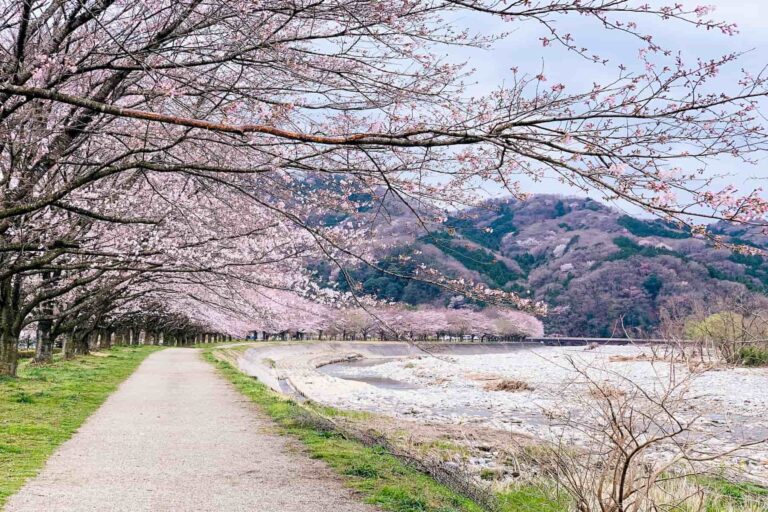
In the springtime, cherry blossoms burst into vibrant colors in Japan. The blooming trees and their pink flowers are so pretty that some travelers visit Japan in the spring just to see them.
Here’s our list of some of the top places in Japan that are famous for cherry blossom viewing. As the cherry blossom front goes from the south to the north of the country, this article will also introduce the sights in the same way.
1. Kumamoto Castle in Kumamoto

Built in 1607 by the warlord Kato Kiyomasa, Kumamoto Castle is one of Japan’s three great castles and one of its most emotionally resonant cherry blossom spots. Around 560 trees fill the grounds, including a celebrated row of Somei Yoshino along the Miyukizaka slope that frames the castle keep in photographs travelers come specifically to recreate.
The castle suffered severe damage in a 2016 earthquake, and reconstruction is ongoing with a projected completion date of around 2038. A temporary elevated walkway built for the restoration offers surprisingly good views of the keep and the blossom canopy below. Visiting now means witnessing something rare — a great Japanese castle actively being brought back to life, blossoms and all.
Peak bloom: late March to early April
2. Kintaikyo Bridge in Yamaguchi

One of Japan’s three most famous bridges, Kintaikyo was first built in 1673 and spans the Nishiki River in five elegant wooden arches. The total length is 193.3 meters, with a walking surface of 210 meters measured along the curves. The pier stands just 6.6 meters tall, keeping the structure low and intimate against the river.
In early April, the surrounding Kikko Park fills with cherry trees, and the combination of arching timber, river reflections, and pink blossoms makes this one of the most photogenic spots in western Japan. A small toll applies to cross the bridge, and illuminations run most evenings until 10 p.m.
Peak bloom: early April
3. Himeji Castle in Hyogo
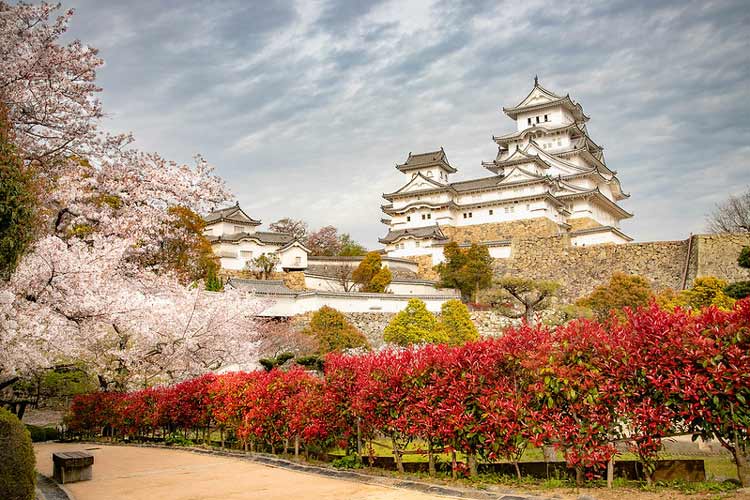
Himeji is arguably the finest surviving feudal castle in Japan and a UNESCO World Heritage Site. Its brilliant white exterior earns it the nickname “White Heron Castle,” and in spring the pale pink blossom clouds against that white stonework create one of the country’s most striking seasonal images.
The Sannomaru Square at the castle’s base fills with Somei Yoshino trees, while the Nishinomaru section is known for weeping cherry trees that bloom slightly later, extending the viewing window. Himeji is about an hour from both Osaka and Kyoto by bullet train, making it a natural addition to any spring itinerary.
Peak bloom: late March to early April
4. Arashiyama in Kyoto
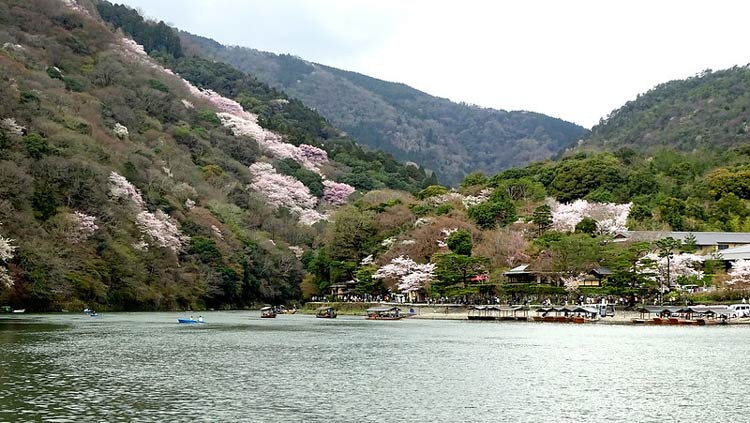
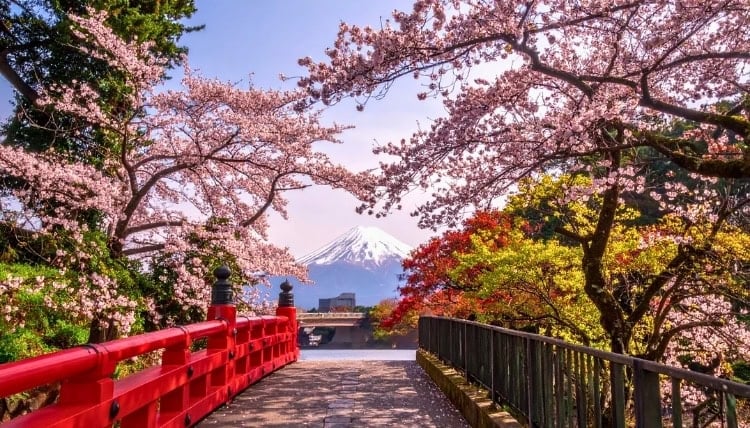
Arashiyama sits at Kyoto’s western edge, where forested mountains meet the Oi River. In spring the hillsides layer pink cherry trees against the evergreens, and standing on Togetsu-kyo Bridge with the mountains ahead is one of those views that earns its reputation.
The riverbank offers relaxed blossom viewing without the density of crowds found at other Kyoto spots. Rickshaw tours through the area cover the bamboo grove, riverside temples, and cherry trees at a pace that actually lets you take it in. Aim for early morning on a weekday — weekends here are genuinely packed.
Peak bloom: late March to early April
5. Mount Yoshino in Nara
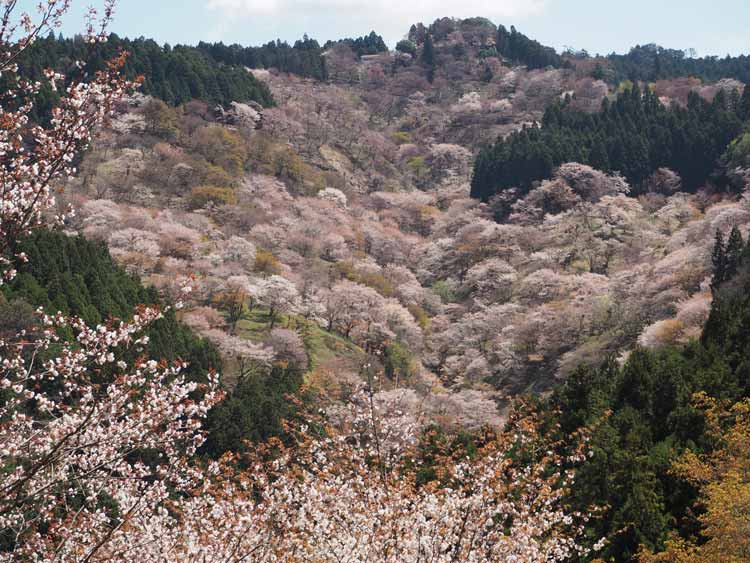
Mount Yoshino has been Japan’s most celebrated cherry blossom destination for over a thousand years. Around 30,000 trees of multiple varieties cover the mountain, first planted more than 1,300 years ago. The mountain is also part of a UNESCO World Heritage Site, so the temples and shrines woven through the cherry forest give the experience real cultural depth.
What makes Yoshino especially practical for trip planning is its four elevation zones — lower, middle, upper, and inner — each blooming at slightly different times. The season stretches across several weeks, which makes timing far more forgiving than destinations where the window is a matter of days.
Mount Yoshino is rewarding but logistically involved with navigating the ropeway, shuttle buses, and four elevation zones during peak season takes planning. The Cherry Blossom Buddha and Mt. Yoshino Day Tour includes round-trip transport from Osaka, guided visits to the best viewpoints, a bento lunch eaten among the blossoms, and a stop at a local strawberry farm. Book well ahead — this one sells out fast during peak season.
Peak bloom: early to mid-April
6. Kenrokuen Garden in Ishikawa
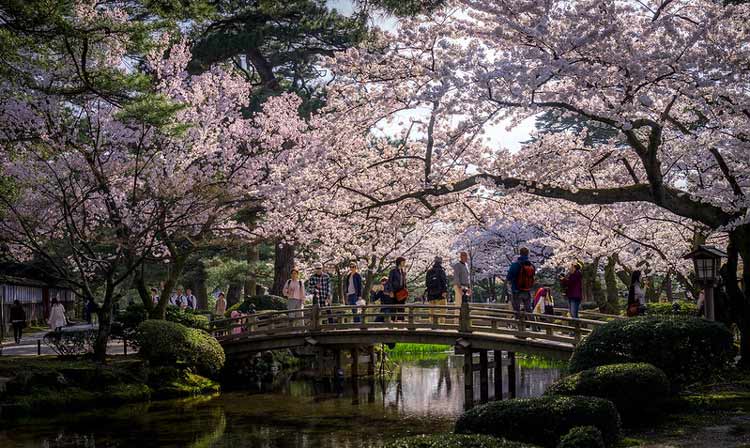
One of Japan’s three most celebrated gardens, Kenrokuen holds more than 400 cherry trees across multiple varieties that bloom at different times, extending the season beyond the typical week-long window elsewhere. The star attraction is the Kenrokuen Kikuzakura, a rare chrysanthemum cherry unique to this garden, whose petals shift from deep pink to soft white as the season progresses.
During peak bloom, admission is free and the garden is illuminated in the evenings. The adjacent Kanazawa Castle Park adds another 400 trees framed against the castle’s white walls — the two are connected by a bridge and worth visiting together.
Peak bloom: early April
7. Shinjuku Gyoen National Garden in Tokyo

For first-time visitors to Tokyo during blossom season, Shinjuku Gyoen is the most practical choice. Around 900 trees across roughly 70 varieties bloom sequentially from mid-March through late April, giving visitors a longer window than almost any other Tokyo spot. The 58-hectare grounds blend Japanese, French, and English garden styles with wide lawns that offer actual breathing room.
Admission is 500 yen for adults, children under 15 enter free. Alcohol is prohibited, making it calmer and more family-friendly than the city’s free public parks. On peak weekends, advance online reservations are required.
Peak bloom: late March to early April
8. Chidorigafuchi Park in Tokyo
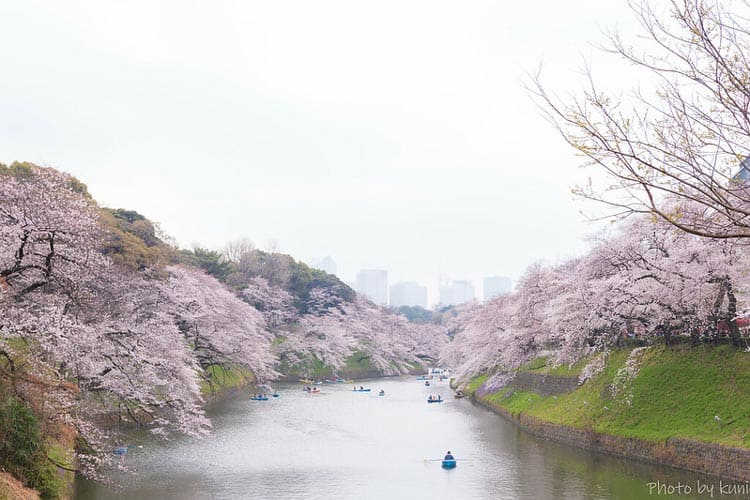
Chidorigafuchi offers something no other Tokyo spot can match: rowing a small boat through an Imperial Palace moat while cherry blossoms hang overhead and petals drift into the water. Around 260 Yoshino trees line the 700-meter promenade, bending low over the moat on both sides.
The walking path is free. Boat rentals during peak season cost 1,600 yen per boat for one hour, with a pre-reservation smart ticket system available online. Illuminations run nightly during the Chiyoda Sakura Festival. Arrive early — boat rental queues form before the 9:30 a.m. opening.
Peak bloom: late March to early April
9. Kakunodate in Akita
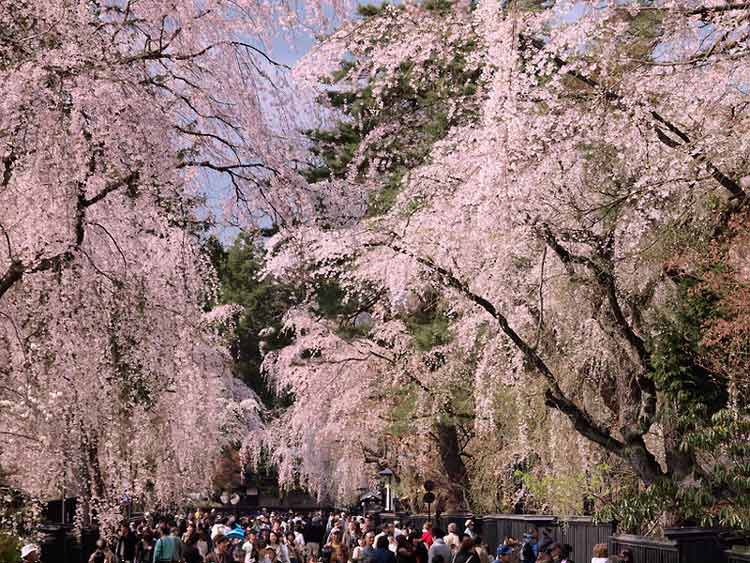
Kakunodate is the kind of place that makes a trip to Japan feel different. Founded in 1620, the samurai district remains largely unchanged from the Edo period, with preserved residences, black-fenced compounds, and wide streets. The weeping cherry trees here trace back to three saplings brought from Kyoto in 1664 as part of a bride’s dowry, and around 400 weeping trees now cascade through the samurai district.
A few minutes’ walk away, the Hinokinai River banks hold another 400 Somei Yoshino trees stretching two kilometers. Because the weeping and riverside trees bloom at slightly different times, the season here is naturally extended. More than 1.2 million visitors come each year — book accommodation well ahead.
The Akita: 1-Day Lake Tazawa and Kakunodate Samurai House Tour combines the samurai district with Lake Tazawa and includes a miso and soy sauce tasting at a local shop. It’s a well-rounded day that gives Kakunodate the time it deserves.
Peak bloom: late April to early May
10. Goryōkaku in Hokkaido
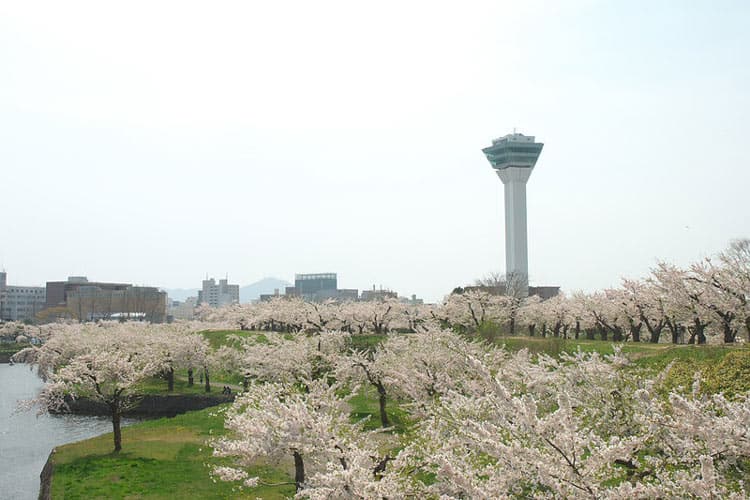
Goryokaku is the most unusual cherry blossom spot in Japan. Japan’s first Western-style fort, completed in 1864 and modeled after European fortress cities, was built in a five-pointed star shape that’s best appreciated from above. The 107-meter Goryokaku Tower observation deck reveals the full star outline surrounded by nearly 1,500 cherry trees lining the moats and grounds.
Bloom here typically coincides with Golden Week, bringing festivals, food stalls, and evening illuminations. For travelers who miss peak season in central Japan, Goryokaku offers a genuinely compelling second act in the north.
Peak bloom: late April to early May
If You Go
Cherry blossom season in Japan follows a reliable south-to-north progression, but exact timing shifts year to year. As a general planning guide:
- Southern Kyushu (Kumamoto): late March
- Tokyo, Osaka, Kyoto, Nara, Himeji: late March to early April
- Kanazawa and northern Honshu: early to mid-April
- Kakunodate: late April
- Hakodate and Hokkaido: late April to early May
Cherry blossom timing shifts year to year, sometimes by more than a week. Japan Guide’s annual sakura forecast tracks bloom predictions from official Japanese weather agencies and updates throughout the season. Bookmark it and check it before booking anything non-refundable.
For Kakunodate and Hokkaido during Golden Week, book accommodation several months in advance since availability disappears fast. Search hotels and ryokans across Japan on Booking.com or Tripadvisor and filter by free cancellation to keep flexibility while the bloom forecast firms up.
Cherry blossom timing is genuinely unpredictable. If you’re building a trip around a specific destination at peak bloom, it’s worth protecting your investment. SquareMouth lets you compare travel insurance plans side by side and find policies that cover trip interruption if your dates don’t line up with the blossoms the way you planned.
Check out our Japan Travel Guide for a curated selection of articles to inspire your trip.
Need a hand planning your trip? Here are the sites and services we rely on most, from booking tools to travel products we love.
Inspire your next adventure with our articles below:
- How Bamboo Farming in Japan Balances Tradition and Modernity
- Tips for a Trip From Tokyo to Mount Fuji to Find the Best View
Author Bio: Masayoshi Sakamoto (坂本正敬)is a Japanese writer and translator based in Toyama, Japan. He writes news and columns for a number of publications and web magazines. He’s also the editor-in-chief of a local magazine, HOKUROKU.
Want to discover more hidden gems and helpful travel tips? Join our free newsletter for the latest travel secrets and travel articles.
We are reader-supported and may earn a commission on purchases made through links in this article.

- El Nido, Philippines: The Islands I Came For, the People Who Made Me Stay - September 30, 2026
- A Guide to Noodles in Vietnam: How to Slurp Like a Local - September 30, 2026
- Travel Guide to Japan - September 29, 2026
Planning another trip soon? ✈️
Add GoWorldTravel.com as a preferred source on Google. Click the button below so our local guides, packing hacks, and hidden-gem itineraries always show up first when you search!
Add to Preferred Sources