
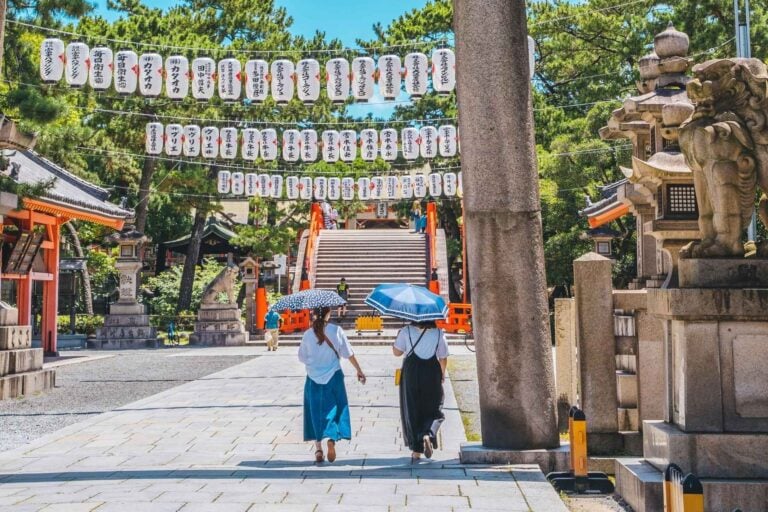

When it comes to famous cities in Japan, Tokyo and Osaka are the first that come to mind. For first-time travelers to Japan, they will likely choose to visit one of these two cities. But which one should you visit first?
According to current data from the Japan Tourism Agency and Japan National Tourism Organization, Tokyo has more foreign visitors staying overnight. The number is nearly double that of Osaka.
This might not come as a surprise, considering the population difference. Tokyo has around 14 million residents compared to Osaka’s 8.7 million.
In addition, Tokyo is served by two major international airports: Haneda and Narita, whereas Osaka only has Kansai International Airport. Given these differences, Tokyo’s dominance might seem inevitable.
Osaka’s profile got a real boost from hosting Expo 2025, which drew millions of visitors to the city last year.
So, in this article, let’s compare the two cities across five categories in a five-round battle format to determine which one you should visit first.
Round 1: Food Fight
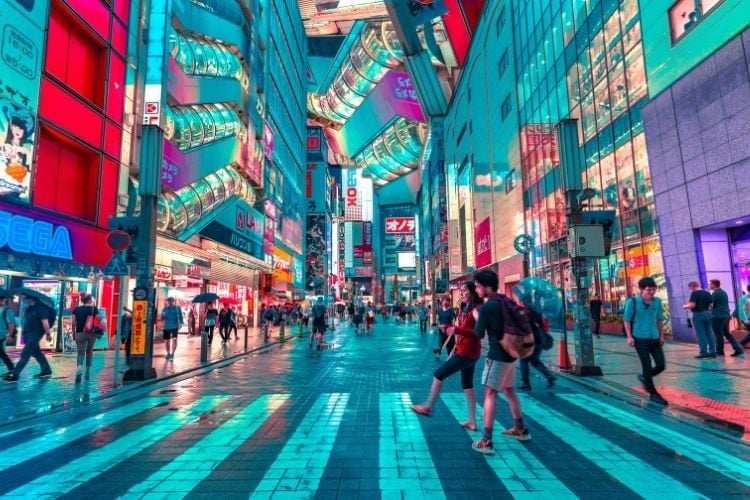
Let’s begin with food. Osaka is famously known in Japan as the city of “kuidaore,” meaning to eat until you drop. It’s a foodie paradise, not necessarily for high-end cuisine, but for its casual and lively food culture.
In the “konamon street” of Dotonbori, you can savor local specialties like okonomiyaki, takoyaki, and negiyaki.
There’s also Kushikatsu Alley in the Shinsekai area, street food at Kuromon Market, and a bar-hopping culture in Namba and Umeda that lets you experience Osaka’s down-to-earth charm.
Despite its casual vibe, Osaka is also recognized in the Michelin Guide Kyoto/Osaka 2026, with 235 restaurants listed: 3 with three stars, 12 with two stars and 66 with one star. This is close to neighboring Kyoto, which has 244 listings.
From affordable street eats to Michelin-starred fine dining, Osaka offers a rich and diverse food scene.
But Tokyo is no slouch either. When it comes to Michelin-starred restaurants, Tokyo has been the global leader for 18 consecutive years.
According to the Michelin Guide Tokyo 2025, Tokyo boasts 12 three-star restaurants, 26 two-star restaurants, and 132 one-star restaurants, totaling 170 establishments.
This sheer number reflects the city’s exceptional quality and variety. Areas like Ginza, Nishi-Azabu, and Kagurazaka are packed with top-tier dining spots.
Moreover, thanks to its large number of foreign tourists and embassies, Tokyo’s food culture is internationally diverse. On top of that, new and experimental dishes are constantly emerging.
In youth-driven areas like Harajuku and Shibuya, “Instagrammable” meals are also the norm.
However, one of Osaka’s advantages is its proximity to Kyoto. If you combine the Michelin restaurants in Kyoto and Osaka, they rival Tokyo in number and quality.
Since many travelers visit Osaka and Kyoto together, it makes sense to consider them as a pair. So in the food category, let’s call it a draw.
If you’re planning a trip to Japan, check out our Japan Travel Guide, where you’ll find a curated selection of articles to inspire you and help plan your trip.
Round 2: Culture Clash
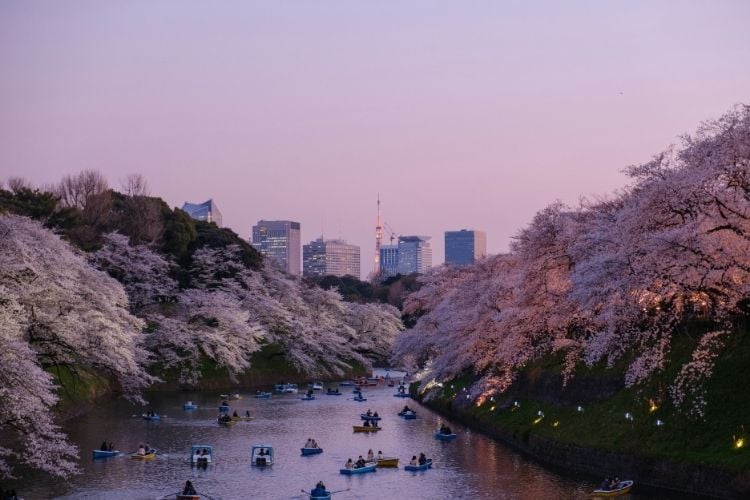
Next up, culture. In Japan, there’s a phrase likening the country’s cultural geography to a typical winter pressure pattern: “west high, east low.”
This refers to the perception that western Japan (where Kyoto and Osaka are located) has a higher cultural standard than eastern Japan (including Tokyo).
Of course, this is a generalization. Today, industries like broadcasting, publishing, and entertainment are centered in Tokyo. Pop culture trends also often originate in the capital. Akihabara, for example, is a global hub for anime and otaku culture.
Still, despite Tokyo’s dominance, many Japanese people would agree that the Kansai region (including Osaka, Kyoto, and Nara) is the true cultural heart of Japan. This belief stems from Japan’s historical development, which largely took place in western Japan.
Historically, the emperor resided in cities like Osaka and Kyoto. As a result, cultural and religious heritage sites are more concentrated in western Japan.
While the Tokyo metropolitan area (Tokyo and the surrounding three prefectures of Saitama, Chiba, and Kanagawa) has only two World Heritage Sites, the architectural work of Le Corbusier at the National Museum of Western Art and the Ogasawara Islands, the Kansai region, which includes Osaka, Kyoto, Nara, and Hyogo, boasts numerous World Heritage Sites such as the Mozu-Furuichi Kofun Group in Osaka, the Historic Monuments of Ancient Kyoto, the Historic Monuments of Ancient Nara, the Sacred Sites and Pilgrimage Routes in the Kii Mountain Range, and Himeji Castle.
While Tokyo has iconic historical sites like Sensoji Temple, if your goal is to experience traditional Japanese culture, Osaka and its surroundings hold the upper hand.
Read More: Exploring Tokyo: A Local Expert’s Guide to Must-See Spots and Hidden Gems
Round 3: Friendly Factor
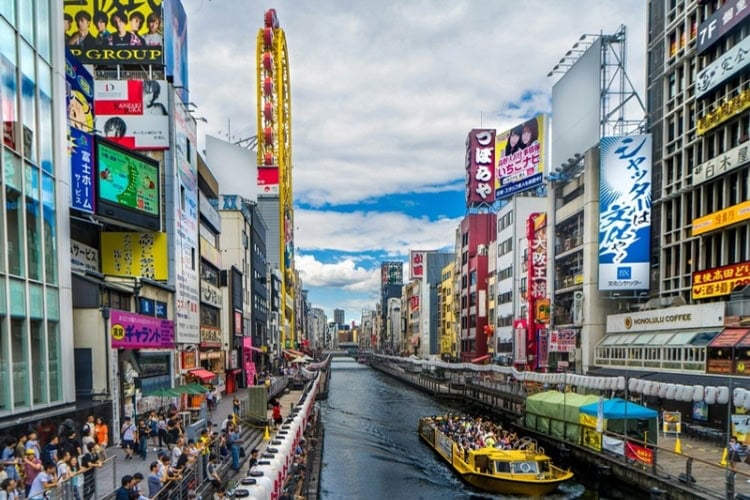
Japan is often praised for its hospitality and good manners.
But at the same time, foreigners sometimes describe Japanese people as reserved, expressionless, or emotionally distant. Between Tokyo and Osaka, which city fits that description more? Most Japanese would likely say “Tokyo.”
On the other hand, Osaka has the opposite reputation. Osakans are known for being cheerful, lively, witty, and social. This image is deeply rooted in the Japanese national psyche.
There’s even a charming anecdote about older women in Osaka always carrying oranges or candies and striking up conversations with strangers by offering them snacks as a way to break the ice and build rapport.
Furthermore, many of Japan’s most famous comedians hail from the Kansai region, particularly Osaka. This has reinforced the city’s image as warm, humorous, and people-friendly.
So, in terms of friendliness, Osaka wins this round by a landslide.
Read More: 14 Hidden Japan Adventures: Myths, Monkeys, Whiskey and Samurai
Round 4: Transport Tussle
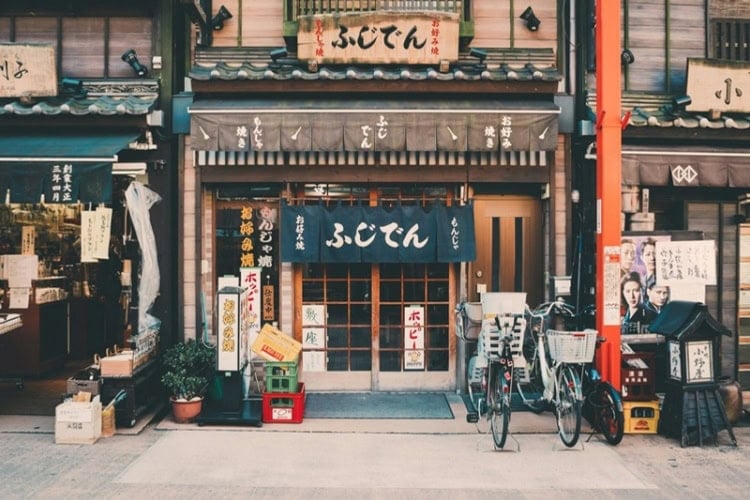
When it comes to ease of getting around using public transportation, how do the two cities compare?
Of course, as major metropolitan areas, both Tokyo and Osaka offer a wide variety of transportation options. However, if we were to conclude, Tokyo has the upper hand.
In terms of both scale and number of users, Tokyo is overwhelmingly ahead. For instance, the number of passengers transported daily by local public buses in Tokyo is roughly three times higher than in Osaka.
In central Tokyo, the rail modal share reaches an impressive 48%. Shinjuku Station, located in this central area, holds the world record for the highest number of daily passengers.
Tokyo alone accounts for 20% of all the hire car and taxi vehicles in Japan, with about 30,000 company-owned taxis operating in the city. In contrast, Osaka has only around 15,000, half the number.
Even when comparing the subway systems, Tokyo Metro operates nine lines with approximately 195 km of track and 180 stations, serving an average of about 6.5 million passengers per day.
Osaka Metro, by comparison, runs 8 lines over about 130 km with 133 stations, and has a daily ridership of about 2.5 million.
Tokyo also has better connections to other regions via the Shinkansen (bullet train). When it comes to Shinkansen lines, Tokyo is served by a wide range, including:
- The Tohoku-Hokkaido Shinkansen,
- The Yamagata Shinkansen,
- The Akita Shinkansen,
- The Joetsu Shinkansen,
- The Hokuriku Shinkansen,
- The Tokaido Shinkansen.
In contrast, Osaka is served by only two lines:
- The Tokaido Shinkansen
- The Sanyo Shinkansen
Of course, Osaka Prefecture is smaller in area and population than Tokyo, so a simple comparison may not be entirely fair. Nevertheless, it’s safe to say that in terms of public transportation convenience, Tokyo comes out on top.
Round 5: Vibe Check
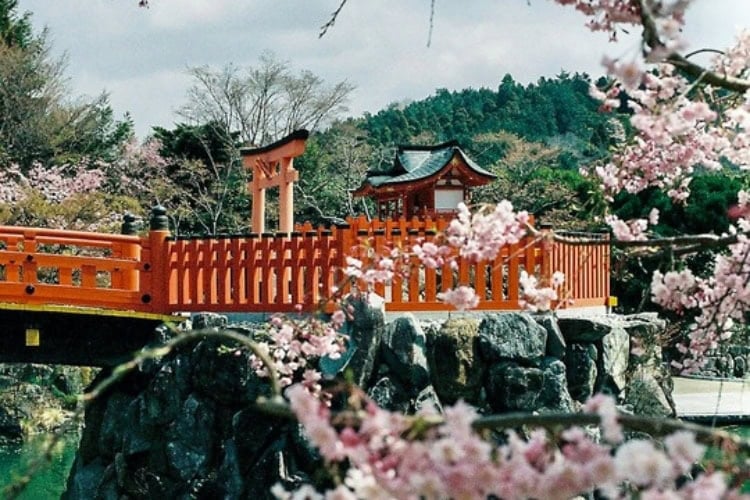
Lastly, let’s talk about the overall atmosphere.
In terms of cityscape, both Tokyo and Osaka are similar: modern high-rises line the streets, subways run beneath the ground, elevated expressways weave through the city, and crowds of people are constantly on the move.
Their climates are not drastically different either. Both cities sit beside bays, Tokyo Bay and Osaka Bay, and are centered around historic castles: Edo Castle (now the Imperial Palace) in Tokyo and Osaka Castle in Osaka.
However, the personality and temperament of the people living in each city are quite different, which means the way a visitor experiences the cities can feel very different.
We previously touched on this difference in temperament when discussing friendliness. Compared to Tokyo, Osaka tends to offer a livelier and more intimate experience. People feel closer, more cheerful, and more talkative.
On the other hand, Tokyo offers a slightly more distant atmosphere in terms of personal space. Visitors can enjoy their time without too much interaction from locals, which some may find more comfortable.
Adding to this is the difference in where people in each city come from. This plays a big role in shaping the overall feel of each metropolis.
According to population mobility data from Japan’s Ministry of Internal Affairs and Communications, only about half of Tokyo’s residents were born in Tokyo.
In other words, many people living in Tokyo moved there later in life for university or work opportunities.
In contrast, nearly 70% of Osaka’s residents are originally from Osaka. Many people were born, raised, and continue to live in familiar neighborhoods with longstanding relationships.
This may explain why social ties feel stronger and interactions are more casual and friendly.
So, who wins this round? As for the writer, I was born in Tokyo and raised in Saitama (just north of Tokyo). So naturally, I strongly lean toward Tokyo. I hope this helps you make your own decision!
If we summarize the comparison:
- Cuisine: A draw
- History and Culture: Osaka
- Friendliness: Osaka
- Public Transportation: Tokyo
- Vibe: Depends on your taste, though I’d give the edge to Tokyo
Need a hand planning your trip? Here are the sites and services we rely on most, from booking tools to travel products we love.
Inspire your next adventure with our articles below:
- Unlock the Best of Japan—Discover the Perfect Month for Your Visit
- Deadly but Delicious: Inside Japan’s Fugu Capital Where Deadly Delicacies and Ancient History Meet
Author Bio: Masayoshi Sakamoto is a Japanese writer, translator, and editor living in Toyama, Japan. He is the editor-in-chief of a local magazine, Hokuroku, and was the chief editor of a popular digital business magazine based in Tokyo, bizSPA!.
Want to discover more hidden gems and helpful travel tips? Join our free newsletter for the latest travel secrets and travel articles.
We are reader-supported and may earn a commission on purchases made through links in this article.

- Slow Down on Corfu: A Perfect Day at Kontogialos Beach - October 21, 2026
- Fort Lauderdale’s New Era: The Best Places to Stay, Eat, and Explore Around Pier Sixty-Six - October 21, 2026
- 11 Incredible Reasons to Visit Fairbanks, Alaska This Winter - October 21, 2026
Planning another trip soon? ✈️
Add GoWorldTravel.com as a preferred source on Google. Click the button below so our local guides, packing hacks, and hidden-gem itineraries always show up first when you search!
Add to Preferred Sources