
It’s the kind of place where surf trips slow down. Not because there’s less to do, but because there’s no need to rush.
For those staying at Simeulue Surf Lodges on Simeulue Island in Indonesia, that rhythm becomes clear from the first morning.
The day begins early, not out of necessity, but instinct. The ocean is close—close enough that the sound of waves replaces any need for an alarm. Before breakfast, there’s already movement: boards being checked, coffee poured, eyes fixed on the horizon. Conversations are simple—tide, wind, direction—the kind of exchanges that only matter in places where the surf still feels like a shared discovery.
Simeulue Island: Remote, Raw, and Uncrowded
Simeulue isn’t polished, and that’s exactly the point.
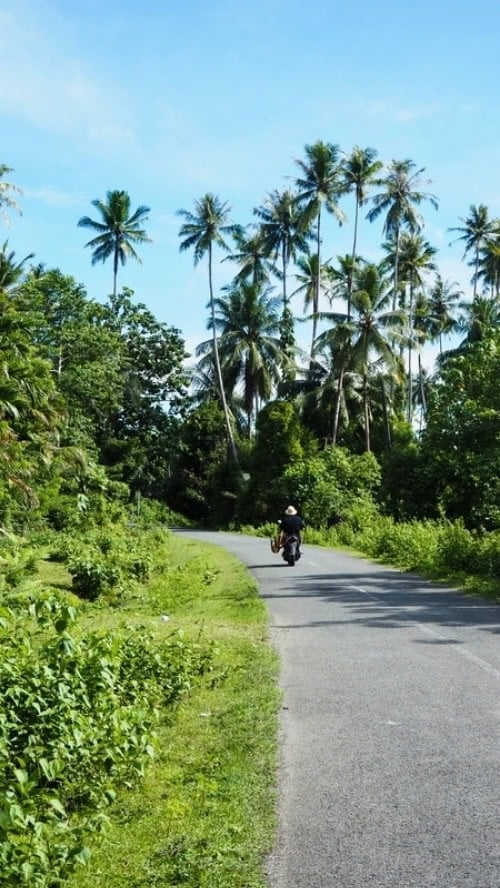
Set off the western coast of Sumatra, the island has long remained removed from Indonesia’s main travel routes. That isolation has helped preserve not only its coastline, but also a way of life that feels steady and largely unchanged. Small villages are spread along the shore, connected by quiet roads where daily life moves at its own pace.
The local economy is built around fishing, farming, and small-scale trade. Coconut palms line much of the island, alongside crops like bananas, cacao, and rice, with many families relying on what they grow or catch themselves. It’s a practical, self-sufficient lifestyle that reflects the rhythm of the environment.
There’s also a strong cultural identity here. The community is predominantly Muslim, and that influence is woven into daily life—from the call to prayer carried across the villages to the people’s respectful, welcoming nature. Visitors are met with a quiet friendliness that feels genuine rather than staged.
How to Reach Simeulue Island
Getting to Simeulue requires a bit more effort, but that’s part of what keeps it the way it is. Most surfers access the island via Medan, with limited flights operating a couple of times a week. There’s also the option of travelling by ferry from the mainland, a slower but more immersive journey that reinforces the island’s sense of separation.
Gorgeous Landscapes
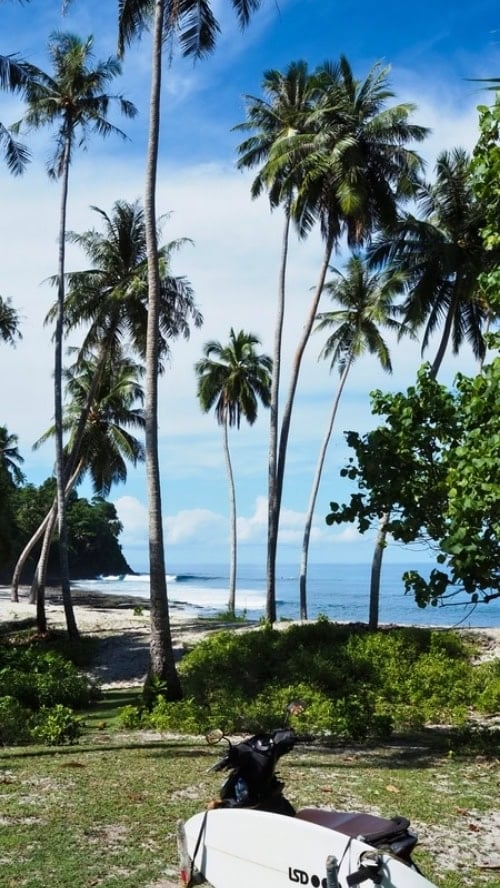
What stands out most, though, is the natural setting. Dense jungle, open coastline, and long stretches of undeveloped land give Simeulue a raw, understated beauty. It’s not curated or built up—it simply exists as it is.
That simplicity carries through everything. Life here feels slower, more deliberate, and largely untouched by outside pressure. It’s a place where not much needs to happen for the day to feel full—and where the experience extends well beyond the surf.
Read More: Beyond the Deck: Understanding the Real Value of a Raja Ampat Liveaboard Journey
Surf Variety Without Crowds on Simeulue Island
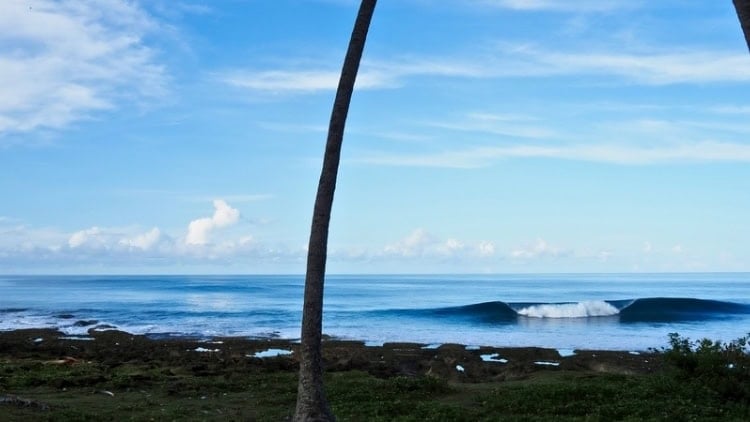
What makes Simeulue stand out isn’t just its consistency—it’s its range.
Within reach of Simeulue Surf Lodges are waves that suit a wide range of abilities. On any given swell, there are softer, more forgiving walls ideal for intermediate surfers looking to progress, as well as heavier, more mechanical sections for those chasing something more critical.
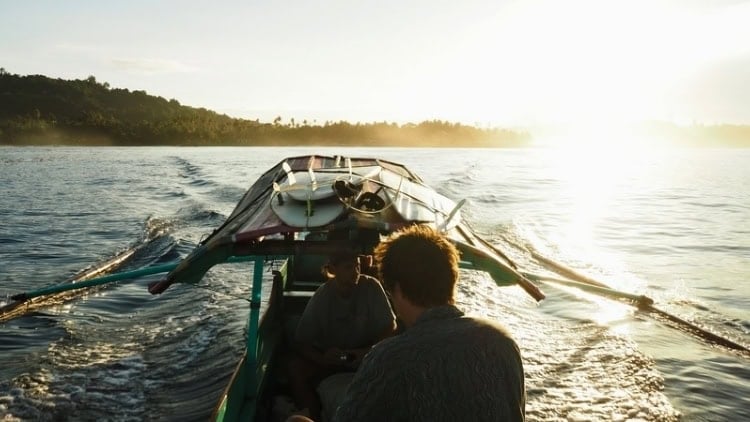
Boat access opens up even more options, and what quickly becomes clear is that this stretch of coastline is far from fully explored. There are well-known breaks, but also long sections of reef that remain largely untouched—waves that break perfectly on the right day, yet still go unridden.
What follows are some of the better-known waves in the area—each offering something slightly different, depending on conditions.
Notable Surf Breaks on Simeulue Island
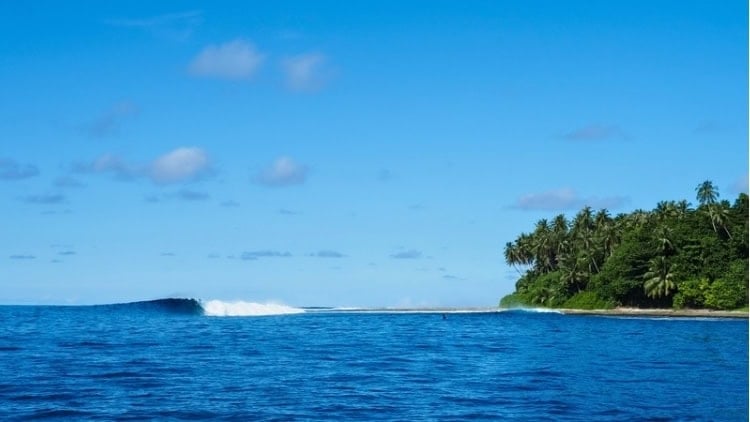
Dylan’s Rights (Right-hander)
Dylan’s Rights is often the benchmark wave in the area—a clean, well-shaped right-hander that seems to line up effortlessly on the reef. The entry is relatively smooth, giving surfers time to set their line before the wave begins to hollow out further down the section. It’s the kind of wave that offers both performance and barrel potential, working across a range of sizes and appealing to confident intermediates through to advanced surfers.
Dylan’s Left (Left-hander)
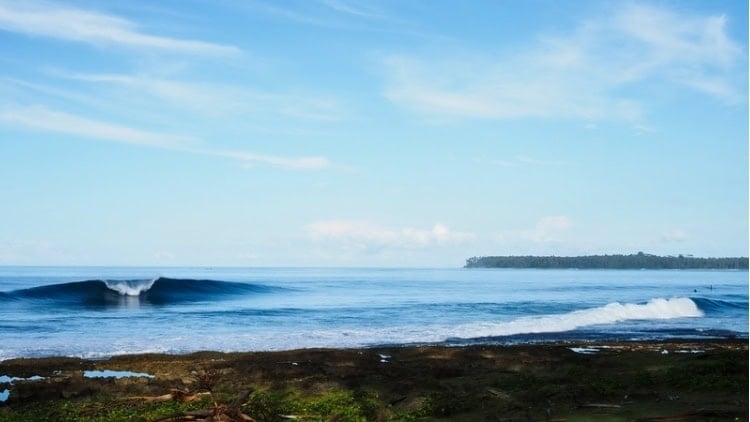
Less talked about but equally enjoyable, Dylan’s Left offers a more relaxed left-hand alternative. The wave tends to open up into longer, more forgiving walls, making it ideal for linking turns rather than chasing barrels. It’s consistent, approachable, and often quieter, which makes it a solid option for surfers looking to settle into a rhythm without pressure.
The Peak (Left & Right)
True to its name, The Peak is an A-frame that breaks both left and right, depending on how the swell hits. It’s one of the more dependable waves on the island, handling a variety of conditions and offering something for everyone. The left can run longer with softer sections, while the right tends to be shorter and more playful. It’s the kind of wave that keeps people in the water for hours.
Tea Bags (Right-hander)
Tea Bags is a powerful right-hander with a heavier feel. The wave breaks with more force, throwing over a shallow section of reef and running fast down the line. When it’s on, it produces long, hollow sections that demand commitment. It’s not the most forgiving option, but for experienced surfers, it can easily become a highlight of the trip.
One Thong (Left-hander)
In contrast, One Thong is a mellow, user-friendly left-hander. It peels gently along the reef, offering long, clean walls that are perfect for cruising or building confidence. It’s one of the more accessible waves in the area, working well for beginners and intermediates, but still enjoyable for anyone looking for a slower-paced session.
Alu Rights (Right-hander)
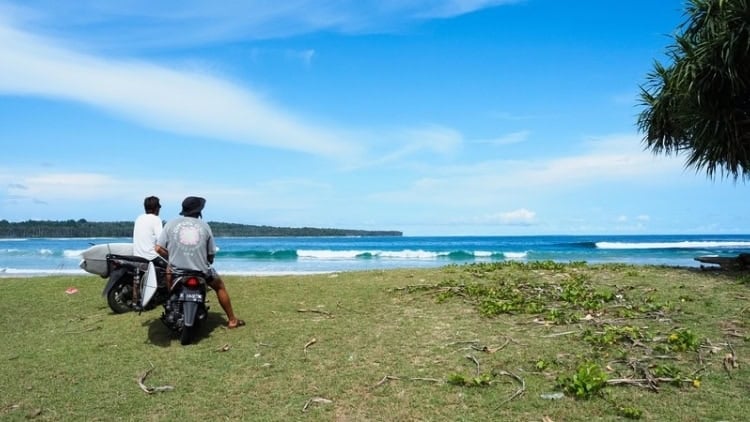
Alu Rights is, as the name suggests, a right-hander that sits further afield and feels more exposed. The wave carries more power, with faster sections and the potential for barrels when conditions align. It’s less predictable than some of the closer breaks, but that sense of uncertainty is part of what makes it appealing for surfers willing to explore.
Ali Babas (Left & Right)
Ali Babas can break both left and right depending on the swell direction, offering flexible, workable sections. It’s one of those waves that isn’t defined by reputation as much as experience—often uncrowded, sometimes inconsistent, but rewarding when it lines up.
Thailands (Left-hander)
Thailands is a long, user-friendly left-hander that tends to offer plenty of room to move. The wave builds gradually, allowing for drawn-out turns with occasional sections that stand up a little more on bigger swells. It’s reliable, uncrowded, and suits a wide range of surfers.
Even across these named spots, what stands out most is the lack of pressure. Line-ups remain light, sessions stretch longer, and there’s always another option down the coast if conditions shift.
For surfers used to competing for waves elsewhere in Indonesia, Simeulue offers something different—not just quality, but space.
Life at Simeulue Surf Lodges
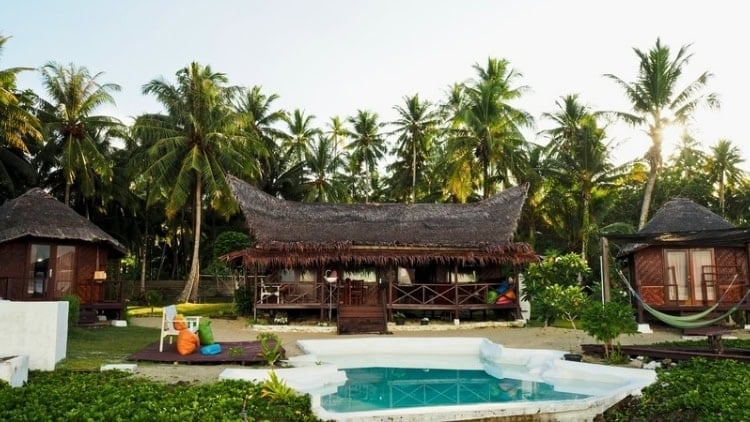
Simeulue Surf Lodges is built around the same rhythm as the island itself—simple, unhurried, and shaped by the ocean.
The setup is intimate by design. With space for just eight guests—stretching to ten at most—it never feels crowded. Instead, it settles into something more personal, where familiar faces quickly become part of the daily routine, and the line between guest and shared experience begins to blur.
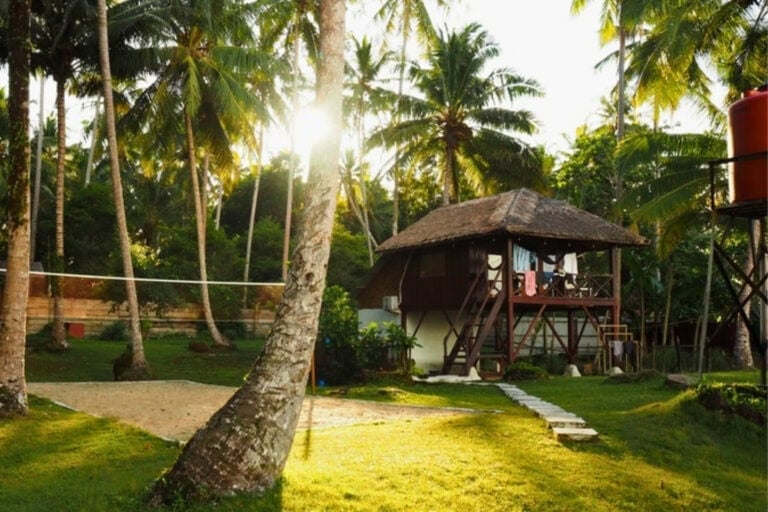
Accommodation is split between three cabana-style huts set closest to the ocean, and a slightly elevated treehouse-style building tucked just behind the main dining area. The cabanas open directly towards the sea, catching the breeze and the constant sound of the waves, while the treehouse offers a different perspective—looking out over both the ocean and the surrounding gardens.
At the centre of the lodge sits a saltwater pool, positioned just in front of the dining area. It becomes a natural meeting point throughout the day—post-surf cool-downs, midday heat escapes, or simply somewhere to drift between sessions. Around it, the space opens into well-kept gardens, with soft grass underfoot and pathways lined by palm trees, frangipani, and flowering plants that give the whole place a calm, almost tucked-away feel.
There’s just enough to do between surfs without ever feeling like a distraction. A ping pong table and a small volleyball pit offer light movement in the slower parts of the day, while scooters are available for those wanting to explore beyond the lodge and get a glimpse of the island at their own pace.
The dining area naturally draws people back together. Meals are shared, boards are stacked nearby, and as the day winds down, cold beers appear almost instinctively. It’s here that the pace of the day becomes most obvious—no rush, no pressure, just a steady flow from surf to food to conversation.
Despite its remote setting, the lodge stays quietly connected. Fast, reliable Wi-Fi is available, though most guests seem to use it sparingly, dipping in and out before returning to the slower rhythm outside.
What defines the space isn’t any single feature, but how it all fits together. The layout, the scale, the surroundings—it all contributes to a feeling of ease.
A place where very little is needed, and even less feels missing.
Read More: The Most Unique Islands on Every Continent You Have to See to Believe
Food for Long Days
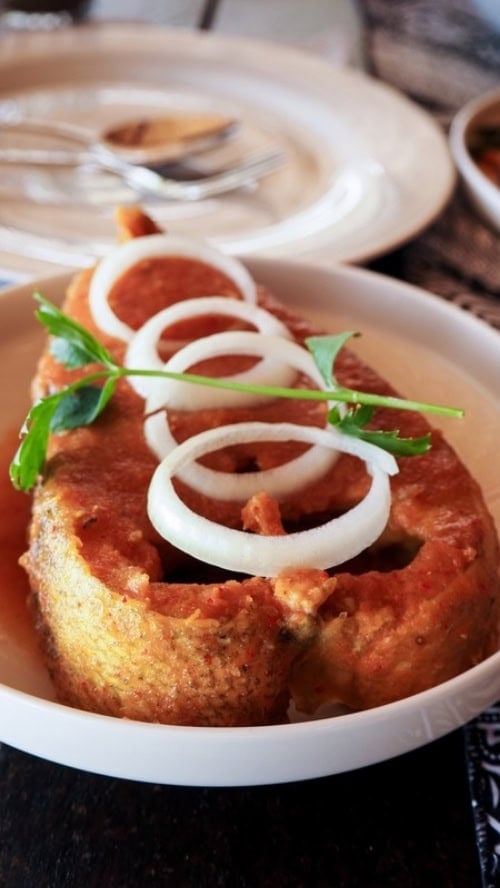
Food at the lodge quickly becomes something guests look forward to just as much as the surf.
Three meals are served each day, and each one is generous, fresh, and perfectly timed around long hours in the water. Dishes lean into the best of Indonesian-style cooking—grilled fresh fish, tender chicken, fragrant rice, and lightly seasoned vegetables—simple combinations that feel both nourishing and full of flavour.
Breakfasts are a highlight in their own way, often centred around freshly made omelettes alongside fruit and coffee, setting a steady pace for the morning ahead.
Everything is prepared fresh before it’s served, and it shows. After a few sessions in the ocean, the meals seem to land exactly where they need to—filling without being heavy, and consistently satisfying.
Coffee and tea are always within reach, becoming part of the daily rhythm between surfs, while a steady supply of fresh fruit sits ready in the fridge for whenever it’s needed—something quick, cold, and refreshing in the heat of the day.
Poolside Dining
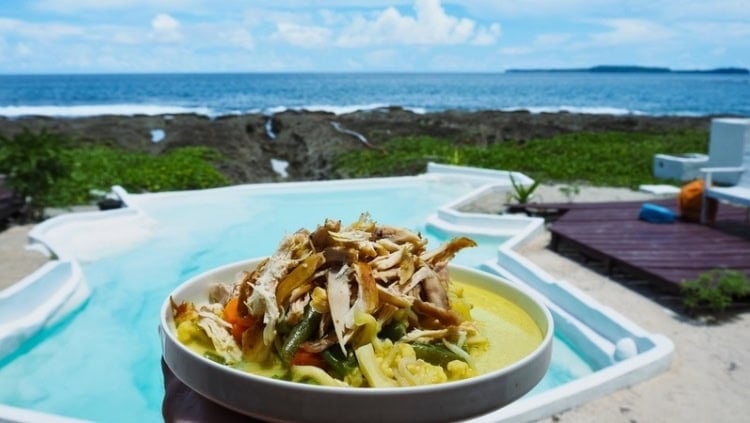
Meals are shared on the open verandah of the communal area, where the dining table looks out over the saltwater pool and across to the ocean. Boards rest nearby, conversations drift, and the sound of the waves carries through the space.
It’s an easy, natural setting—good food, shared simply, in a place where everything else has already slowed down.
Where the Pace Resets
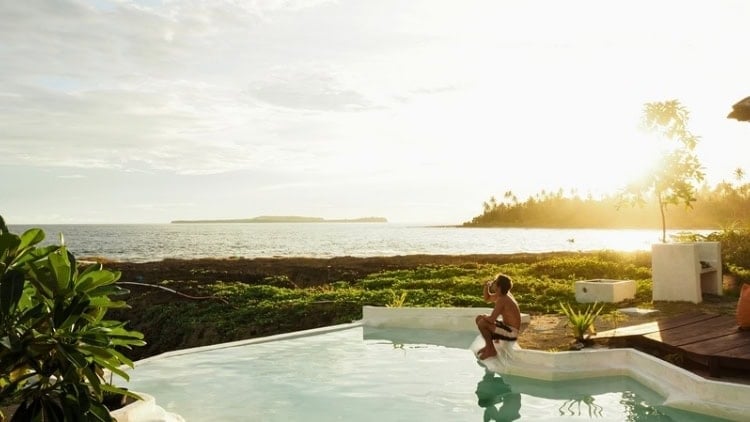
What defines Simeulue Surf Lodges most isn’t something you can list—it’s something you settle into.
There’s no pressure to maximise every hour. No rigid schedules. Some guests surf three times a day. Others take it slower, sitting out sessions to watch the conditions change. Both approaches feel equally natural here.
Staff move quietly through the background, keeping things running smoothly without ever disrupting the flow. Over time, the line between guest and host softens into something more familiar.
Evenings are low-key. Sunset fades into dinner, dinner into conversation, and eventually into the steady sound of the ocean taking over again. It’s not a place built around nightlife or distraction. It’s built around recovery—so the next day can start all over again.
Why Simeulue, Why Now
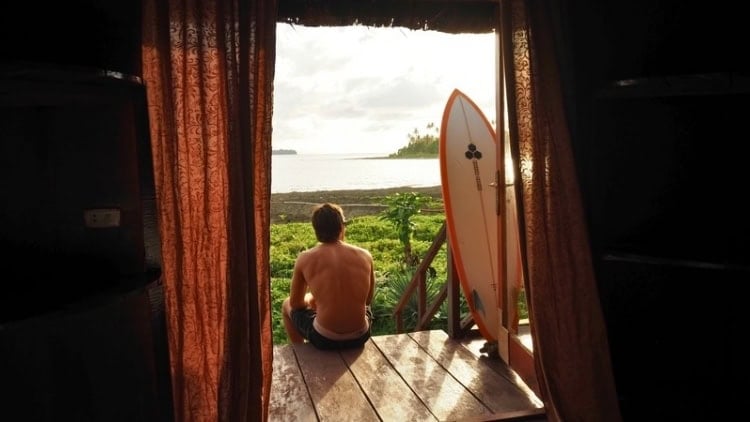
For surfers willing to step beyond Indonesia’s more established breaks, Simeulue offers something increasingly rare: uncrowded waves, a genuine sense of discovery, and a calm, unhurried rhythm in the water.
Surfing here feels different from the outset. There’s no urgency in the line-up, no pressure to compete for waves—just a steady pace that allows sessions to unfold naturally. Time stretches out, and with it comes the chance to surf more deliberately, without distraction.
Away from the water, the island leaves its own impression. Dense greenery, quiet roads, and long stretches of untouched coastline give Simeulue a raw, understated beauty. It’s the kind of place where not much needs to happen for the day to feel full.
That same ease is reflected in the people. There’s a natural friendliness that runs through the island, creating an atmosphere that feels relaxed and genuine rather than curated. It’s subtle, but it shapes the experience in a way that’s hard to replicate.
Simeulue Surf Lodges sits comfortably within this environment, offering a place to stay that complements the island rather than competing with it.
If You Go
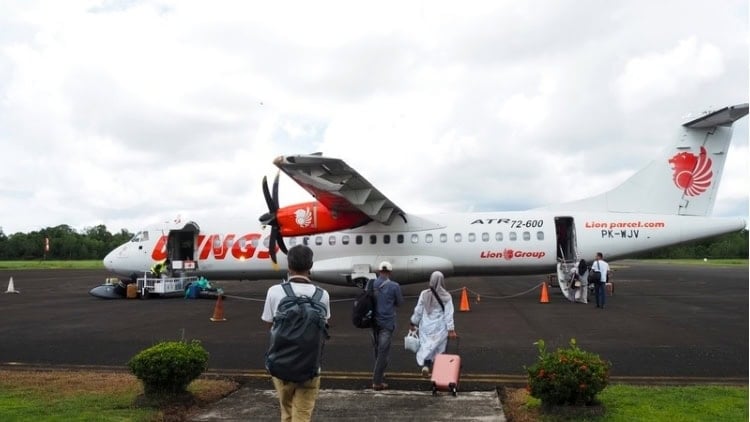
Getting There: Fly into Kualanamu International Airport in Medan, then connect to Simeulue via Wings Air, which operates daily flights to Sinabang on small Cessna aircraft. The flight takes approximately one hour and ten minutes. Note that Wings Air is known to cancel flights periodically — Saturday departures tend to be more reliable. An alternative for those with more time and fewer boards is the ferry from Labuhan Haji, a roughly nine-hour crossing that reinforces the island’s sense of distance. Book international flights to Medan through CheapOair.
Where to Stay: Simeulue Surf Lodges sits almost directly in front of Dylan’s Right on the island’s west coast, with capacity for eight to ten guests across beachfront cabanas and a treehouse-style room. Rates are all-inclusive, covering meals, scooter use and boat access to nearby breaks. Book here.
Getting Around: Scooters are provided by the lodge and are the best way to explore the island’s coastal road, which circles the island and opens up access to breaks beyond the main cluster near Dylan’s. No car rental is needed.
Travel Insurance: Given the remoteness of Simeulue and the reef-heavy surf on offer, travel insurance with solid medical evacuation coverage is worth prioritizing. Compare plans at Squaremouth or consider SafetyWing for flexible coverage.
Staying Connected: Pick up an Indonesia eSIM through Airalo before departure. Coverage on Simeulue is limited compared to Bali or Jakarta, but having data for navigation and communication on the road is useful. The lodge has reliable Wi-Fi for anything requiring a stronger connection.
Need a hand planning your trip? Here are the sites and services we rely on most, from booking tools to travel products we love.
Inspire your next adventure with our articles below:
- Krabi’s Quiet Side: Overwater Villas at Venice Krabi Villa Resort and a Hong Islands Speedboat Day
- Samoa’s Wild Coasts, Lush Pools and a Pilgrimage to Robert Louis Stevenson’s Grave
Author Bio: Alex Benaud is a surf and travel photojournalist drawn to the edges of the map — chasing remote coastlines, unusual surf cultures, and the characters who give them life. Specialising in off-the-beaten-path discoveries, his work explores the stories, people, and places that exist beyond mainstream surf travel. His writing and photography have been published in Tracks Magazine, Surfing Life, Paper Sea Quarterly, White Horses Magazine, Wavelength Magazine, The Inertia, and Smorgasboarder, as well as a range of independent travel and culture publications.
Want to discover more hidden gems and helpful travel tips? Join our free newsletter for the latest travel secrets and travel articles.
We are reader-supported and may earn a commission on purchases made through links in this article.

- Slow Down on Prince Edward Island: A Relaxed Four-Day Itinerary of Dunes, Seafood and Seaside Inns - September 25, 2026
- Two Sides of Cape Town: Table Mountain Trails, Winelands Dawn and Township Voices - September 25, 2026
- St. Pierre and Miquelon: Visit France Without Leaving North America - September 25, 2026
Planning another trip soon? ✈️
Add GoWorldTravel.com as a preferred source on Google. Click the button below so our local guides, packing hacks, and hidden-gem itineraries always show up first when you search!
Add to Preferred Sources