
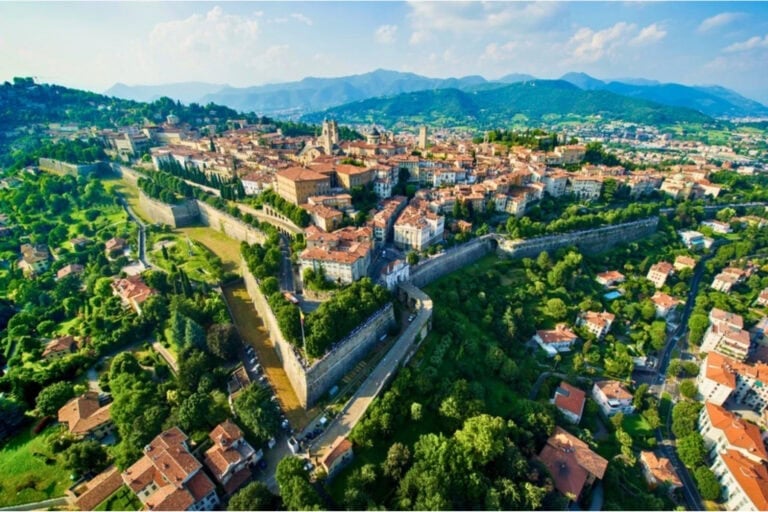
The Venetians left behind more than just a fascinating city built on pillars. To protect its mainland from the advent of the cannon, the Republic stopped building upward and began building outward, creating a masterclass of military geometry: star-shaped cities, massive bastions, and subterranean labyrinths.
UNESCO Fortified Network
This collection of 16th and 17th-century fortifications is now a unique UNESCO World Heritage site—a 1,000 km network split between the maritime Stato da Mar in Croatia and Montenegro and the inland Stato da Terra in Italy.
I decided to trade the crowded canals of Venice for this “Stony Shield,” tracing a route through the Lombardy, Veneto, and Friuli-Venezia Giulia regions. The journey led me to Bergamo to roam walls so massive they dwarf the town; to Peschiera to see a pentagonal water fortress on the lake; and finally to the “Ideal City” of Palmanova to witness its perfect nine-pointed star shape.
Bergamo: The Bastion in the Clouds
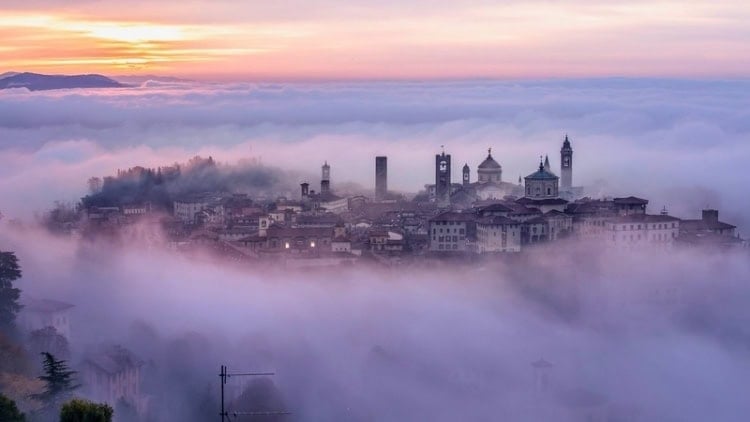
Bergamo’s Upper City is perhaps the most dramatic introduction to the Venetian defensive genius. The city is split into two: a modern, functional base, Città Bassa, and a medieval crown, Città Alta.
As you approach from the lower city, the Mura Veneziane (Venetian Walls) loom overhead—over six kilometers of massive masonry so intimidating they never faced a single siege.
“They thought the build would take 18 months; in the end, the walls were finished after 27 years,” says local guide Sara.
Construction was so aggressive that the Venetians demolished over 250 buildings, including ancient churches, just to ensure the line of fire was clear.
Today, these UNESCO walls have traded soldiers for locals, serving as the ultimate hangout for golden-hour jogs and picnics with views stretching toward the Alps.
Echoing Heights Over Bergamo
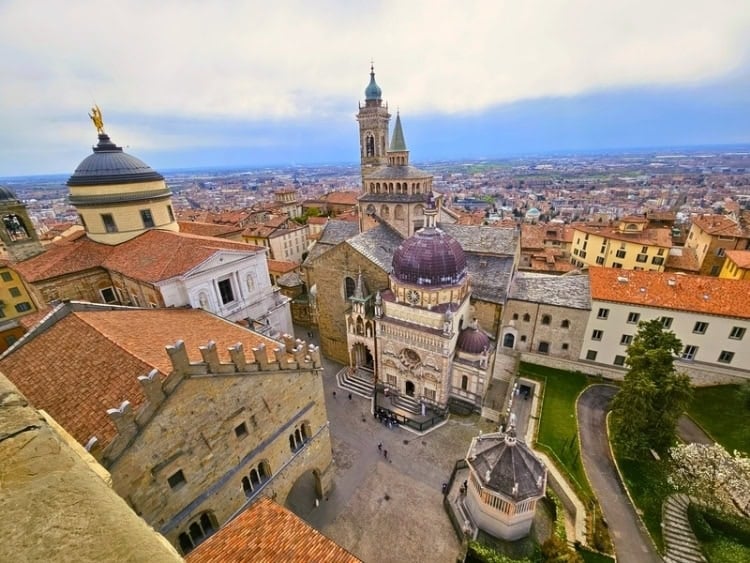
Inside the gates, the city was once a forest of stone with almost 50 towers built by rival noble families as symbols of wealth and defensive lookout points. While most were shortened or destroyed over the centuries, the Campanone (Civic Tower) still stands tall.
You can climb or take an elevator to the top for a dizzying view over the terracotta rooftops. Every night at 10:00 PM, its bell strikes 100 times—a tradition that once signaled the closing of the city gates.
Basilica of Santa Maria Maggiore
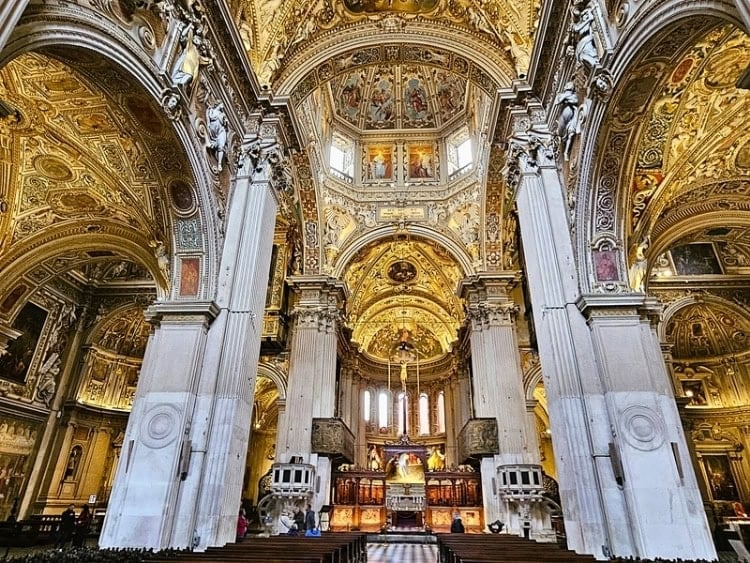
Just below the tower sits the Basilica of Santa Maria Maggiore with its explosion of Baroque gold and intricate tapestries, and its flamboyant neighbor, the Colleoni Chapel with its detailed marble facade.
Food of the Poor
Before you lose yourself in the architecture of Bergamo, you need to head to the kitchen. I came to learn the craft at Nonna Alda, owned by the Taiocchi family, the proud cooks of cucina Bergamasca since 1928. Antonella welcomed me into a cozy world where the air smelled of sage and browned butter.
“I grew up in the kitchen. As a five-year-old, I was already serving coffee to the guests,” she told me, as I slowly copied her moves with the dough to create Casoncelli alla Bergamasca—the “food of the poor.”
Born from the need to use every scrap in the pantry, these stuffed shells transformed humble leftovers—meat, dry bread, and even fruit—into a feast fit for the city’s high-altitude winters.
“You can add cinnamon and dried pears, too,” she revealed, sharing the family recipe before moving to the restaurant’s show window to fold more pasta for the passing crowds.
The Capital of Stracciatella
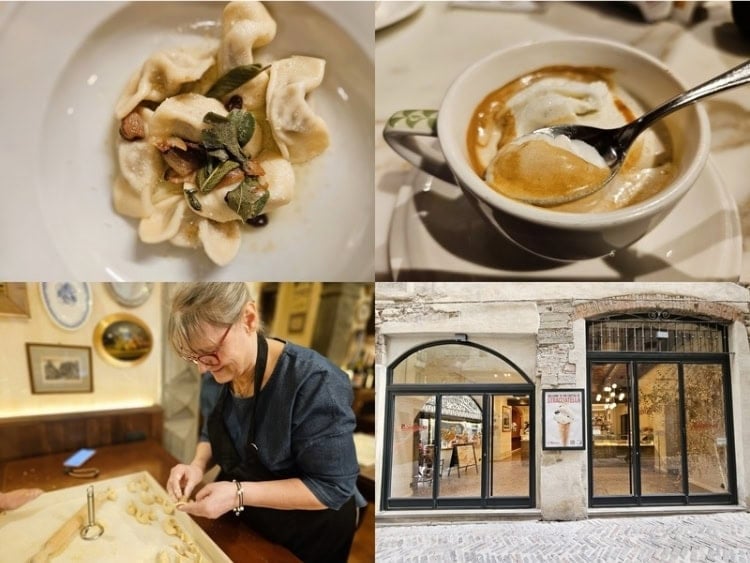
Bergamo’s culinary fame extends to the freezer, too. In 1961, at the nearby Ristorante La Marianna, Enrico Panattoni invented Stracciatella gelato. Inspired by the Roman egg-drop soup of the same name, he drizzled melted dark chocolate into a churning batch of milk-cream gelato, creating the world’s most famous “shredded” chocolate flavor right here in these hills.
For the ultimate treat, try the La Marianna coffee, where a scoop of the original Stracciatella melts slowly into a shot of hot espresso.
Want to eat your way through Bergamo Alta? The Do Eat Better food tour on Viator covers local specialties and ends with a scoop of the original stracciatella.
Old Masters, New Visions
Before leaving the hills, I ducked into the Accademia Carrara. One of the most underrated Italian galleries houses masterpieces by Botticelli and Mantegna, and currently hosts a mesmerizing exhibit on the Tarocchi (Tarot).
As it turns out, Bergamo is the ancestral home of some of the world’s oldest tarot decks, specifically the Visconti-Sforza cards. These aren’t just for fortune-telling; they are exquisite Renaissance miniatures.
Directly across the cobblestones sits GAMeC, a striking contemporary gallery housed in a former monastery.
Floating Star Of Peschiera del Garda
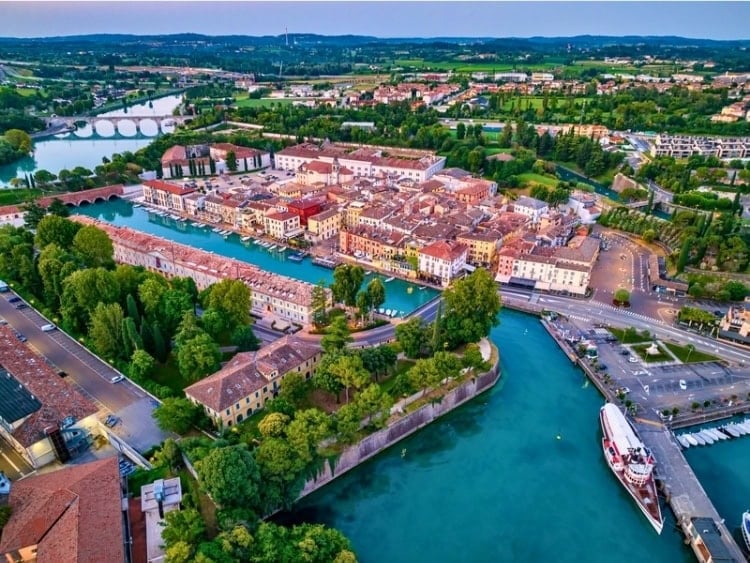
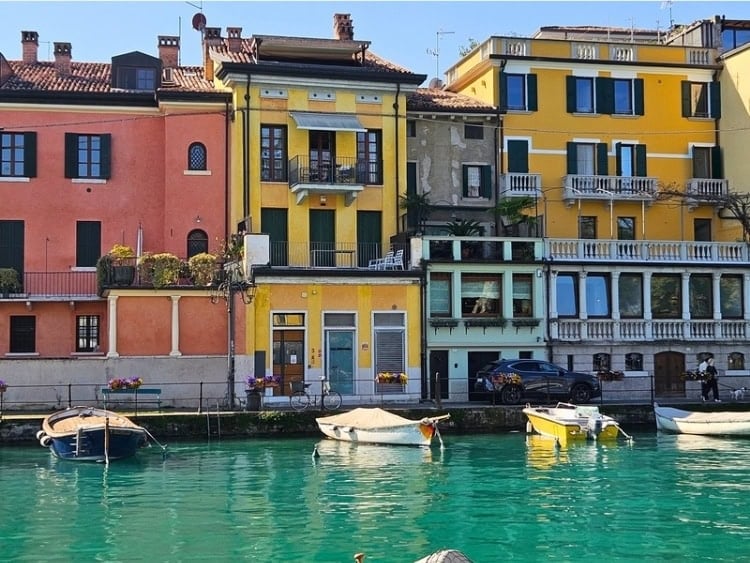
Leaving Bergamo, I head east toward the blue expanse of Lake Garda. But Peschiera del Garda doesn’t feel like a typical lakeside town. I’m welcomed by a massive, water-locked pentagon.
In the 16th century, the Venetian Republic realized that Peschiera was the strategic “key” to the Mincio River. The star-shaped fortress we see today was masterminded by the legendary architect Michele Sanmicheli. In 1549 he effectively “beheaded” the town’s medieval Scaligero castle—reducing its tall towers—to build the low, thick bastions we see today.
The Austrians later integrated it into the famous Quadrilateral—a four-city defensive system that was the strongest in Europe.
Today, those massive ramparts are covered in wild grass and walking paths with a prime view of the sunset on Lake Garda.
Sunken Secrets Beneath Peschiera
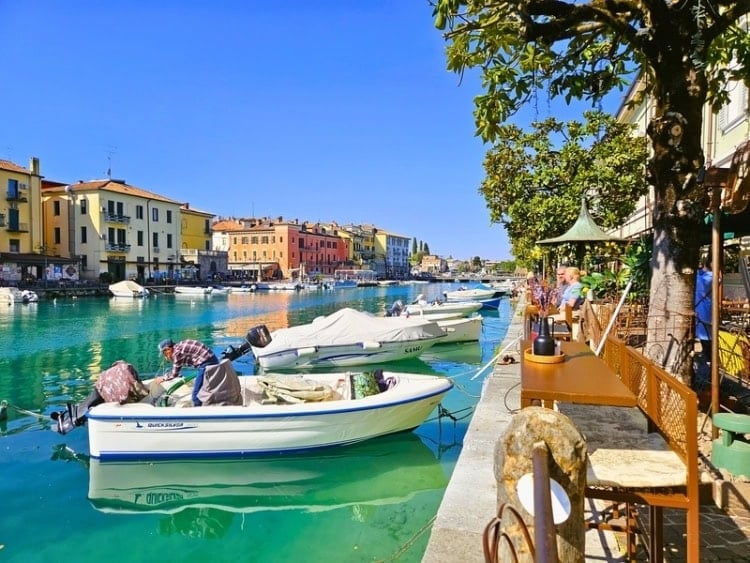
To truly grasp the scale of the fortress, one must take a boat tour through the Canale di Mezzo. Drift under the five brick arches of the Ponte dei Voltoni, and the history suddenly becomes three-dimensional.
“Look straight down,” the boat pilot says, pointing toward the shallows. “Those aren’t just rocks—those are the foundation blocks of the ancient Roman port of Arilica.”
Back on the banks, you’ll notice the meticulous reconstruction of the Officers’ Pavilion, an impressive structure built for the Austrian army, that has been converted into a long row of bars, shops, and trattorias. It’s a favorite spot for locals to grab a drink at small metal tables on the canal. For a good glass of wine, head inland to the Fraccaroli Winery.
The family has been working this specific glacial clay in the south of Lake Garda since 1912, proving that Lugana DOC was a sophisticated white capable of aging.
Palmanova: A Mathematical Miracle
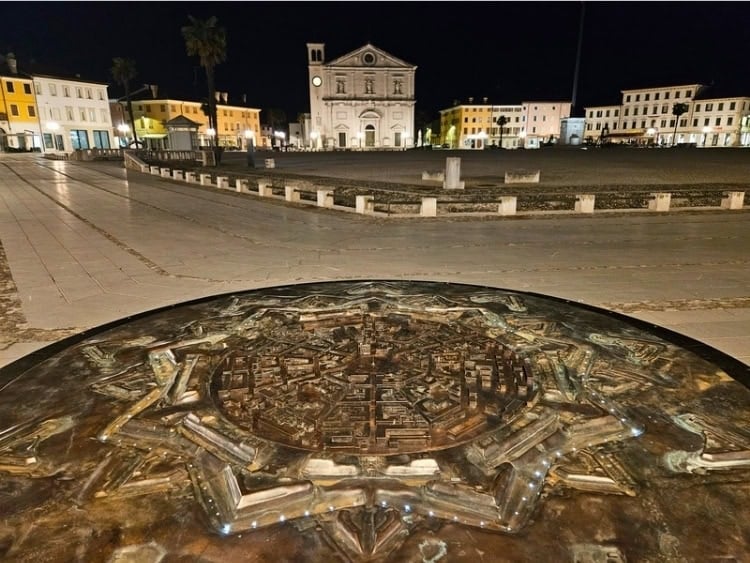
Leaving the water-locked pentagon of Peschiera, I head toward Palmanova in the Friuli region. In 1593, the Venetian Republic decided to build a “Utopian” fortress from scratch to celebrate their victory over the Ottomans at Lepanto and to guard the Friulian plains. The result was a perfect nine-pointed star—a masterpiece of radial symmetry where every street leads to the center and every bastion is a mirror of the next.
At its heart lies the Piazza Grande, a massive hexagonal square that feels more like a desert of white stone than a typical Italian piazza. Six radial roads fan out from this center, but the design is a clever trap: three roads lead to monumental gates, ensuring that any invader who breached the walls would be funneled into a “killing zone.”
“The name isn’t an accident,” my guide explains. “It was originally just Palma, the palm of victory. Napoleon later added the Nova when he realized the world had never seen a fortress like this.”
Beyond the Gates
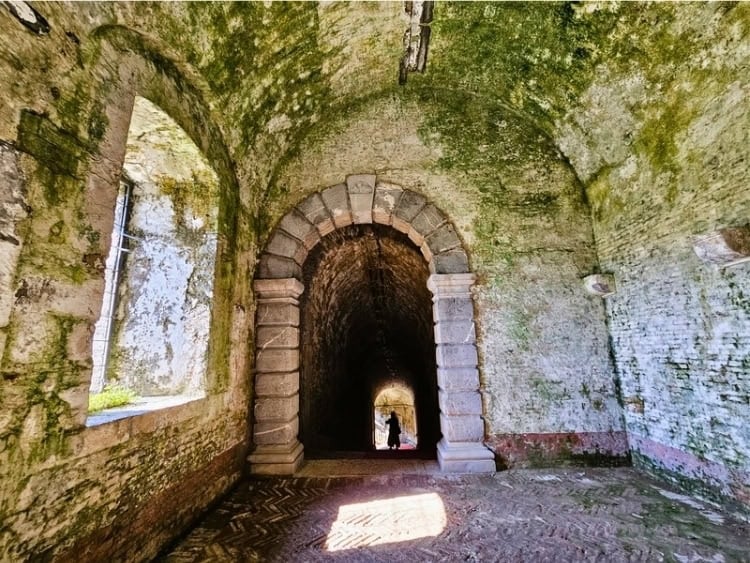
Stepping out through the massive, arched Porta Udine, you enter the wilder, green defenses of the ramparts. Here, you can explore the counter-mine tunnels. Over the centuries, nature has begun to reclaim these military veins; tiny, pale calcite stalactites now hang from the ceilings of the gunrooms.
Napoleon was so impressed by the site that he added the third and outermost ring of fortifications (the lunettes) in the early 1800s, turning the city into a triple-layered shield that was virtually impossible to besiege.
The private guided tour on GetYourGuide takes you through the tunnels and the full star-shaped city — worth booking ahead, as this one runs in small groups.
The Ideal City’s Paradox
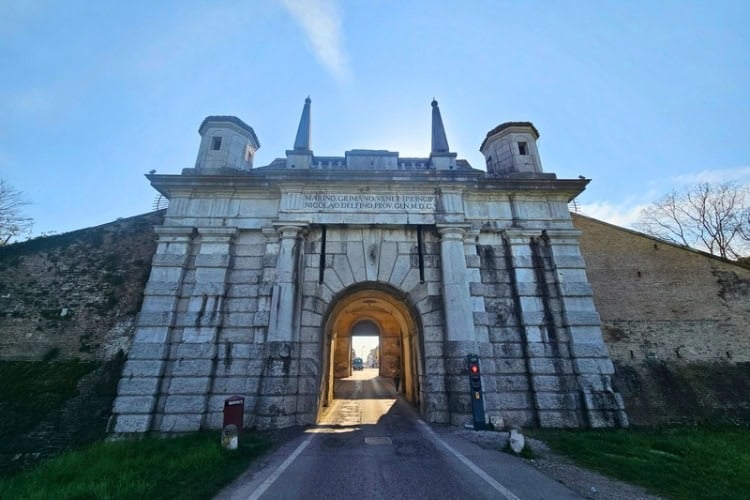
Palmanova was designed as an “Ideal City,” but initially, nobody actually wanted to live there. The rigid military layout and the constant threat of Ottoman invasion were the primary deterrents. This legacy survived into the 20th century, as Palmanova remained a soldier’s town.
“I remember when I was a child that a lot of soldiers came here for their service,” says a local guide, Pamela. “Many soldiers married women from Palmanova and stayed; my father even met my mother here. The soldiers finally left in 1995.”
Today, that military tension has softened. The town organizes concerts and historical reenactments that fill the “star”, but on a regular day, the vast, empty space of the Piazza Grande serves as a reminder of a city built for armies, not for crowds.
“People were always coming and going, so there isn’t such a strong community,” the guide explains, noting the unique atmosphere. “People are quite closed, as if the shape of the city influenced them.”
Modern Echoes and VR Heights
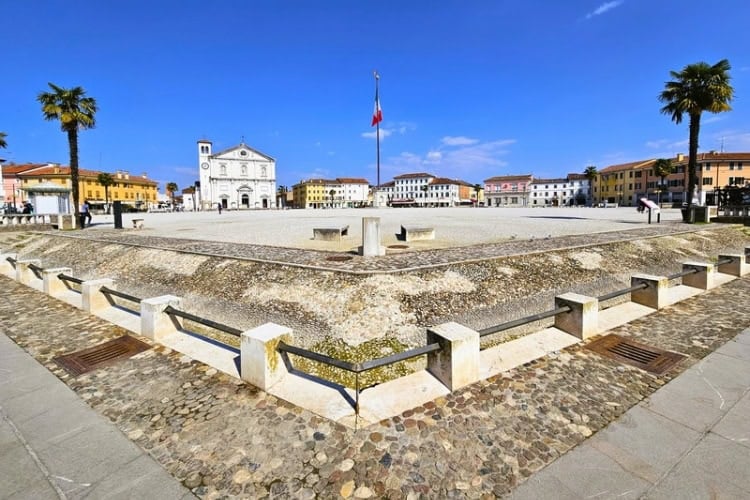
It’s a fascinating place, almost impossible to truly grasp from the ground. Luckily, you can enter the Virtual Lift, a VR experience that whisks you hundreds of meters above the town to see the star in its full glory.
After “landing,” head back to the main square to the Caffetteria Torinese. This historic bar has won multiple “Bar of the Year” titles from Gambero Rosso for its impeccable service and preserved Art Nouveau interior. Here, over a plate of frico (a cheesy potato delight), my journey through the “Stony Shield” of the Serenissima is completed.
Who knows? One day it may extend further into the maritime Stato da Mar down the Adriatic Sea.
If You Go
Getting There: Fly into Milan Malpensa (MXP) or Orio al Serio (BGY) for Bergamo; Venice Marco Polo (VCE) or Trieste (TRS) is best for Palmanova. Book flights on CheapOair.
Getting Around: A rental car is the most practical way to connect all three stops on this route. Search rates on Discover Cars.
Tours:
- For Bergamo, the Do Eat Better food tour on Viator covers cucina Bergamasca, local specialties and stracciatella gelato — 328 reviews. For the walls and upper town, the private guided walking tour of Città Alta is a well-reviewed option.
- For Peschiera del Garda, the fortress walking tour on Viator covers the UNESCO ramparts, the Austrian-era military district and the Roman ruins.
- For Palmanova, book the private guided tour of the star-shaped fortress on GetYourGuide — covers Porta Udine, the counter-mine tunnels and Piazza Grande.
Accommodation:
Bergamo Recommended Picks:
- Gombit Hotel Bergamo — a boutique 4-star in the heart of Città Alta, praised for its location steps from the walls and Piazza Vecchia; one of the most consistently recommended properties in the upper town
- Hotel Piazza Vecchia — 13-room property sitting directly on Piazza Vecchia; as close to the Campanone and Basilica di Santa Maria Maggiore as you can sleep
- Relais San Vigilio al Castello — a luxury relais perched above Città Alta near Castello San Vigilio; quieter and more removed, with panoramic views
Peschiera del Garda Recommended Picks:
- Enjoy Garda Hotel — ranked #1 in Peschiera del Garda on TripAdvisor with 1,600+ reviews; a renovated 4-star in the center of town, close to the fortress ramparts
- Hotel Acquadolce — lakefront promenade location with a rooftop terrace and jacuzzi; well-reviewed for service and views of the lake
Tourist Information:
- Bergamo: visitbergamo.net
- Peschiera del Garda: tourismpeschiera.it
- Palmanova: visitpalmanova.it
- The full UNESCO Venetian Fortresses network: thevenetianfortresses.com
eSIM: Pick up an Italy eSIM through Airalo before you go to avoid roaming charges across all three regions.
Travel Insurance: Cover the whole trip with Squaremouth or SafetyWing.
Need a hand planning your trip? Here are the sites and services we rely on most, from booking tools to travel products we love.
Inspire your next adventure with our articles below:
- Trieste: Italy’s Most Underrated City on the Adriatic
- Why Puglia Might Be the Best Region in Italy for a Family Vacation
Author Bio: Zuzana Zimmermannova is a globally experienced freelance journalist with a passion for storytelling who shares her perspective through articles in magazines, newspapers, and online publications. With a portfolio built across 50+ countries, she delivers compelling travel stories, in-depth interviews, and insightful reports. Her work has appeared in Forbes, GEO, Go World Travel Magazine and other leading publications. She loves uncovering authentic local stories through food, culture, and adventure.
Want to discover more hidden gems and helpful travel tips? Join our free newsletter for the latest travel secrets and travel articles.
We are reader-supported and may earn a commission on purchases made through links in this article.

- Two Weeks in Central Newfoundland: Sharks, Small-Town Culture and Come From Away in Gander - September 11, 2026
- Slow Down on Prince Edward Island: A Relaxed Four-Day Itinerary of Dunes, Seafood and Seaside Inns - September 11, 2026
- Cape Town’s Unique Experiences for the Curious Traveller - September 11, 2026
Planning another trip soon? ✈️
Add GoWorldTravel.com as a preferred source on Google. Click the button below so our local guides, packing hacks, and hidden-gem itineraries always show up first when you search!
Add to Preferred Sources