
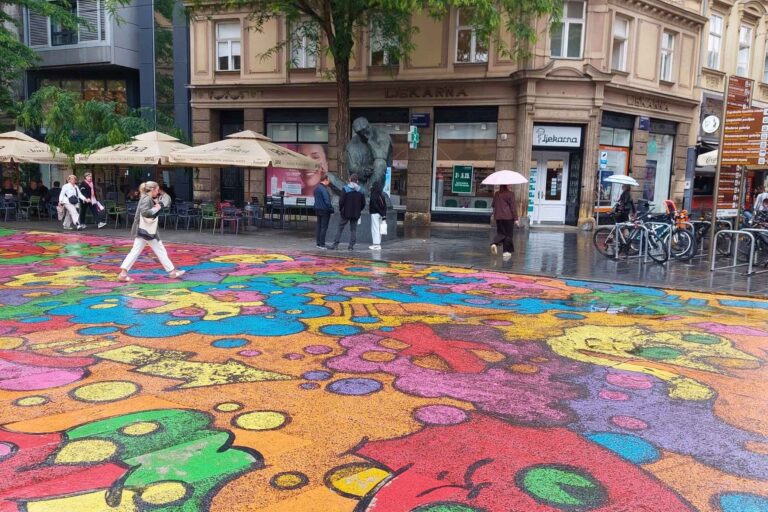

Scaffolding and cranes currently shroud Zagreb’s skyline of Gothic, Viennese-style Neo-Baroque, and modern architecture – a consequence of rebuilding from the region’s destructive earthquake more than five years ago.
On March 22, 2020, the tremor with a magnitude of 5.5 and subsequent aftershocks shook the Croatian capital, toppling some structures and causing widespread foundation damage, resulting in more than 1,900 buildings becoming uninhabitable.
Most noticeable perhaps is the city’s Gothic cathedral, its twin spires still wrapped with scaffolding. Yet not so obvious are the many historic buildings – some housing the city’s traditional museums – that remain closed.
They include the Croatian History Museum, Zagreb’s Old Masters, modern art museums, and two with the works of famous Croatian sculptor Ivan Meštrović, among several others.
“The city today looks like it’s in the middle of a big reconstruction,” says city tour guide Simona Miljanović. “Most of the scaffolding you see is earthquake-related, but that’s a good sign because something is being done.”
When will the city get back to normal? “I say five years,” predicts Miljanović. “And I’m an optimist.”
So what’s a visitor to do? Luckily, Zagreb has several popular but hardly traditional museums currently open, many downright quirky. Here are the city’s best.
Museum of Hangovers

Yes, hangovers – imbibing too much, feeling awful, and regretting it for a day or two later. The museum touts that it’s the only one of its kind in the world.
Through written testimonials, photos of people in their drunken stupors, and actual street signs and other items stolen by these drunks as a gag (and many stories ending in gagging), the museum highlights what many of us have experienced at some point in our lives.
“The concept is like a night out. You start your journey in the bar and then end up in the streets or the park or your bedroom hung over,” says museum staffer Elena Ivančivić.

In one testimonial, a thief enjoyed a bottle of champagne in the house he was burglarizing, only to pass out and wake up to police in the morning. Another passage describes how a drunk tried to open the wrong door for 10 minutes, only to be taken into custody.
“People come in and say it reminds them of their younger days,” says Ivančivić. “I think you need to experience everything, especially when you’re young, even a hangover.”
There’s also a so-called blackout room you visit with a flashlight and an educational room to learn the effects of alcohol, although it seems most visitors already know that.

Museum of Broken Relationships
Also with written testimonials and mementos of relationships, this museum not only highlights lover breakups but also loss of family members and friendships. It was founded 20 years ago by a Zagreb couple who called it quits after four years.
Their personal items and those donated by others have built the museum’s collection associated with hurtful, failed romances and other relationships.
“There are some crazy stories, really funny, some bizarre, but at the same time really sad ones,” says museum staffer Laura Stojkoski. “It makes you aware of the different types of love. Not only stories between lovers, but between friends, families, and even their objects.”
Mementos from personal testimonies, for example, include a horseshoe from a couple’s meeting after a horse ride in Iceland, a Romanian wicker broom thrown by an enraged lover, love letters between a U.K. grandparent, and a collection of buttons snipped off a man’s wardrobe by his jolted lover.
Another showcases a glazed teacup donated by a woman in memory of her grandmother and their Christmas tea room outings.

Museum of Lost Tales
The Brothers Grimm, move over. With artistic creations formed using tree branches and twigs, lights, skull props, and the faces of goblins and other ghouls, this museum tells the tales of creatures of the forest cloaked by dark summer nights.
It’s a deep look into Croatian folklore, fairy tales, and ancient legends, driven by stories of men and elves.
“Croatian mythology is similar to Nordic mythology but has some Slavic elements,” says museum employee Martin Gašparić.
“What’s most impressive is this museum was done by one person,” he adds, referring to all the artwork displays created through the imagination of artist Zdenko Bašić after collecting stories throughout the years.
Six rooms house the dioramas and artworks. A tall white figurine with boney fingers clutching a golden sphere and draped in a gown of branches depicts the Slavic goddess Mokosh, also known as the Earth Mother and protector of women and fertility.
Another tale describes how headless ghosts congregate near a well at twilight, often startling people collecting water for the night and then following them to their doorsteps.
“There are around 150 stories in this museum, and most are almost forgotten and similar to stories told throughout the world,” says Gašparić. “It’s interesting to see them told in a Croatian way.”
Chocolate Museum Zagreb
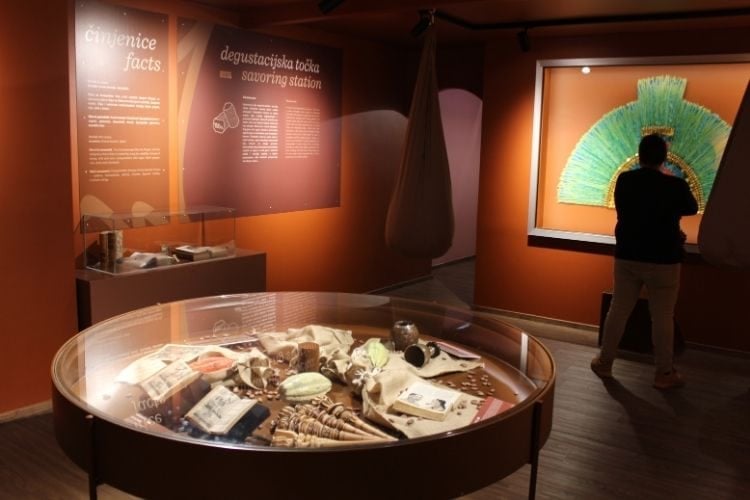
With the more than century-old confectionery factory Kraš and local artisan chocolate specialists, it’s little wonder that Zagreb has a chocolate museum as well.
But instead of a tour through a factory with the thick oozing fudge behind glass partitions, this museum instead focuses on the history of chocolate starting from 1500 BC, with five different eras over the millennia, the best part being the samples provided.
“The main idea is you taste the chocolate as you go through the museum learning about the history, and also taste the history,” explains museum attendant Ana Čapek. “You’ll feel like you’re in that era because you’ll try the chocolate from that era.”
That history begins in Central American rainforests with the sample basically a fermented and dried cacao bean. The next phase highlights the conquistadors arriving in the 16th century, with the sample being an unsweetened chocolate base.
The taste becomes more like what chocolate is today during 17th-century Baroque Europe, with sugar and spices added. The history rounds up with milk chocolate and white chocolate in the 19th and 20th centuries.
Best Zagreb Tours & Excursions
Croatian Museum of Naïve Art
Although considered fine art, many of the colorful and eclectic paintings in this museum often reveal a quirky edge. Naïve art stems from a 20th-century movement starting in the 1930s of self-taught artists noted as peasant painters and sculptors.
This led to the museum’s creation as the Peasant Art Gallery in 1952, with that title eventually replaced by the current name some 40 years later.
With often abstract and even cartoon-like figures and backgrounds, the artworks’ early themes included farm workers toiling in the fields and politically-driven gatherings in snow-covered villages as a way of expressing social injustice and a call for change.
“Naïve art was happening in the villages north of Zagreb,” says Miljanović. “You usually don’t look for connotations or hidden messages in the paintings. The artists simply did not have that kind of education, yet they were very expressive with their colors.”
The museum also includes more detailed paintings, particularly from the 1950s through the 1980s and beyond, highlighting the evolution of the genre described as urban and global Naïve art with abstract rural landscapes and European cityscapes in pastel-like hues.
Zagreb 80s Museum

Many of us remember the Socialist Federal Republic of Yugoslavia before it broke up into Croatia and five other separate countries during the Yugoslav Wars of the 1990s. The Zagreb 80s Museum brings us back to those times with a look at a typical family apartment.
A portrait of Yugoslav President Josip Tito hangs in the living room near a turntable with vinyl records. In another room, a poster of a Yugoslav 80s boy band overlooks old computer equipment. Cans with labels of past food brands and cereal boxes clutter the shelves in the kitchen.

A key highlight of the museum is a chance to sit in the front section of a super-mini Volkswagen Beetle-like yellow Zastava 750, a popular and affordable car at the time. There’s even a gas mask provided during the Chernobyl nuclear reactor meltdown, and Barbie dolls in a bedroom.
Other Museums
Croatia is a country of many firsts, one being the birthplace of the necktie, the focus of the Boutique Museum of the Cravat. That happened when Croat soldiers fighting for the French in the 17th-century Thirty Years’ War donned scarves made by women hoping for their safe return, which later evolved into neckwear.
The goal of the HaHaHouse, Museum of Laughter, which opened in January, is to make visitors laugh with artistic props and interactive exhibits.
Similar to quirky museums found in other cities, Zagreb has the Museum of Illusions, Cannabis Museum, and Museum of Selfie and Memories, popular with younger visitors and social media enthusiasts for posing in front of props.
Museum Websites
- Museum of Hangovers: https://muzejmamurluka.com/
- Museum of Broken Relationships: https://brokenships.com/visit/museum-details/zagreb
- Museum of Lost Tales: https://www.muzejprica.com/home-en/
- Chocolate Museum Zagreb: https://muzejcokolade.hr/
- Croatian Museum of Naïve Art: https://hmnu.hr/
- Zagreb 80s Museum: https://www.zagreb80.com/
- Boutique Museum of the Cravat: https://cravaticum.com/english/
- HaHaHouse, Museum of Laughter: https://www.haha.house/en
Inspire your next adventure with our articles below:
Author Bio: A former Houston TV news reporter, Richard Varr is a freelance travel writer and member of the Society of American Travel Writers (SATW). He’s a frequent contributor to Porthole Cruise and Travel Magazine and the Good Sam RV Club’s Coast to Coast. Other publications have included the onboard magazines for major cruise lines, AllThingsCruise.com, Toronto Star, London Telegraph, Dallas Morning News, Miami Herald, TravelWeekly.com, AAA Home&Away, EastWestNewsService.com and many others. Richard wrote the Dorling Kindersley Eyewitness Travel Guide to Philadelphia.
Want to discover more hidden gems and helpful travel tips? Join our free newsletter for the latest travel secrets and travel articles.
We are reader-supported and may earn a commission on purchases made through links in this article.

- Canadian Rockies in 10 Days: Glacial Lakes, Wildlife and First Nations Culture from Vancouver to Calgary - October 18, 2026
- One Day in Malta, From Valletta’s Golden Streets to Temples Older Than the Pyramids - October 18, 2026
- Skiing Above Santa Fe: Powder, Glades and the Family Who Thins Them by Hand - October 18, 2026
Planning another trip soon? ✈️
Add GoWorldTravel.com as a preferred source on Google. Click the button below so our local guides, packing hacks, and hidden-gem itineraries always show up first when you search!
Add to Preferred Sources