
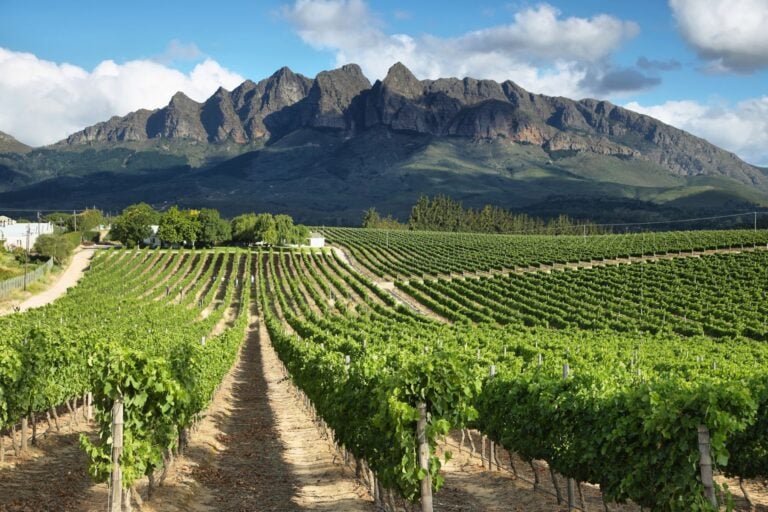

If you’ve heard of the Cape Winelands in South Africa, there is a good chance you know of Stellenbosch, Franschhoek or Paarl. Wellington, on the other hand, tends to be one of those places people drive through without quite realising how much there is to stop for.
It’s a place with a surprisingly complicated history, an active, working part of South Africa’s wine industry and the gateway to one of the most beautiful mountain roads in the Western Cape.
It is also wonderfully positioned. Wellington is only about 45 minutes from Cape Town and roughly 15 minutes from Paarl, yet it feels wonderfully rural.
Think rolling vineyards that give way to orchards, old Cape Dutch farmhouses that appear behind avenues of trees, and beautiful mountain backdrops.
The Story of Wellington
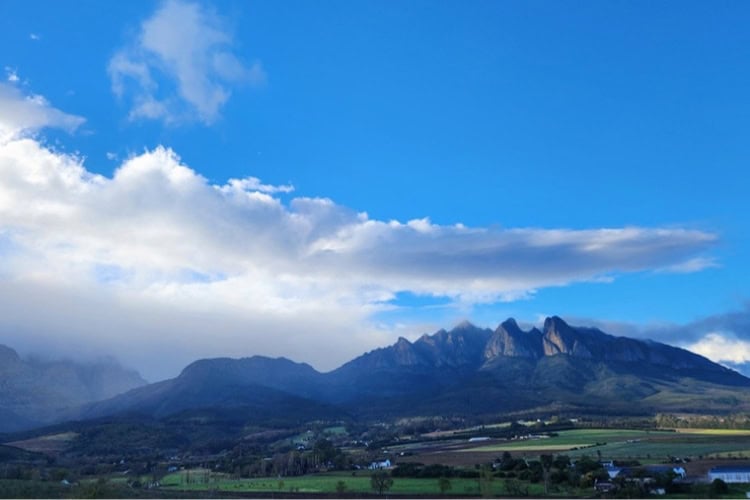
The Wellington valley was inhabited by the San and Khoi-Khoi for thousands of years before European settlement. The first European settlers arrived in the late seventeenth century, and in 1699 Governor Willem Adriaan van der Stel allocated 15 farms in the Limiet Vallei (frontier valley) to French Huguenots.
These French Protestant refugees arrived at the Cape after fleeing religious persecution in France, and their influence can still be felt throughout the Winelands today.
Franschhoek is probably the place most visitors associate with the Huguenots, but Wellington was another important centre of Huguenot settlement.
As the settlers established themselves, another industry became important: wagon making. The valley acquired the name Val du Charron or Wagenmakersvallei, literally meaning the valley of the wagon makers.
That old name still survives in the area, although the town of Wellington itself was officially established in 1840 and named after Arthur Wellesley, the Duke of Wellington, the British military commander who defeated Napoleon at Waterloo.
Walk through the historic centre today, and there are still traces of that time in the old churches, Cape Dutch buildings, and grand houses.
The Road That Changed Wellington
One of the most interesting things about Wellington is that it sits at the entrance to Bainskloof Pass. Today, Bainskloof is a spectacular scenic drive through the mountains, but in the nineteenth century, it was something much more important: a route into the interior.
Before the pass was constructed, getting through the mountains north of Wellington was difficult and slow. But then in 1849 Andrew Geddes Bain, a Scottish-born road builder and self-taught engineer, was tasked with finding a route through the Limietberg Mountains. His achievement was rather extraordinary for its time.
The road follows the river through the mountain, providing access to towns like Ceres and Worcester, with steep cliffs, indigenous vegetation, waterfalls and natural rock pools adding to the drive.
Today, it’s well worth the drive, with several hiking trails, mountain biking routes, and picnic spots along the way.
Wellington and the Wine Industry
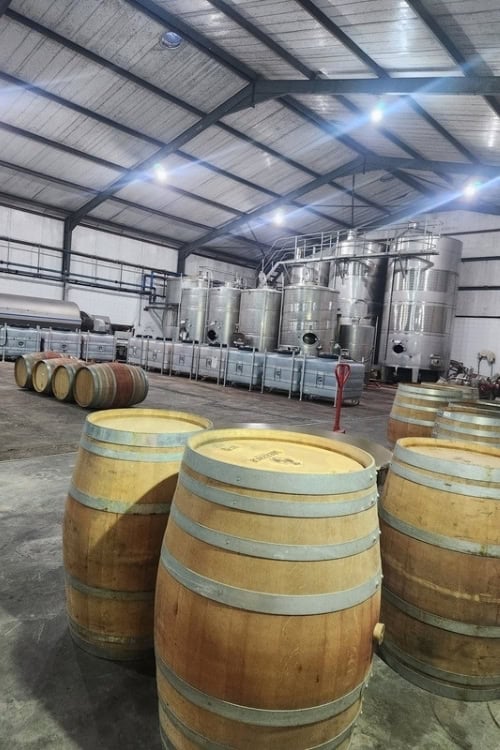
Wellington is also one of South Africa’s most important centres for vine propagation. In fact, Wellington’s vine nurseries supply around 85% of South Africa’s vine cuttings, which are the grafted young vines used to establish vineyards across the country.
The reason why starts in tragedy. In the late nineteenth century, phylloxera, a tiny insect that attacks grapevines, devastated vineyards across South Africa, almost wiping out the wine industry.
The solution was to graft European grape varieties onto resistant American rootstock. Wellington became an important centre for this work.
The first vines were grafted in Wellington in 1888, and the Bosman family, involved in vine growing in Wellington for eight generations, eventually developed a specialist nursery producing grafted cuttings for wine farmers across South Africa.
This means Wellington isn’t just another wine-tasting area; it’s a hub that has helped make wine production elsewhere in South Africa possible.
That’s not to say Wellington isn’t an important winemaking region in itself. The vineyards sit among the mountains, with different elevations, slopes and aspects creating a surprisingly varied collection of growing conditions.
The Wellington Wine Route currently includes 11 member producers, ranging from historic family estates to larger cellars and boutique producers. The valley is also known for deciduous fruit, table grapes, olives, buchu and other farming, giving visitors plenty to discover.
Staying at Val du Charron
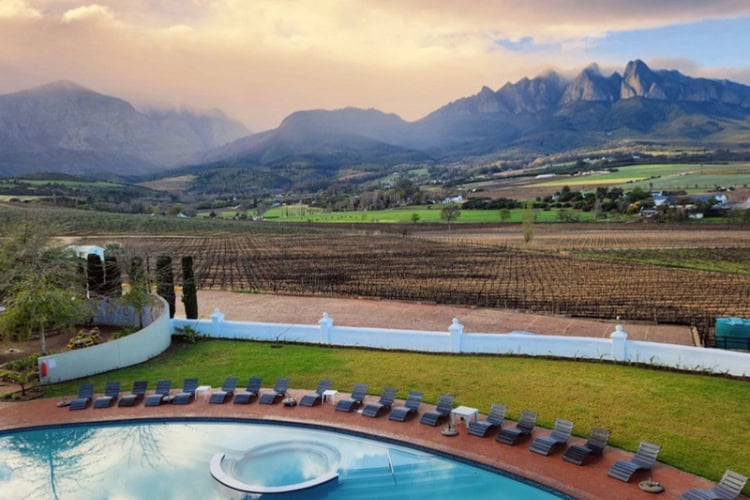
If you want to explore Wellington yourself, there’s nowhere better to base yourself than the aptly named Val du Charron Wine and Leisure Estate.
Set among vineyards at the base of Bainskloof Pass, it offers beautiful views, plenty to do and easy access to the town and surrounding wine farms. It also works particularly well for families, without feeling as though it has been designed solely around children.
There are several different accommodation options, from the more intimate Coach House rooms with their own private plunge pools to the newer family rooms with their own private courtyards. These are particularly well thought out for travelling with children, with bunk beds tucked into a cosy corner that give younger guests their own space.
There is also a private two-bedroom manor house on site for families or groups wanting a little more space and privacy.
Amenities include a large communal swimming pool overlooking the valley, an ideal spot for lazy afternoons when the weather is warm. The estate also has bike trails for exploring on two wheels.
Dining at Val du Charron Wine and Leisure Estate
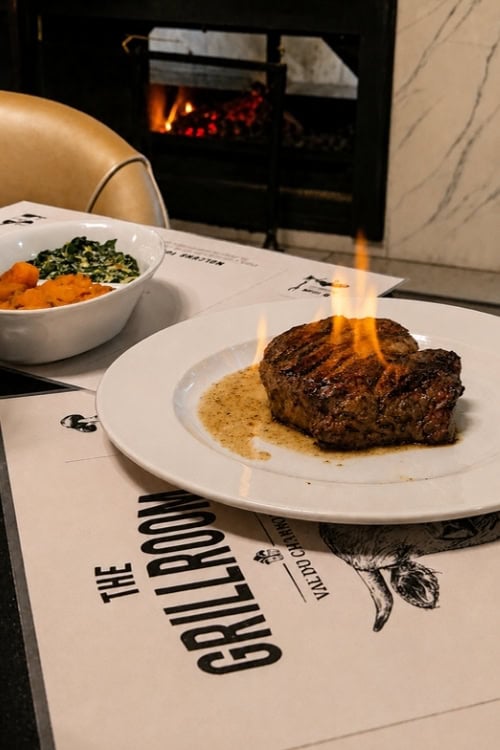
And as with any good Cape Winelands stay, food is another big part of the experience, with two very different restaurants on the estate.
The relaxed pizza restaurant is particularly popular with families, with a jungle gym and splash pad at the bottom of the garden giving children somewhere to play while parents enjoy a leisurely lunch.
For something more intimate, the Grillroom focuses on steaks, wine, and a more relaxed grown-up atmosphere.
You can spend the day exploring Wellington and its wine farms, or simply stay put and enjoy the pool, trails, restaurants and views.
Another beauty of staying here is the central location, so you can easily visit Stellenbosch or Franschhoek for the day, spend another day at Wellington’s wine farms, and another at Bainskloof. This way you can see as much of the area as possible without having to pack and unpack again.
Where to Go Wine Tasting

Wellington may not have the sheer number of wine estates found in Stellenbosch or Franschhoek, but that is part of its appeal. The wine route is smaller and more relaxed, so you can take your time.
Val du Charron is a great place to start your wine tasting journey. The estate has around 21 hectares under vine and grows an impressively diverse collection of 16 different varietals.
Since 2012, the Val du Charron estate label has been made entirely from grapes grown on the property. Here, you can enjoy wine tastings as well as guided cellar and vineyard tours.
Bosman Family Vineyards is also a great stop for anyone who wants to understand Wellington’s history and how vines are propagated in South Africa.
Doolhof Wine Estate is another beautiful stop, set against the Limietberg mountains, while Wellington Wines offers a chance to explore a variety of wines produced from grapes grown in the surrounding valley, and some great bargains can be picked up at the shop here.
Where to Eat
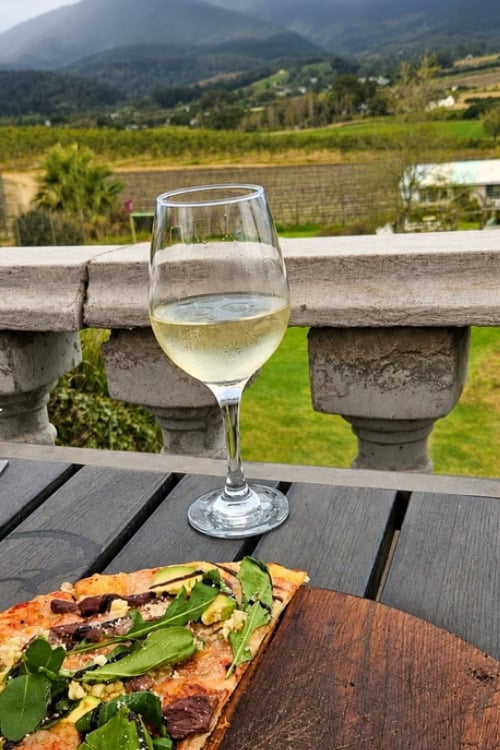
At Val du Charron, the two restaurants give you very different options. Pizza Vista is relaxed and family-friendly and an easy choice for a long lunch when you want good food without worrying about keeping children occupied at the table. For something more sophisticated, the estate’s Grillroom focuses on steaks and offers a more intimate atmosphere.
Beyond the estate, make time for a long farm lunch if you can. Many of the surrounding wine farms and estates have restaurants or tasting experiences where the food is designed to complement the wines, while Wellington itself has a selection of adorable cafés, bakeries and restaurants worth exploring. Just wander the main street to find one that takes your fancy.
Other Things to Do
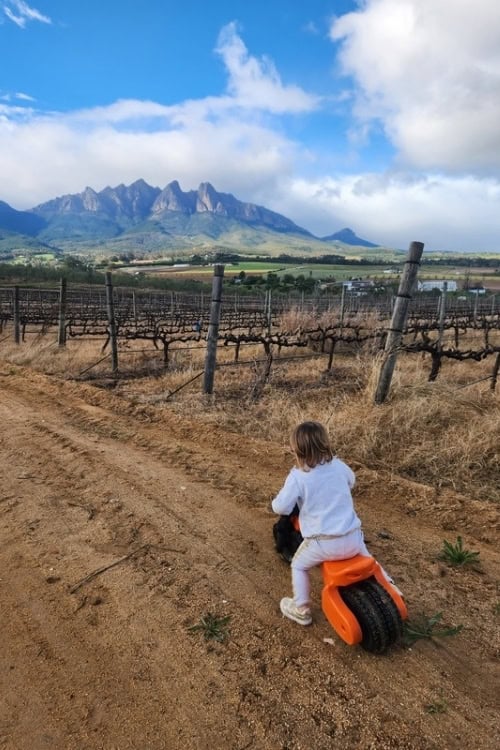
Driving Bainskloof Pass should be high on your list. The historic pass offers beautiful mountain scenery along the way. Allow plenty of time to stop and soak in the views rather than treating it simply as a route from A to B.
Also take some time to explore Wellington’s historic centre. Wander through the town, look at the old Cape Dutch buildings, churches and historic homes. The town’s small museum is also well worth a visit.
Go hiking or cycling: There are plenty of opportunities to get active around Bainskloof, Val du Charron and the surrounding mountains, ranging from shorter walks or trails to more demanding mountain routes.
Explore the farm stalls and markets: Keep an eye out for local produce, preserves, fresh fruit, wine and other regional specialities. Wellington is surrounded by working agricultural land, so food shopping here can be as much about discovering what is grown locally as it is about picking up souvenirs.
When to Go
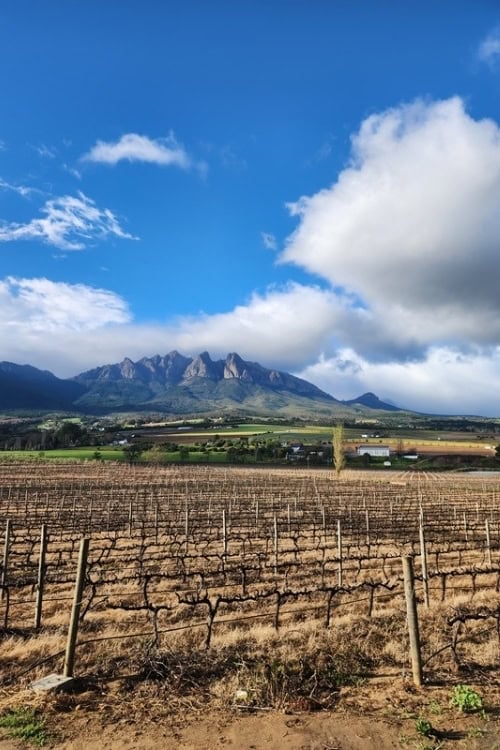
There really isn’t a bad time to visit Wellington. Summer (December to February) is warm, dry and ideal for swimming, outdoor lunches and exploring the vineyards. It is also peak holiday season, so popular accommodation and restaurants can be busy.
Autumn (March to May) is one of the loveliest times to visit. The heat begins to ease, the vineyards change colour and the harvest season brings plenty of activity to the wine farms. Days can still be beautifully warm, while evenings are cooler.
Winter (June to August) can be exceptionally cold with snow occasionally dusting the surrounding mountains. If you enjoy cosy restaurants, roaring fires and red wine, then this is a great time to visit; just be aware that some outdoor activities are more weather-dependent.
Spring (September to November) brings greener landscapes, wildflowers, and is an excellent time for hiking and cycling.
Planning Your Trip
For a quick introduction, two nights will give you a taste of Wellington, with time to visit a couple of wine farms and drive Bainskloof Pass. Three or four nights is better if you want to enjoy some lazy days, slow meals, exploration of the town, and a day trip to Paarl, Stellenbosch or Franschhoek.
Bring comfortable walking shoes for exploring wine farms, and a hat, sunglasses and sunscreen for sunny days. A light jacket or jersey is useful year-round because temperatures can drop once the sun goes down, particularly in the mountains.
If you are visiting in winter, bring a proper waterproof jacket and warmer layers. Swimming costumes are also essential in summer.
Getting There and Around
Cape Town International Airport is roughly an hour away by road, depending on traffic, making Wellington an easy first or final stop on a Cape Town itinerary.
You will need to have your own car to explore Wellington. The town itself is relatively compact, but the wine farms, mountain roads and surrounding attractions are spread throughout the valley. Having a car also gives you the freedom to stop at viewpoints, farm stalls and smaller wine producers along the way.
However, if you plan on doing a serious wine-tasting day, consider using a private driver or organised wine tour rather than driving between multiple tasting rooms yourself.
Need a hand planning your trip? Here are the sites and services we rely on most, from booking tools to travel products we love.
Inspire your next adventure with our articles below:
- Slow Down and Savor: Why Africa’s Most Elegant Train Journey Should Be Your Next Adventure
- South Africa’s Addo Elephant National Park Is the Ultimate Family Safari
Author Bio: Janine Avery was born and bred in Cape Town, South Africa, and says there is nowhere she would rather call home. She is a lover of all things nature and loves to explore new places, enjoying any form of travel from basic tenting to lazing in luxury lodges. She also loves to dabble in digital marketing, spreading messages on social media, and taking audiences on a journey through her travel stories.
Want to discover more hidden gems and helpful travel tips? Join our free newsletter for the latest travel secrets and travel articles.
We are reader-supported and may earn a commission on purchases made through links in this article.

- Wellington, South Africa: A Peaceful Cape Winelands Base for Wine, History and Bainskloof Pass - September 18, 2026
- Seychelles Travel Guide: Best Islands, Top Stays and How to Get Around - September 3, 2026
- Beyond Kruger: Safari by the Sea in St Lucia, Where Hippos Roam - April 27, 2026
Planning another trip soon? ✈️
Add GoWorldTravel.com as a preferred source on Google. Click the button below so our local guides, packing hacks, and hidden-gem itineraries always show up first when you search!
Add to Preferred Sources