
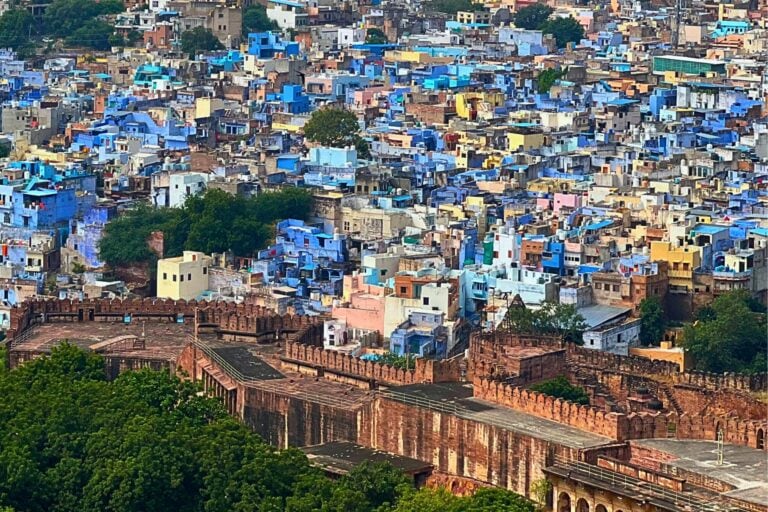
Rajasthan’s famous Blue City, where clusters of blue homes seem to glow in the desert sun. I first saw it in a travel magazine years ago. The image felt magical—hundreds of blue rooftops packed into narrow lanes, spread across the city like a watercolor painting.
It stuck with me quietly for years. When I finally booked my trip, I knew I was in for something special.
Staying In A Haveli Made Me Feel Like I’d Traveled Back
From the wide range of places to stay, I chose a haveli (a traditional Indian mansion) in the heart of the old blue quarter.
Reaching it was almost cinematic—broken roadways, winding alleyways and no elevator, just a cement staircase up several flights.
But arriving on the top floor felt like entering a time capsule. Wooden beams, vintage lights, patterned tiles and a narrow balcony overlooking bustling lanes—all of it whispered stories of bygone eras.
Wandering Blue Alleys Under The Desert Sky

I visited Jodhpur in October, and the heat was no joke; temperatures hit 35 °C, and locals mentioned it can soar past 50 °C in summer.
Coming from a cooler climate, the dry heat felt intense. But once I stepped into the narrow, blue-painted lanes, everything shifted. The shade, the quiet, the colors, it was like walking into another world.
The deeper I walked, the quieter the bustle became. Occasionally, a temple bell chimed or a shopkeeper called out softly. It all felt peaceful, even meditative.
Why Is Everything Blue Here?
On my walk toward Mehrangarh Fort, I couldn’t stop asking: Why is Jodhpur painted blue? People shared several theories. Some said Brahmins (members of the Hindu priest caste) first painted their homes blue to distinguish them.
Others explained that limestone mixed with copper sulfate repels termites. A third theory said the blue kept interiors cooler during the blazing heat.
Maybe all are true. Or maybe it’s just artistry. Whatever the reason, the effect is unforgettable.
Facing Mehrangarh Fort, Jodhpur’s Crown Jewel

If you only see one place in Jodhpur, let it be Mehrangarh Fort. Rising almost 400 feet above the city, this stone giant has stood for over 500 years as the Marwar kingdom’s capital.
Climbing it isn’t effortless—bring water and wear comfy shoes. But once you reach the ramparts, the panorama is jaw-dropping.
The city sprawls below in sharp blue bursts, domes, and winding streets. It looks less like a city and more like a living canvas.
Inside, the courtyards, galleries and palace chambers hold centuries of stories. But the best moment? Sitting on the edge of a rampart as the sun slants across the blue walls.
Best Jodhpur Tours & Excursions
Markets, Stepwells, Food and Street Music

Beyond the fort, Jodhpur unfolds like a hidden treasure map. We stumbled into Toorji Ka Jhalra (an ornately carved stepwell), hidden yet enchanting.
Nearby, the Clock Tower Market buzzed with energy—bangles, spices, juttis (traditional leather shoes), and colors everywhere.
When hunger hit, I grabbed a pyaaz kachori (onion-stuffed fried pastry) to go. Later, I sat down for a Rajasthani thali (platter of regional dishes)—dal baati (lentils with baked wheat rolls), gatte ki sabzi, ker sangri, and churma, all bursting with flavor.
By the fort, I even encountered Ravanhatha (traditional bowed string instrument) players. Their haunting melodies seemed to echo off the blue houses.
The Old City Captured Me
In three days, we explored new and old Jodhpur—Mandore Garden, Umaid Bhawan Palace, Jaswant Thada (white marble memorial)—all beautiful and grand.
But I kept returning to the old city. It pulled me back—with its imperfect roads, narrow lanes, and kaleidoscopic blue. Here, history mingles with everyday life.
Strangers wave as you pass, and every corner hides a story. Jodhpur doesn’t just ask you to observe, it invites you to linger, absorb and maybe leave something of yourself behind.
Top Tips for Visiting Jodhpur

Best Time to Visit: October to March is ideal, with pleasant weather for sightseeing. Avoid April–June, when temperatures can soar past 45°C (113°F).
Getting There (From Outside India): Fly into Indira Gandhi International Airport (DEL) in New Delhi or Chhatrapati Shivaji Maharaj International Airport (BOM) in Mumbai, then take a domestic flight to Jodhpur Airport (JDH).
Booking Flights & Hotels:
- Skyscanner.com – Find competitive international + domestic flight deals
- Google Flights – Great for planning multi-city itineraries
- Booking.com – For heritage stays, havelis, and boutique hotels in Jodhpur
- Agoda.com – Often includes smaller properties with reviews from international travelers
- MakeMyTrip.com – A local favorite for booking India-specific hotels and flights
Getting Around Jodhpur: Use Uber or local auto-rickshaws for short distances. Ask your hotel to arrange trusted drivers for day trips or fort visits.
Cultural Tips:
- Dress modestly, especially when visiting temples or old city areas
- Carry small cash for local shopping and tuk-tuk rides
- Don’t drink tap water—opt for bottled water always
- Learn a few Hindi words for fun interactions (e.g., namaste, dhanyavaad)
Tourism & Planning Resources:
- incredible-india.org – Official Indian tourism site
- tourism.rajasthan.gov.in – Details on forts, monuments, and events
- TripAdvisor.com – Traveler reviews for restaurants and attractions
- Rome2Rio.com – For understanding how to get between cities (bus, train, air)
Need a hand planning your trip? Here are the sites and services we rely on most, from booking tools to travel products we love.
Inspire your next adventure with our articles below:
Author Bio: Babitha Balakrishnan is a writer, editor, and curious traveler with a deep love for places that hold stories within their walls. Drawn to destinations that blend history, texture, and human connection, she sees travel as a way to slow down, observe, and rediscover joy in the details.
Want to discover more hidden gems and helpful travel tips? Join our free newsletter for the latest travel secrets and travel articles.
We are reader-supported and may earn a commission on purchases made through links in this article.

Planning another trip soon? ✈️
Add GoWorldTravel.com as a preferred source on Google. Click the button below so our local guides, packing hacks, and hidden-gem itineraries always show up first when you search!
Add to Preferred Sources
Felt like travelled Jodhpur with you ❤️