
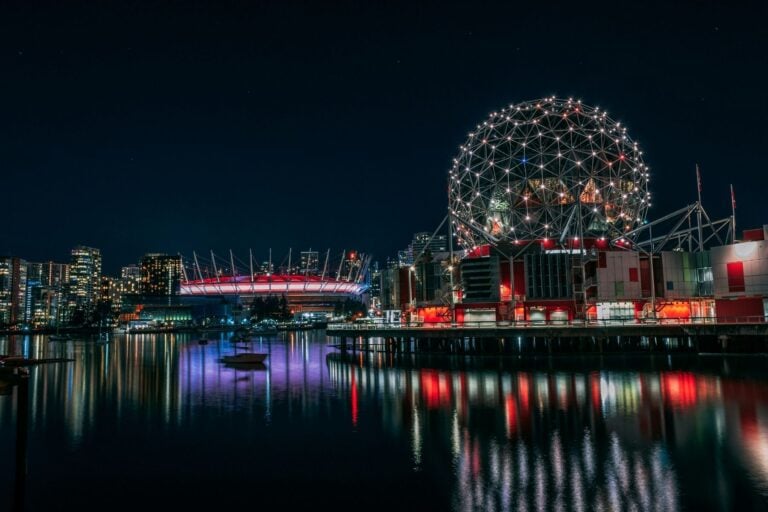
It starts slowly in Vancouver.
Set on the West Coast of Canada, in the province of British Columbia, Vancouver is a city where mountains meet the Pacific Ocean, shaped as much by nature as it is by culture. Home to more than 2.6 million people in the greater Metro Vancouver region, it’s known across Canada for its easy access to wilderness, its walkable waterfront and its long, luminous summer days.
In June and July, daylight can stretch past 10 p.m., casting the city in an extended golden glow that feels almost suspended in time. A summer evening in Vancouver doesn’t so much arrive as it lingers. The light stretches, softens, and settles over mountains, forest and sea as if reluctant to leave. And somewhere in that long golden hour, you begin to sense the shift. The day isn’t ending, it’s simply changing shape.
On this particular visit to the city where I was born and raised, I return with a different perspective, drawn not just by its reputation for outdoor culture and coastal beauty, but by a deeper curiosity about those famously long summer nights. This time, I decide to follow the light, letting one evening lead naturally into the next, discovering how Vancouver and its surroundings reveal themselves after dark.
Looking Up, Slowing Down
Here, that transition begins indoors, unexpectedly. At the H.R. MacMillan Space Centre, I settle back into a reclining seat as the lights dim and the domed ceiling above dissolves into darkness. One by one, stars appear, tentative at first, then multiplying until the entire sky feels close enough to touch.
A narrator’s voice traces constellations that once guided explorers and shaped entire civilizations. Removed from screens and distractions, the experience becomes immersive, almost meditative.
What surprises me most is how quickly the outside world fades. The city, with all its movement and urgency, feels distant. In its place is something quieter, a reminder of scale, of time, of how small we are within something so vast.
That sense lingers as I step back outside into the evening air. The sky above Vancouver is softer, less dramatic than the one I’ve just seen, but I find myself looking up anyway, searching.
The night has begun to change how I see.
From City Lights to Distant Worlds
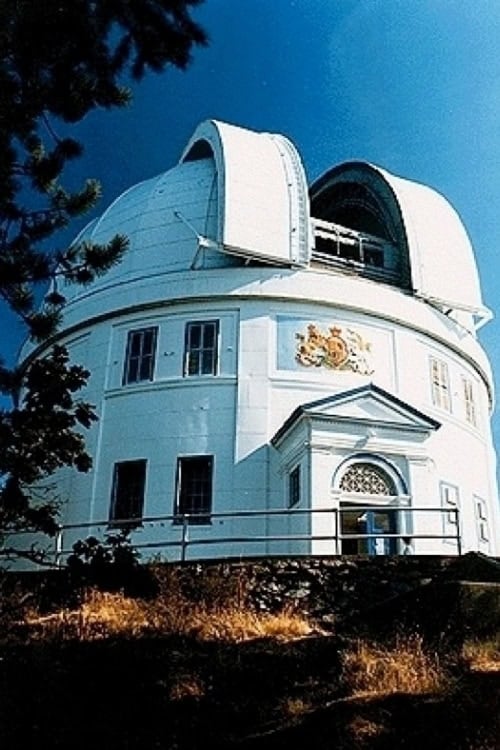
A few days later, I carry that same curiosity across the water to Vancouver Island, where the experience of looking up becomes something far more tangible.
The road to the Dominion Astrophysical Observatory winds quietly upward, away from the glow of the city. By the time I arrive, the air feels cooler, the surroundings darker, the pace noticeably slower.
Inside, there’s a shared anticipation. People speak in low voices, as if instinctively aware that this is a place of observation, not interruption.
When the telescope is aligned and the dome opens, the room falls still.
One by one, we step forward. When it’s my turn, I lean in carefully, adjusting my focus until the blur sharpens. And then, there it is, a distant point of light, suddenly defined. A planet. Not an image, not a projection, but something real, visible in that exact moment because of where I’m standing.
It’s a quiet kind of awe. Not dramatic, not overwhelming, just deeply grounding.
Later, stepping back outside, I pause again. Without the city’s interference, the stars feel more deliberate, more present. And once again, I linger longer than expected.
Where Stories Meet the Night Air
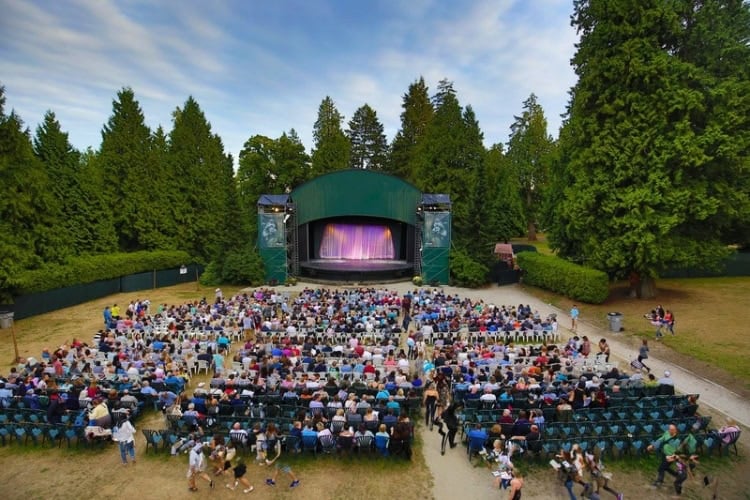
Back in Vancouver, the evening takes on a different tone.
At Stanley Park, the pathway curves through towering trees before opening into the familiar setting of Theatre Under the Stars, a tradition that has quietly endured for decades.
As I take my seat, the sky is still holding onto its last traces of light. Around me, there’s an easy sense of anticipation, families settling in, friends catching up, the soft rustle of programs.
Then, as if on cue, the lights dim.
What unfolds on stage is polished and engaging, but it’s the setting that stays with me. The performance shares space with the evening itself. A breeze moves through the trees. The sky deepens overhead. The sounds of the city fade into the background.
At one point, I glance upward. The contrast is striking, stage lights below, stars just beginning to appear above. It feels layered, immersive in a way traditional theatre rarely achieves.
And when the curtain call comes, the night doesn’t feel like it’s ending. It feels like it’s continuing.
A Quieter Kind of Evening
Not all summer nights in Vancouver are filled with applause or spectacle. Some unfold more quietly.
At the Dr. Sun Yat-Sen Classical Chinese Garden, the transition into evening is subtle, almost imperceptible. Lanterns begin to glow softly, casting reflections across still water. Curved rooftops and wooden walkways take on a different character in low light.
I arrive just as a small performance is beginning. There’s no stage in the traditional sense. Instead, a musician sits within the garden, allowing the space itself to shape the sound. Notes drift across the courtyard, echoing gently against stone and wood.
Visitors move slowly here, instinctively lowering their voices. Conversations soften. Footsteps become more deliberate.
It’s not an experience that demands attention. It invites it. And in doing so, it creates something rare—a moment of stillness within a city that rarely stops.
Where the City Meets the Sea
Eventually, the evening leads me back to the water.
From Vancouver’s harbour, I board a small cruise just as the sun begins its final descent. The timing feels intentional; this is less about the destination and more about the transition.
As the boat pulls away, the city shifts perspective. Buildings that felt imposing from the street now appear softened, their edges blurred by distance and reflected light. The sky moves through its familiar progression, gold to rose to deepening blue.
A quietness settles in. Conversations fade as people turn outward, drawn to the horizon.
By the time darkness fully arrives, the city has transformed. Lights flicker on across the skyline, stretching into long reflections on the water. The harbour feels expansive, calm, almost suspended.
And then, unexpectedly, the sky erupts.
Fireworks rise sharply, bursting into colour above the water, mirrored below in rippling light. For a few minutes, everything else falls away. Strangers pause together, looking up.
When the final burst fades, there’s a brief silence before conversation resumes. But something has shifted. The moment lingers.
Read More: Liquid Sunshine and Glaciers: What It’s Really Like to Cruise Alaska’s Inside Passage
Holding Onto the Night
What stays with me after these evenings isn’t any single experience, but the way they connect.
Each one begins in light and ends in something deeper, something quieter. Whether looking up at distant galaxies, watching a story unfold beneath trees or drifting along the water as the city glows, the pattern repeats itself.
In Vancouver, summer nights don’t announce themselves loudly. They unfold gradually, inviting you to follow along.
And if you do—if you allow yourself to slow down, to look up, to stay a little longer—you begin to see the city differently. Not just as a place of remarkable natural beauty, but as one that reveals its most memorable moments when the light begins to fade.
If You Go
Getting There
Most international travellers arrive via Vancouver International Airport, with easy access to downtown Vancouver and connections to Vancouver Island.
Best Time to Experience It:
June through September offers long daylight hours, warm evenings, and ideal conditions for outdoor performances and waterfront experiences.
Planning Tip:
Even in summer, temperatures dip once the sun sets, especially near the water. Bring layers and allow time to linger. The best moments here aren’t rushed.
Need a hand planning your trip? Here are the sites and services we rely on most, from booking tools to travel products we love.
Inspire your next adventure with our articles below:
- North Carolina Has Some of the Best Stargazing in the East. These 5 Spots Prove It.
- The Midnight Sun in Norway: Best Time to Go and Where to See It
Author Bio: Since 1996, while freelancing, Jane Cassie has had thousands of articles published. Her stories have appeared CNN Magazine, Northwest Travel, New York Daily News, Chicken Soup For The Soul, Dreamscapes, Air Canada In-flight, Cottage Life, Epicure and Travel, just to name a few. She has been a regular contributor to Spa Life, INNspire, North American Inns Magazine, Cottage, and Inspire Magazines.
Want to discover more hidden gems and helpful travel tips? Join our free newsletter for the latest travel secrets and travel articles.
We are reader-supported and may earn a commission on purchases made through links in this article.

- Bukhara, Uzbekistan: The Silk Road City Where History and Art Thrive - October 20, 2026
- Hoi An, Vietnam: A Local’s Guide to the Ancient Town, An Bang Beach and Must-Try Dishes - October 20, 2026
- Why Cape Town’s Kloof Street Was Ranked the Coolest Street in Africa - October 20, 2026
Planning another trip soon? ✈️
Add GoWorldTravel.com as a preferred source on Google. Click the button below so our local guides, packing hacks, and hidden-gem itineraries always show up first when you search!
Add to Preferred Sources