
As a teenager, I was captivated by reading about and seeing images of Samarkand, Uzbekistan, the crown jewel of the ancient Silk Road.
I was mesmerized by the city’s vast collection of mosques, madrasas and minarets covered in stunning turquoise and blue tiled domes. It became my goal to someday visit this Central Asian country known for being an epicenter of science, philosophy and theology during Islam’s golden age between the 8th and 14th centuries.
Last year, I finally visited Uzbekistan as part of a guided tour using Gate1 Travel. Our tour included numerous sights throughout the country.
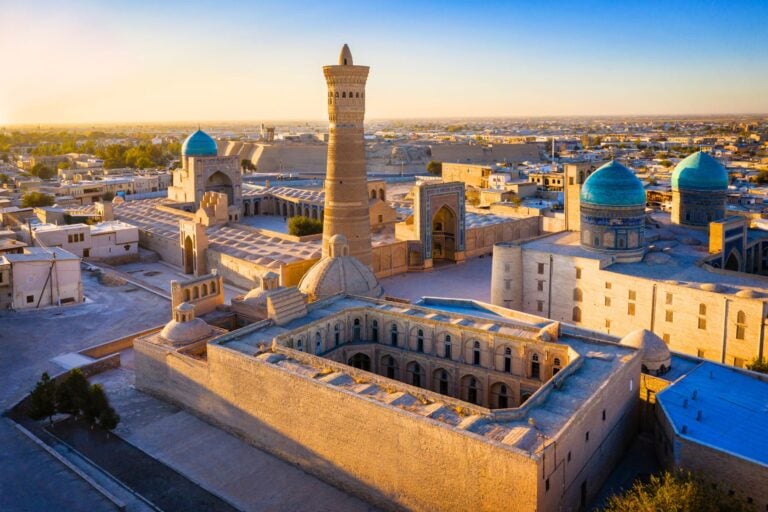
While Samarkand is jaw-dropping, especially its celebrated Registan Square, I was equally impressed with Bukhara. This lively city, located in the flat desert of the central part of the country, is full of diverse culture, history and amazing architecture.
The city was once a center of Persian culture. It has been continuously inhabited for over two millennia, dating back nearly 1,000 years before Alexander the Great conquered the region.
Between the 9th and 16th centuries, Bukhara was a major intellectual center of the Islamic world, renowned for its numerous libraries.
We spent three days in Bukhara and were pleasantly surprised by how its residents embrace the city’s rich history and culture while looking confidently toward the future.
The city pulsed with energy and creativity, from its bustling outdoor cafés to its many art venues and cultural celebrations. It’s a place that feels both ancient and contemporary, historic yet vibrant.
History And Culture Of Uzbekistan
Uzbekistan has long played a strong role in Central Asia’s history, with various waves of conquests shaping its identity over thousands of years. Alexander the Great, Genghis Khan and Tamerlane each ruled and influenced the region. This resulted in a mosaic of cultures, architecture and languages.
For over 2,000 years, Uzbekistan was at a crossroads on the ancient Silk Road that connected China, the Middle East and Europe. Goods such as silk, spices and gold were traded between east and west. Additionally, there was an exchange of religious, technological, philosophical, and scientific thought.
Read Walking Beijing’s Imperial Axis, From Tiananmen Square to the Temple of Heaven for a look at China’s imperial heart.
By the 19th century, Russian imperial expansion brought the region under tsarist control. This was followed by Soviet rule in the 20th century, bringing industrialization and new social systems, including the suppression of religion.
Uzbekistan gained independence from the Soviet Union in 1991, emerging as a modern nation with a strong secular but authoritarian government.
Recent leadership has opened the country, promoting tourism, economic reforms and regional cooperation. At the same time, it has maintained tight control of political expression, the press and religious activity.
Arrival In Bukhara
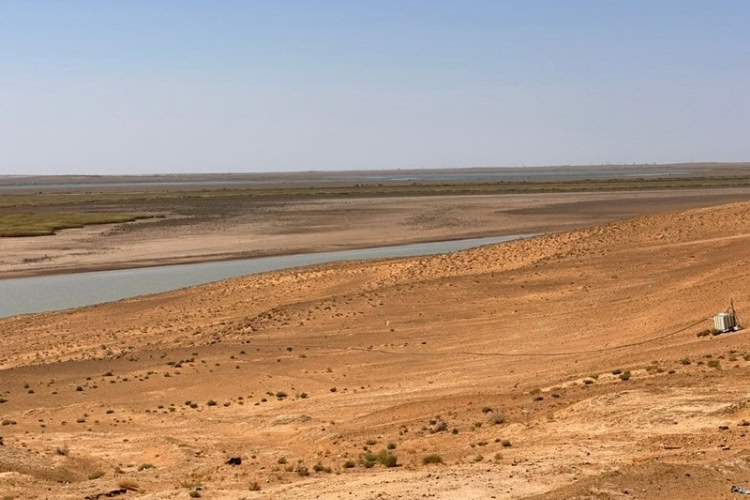
While en route from Khiva to Bukhara, we stopped for a tea and restroom break at a small dusty outpost in the middle of the desert near the Amu Darya River.
Across the river was the border of Turkmenistan, one of the most restrictive and authoritarian countries in the world. I took a photo looking out toward Turkmenistan before noticing a worn sign stating that photography was prohibited.
We soon left, and three hours later, arrived in Bukhara, a city rising in sand-colored brick and turquoise tile. Its skyline was punctuated by minarets and domes that once guided traders, pilgrims and conquerors. Now they guide an ever-increasing number of tourists.
At one time, over 300 mosques and 100 madrasas were spread throughout the city, many of which still stand today. The compact old town, a UNESCO World Heritage Site, encompasses 140 protected monuments. Wandering the city’s old streets feels like entering a living museum.
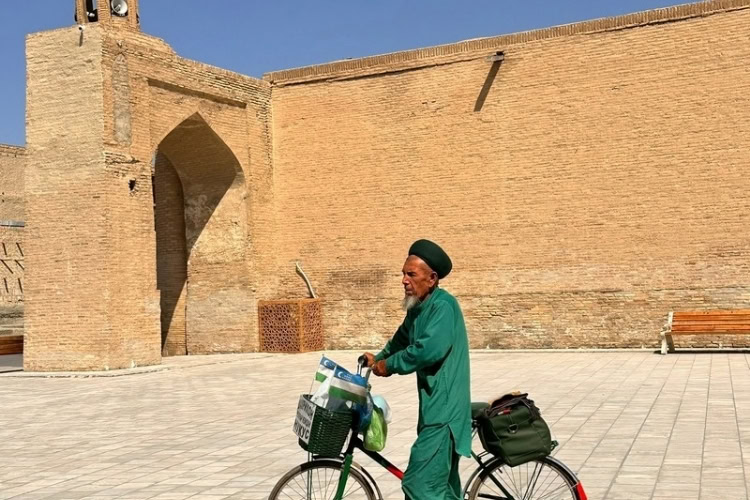
At the same time, the ancient city feels fully alive. Merchants still trade beneath domed bazaars while children play in madrasa courtyards. At night, the city’s streets and squares awaken, filled with people of all ages. Young, fashionably dressed couples stroll the streets and bazaars and dine at the numerous outdoor cafés.
One example of the city’s energetic, forward-thinking spirit can be found in the embrace of contemporary art and culture.
Bukhara Biennial
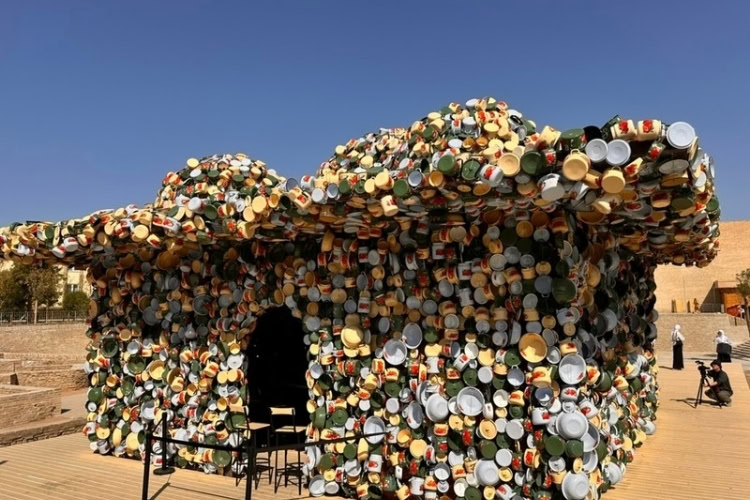
We were lucky to arrive in the city during the inaugural Bukhara Biennial. The free, six-month-long event, themed Recipes for Broken Hearts, was commissioned by the Uzbekistan Art and Culture Development Foundation.
It showcased over 70 local and international artworks scattered at historic landmarks throughout the city. The focus was on how art can be a “recipe” for mending grief, inspired by plov, the country’s national dish. The event helped contribute to the city’s festive atmosphere.
My favorite installation, Salt Carried by the Wind, was designed by Indian artist Subodh Gupta. The piece included a small domed building covered entirely with colorful ceramic pots, representing exchange along the Silk Road.
During the exhibition, the building housed cooking sessions, adding a layer of theater, conversation, and storytelling.
Poi-Kalyan Religious Complex
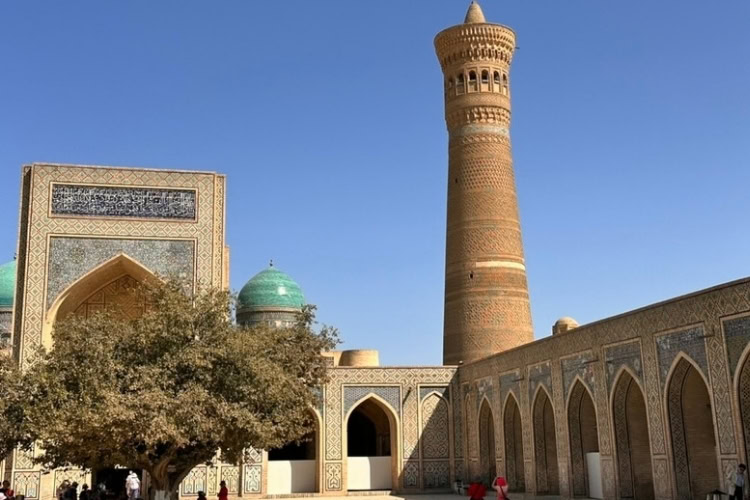
Bukhara’s largest attraction is Poi-Kalyan, a square which boasts a robust ensemble of Islamic architecture and religious facilities.
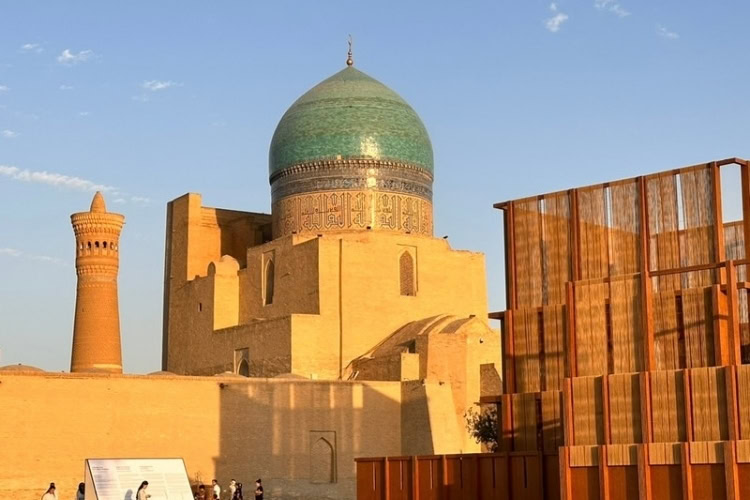
The centerpiece is the huge Kalon Mosque, built of patterned brick and tiles during the 16th century. At the main eastern façade, I looked up in amazement at the ornately decorated portal covered with intricate geometric designs and patterns made from glazed blue and teal tiles. The portal leads to a large central courtyard surrounded by four halls known as iwans.
The towering 12th-century minaret rises fifty meters above the square. It was once so majestic that even Genghis Khan spared it during his 13th-century conquest of Bukhara.
Next door is the equally impressive and ornate Mir-i-Arab Madrasa, characterized by two turquoise domes rising above each side of the two-story portal. The madrasa functions to this day as a working Islamic school, and it’s one of the anchor stops on this small-group walking tour of the old town, which also takes in the Kalon Minaret, the trading domes and Lyab-i Hauz with a local guide over an unhurried half day.
Ark Of Bukhara Fortress
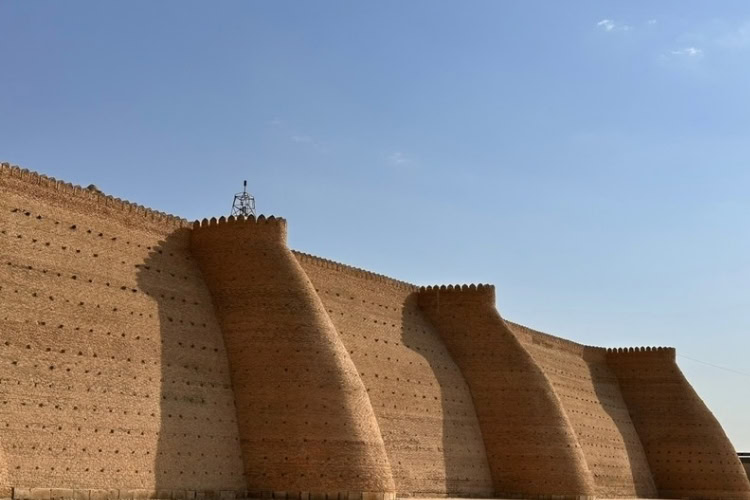
From our hotel, we walked to the nearby Ark of Bukhara Fortress. The large earthen fortification dates from the 5th century A.D. and once enclosed and protected the royal residence of Bukhara’s emirs.
The massive 60-foot-tall walls create a shape that was influenced by the Ursa Major (Big Dipper) constellation. Today, the fortress includes museums, reception halls and sweeping views over the old town.
The current Ark stands on the remains of earlier structures, with all existing buildings built in the last three centuries. Inside are museums, former prison cells, reception halls and mosques.
Lyab-i Hauz Square
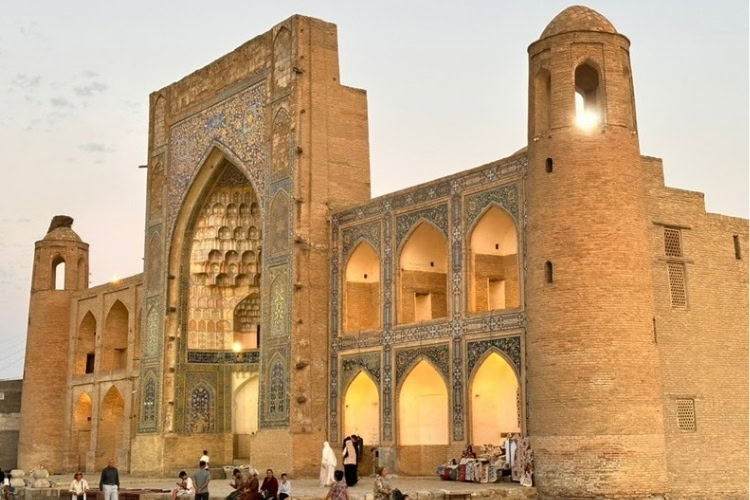
Centered on a 17th-century reflecting pool, Lyab-i Hauz is a lively public square and Bukhara’s social living room. Tea houses and cafés spill onto shaded terraces beneath mulberry trees. As we saw, they are very popular with both locals and tourists on cool evenings.
The pool is one of many that once occupied Bukhara before being removed during the Soviet era due to the spread of disease.
Surrounding the square are former madrasas, including the Nadir Divan-Begi Madrasa and Kukeldash Madrasa. These now host artisan shops selling embroidery, ceramics and handwoven carpets.
Ustoz Shogird Center
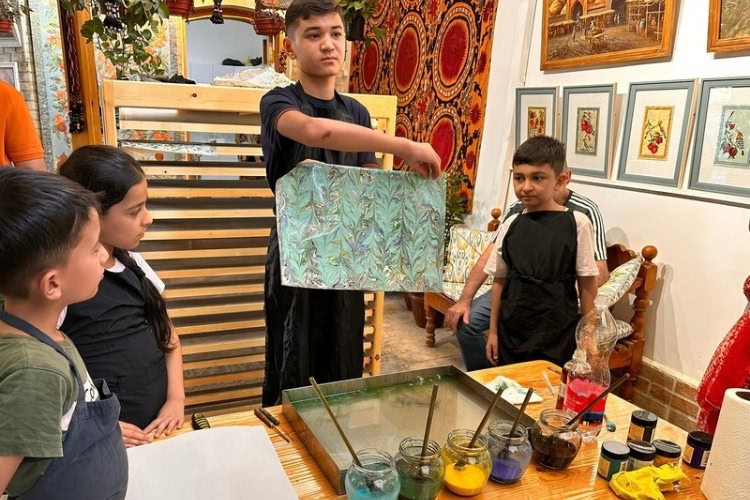
One evening we made a visit to the Ustoz Shogird Center, an art school dedicated to preserving traditional Uzbek crafts and paintings. The school is guided by Davlat Toshev, a renowned artist whose Persian miniature paintings have been exhibited worldwide.
We watched young students demonstrate painting techniques and were given the opportunity to donate art materials to the school.
Home Cooking
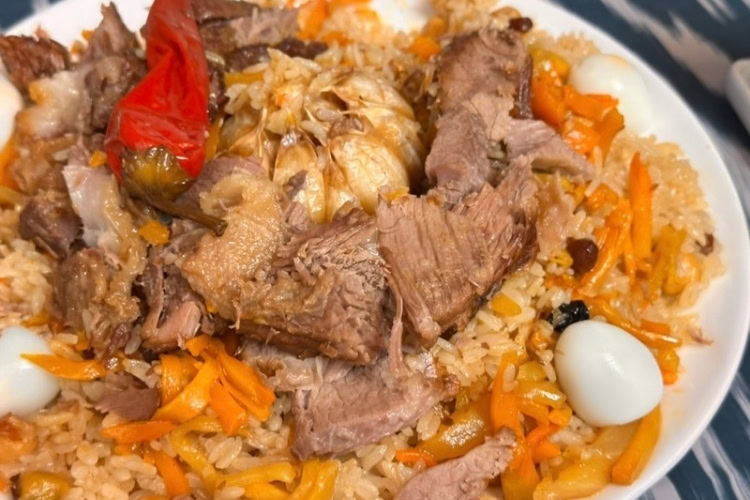
That evening at Davlat’s home, we were treated to a cooking demonstration and dinner of Uzbekistan’s national dish of plov. This delicious dish is a flavorful mix of rice, lamb or beef, onion, garlic, carrots, chickpeas and spices, traditionally cooked in large pots.
In 2016, the dish was added to UNESCO’s Intangible Cultural Heritage list.
Bazaars And Souvenirs
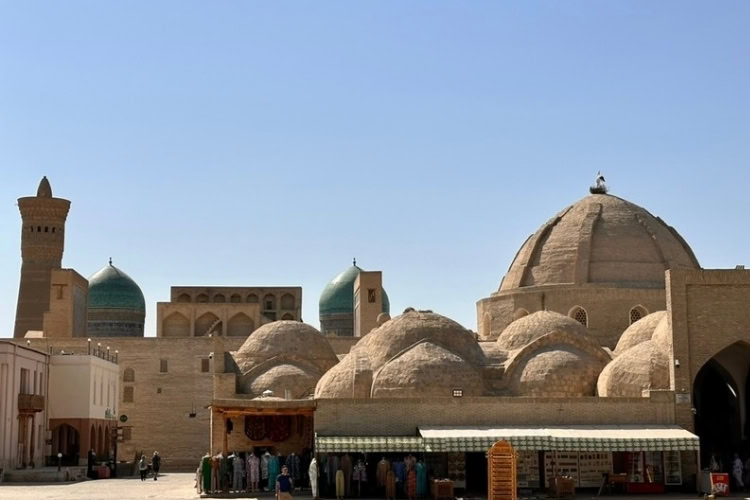
Bukhara has several covered bazaars, known as trading domes. At the Markaziy Bazaar, we were greeted with the sights and smells of Uzbekistan. This included fresh produce, dried fruits and nuts, delectable sweets and freshly baked, beautifully designed round loaves of bread known as lepeshka.
In the center of town is the Toki Zargaron, with its domed brick ceilings and openings that attract filtered desert light. Inside, visitors can purchase various Uzbek souvenirs, such as silk scarves, rugs, Uzbek-style hats, miniature paintings and carved woodwork.
If cities rich in mosques and bazaars appeal to you, read I Went to Istanbul for Five Days. I Am Still Not Over It.
Our tour included stops where we could buy hand-knotted carpets and handcrafted knives, a specialty of the Bukhara region. They are deeply rooted in Silk Road history, with techniques passed down through generations.
Bukhara carpets are known for their vibrant colors and distinctive geometric patterns, typically featuring repeating rows of small diamonds and octagons. Bukhara handcrafted knives feature intricate designs and Damascus steel blades.
More Bukhara Highlights
We explored other mosques, madrasas, palaces, the old bazaar and ancient mausoleums, like the Ismail Samani Mausoleum. This is one of Central Asia’s oldest surviving Islamic monuments dating from the 9th century.
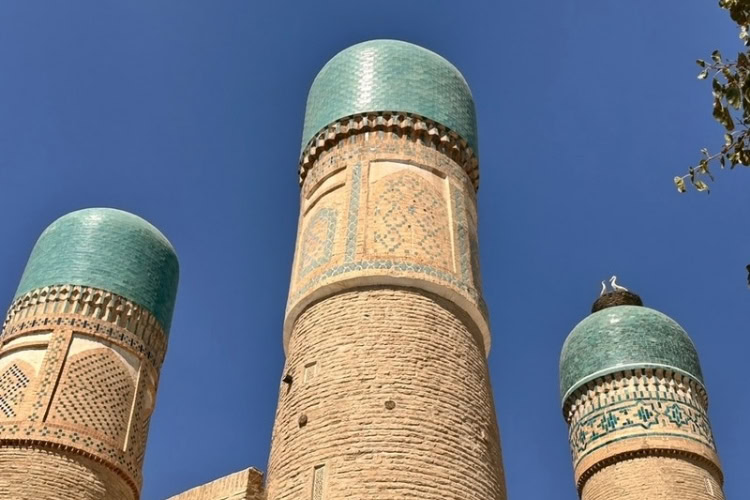
Its baked-brick façade forms intricate geometric patterns that shift with the light, a masterpiece of early Islamic architecture. The 19th-century Chor Minor monument and mosque was a surprise, with its small size and unique four turquoise-domed towers.
We happened to be in Bukhara on the night of a full lunar eclipse. As we observed the blood moon for an hour from our hotel rooftop, I thought about how Bukhara was the perfect spot to witness such an event. We were surrounded by history, surreal architecture, a desert setting, but more importantly, a place that is celebrating its past while looking toward the future.
When To Go
When to Go
Spring (April and May) and fall (September and October) bring the most comfortable temperatures, though they’re also the busiest and priciest times to visit. Summer is scorching, with highs that can top 40°C (104°F), while winter turns cold but rewards travelers with thinner crowds and lower costs.
Whenever you choose, go soon. Uzbekistan welcomed 11.7 million foreign visitors in 2025, nearly 47 percent more than the year before, and the country is investing in new hotels, roads, airports and visitor experiences to keep pace. Art lovers can plan a fall trip around the second Bukhara Biennial, which runs September 3 to November 21, 2027.
Getting Around
Uzbekistan’s high-speed Afrosiyob trains connect Tashkent, Samarkand and Bukhara, and the run from the capital takes about four hours. The official railway site can be fussy with foreign cards, so reserve your Afrosiyob seats on 12Go, which accepts international payment.
Where to Stay
- Boutique Hotel Minzifa has rooms decorated in traditional Uzbek style around a quiet courtyard, plus a rooftop terrace with views over the old city. It’s a short walk from Lyab-i Hauz.
- Mercure Bukhara Old Town is a polished, full-service pick with a spa and an indoor pool, which is welcome after a long day of walking in the desert heat.
- Komil Bukhara Boutique Hotel is a heritage stay close to the historic center, and guests often single out its ornate 19th-century dining room.
Tours and Experiences
- This small-group walking tour of the old town covers Lyab-i Hauz, the trading domes, the Kalyan complex and the Ismail Samani Mausoleum with a local guide.
- This countryside tour with a traditional lunch pairs Chor Minor with the Emir’s summer palace and the Bakhouddin Naqshbandi Mausoleum, finishing with plov and fresh bread in a local setting.
Staying Connected
An Airalo eSIM for Uzbekistan gets you online the moment you land, so maps and messaging work from the first taxi ride.
Travel Insurance
- SafetyWing offers flexible coverage that works well for longer trips through Central Asia.
- Squaremouth lets you compare policies from dozens of providers side by side.
Further Reading
Colin Thubron’s Shadow of the Silk Road follows the ancient trade route from China across Central Asia, and it makes a great companion before a trip to Bukhara.
Need a hand planning your trip? Here are the sites and services we rely on most, from booking tools to travel products we love.
Inspire your next adventure with our articles below:
- From Troy to Gallipoli: Tracing Millennia of History in Turkiye
- Agafay, Morocco: Why an Overnight Stay Beats a Day Trip From Marrakech
Author Bio: Steve Sindiong is a travel writer, photographer and urban planner. He has been traveling the world since he was a child. His quest for traveling began as an Urban Planning undergraduate student, when he spent a semester abroad traveling the Balkans, learning about urban design. During graduate school, he conducted his urban planning thesis in Stockholm, Sweden and backpacked throughout Europe. Since then, he’s traveled throughout all 50 U.S. states and to over 80 countries on six continents and aspires to see many more. He currently lives in Alexandria, Virginia with his partner and their dog, Benji. Learn more about Steve’s travels and writing at www.journeyswithsteve.com
Need a hand planning your trip? Here are the sites and services we rely on most, from booking tools to travel products we love.
We are reader-supported and may earn a commission on purchases made through links in this article.

Planning another trip soon? ✈️
Add GoWorldTravel.com as a preferred source on Google. Click the button below so our local guides, packing hacks, and hidden-gem itineraries always show up first when you search!
Add to Preferred Sources