
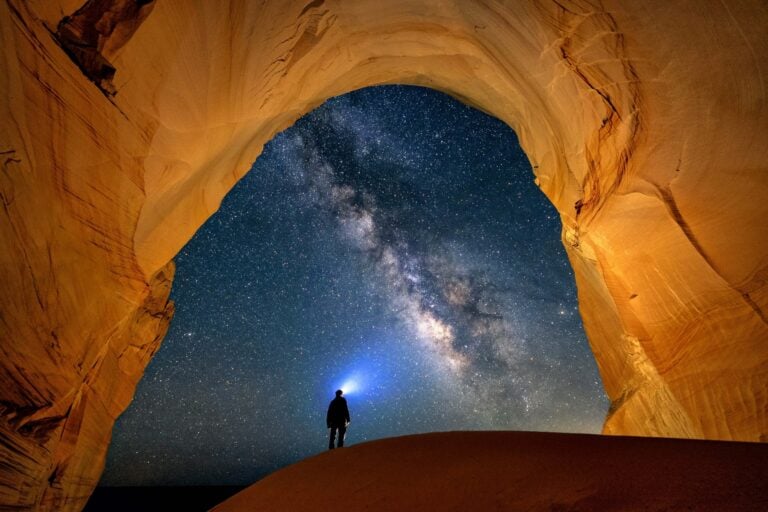
Most of us do not know what the night sky looks like anymore. We know the moon. We know a few bright stars. We know the soft orange glow that hangs over highways, gas stations and subdivisions. But the full thing has become rare enough that people now plan entire trips around seeing it.
That is the strange truth behind astrotourism. We are not traveling to see something new. We are traveling to see something we used to have.
The best stargazing destinations are often places where development has not prevailed. These are places where the dark is still dark. Some are certified International Dark Sky Places. Others are simply far enough from the machinery of modern life that the stars have room to return.
The best places to see the night sky in the USA offer more than darkness. They give the sky a setting. At Natural Bridges, stars rise over sandstone. At Chaco, they hang above the remains of a civilization that watched the heavens long before us. At Assateague, they appear over the Atlantic with wild horses somewhere in the dunes. At Denali, the sky can do something even stranger: turn green.
Before You Go Stargazing
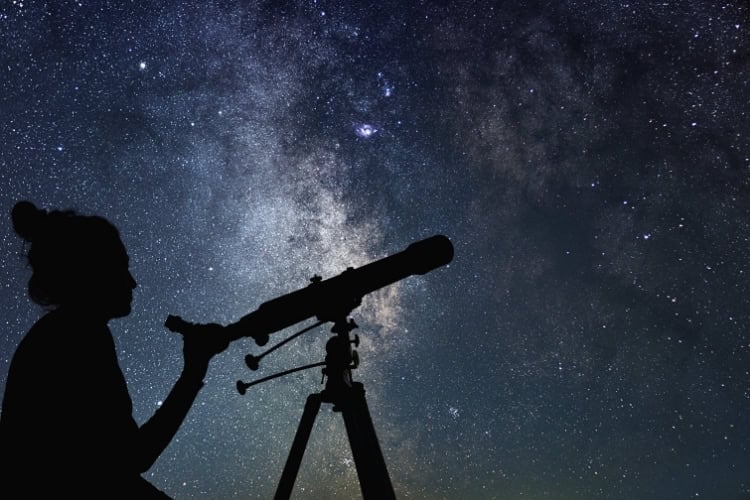
Before planning a stargazing trip, the first thing to check is not the hotel. It is the moon. The darkest skies come around the new moon, when moonlight does not wash out the fainter stars. In much of the United States, summer is the best time to see the Milky Way, especially on clear, moonless nights from June through August.
You do not need a telescope to enjoy most dark sky parks in the United States. In fact, a telescope can be the wrong starting point. Use your eyes first. They are best for taking in the Milky Way, constellations, meteors and the sheer size of the night sky. Binoculars are an easy next step.
You may also see references to the Bortle scale, which ranks night sky darkness from Class 1 to Class 9. Class 1 is the kind of dark sky where the Milky Way is obvious and detailed. Class 9 is an inner-city sky where only the moon, planets and a handful of bright stars can break through. In general, the lower the number, the better the stargazing.
DarkSky International’s place finder is also worth checking before you go.
1. Natural Bridges National Monument, Utah
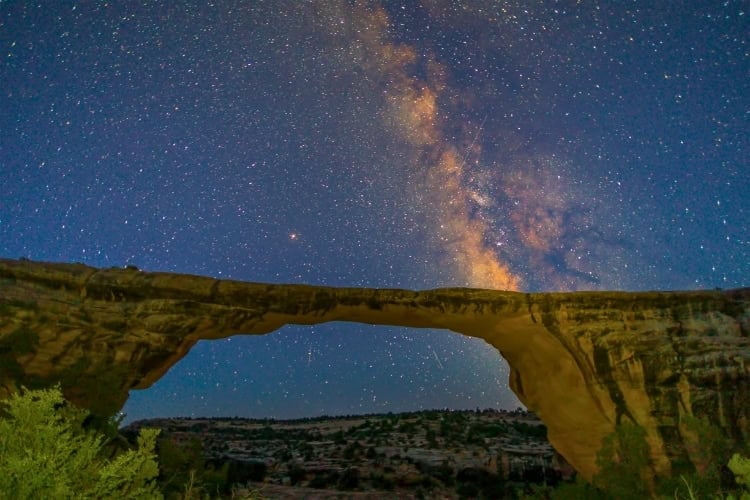
In 2007, this remote national monument in southeastern Utah became the world’s first International Dark Sky Park. That matters because Natural Bridges is not just a beautiful place to look up. It is part of the origin story of dark sky preservation in the United States.
The setting helps. Natural Bridges sits on the Colorado Plateau, surrounded by canyon country, sandstone formations and the kind of open Western landscape that makes the horizon feel far away. By day, visitors come for the monument’s three natural bridges: Sipapu, Kachina and Owachomo. By night, those same stone forms become silhouettes under a sky that feels almost impossibly full.
On a clear, moonless night, the band of the galaxy can appear bright and textured, with dark lanes and star clouds visible to the naked eye. The experience is not flashy. You drive in, let your eyes adjust and realize how much the sky has been holding back elsewhere. While you are in Utah’s canyon country, you can also raft Utah’s Cataract Canyon.
Read More:
2. Big Bend National Park, Texas
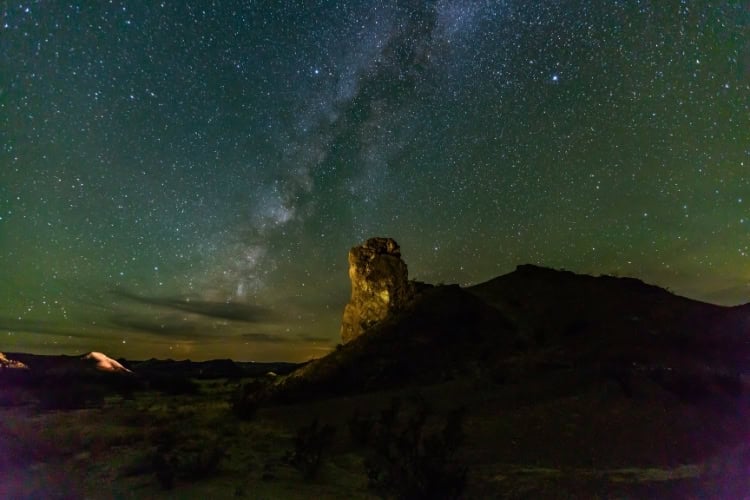
The park sits in far West Texas along the Rio Grande, where desert, mountains and borderlands meet in one of the least crowded corners of the lower 48. The National Park Service has described Big Bend as having less light pollution than any other national park unit in the contiguous United States. Once you are there, that claim makes sense. There are not many towns nearby. There are not many roads. There is not much of anything to compete with the sky.
This is one of the best stargazing destinations in the USA for people who want scale. The Chisos Mountains rise out of the desert. The Rio Grande cuts through limestone canyons. At night, the sky seems to sit directly on top of all of it.
What you see depends on the season, the moon and the weather, but Big Bend can deliver the classic dark-sky experience: the Milky Way overhead, planets bright along the ecliptic, meteors when showers are active and a horizon that is not ruined by a ring of city glow.
There is also something honest about stargazing here. Big Bend does not make the night feel cozy. It makes it feel vast.
3. Cherry Springs State Park, Pennsylvania
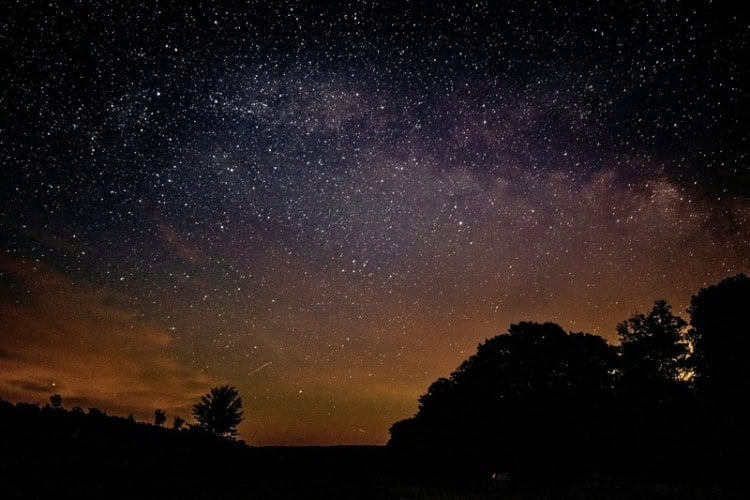
Cherry Springs matters because not everyone can get to Utah, Nevada or West Texas every time they want to feel small under the sky.
Located in north-central Pennsylvania, Cherry Springs State Park is one of the best-known dark sky destinations east of the Mississippi. It sits within the largely undeveloped Susquehannock State Forest, giving it a level of darkness that feels almost improbable for the eastern United States.
This is the practical choice for East Coast travelers who want a real stargazing trip without flying west. The park’s Astronomy Field offers a wide, open view of the sky, and the site has become a gathering place for amateur astronomers, astrophotographers and travelers who simply want to see what they have been missing.
The experience here is different from the desert parks. Cherry Springs feels more communal. People come with telescopes, cameras, red lights, folding chairs and serious opinions about clouds. On a good night, it can feel like a small temporary village organized around looking up.
What makes Cherry Springs special is not just that the sky is dark. It is that it proves the eastern U.S. has not entirely lost the night.
4. Death Valley National Park, California
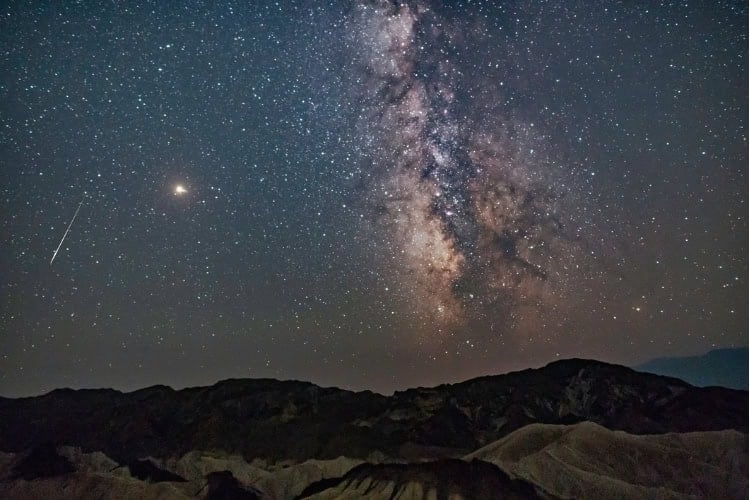
This is one of the most dramatic places in America to see the stars, not only because the sky is dark, but because the land underneath it is so strange. Salt flats, badlands, dunes, craters and mountains all become part of the night experience. You are not just looking at the Milky Way. You are looking at it from one of the most extreme landscapes in North America.
Death Valley has been recognized as a Gold Tier International Dark Sky Park, the highest darkness rating under the older DarkSky system. The park is huge, and many areas away from developed lodging and major roads offer excellent night-sky viewing. Popular places include Mesquite Flat Sand Dunes, Badwater Basin, Harmony Borax Works and Ubehebe Crater.
The Milky Way can be visible to the naked eye here under the right conditions, especially around the new moon. The best experience is often the simplest one: bring a chair, let the heat bleed out of the desert and wait for the sky to fill in.
A note of reality: Death Valley is not casual in summer. Daytime heat can be dangerous, and night-sky plans still require serious attention to water, distance, road conditions and temperature. The stars may be beautiful, but the desert does not care whether you came for them.
5. Great Basin National Park, Nevada
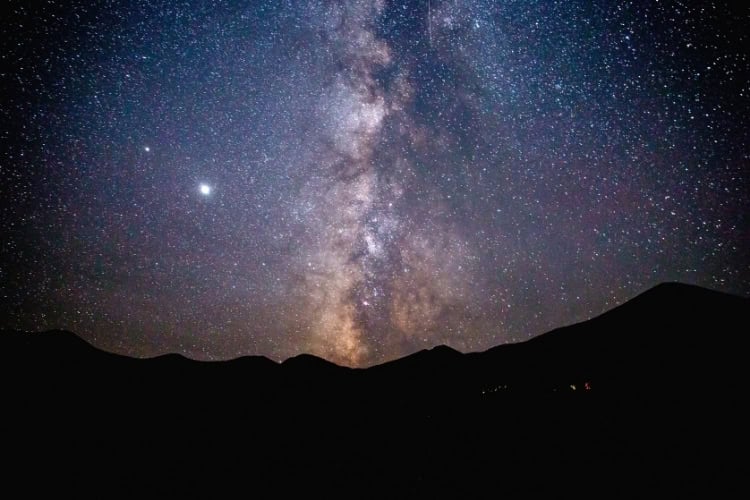
This Nevada national park is often overlooked, which is exactly why it works. Great Basin has high elevation, dry air, limited nearby development and a quieter feel than many of the better-known Western parks. It is the kind of place where the darkness still feels like part of the park’s identity rather than an accessory.
On a clear, moonless summer night, visitors can see thousands of stars and the Milky Way across the sky. With binoculars or a telescope, the experience goes deeper: star clusters, planets and even the Andromeda Galaxy may come into view under good conditions.
Great Basin also has something many dark-sky locations do not: a strong astronomy program. Ranger-led astronomy programs are typically offered during the warmer months, and the park has an Astronomy Amphitheater and observatory programming. That makes it a good choice for travelers who want the romance of a dark sky but also appreciate having someone nearby to explain what they are looking at.
The park’s night sky pairs naturally with its daytime landscape: ancient bristlecone pines, caves, mountain trails and the high, quiet feel of the Great Basin itself.
6. Chaco Culture National Historical Park, New Mexico
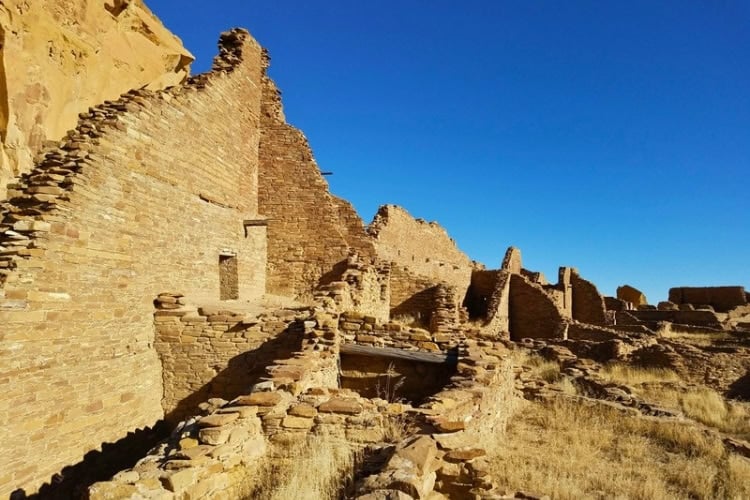
Located in northwestern New Mexico, Chaco Culture National Historical Park protects one of the most significant ancestral Puebloan sites in the United States. Its great houses, roads and ceremonial spaces reflect a deep relationship with landscape, architecture and celestial observation. That cultural layer changes the way the night sky feels here.
The park has long connected astronomy to its interpretation, including public night-sky programming and an observatory near the visitor center. Seeing the stars above Chaco is not just about finding the Milky Way, though the dark skies can be excellent. It is about standing in a place where people watched the movement of the sun, moon and stars with a seriousness many modern travelers can barely imagine.
That does not mean visitors should romanticize or flatten the history. Chaco is not a mystical prop for modern stargazers. It is a complex cultural landscape with deep Indigenous significance. The better way to experience it is with humility: walk the ruins during the day, learn what you can and let the night sky add weight rather than decoration.
7. McDonald Observatory, Texas
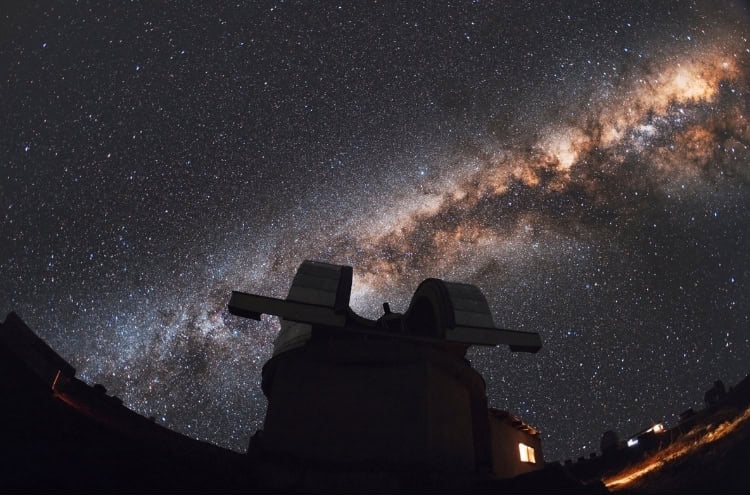
Located in the Davis Mountains of West Texas, the observatory is one of the best places in the country to make stargazing interactive. This is not just a pull-off, a blanket and a hope for clear skies. McDonald Observatory offers public programs, including evening star parties with constellation tours and telescope viewing.
That makes it especially good for beginners. The night sky can be overwhelming if you do not know what you are looking at. At McDonald, staff and volunteers help visitors identify constellations, planets and deep-sky objects. Instead of staring upward and pretending to understand the difference between a star and a satellite, you get some guidance.
The location helps, too. The Davis Mountains offer darker skies than most populated areas, and the observatory setting gives the evening a sense of occasion. It feels like a field trip in the best possible way.
This is also a smart choice for families or travelers who want structure. Not everyone wants to drive into a remote park at midnight and figure it out alone. Sometimes the best stargazing trip is the one where someone hands you a telescope view and says, “Look here.”
8. Craters of the Moon National Monument and Preserve, Idaho
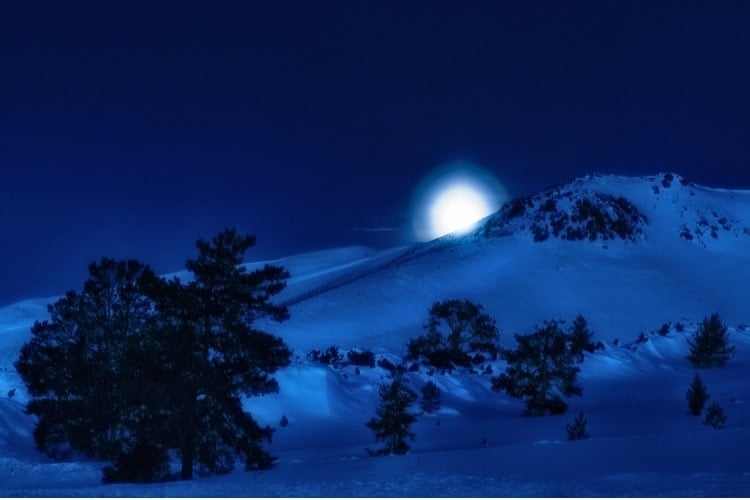
This Idaho national monument protects a vast volcanic landscape of lava flows, cinder cones, caves and black rock. In daylight, it already has a lunar quality. At night, under a dark sky, the effect becomes even stronger. The land looks raw and strange, and the stars overhead seem to complete the scene.
Craters of the Moon has been designated an International Dark Sky Park, and its volcanic terrain gives it one of the most distinctive on-the-ground experiences of any place on this list. The sky may be the reason you go, but the landscape is what makes you remember it.
The Milky Way can be visible under clear, moonless skies, especially after your eyes adjust and the last traces of twilight disappear. Stargazing here is less about comfort and more about atmosphere. You are standing on old lava, looking up at ancient light. It is hard not to feel the scale of things.
For travelers who want a dark sky destination that is not another red-rock canyon or desert overlook, Craters of the Moon is a strong choice. It is eerie in the best way.
9. Assateague Island National Seashore, Maryland and Virginia
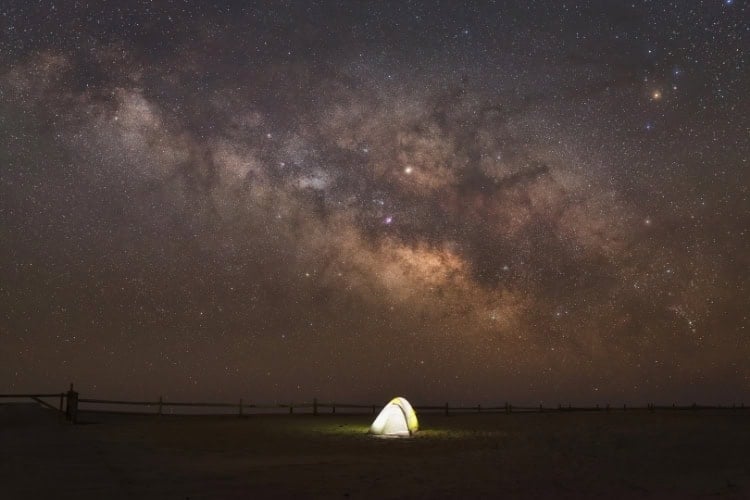
Stretching along the coasts of Maryland and Virginia, Assateague Island is known for its windswept beaches, salt marshes, maritime forests and wild horses. By day, it feels like a place shaped by movement: ocean wind, shifting sand, tides and storms. At night, especially on the Maryland side, where the district is open 24 hours, the island can offer a more accessible coastal dark-sky experience for East Coast travelers.
The appeal here is atmosphere. Stars over the Atlantic feel different from stars over the desert. The horizon is open. The ocean is audible. The dunes sit behind you. Somewhere nearby, the island’s horses may be moving through the dark, though visitors should always keep a safe distance and never treat them like props.
For readers who want the most technically impressive Eastern dark sky, Cherry Springs is the stronger bet. But for travelers who want stars, beach camping and a wilder coastal setting, Assateague has a pull that is hard to replicate.
10. Denali National Park and Preserve, Alaska
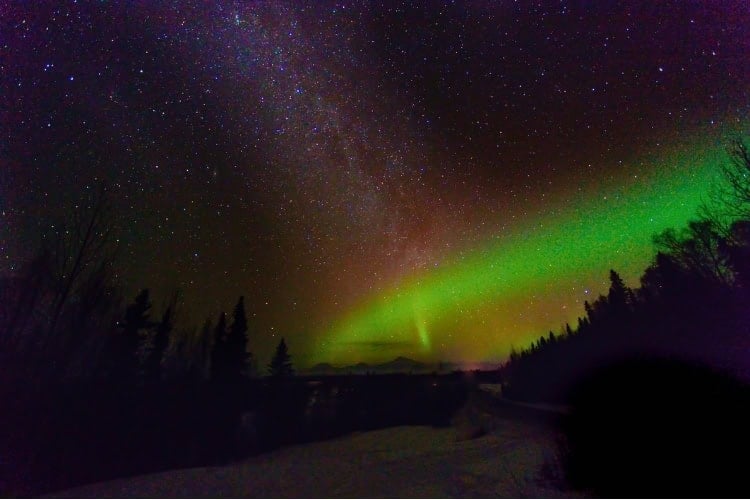
Because of its far northern latitude and limited light pollution, Denali is one of the best national parks for travelers hoping to see the aurora borealis. This is not the same kind of stargazing trip as the desert Southwest. In summer, Alaska’s long daylight hours can make traditional stargazing difficult or impossible. The darker season, especially fall through early spring, is better for aurora viewing.
That seasonal difference matters. Denali is not a June Milky Way destination in the same way Death Valley or Big Bend can be. Its night-sky magic comes when darkness returns and solar activity, clear skies and timing line up.
The reward is enormous. The aurora can appear as green, white, pink or purple light moving across the sky. It is not guaranteed, which is part of the deal. You can plan carefully and still see nothing. You can also step outside on the right night and watch the sky behave like it is alive.
Denali also brings a different kind of scale to the experience. The park is immense, mountainous and wild in a way that resists easy packaging. A night sky here is not just a pretty ceiling. It is part of a larger northern world.
Read More: Chasing the Aurora Borealis: 10 Magical Destinations for the World’s Greatest Light Show
Need a hand planning your trip? Here are the sites and services we rely on most, from booking tools to travel products we love.
Inspire your next adventure with our articles below:
- Two National Parks, One Epic Road Trip: Yellowstone and Rocky Mountain
- Canoeing Maine’s Mystical Allagash: Where Ghost Trains and Wilderness Waters Collide
Want to discover more hidden gems and helpful travel tips? Join our free newsletter for the latest travel secrets and travel articles.
We are reader-supported and may earn a commission on purchases made through links in this article.

- Language Learning Travel Guide - September 12, 2026
- Safari Travel Guide - September 12, 2026
- Luxembourg City in 24 Hours: Essential Sights, Views and Cafés - September 12, 2026
Planning another trip soon? ✈️
Add GoWorldTravel.com as a preferred source on Google. Click the button below so our local guides, packing hacks, and hidden-gem itineraries always show up first when you search!
Add to Preferred Sources