
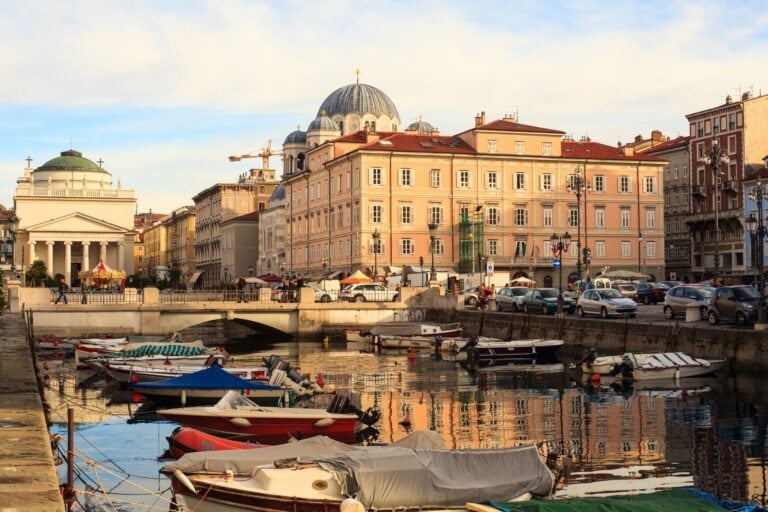
While Croatia was a part of Yugoslavia, Trieste was a true shopping heaven. Our parents regularly went, as the song says, “to Trieste for jeans.”
That is why we Croats may unjustly neglect the beautiful Trieste.
Of course, Italy has many famous destinations, such as Rome and Venice, yet Trieste shines with its own charm.
Not only are there charming cafes where James Joyce spent time, but also an intense love affair with coffee drinking (more on that later).
It is the capital of the Friuli-Venezia Giulia region, with Austrian influences (it was a part of the Austro-Hungarian Empire). It has beautiful neoclassical architecture similar to Vienna and Europe’s largest seafront square.
This European town is located in the northeastern corner of Italy, between the Mediterranean and the Alps’ foothills.
So, where can you drink the best “caffè corretto?” Why don’t you get a cappuccino after 11 a.m. in Italy? And where is the best view of the city and the Adriatic Sea?
Find out in this travel guide.
1. Piazza dell’Unità d’Italia
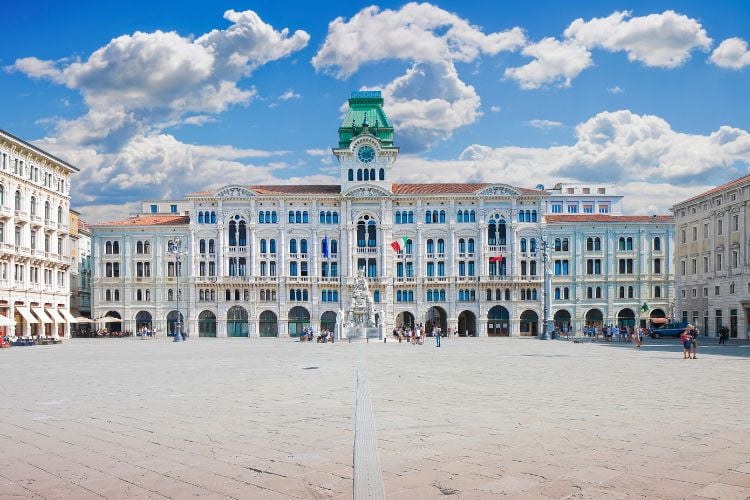
I love this place. Piazza dell’Unità d’Italia is Trieste’s crown jewel. It’s the city center, so you’ll probably go there first.
It has beautiful buildings with neoclassical and Austro-Hungarian influences. You’ll also see Town Hall, a neo-Gothic and Venetian architectural gem.
This piazza is also Europe’s largest seafront square.
But the real magic happens at night. The buildings are lit up, creating an inviting reflection on the cobblestone floor. Open-air concerts, festivals and vibrant markets attract both locals and tourists. All of this generates a unique atmosphere.
Also, don’t forget to explore the local cafés and restaurants, as well as the neighboring Piazza della Borsa. I recommend a traditional “caffè triestino” and local dishes such as jota, a hearty bean and sauerkraut soup.
You will enjoy strolling through this square while the sun shines off the Adriatic Sea and the aroma of fresh espresso wafts from nearby cafés, inviting you to pause and enjoy life.
So, sit back, smile and relax. You are in Italy.
2. Teatro Romano (Roman Theater)
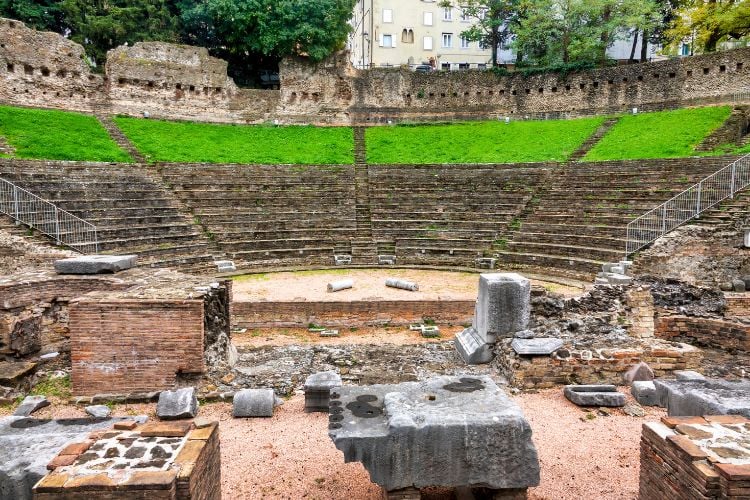
Let’s step back to the 1st century AD. The Roman Theater is a must-see attraction.
As you walk through the ruins, you can almost hear the whispers of history—gladiatorial contests, dramatic plays and lively festivals. And one of the most captivating things is how Teatro Romano was built into the hillside, providing breathtaking views.
Today, it hosts cultural events. I bet it’s beautiful to go to an outdoor concert while the stars sparkle and the music echoes off the old stone walls.
And if you wish to view more Roman antiquity, I recommend walking past the Arch of Riccardo, which was built between 33 and 32 BC.
3. Museo Revoltella
Museo Revoltella is a fascinating modern art museum that has six floors. It is located in a beautiful building that was the residence of the wealthy industrialist and art collector, Baron Pasquale Revoltella.
You can see his private accommodations on the first three floors, where the rooms are lavishly adorned with historical furniture and accessories.
Revoltella has a fantastic collection of 19th- and 20th-century art, primarily by Italian artists. There are hundreds of artworks.
However, I would say that the Revoltella itself is also a piece of art, with clean lines, large windows and a rooftop terrace that offers a stunning view of Trieste’s skyline.
4. Castello di Miramare (Miramare Castle)
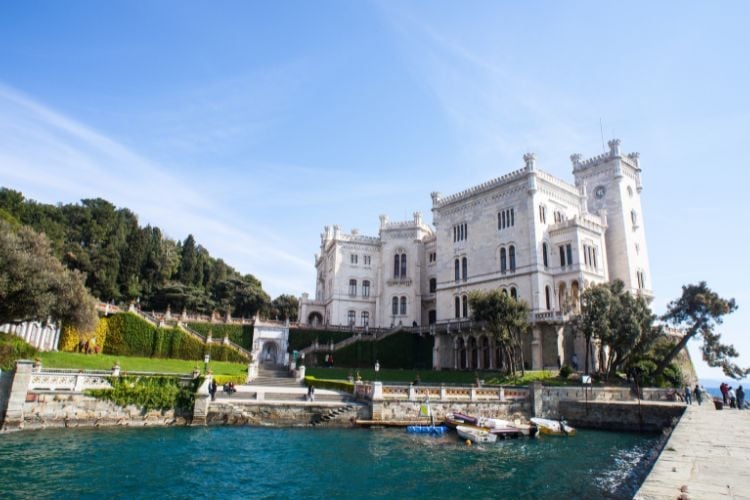
You shouldn’t miss Miramare Castle. It is one of the most beautiful things to do in Trieste.
Archduke Ferdinand Maximilian of Habsburg built it in the mid-19th century for his love, Charlotte. They lived here till they went to Mexico.
The beautiful white building, which shines out against the green nature and blue Adriatic Sea, will delight you. It also has a lovely view of the Gulf of Trieste.
When you’ve been mesmerized by the beauty of the castle’s interior, I recommend a leisurely stroll through Miramare Castle Park. It features exotic plants and trees that evoke Mediterranean vibes. Along with royal vibes, of course.
Maximilian loved the sea, so the castle is located right next to the Adriatic Sea. Simple as that.
5. Castello di San Giusto
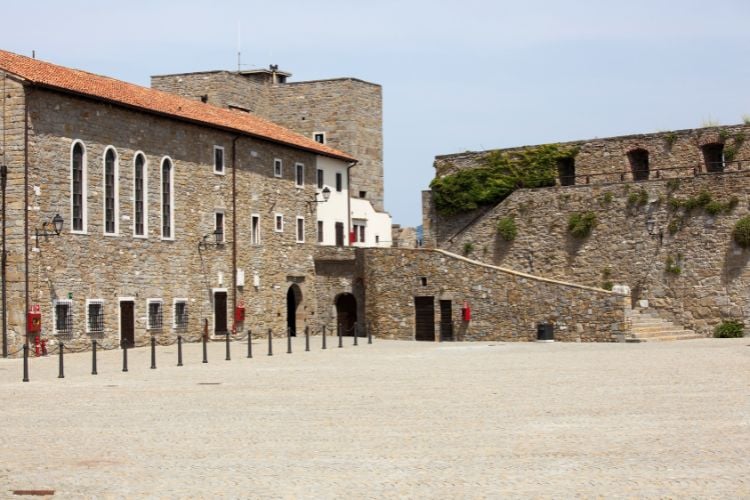
Castello di San Giusto is a captivating Gothic fortress located on the San Giusto hill.
Inside the castle is the museum, where you can learn about local history. You may tour the well-preserved battlements and take in panoramic views of Trieste and the Adriatic Sea.
Another place for an even more beautiful panoramic view is Faro della Vittoria, an active Victory Lighthouse. It is 68 meters high and 129 meters above sea level, making it one of the world’s tallest lighthouses.
It’s free to access, but it’s a little out of town.
6. Museum Risiera di San Sabba
This may not be the type of vacation experience you had in mind. However, I suggest it as a reminder to be grateful, which we all need from time to time.
The Museum Risiera di San Sabba commemorates the most terrible of events. It was converted into a concentration camp for Jewish people and political opponents during World War II.
This camp was the only Nazi facility in Italy equipped with a crematorium.
Risiera di San Sabba received national monument status in 1965.
Some researchers estimate that at least 2,000 people died here, while others say 4,000 to 5,000. Executions of prisoners often took place at night, and the sounds of music were used to mask the screams of the victims.
The museum is free to visit, but I recommend purchasing an audio guide to learn more (it costs about 3 euros).
Of course, be ready for the heavy atmosphere; you can feel the weight of the past in every single corner.
7. Stroll Along the Molo Audace and Harbor

“Molo Audace” is Trieste’s waterfront promenade, once known as “San Carlo.” It is right in front of the iconic “Piazza Unità,” so you can’t miss it.
What should you do here? Well, relax, enjoy the view and say, “Che bello!”
8. Cattedrale di San Giusto
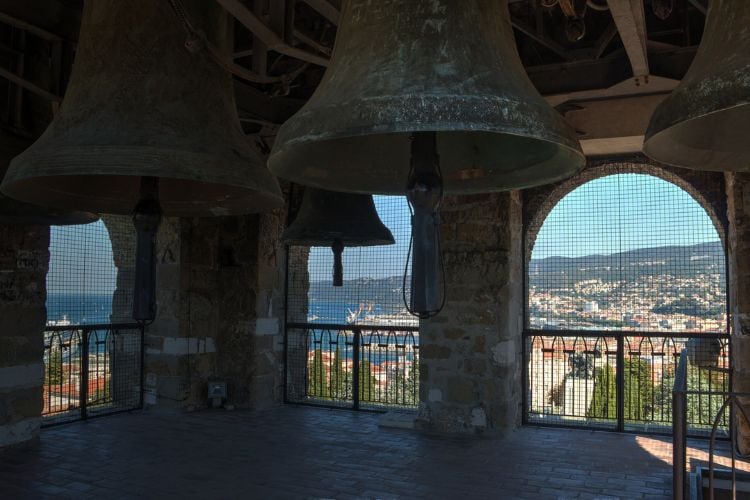
The Cattedrale di San Giusto is another place worth visiting.
Here is an added bonus: a panoramic view from the San Giusto hill of Trieste and the Adriatic Sea.
The Cattedrale di San Giusto is a nice example of Roman architecture with a lovely façade. It is dedicated to Saint Justus, Trieste’s patron saint.
I recommend going inside, where you can find mosaics and a serene atmosphere. There are also the relics of Saint Justus, which add to its spiritual significance.
Speaking of churches, I also recommend Sant’Antonio, located near the end of the Grand Canale, as well as the Serbian Orthodox Church, which reflects Byzantine and Eastern Orthodox architecture.
9. Experience Trieste’s Unique Coffee Culture in Historic Cafes
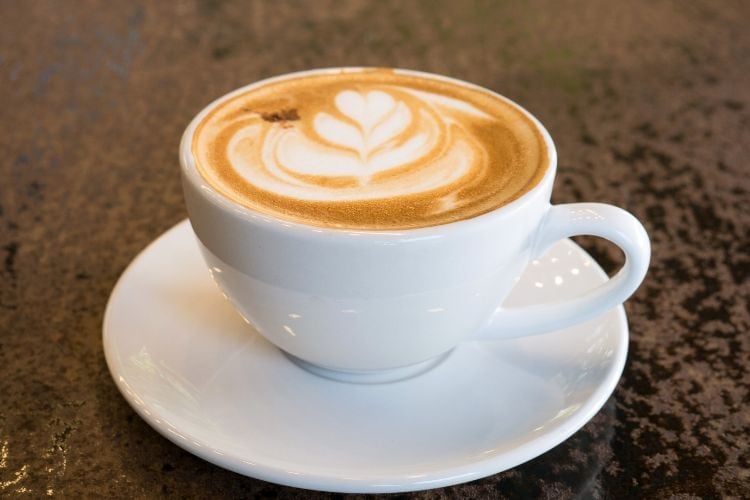
We Croats have a special love affair with coffee, but the Italians are not far behind. So, good news for coffee lovers: you will enjoy every sip in Trieste. The coffee is really good here.
In fact, Trieste is commonly referred to as Italy’s coffee capital.
But where to go?
I recommend the iconic historic café called Caffè San Marco, where literary figures gather. Even James Joyce drank beer there. Cool, right?
I also recommend Caffè degli Specchi for its beautiful view of Piazza Unità d’Italia.
While there, try the locals’ favorite “caffè corretto,” which is an espresso with a shot of grappa. Grappa is an Italian pomace brandy prepared from grapes’ residual skins, seeds and stems after winemaking. The price is about 3.5 euros.
Caffe Tommaseo is another gem, known for its cozy ambiance and artisanal pastries. The sweet bread (I recommend it filled with nuts and chocolate), perfectly paired with your coffee.
Pro tip: if you want to act Italian, “cappuccino” is only appropriate in the morning (until 11:00). It’s a tradition because Italians think that drinking milk-based drinks late in the day can be heavy on the stomach.
So, in the afternoon, they prefer corretto, espresso or a macchiato. Of course, if you are rebellious and want to break the rules, feel free to do it (but you risk being the worst tourist ever).
Or you can simply order prosecco so you don’t have to think about what time of day it is.
10. Take a Day Trip to Lake Bled and Ljubljana, Slovenia
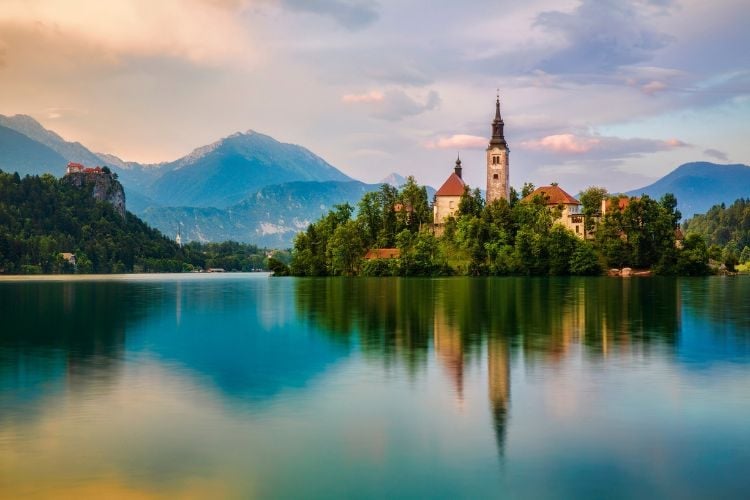
You can see everything in Trieste in two days. So if you have more time, I recommend a day trip to Slovenia. It is a small, beautiful country with plenty of natural beauty.
And renting a car allows you to explore everything.
Enjoy a walking tour of Lake Bled, have a coffee in lovely Ljubljana (the capital) and take a guided tour of the Slovenian Postojna Cave.
For me, Postojna Cave was a lovely experience. You can take a train ride through the cave, enjoy one of the world’s largest karst cave formations, admire the huge stalactites and stalagmites and see the famous human fish.
If you want to visit a cave but don’t want to travel all the way to Slovenia, go to Grotta Gigante. It is about 20 kilometers from the city center of Trieste.
There is also a beautiful valley called Val Rosandra on the border of Italy and Slovenia. It is a nice alternative for nature lovers.
And if you prefer city vibes, consider Austrian Vienna or Italian Milan and Venice.
Where to Stay in the City of Trieste
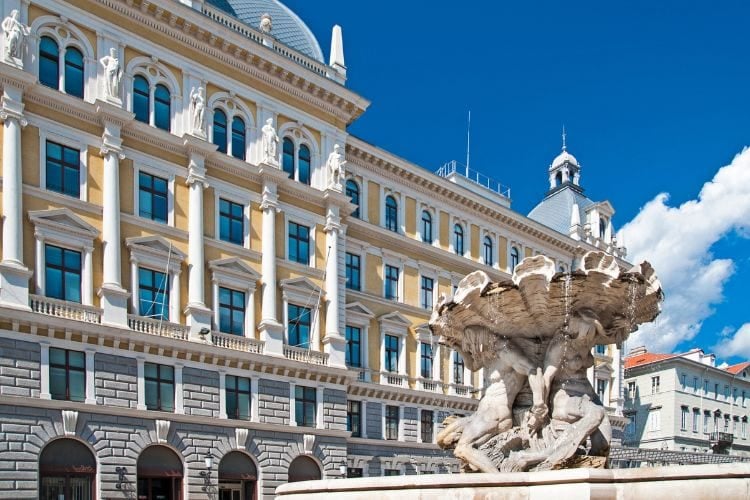
When visiting Trieste, consider staying near the Piazza Unità d’Italia. It’s the city’s heart, where beautiful architecture meets charming cafés and restaurants.
This area provides easy access to Trieste’s waterfront promenade, perfect for evening strolls.
Also, consider the Città Vecchia (Old Town). Its cobblestone streets lead to hidden gems such as the Roman Theatre and the Cathedral of San Giusto. You will love its bustling atmosphere and local seafood eateries.
The Grande Canal region offers an idyllic experience with charming canals and colorful buildings. It reminds me of Venice and it is perfect for leisurely dining and scenic views.
If you prefer a more tranquil location, the San Giusto district, with its hilltop castle, offers beautiful views and a relaxing mood after a day of touring.
When is the Best Time to Visit Trieste?
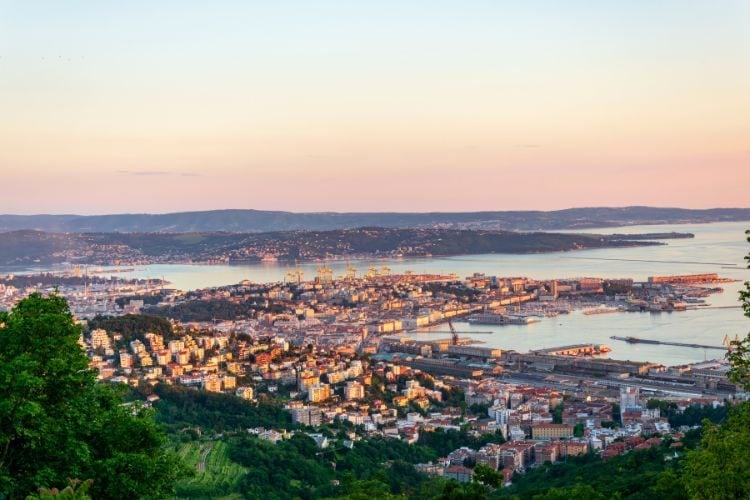
The best time to visit Trieste is between April and October.
In spring, the weather is pleasantly mild, with blooming flowers and vibrant outdoor cafés. It is perfect for exploring the city’s parks and Trieste’s waterfront.
Summer in Italy is hot, but luckily, there is the Adriatic Sea. However, summer (July and August) attracts more visitors, so be prepared for larger crowds.
Early autumn offers similar conditions to spring. It has fewer tourists and comfortable temperatures, ideal for sightseeing.
Events like the Trieste Coffee Festival in October also add to the local charm.
Winter (December to February) is quieter, with festive holiday markets. But the temperatures are lower, so if you don’t like walking tours in the cold, don’t risk it.
Anyway, whatever you choose, one thing is sure: Italy is always a good idea.
Need a hand planning your trip? Here are the sites and services we rely on most, from booking tools to travel products we love.
Inspire your next adventure with our articles below:
Want to discover more hidden gems and helpful travel tips? Join our free newsletter for the latest travel secrets and travel articles.
We are reader-supported and may earn a commission on purchases made through links in this article.

- Why So Many Travelers Are Flocking to Lake Bled in Slovenia - August 31, 2026
- The Eye of the Earth: Croatia’s Cetina River Springs - August 24, 2026
- These Italian Lakes Offer Alpine Beauty Without the Lake Como Crowds - August 19, 2026
Planning another trip soon? ✈️
Add GoWorldTravel.com as a preferred source on Google. Click the button below so our local guides, packing hacks, and hidden-gem itineraries always show up first when you search!
Add to Preferred Sources