
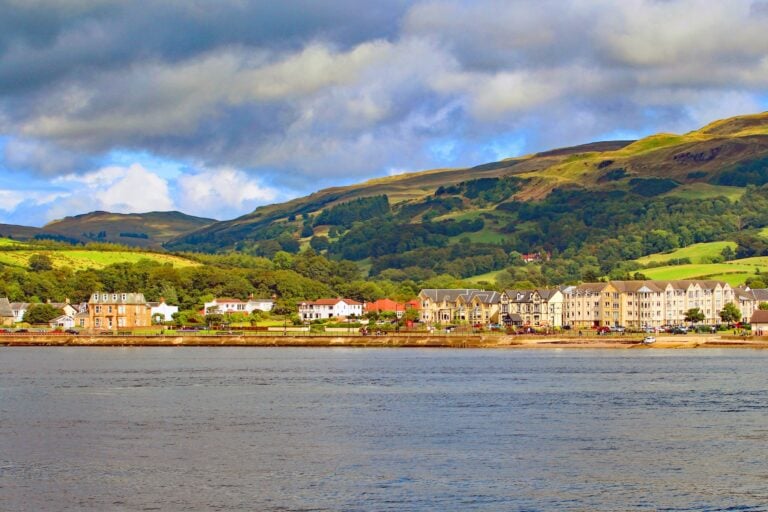

Nestled in the Firth of Clyde, just off the west coast of Scotland, sits the Isle of Arran. It’s not a large island, around 20 miles long and 10 miles wide, with one road around the coastline and a second cutting across the middle. But Arran packs so much into this little space that it’s referred to as Scotland in Miniature.
When visitors think of Scotland, they conjure up images of mountains, castles, waterfalls, distilleries and stone circles. The Isle of Arran has every single one of these and much more to share.
The Highland Boundary Fault runs right through the middle of the island, leaving rugged, windswept mountains in the north and sweeping farmland and moors to the south.
Getting to and Around the Isle of Arran
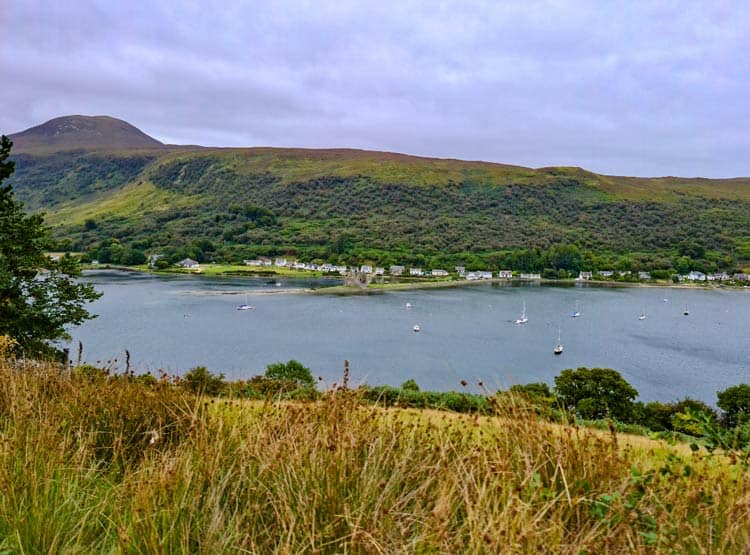
Being an island, the most important thing you need to know about Arran is how to get there. Caledonian MacBrayne run two ferries, the most popular between Ardrossan on the mainland and Brodick. Ardrossan is only an hour from Glasgow and 2 hours from Edinburgh so very accessible.
Driving on and off the ferry is straightforward, and unlike many other Scottish islands, Arran has well-maintained dual-lane roads. If you are looking to travel by foot, then Ardrossan has a train station and the island is well serviced by local buses.
The crossing takes around 55 minutes and must be booked in advance. Check current fares and timetables at calmac.co.uk.
If you’re planning a trip to Scotland, check out our Scotland Travel Guide, where you’ll find a curated selection of articles to inspire you and help plan your trip.
Traditional Scottish Castles
It wouldn’t be Scotland in miniature without some castles and the Isle of Arran is blessed with three, evenly spread out and showcasing completely different states. At the very south of the island, the remains of Kildonan Castle cling to a cliff overlooking the beach.
This once mighty stronghold of the MacDonalds was abandoned in the 16th century and is now barely more than a couple of crumbling walls.
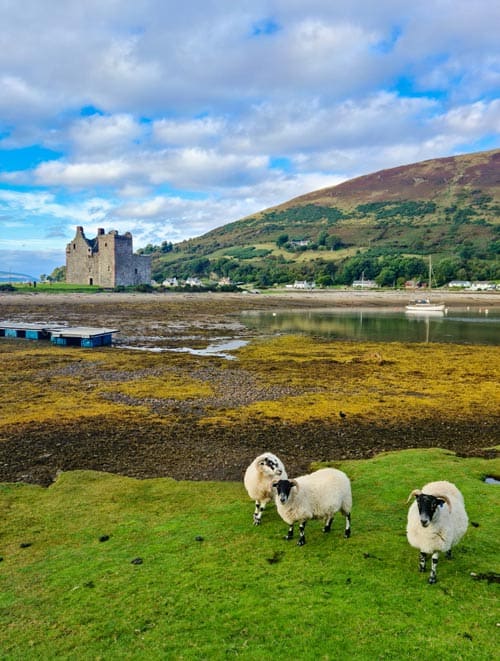
At the very north of Arran, the ruined but still imposing Lochranza Castle stands on a little peninsula jutting out into a sea loch. Owned by Historic Scotland, visitors can explore the inside of this former Royal hunting lodge for free during the summer months.
Even from the outside, it’s easy to appreciate the picturesque setting. Just imagine a dozen longships pulled up on the beach next to the castle, ready to head off on another coastal raid.
The third of Arran’s fortresses is the thankfully intact Brodick Castle, still maintained as a grand residence by the National Trust for Scotland. Previously home to the Dukes of Hamilton, the castle history goes back as far as the 5th century.
Outside, the gardens are vast while inside tells the story of the 11th Duke, otherwise known as the most handsome man in Europe, and his Princess bride.
Brodick Castle is open seasonally — check current opening dates and admission prices at here before you visit.
Machrie Moor Standing Stones
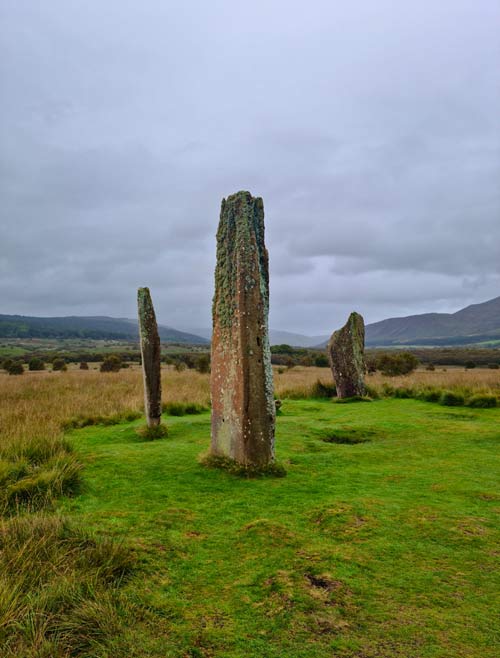
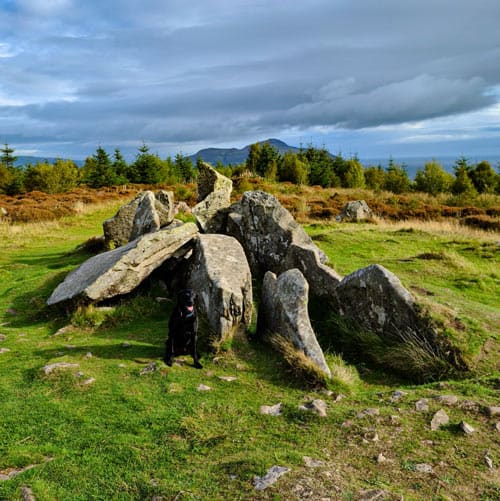
The Isle of Arran is littered with prehistoric sites but there is one that eclipses the rest. The Machrie Moor Standing Stones are a collection of 6 stone circles of varying sizes, but all equally fascinating. This might be Scotland in miniature but some of the stones are enormous, towering almost 5 metres high.
If the size of the stones and their atmospheric location doesn’t take your breath away, then maybe the fact that these were raised by humans between 3500 and 5500 years ago will. We might never know exactly what each circle means, but the local community has come up with their own legends over the years.
Aside from the largest stones, sits a smaller double circle known as Fingal’s Cauldron Seat. A legendary Gaelic hero was said to use the stones as a base to cook his supper on.
His faithful dog, Bran, kept begging for scraps, so Fingal used a little hole in the corner of one stone to tie the hound up. Spend a little bit of time looking and you can still find that hole, worn smooth over thousands of years.
There is no charge to visit the standing stones, just a small car park off the main road and then a flat walk of around 30 minutes to the cluster of stone circles.
Tumbling Waterfalls
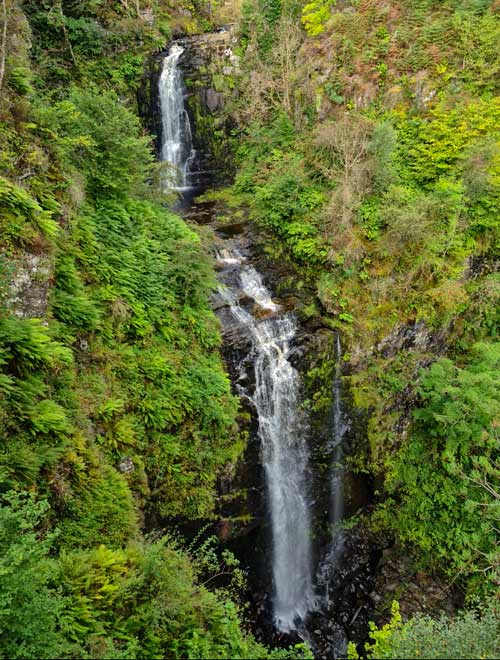
Arran is blessed with some spectacularly underrated waterfalls, all just a short walk away. For a crashing double waterfall, head to Glenashdale near the south of the island. After a short hike, a wooden viewing platform appears, hanging over the edge to give the best aspect of the crashing water.
Follow the same circular path a little further uphill and Glenashdale has another surprise. In a clearing, with views out over the landscape, are the remains of two Neolithic cairn burials known as the Giants’ Graves.
The name hints at the size of the monuments. If they were each built as stone coffins, then their inhabitants could have been 22 feet and 7 feet tall.
Further north, rather than a single large waterfall, North Glen Sannox is a low-level walk along the side of a series of tumbling falls. The further along the path you walk, the more impressive the features get and the more stunning the backdrop.
While the Fairy Pools on the Isle of Skye are regularly packed with visitors, this lesser-known walk on Arran is every bit as enjoyable but far more peaceful.
Glenashdale & The Giants’ Graves takes around 2 hours, while North Glen Sannox takes around an hour and a half. Both walks are well signposted with large, free car parks.
The Outlaw King’s Cave
As an island, it’s no surprise that Arran has a fascinating coastline. There are plenty of beaches and cliffs, but nowhere is as interesting as King’s Cave. This is allegedly where the warrior King of Scots, Robert the Bruce, hid during the winter of 1306. The monarch had a rough start to his reign, almost immediately losing a series of battles and being forced into hiding like an outlaw.
A popular children’s story describes how the King was sitting in this cave on Arran, considering giving up the fight for Scotland, when he saw a little spider. It was trying to make a web, but every time it jumped from one strand to another, the spider fell and had to start again.
Eventually, the determined spider made the leap, finished the web, and the King of Scots was inspired. Some believe this is the true origin of the phrase, “if at first you don’t succeed, try and try again.”
King’s Cave is a circular walk that takes around 2 hours. The gate at the entrance is no longer locked and the cave can be accessed all year round.
Scotch Whisky Distilleries
If you travelled to Scotland to sample some Scotch Whisky, the Isle of Arran has two distilleries worth your time.
Lochranza Distillery in the north has been producing award-winning unpeated single malt since 1995. Book a guided tour of the whisky-making process and stay for a tasting — the whisky and chocolate pairing is a particular highlight. Visit arranwhisky.com to reserve your spot.
Lagg Distillery in the south opened in 2019 and goes in a completely different direction, producing heavily peated spirit that’s smokier and earthier — closer in character to an Islay malt. Tours and tastings run Tuesday through Saturday and must be booked in advance at laggwhisky.com.
If You Go
Getting There: Caledonian MacBrayne runs the ferry from Ardrossan to Brodick, with the crossing taking around 55 minutes. Book ahead at calmac.co.uk. Ardrossan is about an hour from Glasgow by train, making Arran an easy addition to any Scotland itinerary.
Getting Around: A car gives you the most flexibility on Arran. Compare rental options at Discover Cars before you go.
Where to Stay: Browse hotels, B&Bs, and guesthouses on TripAdvisor, or search self-catering cottages and vacation rentals on VRBO.
Flights: Find flights and travel packages to Scotland at CheapOair.
Stay Connected: Traveling from outside the UK? Pick up an eSIM before you leave through Airalo and skip the roaming charges.
Travel Insurance: SafetyWing offers flexible, affordable coverage that’s well-suited to independent travelers, while Squaremouth lets you compare multiple policies side by side to find the right fit for your trip.
Need a hand planning your trip? Here are the sites and services we rely on most, from booking tools to travel products we love.
Inspire your next adventure with our articles below:
Author’s Bio: Graeme is the writer and storyteller behind Scotland’s Stories. In love with the history and folklore of Scotland, his mission is to share these stories in an engaging way to help people appreciate their travel more.
Want to discover more hidden gems and helpful travel tips? Join our free newsletter for the latest travel secrets and travel articles.
We are reader-supported and may earn a commission on purchases made through links in this article.

- El Nido, Philippines: The Islands I Came For, the People Who Made Me Stay - September 30, 2026
- A Guide to Noodles in Vietnam: How to Slurp Like a Local - September 30, 2026
- Travel Guide to Japan - September 29, 2026
Planning another trip soon? ✈️
Add GoWorldTravel.com as a preferred source on Google. Click the button below so our local guides, packing hacks, and hidden-gem itineraries always show up first when you search!
Add to Preferred Sources