
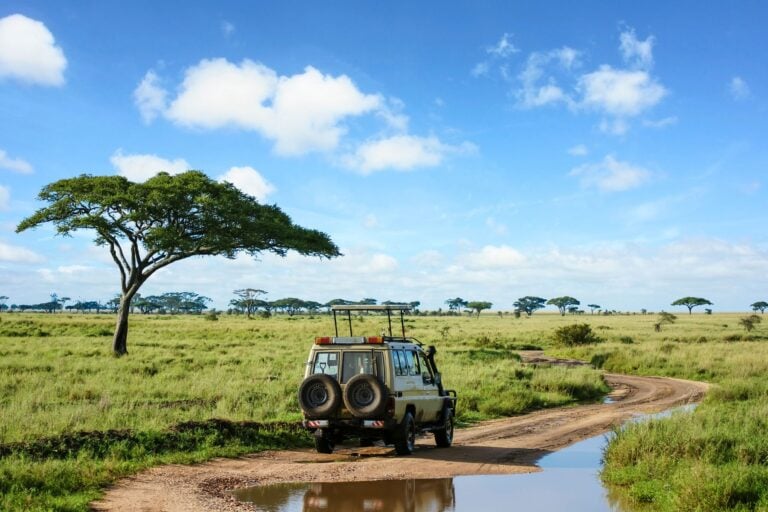
I pulled the red bandana over my nose as another cloud of dust swirled through the truck window. It was Christmas Day and I had just driven us seven hours through the Serengeti National Park in our rented 4×4. After bumping over rutted gravel roads and bouncing over potholes, I was glad our safari lodge was now in view.
High on the list of honeymoon destinations, Tanzania is famed for its luxurious safari lodges and its high concentration of wildlife. With the twin centre of Zanzibar and its stunning white beaches on the Indian Ocean a short flight away, this African treasure is the perfect destination to take a trip of a lifetime.
The word Serengeti translates from the Maasai word siringet, meaning the place where the land runs on forever. This national park is vast. At 5,700 square miles, it is home to over 1.5 million wildebeest and over 3,000 lions, the largest lion population in Africa
With over 500 species of birds and swathes of other mammals, it is a special experience for any traveller. However, there is a reason most people save this location for a trip of a lifetime: it is known for being astronomically expensive.
Off-Roading, Not for the Faint-Hearted
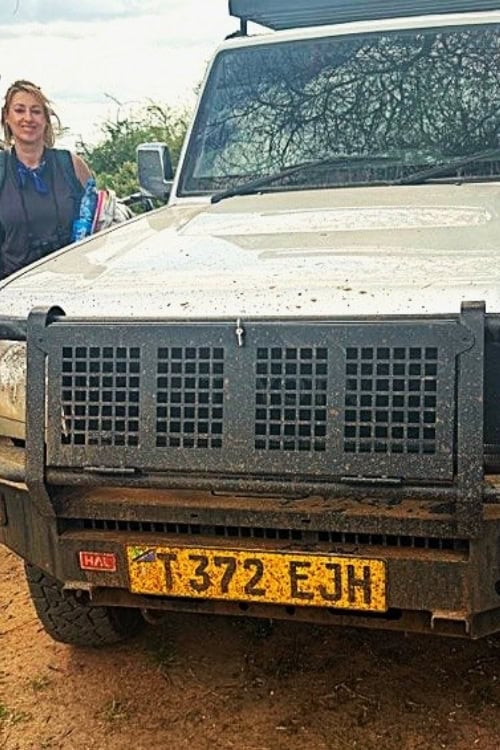
Photo by Simon Clark
Tanzania, and in particular the Serengeti, had been high on our list to visit for some time. Passionate about wildlife, we have had the privilege of going on safaris in several other African countries. However, we wanted to visit this iconic location without breaking the bank.
In other locations, we found that one of the best ways to do this is to self-drive. Rather than booking a group tour or paying for a private driver, we have hired our own 4×4 and booked our accommodation independently.
This approach isn’t for the faint-hearted or the inexperienced, but it is doable, highly enjoyable and much more affordable.
With a bit of research, I identified a safari lodge that wouldn’t bankrupt us. Also a vehicle hire company willing to let us drive ourselves.
Having driven the moon-like landscapes of Namibia, sand tracks of Botswana and the gravel roads of the Kruger in South Africa, I have done my fair share of off-roading. So I was excited to pick up our Toyota Land Cruiser in Arusha.
What I hadn’t realised, however, was that it was highly unusual to hire a vehicle without a driver in Tanzania. And it is nearly unheard of for a female to be doing the hiring.
Clearly shocked that I was the main driver, the vehicle hire proprietor defaulted to talking my husband through the vehicle’s attributes. He made it clear he needed to talk me through the “farmer’s jack” and how to change into a lower gear, but he remained puzzled.
Christmas Day on the Road to the Serengeti
Setting off on Christmas morning towards the Serengeti, we hadn’t realised (due to a lack of information online) the number of checkpoints and park fees involved in passing through the conservancy areas to get there.
Or how I would have to jostle and hustle for position with the male safari guides to make sure my paperwork got stamped and approved.
As a female driver, the guides didn’t know what to make of me. At times I felt like a tourist attraction. Everyone was polite but eyed me with awe and suspicion every time I climbed into the driver’s seat.
An Unfenced Camp at Ikoma
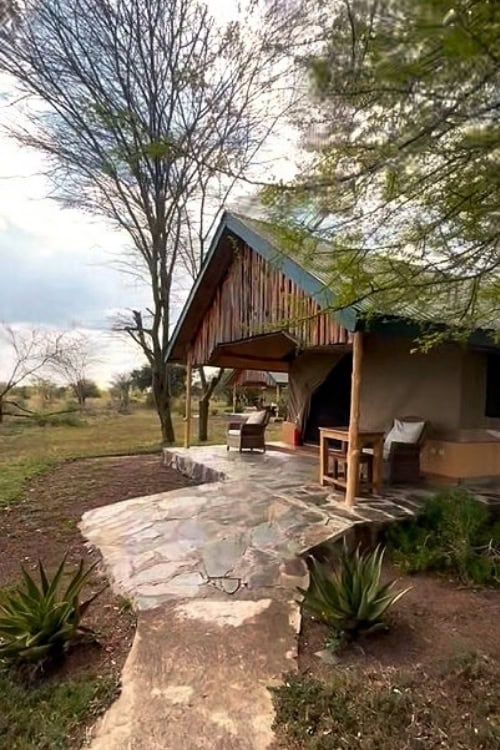
After our epic drive, we arrived at Africa Safari Serengeti Ikoma Lodge just outside the park’s northwestern boundary, near Ikoma Gate. Unfenced, a plethora of wildlife teemed outside the door of our safari tent.
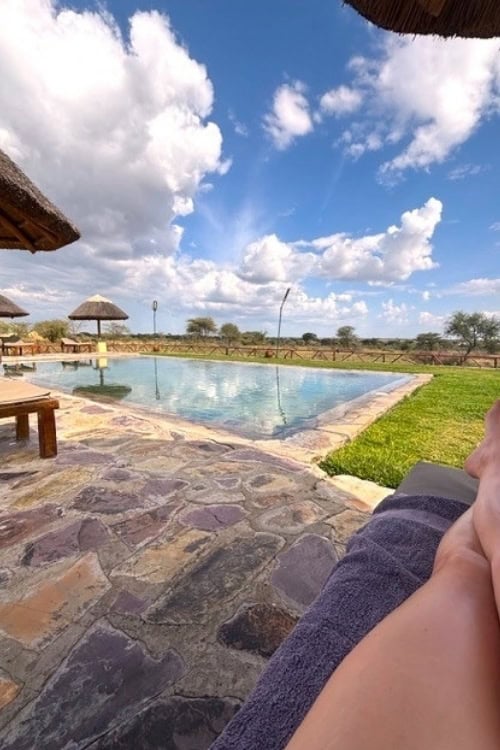
With its luxurious swimming pool complete with elephants wandering by, I was in wildlife heaven. After dark, the skies were black and star-covered, the camp silent. With the torch provided, I was grateful for the guard who safely escorted us to and from the restaurant where we enjoyed a delicious braai.
We felt very safe, even when we came face to face with buffalo in the pitch black on our way back. We were then given strict instructions not to leave the tent until dawn.
Wildebeest, Wildebeest and More Wildebeest
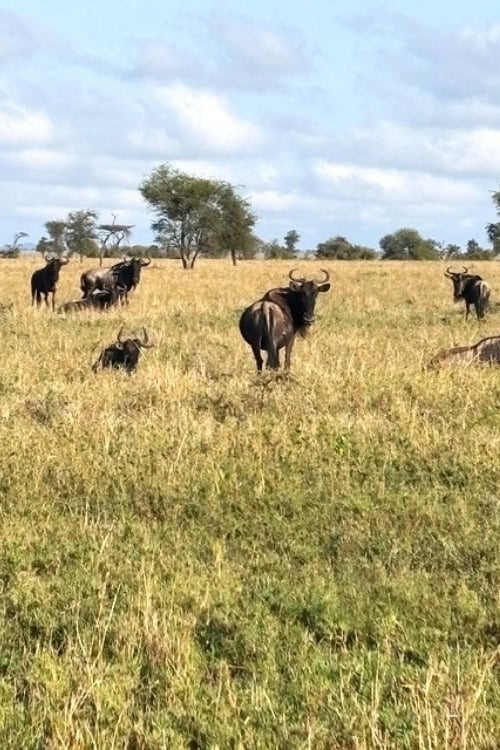
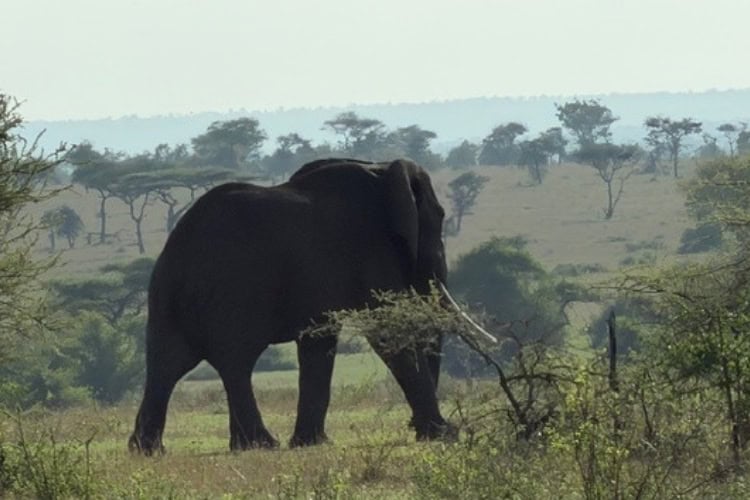
Spending our days driving across the plains, we couldn’t get over the huge numbers of animals we were seeing. With the wildebeest herds moving south toward their calving grounds, the numbers were colossal.
The number of zebra, hyena, lion and even cheetah we spotted was up there with the best of any other safari we had undertaken. And our trip didn’t end there.
From the Serengeti, we opted for a guided tour of the Ngorongoro Crater. This was better value than paying to take our own vehicle. It was a great way to visit this unique ecosystem.
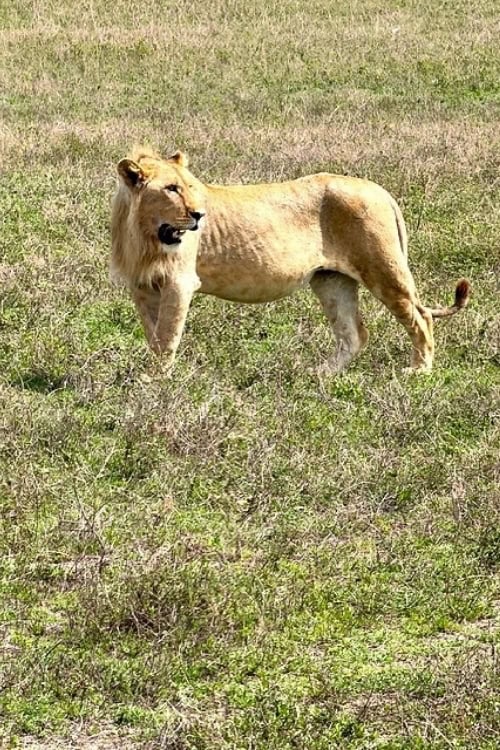
Described as a real-life “Garden of Eden,” it’s the world’s largest inactive, unbroken and unfilled volcanic caldera. It’s also one of the easiest places to spot the Big Five, which we did. From there, it was a little further to the Tarangire National Park with its abundance of elephants.
At the end of a thrilling week, we returned the vehicle to the depot where the owner shook my husband’s hand and thanked him for returning the vehicle in good condition. With a roll of my eyes, I decided not to take offence.
My hope is that in the future we might see more women behind the wheel of safari vehicles in Tanzania. Not only would they have the most exhilarating drive of their life, but they will also get to experience what it’s like to be the most unique mammal on safari.
If You Go
These are two of the companies that rent to self-drivers: Shilashi and Adventure Kaskazini
The Serengeti National Park website gives a lot of information. However, it doesn’t tell you the whole picture of the conservancy fees that you have to pay or that you need a booking reference from your vehicle hire company to enter and then leave the Serengeti.
From Arusha, you will need to drive through the Ngorongoro area (but not into the crater) before entering the Serengeti.
To stay at Ikoma, you leave the park and then re-enter each time. Ask the vehicle rental company to help you with permits, booking references and any paperwork you will need. They will charge you for this, but you cannot transit without it.
In my opinion, all of our accommodation choices were on par with “mid-range” for what you would expect in Tanzania. These are the accommodations we used:
For our seven-day vehicle hire, seven nights’ accommodation, Serengeti park fees, and Ngorongoro Crater trip, we paid $3,307 (£2,500) in total for two people. This worked out at $236 per person per day. This did not include food or fuel.
A basic camping safari is generally quoted online as around $250 per person per day, rising to $350–$450 per person per day for mid-range.
For more, read An Artist’s Safari: Seeing the Soul of the Wild in Black and White.
Need a hand planning your trip? Here are the sites and services we rely on most, from booking tools to travel products we love.
Inspire your next adventure with our articles below:
- Why South Africa’s Waterberg Makes an Easy First Family Safari
- Tales of the Savannah: A Front-Row Journey Through the Masai Mara
Author Bio: Hayley Clark is an avid traveller who has had the privilege of visiting 59 countries, including 13 unforgettable countries in Africa. She works in the UK charity sector and spends her spare time writing fiction, woodcarving, and painting. Hayley has a passion for wildlife, travel with friends and family, and authentic experiences away from the tourist trail.
Want to discover more hidden gems and helpful travel tips? Join our free newsletter for the latest travel secrets and travel articles.
We are reader-supported and may earn a commission on purchases made through links in this article.

- Self-Driving the Serengeti on a Budget: A Woman Behind the Wheel in Tanzania - November 6, 2026
- Inside Mexico’s Hidden Cenotes: Swimming in the Yucatan’s Sacred Underground Caves - November 6, 2026
- Helicopter-Access Hiking at Durrand Glacier Chalet in British Columbia’s Selkirk Mountains - November 5, 2026
Planning another trip soon? ✈️
Add GoWorldTravel.com as a preferred source on Google. Click the button below so our local guides, packing hacks, and hidden-gem itineraries always show up first when you search!
Add to Preferred Sources