

What waterway links two historic Canadian cities, flows through lakes and rivers unchanged since the 1800s and invites travellers to slow down and step into another era?
Welcome to the Rideau Canal, a 202-kilometre (126-mile) ribbon of water stretching from Ottawa to Kingston in Canada’s province of Ontario. Built in 1832 and now a UNESCO World Heritage Site, it remains one of North America’s best-preserved historic canals, complete with 47 locks still operated by hand.
In summer, the Rideau comes alive. Boats glide through sunlit channels, cyclists follow quiet backroads, and small towns hum with markets, cafés, and waterfront patios. Over two days, we explore this iconic route by both road and water, discovering that the Rideau isn’t just a journey through geography, but through time.
Day One: From Ottawa to Perth — Small Towns and Summer Charm
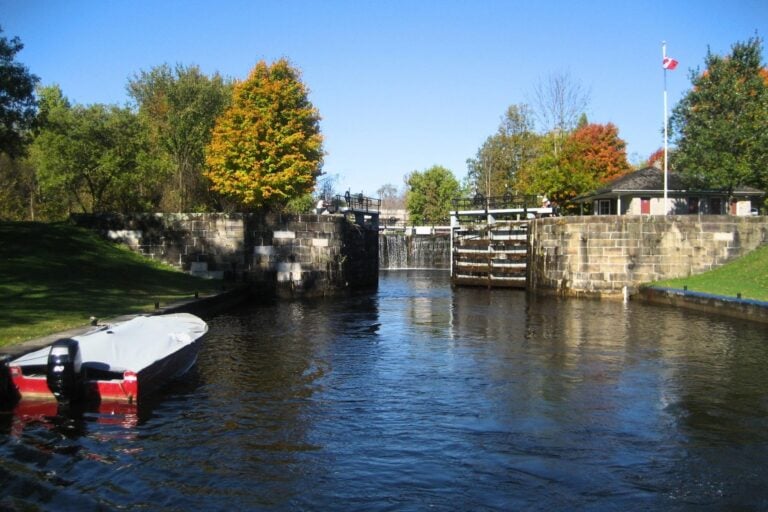
We begin just south of Ottawa at Black Rapids Lockstation, where the canal feels worlds away from the capital’s bustle. The water is calm, edged by reeds and shaded by mature trees and it’s easy to imagine steamships once navigating this same route.
It’s a surprisingly peaceful start, especially considering we’re only minutes from the airport.
Rather than taking the faster highway, we follow the scenic Rideau Heritage Route, a slower but far more rewarding drive that hugs the canal’s path through a series of postcard-perfect communities.
Our first stop is Manotick, home to the historic Watson’s Mill, one of the few working gristmills in North America. The village feels tailor-made for summer wandering—flower boxes spilling over railings, cafés buzzing with locals and the scent of fresh baking drifting through the air.
Further along, we pause in Merrickville, often called “the Jewel of the Rideau.” Its narrow streets are lined with artisan boutiques, galleries, and specialty food shops. We duck into a local favourite for small-batch mustards and gourmet treats, then linger longer than planned, exactly the kind of detour this trip invites.
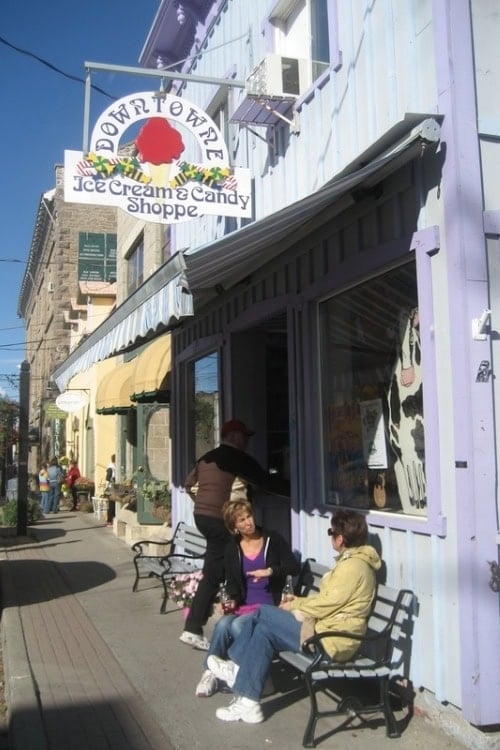
Roadside stops become part of the rhythm. A general store for ice cream. A shaded bench overlooking the water. A quiet lockstation where boaters wait patiently as gates open and close with a satisfying, mechanical simplicity.
By afternoon, we reach Smiths Falls, once a major railway and industrial hub. Today, it’s reinventing itself as a gateway to the Rideau, with museums, waterfront parks and a growing tourism scene. It’s a place that honours its past while quietly building a new identity.
But our final destination for the day is the real gem.
Perth: A Storybook Stop Worth Staying For
Nestled along the Tay River, Perth, Ontario feels like stepping into a painting. Stone buildings, heritage homes and leafy streets create an atmosphere that’s both elegant and relaxed. It’s the kind of town where you slow down without even trying.
We check into a boutique heritage property tucked into the heart of town, with high ceilings, period details, and a sense of history that lingers in every room. As it turns out, one of the spaces we’re staying in once hosted A. Y. Jackson, one of Canada’s most celebrated artists.
There’s something fitting about that.
After all, the Rideau region, with its water, light, and ever-changing landscape, feels like a living canvas.
Dinner is easy and unhurried, followed by a stroll along the river as the sun dips low. Summer evenings here stretch long and golden, the air soft and warm, the pace unforced.
Tomorrow, we trade road for water.
Day Two: Cruising the Rideau — Locks, Legends and Living History
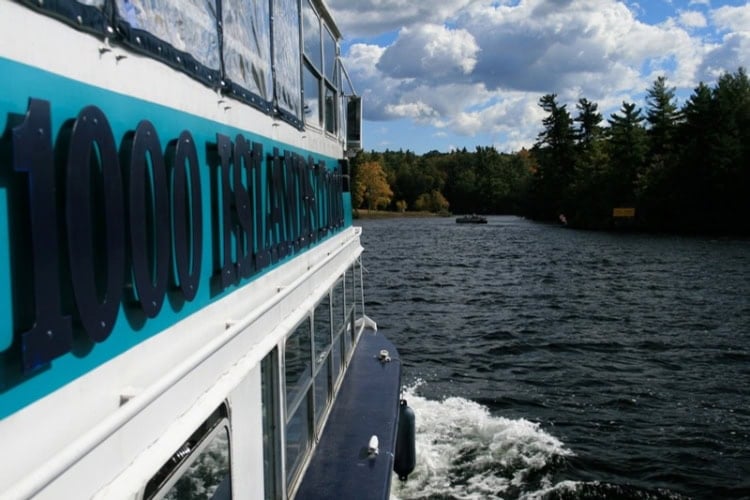
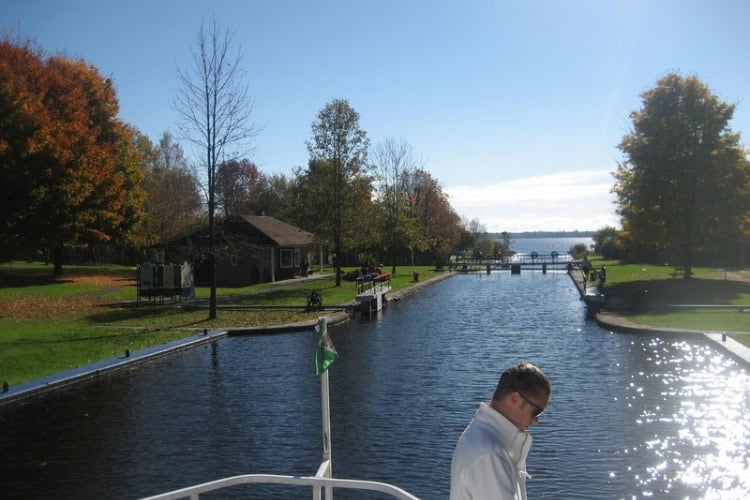
The next morning, we step aboard a sightseeing vessel for a full-day cruise along the canal, an entirely different perspective on the Rideau experience.
From the water, the landscape shifts again.
Cottages peek through trees. Wetlands open into wide, bird-filled marshes. Narrow channels carved through ancient rock reveal the engineering ambition behind this historic waterway.
How Colonel By’s Locks Work
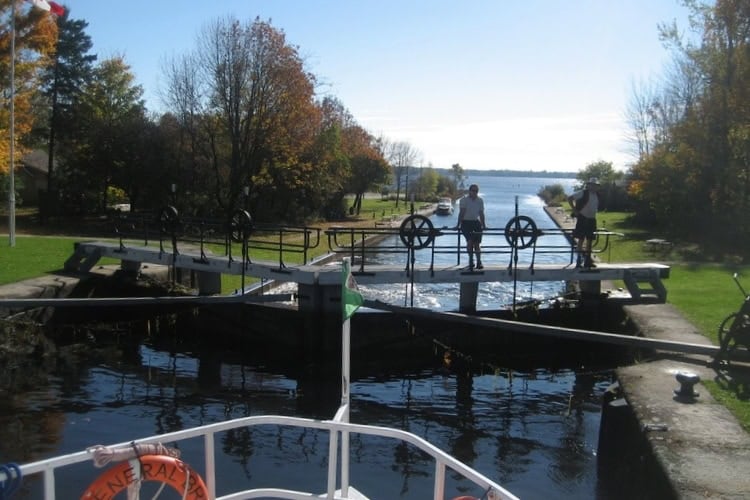
Our captain, a seasoned guide with years on the Rideau, brings the canal’s story to life.
“This isn’t just a canal,” he tells us. “It’s a story of vision, hardship, and survival.”
After the War of 1812, the British sought a secure inland route between Montreal and Kingston, safe from potential American attack. The man tasked with this monumental project was Colonel John By.
His solution: a series of locks, ingenious water elevators that raise and lower boats between different elevations.
Watching them in action is mesmerizing.
As gates swing open and water levels shift, boats rise and fall in a process that feels almost theatrical. It’s slow, deliberate, and entirely hands-on, powered not by automation, but by teamwork and tradition.
Over the course of the day, we pass through several locks, each one offering a glimpse into 19th-century engineering that still functions flawlessly today.
Nature, Stillness and Summer on the Water
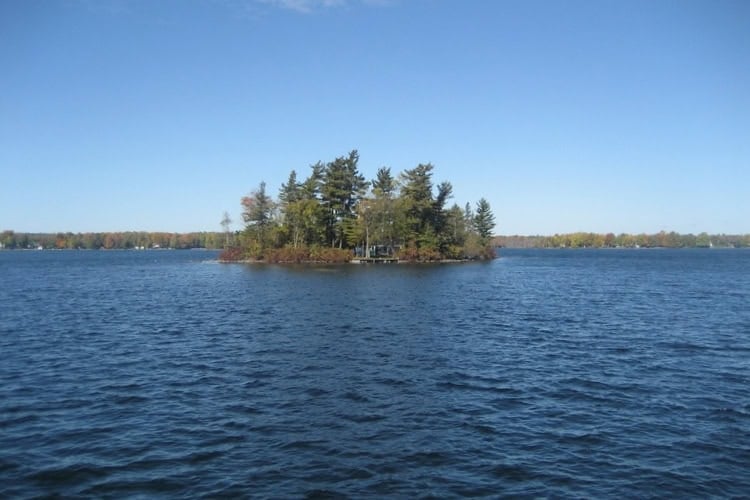
Between lockstations, the Rideau reveals its quieter side.
We glide past lakes dotted with boats, their wakes catching the sunlight. Marshlands teem with birdlife. Tree-lined shores reflect perfectly in the still water.
It’s peaceful in a way that feels increasingly rare.
And yet, beneath the calm lies a history of hardship. The canal’s construction was gruelling—thousands of workers, many of them Irish immigrants, laboured under harsh conditions, facing disease, accidents and unforgiving terrain.
The Rideau may look serene today, but it was built through sheer determination.
Jones Falls: Engineering Marvel and Hidden Highlight
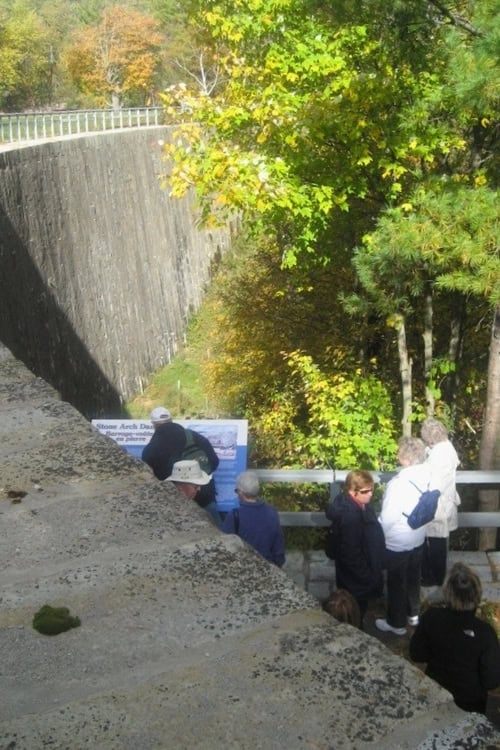
Our journey culminates at Jones Falls, one of the canal’s most impressive lockstations.
Here, four locks work together to manage a dramatic change in water level, an intricate system that still operates as it did nearly two centuries ago.
But the real showstopper is the dam.
Stretching 107 metres across and rising nearly 20 metres high, this massive stone structure was once considered a wonder of the world. Its curved design gives it a unique acoustic feature—stand at one end, whisper and your voice carries clearly to the other.
Naturally, we test it. It works.
Surrounding the locks are heritage buildings: a blacksmith shop, lockmaster’s house, and interpretive displays that bring the canal’s past into focus. It’s a place where history isn’t just preserved, it’s experienced.
A Summer Stay Steeped in History
Just beyond the locks, we settle in for the night at a historic lakeside inn, its yellow clapboard exterior and breezy verandas evoking a bygone era.
Dinner is unhurried. The lake glows in the fading light. And once again, the pace of the Rideau sets the tone.
Slow. Steady. Intentional.
Exactly as it should be.
Why the Rideau Canal Is Perfect for Summer
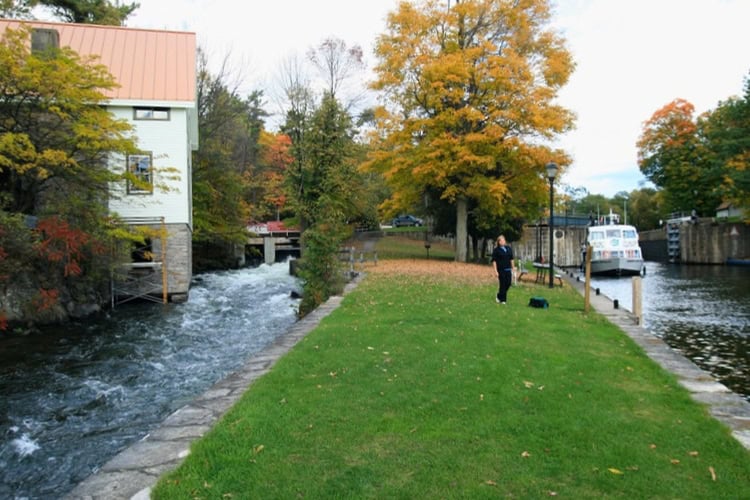
While the Rideau Canal is a year-round destination (and famously transforms into the world’s largest skating rink in winter), summer is when it truly shines.
This is when:
- Boats move freely through the locks
- Cycling routes are at their best
- Small towns come alive with markets and festivals
- Patios, docks, and waterfronts become gathering places
It’s a season that invites exploration—by car, by bike, or by boat.
And over just two days, it offers a journey that feels both expansive and deeply personal.
Read more: Barging Down the Caledonian Canal in the Scottish Highlands
If You Go
Getting There
Start in Ottawa or Kingston. Both are easily accessible by air or car.
Best Time to Visit
Summer (June–September) offers the best conditions for boating, cycling, and sightseeing.
Don’t Miss
- Rideau Canal lockstations
- Merrickville for shopping and local flavour
- Perth, Ontario for charm and overnight stays
- Jones Falls for engineering history
Ways to Explore
- Self-drive along the Rideau Heritage Route
- Join a guided boat cruise
- Cycle sections of the pathway for a more active experience
Need a hand planning your trip? Here are the sites and services we rely on most, from booking tools to travel products we love.
Inspire your next adventure with our articles below:
- The Best Way to Experience Niagara Falls for the First Time
- A Luxury Barge Cruise on England’s River Thames Is a Regal Anniversary Escape
Author Bio: Since 1996, while freelancing, Jane Cassie has had thousands of articles published. Her stories have appeared CNN Magazine, Northwest Travel, New York Daily News, Chicken Soup For The Soul, Dreamscapes, Air Canada In-flight, Cottage Life, Epicure and Travel, just to name a few. She has been a regular contributor to Spa Life, INNspire, North American Inns Magazine, Cottage, and Inspire Magazines.
Want to discover more hidden gems and helpful travel tips? Join our free newsletter for the latest travel secrets and travel articles.
We are reader-supported and may earn a commission on purchases made through links in this article.

- A Quest for the Best Frango Assado in Portugal’s Algarve - October 24, 2026
- A Week in Auckland: Parnell, Devonport and the Waterfront - October 24, 2026
- Where Empires Were Carved: Inside England’s Haunting Isle of Portland - October 24, 2026
Planning another trip soon? ✈️
Add GoWorldTravel.com as a preferred source on Google. Click the button below so our local guides, packing hacks, and hidden-gem itineraries always show up first when you search!
Add to Preferred Sources