

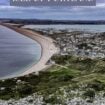
A rare moment of sunshine pierced the British grey sky, casting light on twelve giant “Memory Stones,” created by artist Hannah Sofaer. We were standing at the southern tip of Dorset, on the long-forgotten and remote Isle of Portland.
Part of Dorset’s Jurassic Coast, a UNESCO World Heritage Site, the isle has a unique geology that attracts geo-tourists, scientists and artists worldwide. Thanks to the uncommon Portland Stone found here.
“Portland Stones have built the British Empire… from St. Paul’s Cathedral to the British Museum and Buckingham Palace,” informed Hannah. “And most of it was quarried from this Isle.”
In fact, the isle is a mix of melancholy, modernity, and mystery. A walk along the Portland Marina offers a glimpse into the World War periods when it endured bomb raids due to its status as a naval base.
Today, the marina hosts windsurfing, jet skiing, and kayaking, while the Portland Museum in the island’s secluded part preserves stories of witches, pirates, and smugglers.
Colonial Stones

However, it was the Portland Stone, with its peculiar look and white, creamy texture, made of oolitic limestones, that actually brought me to the island.
“The Romans quarried the isle, but when the quarries closed, it became a prison for society’s outcasts. Their spirits still haunt the island, earning it the name ‘Isle of Dead’,” says local lore.
Historically, the Romans were the first to quarry Portland Stone, often used for building coffins. However, the stone’s popularity reached its peak in the 1600s.
Standing by the Memory Stone, we spotted an etching on it: Great Fire of London (1666). It described how Portland’s weather-and-fireproof limestone had rebuilt the city of London. Ever since then, Portland Stone has grown popular and shaped global landmarks, including the UN Headquarters in New York.
Unfortunately, 28 generations of Portland’s quarrymen toiled under dangerous conditions to make this happen—first under the Crown and later under private owners, with limited rights to the stones they carved.
“So much was taken from Portland and its people,” said Hannah, also the Creative Director of the Portland Sculpture and Quarry Trust (PSQT). She suggested visiting Tout Quarry — a Sculpture Park and Nature Reserve.
“The repurposed quarry is our attempt to give back by preserving their stone legacy,” she added.
The Grim Quarry Life

“It was rumoured that the islanders threw stones at anyone attempting to enter their island,” I recalled the words of Jonathan, my Airbnb host, while crossing the 150-meter Green Corridor connecting the Memory Stone to the 40-acre Tout Quarry.
Portland stayed isolated and forgotten until a ferry bridge linked it to the mainland in 1839. That same eerie isolation lingers as you pass through the dark tunnels and under stone bridges in the overgrown, maze-like path.
On reaching the quarry, you can spot grooves and holes on the scattered limestone blocks. Without machines, quarrymen used to drill holes, wedge them, and split the blocks along their natural fracture lines.
But life in the quarry was unforgiving. On crumbling cliffs, quarrymen would balance precariously, dodging falling rocks, chiselling stone with blistered hands and inhaling dust. Fatalities were common, and gruesome stories still echo across the island.
The dark resting huts across the quarry take you back to 1848, when Portland Prison opened and convicts were brought in as free quarry labor. The Grove Prison Museum on the island now displays their tools and personal belongings.
I decided to follow the faded tramway lines that once carried horse-drawn wagons loaded with stone waste. One such line led me to a cliff edge where stone waste, dumped by the tram, still litters the slope.
From the top, the notorious Chesil Beach was visible. Nicknamed “Dead Man’s Bay,” its steep shore and strong currents have wrecked several ships for centuries, some possibly carrying Portland Stone. At Chesil Cove, divers still find massive shipwreck remains.
A narrow path stretched southwards from Chesil Cove to Hallelujah Bay. The path was single-handedly created by a quarryman, reminding us how the quarrymen’s imprint extends across the Isle.
Best England Tours & Excursions
The Hidden Art Sculptures

Against the dim sky, a carved upside-down figure emerged on the dazzling white limestone wall. The silhouette, titled “Still Falling,” was created by renowned artist Antony Gormley.
From the cliff top, I descended, following a sculpture map I had downloaded. Like a treasure-hunt game, the map guides you to over 70 sculptures and carvings. Using primitive quarry tools, several national and international artists have crafted intricate pieces on scattered boulders.
Each sculpture holds meaning: an encircled chain reflects Portlanders’ bond with their land, while an open-book carving symbolizes the island’s layered history etched into its stones.
Beyond artistic value, sculptures like Still Falling also offer geological insights. Its feet rest on Roch Stone —the topmost layer, body on Whitbed —the middle layer, and head on Basebed —the lowest of the three layers of Portland Stone.
Learning Carving
Admiring the sculptures reminded me of my interaction with Mary Ann Cleary. As a geo-tourist from California, she has been visiting Portland for the past ten years to learn traditional masonry at Drill Hall, an art gallery and project space of PSQT.
“Sculpting is therapy for me. I love choosing the right stone, feeling its texture, and chiselling with focus,” said Mary, driving a wooden mallet to chisel a stone block.
Artists often work with Whitbed and Basebed. Though softer to carve, quarry workers used to dig 30-60 feet to reach them. Today, artists utilize the leftover pieces for sculpting.
You can learn carving by joining outdoor workshops held in the quarry itself or book taster classes with local artists like John Davey.
Alternatively, dine and wine at the White Stones Art Café Gallery, where its owner and sculptor, David Nicholls, showcases work by various regional artists.
Rare Wildlife

In a remote corner of the quarry, the “Green Man” stared with bulging eyes and a demonic expression. To find this protruding stone-carved face, I followed a narrow, rocky passage through slippery, mossy edges and limestone pastures brimming with Silver-studded Blue and rare Grayling butterflies.
Today, it is overflowing with life, but back in the 1980s, the quarry became a dumping spot after being abandoned. This is when, in 1983, over 40 artists began carving stones to save it and eventually PSQT was formed.
“Artists, conservationists, and locals came together,” said Paul Crabtree, Arts Educator and Manager at PSQT.
He narrated how trash and weeds were removed to revive the limestone pastures, where rare lichens began flourishing. Being porous, Portland Stone allowed water to seep in, nurturing white-violet Eyebright flowers and attracting bumblebees.
Ironically, the destructive quarry dust created a calcium-rich, alkaline soil for unique orchids to bloom, and extraction pits turned into ponds where dragonflies could glide. Inevitably, in 2012, the quarry was designated a Nature Reserve, managed by Dorset Wildlife Trust and PSQT.
Clues to Past Life

Upon closely examining the rough face of the Green Man, I noticed it was filled with several voids and cavities, as it was carved from Roch Stone.
The Roch bed is often rich with fossils of ammonites, molluscs, corals, and sea urchins. Over time, many fossils dissolved, leaving these voids, which hold important clues to Late Jurassic marine life.
They tell how 145 million years ago, Britain lay near the equator and much of southern England was submerged in a warm, shallow sea. The sunlit waters nurtured marine life, and their calcium-rich shells and skeletons accumulated on the seabed.
Over millions of years, they compressed layer by layer into limestone, forming Portland Stone.
As deep quarrying exposes all layers of the stone, sites like Tout Quarry are often valuable for scientists studying ancient life and climate.
Quarrying also sometimes unearths unique fossils. About an hour from Portland, Spyway Quarry reveals over 100 fossilized dinosaur footprints.

In fact, just five minutes from Tout Quarry lies Church Ope Cove. Once a sandy beach, it is now covered with shingles.
Over the years, quarried rocks from the surrounding cliffs were dumped onto it. These rocks slowly eroded to form white pebbles, among which fossils can be found.
As I circled back to the Memory Stone, the quarry felt more alive. Visitors were approaching from the nearby The Heights Hotel, birdwatchers observing cliff-dwelling falcons and children’s laughter bouncing off the once-silent walls.
Amidst all, the stones stood tall and proud. Once building distant empires, they now rest at their birthplace.
Getting to the Isle of Portland
The most relaxing option is to take the train from London’s Waterloo Station to Weymouth (3 hours), followed by Bus 1 (Jurassic Coast) from Weymouth King’s Statue (near the train station).
Alternatively, a car takes 3.5-4.5 hours from London via motorways. Parking is usually available, but plan ahead during the busy months of July and August.
Activities to Do on the Isle of Portland

Photo by Eva Badola
Castle Hopping
Portland Castle and Sandsfoot Castle are for families and history buffs. Pennsylvania Castle is for architecture and Blacknor Fort for military history. Rufus Castle offers stunning coastal views and is ideal for photography.
Day Trip from Portland

Drive 40-50 minutes to reach Lulworth, a cove made of hard and soft stone layers. Just west of the cove lies Stair Hole, a collapsed limestone cave that showcases dramatically folded rock layers, known as the “Lulworth Crumple”. From there, hike along the South West Coast Path down to Durdle Door.
If You Go
Getting There
- The most relaxing route is the train from London Waterloo to Weymouth, which takes about three hours. From there, take Bus 1 (Jurassic Coaster) onto the island from the King’s Statue stop near the station.
- Driving from London takes three and a half to four and a half hours. Parking is usually easy to find, but plan ahead in July and August. A car also makes the day trip to Lulworth Cove and Durdle Door simple, so compare rental cars on Discover Cars before you go.
Where to Stay
Perched on the island’s summit with views over Chesil Beach, The Heights Hotel sits just a short walk from Tout Quarry and the Memory Stones.
Before You Go
- Weather and cliff paths can be unpredictable, so compare travel insurance plans on Squaremouth or SafetyWing before you fly.
- Stay connected for maps and bus times with an Airalo eSIM for the UK.
Need a hand planning your trip? Here are the sites and services we rely on most, from booking tools to travel products we love.
Inspire your next adventure with our articles below:
- The London Collection: 10 Timeless Experiences Every Traveler Should Have
- The Ultimate UK Road Trip: 10 Scenic Routes from Cornwall to the Highlands
Author Bio: Eva Badola is a UK-based writer and freelance journalist. Her several articles and a book focus on nature, culture, and sustainability.
Want to discover more hidden gems and helpful travel tips? Join our free newsletter for the latest travel secrets and travel articles.
We are reader-supported and may earn a commission on purchases made through links in this article.

- A Weekend in Cambará do Sul: Hiking Brazil’s Itaimbezinho and Fortaleza Canyons - October 26, 2026
- Uzbekistan’s Silk Road Cities: From Tashkent’s Markets to Samarkand’s Registan - October 26, 2026
- Lost in the Fjords: Finding Myself Through Her Eyes - October 26, 2026
Planning another trip soon? ✈️
Add GoWorldTravel.com as a preferred source on Google. Click the button below so our local guides, packing hacks, and hidden-gem itineraries always show up first when you search!
Add to Preferred Sources