
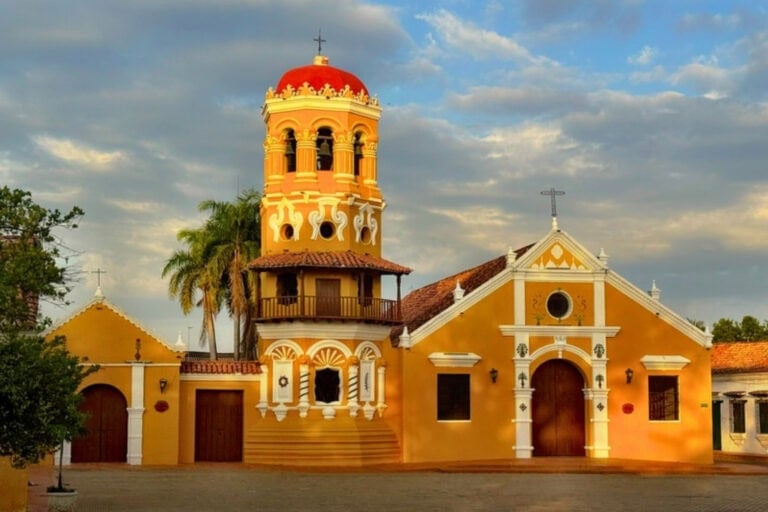
Locals still marvel at the “Great Bridge,” the soaring span across the Magdalena River opened this decade. The bridge has cut the 170-mile drive to and from Cartagena from nearly a full day to just six hours. But for all that modern engineering has accomplished, the town of Santa Cruz de Mompox remains stubbornly distant, a world apart from coastal Cartagena or the metropolises of Medellín or Bogotá.
Motorcycles and a few horse-drawn carts still outpace cars, afternoons move at a tropical crawl, and locals gather in the setting sun for a coffee or the occasional Zumba class in a church plaza.
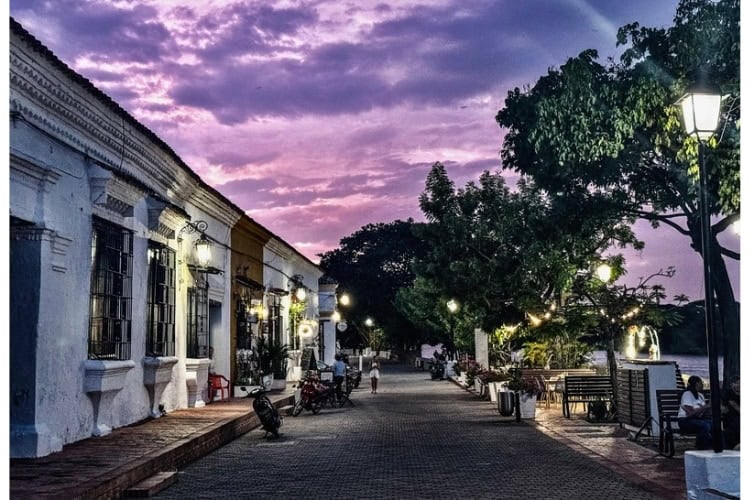
When the Magdalena River shifted its course centuries ago, it left behind one of Colombia’s most important port communities, resulting in a city frozen in time. Rather than becoming a ghost town, the local population stayed and preserved the whitewashed mansions of Spanish nobility, the golden altars of historic churches, and cobblestone plazas. For the 21st-century traveler, that resilience is the reward. What the river left behind, the people kept alive.
Journey Into the Spanish Colonial Era
The historic center of the city, which is easily explored on foot, was designated a UNESCO World Heritage site in 1995. As UNESCO notes, this is an outstanding example of a Spanish colonial settlement—a community established on the banks of a major river that has survived intact to the present day. The town’s layout, which developed parallel to the Magdalena River over four centuries, extends only three or four blocks inland from the water’s edge.
Yet from the northern end of town, you can walk two miles along the newly paved riverfront Malecón to the southern edge, where small ferries shuttle locals and their motorcycles across the wide brown river.
Step Into Historic Churches Along the River
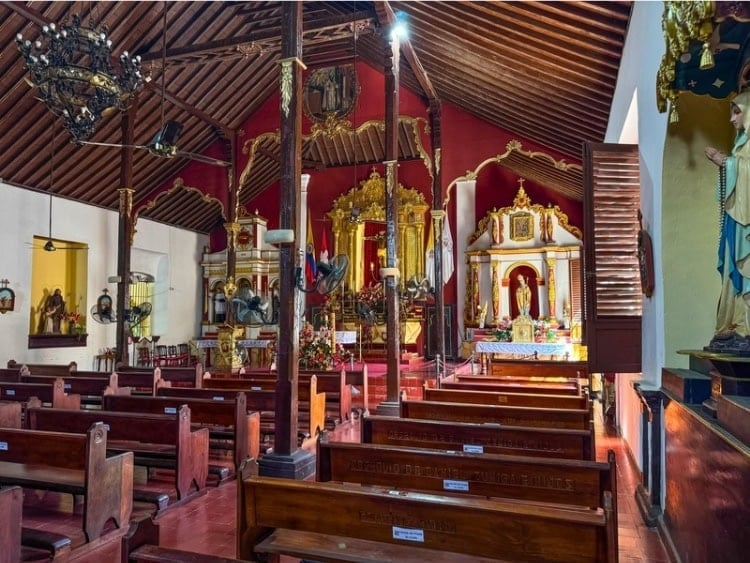
Start at the Iglesia de Santa Bárbara, the most famous of the six religious institutions, overlooking a large plaza on the riverbank with its distinctive Hispano-Moorish octagonal tower—a landmark that has welcomed travelers arriving by water for centuries. Walk south until the street opens onto the main square. You’ll see the Iglesia de la Inmaculada Concepción, larger and more formal at the civic heart of town. Further south is the more modest Iglesia de San Juan de Dios near the old hospital, where the atmosphere feels intimate and close to the working river.
Turn a few blocks inland to the quieter plaza of the Iglesia de Santo Domingo, with its more cloistered convent air. Heading further south through the grid, you arrive at the Basílica de San Agustín, the only basilica in town and focal point of Holy Week processions. At the southern end of the historic center, the Iglesia de San Francisco is unmistakable with its distinctive red paint.
The churches are intermittently open, so it’s helpful to have a guide who can arrange for a tour inside. Acaraices travel agency is particularly helpful.
Wander Among the White Tombs of Cementerio Municipal
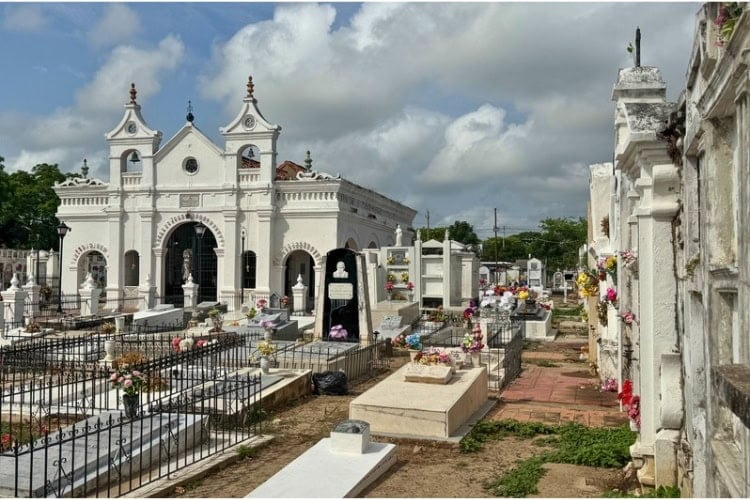
For a final, hauntingly beautiful stop on a tour of religious spaces, walk to the Cementerio Municipal behind one of the city’s most attractive leafy squares. This atmospheric cemetery, built in the early 19th century after colonial authorities banned burials inside church grounds, features brilliant white tombs and a chapel, consecrated in 1840, that bears the inscription: “Here, life borders on eternity.”
Locals who pass away are still buried here in the main section. After a few years, their remains are transferred to tall outdoor mausoleums, most of them situated beneath shaded trees.
Explore the River and Wetlands
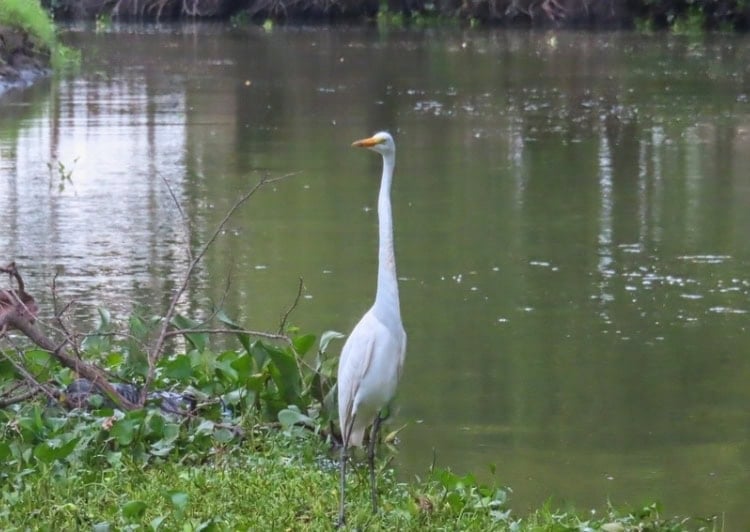
The Magdalena River is still the town’s animating spirit. To truly understand the landscape, escape the midday heat by hiring a boat—whether a narrow wooden canoe paddled by a local guide, a motorized lancha, or a covered tour boat that offers shade and seating for small groups.
Most boats take their passengers into the nearby Ciénaga de Pijiño, a vast wetland system. Narrow, often shallow channels—originally dug by the Zenú people to manage the annual floods—wind through a maze of water lilies and mangrove-like thickets. This is a birdwatcher’s paradise, home to herons, osprey, kingfishers, and spectacled caimans sunning on a mudbank.
Read More: Cali, Colombia, Has More Bird Species Than Any Other City on Earth
Walk the Riverfront Malecón
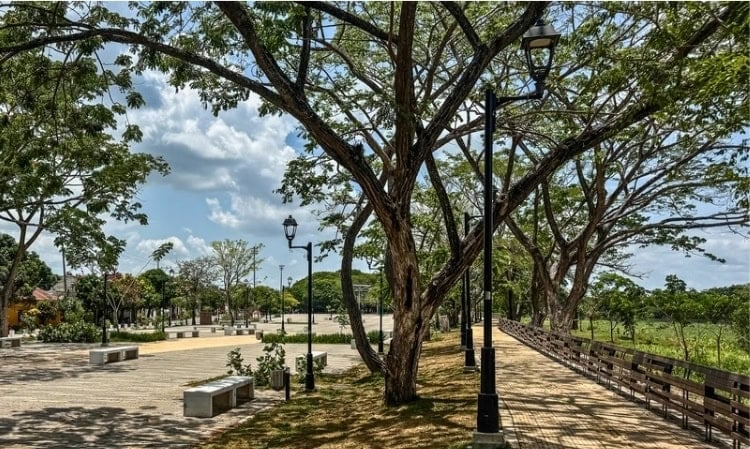
Today, a remarkable revitalization project has made the waterfront the place for locals to run, bike, walk, exercise, and occasionally watch a soccer match, especially in the early morning hours before the sun beats down.
The newly extended Malecón, known locally as La Albarrada, is a 2.7-kilometer riverfront walkway that blends colonial charm with modern community space. The high sidewalks, rebuilt using traditional brick and ceramic methods, protect against flooding while maintaining the town’s timeless aesthetic. This space is also the proud home of the Parque del Jazz, the epicenter of the town’s famous Mompox International Jazz Festival each October.
Witness the Art of Filigree Jewelry Making
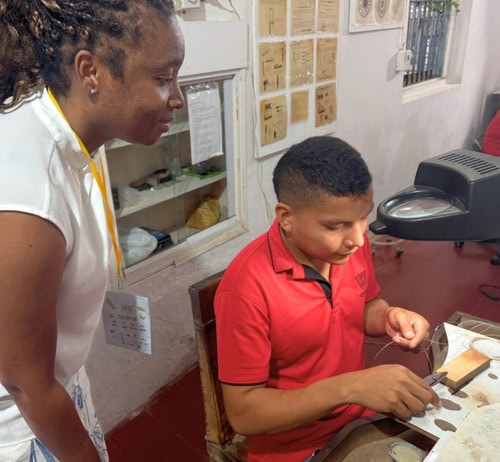
Forget factory-made souvenirs; Mompox is renowned throughout Colombia for its filigree jewelry. This delicate art of weaving gold and silver threads into intricate, lace-like designs has been passed down through families since colonial times, blending Spanish techniques with native motifs.
Walk into any small workshop in the historic center, and you will see artisans hunched over anvils, using hand tools unchanged for generations. You can watch them transform a plain wire into a tiny bird or a flower, then purchase the finished piece directly from the maker. You can book a tour in advance to watch the artisans up close or join a session to make your own piece of jewelry at Joyeria Wamaris in the center of town.
Shop Local Art at El Boga Casa Taller
For a truly meaningful souvenir, head to El Boga Casa Taller, a 17th-century colonial house turned artists’ residency and cultural foundation. Here, local Mompox artisans work alongside international resident artists—filigree jewelers, ceramicists, painters, and weavers, all creating side by side.
Browse and purchase one-of-a-kind handmade pieces, from delicate silver filigree earrings to original paintings inspired by the Magdalena River. Your purchase directly supports the foundation’s community programs, including workshops for local children and the preservation of Mompox’s traditional crafts. It’s best to call ahead and drop by on the first day of your visit to ask about seeing and possibly purchasing the crafts.
Explore the Wild Wetlands of Reserva Natural El Garcero
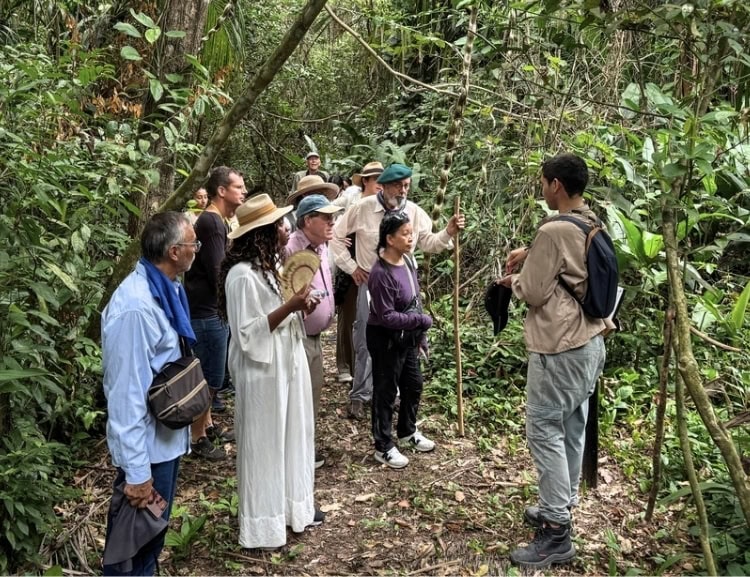
For travelers seeking a deeper immersion into the Magdalena River’s unique floodplain ecosystem, the Reserva Natural El Garcero is worth a visit. Located roughly an hour’s drive from Mompox, this 600-acre private reserve was established in 1991 on a branch of the river. The reserve serves as a living laboratory where scientists work to restore the natural balance of the floodplains, control forest fires, and keep out roaming cattle.
A wide variety of wildlife thrives here, from spectacled caimans and capybaras to the great egret—known locally as “el garcero”—that gives the reserve its name. Birdwatchers will find paradise: over 178 species have been recorded on the property. Access is limited—you must book your visit in advance through the Fundación Neotrópicos. Due to the humid, marshy environment, do not forget to bring plenty of bug spray.
Where to Stay: Colonial Charm on Every Corner
Mompox may feel frozen in time, but its accommodations offer modern comforts within centuries-old walls.
- Hotel San Rafael: A beautifully restored 17th-century mansion in the heart of the historic district, featuring lush gardens, an outdoor pool, and a rooftop terrace with stunning river views.
- La Gloria Hotel by Bespoke Colombia: Opened in 9, this neo-colonial property features a large outdoor swimming pool set within a peaceful garden.
- Hotel Archangelus: This intimate, family-run hotel has just six rooms with a beautiful garden.
Getting to Mompox
Getting here by car is easier than it once was, but it remains a long day’s drive from Cartagena. Your better bet for an extended Colombia vacation is to fly to Mompox for a few days from Medellín or Bogotá. There are regular flights—just not every day, so plan accordingly.
A New Way to Arrive: Cruising the Magdalena
For travelers who believe the journey is as important as the destination, AmaWaterways recently launched the intimate 64-passenger AmaMelodia, which sails week-long itineraries from Cartagena that include a stop in Mompox.
Need a hand planning your trip? Here are the sites and services we rely on most, from booking tools to travel products we love.
Inspire your next adventure with our articles below:
- What a Taxi Stand in Santiago, Chile Taught Me About Solo Travel
- 18-Day Colombia Road Trip Itinerary by Bus or Car
Author Bio: For more than 40 years, R.C. Staab has been a tourism and culture expert who has been quoted by and had photos published in numerous publications including the New York Times, USA Today, the Wall Street Journal, the LA Times and CNN, and is a frequent contributor other than New Jersey Monthly magazine. He wrote 100 Things to Do at the Jersey Shore Before You Die, now in its second printing, and New York City Scavenger: The Ultimate Search for New York City’s Hidden Treasures. Click here to buy his Jersey Shore and NYC book. He has traveled the world and visited 49 of the 50 states seeking adventure, admiring museums, culture and history and climbing sand dunes from Namibia to Idaho. He has snorkeled with killer whales in Norway, sperm whales in Dominica and humpback whales in Turks & Caicos, viewed polar bears up close on the Hudson Bay, hiked the Amazon in Ecuador, done a walking tour of the Lake District in England, trekked Machu Pichu, climbed up 10,000 feet to the Tiger’s Nest in Bhutan, hiked through rain, snow and sunshine on New Zealand’s best one-day hike and hung out with black bears at the Alaska Bear Camp. He lives in New York his wife, Valari, and dog, Skye.
Want to discover more hidden gems and helpful travel tips? Join our free newsletter for the latest travel secrets and travel articles.
We are reader-supported and may earn a commission on purchases made through links in this article.

- Slow Down on Prince Edward Island: A Relaxed Four-Day Itinerary of Dunes, Seafood and Seaside Inns - September 25, 2026
- Two Sides of Cape Town: Table Mountain Trails, Winelands Dawn and Township Voices - September 25, 2026
- St. Pierre and Miquelon: Visit France Without Leaving North America - September 25, 2026
Planning another trip soon? ✈️
Add GoWorldTravel.com as a preferred source on Google. Click the button below so our local guides, packing hacks, and hidden-gem itineraries always show up first when you search!
Add to Preferred Sources