
By the time most travelers land in Rome, they already have a checklist in mind: the Colosseum, the Trevi Fountain, Vatican City, and cacio e pepe somewhere in Trastevere. But less than an hour beyond the capital, another side of Italy begins to emerge — one far quieter, stranger, and more atmospheric than the crowds packed shoulder-to-shoulder near the Spanish Steps.
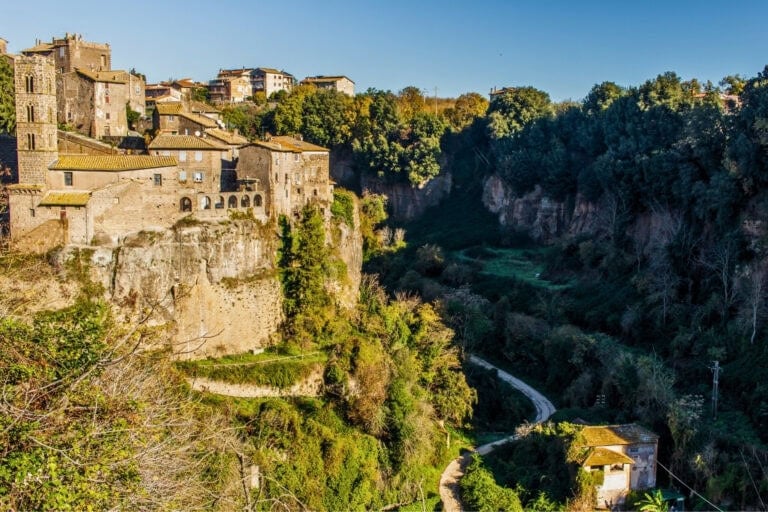
I found it in the Lazio countryside, inside the volcanic Cimini Mountains near Ronciglione and Lake Vico, where medieval villages cling to hillsides and forests seem to swallow time whole. The roads twist through dense chestnut woods, the air smells faintly of earth and moss, and conversations linger longer over wine. Here, Italy slows down.
Villa Lina’s Hidden World
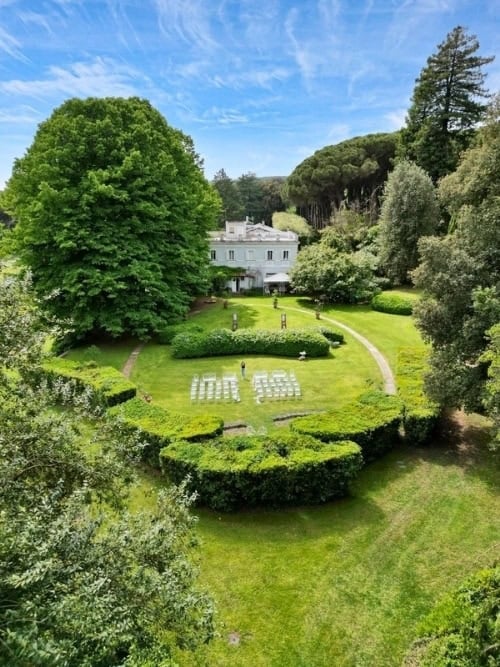
My base for exploring the region was Villa Lina, a historic estate tucked deep within ancient Etruscan Tuscia, a territory many international travelers have never heard of despite its extraordinary beauty. The drive there from Rome takes roughly 40 minutes, but emotionally, it feels much farther away.
The entrance alone feels cinematic. Villa Lina sits behind a series of gates hidden among winding roads and towering greenery, giving the estate an almost dreamlike sense of privacy. Peacocks roam the grounds freely, occasionally crossing stone pathways as if they own the place. They probably do.
Walking through the property felt less like checking into a hotel and more like stepping into an Italian art film suspended somewhere between fantasy and history. Every turn revealed another surprise: fountains echoing through botanical gardens, hidden amphitheaters, tunnels of greenery, ivy-covered staircases, and ancient trees stretching toward the sky.
If you’re planning a trip to Italy, check out our Italy Travel Guide, where you’ll find a curated selection of articles to inspire you and help plan your trip.
Artistic Spirit at Villa Lina
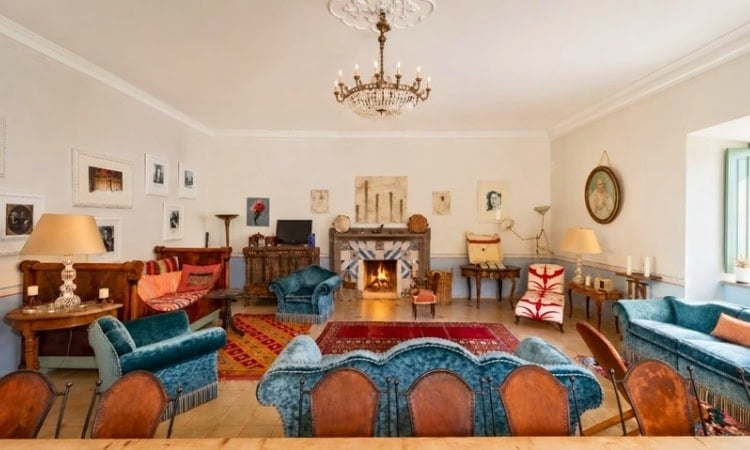
The estate has existed in some form for centuries, but today Villa Lina operates as a creative retreat and luxury countryside escape curated by writer and filmmaker Paola Igliori Lante. Her presence can be felt throughout the property. Villa Lina is not designed around polished perfection or traditional luxury hospitality trends. Instead, it embraces artistry, eccentricity, spirituality, and a profound connection to nature.
That atmosphere has drawn artists and creatives for decades. Figures including Julian Schnabel, Jean-Michel Basquiat, Nick Cave, and filmmaker Paolo Sorrentino have all spent time connected to the estate. The 2007 film “Silk,” with Keira Knightley, was shot at Villa Lina, so you can understand why. Inspiration seems embedded in the landscape itself.
Gardens and Plant Therapy
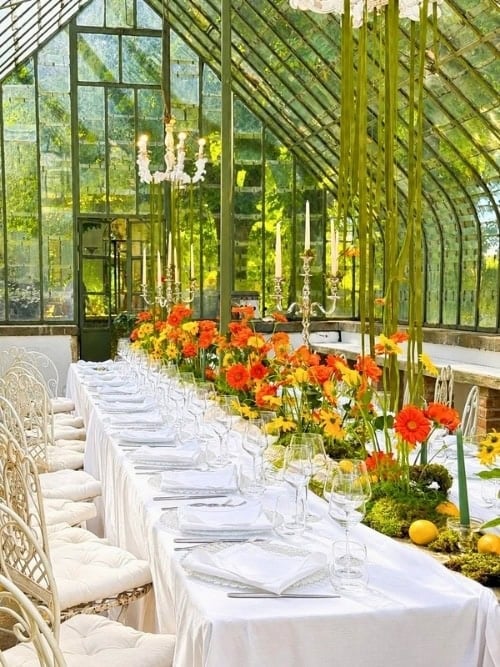
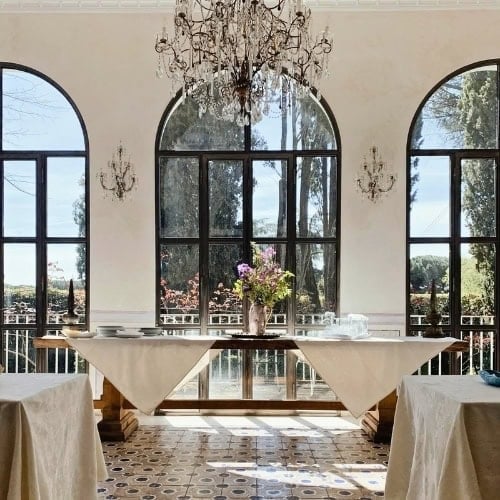
The grounds unfold across nearly 80 acres of gardens, forests, farmland, and volcanic terrain. At the center sits the 1929 Olympic swimming pool, impossibly elegant beneath the trees. Nearby, grand salons open toward fountains while hammocks sway quietly in shaded corners of the property.
Villa Lina’s gardens are perhaps its greatest triumph. The estate contains an 18th-century botanical garden filled with exotic and rare plant species that thrive within the region’s volcanic soil. There is even a philosophy here centered around what the estate calls “plant therapy,” rooted in the idea that the electromagnetic energy of trees, water, and volcanic rock can help restore balance to the body.
Whether or not you subscribe to that kind of thinking, there is undeniably something restorative about the environment. Time behaves differently there. Afternoons stretch endlessly. The sounds of fountains replace notifications.
But Villa Lina is only one chapter of the story.
Ronciglione and Lake Vico
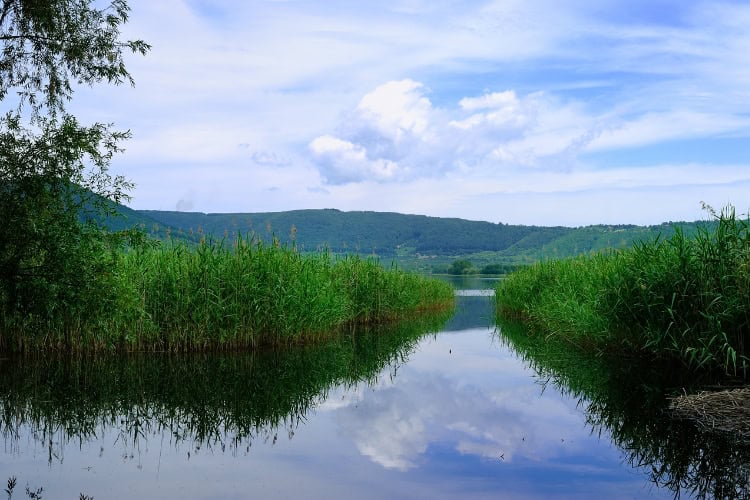
The surrounding Lazio countryside deserves equal attention, particularly for travelers searching for an Italy that still feels deeply local. Ronciglione, the nearest town, quickly became one of my favorite discoveries during the trip. Built along volcanic cliffs, the medieval village is all narrow alleyways, weathered facades, tiny piazzas, and old men lingering outside cafés discussing football and politics. Unlike heavily trafficked tourist destinations, daily life here unfolds naturally around you.
I spent hours wandering without direction. Laundry fluttered above cobblestone streets. Small bakeries filled the air with the smell of warm bread and hazelnut pastries. Locals greeted one another by name. It felt intimate in a way many larger Italian destinations no longer do.
The region surrounding Lake Vico carries its own distinct identity shaped by volcanic geography and agricultural traditions. The lake itself sits inside a massive volcanic crater and is surrounded by forests and fertile farmland. Along the shoreline, understated trattorias serve dishes deeply connected to the land: handmade pastas with wild mushrooms, freshwater fish, local honey, roasted hazelnuts, herbs gathered nearby, and vegetables grown in surrounding farms.
Read More: 14 Things to Do in Alberobello, Italy’s Whimsical Cone-Roofed Village
Slow Travel and Wellness
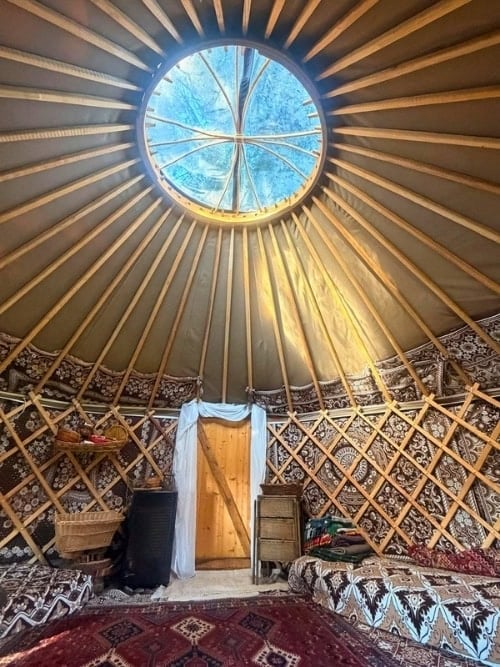
One of the pleasures of traveling through this part of Lazio is how sensory the experience becomes. Meals are slower. Produce tastes intensely fresh. Even the wine feels more connected to the place. Unlike the performative luxury that dominates certain Italian destinations, the beauty here feels organic and unforced.
That same philosophy extends into the wellness experiences increasingly woven throughout the region. At Villa Lina, guests can participate in garden rituals, herbal workshops, natural cosmetic-making classes, and immersive retreats focused on reconnecting with nature and creativity. The estate’s “Garden of the Senses and the Myths” blends Greco-Roman mythology with botany, creating experiences centered around archetypes, plants, and self-reflection.
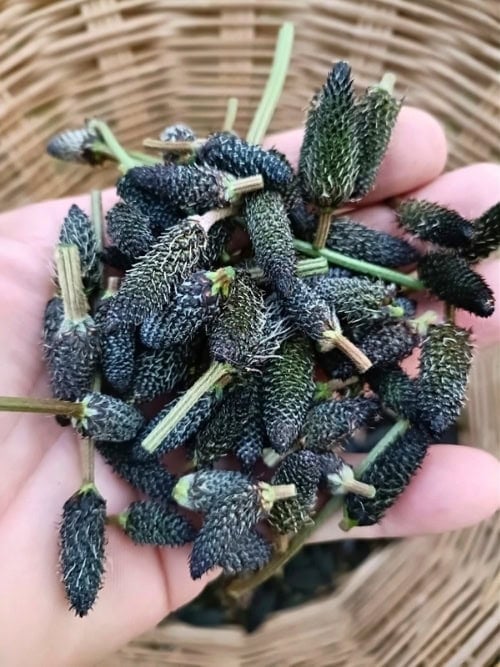
Elsewhere throughout the countryside, the landscape itself becomes the wellness ritual. Long walks through chestnut forests. Quiet mornings overlooking the lake. Foraging excursions searching for edible herbs and flowers. Even the silence feels medicinal.
What struck me most during my time there was how untouched the area still feels by mass international tourism. While Tuscany has become synonymous with luxury countryside escapes, this corner of Lazio retains a certain mystery. It hasn’t yet been polished into predictability.
Etruscan Roots and Light
The villages still belong to the people who live there. The restaurants still prioritize local regulars over social media aesthetics. And the beauty reveals itself slowly.
There’s also something deeply layered about the region historically. Ancient Etruscan roots remain embedded throughout Tuscia, long predating the Roman Empire. Renaissance gardens, medieval architecture, volcanic lakes, and dense forests coexist within surprisingly short distances of one another. Even the light feels different there. At sunset, the hills surrounding Lake Vico turn gold while mist settles softly into the valleys. The countryside grows impossibly quiet except for birdsong and distant church bells.
Presence Over Spectacle
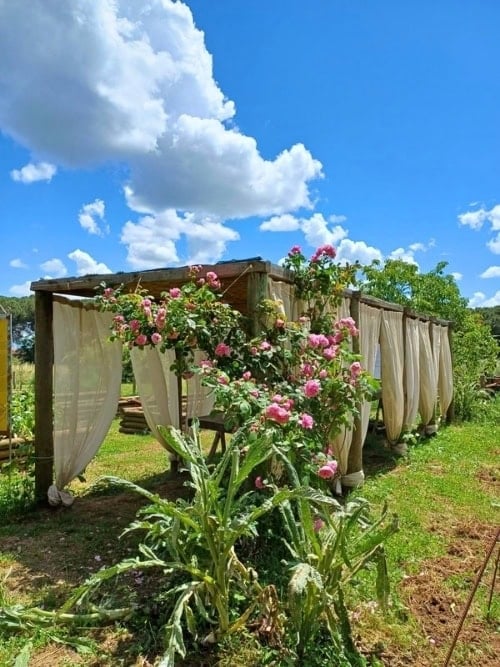
Back at Villa Lina one evening, I sat near the gardens listening to fountains while peacocks wandered nearby in the fading light. It was one of those rare travel moments where nothing dramatic happens, yet everything feels unforgettable. Italy often sells itself through spectacle: grand monuments, crowded piazzas, glamorous coastlines. But the Lazio countryside surrounding Ronciglione and Lake Vico offers something more intimate.
It invites travelers to disappear for a while. To wander medieval streets without an agenda. To spend hours over lunch beneath trees. To reconnect with silence, nature, and slower rhythms rarely found in modern travel. And perhaps that is the real luxury here.
Not exclusivity. Not excess. But presence.
For travelers willing to venture beyond Rome, the volcanic hills of Tuscia reveal an Italy that still feels personal, soulful, and wonderfully undiscovered.
Read More: 14 Things to Do in Alberobello, Italy’s Whimsical Cone-Roofed Village
If You Go
The Lazio countryside surrounding Ronciglione and Lake Vico is easily accessible from Rome, making it an ideal escape from the capital’s crowds. Travelers can rent a car and drive roughly 40 minutes into the Cimini Mountains, though trains from Rome also connect to nearby stations, including Capranica-Sutri and Viterbo. From there, taxis can bring visitors to Villa Lina, Ronciglione, and the lake area.
Spring and early autumn are the best times to visit, when temperatures are comfortable and the forests surrounding Lake Vico are especially beautiful. Summer offers warm lake days and long outdoor dinners, while autumn transforms the region with golden chestnut forests and misty volcanic landscapes.
Visitors should pack comfortable shoes for navigating medieval cobblestone streets and uneven pathways. The region is best experienced slowly, with time left for long lunches, wandering village streets, lakeside meals, and spontaneous discoveries.
Unlike Italy’s larger tourist destinations, this corner of Lazio remains wonderfully local and understated. Part of its charm is simply allowing yourself to slow down and experience it without a strict itinerary.
Need a hand planning your trip? Here are the sites and services we rely on most, from booking tools to travel products we love.
Inspire your next adventure with our articles below:
- The Heel of Italy Has It All: Here’s Your Guide to Puglia
- The Venetian Fortresses of Italy: Star-Shaped Cities, Hidden Tunnels and a Perfect Utopian Town
Author Bio: Carlos Omar Gardinet is a Miami-based journalist and senior copywriter covering music, arts, culture, and travel. A graduate of The New School in New York City, he has interviewed everyone from Chaka Khan to Zoe Saldaña, with bylines in Vibe, The Source, MTV, BET, and the New York Post. His travels have taken him from the vibrant souks of Morocco to the rolling countryside of Italy, aboard the scenic Bernina Express through the Swiss Alps, to the waterfalls of Iguazu and the rainforests of Costa Rica. Passionate about sustainable, eco-friendly, and plant-based travel, Carlos is always searching for destinations that nourish both people and the planet. When he’s not chasing a story or mentoring college students in marketing and advertising, you’ll likely find him on the tennis court or working on his first novel and a short screenplay.
Want to discover more hidden gems and helpful travel tips? Join our free newsletter for the latest travel secrets and travel articles.
We are reader-supported and may earn a commission on purchases made through links in this article.

- Darwin, Australia’s Northernmost Capital, Combines Vibrant Markets, Waterfront Life and Access to Kakadu and Litchfield - October 11, 2026
- The Ghostly Side of Edinburgh: Haunted Castles, Underground Vaults and Murder Sites - October 11, 2026
- A Quest for the Best Frango Assado in Portugal’s Algarve - October 10, 2026
Planning another trip soon? ✈️
Add GoWorldTravel.com as a preferred source on Google. Click the button below so our local guides, packing hacks, and hidden-gem itineraries always show up first when you search!
Add to Preferred Sources
Carlos,
I finally sat down and read your Lazio piece properly from beginning to end, and I’m genuinely glad I did.
What stayed with me most was not simply the geography or even the beauty of the countryside itself, but the atmosphere you managed to create between the lines. There is something increasingly rare about writing that does not scream for attention, yet quietly pulls the reader into a slower rhythm of life almost without them noticing.
You didn’t write about Lazio as a tourist destination. You wrote about it almost as a living memory…. textured, patient, imperfect, human.
I particularly loved the contrast between timelessness and movement throughout the article. It felt less like “travel content” and more like standing still long enough to notice details most people rush past while trying to “see everything.” That is a very difficult tone to achieve naturally, and you did it beautifully.
There were moments where the piece almost felt cinematic to me; not in a dramatic sense, but in that quiet Italian-film way where sunlight, stone walls, conversations, food, distance, and silence all become characters themselves.
And honestly? In a world of algorithmic writing and generic travel lists, your voice feels distinctly human. That matters more than people realize.
It made me want to disappear into the Lazio countryside for three days with good wine, uncomfortable philosophical thoughts, and absolutely no Outlook notifications!
Beautifully done.
This was wonderfully written and very poetic. I’m already thinking of a Lazio trip. Thank you.