
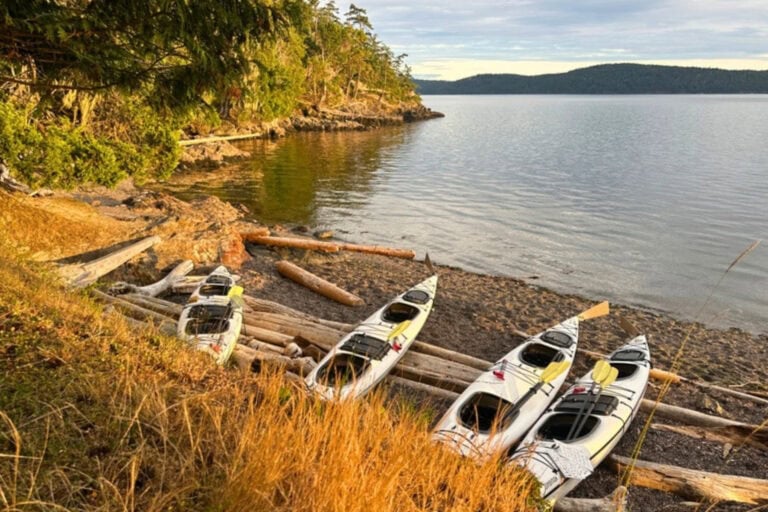
Our five double kayaks cut through the Salish Sea as we scanned the surrounding water for whales. Everybody hoped to see the famous orca pods of Washington’s San Juan Islands—even though a large male could be twice as long as a kayak. Instead, we saw the occasional cute, curious face of a harbor seal poke out of the water.
I was on a three-day group kayak camping trip with Outdoor Odysseys, an outfitter celebrating its fortieth anniversary this year. We were eight guests and two guides, all women except for Eli Todaro, the guide with whom I shared a double kayak. Our ages ranged from our 20s through early 60s, our experience from master camper to never paddled.
The San Juan Islands are between Vancouver Island and mainland Washington state in the Salish Sea. The archipelago of 172 named islands—the majority of people live on four main islands—is known for natural Pacific Northwest beauty and offers excellent orca whale watching. Most people arrive by ferry from Anacortes, a town 80 miles north of Seattle.
While I have kayaked many times, kayak camping was new to me. I have an aversion to sleeping on the ground. But I figured surely the beauty of these islands would outweigh a little discomfort.
Camp Life
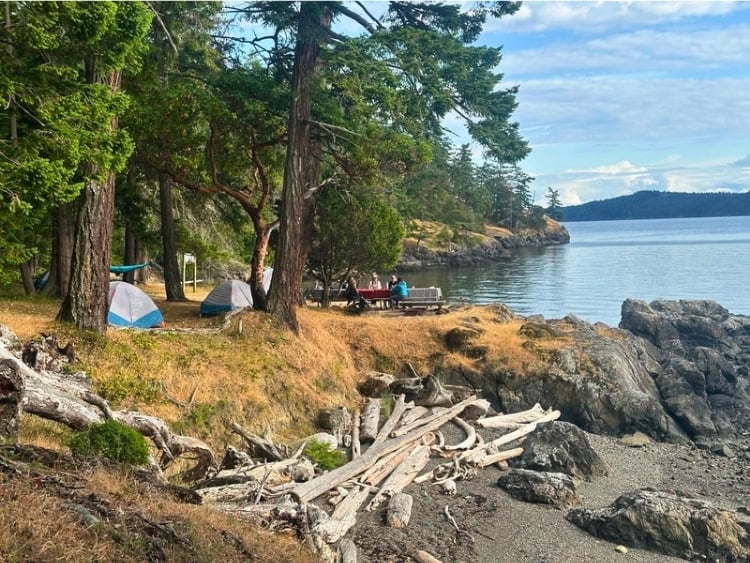
The first day we only paddled for about two hours to get to Jones Island, which is a state park. But we’d already done a lot of work by then—dragging the kayaks and all our gear down to the launch site on San Juan Island, and filling every hull and crevice of our long, pointy kayaks with tents, sleeping bags, cooking supplies, tarps and dry bags for our clothes.
Guide Tiff Pendergrass paddled ahead to scope out the best campsite, as it’s first-come, first-served. She nabbed the two primo sites on the west side of Jones Island, which are only for non-motorized vessels, promising a quieter stay. Then came the big task of unloading everything from the kayaks and dragging gear up a short cliff path to our site overlooking the Salish Sea.
“Anywhere you look around, it’s just a picture-perfect moment,” Tiff told me about her love of the islands. “It’s like you lift up a camera and you’re just mind-blown most of the time.”
Both our guides were in their twenties and, coincidentally, have lots of alligator experience from living in the Southeastern U.S. Eli is from Louisiana and started guiding in hunting camps as a teen. Tiff spends her winters guiding in the Everglades, where she’s encountered enormous pythons as well as gators.
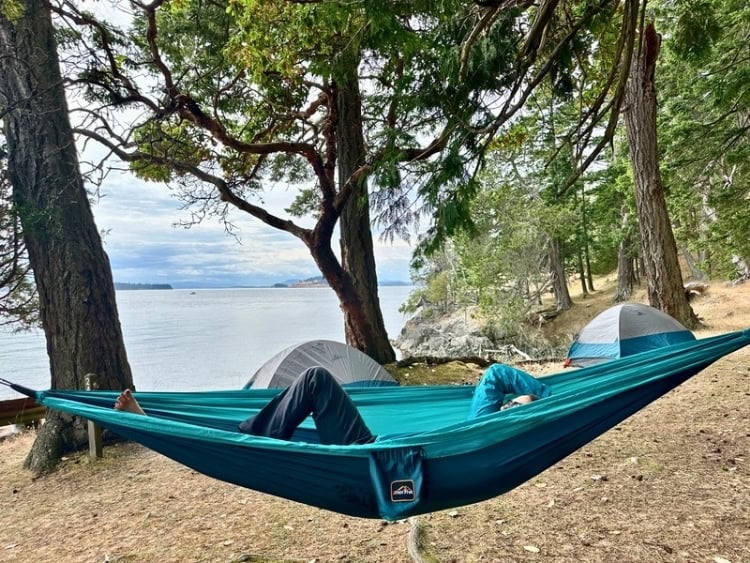
The tents were easy enough that even a non-camper like me could set one up with minimal instruction. Then we were free to chat around a picnic table or explore the wooded paths and coastal views of Jones Island.
Camp Dining
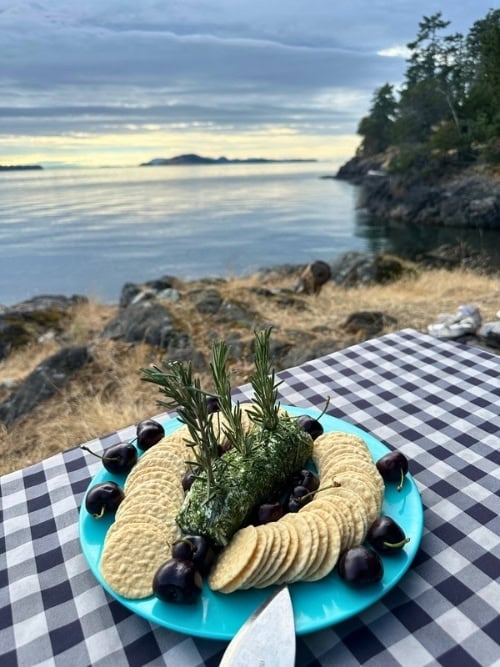
Eli and Tiff can really cook. They whipped up charcuterie plates, pesto pasta, grilled peaches and apple crisp. Eli, who comes from a Louisiana family in the food and wine biz, presented the food like a Michelin-starred chef, describing the provenance of each item.
They cheerfully catered to all our food preferences. I was staggered when Eli pulled an artisanal vegan herb cheese out of a kayak’s hull. In the morning, there was French press coffee. One of our group turned 50 on the trip and our guides managed to make her a chocolate birthday cake.
Island Visitors
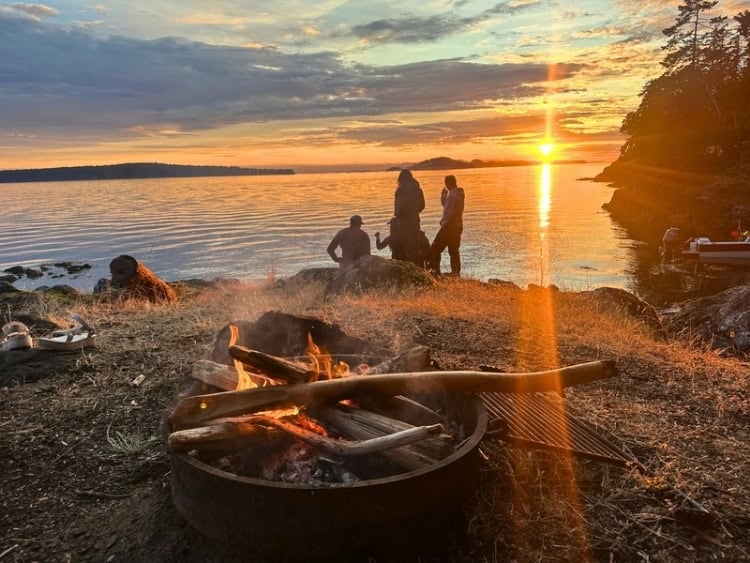
Our second night at camp, we were sitting around a campfire watching the sun descend when a boat stopped just offshore. A man yelled up to us, “Do you want shrimp?”
“Hell, yeah!” our guides answered. Two men and two women trooped up the cliff and joined us around the fire. They traded shrimp for chocolate cake.
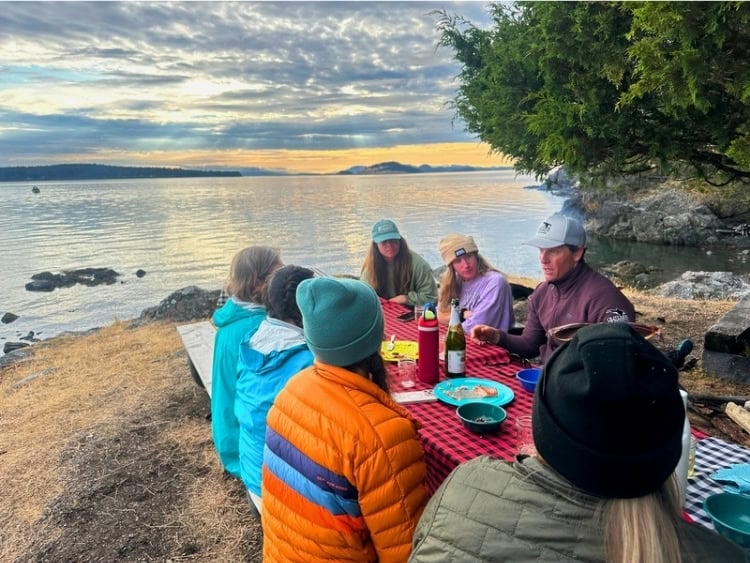
Tom Murphy, owner of Outdoor Odysseys, had also paddled out to join our group for dinner. Soon he and the two men—both local tiny house builders—had identified multiple common acquaintances. Life on the islands is like that. They stayed until the light faded, then the shrimpers took off in their boat and Tom paddled off into the sunset in his speedy red kayak.
Those weren’t our only visitors that night. Several times that afternoon we’d spotted a wily raccoon that we’d named Shannon. Despite taking the precaution of stowing any scented items in our kayaks at the bottom of the cliff—including toothpaste and deodorant—Shannon struck hard on night two.
That night is a blur. There were the sounds of a rampaging raccoon followed by unzipping tents as people gave chase. Others shouted, “Stay back, she might have rabies!” One camper reported seeing Shannon jumping over a log, a small orange dry bag in her teeth.
Her final score: two quinoa bars, a jacket, and ten sleepless humans. She also took a power bank out of a dry bag but changed her mind and left it in the dirt.
And we’d really been hoping to sleep that night. The first night, an unusually strong summer storm flooded our tents. The elevated dining was clearly glamping, but when you crawl onto a wet sleeping pad and listen to a psycho raccoon scratching at your tent, you are back to camping.
Family-Friendly Kayaking in the San Juan Islands
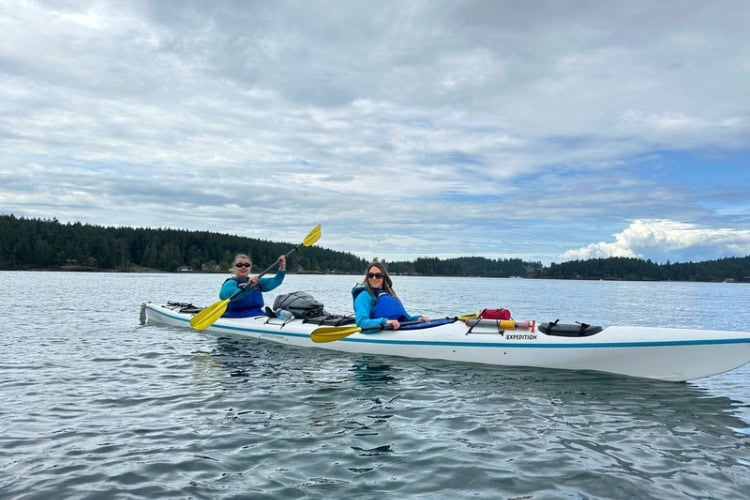
Outdoor Odysseys has been in business since 1987 and welcomes both experienced and inexperienced kayakers and campers. “We’ve had a lot of people that have done neither of those things and come on even three and four-day trips,” Tom said. “It’s a pretty accessible sport.”
Many beginners prefer sharing a double kayak with a more experienced paddler. It can be a little intimidating paddling in depths of 600 feet, never knowing if a whale might pop up nearby.
Kids twelve and up are welcome on public multi-day trips. But there’s no upper age limit. “I guided a trip once where the combined age in one of the doubles was 169 years old,” Tom said. The men were 88 and 81, both former World War II fighter pilots who were visiting the San Juans from Denver with their ski club.
Outdoor Odysseys also offers custom trips for groups like the ski club, families, college reunions and bachelorette parties. Younger children are allowed on custom trips, which are more tailored to ability. The company also offers short, family-friendly day trips.
Back to Civilization
Our last day was the most tiring. We got up early and broke down camp. It was a gray and misty morning, with the water rougher and choppier than on the preceding days.
We paddled for almost three hours before reaching Turn Island, where we lunched on Greek salad and hummus in pita bread. After lunch, it was a short paddle to our take-out point. We dragged the kayaks and gear up the beach in time for our ferry back to the mainland.
An hour or so later, we were sitting on a comfortable ferry, glad to relax while admiring the rocky coastline of the islands rather than paddling or hauling kayaks. Then a voice came over the loudspeaker and said that magic word: orcas.
Everybody rushed to the deck to watch the killer whales. They weren’t super close, but we could see their big fins sticking out of the water as they cavorted around. Our trip to these postcard-perfect Pacific Northwest islands was complete.
If You Go to the San Juan Islands
Ferry and seaplane are both fun ways to get to the San Juan Islands. Check the Washington ferries schedule well ahead of your trip to the San Juan Islands, especially if you’re bringing a car. Spaces fill up. If you’re flying into Seattle, you can take a shuttle to the seaplane airport for Friday Harbor Seaplanes.
Friday Harbor is the main town in the San Juan Islands, and the place where the ferries dock. You might need to stay over at the beginning or end of your trip, depending on transportation connections. I’ve had good stays at both Discovery Inn and Friday Harbor Suites. Salty Fox Coffee is a good spot for a cappuccino close to the ferry.
Check out the Visit San Juans tourism site for more trip planning tips.
For more, read Victoria, B.C., by Sea and Sky: Floatplanes, Whale Watching and Coastal Wonders.
Need a hand planning your trip? Here are the sites and services we rely on most, from booking tools to travel products we love.
Inspire your next adventure with our articles below:
- A Guide to Bellingham, WA, Your Next Pacific Northwest Escape
- Drive to the “American Alps” on Washington’s Scenic North Cascades Highway
Author Bio: Teresa Bergen writes about water adventures, eco, vegan and sober travel. She’s on a mission to kayak or SUP in every US state and Canadian province—and other countries, too, when she gets the chance. Teresa is the author of Sober Travel Handbook and Easy Portland Outdoors.
Want to discover more hidden gems and helpful travel tips? Join our free newsletter for the latest travel secrets and travel articles.
We are reader-supported and may earn a commission on purchases made through links in this article.

- Bonaire, Savored Slow: Cactus Liqueur, Caviar, Donkeys and Shore Diving - October 23, 2026
- Two Colorado Hot Springs Worth the Drive from Denver - October 23, 2026
- Is 55 Too Young for a River Cruise in Europe? - October 23, 2026
Planning another trip soon? ✈️
Add GoWorldTravel.com as a preferred source on Google. Click the button below so our local guides, packing hacks, and hidden-gem itineraries always show up first when you search!
Add to Preferred Sources