
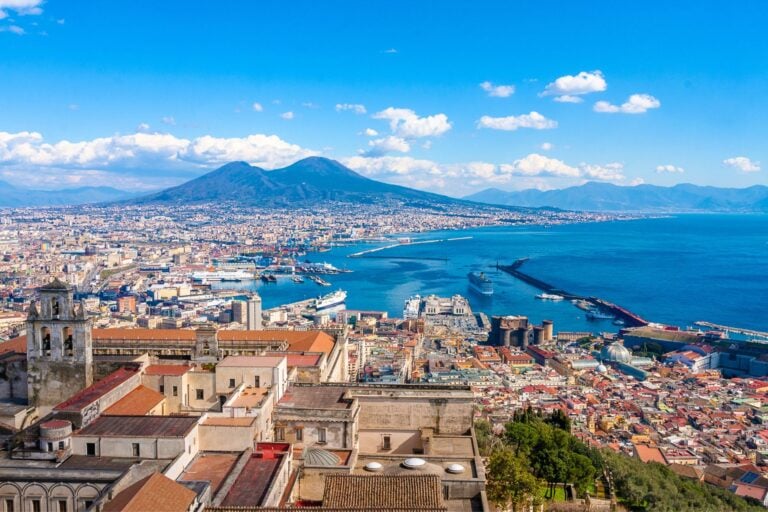

Standing on the balcony of my friend’s home, I gazed across the expansive, glistening Gulf of Naples to the city of Naples and its environs stretching toward towering Mount Vesuvius. Beyond it was the glitzy Amalfi Coast.
I was here for a week with my partner and a friend with family ties to Naples. It was the last day of our trip, but I knew I would be back someday.
Unconventional Beauty
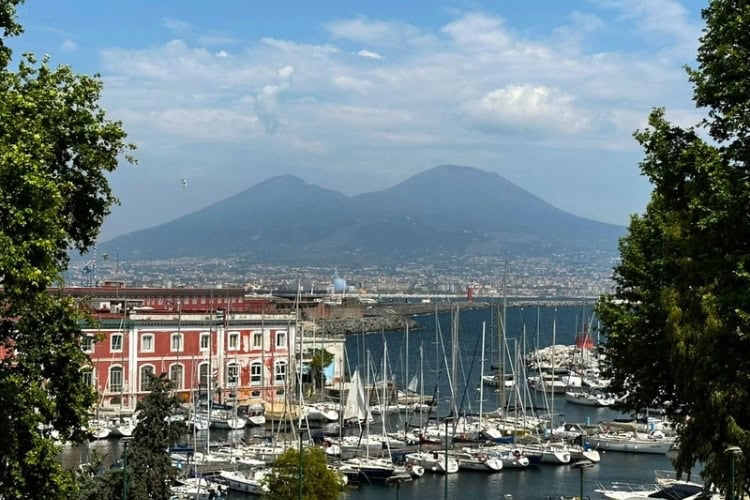
I didn’t expect to love, or even like, Naples. I had heard stories about the chaos, the grittiness and the petty crime and was prepared for disappointment.
From the minute we arrived at the city’s chaotic and outdated airport, I knew that Naples was going to be a city full of surprises.
Our car rental agent informed us that our reserved car was no longer available since we arrived over an hour after the original pick-up time.
We were looking at spending a thousand dollars at another agency. But a few minutes later, the agent came running to us, saying she found us a replacement at no cost. Time, money and aggravation were averted.
Naples isn’t beautiful in a conventional sense. But it possesses a raw magnetism that is difficult to forget. Unlike many cities dominated by the tourism industry, Naples feels real, emotionally alive and intensely lived in.
Beneath the disorder lies an authenticity in which life spills dramatically into the city’s public spaces. Once you peel back the grime, graffiti and chaos, there are treasures to be found.
It demands patience, curiosity, and openness. The city became more rewarding the longer I stayed and explored.
Historic Heart of Naples
My first day wandering the streets was one of sensory overload. Streets pulsed with energetic movement and noise, while graffiti mixed with faded grandeur.
Laundry was strung on balconies and across narrow alleys that permeate throughout the city. Traffic seemed governed more by instinct than rules. The city’s infamous scooters, known as motorini, wove through the city’s labyrinthine streets, squeezing narrowly between cars and pedestrians.
We met up with Gennaro, the cousin of my friend, his girlfriend Rosaria, and her sister, Elena. We started in the historic, raw, and energetic Rione Sanita neighborhood, known for its numerous catacombs.
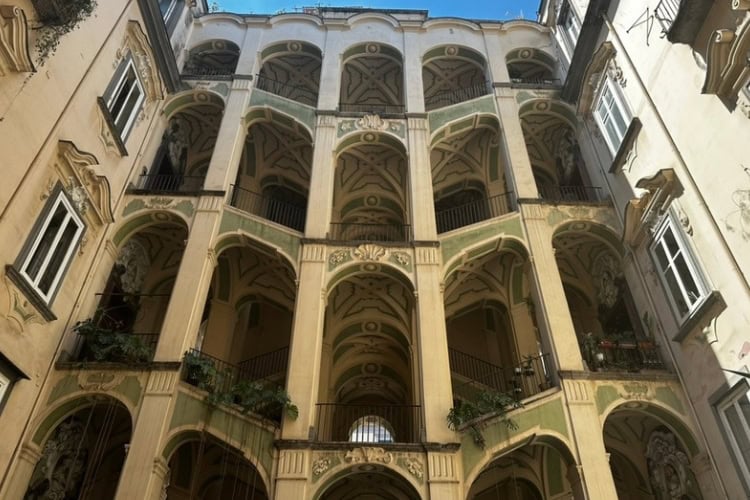
As an urban planner and architecture buff, I was immediately drawn to the area’s historic Baroque-style apartment buildings, some with uniquely symmetrical staircases hidden within them. One such example is Palazzo dello Spagnolo, built in the 18th century and designed by architect Ferdinando Sanfelice.
From a crowded sidewalk lined with vendors, a nondescript arched door leads to a quiet inner courtyard. On the far end is a striking theatrical staircase famous for its “hawk’s wing” design, where the stairways sweep outward in symmetrical curves that resemble the spread wings of a hawk in flight.
The open arches, layered landings, and geometric perspectives create an extraordinary sense of depth and motion. The blend of movement, symmetry, and light draws the eye upward through the structure, creating both a graceful and dramatic effect.
Faith, Death, and Memory
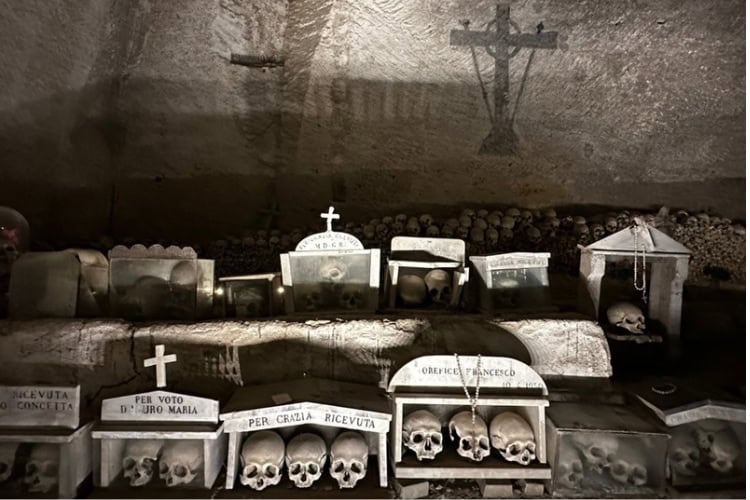
One of the neighborhood’s most curious sites is the Fontanelle Cemetery, housed within a former quarry carved into the hillside along a narrow residential street.
Inside are the skulls and bones of more than 40,000 anonymous Neapolitans, many of whom died during plagues, famines and epidemics between the 17th and 19th centuries.
Here we learned about the Neapolitan tradition of the “anime pezzentelle” (“poor souls”). Until recently, residents would adopt and care for unidentified skulls, cleaning them, leaving flowers, placing them in small tabernacles, and praying for the souls in exchange for spiritual protection or favors, like good fortune.
While the Catholic Church officially banned the practice in 1969, many elderly Neapolitans continued the tradition, offering a glimpse into the city’s complex relationship with faith, death, memory, and community.
San Gennaro and Spaccanapoli
We made our way to the UNESCO-listed historic center, one of Europe’s oldest continuously inhabited urban areas.
Our first stop was the stunningly beautiful Naples Cathedral, known locally as the Duomo. Here, Elena explained the phenomenon of the liquefaction of the blood of San Gennaro, the city’s patron saint.
Three times a year during specific ceremonies, the congealed blood stored in sealed glass vials traditionally liquefies and changes to a bright red color. For Neapolitans, the smooth liquefaction is a barometer for the city’s safety. When the blood fails to melt, it is interpreted as a bad omen, indicating impending disasters.
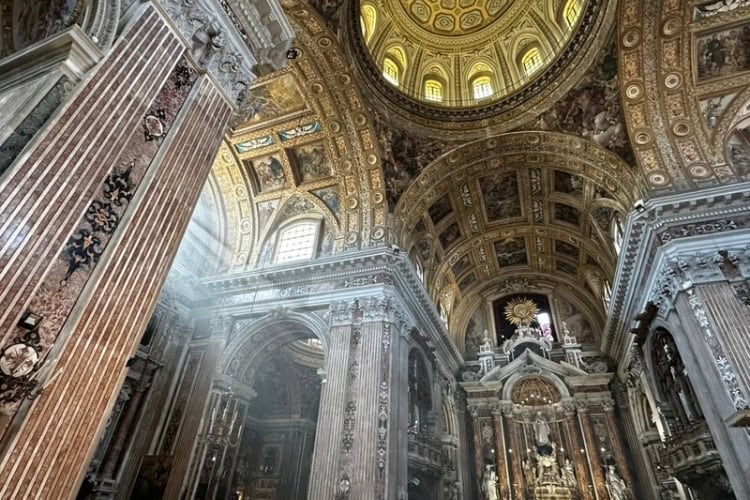
We continued along Spaccanapoli, a narrow street that cuts through the old city. We visited artisan shops, ogled delectable Italian pastries in pasticcerias, and admired churches such as the 16th-century Church of the New Jesus.
The church’s exterior façade is made of unusual pyramidal-shaped stones, giving it a fortified and somewhat spartan look. Once we stepped inside, we were blown away by its magnificent beauty.
Every square inch of the interior unfolded in a dazzling display of Baroque design, including soaring frescoes, richly colored marble, gilded chapels and intricately carved details.
Art and Antiquities
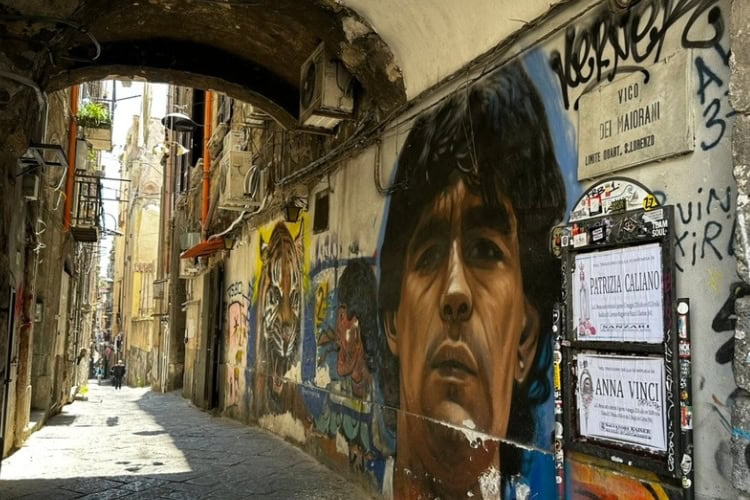
One of the world’s finest collections of Roman antiquities sits across from the Prince of Naples shopping arcade, whose exterior is filled with graffiti and homeless encampments, perhaps another contradiction of the city.
The National Archaeological Museum of Naples is filled with some of the most extraordinary mosaics, frescoes, and artifacts recovered from nearby Pompeii and Herculaneum. While wandering the massive building, we were given an intimate glimpse into Roman life.
The famous Secret Cabinet houses ancient erotic art that was originally housed in brothels, private homes and bathhouses in Pompeii and Herculaneum.
For centuries, these relics were hidden away and kept under lock and key, considered too explicit for public viewing. Today, they offer cultural insight into ancient Roman attitudes toward desire, fertility, protection, status and entertainment.
Upscale Contrasts
Another day, we explored the city’s densely packed Spanish Quarter and the nearby San Ferdinando district, one of the city’s grandest quarters, known for its monumental architecture, upscale shopping, the grand Piazza del Plebiscito, and the adjacent Royal Palace.
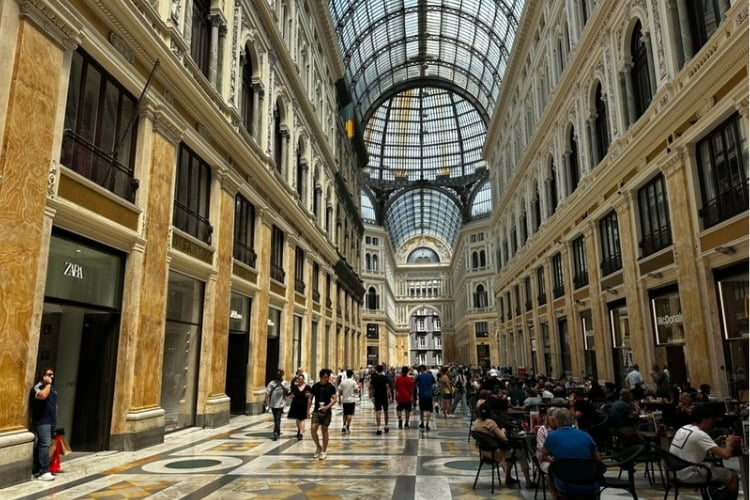
Nearby, the medieval walls of Castel dell’Ovo rise dramatically above the sea. As it began to rain, we ducked inside Galleria Umberto I, an elegant shopping arcade built in the late 19th century and designed by architect Emanuele Rocco.
The soaring glass-and-iron dome flooded the interior with natural light, exposing the ornate mosaics, marble floors, and elaborate decorative features. Standing beneath the dome, we admired the zodiac mosaic embedded in the floor, taking photos of our individual signs.
Day Trips From Naples
On other days, we explored nearby attractions outside of Naples. We had previously visited Pompeii, so we decided to check out Herculaneum, another ancient city decimated by the eruption of Mount Vesuvius in AD 79.
Ancient Herculaneum
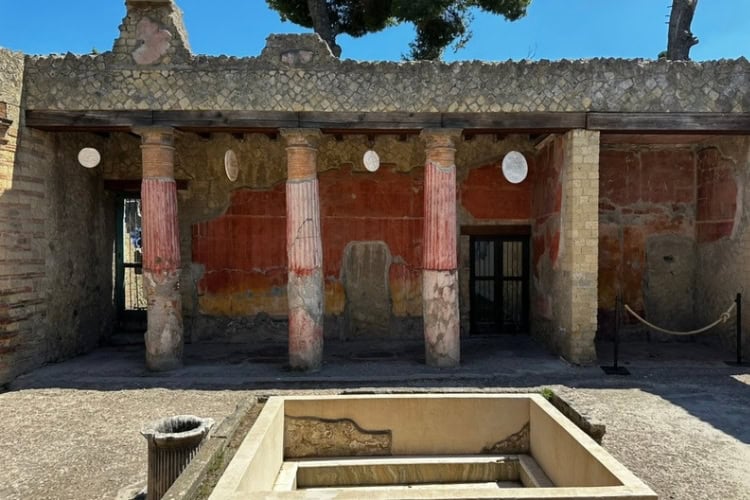
Herculaneum is compact, unlike Pompeii, allowing a visit in a few hours rather than a full day. The wealthy seaside resort city was buried under a dense pyroclastic flow, which carbonized wooden structures and preserved upper floors of buildings, leaving behind vivid details of life.
Walking through the city’s streets, I got a sense of how the residents lived. I fantasized about what it must have been like to live in such an amazing place, without experiencing the impending disaster, of course. Numerous buildings still have intact staircases, wooden beams, mosaics, and frescoes.
The park’s museum houses a fascinating collection of everyday objects like furniture, boats, food storage, jewelry and coins.
Near the former harbor, I stood before the haunting skeletons of those who sought refuge, their bodies frozen in their final moments, a stark reminder of how quickly ordinary life can be erased by forces beyond our control.
Ischia: The Quieter Capri
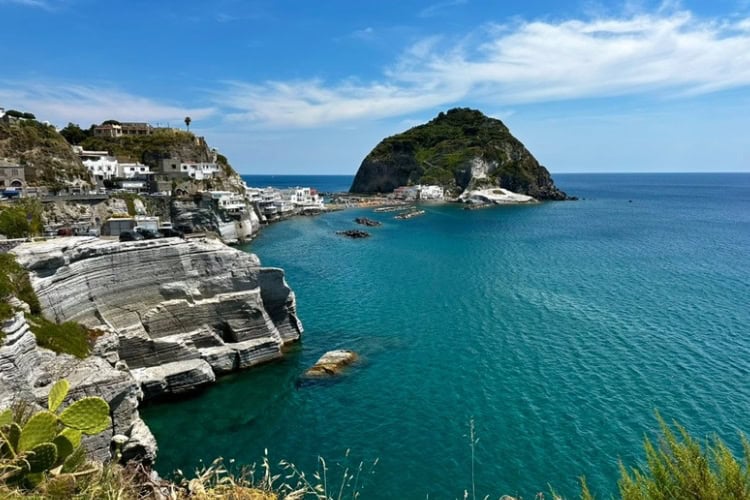
Another day, we took the ferry to the magical island of Ischia. We had heard that Capri was overrun with tourists and sought an alternative that was equally beautiful but less crowded. Ischia is famous for its natural thermal springs and seaside spas, which have attracted visitors since Roman times.
Using the local bus, which did get overloaded at times, we visited some of the island’s best attractions, such as the medieval Aragonese castle, which rises from a rocky islet connected to the main island by a stone bridge.
We visited the charming fishing village of Sant’Angelo, where pastel-colored houses cluster around a peaceful teal-colored harbor. Here, we had a delicious lunch at a quiet seaside café, where a slight cooling breeze and a beautiful view added to the experience.
We made the right decision in choosing Ischia, and I would gladly return, though I would make sure to add a few extra days.
Royal Palace of Caserta
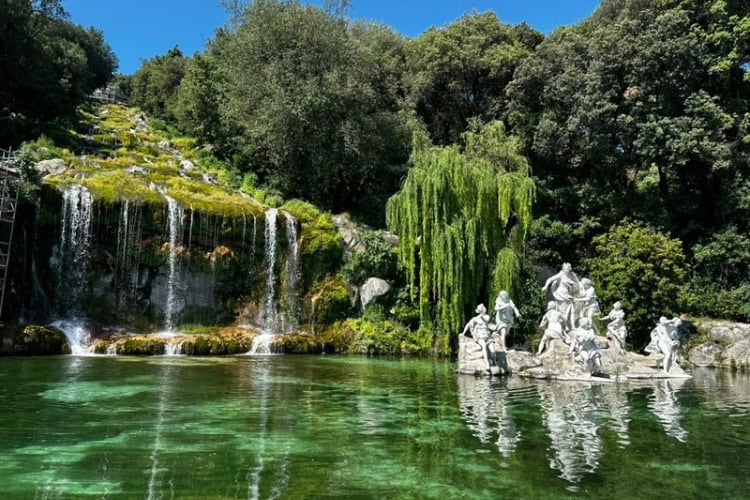
One of the most magnificent royal residences I’ve ever witnessed is located thirty minutes north of Naples.
The Royal Palace of Caserta was commissioned in the 18th century by King Charles VII of Naples of the Bourbon dynasty and built to rival Versailles. The enormous palace, designed in the Baroque and Neoclassical styles, is filled with over 1,200 rooms, of which 60 are open to the public.
Undeterred, we began our tour walking through the surrounding gardens, which stretch up a hill for more than two miles beyond the palace and feature formal Italian landscaping, an English garden, a reflecting pool, mythological fountains, a great waterfall, and long axial views that disappear into the horizon.
Back at the palace, we climbed the spectacular marble Grand Staircase, which led us to the second level, where we walked through a series of lavish apartments, each filled with marble, frescoes, and ornate decoration.
Food of Naples
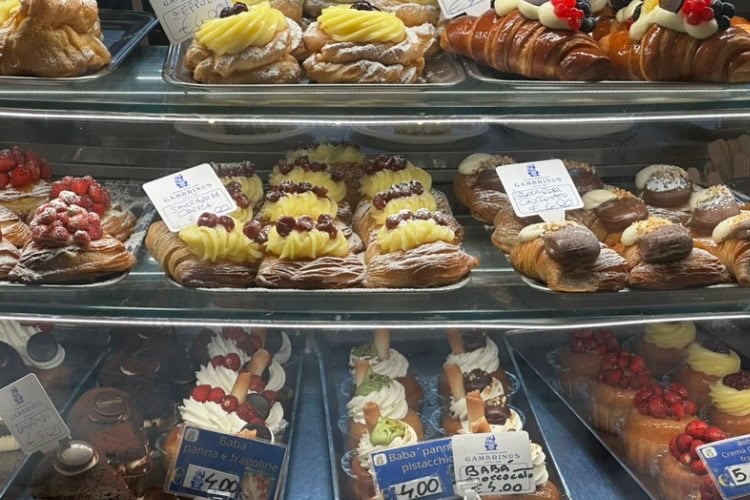
No discussion of Naples is complete without food. After all, the city is the birthplace of pizza, specifically Neapolitan pizza, with its soft and lightly charred crust, bright and sweet tomatoes and impossibly fresh mozzarella.
While it can be found on nearly every street corner, we enjoyed a variety of styles at Pizzeria Concettina ai Tre Santi, a restaurant with intimate alley seating that has earned rave reviews and continues to attract large crowds.
Wandering the streets, we sampled mouthwatering shell-shaped sfogliatella pastries filled with sweet ricotta and pistachio cream-filled cannoli.
At Piazza del Plebiscito, we stepped inside the famous Gran Caffè Gambrinus, once a gathering place for artists, politicians, intellectuals and writers like Oscar Wilde and Ernest Hemingway.
Today it is a favorite among tourists who gaze at the marble details, chandeliers, and gilded décor. It’s also a perfect stop to savor Italy’s aperitivo culture. We relished cold desserts like lemon granita and affogato to cool us down from the city’s heat.
A Narrow Escape
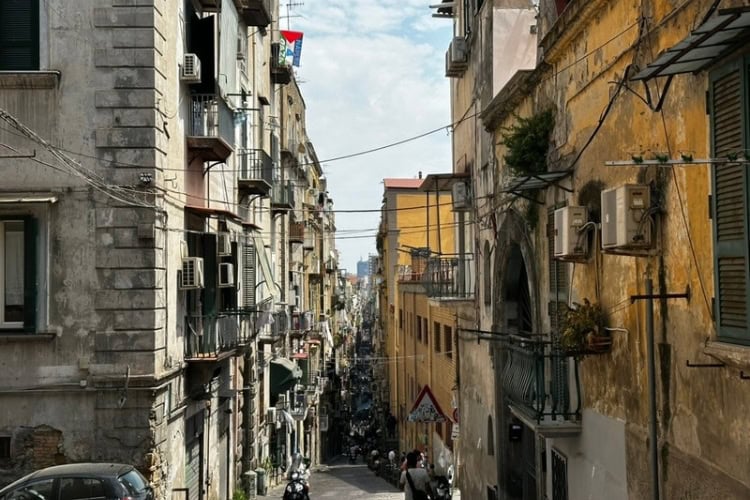
With all of Naples’ chaos, the city somehow works amid a rhythm of give and take. The residents help each other through it.
For example, on one occasion, we mistakenly drove up a narrow, hilly, cobblestone road that kept narrowing, all the while being passed by scooters. One young scooter rider gave us a look of both disgust and curiosity. An old man frantically waved us to stop, letting us know that we would never make it through.
Both he and the young man helped us to maneuver down the tight, twisting road. Sitting in the passenger seat, I nervously peered out the window, helping to keep us clear of buildings, pedestrians and motorini that continued to inch by.
Once we reached our turnaround, the old man, now on his own scooter, led us down a maze of streets to a main road. Without asking, we left him a meager tip from our leftover coins, which he gladly accepted.
Naples Wins You Over
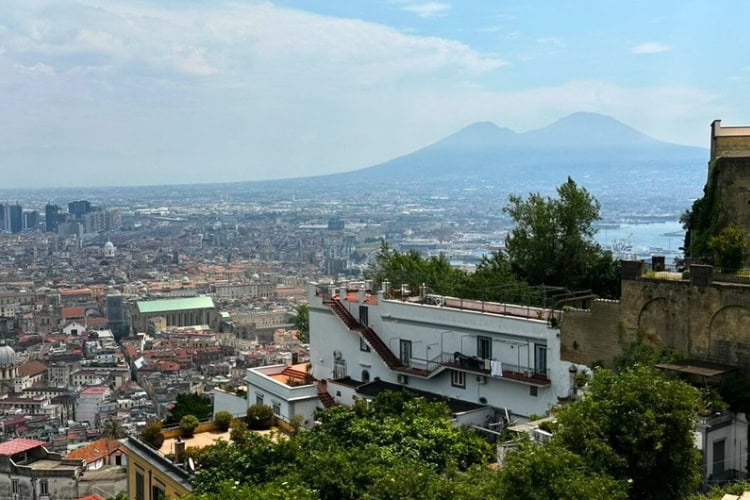
By the end of my trip, I understood why so many people fall in love with Naples. The city is not curated but simply exists on its own terms. Falling in love with Naples is like falling for the least likely sister.
Rome is sophisticated and cultured. Venice is blessed with a remarkable physical beauty. And Florence is both elegant and intellectual.
Naples, on the other hand, at first sight appears frazzled, loud and unkempt. But beneath it all lies an inner beauty and sophistication aching to emerge and eventually win you over.
Once you get to know her, you fall in love, blemishes and all. She is unapologetically herself, a place that is memorable because she refuses to conform to expectations.
If You Go
Getting There
Finding affordable flights to Naples is easier than you might expect. Search flights to Naples on CheapOAir — the platform pulls from a wide range of carriers and fare classes, making it a solid first stop when planning an overseas trip.
Getting Around
A rental car gives you the freedom to reach day trips like Herculaneum, Ischia and the Royal Palace of Caserta on your own schedule. Book your rental through Discover Cars, which compares rates across multiple suppliers so you’re not locked into a single agency on arrival.
Tours & Experiences
Naples rewards those who eat their way through it with a local in the lead. The Authentic Naples Food Tour with 8+ Tastings of Pizza, Wine & More winds through the historic center — Spaccanapoli, Piazza Dante, Via dei Tribunali — with stops for buffalo mozzarella, pizza fritta, sfogliatella, local wine and the tour’s signature secret dish. Small groups of 12 maximum; book well ahead.
For the ancient ruins, the Herculaneum Tour with Archaeologist and Skip-the-Line Entry pairs fast-track access with a specialist guide who brings the site to life — the thermal baths, the skeletal remains near the harbor, the remarkably intact mosaics and wooden beams. A half-day is all you need.
Travel Insurance
Italy is generally safe and well-served medically, but travel insurance is worth having for any international trip. SafetyWing offers flexible, affordable coverage for independent travelers, and Squaremouth lets you compare multiple policies side by side to find the right fit.
Stay Connected
Pick up an Airalo eSIM before you leave home for affordable data coverage across Italy without the hassle of swapping physical SIMs on arrival.
Need a hand planning your trip? Here are the sites and services we rely on most, from booking tools to travel products we love.
Inspire your next adventure with our articles below:
- Top 10 Things to Do in Italy: Planning Your Italian Journey
- Cagliari: Why Sardinia’s Capital Should Be Your Next City Break
Author Bio: Steve Sindiong is a travel writer, photographer and urban planner. He’s traveled throughout all 50 U.S. states and to over 80 countries on six continents and aspires to see many more. He currently lives in Alexandria, Virginia with his partner and their dog, Benji. Learn more about Steve’s travels and writing at Journeyswithsteve.com
Want to discover more hidden gems and helpful travel tips? Join our free newsletter for the latest travel secrets and travel articles.
We are reader-supported and may earn a commission on purchases made through links in this article.

- Strasbourg, France: Gothic Grandeur, Pretty Canals and German Heritage - October 7, 2026
- Slow Down on Corfu: A Perfect Day at Kontogialos Beach - October 7, 2026
- Winter Family Fun in Colorado: Play, Discover and Ski Beaver Creek - October 7, 2026
Planning another trip soon? ✈️
Add GoWorldTravel.com as a preferred source on Google. Click the button below so our local guides, packing hacks, and hidden-gem itineraries always show up first when you search!
Add to Preferred Sources