
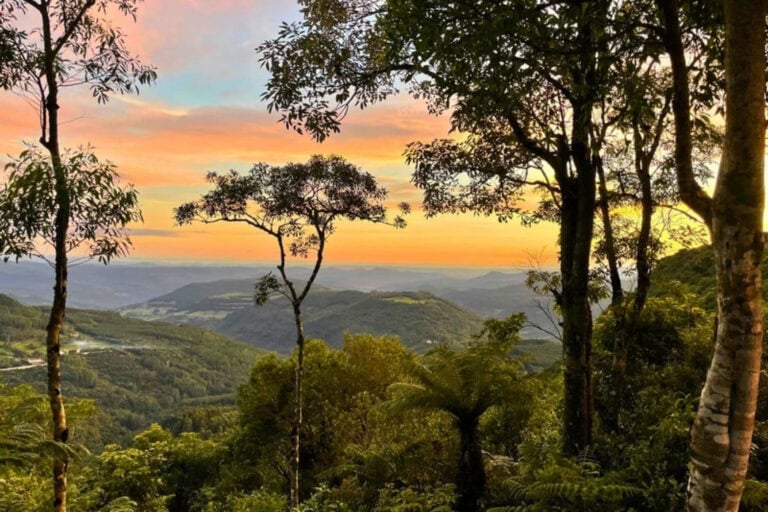

When my fiancé took me on a surprise weekend away, only a week after I had joined him in Brazil for his new job, I was not expecting the Germanic, polished, Alpine town that greeted us when we stepped off the bus. Instead of the humidity and heat that I was only just beginning to get used to, we took a two-hour bus from Porto Alegre, our new home and Brazil’s southernmost capital city, and climbed into the cooler climate of Gramado, which sits 2,790 feet above sea level in the Serra Gaúcha region.
Stepping off that bus, we were met with timbered chalets, manicured flower boxes, chocolate shops on nearly every corner, and quaint café terraces. Despite having just relocated across continents, it suddenly felt as though we had arrived back in Europe, wandering through the streets of Bavaria.
Except we hadn’t. We were indeed in southern Brazil. And while the air was noticeably cooler in the steep hills of Rio Grande do Sul than that of Porto Alegre’s coastline, we certainly were not in Germany.
Having just moved abroad from the UK to Brazil a week earlier, this cultural whiplash was certainly unexpected but equally intriguing. It begged the question: how did a little slice of Europe end up here?
European Roots In Gramado

We quickly learned from the locals that Gramado and the surrounding areas had been heavily impacted by waves of European immigration in the nineteenth century. While originally being settled by Azorean descendants, the region later saw Portuguese immigrants arrive, before experiencing a further influx of immigration from Italy and Germany around the 1870s—so much so that German beer, and Italian pizza and pasta, feature heavily among the restaurants today.
This heritage and culture have been passed down through generations and have quite visibly been embraced by the town. Now, Gramado has become one of Brazil’s most popular domestic holiday destinations, and is known especially for Natal Luz, the country’s largest Christmas festival. Running from November to January, the event draws around 1.5 million visitors every year. These factors combined have led to Gramado being named Brazil’s Christmas capital.
During our weekend in Gramado, we were able to watch the Natal Luz parade, despite Christmas having already passed several weeks prior. The parade lasted a full hour, and we gathered among the crowds to watch the hundreds of performers dressed in costumes that ranged from giant gingerbread pieces, baubles, and Christmas trees, to nutcrackers, fairies, and even the three wise men, all passing beneath sparkling lights on elaborate floats. The music was constant, and the wintery Christmas spirit was everywhere despite it being the height of summer in Brazil, and not a hat or scarf in sight.
Year-Round Alpine Vibe
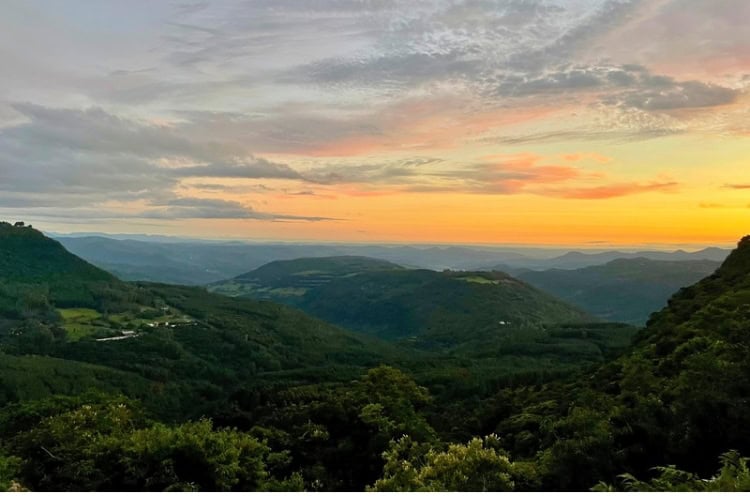
Exploring Gramado, regardless of the time of year, feels slightly surreal. Despite having lived in Brazil for only five months now, we have already returned to Gramado twice. The Italian café culture runs deep here, and with beautiful streets, bakeries, and chocolate shops lining the roads, the atmosphere feels both relaxed and welcoming for tourists and locals alike. It’s the kind of place where you can’t help but slow your pace, wander without a strict plan, and simply take in your surroundings.
While Gramado offers cozy cafés and incredible restaurants serving fondue or hot stone cooking directly at your table, Canela, a smaller and highly underrated neighbouring town, offers a different kind of experience. Just a ten-minute drive away, Canela (which directly translates to Cinnamon) offers access to nature and some of the most sweeping views across the hills of the Serra Gaúcha.
Canela feels less polished than Gramado, with fewer tourists and a stronger sense of Gaúcho life. This contrast only adds to the character and many layers that make up southern Brazil.
Read More: 9 Life Changing Countries Worth Adding to Your Travel Bucket List
Staying In Canela
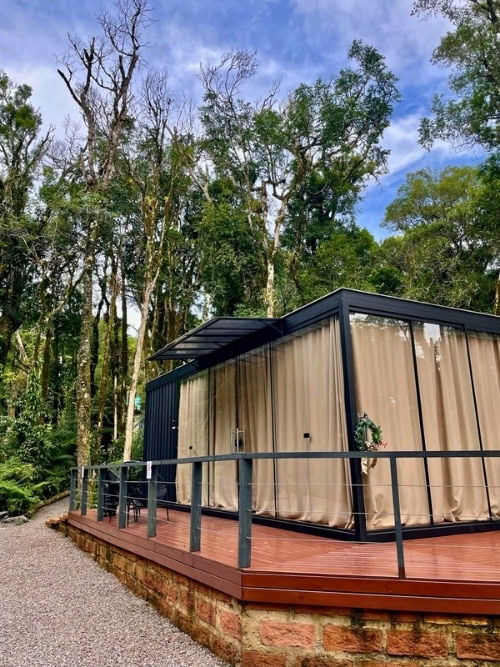
During that first weekend in the region, my fiancé had booked us to stay in Canela, in a sweet little cabin tucked beside the forest. This hideaway placed us among nature and wildlife. Large ferns and towering trees surrounded our cabin, and yellow cardinals and tropical parulas flew overhead, while the occasional tegu lizard passed through the garden. In the distance, we could also see black vultures circling the hills beneath us.
We were also on the lookout for howler monkeys, which live high in the forest canopy, and porcupines that sometimes appear at dawn and dusk to forage, but unfortunately, they remained elusive.
Trails And Wildlife
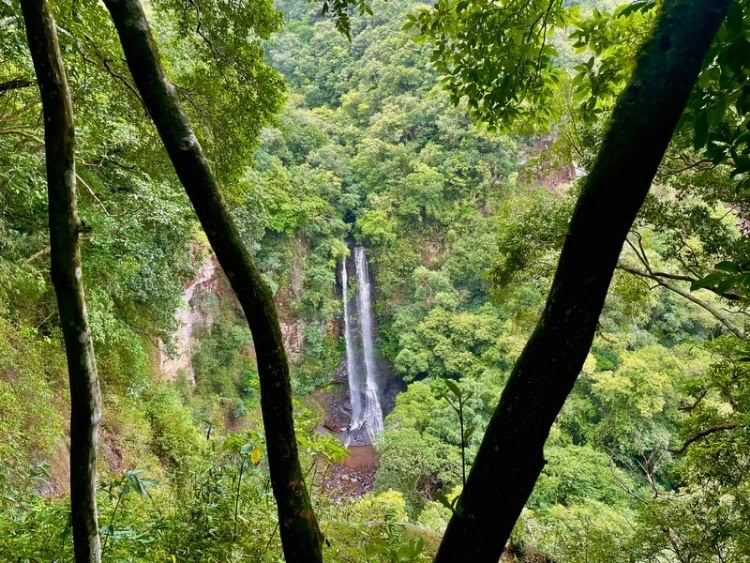
Going back to Gramado more recently, outside of the festive season, was particularly refreshing due to the lower tourist numbers. This particular visit with my in-laws featured a lot more time exploring the countryside, and we spent our days horse riding through the hills and hiking throughout Ecoparque Sperry, where we saw four waterfalls across the trails and caught glimpses of the vibrant blue Swallow-tailed Manakins and the tiny Mottle-cheeked Tyrannulets.
Being from the UK, I had expected such access to hiking trails to be free of charge. However, in Brazil, it’s very common for parks to charge entrance fees to manage the trails, conservation, and visitor safety. While prices vary, Ecoparque was fairly reasonable, and well worth the cost as we had the whole pocket of wilderness to ourselves.
We didn’t see another soul apart from a groundskeeper inspecting some of the trees, who was so knowledgeable she was able to tell me the age of each tree, and explain which plants naturally thrive alongside one another.
Waterfalls And Views
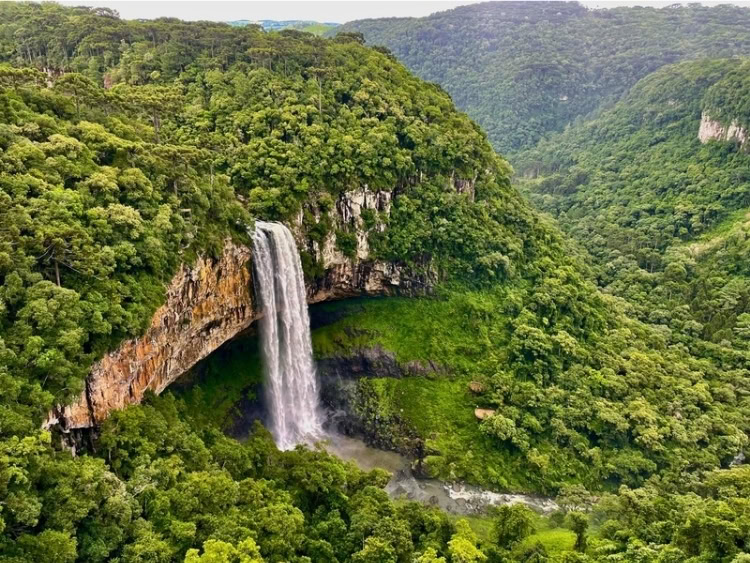
Despite several visits to Gramado now, we are yet to run out of things to do. Some of our highlights also include Parque do Caracol, which has family-friendly walking trails, and a picture-perfect view of the Cascata do Caracol, a waterfall that cascades 131 metres over basaltic rocks, and is supposedly the second most visited tourist spot in southern Brazil.
One of the best ways to experience the waterfall, however, is from a completely different angle via the nearby cable cars at Parque Bondinhos Canela. The cable cars stop at three stations across a route of 840 metres, offering different vantage points over the valley, along with options to access trails and short hikes throughout the surrounding subtropical Atlantic Forest.
Beyond The Big Cities
Both Gramado and Canela sit far from the international hotspots of Rio de Janeiro and São Paulo, which receive millions of tourists every year. Yet this small pocket of southern Brazil is a stark reminder that there is far more to the country than its goliath cities, and that Brazil contains far more cultural surprises than most visitors expect. In the hills of the Serra Gaúcha, Brazil reveals another side of itself entirely.
Need a hand planning your trip? Here are the sites and services we rely on most, from booking tools to travel products we love.
Inspire your next adventure with our articles below:
- In Search of the Freshest Latte in the Heart of Brazil’s Coffee Fields
- Rio Beyond the Postcards: The Side of Rio de Janeiro Most Travelers Never See
Author Bio: Ellen is a British travel writer currently based in Porto Alegre, Brazil.
Want to discover more hidden gems and helpful travel tips? Join our free newsletter for the latest travel secrets and travel articles.
We are reader-supported and may earn a commission on purchases made through links in this article.

- Why New Zealand’s Coromandel Peninsula Belongs on Your Itinerary: Whitianga and Cathedral Cove by Boat - September 22, 2026
- Galicia, Spain: Coastal Fortresses, Celtic Traditions and the Camino de Santiago - September 22, 2026
- The East Coast’s Most Epic Fall Road Trip: 1,500 Miles of Peak Autumn Colors - September 22, 2026
Planning another trip soon? ✈️
Add GoWorldTravel.com as a preferred source on Google. Click the button below so our local guides, packing hacks, and hidden-gem itineraries always show up first when you search!
Add to Preferred Sources