
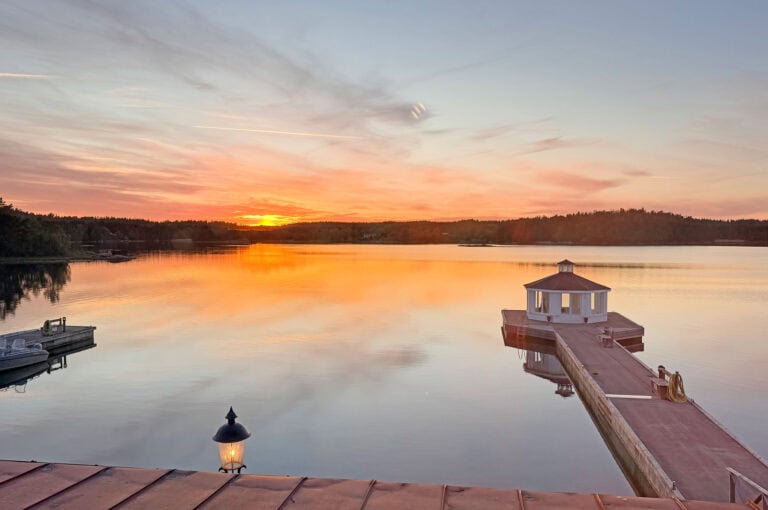
Sweden has more than 267,000 islands, more than any other country on earth. I don’t think I understood what that number really meant until I was standing along the shore of a tiny island watching a wooden ferry glide across the open water.
There was no traffic noise, no crowd jockeying for a photo. Just the slap of small waves against pilings and the smell of lilacs drifting over from someone’s garden. A few friends and I had come to Sweden’s East Coast Archipelago for a few days of exactly this, with nothing on the schedule but islands, quiet inns, and time on the sea.
An Old Hotel with New Light
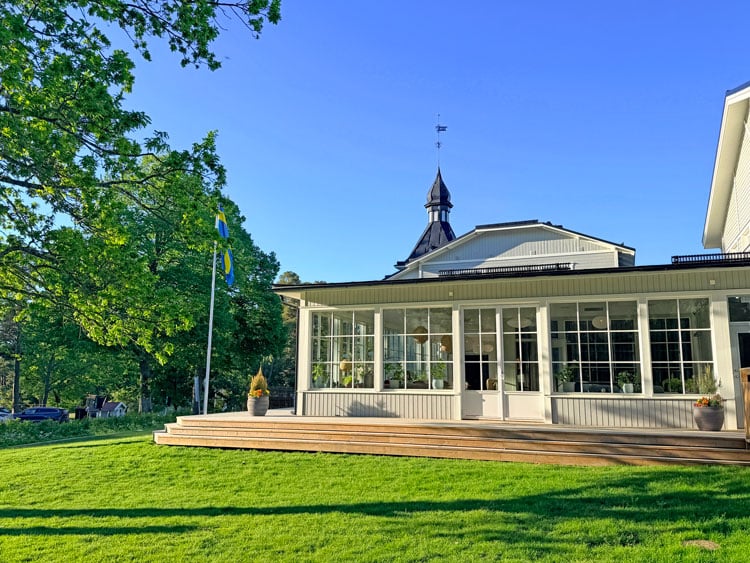
Our trip began in Arkösund, a former fishing village on Sweden’s east coast near Norrköping, at Arkösunds Hotell, built in 1895 and operating continuously ever since. The building has been fully renovated, though the owners were careful about how. They furnished it with secondhand and vintage pieces wherever they could, which turned out to be cheaper and kinder to the planet, and honestly just looks better than anything brand new would have.
The rooms are full of light, several opening onto private terraces facing the sea. A spa with a heated pool and sauna is tucked inside. I later learned that Sweden’s Crown Princess Victoria had stayed there once without anyone quite realizing it at the time, which somehow says everything about this stretch of coast.
Dinner that first night set the pattern for the trip. We started with white asparagus, a Swedish spring tradition, followed by lake fish pulled from nearby waters. Everything on the plate had traveled a short distance to get there.
Aspöja, Where Islanders Still Farm the Land
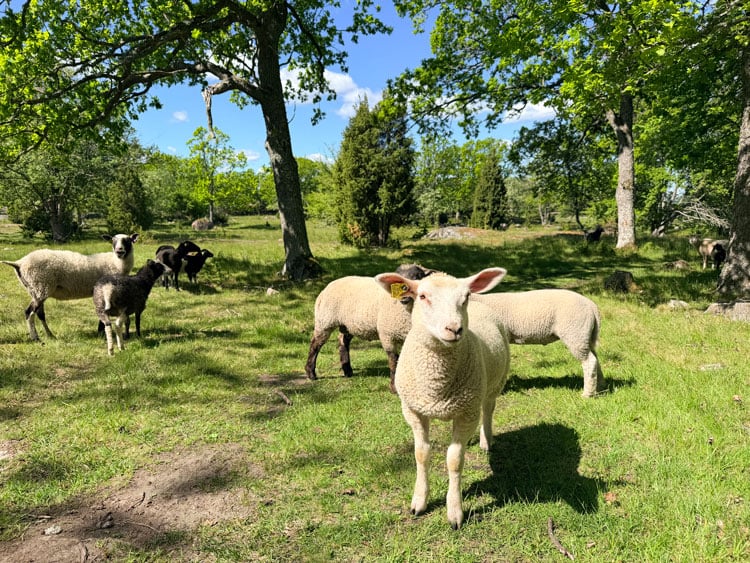
The next morning we took a short boat ride out to Aspöja, deep in the St. Anna archipelago. About 25 people live here year-round, farming, fishing, and grazing animals much as their families have for generations.
We wandered past a small children’s garden where kids can pretend-fish and ride stick horses, then sat down for lunch at Forsmans på Aspöja, a restaurant run by Helen Forsman, whose family has farmed this island since the 18th century.
Helen left Aspöja as a young woman to study and see more of the world, then came home to take over the family farm. Talking with her, I kept thinking about how rare that kind of return is, and how much an island like this depends on people choosing to stay, or choosing to come back.
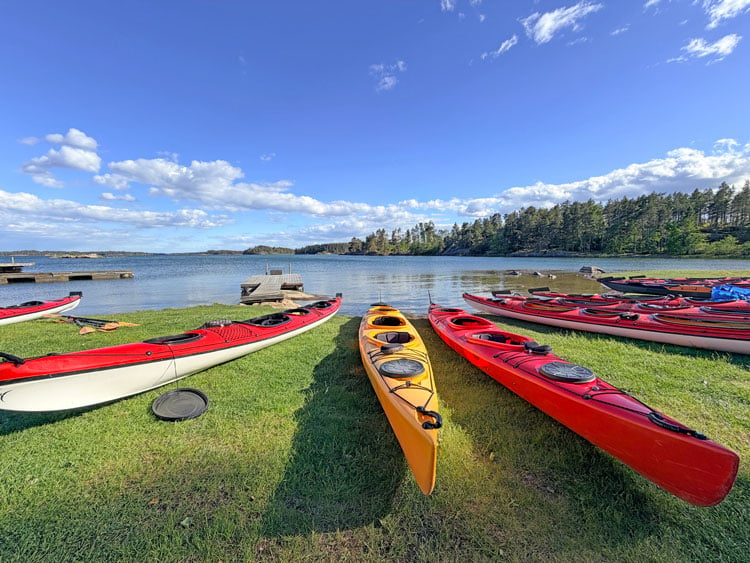
That afternoon we traded the boat for kayaks with a guide named Anders from Kajakparadiset, paddling along the coastline before pulling up onto sun-warmed rocks for a proper fika, Sweden’s daily ritual of coffee and something sweet, less a coffee break than an excuse to actually stop and sit with people for a while.
We spent that night in the archipelago village of Mon, at Skärgårdsbyn, a lovely apartment hotel overlooking the water. We ate a delicious dinner at Båthuset (the Boat House), a bistro built right into the harbor, with waves visible through every window.
Harstena’s Centuries of Island Life
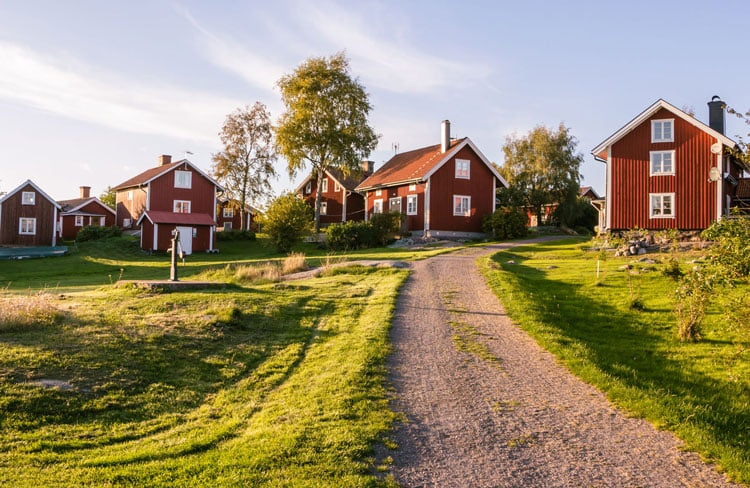
The next morning, we boarded a classic boat, the M/S Ellen, bound for Harstena, an island first recorded in a royal land register in 1543, with archaeological finds suggesting people lived here even earlier. Harstena didn’t get electricity until 1945.
Today only three or four families remain year-round, descendants of the original eight families who bought the island generations ago, though the population swells each summer as visitors arrive by ferry and private boat to rent cottages, eat at the island’s one restaurant, and watch seals bob along the rocky shoreline.
From there, we took a public boat to Häradsskär, a tiny island at the edge of the archipelago where fishermen have worked these waters since the Middle Ages. A red iron lighthouse rises 29 meters above the rocks, built in 1863 under engineer Gustaf von Heidenstam and notable as Sweden’s first to use a rotating lens.
Standing on the shore, I could see nothing but water and scattered islands in every direction. For a minute I just stood there and breathed, listening to the wind and waves.
Gardens, Canals, and a Slow Way Home
Back on the mainland at Fyrudden, we stopped at Gryts Handelsträdgård, a farm shop and garden center. I picked through homemade jams and plants grown right there on-site.
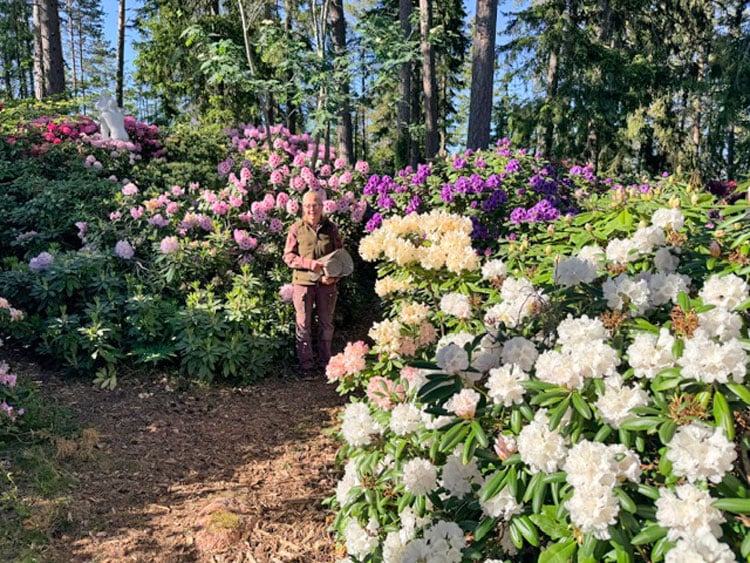
Just down the road is Kärlekens Trädgård, the Garden of Love, planted by Karola Messner and her husband as a tribute to their marriage. It holds roughly a thousand roses across 450 varieties, some 700 rhododendrons, and fourteen life-sized sculptures of couples that Karola carved herself. We wandered through it in late spring, everything just starting to bloom.
Our last stop was Gryts Varv, a small hotel tucked into the Gryt archipelago, followed the next morning by an easy bike ride along the Göta Canal’s old towpath from Norsholm to Brådtom lock, flat and car-free.
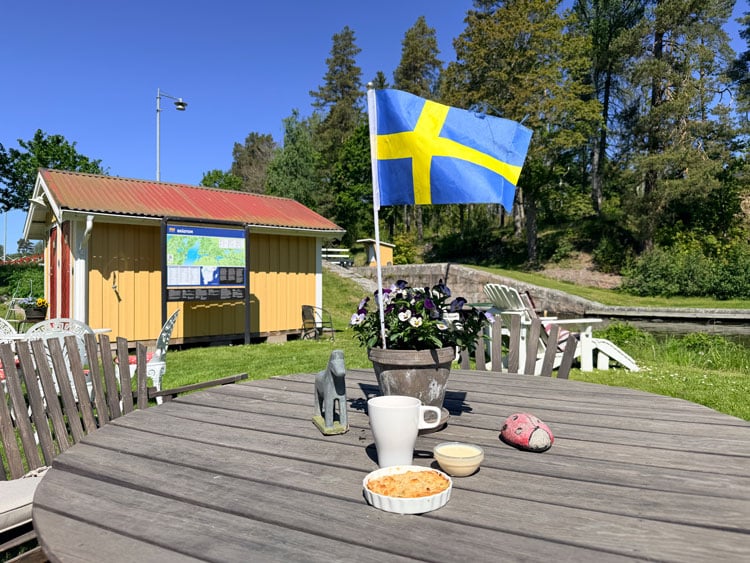
We stopped for fika at Brådtom Slusscafé, a charming cafe, hostel and working farm along the Göta Canal and watched boats pass slowly through at the same unhurried pace that defined the whole trip.
Why This Corner of Sweden Stays Quiet
Sweden’s west coast tends to draw the crowds, but Sweden’s East Coast Archipelago, threading through the archipelagos of Arkösund, St. Anna, and Gryt, remains something closer to untouched.
How to Get There
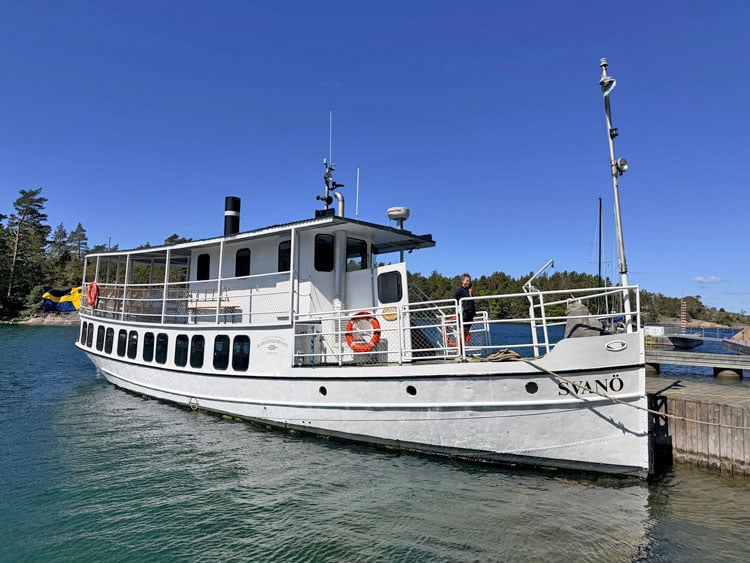
You can fly directly from Amsterdam to Linköping, which makes it more reachable than it feels once you’re out on the water. From there, the region is easy to explore by local bus, rental car, or the seasonal archipelago boat lines that connect the islands all summer long.
If you’re planning your own version of this trip, Visit Ostkusten is a good place to start, with details on lodging, dining, and getting around the coast.
What I keep coming back to, weeks later, isn’t any single view or meal, but the pace of it all. You reach these islands only by boat. The same families have run the same restaurants for generations. Even the hotel we started at chose secondhand furniture over anything new, just because that’s the kind of place it wants to be.
In a part of the world defined by more islands than anyone could count in a lifetime, I found exactly what I was looking for: room to breathe, and nowhere in particular I had to be.
Read More: Island-Hopping in Sweden’s Gothenburg Archipelago

- 9 Insider Tips I Wish I’d Known Before My First European Adventure - October 7, 2026
- Seaplanes, Porcupines and Hidden Lakes on Quebec’s Explorer’s Route - October 6, 2026
- The Family Reunion Hack That Eliminates All the Planning Stress - September 30, 2026
Planning another trip soon? ✈️
Add GoWorldTravel.com as a preferred source on Google. Click the button below so our local guides, packing hacks, and hidden-gem itineraries always show up first when you search!
Add to Preferred Sources