
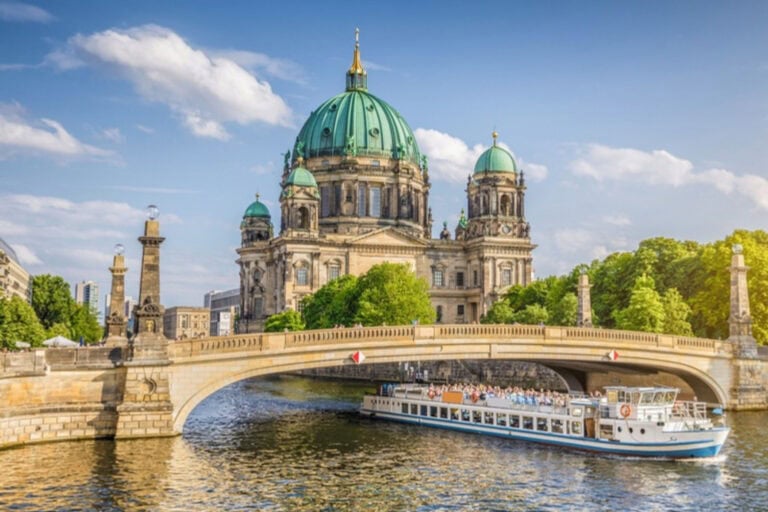

Crossing the Friedrichsbrücke bridge onto Museuminsel (Museum Island), I was greeted by the magnificent Berliner Dom. Its Baroque Revival dome was gleaming in the midday sun.
Street musicians and artists created an inspired atmosphere in the breeze atop the ornate overpass. Long colonnades evoked the grandeur of an ancient acropolis, cascading along the walkways on the other side. The views here are iconic.
Amid the bicentennial celebrations, museum visitors were plentiful. I spotted the regal equestrian statue of Frederick William IV watching over the scene as I entered the enclave of Berlin’s treasure chest.
Rising from the Spree River in Berlin’s central historic Mitte district, Museumsinsel is one of Europe’s great cultural destinations.
Designated a UNESCO World Heritage Site in 1999, the five-museum complex is a leisurely 15-minute walk along the grand Unter den Linden from the popular Brandenburg Tor.
Historic Hotel Adlon
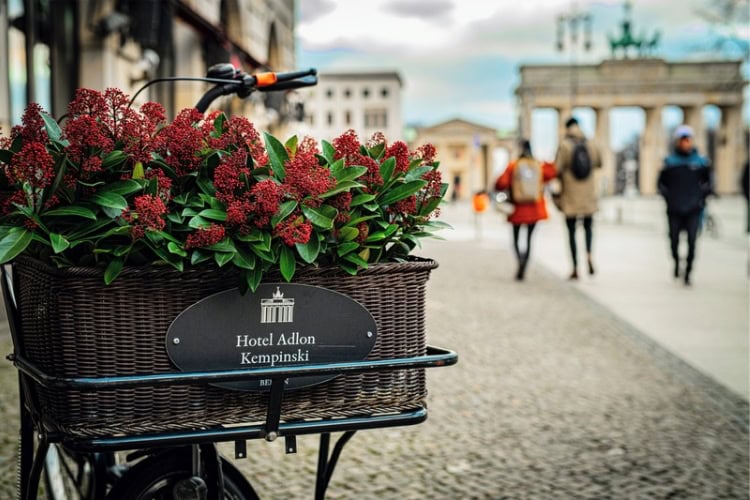
The Brandenburg Gate stands right beside the historic Hotel Adlon, where I was staying. Both are just gorgeous.
The cultural hub that is Museumsinsel has its own dedicated U-Bahn station, making visits to the museums’ collections an easily accessible experience from wherever you are while exploring eclectic Berlin.
Sanctuary of Art & Science
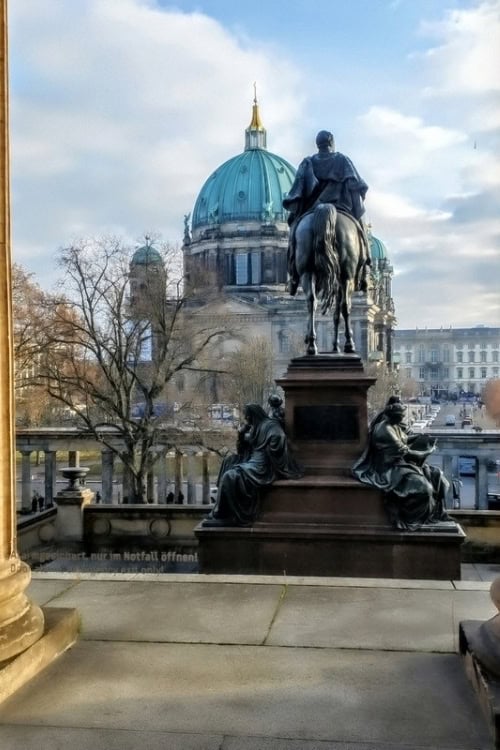
Spread across 21 acres, each of the five museums has its own distinct architectural identity, reflecting the cohesive vision of King Frederick William IV of Prussia in 1841.
The Prussian King commissioned the project as a “sanctuary for art and science,” where extraordinary collections would be available not only to royalty but to the public for education and inspiration. But Museuminsel’s roots run even deeper.
During the Napoleonic Wars, much of Prussia’s royal art collection that fills Museuminsel was seized when French forces occupied Berlin in 1806. The treasures were then transported to Paris, but were returned home to a jubilant public following the tyrant’s defeat.
The subsequent exhibition of the recovered art was wildly popular. This inspired King Friedrich Wilhelm III to establish a permanent cultural center where the public could share these collections. Judging by the roughly 2.5 million visitors who explore Museum Island each year, the vision continues to flourish 200 years later.
Designed by some of Prussia’s most celebrated architects, each museum reflects the character of its treasures. Classical Greek temples, Byzantine basilicas, and Renaissance influences create thoughtful architectural pairings that indeed complement the collections inside.
Construction unfolded during a century that bore witness to the Age of Enlightenment, the Industrial Age, and wars. Restoration remains a perpetual labor of love in efforts to preserve and enhance the island’s remarkable legacy.
If you’re planning a trip to Germany, check out our Germany Travel Guide, where you’ll find a curated selection of articles to inspire you and help plan your trip.
The Haven of Treasures
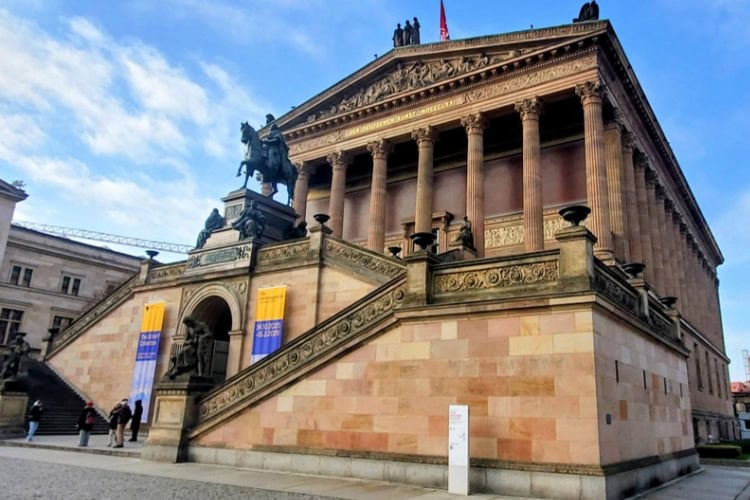
Inside the Alte Nationalgalerie, a classical temple devoted to nineteenth-century art, I floated through the collection across its three floors. I lingered in Renoir’s elegance, felt the breezes of Cézanne and was transported to a dreamy Belle Époque with a complete Lautrec.
The renowned Scharf Collection, one of Germany’s most significant private art collections, showcases French masterpieces spanning Realism, Impressionism, Cubism and Surrealism.
The galleries unfolded with fluidity and ease. It’s easy to lose yourself and lose time among the masterpieces, but isn’t that the point? Audio guides and docent-led tours are available.
Face to Face with Nefertiti
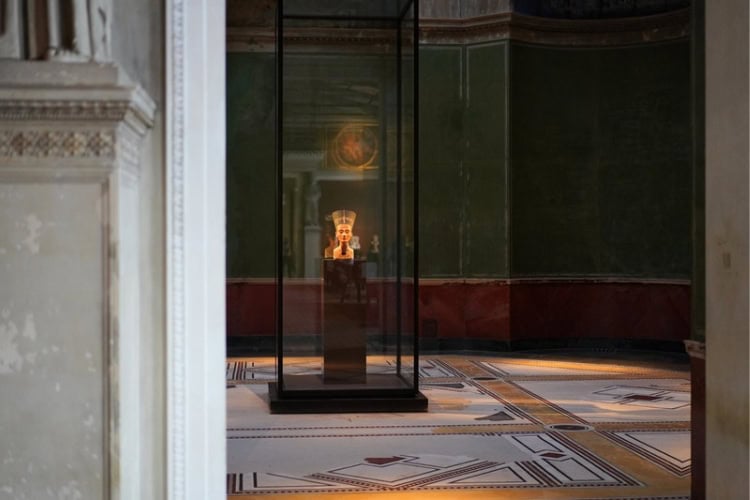
Soon I found myself face to face with the 3,300-year-old Bust of Nefertiti. Yes, that one. I stood entranced, finally up close with one of the world’s most celebrated and mysterious works of ancient art.
Displayed within the graceful, immersive galleries of the Neues Museum, the queen may be the undeniable star. However, every room, every inch, offers another layer of archaeological discovery that transports visitors from Egypt to the Stone Age and back. I had to take a seat in the interior tea room just to process it all.
The Bode and Altes Museums
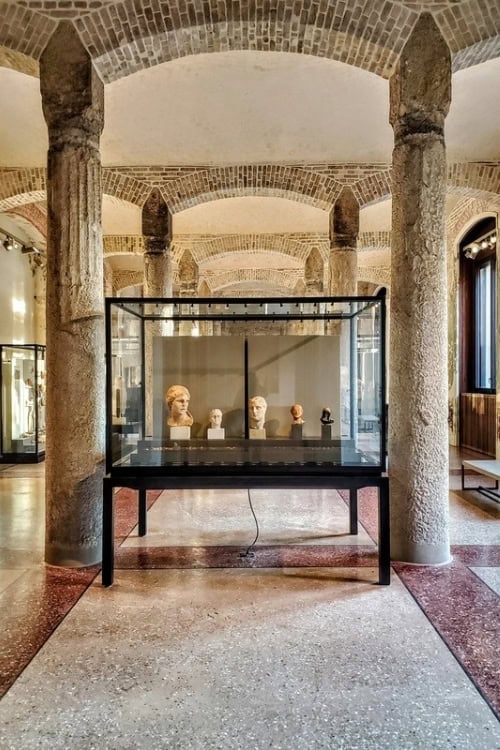
Next door, the Bode Museum lured me to linger beneath its soaring Neo-Baroque dome. Here, I circled below the hovering sculpted dance of Venus and Mercury frozen in time. Roman, Byzantine and Far East treasures filled beautifully curated galleries.
I marveled at the Donatello and Bernini figures before continuing beyond the staircase pillars, floating into the Altes Museum. Once known as the Royal Museum, Altes is the first museum of the complex to be opened to the public.
Once inside, the grand rotunda echoed inspiration from the Pantheon in Rome with its coffered dome and central oculus beaming with natural light. As a cornerstone of the Neo-Classical Era, its remarkable gems from Greek and Roman antiquity await.
Virtual Pergamon
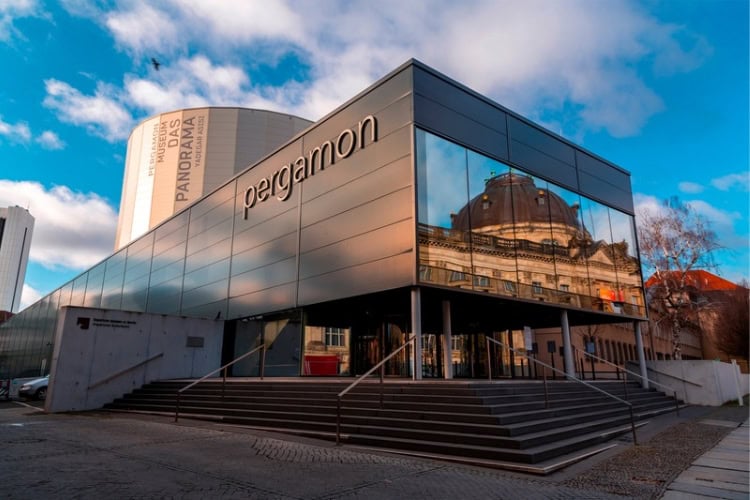
The Pergamon Museum is currently undergoing an extensive, multi-year restoration on Museum Island. However, I still had the chance to experience some of Berlin’s most compelling exhibitions just across the Spree at its temporary space one afternoon.
I toured a unique exhibit that bathed the ancient sculptures in all the colorful, vibrant glory their artists originally intended. It’s always fascinating to remember that these fantastic sculptures were never meant to be bare white at all.
The famous giant head of Herakles and other sculptures are here as well. The site of the famous Altar of Zeus, the Gate of Ishtar and the Market Gate of Miletus are certain to wow visitors again when the doors reopen.
Das Panorama, created by artist Yadegar Asisi, recreates ancient Pergamon inside an immersive 360-degree installation. Towering projections and atmospheric sound sweep guests up into a time-travel visit to a bustling city during the reign of Emperor Hadrian in A.D. 129, in the midst of daily rituals by its dwellers.
Climbing the central viewing platform provided a strikingly intimate panoramic perspective of the culture that left me wondering just how different they were from us.
Whether you’re captivated by Impressionist paintings, ancient civilizations, monumental architecture or simply the joy of wandering through world-class museums at your own pace, Museum Island really is its own unique entity.
Visitors can purchase one-day or three-day Museum Passes that include admission to all of Museum Island’s collections and multiple museums throughout Berlin. The passes are available for purchase at Museum Pass | Staatliche Museen zu Berlin.
A Deeper Look Into Deutschland
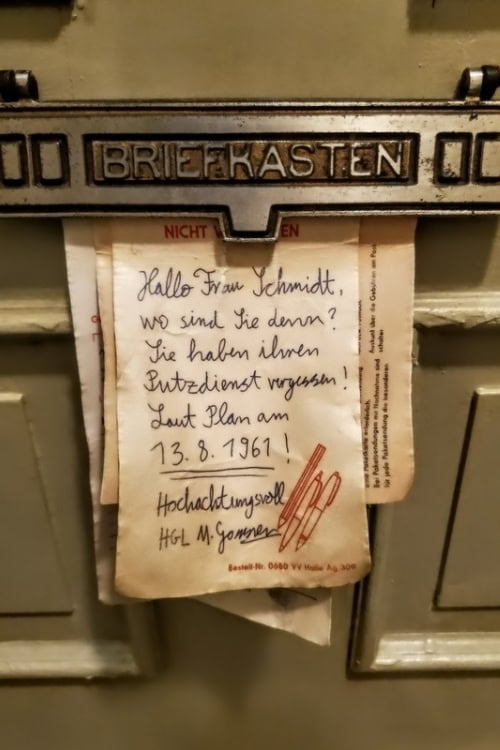
It is astounding to think that Museum Island existed as a bomb site, untouched during the 45-year-long division of Berlin. During WWII, most of its treasure was evacuated to remote sites like the Flak Towers, salt mines and beneath the Berliner Dom itself.
While many were lost to looting and fires, countless masterpieces from the island were either confiscated or destroyed during the Nazis’ Degenerate Art purge. The fascists wound up preserving a good deal of it unknowingly by displaying it as mockery.
Today, bullet holes and other war scars on the walls of Museuminsel are deliberately preserved.
At the Deutschlandmuseum in Berlin, history took me on a wild, high-tech, and deeply immersive ride through a multi-sensory experience spanning 2,000 years in 60 minutes.
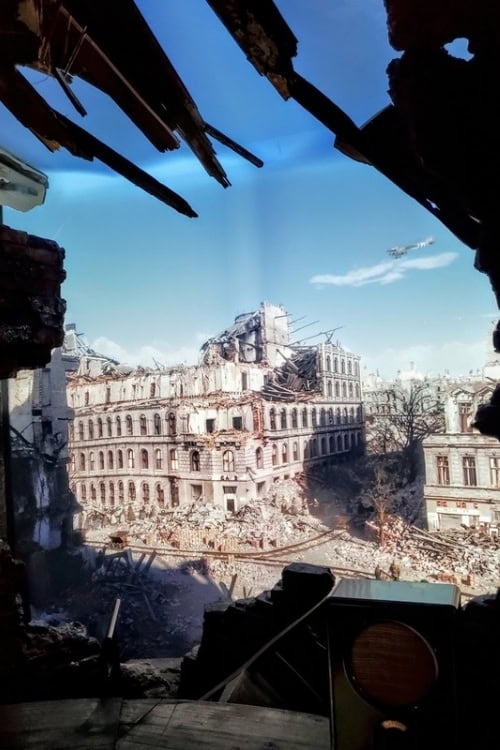
Photo by C. Ludgate
The multiple award-winning interactive journey evoked palpable emotions as I moved through time, while at times feeling and hearing that ominous thunder in the foreground. Vibrant glimpses into Germanic tribes, the Age of Enlightenment, Cabaret culture, Bauhaus & the Weimar Republic and beyond created a cohesive, linear story within life-size worlds.
The intriguing, poignant, and pivotal moments were powerful, even in what could have felt like reductive retellings if handled carelessly. The exploration incorporated complexity without becoming preachy; in fact, it humanizes people and, at times, questions society and politics at large.
The multidimensional details of the Deutschlandmuseum somehow make grey areas clearer in a linear way. I really did walk out feeling a little more knowledgeable than before. The museum is very kid-friendly and is located by Potsdamer Platz in the Mitte District. Inquire with Visit Berlin for deals and discounts.
The Eastside Gallery
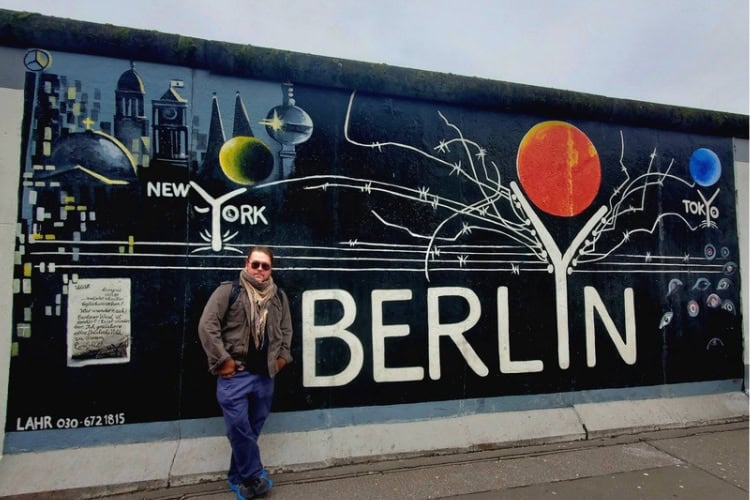
On the banks of the Spree in Friedrichshain, I found myself at one more uniquely Berlin experience oozing with raw history, culture, and art. The East Side Gallery, or the remains of the Berlin Wall, comprises the longest open-air gallery in the world at 4,300 feet.
As an ’80s kid, The Wall was something that provoked immense wonder for me. But a visit is more fascinating than nostalgic. From its stark place in history to the real meaning of the division, to Pink Floyd’s The Wall, to the tearing it down, it is an immensely powerful cultural icon to see up close.
Immediately after the Berlin Wall fell on November 9, 1989, 118 artists from 21 countries began painting raw, powerful, elaborate murals with intense commentary that make up the East Side Gallery. The gallery officially opened on September 28, 1990, and ongoing restorations are carried out as needed.
Many images are now iconic and synonymous with the era, such as Dmitri Vrubel’s “My God, Help Me to Survive This Deadly Love,” which depicts the socialist fraternal embrace, symbolizing freedom after the fall of the Wall. It’s epic. Access East Side Gallery via the Warschauer Straße and Ostbahnhof stations on the U-Bahn. Access is free.
Need a hand planning your trip? Here are the sites and services we rely on most, from booking tools to travel products we love.
Inspire your next adventure with our articles below:
- Island-Hopping in Germany (Yes, Germany)
- A Guide to Berlin’s Most Significant and Moving Historic Landmarks
Author Bio: As a New York-based Travel & Culture Writer, Photographer, and award-winning Filmmaker with 12 years in the industry, I work with multiple outlets, including Passport and Fodor’s. I am a contributing writer for Wander Magazine’s sophisticated bohemian demographic in the publication’s Travel Well, Eat Well, and Live Well sections. I have interests in tailor-made experiential itineraries that facilitate compelling, dynamic, practical storytelling with nuanced angles.
My work tends toward quiet luxury elements for adventurous, wellness-minded travelers with cultural curiosity. Nature and outdoors, coastal and spas, art and museums are major niches in combination with hands-on activities, historical, F&B experiences, and under-the-radar gems. Archaeology and architecture are also strong interests.
I adapt to a variety of demographics and welcome solo travel. Active, walking-friendly, biking, rail, nautical, and leisurely itinerary collaborations are welcome, as are river cruises and adventurous road trips. My work includes immersive deep dives or broad takes, long-form or short-form editorial, plus pictorials and occasional round-ups. I am drawn to unique angles for down-to-earth people who appreciate good taste and a good time. I welcome collaborations with like-minded colleagues for creative, inspiring itineraries. Website: wanderamatravel.com | IG: @christopher.wanders
Want to discover more hidden gems and helpful travel tips? Join our free newsletter for the latest travel secrets and travel articles.
We are reader-supported and may earn a commission on purchases made through links in this article.

- Berlin’s Museum Island: Art, Antiquities and Architecture on the Spree - September 19, 2026
- Sacred and Serene: Patmos and Paros Prove Less Is More in Greece - September 19, 2026
- 7 Crowd-Free British Autumn Getaways Beyond the Cotswolds - September 18, 2026
Planning another trip soon? ✈️
Add GoWorldTravel.com as a preferred source on Google. Click the button below so our local guides, packing hacks, and hidden-gem itineraries always show up first when you search!
Add to Preferred Sources