
I suddenly woke up and realised the bus had stopped. Some drops of sweat were rolling down my temple, which I took to mean the announcement shouted in Vietnamese before we left was about the air conditioning being faulty.
The driver left his seat, turned towards us, and shouted a new announcement that I was yet to decipher. My obvious confusion was noticed by a kind lady who, while heading towards the bus’s open doors, swiftly told me, “Break! 15 minutes.” So I obliged.
At this point, I had been in Vietnam for about 2 hours. I had just landed from Mumbai and was making my way to the Mekong Delta. A direct bus from Ho Chi Minh City to Cần Thơ.
Not long, only a 3-hour ride, and, it being my first time travelling through Vietnam, I decided to splurge and pay a few extra dollars for the luxury bus, which included more comfortable seats, and, most importantly, air conditioning. Nevertheless, I was not going to let this small disappointment get in the way of the immense levels of excitement I was filled with for finally visiting a country I had dreamt of since I was a child.
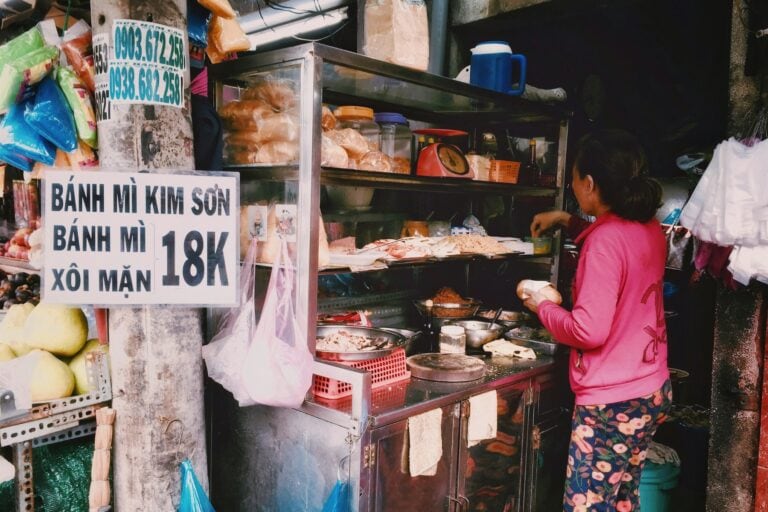
As I got off the bus, people moved in a sort of Brownian chaos, queuing for the toilet, weaving between one another, rushing to grab the last empty tables to enjoy their packed meals. But the longest queue, about fifteen to twenty people, formed in front of this small cart surrounded by prepping tables and displaying various pots filled with ingredients.
The sign simply read “Bánh Mì – 15K”. I decided to queue up, as I saw a few familiar faces from my bus and figured that they knew how long it takes to prepare one, and we would be in time for the end of our break.
A First Taste
The smell of sizzling meat filled the whole queue, fat dripping on the hot coals with a sharp hiss as it browned over the fire. The sound of a metal knife against a wooden board cut through the air, slicing crisp vegetables with each hit, blending with the rumbling voices of the people in the car park.
Then I reached the front of the line. I fumbled with the unfamiliar VND notes, trying to count out 15K, when a voice cut through the noise: “Pork? Chicken?” I chose pork.
The sandwich preparation process felt like a rehearsed sacred ritual. The bread was sliced lengthwise with one swift motion, opening it up like a pocket. The canvas was set.
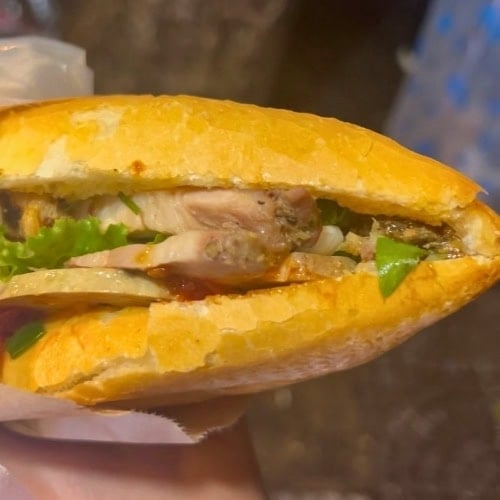
Inside, the first layers went down: pâté on one side, mayonnaise on the other. Followed by the pièce de résistance, thick slices of crispy, golden-skinned pork, its fat seeping into the bread. Julienned pickled carrots and white radish were added next, their acidity cutting through the richness. Fresh greens added the final layer: cucumber, coriander, and thin slices of jalapeño, finished with a drizzle of soy sauce.
I was so excited I could barely remember getting back to my seat on the bus, the sandwich already out of the bag. I took a bite. The bread and pork were so crispy they cracked like wood in a fire under my teeth.
Flavours came like waves on a shore: salty, sour, a touch of sweetness, with constant hits of heat. This was my very first taste of Vietnam, an amalgam of sensations pulling me in for more. It set the bar high for something bought on the side of the road, and, at first glance, just a sandwich.
Origins and Evolution
But is bánh mì just a sandwich? To answer that question, we must go back to the mid-19th century, when the French first arrived in modern-day Vietnam, bringing with them one of their most defining staples: bread. In a land where rice was the foundation of daily life, this was a complete novelty. Over time, the recipe was adapted by adding rice flour, creating a lighter, crunchier version, better suited to local tastes.
Historically, a luxury product largely consumed by foreigners, bread became much cheaper and widely available after World War I. By the early 1950s, in Saigon, bánh mì had emerged as a local take on a foreign staple. Even the name, simply translating to “wheat bread”, is a reminder of how new this ingredient once was to the Vietnamese people.
With the end of the war and the migration of Vietnamese people to the United States in the 1970s and 1980s, this sandwich became a global phenomenon and a symbol for a country that was so unfamiliar to many.
Read More: Phnom Penh in 48 Hours: Royal Palace, Mekong Sunsets and Khmer Cuisine
More Than a Sandwich
So when I first bit into that sandwich, in a car park on the side of the road between Ho Chi Minh City and Cần Thơ, I didn’t just taste food. I sank my teeth into decades of change that shaped a country that took something once completely foreign and made it its own.
And that is why bánh mì is more than food. Not because of what it is, but because of what it represents. A symbol of adaptation and resilience. The history of a people reshaping what was given to them. All of it is told through a baguette sliced in half, sold for 15K VND on the side of the road.
What to Know When Ordering Bánh Mì
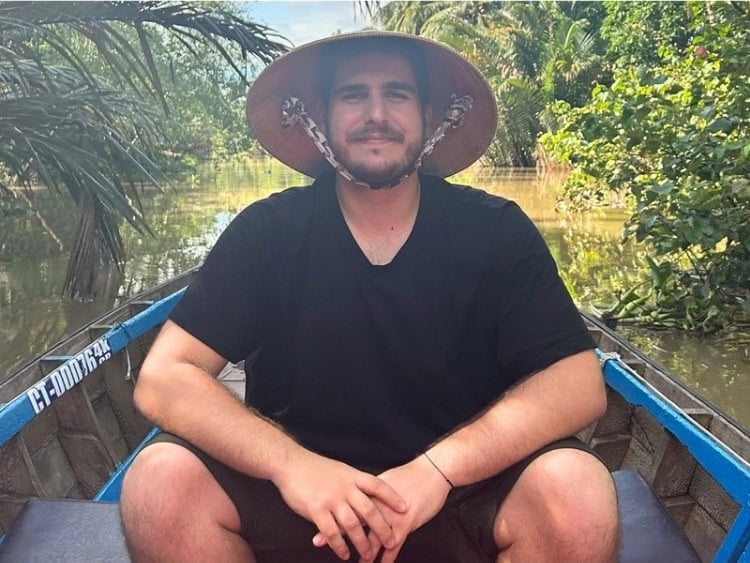
Experiencing your first bánh mì at a food cart on some random street corner is usually the best way to do it. I know that the appeal of a fancy, well-marketed restaurant might be more enticing, but trust me, nothing compares to the feeling you get when you stand in front of a bánh mì cart for the first time. It’s almost a perfect mix of confusion and excitement.
You will feel a little bit left out, as it might seem you are the only one not quite knowing what they’re doing. But that is part of it! And the best advice I can give you is to improvise.
First, make sure you understand the currency and have the money prepared. That will save you some time and a bit of embarrassment when it’s your turn to order.
Second, expect a kick. Traditionally, bánh mì contains freshly sliced bird’s eye chilies. So you may want to ask for a milder version if you know you can’t handle spice. But don’t worry, even if you miss doing so, the other fillings are designed to balance the whole sandwich, so it won’t be overwhelming.
And finally, don’t forget to enjoy it! You will only have your first bánh mì in Vietnam once, so don’t rush that experience.
Need a hand planning your trip? Here are the sites and services we rely on most, from booking tools to travel products we love.
Inspire your next adventure with our articles below:
- Cebu, Philippines: Jeepneys, Markets, and Clear Seas at Southeast Asia’s Welcoming Gateway
- Simeulue Island: Uncrowded Waves and Slow Days in Indonesia
Author Bio: Rafael Boceanu is a Romanian-born, UK-based travel writer. He writes narrative pieces about the politics, history and humanity hidden within everyday travel experiences on Substack at Collector of Visas.
Want to discover more hidden gems and helpful travel tips? Join our free newsletter for the latest travel secrets and travel articles.
We are reader-supported and may earn a commission on purchases made through links in this article.

Planning another trip soon? ✈️
Add GoWorldTravel.com as a preferred source on Google. Click the button below so our local guides, packing hacks, and hidden-gem itineraries always show up first when you search!
Add to Preferred Sources