
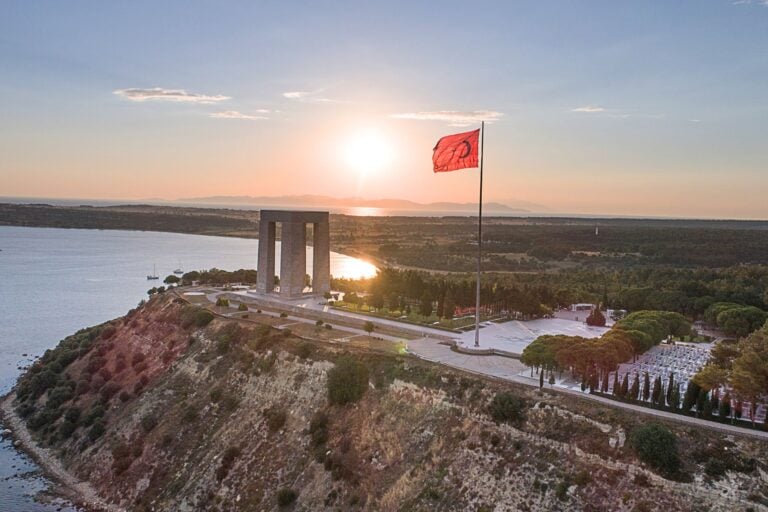
Türkiye is a study in contrasts. East meets West because it’s one of the few countries in the world that straddles two continents. Vestiges of Christianity exist in harmony with Islamic relics, and ancient ruins sit side by side with 20th-century history.
During my trip to Troy and the Gallipoli Peninsula, I visited two continents and saw ruins that date back thousands of years. Then I traveled less than 60 miles and was immersed in 20th-century history.
Ancient History In Troy
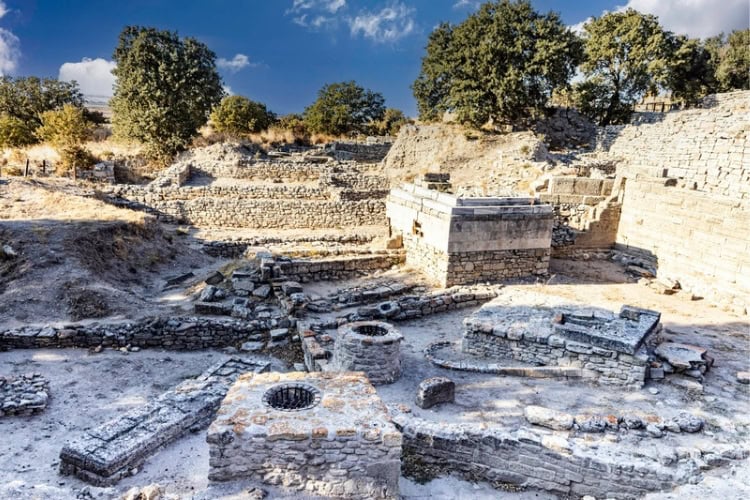
The ancient city of Troy is located a few miles from the southern entrance to the Dardanelles Strait near Çanakkale (Cha NAH ca lay) on Türkiye’s Aegean coast.
Historians hunted for centuries to find proof that the city really existed. They also wanted to verify whether there was a Trojan War, and if so, how much of what Homer wrote in the Iliad was true and how much was fiction.
In 1870, Heinrich Schliemann, a German businessman and amateur archaeologist, discovered remains of a large Bronze Age city on Türkiye’s northwest Aegean coast.
He and his team determined that the ruins were Troy, and that the city is actually nine cities built one on top of the other. The nine layers of civilization span 4,000 years, beginning in 3000 BC. A civilization in the sixth layer dates to around 1250 BC, which fits the time Homer wrote about.
Artifacts from the sixth and seventh layers indicate that Troy was ransacked and burned between 1400 and 1200 BC. Archaeologists found burnt deposits, hastily buried skeletal remains, and weapon fragments.
Written accounts from the same period also describe conflicts that could have caused a war. However, it most likely didn’t occur as described in mythology.
For more on Greek antiquity and myth, read Center of the Ancient World: Delphi, Greece and the Oracle That Shaped History.
The Trojan War According To Homer
According to Greek mythology, all the gods and goddesses were invited to the wedding of Peleus, a mortal king, and Thetis, a sea nymph, who would eventually become the parents of Achilles.
However, the guest list excluded Eris, the goddess of chaos. To get revenge, she attended the wedding secretly and placed a golden apple inscribed with the words “To the Fairest” in the middle of the banquet table.
Hera, Athena and Aphrodite all claimed the apple was meant for them and asked Zeus to proclaim who was the rightful owner. He (wisely) decided that someone else would make the decision because all three were powerful goddesses, and one (Hera) was his wife.
Zeus declared that Paris, a shepherd and a mere mortal, would decide which goddess should receive the apple. All three goddesses offered Paris gifts to influence his decision.
Hera promised to make him king of Asia and Europe, and Athena promised to make him the smartest man in the world. Paris selected Aphrodite because she promised to give him the most beautiful woman in the world as his wife.
Helen was the most beautiful woman in the world, but she was married to King Menelaus of Sparta. So, Aphrodite arranged for Paris to kidnap her and take her to Troy. Of course, Menelaus was furious when he learned his wife had been abducted. He mustered his army and armies from the other Greek states, and they set sail for Troy to get her back.
The Trojan Horse
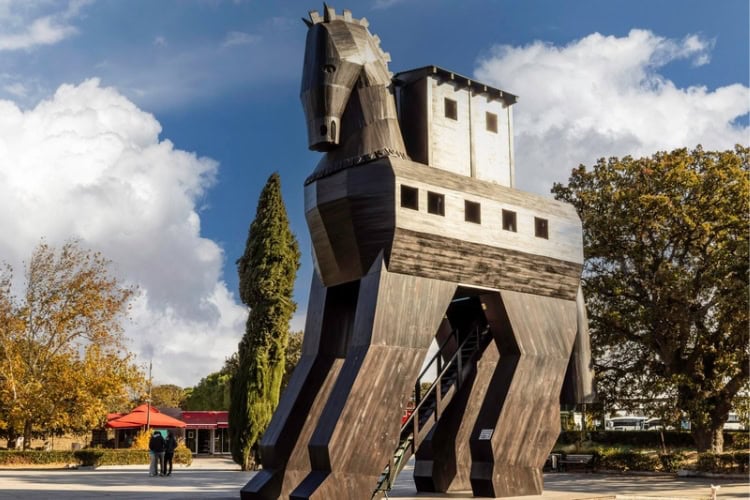
The Trojan War lasted for 10 years because the walls surrounding Troy were virtually impenetrable. To break the stalemate, the Greeks placed a large wooden horse at the main city gate.
Some soldiers hid inside the horse, and the rest of the army waited on a nearby island. A spy who stayed behind told the Trojans the horse was a gift from Athena.
The Trojans thought the war was over since they no longer saw the Greek army camped outside the city. They also believed the horse was a victory gift from Athena and brought it inside the city. That night, the soldiers emerged, opened the city gates, and the entire Greek army ravaged Troy.
I saw a model of the Trojan horse that greets visitors as they enter the city and another in downtown Çanakkale that was used in the movie Troy.
If ancient mysteries intrigue you, consider reading our article, The Ultimate Stonehenge Day Trip: Ancient Mysteries, Roman Baths and Georgian Grandeur.
Not So Ancient History In Gallipoli
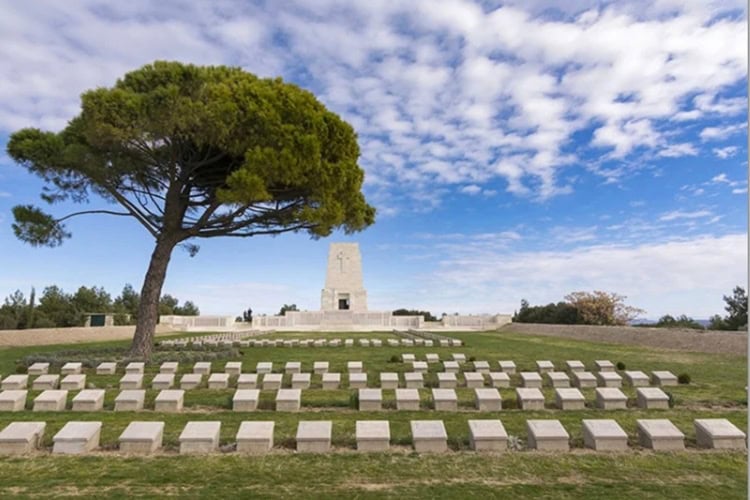
A 60-mile drive took me 4,000 years into the future to the Gallipoli peninsula, the site of one of the worst battles of World War I in 1916.
The British needed to secure the Dardanelles and the Bosphorus Strait to gain access to the Black Sea. They knew the key was to occupy the Gallipoli peninsula. So, they attacked in an amphibious landing with thousands of (primarily) Australian and New Zealand troops on April 25, 1915. This was the beginning of the Gallipoli Campaign, which lasted until January 1916.
Gallipoli was one of the bloodiest battles of World War I, with around 500,000 casualties on both sides. Over 80 cemeteries in Gallipoli Peninsula Historical National Park serve as a final resting place for French, Turkish, Australian, and New Zealand soldiers, and numerous memorials honor soldiers from both sides.
Honoring The Mehmetçik
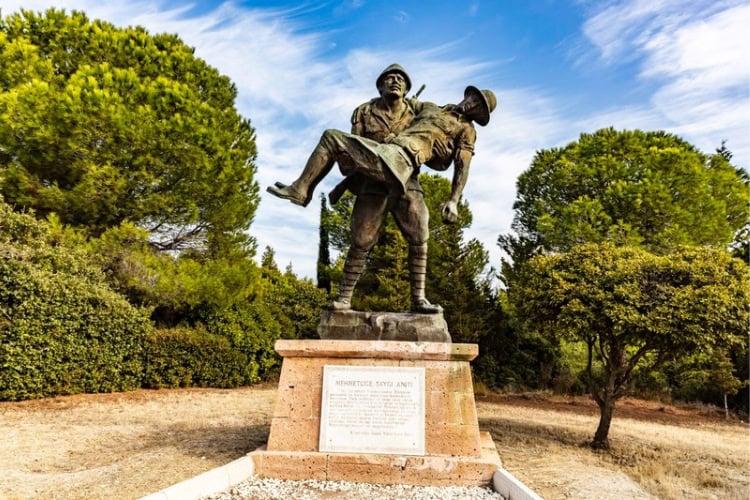
Photo by Marni Patterson
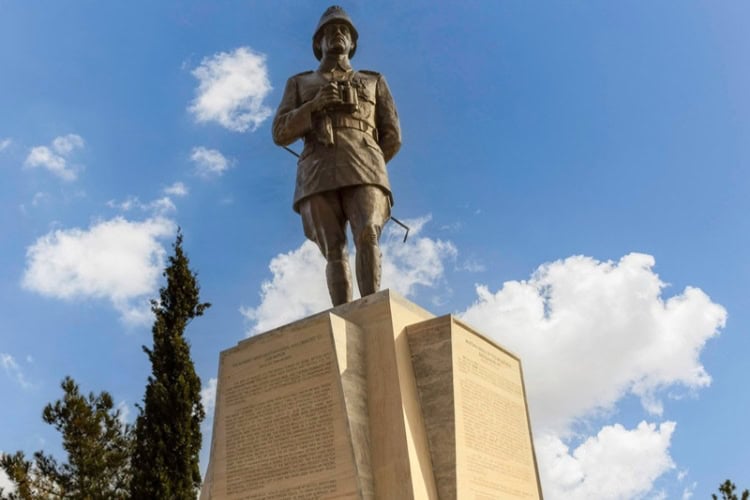
One monument, the Respect to Mehmetçik Memorial, is noteworthy because it shows that acts of compassion are possible, even during war. Mehmetçik is a Turkish name for soldiers like GI, Tommy, and Doughboy.
As the story goes, a badly wounded Australian soldier was caught in “no man’s land,” and an Ottoman soldier raised a white flag and risked his life to carry the soldier back to Australian lines. Then he returned to his side and fighting resumed.
Tankut Öktem, a Turkish sculptor, created the statue. The inscription at the base is an excerpt from a speech by Lord Richard Casey, a staff captain with the Australian 3rd Brigade during the Gallipoli Campaign who became the Governor-General of Australia.
He visited Türkiye to represent Australia at a Remembrance Day celebration and paid tribute to the Turkish army in his speech.
Impact Of Gallipoli
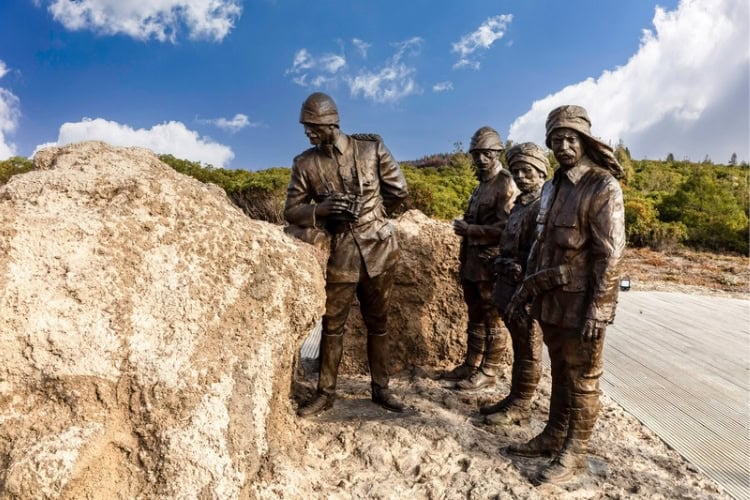
The Gallipoli Campaign was significant for Türkiye as well as Australia and New Zealand. It was a big victory for the Turks because the British never gained control of the Dardanelles and the Bosphorus Strait. It also laid the groundwork for the birth of Türkiye as a modern republic.
Mustafa Kemal Atatürk emerged as a military leader and became the founding father and the first President of Turkey. Turkish admiration for Atatürk is similar to the respect Americans have for George Washington, the French’s reverence for Charles de Gaulle, and how people in Venezuela, Bolivia, and other South American countries pay tribute to Simón Bolívar.
In March 1915, Sultan Mehmed V, ruler of the Ottoman Empire, established the Ottoman War Medal, also known as the Gallipoli Star. It was awarded to soldiers from the Ottoman Empire and the Central Powers for bravery in battle for the duration of World War I and was equivalent to the Victoria Cross in England and the Medal of Honor in the U.S.
Many cities and towns in Australia and New Zealand have monuments that honor the “Men of Gallipoli.” ANZAC Day (Australian and New Zealand Army Corps) is one of the most important national holidays in both countries. There are parades and ceremonies at war memorials to honor the sacrifices of soldiers during World War I and other wars.
Remembering The Fallen
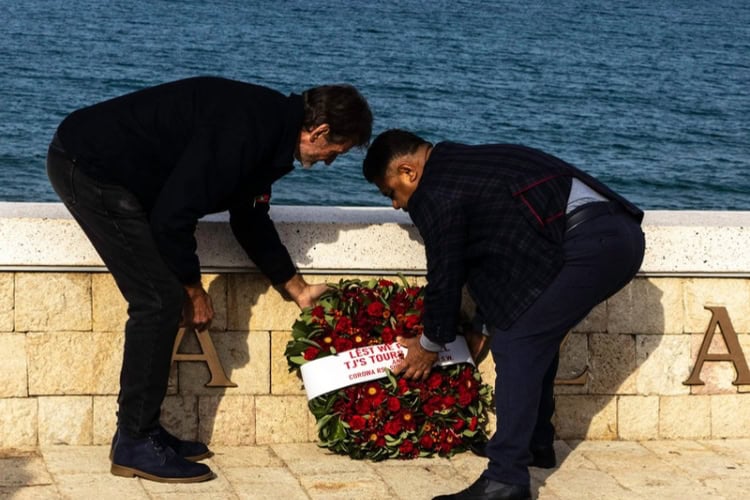
Each year, hundreds of Turks, Australians, and New Zealanders gather on Remembrance Day (November 11) to honor those who lost their lives during the Gallipoli Campaign.
Since I visited on November 11th, I had the opportunity to watch a joint Turkish–New Zealand ceremony. The Turk and Kiwi representatives presented a wreath to honor soldiers from both sides who perished at Gallipoli.
Many of the attendees wore red poppies, which became a symbol of remembrance for ANZAC Day after John McCrae published his poem “In Flanders Fields.”
After the ceremony, the group cast pine branches in the Aegean Sea, a tradition which connects fallen soldiers with their homelands and symbolizes sending them on their final journey. It was a fitting end to my odyssey through thousands of years of history in Türkiye.
For more stunning Middle Eastern ruins, see 15 Amazing Photos: An Inside Look at Petra and Little Petra.
What To Know If You Go
- Dress modestly. Türkiye is a secular country with a long Muslim history. Shorts and revealing clothes are acceptable in tourist areas and at the beach but may attract unwanted attention elsewhere.
- When visiting active mosques, both men and women are required to cover their knees and shoulders, and women must also cover their heads with a scarf.
- You must take off your shoes before you enter a mosque and may also be asked to remove them if you visit someone’s house.
- Don’t walk in front of someone who is praying. According to Muslim tradition, a prayer won’t be counted if it’s blocked by a physical presence.
- Mullahs call Muslims to prayer five times a day: dawn (before sunrise), noon, late afternoon, immediately after sunset, and after dusk. Bring earplugs to wear while you sleep if you don’t want to be awakened in the wee hours of the morning.
- The water is safe to drink in large cities but may not be in rural or less-developed areas. Bring a filtered water bottle or buy bottled water.
- Public bathrooms often aren’t stocked with toilet paper, paper towels, and soap, especially in rural and less-developed areas. Pack tissues, wipes, and hand sanitizer in your backpack or purse “just in case.”
- Many public bathrooms have squat toilets (i.e., holes in the ground). Ask if Western-style toilets are available. Many bathrooms have a few to accommodate people with knee and back problems.
- Learning a few Turkish words will help you make friends and build rapport with locals. A few helpful ones are: Hello (Merhaba – mer HABA), Goodbye (Güle güle – GOO-leh GOO-leh), Please (lütfen – LOOT fen), and Thank you (Teşekkür ederim – tesh-ek-KUR edim).
- Read Homer’s Emily Wilson’s translation of the Iliad before you go for the full account of the war behind the ruins.
Need a hand planning your trip? Here are the sites and services we rely on most, from booking tools to travel products we love.
Inspire your next adventure with our articles below:
- Ephesus, Turkey: Marble Streets, the Celsus Library and a Legendary Cat
- Waking Up With the Pharaohs: A Mother-Daughter Journey Through Luxor and Beyond
Author Bio: Marni is a freelance journalist who writes about destination travel, local customs and cultures, and history. She lived all over the U.S., and caught the travel bug when she spent a year in Belgium as an exchange student. She’s a member of the International Food, Wine & Travel Writers Association (IFWTWA) and the Society of American Travel Writers (SATW).
Want to discover more hidden gems and helpful travel tips? Join our free newsletter for the latest travel secrets and travel articles.
We are reader-supported and may earn a commission on purchases made through links in this article.

- Darwin, Australia’s Northernmost Capital, Combines Vibrant Markets, Waterfront Life and Access to Kakadu and Litchfield - October 11, 2026
- The Ghostly Side of Edinburgh: Haunted Castles, Underground Vaults and Murder Sites - October 11, 2026
- A Quest for the Best Frango Assado in Portugal’s Algarve - October 10, 2026
Planning another trip soon? ✈️
Add GoWorldTravel.com as a preferred source on Google. Click the button below so our local guides, packing hacks, and hidden-gem itineraries always show up first when you search!
Add to Preferred Sources