
Before I properly met the river that gives the Gambia its name, I met a kola nut. Sitting in Yousef’s palm, it looked like something a squirrel would reject, the color and demeanor of an old bruise, purplish, faintly mottled, somewhere between a chestnut and a disappointment.
It offers no clue as to why, for thousands of years, it has been the thing you bring to a gathering, the thing that travelled with traders across the Sahel the way salt once moved across the Sahara, currency, comfort, and ceremony compressed into something you could fit in a little pouch.
Yousef splits it open with his thumbs and the smell arrives before anything else, faintly vegetal, faintly medicinal, like the back room of a herbalist’s shop. He offers me a piece with the calm confidence of a man who knows exactly what is about to happen to my face.
There is a particular expression worn by those watching the uninitiated encounter kola nuts, somewhere between encouragement and the quiet pleasure of a test being administered. My guide Yousef has it perfected. He will tell me later, more than once, that he has never managed to enjoy the taste himself. He eats it anyway, out of what I eventually understood to be something closer to loyalty than habit.
My mouth says no. My mouth is, as it turns out, ahead of events.
The bitterness is not aggressive so much as patient. It waits until you think you’ve survived it before opening up at the back of the throat like a slow, botanical tide. And yet something underneath nags at the tongue and sends you back for another piece, the same dark instinct that returned you to coffee as a teenager after your first taste convinced you it was some form of punishment.
This, it transpires, is not a coincidence. The kola nut is Cola acuminata, and its name lives on inside every can of Coca-Cola ever cracked open on a hot afternoon, the original formula carrying this same ancient bitterness, tamed with sugar into the most recognizable drink on earth. We have been consuming West Africa’s great ceremonial nut for over a century without knowing it. Here, at least, it arrives honestly, no subsidy, no import license and no permission from anyone beyond the tree.
Kola Nuts And Welcome
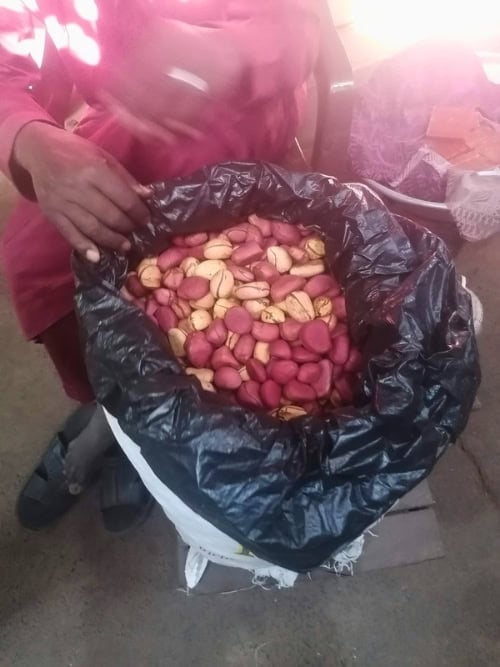
Across West Africa, to share kola nuts is to say, without words, you are here, you are known, you are welcome. They move through ceremonies the way the calima, airborne Saharan sand, moves across the skies: present at weddings, funerals, and the sealing of negotiations, at any moment when people feel the need to mark that something real is happening. I was providing, I realized, the exact wince my predecessors had provided for as long as anyone could remember. I was, briefly, part of the tradition.
I took a third piece. Yousef smiled and offered me some water to wash it down.
Soma Market Crossroads
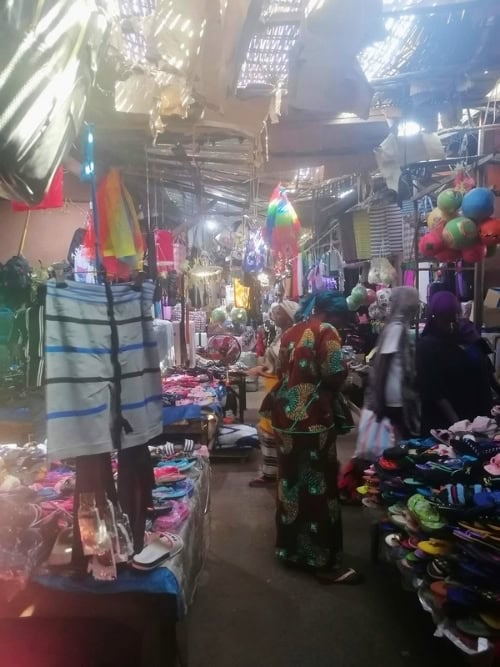
We were sitting in the municipal market in Soma, an important crossroads in more ways than one: the place where the main east-west road meets the Trans-Gambia Highway, the artery stitching together the two halves of Senegal that the Gambia, in its improbable sliver of geography, has been interrupting since independence in 1965.
It exists because of movement, goods, people, livestock and languages passing through, pausing, leaving something behind. I had come to a country named after a river, and so far the river had told me less about itself than the thing sitting in my palm.
What struck me first about Soma’s market was how little theatre it put on for outsiders. No one called out to us or thrust fabric or phone cases in our direction. It went about its business with the indifference of a place that has never needed tourists’ attention and sees no reason to start now. We moved through it almost unnoticed, which is what every traveler desires and what very few deserve.
We had given ourselves a task: to find only what the land around us had produced, no imports, no Chinese plastics, no pale imitations of somewhere else. It was, Yousef assured me, more possible here than the markets closer to the coast, though he said it the way a man says something he has decided to believe.
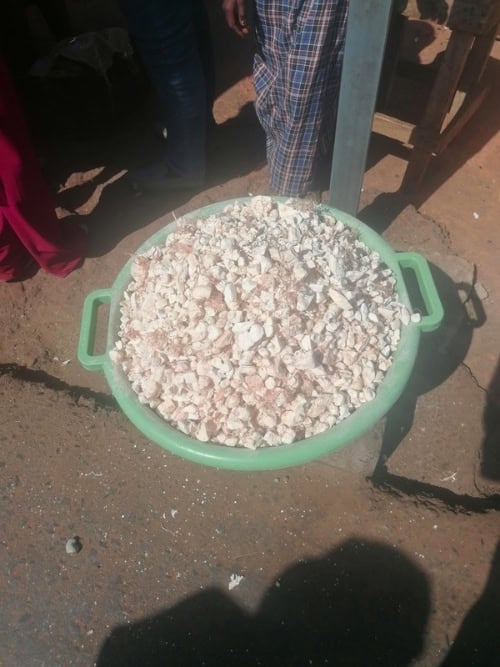
We found fish, oysters, sponges, peppers, cashew nuts and bales of groundnuts. I focused on a whitish substance that looked like chalk. The old woman selling it laughed when I asked if that was what it was, then dipped two fingers into the bowl and held them out. Before I could ask permission she had already decided I needed to taste it. It was citrusy and refreshing, and came, Yousef told me, from the baobab tree.
We had gone looking for the country in its market stalls and found it, in a nut that isn’t a nut and a chalk that isn’t chalk. The market was the more reliable half of the country. The river the nation is named for, it turned out, was keeping its own counsel.
A River Reconsidered
When Europeans first reached this coast, the river was the country: the road inland by which slaves, ivory, and groundnuts moved between the Atlantic and the interior, every settlement facing the water because everything important arrived by boat. It was this river, I suspect, that I had come looking for without quite admitting it, dense with barges, a highway of empire and commerce, the sort of thing that fills the pages of an old expedition account.
The one in front of me had other ideas. In one sense, it remains the country’s lifeline: the main source of protein for most who live near its banks. But after two days on the water, I saw little more traffic on it than the dugout canoes of hopeful fishermen. Once, we drifted past two enormous barges loaded with groundnuts, moored to a crumbling wharf, awaiting whatever. No one seemed in any hurry to find out what that was.
I had imagined that a country named after its river would still revolve around it. It was an assumption so obvious that I hadn’t noticed I was making it until the river quietly declined to cooperate.
Birdlife Along The Gambia
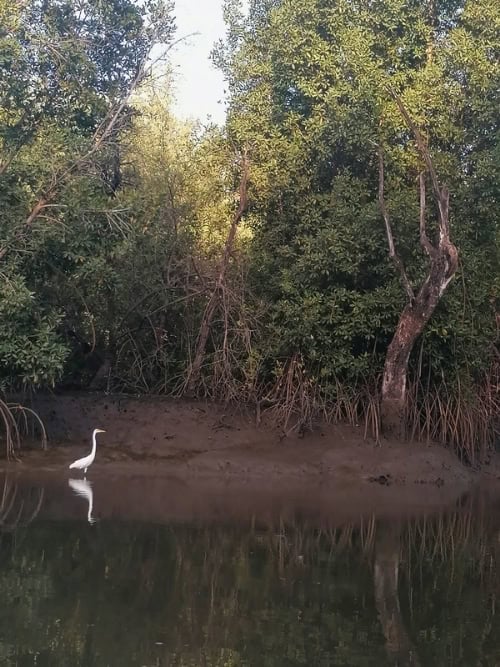
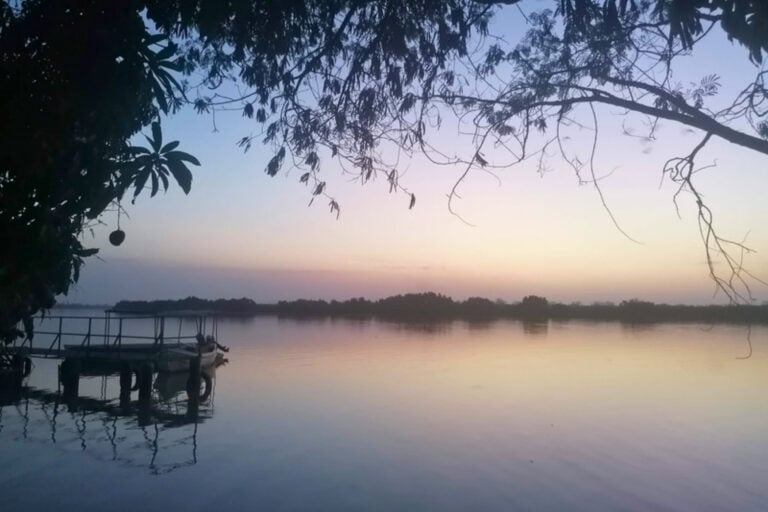
Sunset on the river glowed orange like the immodest birds that haunt the mangroves. Herons and egrets holiday in the biblical sludge drawn from the heart of Africa, on what amounted to a package tour from Europe.
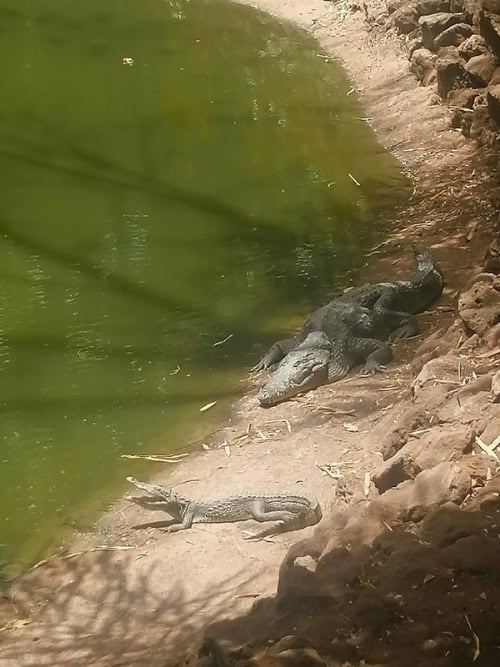
A camouflaged crocodile slid into the water ahead of our wooden boat, its gaudy blue paint a small defiance against the café con leche of the current. Kingfishers darted off indignantly whenever our hull disturbed their ambush from above, and at low tide the mud banks seemed to dance in the glare of the sun, until I understood that the mud actually was dancing, with waves of one-clawed crabs doing what crabs do.
Near Tendaba Camp, the birds are the real attraction, though I wondered whether a visitor might feel short-changed, coming so far to watch cormorants and herons on holiday from the countries they’d flown out of.
Seeing the real stars meant knowing what to look for, a small preview of the river’s larger conundrum: a nation’s founding waterway sitting almost entirely unused by the nation itself. Or perhaps unused only by the standards I had arrived with. The nervous system was clearly there. The traffic that should have run along it had simply gone elsewhere.
Crossings And Ferries
It had gone to the crossings. The next day our driver, Abdoulie, drove us to Kuntaur, 170 kilometers in three hours, a speed owed less to the well-paved road than to the “sleeping police,” as locals call the speed bumps meant to enforce a slowness the highway never quite earns on its own.
Abdoulie drove without comment, both hands loose on the wheel, a man who had long decided the road would do as it liked regardless of his opinion of it. Checkpoints, mostly manned, sometimes womaned, waved us through from beneath whatever tree happened to be shading them, since in this country it is invariably a single generous tree that constitutes a village.
If the river had gone quiet, the business of crossing it had not, enduring, like the kola nut passed hand to hand, not despite the world’s changing shape but quietly beside it.
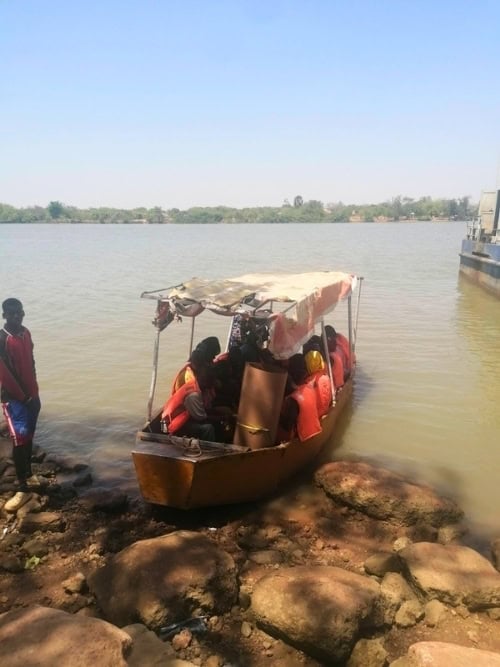
We crossed the river at Janjanbureh, formerly Georgetown, roughly 270 kilometers upriver. The island was purchased by the British captain Alexander Grant in 1823 as a settlement for freed slaves. Yousef and I crossed to the north bank in an overcrowded passenger boat, life jackets too beaten to hold anyone up for long, while Abdoulie took the 4×4 across on a car ferry.
No one on board looked frightened exactly, more resigned, the particular calm of people who have made a crossing many times and intend to go on making it. Seven uneventful minutes later I tumbled ungracefully out onto the far bank.
Rice, Fields And Hippos
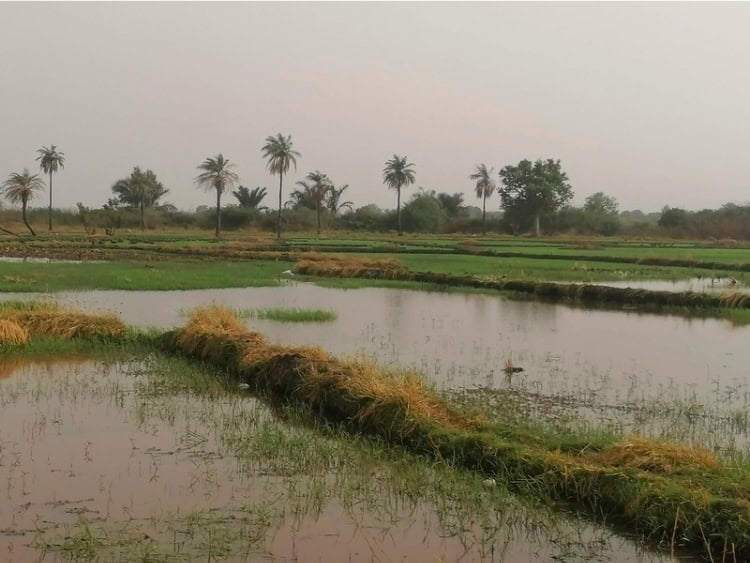
As we neared Kuntaur, we passed through EU-funded rice paddies that gave the area the sudden, unlikely look of a very dry Southeast Asia, odd, given the country still imports most of the rice it eats, on a river running directly past barren fields that could grow it. Yousef found this self-evidently absurd, as though the world’s failure to arrange itself sensibly were a personal affront.
It was hard, watching the fields go by, not to think of the kola nut still in my pocket, a thing this country makes entirely for itself, requiring no shipping container, no goodwill from Banjul or beyond. Rice, evidently, was a different kind of appetite, one the country had somehow talked itself out of satisfying at home. The other real danger to the crop, apparently, is the occasional hippo developing a taste for it and tearing up a paddy in a drunken spree.
Chimpanzees Of Baboon Island
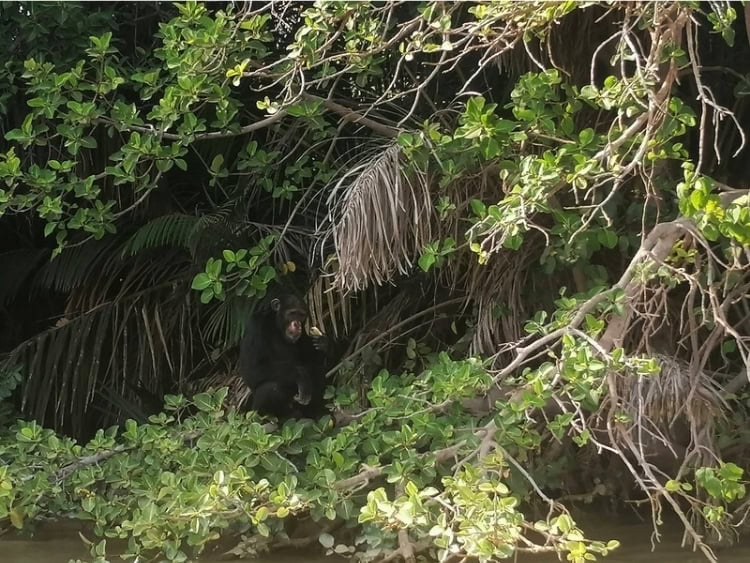
We had come this far upriver for the chimpanzees. The rehabilitation project on Baboon Island began in 1969, when Eddie Brewer, head of the country’s wildlife department, and his daughter Stella began taking in orphaned chimps confiscated from traffickers and circuses; Stella moved the survivors here in 1979. Today more than a hundred live across these islands, fed daily by staff since the land alone can’t support them, drawing them out of cover for the tourist boats. Safe from predators, and unable to swim, they simply stay where they’re put, a sanctuary and, in the same breath, something like a penal colony: an Australia for retired circus performers, comfortable, contained, permanent.
That night the lights went out early and I slept under a mosquito net that had once swayed with a ceiling fan now hanging inert above me. I woke to the call to prayer and watched the purplish river boil here and there with fish breaking beneath it, while a kingfisher took up residence on a moored tour boat’s canopy, darting down again and again, missing, and trying again without any evident loss of confidence.
North of the river the land turns markedly drier, mango groves give way to leafless baobabs gesturing at a Sahel that keeps creeping south, the calima thick enough to make the horizon feel like the edge of something harsher.
Bridges And Quiet Change
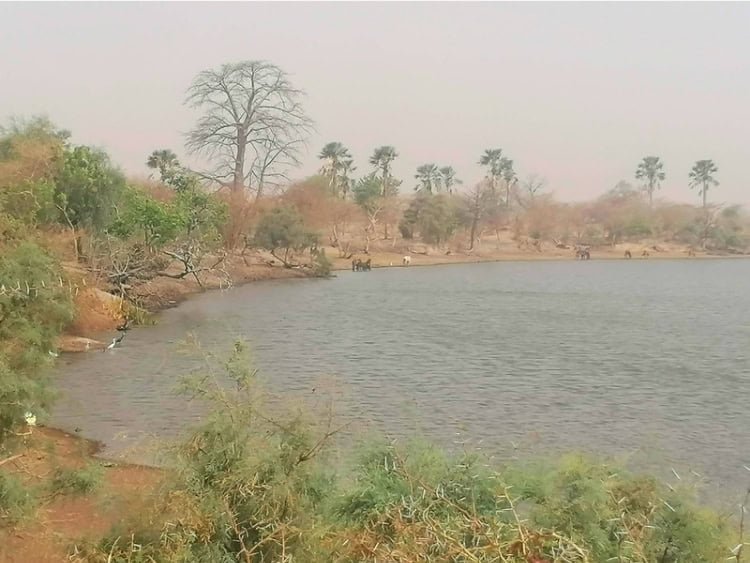
We made our own last crossing back toward Amdalai camp, near Farafenni, on the bridge that has, since 2019, finally carried the Trans-Gambia Highway over the river on something other than a ferry timetable.
First proposed in 1956 and shelved for decades by shifting politics between Banjul and Dakar, it took roughly the length of a human life to arrive: a crossing once measured in days of waiting, now minutes. Yousef, who has crossed this river more times than he could count, seemed almost bemused by the tollbooths, as though the bridge, having taken sixty years to become inevitable, would need a little longer yet to become ordinary.
Somewhere behind us, the barges were presumably still moored, still awaiting whatever they had been awaiting since we first passed them. Somewhere upriver, the rice was still being imported past fields that could have grown it, and the chimps were still being fed by hand on their island of exile.
None of it was for lack of capacity, exactly; the market in Soma had shown as much. But the river had never quite explained itself, and it wasn’t about to start now. The kingfisher, at least, wasn’t waiting on an explanation. It dropped, missed, rose, and tried again. Rivers, I began to suspect, are far less interested in the uses we find for them than in the lives they quietly continue to sustain.
If You Go
Getting there: Fly into Banjul International Airport, served from Europe by regular and low-cost carriers, with connections also possible via Casablanca and Dakar, a five-to-six-hour road transfer if you’d rather arrive overland from the capital of Senegal. A guide and driver (like Yousef and Abdoulie), as invaluable here as they were for this trip, can be easily arranged through guiagambia.com.
When to go: The dry season, roughly November through May, is kindest to visitors, cooler, largely rainless, and best for spotting the birdlife along the river. It’s also when the calima, the Saharan dust that colors the Sahel’s horizons, is at its thickest, so if you want the hazy light this piece describes, aim for the early or late end of that window.
What to know: Entry rules vary by nationality and change without much warning, so check the current requirements for your passport before booking. Many EU, UK, and ECOWAS citizens can enter visa-free. A passport valid at least six months beyond your travel dates, proof of onward travel, and a yellow fever certificate (if arriving from an at-risk country) are standard requirements, along with a small airport security fee payable in cash (around US$20 or €20 at the time of writing) on arrival and departure. The dalasi is the local currency; cards are unreliable outside major hotels in the capital, so carry cash.
Where to go: Tendaba Camp is the base for river trips and birdlife along the lower reaches. Further upriver, Janjanbureh (formerly Georgetown) and Kuntaur are the gateways to Baboon Island, where the chimpanzee rehabilitation project run by the Gambia’s Department of Parks and Wildlife has operated since 1969; boat trips out to view the chimps are arranged locally and are best booked a day ahead. If you’re crossing the river yourself, the passenger ferries at Janjanbureh and the newer bridge at Farafenni-Amdalai are both worth experiencing for what they say about how this country moves.
Two small rituals worth knowing: look for attaya, the local tea. Kola nuts are still exchanged as a gesture of welcome and respect across much of West Africa. If you’re offered one, take it, just don’t expect to enjoy the first bite.
Need a hand planning your trip? Here are the sites and services we rely on most, from booking tools to travel products we love.
Inspire your next adventure with our articles below:
- A Nile River Cruise Through Egypt’s Ancient Temples, From Luxor to Aswan
- Inside South Africa’s Battlefields, Where Zulu Warriors Once Faced Down Empires
Author Bio: Troy Nahumko is an award-winning (Mercedes Calles y Carlos Ballesteros premio de periodismo) author based in Spain. His recent work focuses on travels around the West Africa and the Mediterranean. His first book, Stories Left in Stone, Trails and Traces in Cáceres, Spain focuses on travels around the province of Caceres published with the University of Alberta Press. He also wrote the Mid-Spain section of the Lonely Planet’s new Experience Spain. As a writer and photographer he has contributed to newspapers and media such as The Globe and Mail, The South China Morning Post, The Sydney Morning Herald, The Toronto Star, The Boston Review, Counterpunch, The Irish World, The Straits Times, Khaleej Times, DW-World, Rabble, El Pais, CTXT, Nueva Tribuna, SUR in English and has a bi-weekly column in Spanish in HOY.
Want to discover more hidden gems and helpful travel tips? Join our free newsletter for the latest travel secrets and travel articles.
We are reader-supported and may earn a commission on purchases made through links in this article.

- 10 Essential Tips for Surviving Major Flight Disruptions - October 22, 2026
- Helicopter-Access Hiking at Durrand Glacier Chalet in British Columbia’s Selkirk Mountains - October 22, 2026
- An Artist’s Safari: Seeing the Soul of the Wild in Black and White - October 22, 2026
Planning another trip soon? ✈️
Add GoWorldTravel.com as a preferred source on Google. Click the button below so our local guides, packing hacks, and hidden-gem itineraries always show up first when you search!
Add to Preferred Sources